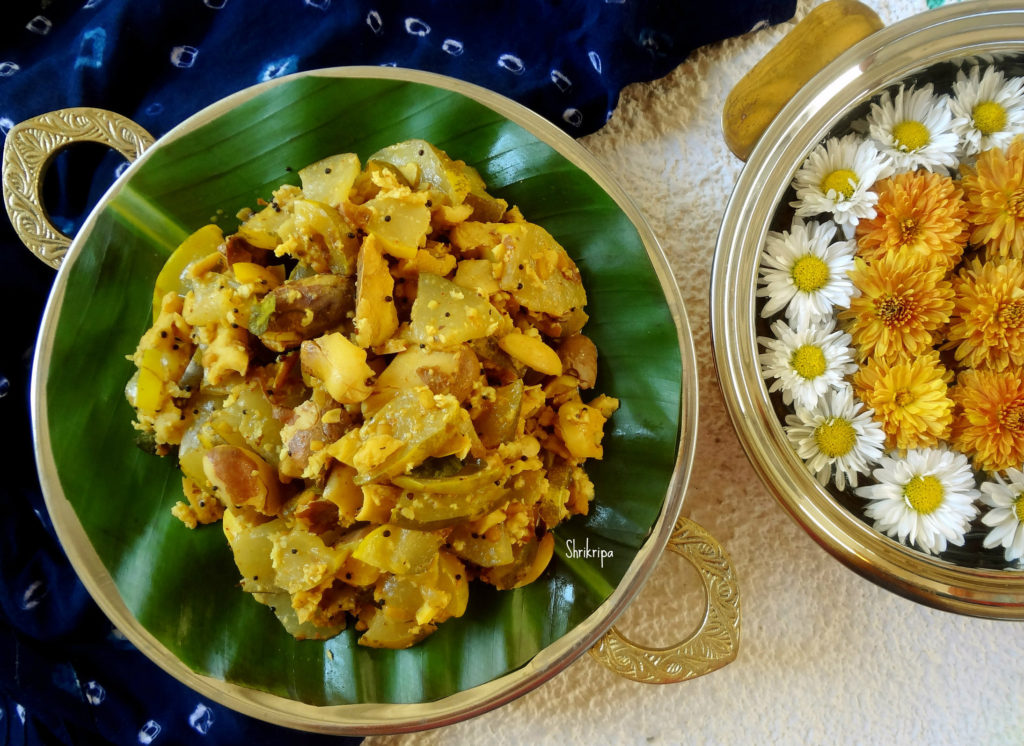
Jack seed and Mangalore cucumber palya:

Jack seed is halasina beeja, which is a seed of jackfruit and most underrated protein rich nature’s gift to mankind. All thanks to our elders, who have gifted us with the knowledge of lots of combinations of ingredients, vegetables. One such combination is coloured cucumber which is also known as Mangalore cucumber/ sambar cucumber with jack seed.  It is an ultimate, tasty side dish from our region and I am eager to share this recipe with you all –

I normally preserve jack seeds in a frozen form and procedure is already shared in my blog as well.
Ingredients:

Coloured cucumber – ½ or 1

Fresh or Frozen jack seeds –2 fists full

Grated coconut – 3 table spoons

Turmeric – ½ tea spoon

Red chilli powder – 1 tea spoon

Salt- as needed

Jaggery – as needed

Seasoning:

Coconut oil – 1 table spoon

Mustard – 1 tea spoon

 Urad dal – 1 tea spoon

Cumin – ½ tea spoon

Red chilli -1

Curry leaves – 2 springs

Method:

-Wash Mangalore/Coloured/sambar cucumber.

-Chop off 2 ends, slice in to 4 pieces and remove inner core (seed part) and chop into thin slices. (see the picture)

-Check now for the taste. If it is bitter in taste, soak the pieces in plain water for 5 minutes.

-Discard the water and proceed.

-If cucumber tastes good, no need to soak in water and you can directly proceed in cooking.

-I normally crush and store the jack seeds. So, no need of chopping or crushing. If you have fresh seeds with you, please crush the seed by using hitting stone and remove outer stiff cover and use inner seed.
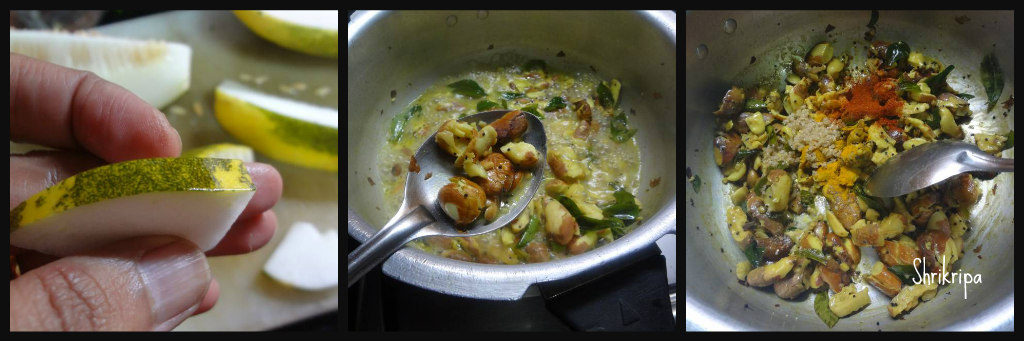
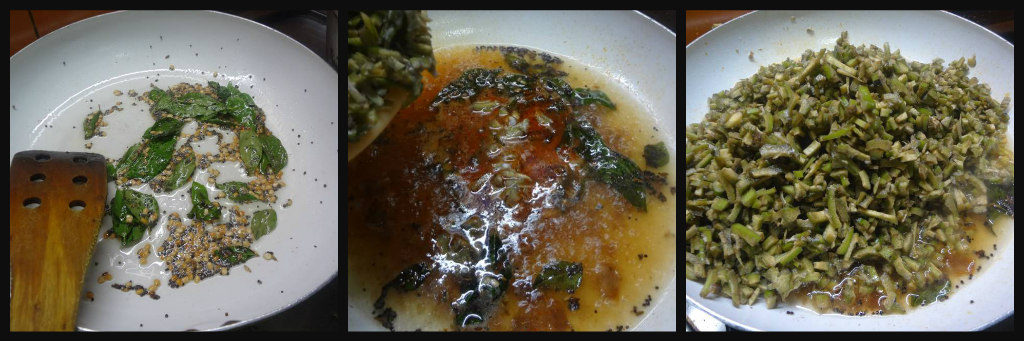
– Take one pressure pan or cooker, do seasoning. Heat oil, splutter mustard, add urad dal. When dal becomes light brown, add cumin, red chilli and curry leaves.

-Now add in crushed jack seeds, little water and cook for one whistle.

-When pressure releases, remove cooker lid and proceed to make palya.

-Switch on the gas, Add Red chilli powder, salt and jaggery, required amount of water and chopped cucumber pieces.
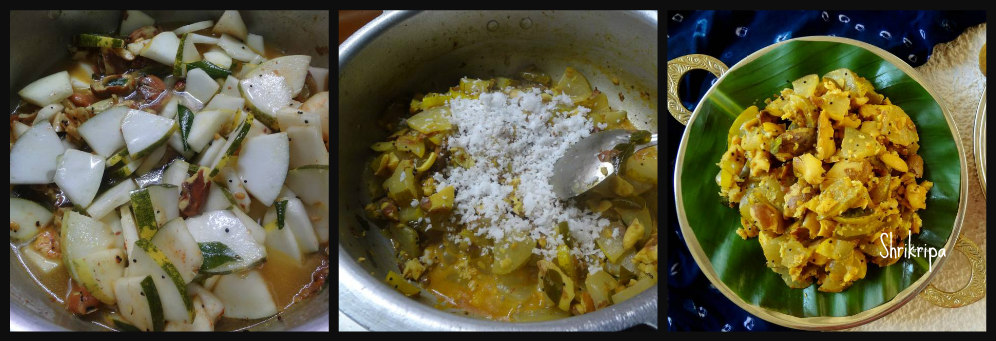
-Close the lid and cook this in a low flame, until cucumber is cooked or up to water drains.

-If water drains first, add some more water and make sure to cook cucumber.

Garnish with fresh grated coconut and mix, cook for 2 minutes and switch off the gas.

-Serve with hot rice and enjoy as a side dish.
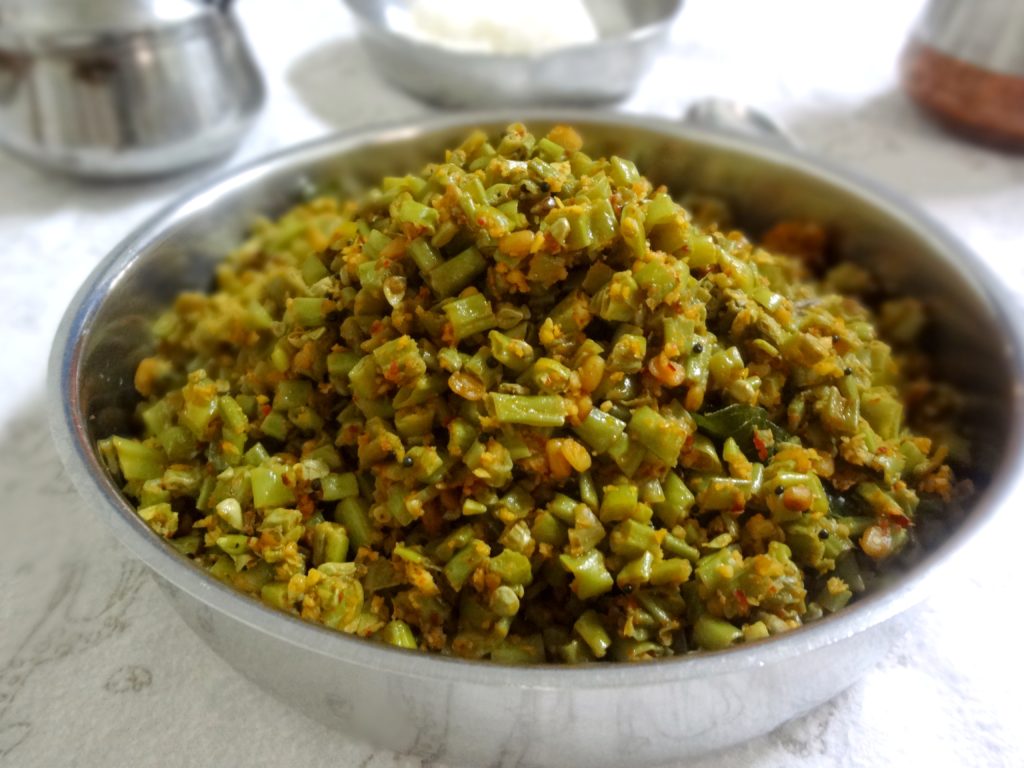
Alasande Palya / Yard long beans dry curry:

Alasande aka yard long bean is very popular and one of the age old cultivated crops of Mangalore coast. It is tender, immature pods of black eye pea. In rainy season, most of the vegetable kitchen gardeners grow this super tasty veggie for day to day use.

Immature pods are one of the favourite food for little birds as well. It is a low calorie, high in fibre vegetable and tastes little sweetish and texture is little chewy and watery.

Alasande side dish is one of the very popular dishes during the festivities- either in weddings, festival cooking or day to day cooking. For day to day cooking, we normally toss this veggie with mild seasoning and for festivity cooking, we use coconut masala. Today I am going to share the recipe of my house hold which my family relishes whenever I prepare.

Ingredients:

Alasande / Yard long beans – 500 grams

Red chilli powder – ½ tea spoon

Turmeric – ½ tea spoon

Salt

Jaggery – 1 tea spoon

For seasoning:

Coconut oil – 1 table spoon

Mustard – 1 tea spoon

Urad dal – 1 tea spoon

Red chilli – 1 (optional)

Curry leaves – 1 spring

For Masala:

Coconut – ¼ cup

Roasted Byadagi Red chillies – 2 to 3

Cumin – 1 tea spoon

Tamarind – ½ tea spoon

Method:

-Wash, remove two ends of yard long beans and chop as required.

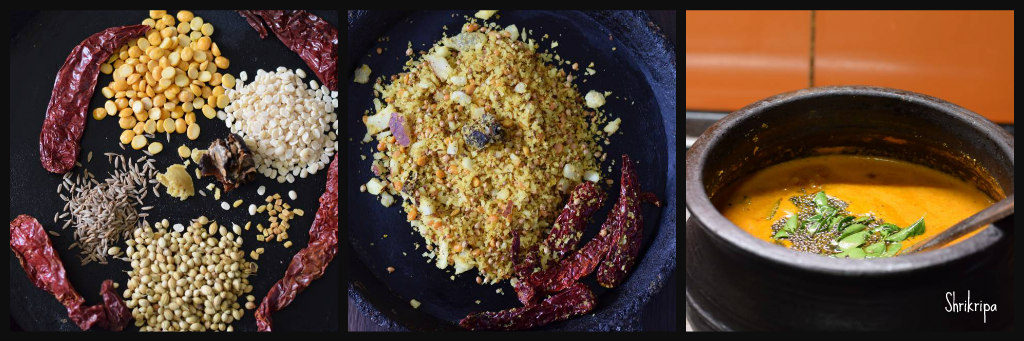
-Dry grind coconut with roasted chillies, cumin and tamarind for masala and keep aside.

-Now take one kadai, heat oil for seasoning, splutter mustard, add urad dal. If you are adding red chilli add that as well.

-When urad dal becomes red, add curry leaves, chopped beans, turmeric, salt, jaggery, red chilli powder and toss for two minutes.

-Add one small cup of water and cook until it is soft and firm.

-Add dry ground masala and mix everything. Keep it covered for two to three minutes and switch off the gas.

-Serve with hot rice or with thali as a side dish.


Hog Plum/Ambatekayi Gojju:

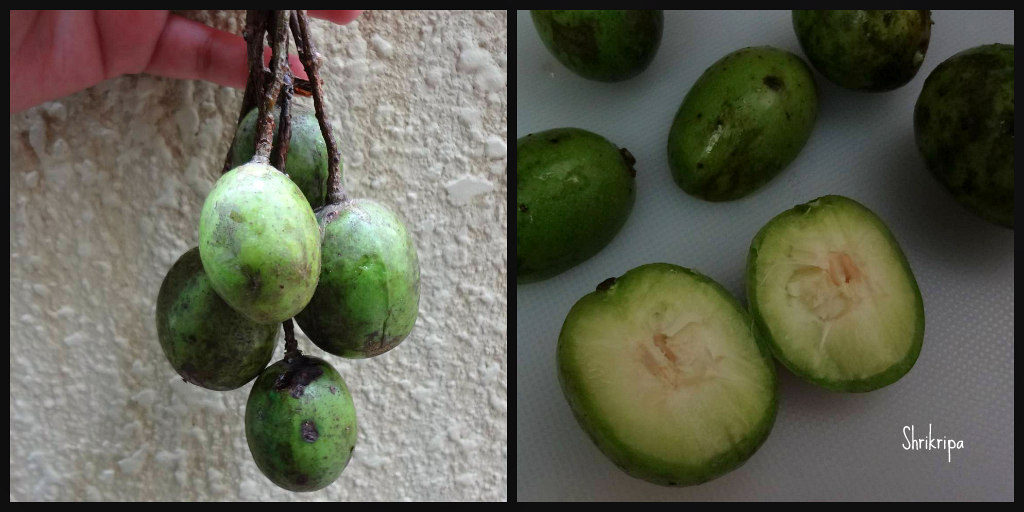
We call hog plum as “Amtekai” in Kannada and as “ambate” in our local language. In our region you will find 2 varieties of hog plums. One is Wild variety which is also known as Indian sour hog plum and the other one is known as grafted or Kashi Amtekai/ hog plum.  Grafted variety is nothing but Hog plums which we normally find in South America or South East Asia. Also known as Ambarella or Golden apple which belongs to the specie – spondias dulcis.

Wild variety is normally used in pickle making or as a souring agent in some of the traditional curries because of its sour taste. When it matures, seed becomes hard and skin becomes thin. Here I have used normal hog plum, which has a fibrous core and when it matures, skin will turn green to yellow and sweetish in taste. People use this as a fruit as well.

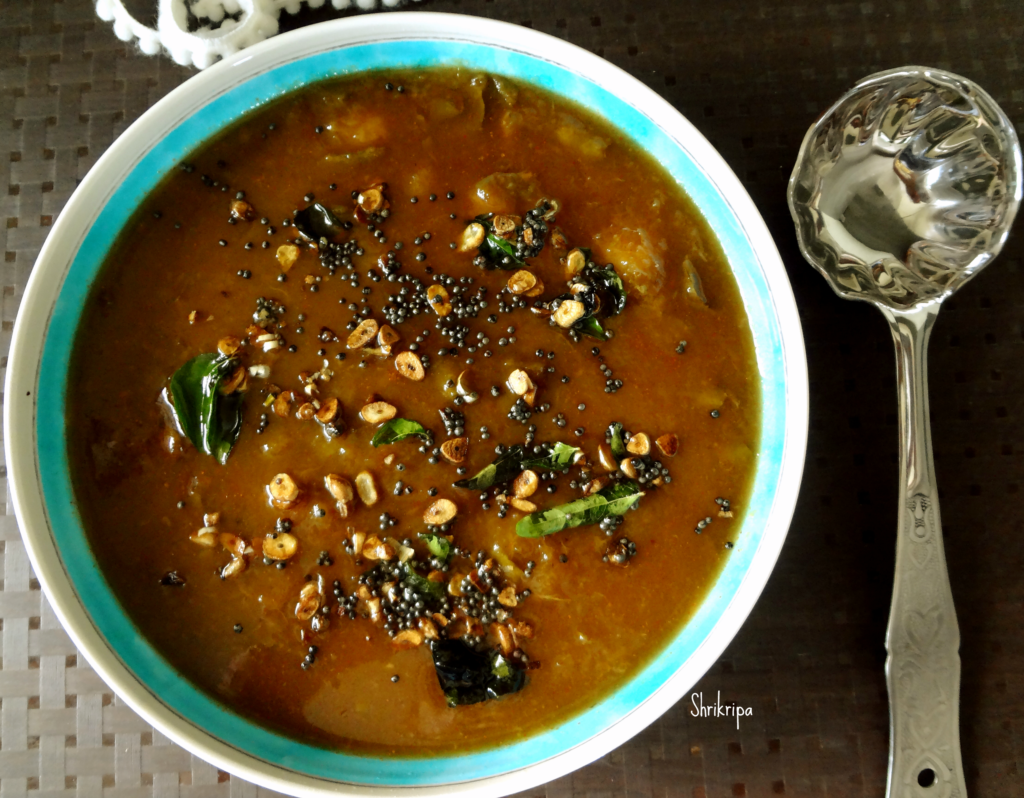
Gojju/ Gojji is an essential side dish of our community. Which is a semi solid, tamarind based, sweet and sour curry, which can be relished as it is with hot rice, or as an accompaniment with curd rice as well. Some of the gojjus taste good with Dosa or Idli as well.

Ingredients:

Hog plums – 7 to 8

Jaggery – 2 to 4 table spoons

Salt

Red chilli powder – 1 tea spoon

Seasoning:

Coconut Oil – 1 table spoon

Mustard – 1 tea spoon

Garlic cloves – 8 to 10 (sliced)

Curry leaves – 1 spring

Method:

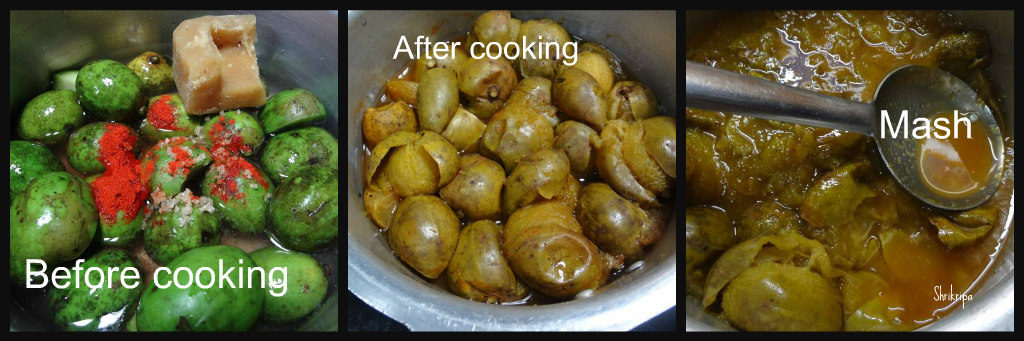
-Wash and cook hog plums in sufficient water by adding salt, jaggery, red chilli powder in a pressure cooker.

-One whistle is more than enough for this veggie to cook.

-When it is cooked, outer skin layer will separate, inner flesh will become soft.

-Mash a little by using back of the serving spoon, to give a texture to the curry.

-Mix everything and check for salt, hot and sweet. Add whatever is needed.

-Curry should taste tangy, hot and sweet.

-Boil this and add seasoning.

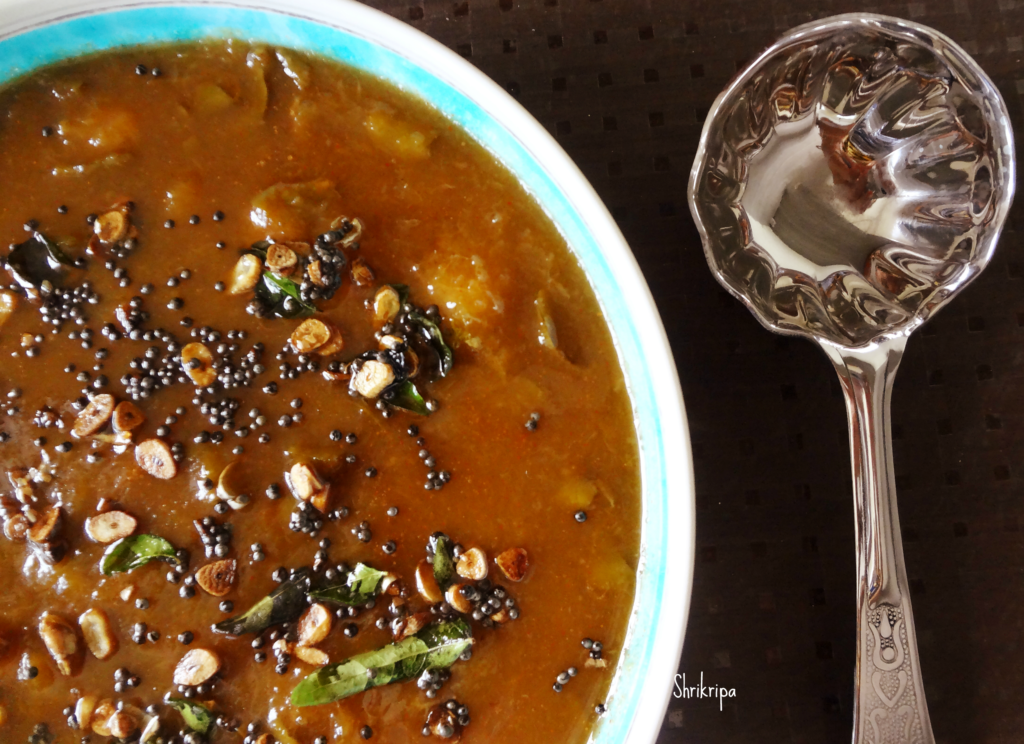
-Heat oil, splutter mustard, add sliced garlic. When garlic becomes brown, add curry leaves and pour this over curry.

-Serve as a side dish with rice or curd rice.

Note:

-Usage of garlic is purely optional.


Simple Bele saaru /Rasam:

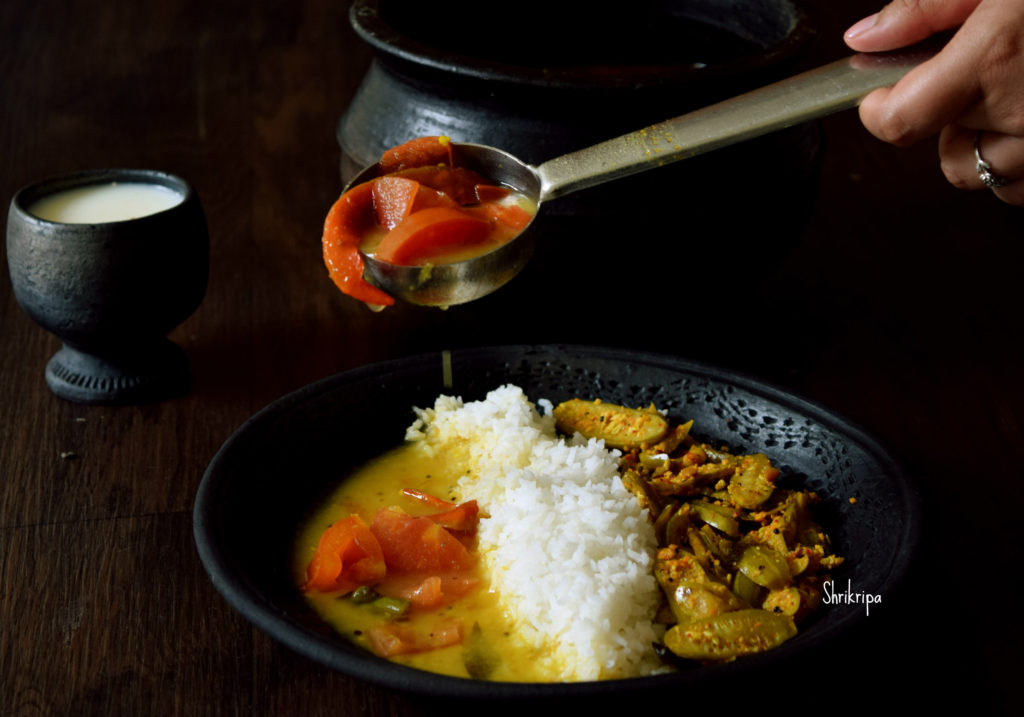
This Rasam is a very good option, if one has to cook no onion and no garlic meal. Usually it is an option for us during any festivity or “No mood to cook” meal. Olden days usage of onion or garlic was a taboo in our community and our grand moms used to prepare this kind of Rasam, which we call as saaru in local language. My hubby has fond memories attached to this Rasam, which he used to relish as a small child in his grand mom’s place and he usually asks for it and calls this Rasam as Doddajji saaru (grandma’s saaru) to signify. It is a plain Rasam, with ginger and hing flavour. In our region, we see this Rasam in some of the temple meals as well. If it is ginger flavoured one, no Rasam powder will be used and Rasam will be yellow in colour, due to the addition of turmeric and dhal.

DSC_0002_Fotor

Ingredients:

Toor dal – 1 cup

Tomatoes – 3 to 4

Green chillies – 4 to 6

Hing – peanut sized

Ginger – ½ inch (slivered)

Curry leaves – 2 springs

Salt

Jaggery – ½ to 1 tea spoon

Turmeric – ½ tea spoon

Tamarind – 1 tea spoon

Coriander leaves – little (optional)

Seasoning:

Coconut oil or ghee – 1 table spoon

Mustard – 1 tea spoon

Red chilli – 1

Curry leaves – 1 spring

Method:

-Wash and cook toor dal in a pressure cooker, mash a little and keep aside.

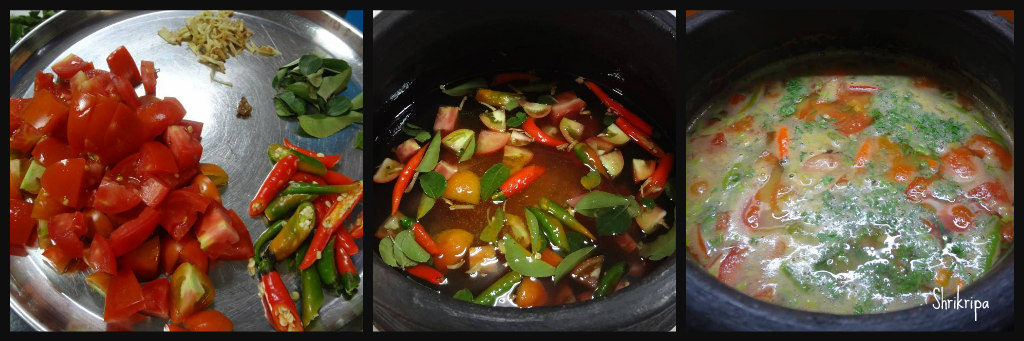
-Soak tamarind, chop tomatoes, green chillies and ginger.

Ribbet collage

-Take one Rasam pot (I normally use clay pot) and take 3 to 4 cups of water, tomato, green chillies, ginger, hing, curry leaves, turmeric, salt and jaggery.

-Cook this until everything cooks properly.

-Now add toor dal and mashed soaked tamarind.

-Boil this and adjust the consistency and check for salt, ginger and green chilli. If needed adjust by adding extra.

-When it is boiled, add chopped coriander leaves.

Ribbet collage 1

-Season with oil or ghee by spluttering mustard, red chilli and curry leaves.

-Serve with hot rice .


Gujje kadle gashi / Tender jackfruit and whole black chickpeas curry:

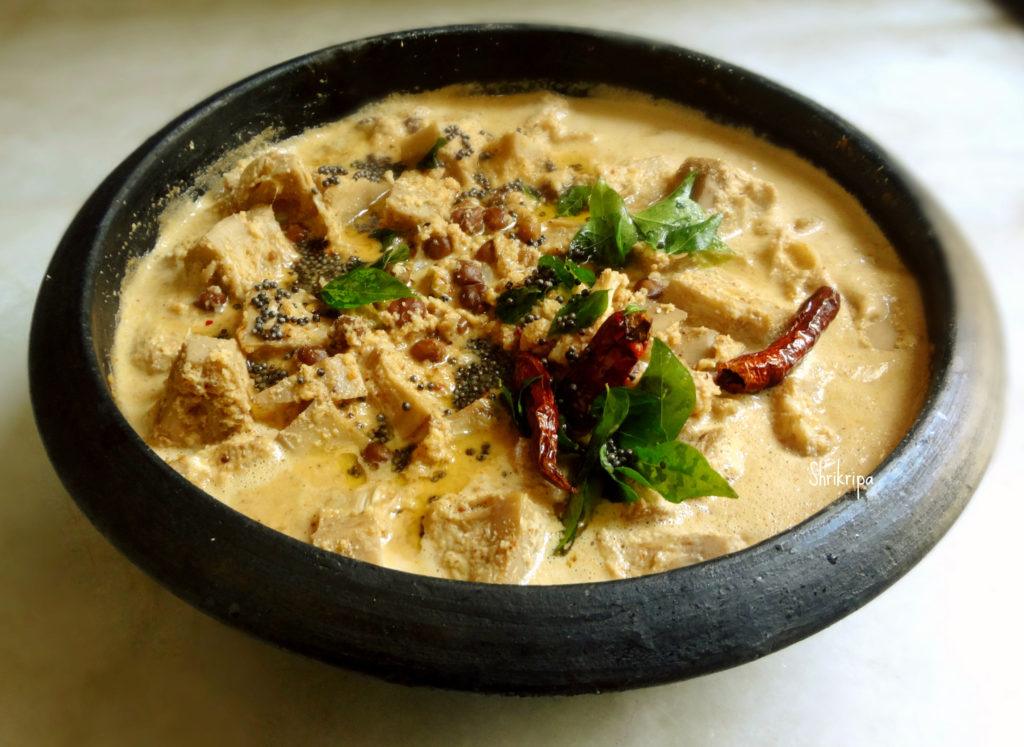
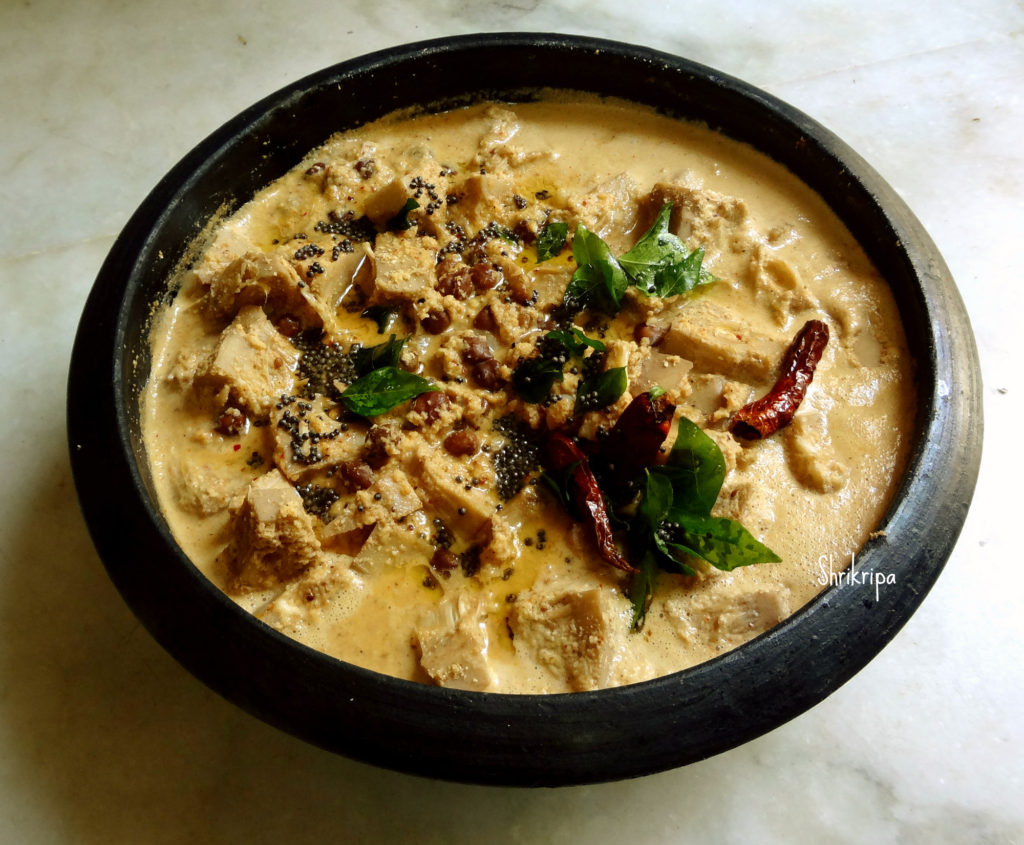
Tender jackfruit is an integral part of our traditional cooking. Till now I have shared a couple of recipes and today I am going to share one more tender jack recipe which is prepared by pairing it with protein rich black chickpea, which is also known as kala chana, black chana in India.

Tender jackfruit is a super food, which is high in vitamins, minerals and dietary fibers and at the same time, less in calories, salt and fats. Now a day, it is available in almost all parts of the globe as fresh or frozen.

This curry is double beneficial because of additional benefit by adding black chickpea. Which is also known as Bengal grams, Garbanzo beans or Kala chana which has darker skin and thick outer cover and has high roughage.

DSC07426_Fotor

Ingredients:

Tender jack or Gujje pieces – 1 bowl.

Black chick peas/chana – 1 cup

Salt

Jaggery – 1 tea spoon

Red chili powder – 1 tea spoon

Coconut oil – 1+2 tea spoon

Masala:

Grated Coconut – from half coconut

Coriander seeds – 1 tea spoon

Urad dal – 1 tea spoon

Methi – ¼ tea spoon

Hing – one pinch

Red chillies – 3 to 4

Tamarind – ½ tea spoon

Season:

Coconut oil – 1 tea spoon

Mustard – 1 tea spoon

Red chilli – 1 (optional)

Curry leaves – 1 or 2 springs

Method:

-Wash and soak Black chana overnight. Drain the soaked water the next morning.

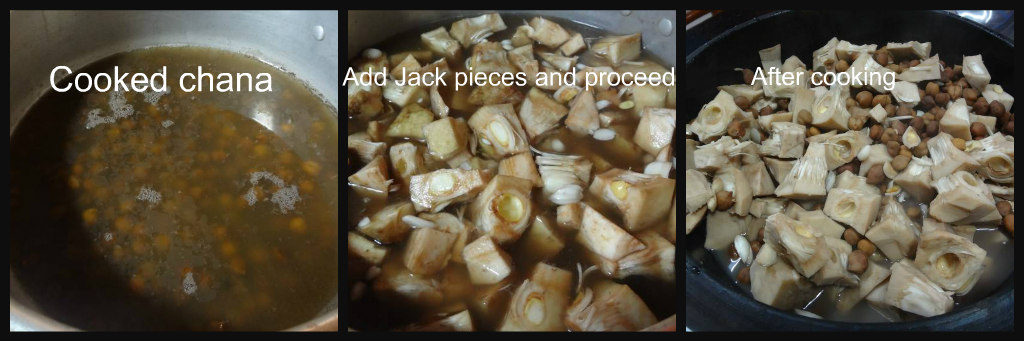
-Take one pressure cooker, cook chana by adding sufficient water. It requires around 4 to 5 whistles.

Ribbet collage

-Add Tender jack pieces into cooked chana, if needed some water, salt, red chilli powder and jaggery and cook in an open fire, until jack pieces are soft.

-In the meantime, prepare masala:

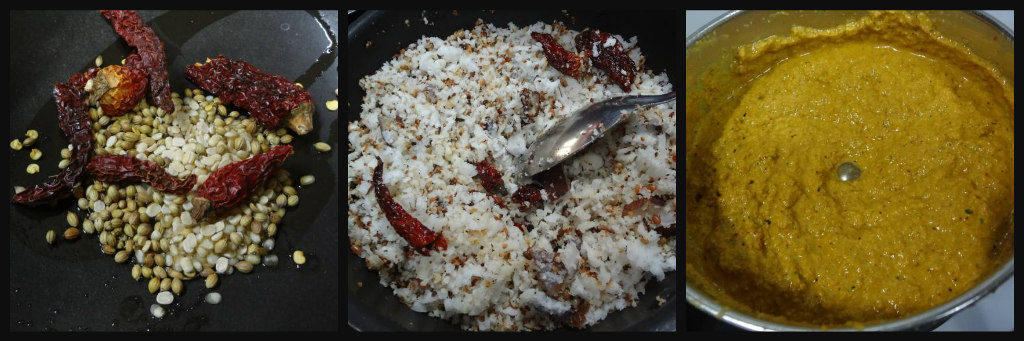
-Take 1 tsp of coconut oil in a tawa, fry methi, add coriander, hing, urad dal, red chillies and fry until urad dal becomes red. Next add coconut and fry until it emits fragrance.

Ribbet collage 2

-Cool the mixture, add tamarind and grind into little rough paste by adding water.

-Add the ground masala into cooked veggie mixture, boil.

-Add seasoning, heat coconut oil, splutter mustard, add red chilli (optional), curry leaves into oil and pour the mixture over boiled curry.

DSC07427_Fotor

-After adding the seasoning, add 2 tsp of raw coconut oil and keep it covered until u serve. This is to get an authentic taste.


Mavinakai Chutney/ Raw Mango and Coconut chutney:

There are so many ways to make lip smacking good Mango chutney. This is traditional mango chutney from Mangalore, South of Karnataka and it is mostly ground to a thicker consistency and is also called as Gatti chutney, which means thick raw mango chutney and is served with Kanji (Brown rice gruel) and ghee. It is our comfort food.     DSC_0037_Fotor

Ingredients:

Grated Fresh coconut – 1 cup

Grated fresh green mango – ¼ cup

Green chillies – 2 to 3

Salt

Seasoning: Coconut oil, mustard, curry leaves.

Method:

-Put freshly grated coconut, grated green mango, green chillies and salt in a mixer grinder.

-Instead of green chillies, traditionally people use small bird eye chillies too. If you have that, you can use those chillies as well.

– Now blend the mixture in the mixer grinder coarsely, without adding any water. If juice from the raw mango is not sufficient, then add 1 to 2 tsp of water and grind to get this thick consistency.

-Prepare the seasoning and serve with Brown rice kanji and ghee.

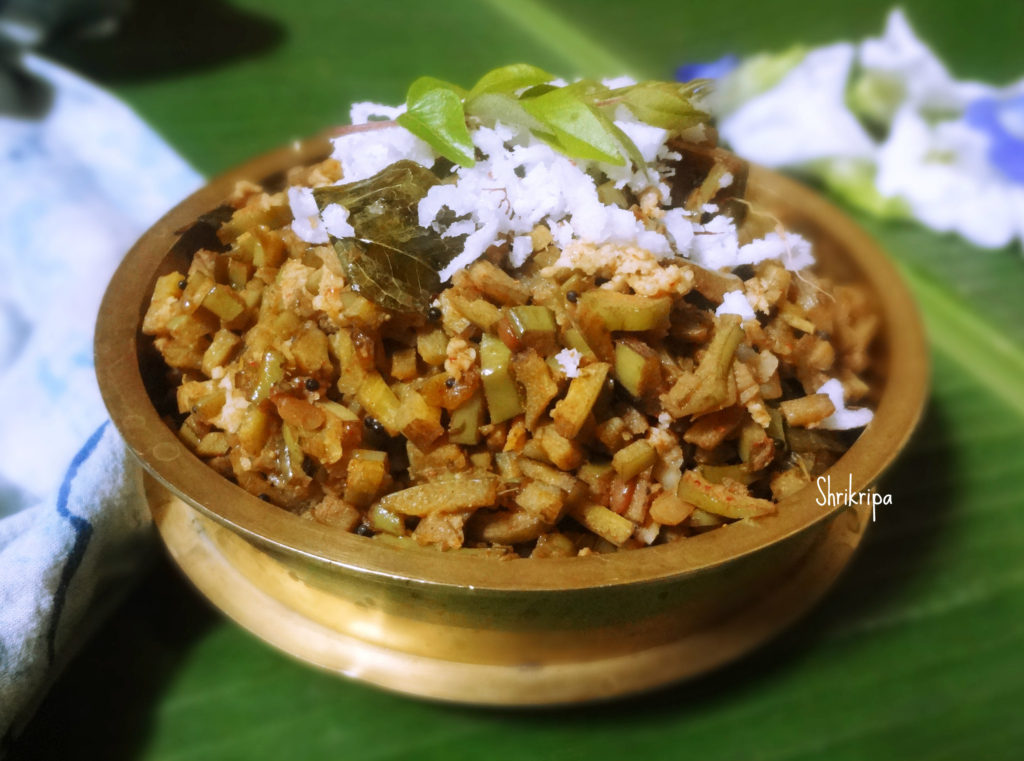
Nendra Sippe Palya/Plantain peel dry curry:

Nendra is also known as Kerala Banana. Which is mainly used in chips, if it is raw and firm or Halwa making, when it is ripe and black.

When Chips is made, all the healthy, iron rich and fibre rich peel will be wasted, and it is some what a bi -product of chips making activity.

This palya is normally prepared on previous night of wedding celebrations in our region. Normally plantain chips are an integral part of any festivity meal and it is prepared well in advance, usually process starts from the previous afternoon and peels will be fresh and ready to be used in the previous night’s dinner menu.

It is a very tasty side dish with hot Rasam or as it is with hot rice topped with ghee.

Taste of this dish will be a mixture of sweet, hot and sour and only Raw Nendra banana peel can be used to make this palya.

DSC03635_Fotor

Ingredients:

Plantain Peel – of 8 to 10 Raw bananas

Tamarind water – ½ to 1 cup

Salt

Jaggery – 1 to 2 table spoons

Red chilli powder – 2 tea spoons

Fresh grated coconut- ¼ cup

Seasoning:

Coconut oil – 2 table spoons

Mustard – 1 tea spoon

Urad dal – 1 tea spoon

Red chilli – 1

Curry leaves – 2 springs

Method:

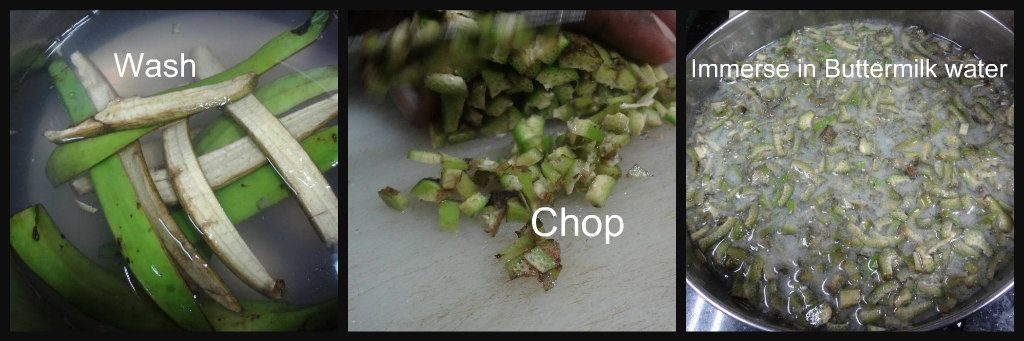
-Make thin buttermilk water to immerse the chopping’s:-Take one vessel, put 1 spoon of curd or butter milk and add two cups of water.

-Soak one tea spoon of tamarind in a half to one cup of hot water and make tamarind water and keep.

Ribbet collage 1

Wash Plantain peel and keep aside.

-Chop plantain peel into thin strips and put it into thin buttermilk water.

-Take one tawa, add one table spoon of oil, splutter mustard, add urad dal, red chilli and fry until dal becomes red. Add one spring of curry leaves.

Ribbet collage 2

-Pour tamarind water, salt, jaggery, red chilli powder and boil.

-Discard butter milk water and keep chopping’s ready for use.

-When it starts boiling, add drained plantain peel chopping’s.

-Close the lid and cook this in a simmer.

-Check for water in-between. If peel is not cooked add some more water.

-When chopping’s are soft and cooked, after water drains, add grated coconut, remaining 1 table spoon of oil and one spring curry leaf.

-Mix everything and cook for 2 to 3 minutes and then switch off.

-Serve with hot rice topped with ghee or as a side dish with rice and Rasam.

Nendra Balekai Chips / Kerala plantain chips:

A person who can resist chips, let alone not like them, is unheard of.

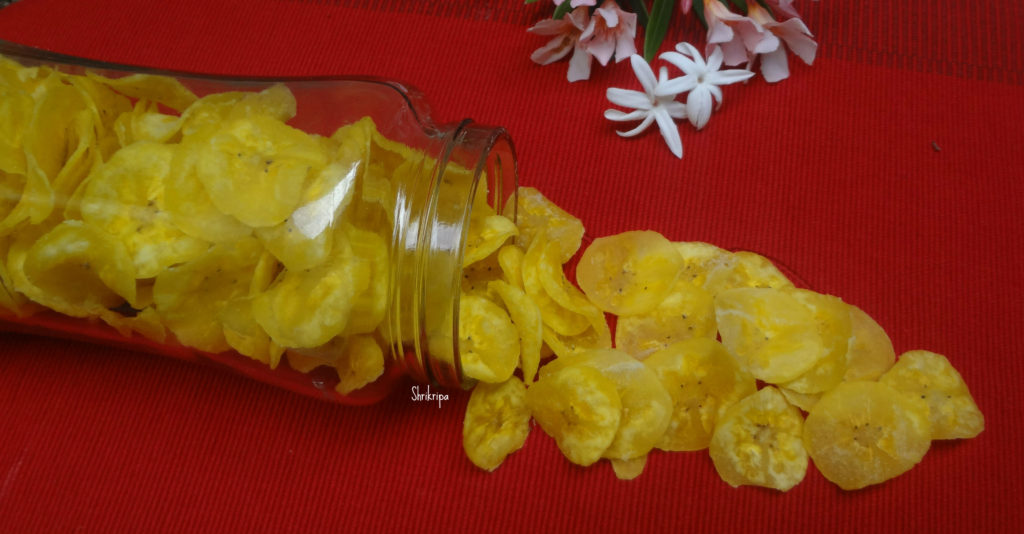
Nendra is a variety of banana, which is very popular in Kerala and our coastal region. We usually use this in various snack preparations. Raw banana chips are very popular in South India and it’s usually served as a savoury side dish in a traditional meal or just as munchies. This is very addictive and has a distinct flavour due to usage of coconut oil for frying.

I got this raw banana from my cousin brother’s farm and prepared these chips after ages. All thanks to them.

DSC08387

Now we will proceed towards the recipe-

Ingredients:

Green Nendra Banana – 10

Salt – 1 tbl sp

Water – 1 small cup

Coconut oil – To deep fry.

Chips slicer – to slice

Method:

Apply some oil to your hand. To some extent it will protect your hand from blackening.

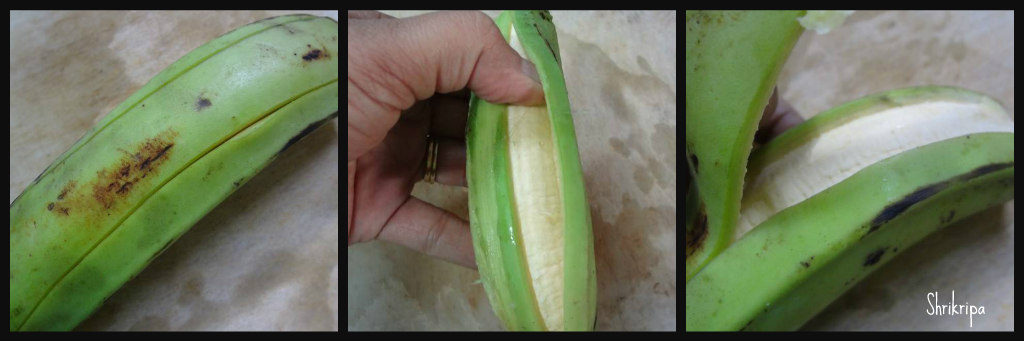
Take fresh, green plantain, wash properly. Take one small sharp knife, remove top and bottom part and give slits on outer skin at regular intervals (may be 4 to 5) from top to bottom.

Ribbet collage

Now slowly insert your thumb at the slit and open the outer skin.

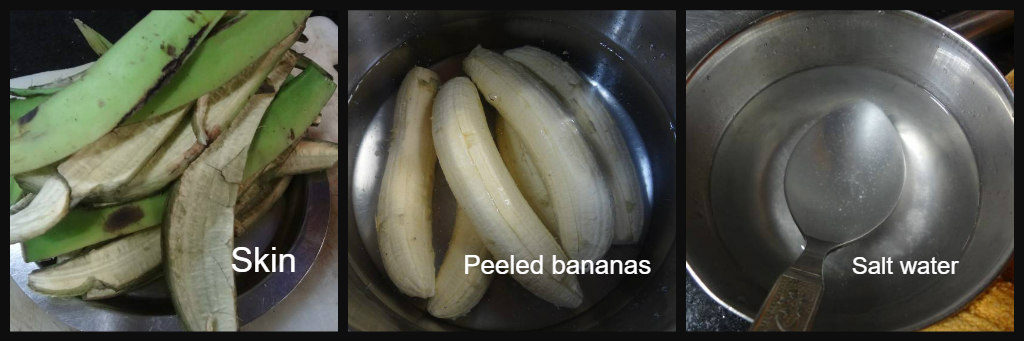
Don’t throw away this skin; you can make very tasty palya/Subzi out of this.

Immerse these peeled bananas in a bowl of water.

Ribbet collage 2

Take one small bowl of water and mix salt and keep aside.it is your salted water, which is used while frying chips.

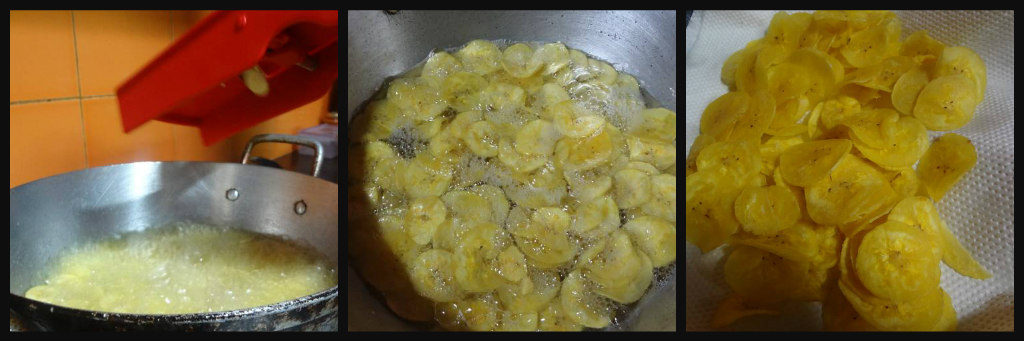
Now you can keep coconut oil for heating. When it is very hot, start making chips. To test the hotness of oil, drop one small piece of plantain, if it pops up immediately, it is ready.

Take out plantain from water, pat dry and start slicing directly to the hot oil by using slicer.

Ribbet collage 3

Use one or two plantains at a time.

Keep flame at medium. When the slices of plantain cook, the bubbling sound of the oil becomes faint. Now you can add 1 tbl spoon of salted water, and you will hear lot of bubbles and bubbling sound. When the sound reduces, the chips are ready to be removed from the oil.

Remove the chips from the oil and keep them on a tissue-laid plate.

After cooling store, it in an air tight container and proceed with the remaining plantain.


Temple Style Vegetable Sambar:

Usually people ask me regarding recipe of sambar, which is served in Coastal Mangalore temples. In our coastal temples, prasadam is served in the form of afternoon lunch. It is a simple lunch, served on a plantain leaf. which usually includes palya, rice, Rasam, sambar, payasam and buttermilk. Speciality of this lunch is, taste of the Rasam or sambar will linger in your mouth even after some time.

Commonly used vegetable for this kind of sambar is Ash gourd, sweet pumpkin or Coloured cucumber. You can take any one of these above-mentioned veggies and make. Here freshly roasted and ground masala has been used and onion or garlic is a taboo ingredient in prasadam lunch.

DSC_4627_Fotor

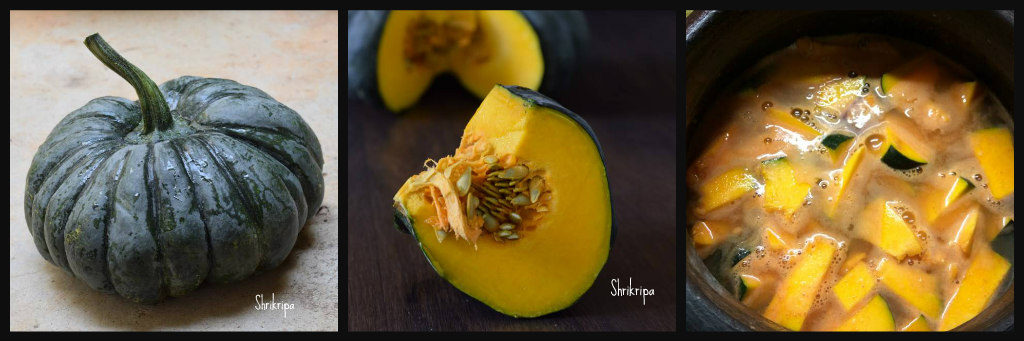
Here I have used home grown Sweet pumpkin –

Ingredients:

Sweet pumpkin – ½ kg (you can use coloured cucumber or Ash gourd as well)

Salt

Jaggery – 1 to 2 tea spoons (adjust according to your taste)

Red chilli powder – ½ tea spoon

Coriander seeds – 1 table spoon

Cumin – 1 tea spoon

Methi – ¼ tea spoon

Hing – pea nut size (hard hing) or ½ tea spoon of powdered hing.

Urad dal – 1 tea spoon

Chana dal – 1 tea spoon

Red chillies – 3 to 4

Coconut – ½ cup

Curry leaves – 1 spring

Toor dal – ¼ cup

Turmeric – ½ tea spoon

Tamarind – ½ – 1 tea spoon

Seasoning:

Coconut oil – 1 table spoon

Mustard – 1 tea spoon

Red chilli – 1

Curry leaves – 1 spring

Method:

-Cook toor dal after washing and keep aside. (don’t use more dal)

-Remove central seed part. Chop veggies, as bigger chunks.

Ribbet collage 1

– Cook chopped veggie by adding sufficient water, salt, jaggery, red chilli powder.

-In the meantime, roast masala for grinding.

Ribbet collage 2

-Take one thick kadai, add 1 tea spoon of coconut oil, fry methi seeds until light brown.

-Add in coriander, cumin, Hing, Red chillies, urad and Chana dal and proceed frying until dal becomes light brown and red chillies puffs and roasts.

-Add in coconut, curry leaves and turmeric, proceed frying for 2 to 3 minutes or until you feel the aroma of coconut.

-Cool this mixture and grind into not so smooth paste by adding tamarind and sufficient water.

– Now mash cooked dal add dal and freshly ground masala to cooked veggie and boil.

-Check for salt, jaggery and adjust. When it boils add seasoning.

-Heat coconut oil, mustard, red chilli, when mustard splutters, and curry leaves and pour over the prepared(boiled) sambar.

-Serve with hot rice.


Neeru mavinakai Gojju/ Brined mango curd curry:

Neeru Mavinakai” is what we call brined mango, which is basically a firm fully grown, matured but un-ripened mango which is preserved in salt water. We usually relish this in the rainy season or in the off season by preparing some of our traditional dishes. I have shared how to preserve mangoes in my earlier post.  Today I am going to share one of our favourite simple curd curry, which we used to relish even in our childhood days. It is a simple curd curry, seasoned with curd chillies (known as majige menasu), curry leaves and garnished with chopped onions to give the extra zing.

DSC_4350_Fotor

Ingredients:

Preserved raw mangoes – 2

Curd – 1 cup

Coconut milk – 2 table spoons

Green chilli – 1 (chopped)

Onion – 1 (chopped)

For Seasoning;

Coconut oil – 1 table spoon

Mustard – 1 tea spoon

Curd chillies – 1 to 2 (chopped)

Urad dal – 1 tea spoon

Hing – ¼ tea spoon

Curry leaves – 1 spring

Method:

-Remove required number of mangoes from the brine water.

-Immerse these mangoes in fresh water for some time to reduce its salt content.

-Sometimes brined mangoes will be soft or hard. If it is soft, mash it and use.

Ribbet collage

-If it is very hard, cook for a couple of whistles in a cooker by adding little water and try to mash or grate.

-What I had was very hard, and I used it by grating.

-After this is done, mix in curd and coconut milk.

-If you don’t have coconut milk, you can use maggi or some other brand of coconut milk powder as well. (addition of coconut milk will reduce the tartness)

-Mix in chopped onion, green chilli.

-Do seasoning, heat coconut oil, put in mustard. When mustard starts to splutter, add in urad dal, Hing, chopped curd chillies and fry until chillies turns out dark brown.

– Add curry leaves to this hot mixture and add the seasoning over Gojju.

-Traditionally we enjoy this Gojju either with Boiled rice ganji (gruel) or with curd rice as an accompaniment.