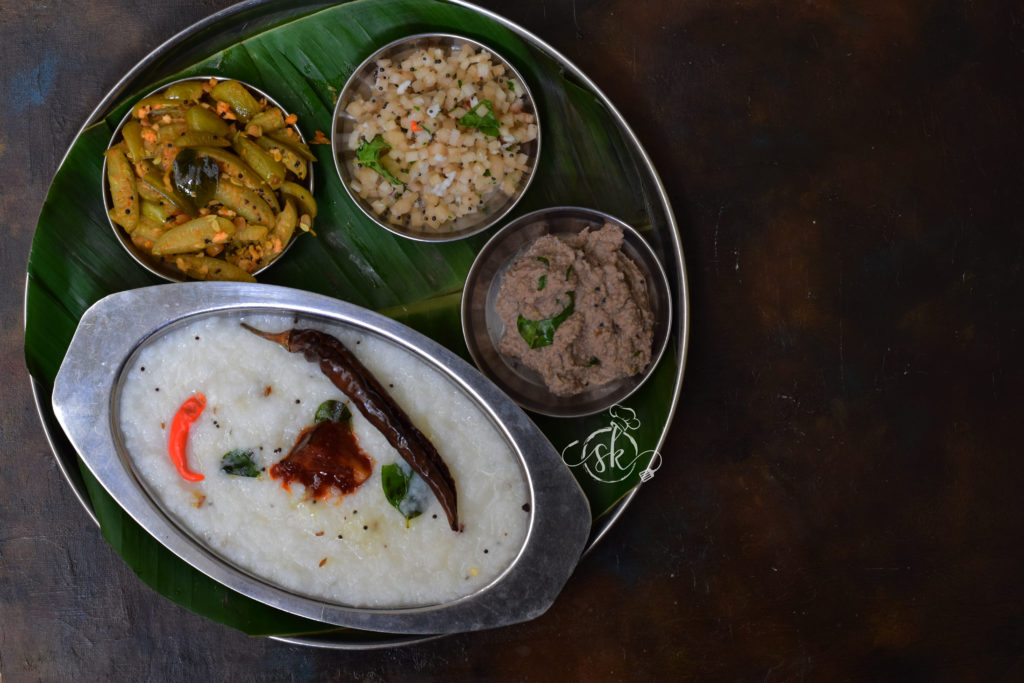
Kayi Ganji: Coconut Flavoured Rice porridge

It is my go-to recipe for a lazy, Simple, soulful meal on weekends or rainy/winter evenings. This recipe of Kayi Ganji is not our traditional recipe. My way of making a one-pot meal is by mixing my mom’s Theli saru, nothing but rice starch Rasam and rice.

 Amma used to make fantastic ginger flavoured Rasam by using drained rice starch of cooked rice. We sisters used to enjoy Hot white rice with Amma’s theli saaru and pickle a lot. Hence, I introduced those two aspects in a single one-pot meal, and the recipe is here.

Here, one can use freshly extracted coconut milk as well as instant coconut milk powder. Freshly extracted milk does taste out of this world, and for sure, there is no comparison in taste. When you are sick and have no mood to cook, it is a soothing and relaxing one-pot meal option.

The procedure is simple-

Ingredients:

Rice – 1 cup

Water – 4 cups

Salt

Green chillies – 1 or 2

Ginger – ½ inch (julienne)

Coconut milk or powder – according to the taste

Seasoning: Ghee/coconut oil, mustard, cumin and curry leaves.

Method:

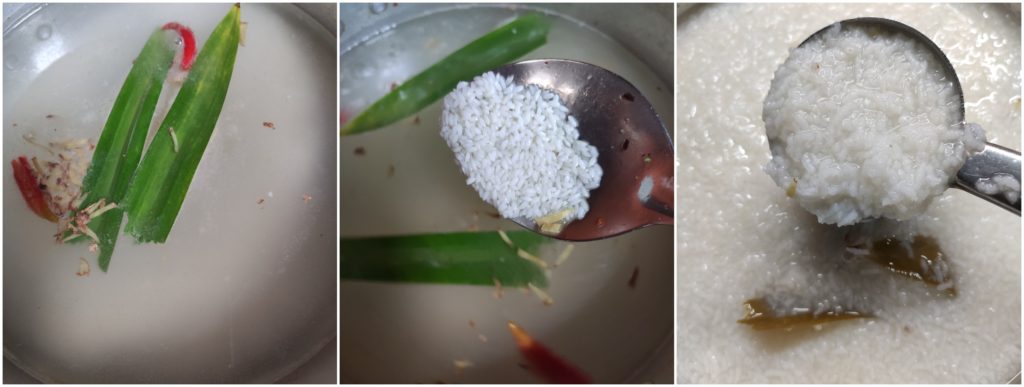
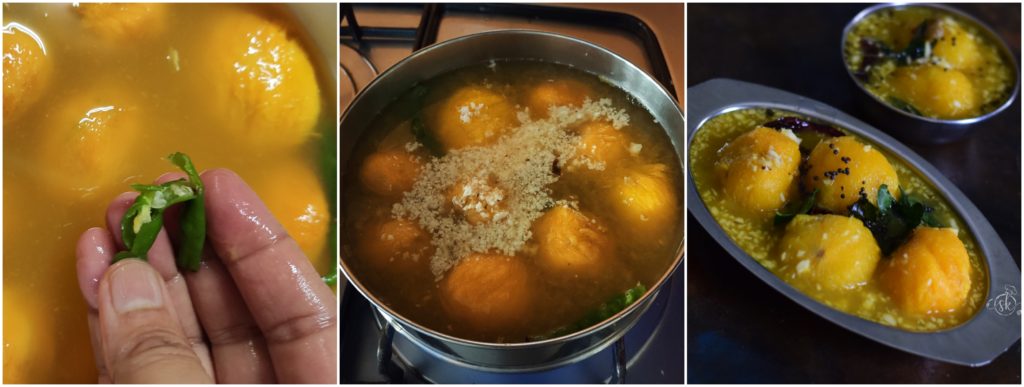
-Wash rice, boil water in an open vessel or a cooker. Add rice, slit green chilli, ginger, salt and cook.

-Here, the rice should become mushy. If it is the cooker, switch it off after 3rd whistle.

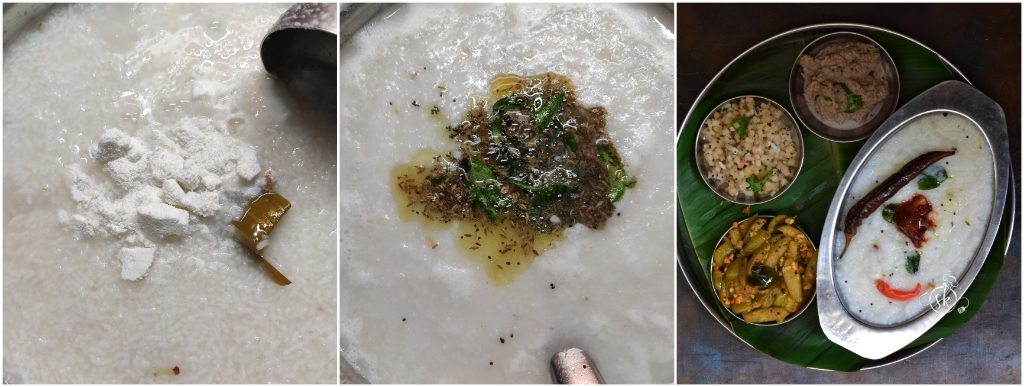
-Open the lid, add coconut milk, adjust the consistency by adding more water.

-Boil for 2 minutes and switch off.

-Do seasoning by heating ghee or oil, splutter mustard, cumin, and curry leaves. Pour it over the rice and mix everything and serve. You can enjoy it with any side dish or plain pickle.

-You can garnish with chopped coriander as well as lemon juice (completely optional)

Note: I have added one pandan leaf to enhance the flavour. It is entirely optional.


Bendekai Kayirasa / Ladies finger coconut curry:

Kayirasa is one of our almost extinct dishes, which can be seen only in our rural houses and found only in our community / homely recipe. It is coconut-based, slightly sweetish, and pairs well with hot boiled red rice or white rice.

Like Sambar, we always use a light green or purple coloured heirloom variety of Bhindi to make Kayirasa. I have never tried Kayirasa with any other types of Bhindi. It is my childhood favourite, and I used to ask my ajji / Grandmother to prepare whenever I visited her. Her preparation tasted like heaven, and I could never replicate that taste even if I used clay pot like her. Grandmothers are ultimate, and they have a magic wand in their hand to dish out such a delicious meal.  

Ingredient:

Bendekai / Ladies finger – ½ kg

Tamarind – big gooseberry size.

Salt

Jaggery

Red chilli powder – ½ tsp

Fresh coconut – 1 big bowl

Urad dal – 1 tablespoon

Dried red chillies – 3 to 4

Seasoning:

Coconut oil – 2 tsp

Mustard – 1 tsp

Red chilli – 1

Curry leaves – 1 to 2 springs

Method:

–Soak tamarind, boil with little added water, salt, jaggery, red chilli powder.

-When it starts boiling, add chopped Bhindi. Allow cooking on a low flame.

-To avoid sliminess,  don’t close the lid or put a spoon to mix while boiling Bhindi.

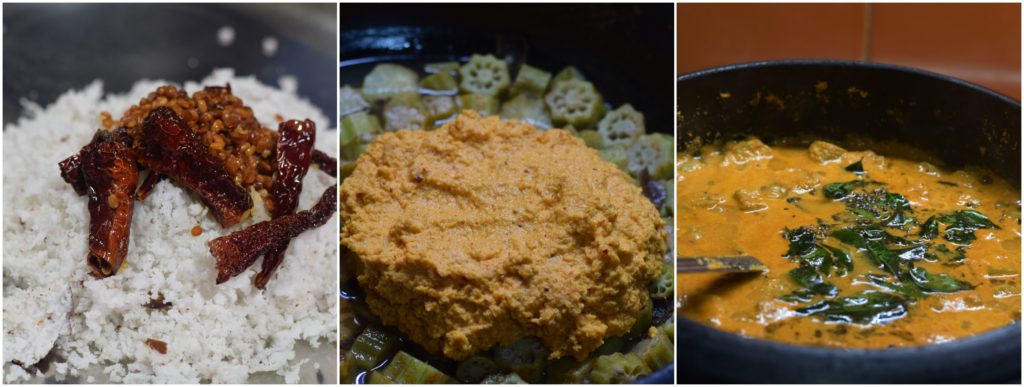
-In the meantime, prepare the masala: heat coconut oil, fry urad dal, red chillies. Grind into smooth paste by adding coconut and water.

-Add the ground masala to cooked veggie, boil nicely by adding sufficient water to adjust the consistency.

-Do the seasoning and serve with hot rice.


How to cook Par Boiled Red Rice/ Matta Rice:

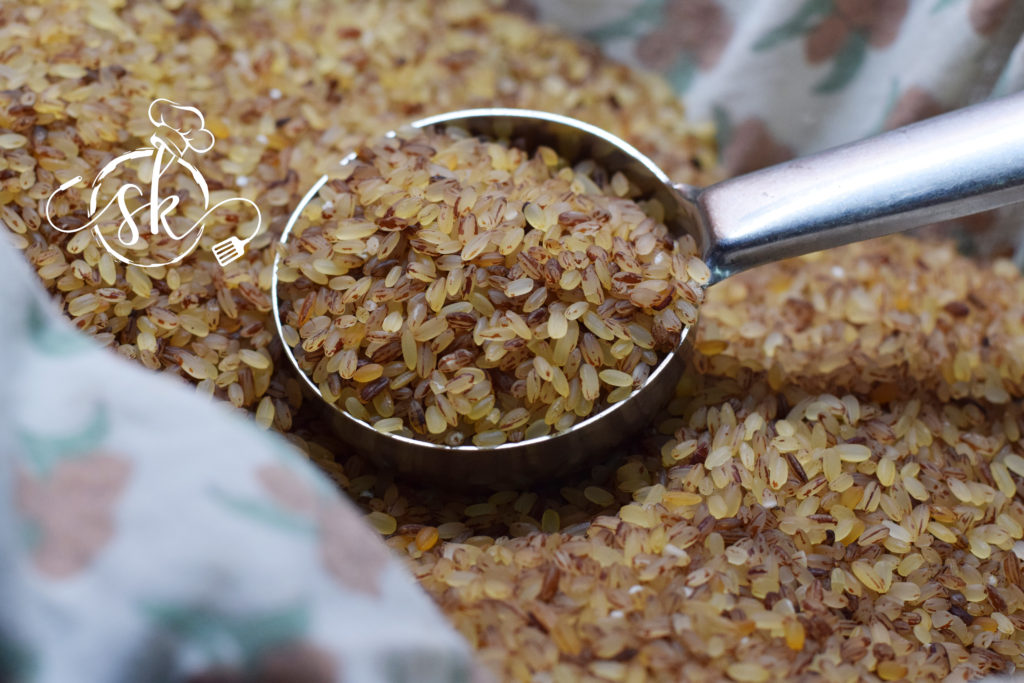
Often, I get a query regarding the cooking method of our traditional parboiled Rice, red Rice, matta rice. So, I thought of including the procedure in my blog to share the link whenever required.

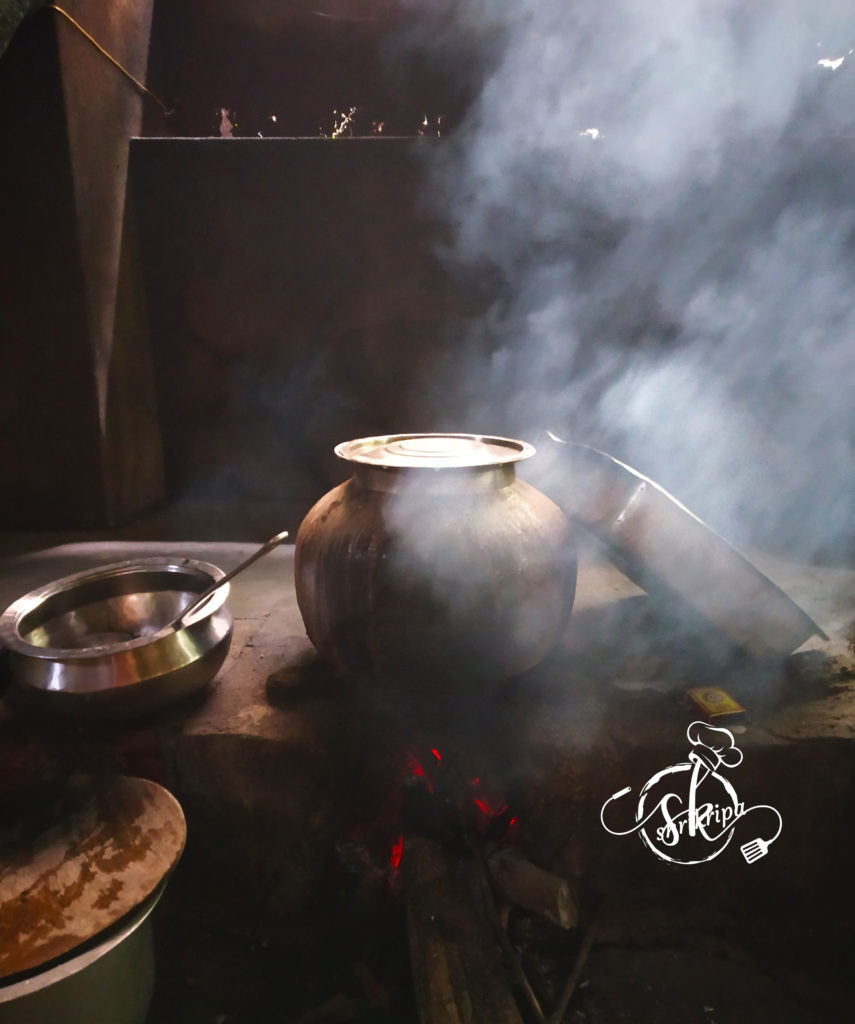
Before discussing the method, we would see how we used to prepare Rice in our traditional kitchen-

We have come a long way in the cooking method as well. Earlier, people used to cook Rice in a huge open pot by using a wood fire. You can see in this picture, which I clicked in our ancestral home; they follow this method, even now.

Then, gradually cooking medium has changed from firewood to a kerosene stove or hot plate. Hence, the system changed, and a huge wooden box insulated with a layer of thermocol was the trend to keep/cook Rice.

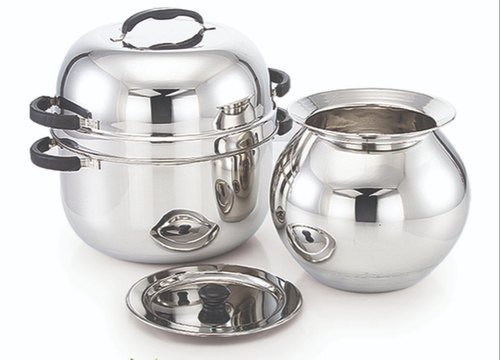
Pic Courtesy: By Google

In the modern era, the scenario has changed; with the micro family system, our huge box has turned into a small stainless steel insulated pot, marketed in the name of “China pot”. It consists of an insulated outer container and a cooking vessel.

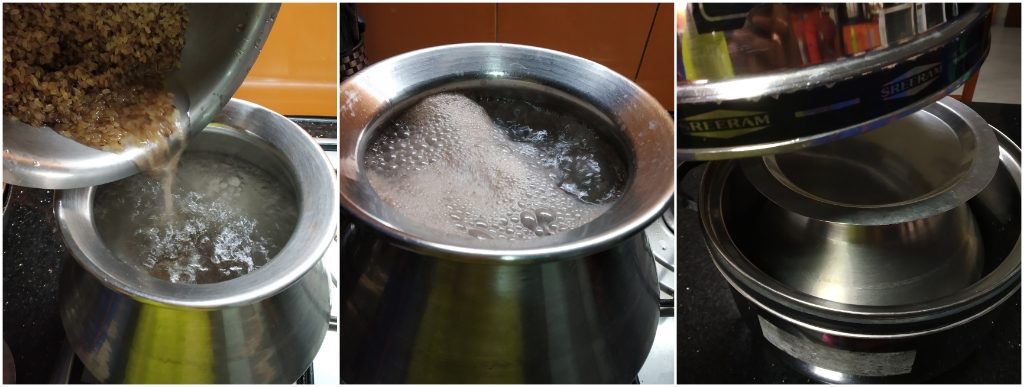
Let us see The procedure of Cooking: (Open Vessel Method) 

-Procedure is simple, Boil water in a vessel; when it starts bubbling, add washed Rice, boil further for 5 to 10 minutes, remove, and keep it in a china pot.

-After one hour or so, check the doneness. You can refer to the picture. If you prefer soft Rice like us, boil one more time and keep it inside the china pot once again.

Within an hour, it would be soft and well cooked. Strain water and use it like regular Rice with curry or have it as a Ganji by including gruel.

To experience the real taste of parboiled Rice and curry,  you need to separate starch from the Rice.


Vegetable and Soya Nuggets Biryani:

This recipe is for Soya Chunk/ nuggets lovers. Soya is known as vegetarian meat. A full-fledged protein source is a by-product of extracting soyabean oil and is relatively healthy, fibre-rich apart from the nutritional value.

Even though I’m not fond of the smell of Soya, My family love to have soya chunks in gravies or Biryani.
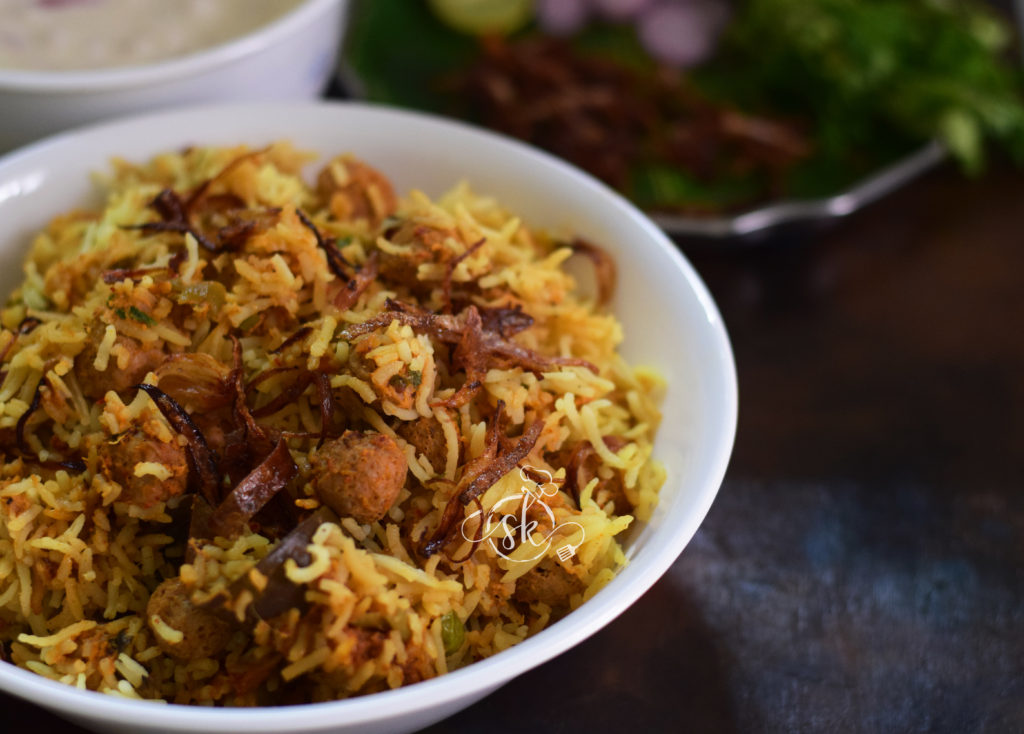
Let us see the Dum Biryani / which I make.

Ingredients:

Basmati Rice – 2 cups (standard cup)

Soya Nuggets – ½ packet ( 2 or 3 cups)

Cashew – 1 fistful ( you can take a  mixture of melon seed and Cashew as well)

Milk – to soak Cashew (vegans can use hot water as well)

Onions – 4 medium-sized ( 2 for frying, 2 for the gravy masala)

Veggies – 1 cup ( Beans, Carrot, green peas )

Garam masala or Biryani masala – 2 tbl spoons

Red chilli powder – 1 tsp

Oil- ½ cup ( to deep fry onion and further cooking process)

Rosewater – 1 tablespoon

Lemon – Juice of 1 lemon

Saffron – 7 to 8 strands soaked in 2 tbl spoon of milk (vegans can use any plant-based milk)

Coriander and pudina leaves – chopped (as needed)

For the Gravy Masala:

To Ground into a paste:

Dry ingredients: Coriander seeds – 1 tablespoon, Cinnamon – 1″, Bayleaf – 1, clove – 2, Star anise – 1, Cardamom – 2, Black cardamom – 1, Black peppercorn – 5 to 6, Red chillies – 3 ( Byadagi)

Ginger garlic paste – 1 ½ tablespoon

Coconut – 2 tablespoons

To Make Gravy:

Cumin or Shajeera – 1 tsp, Cardamom – 2, Star anise – 1, Cinnamon -1″, bay leaf – 2, Black cardamom – 1, Stone flower – 1 small chunk.

Method:

-Wash rice, soak for 10 minutes. Take one big pot, fill the water, add little salt, turmeric, 1 tsp of oil, one bay leaf, one cardamom, 1″ cinnamon. When it starts boiling, add soaked rice, cook only for 7 min (1/2 done), drain the water and keep aside.
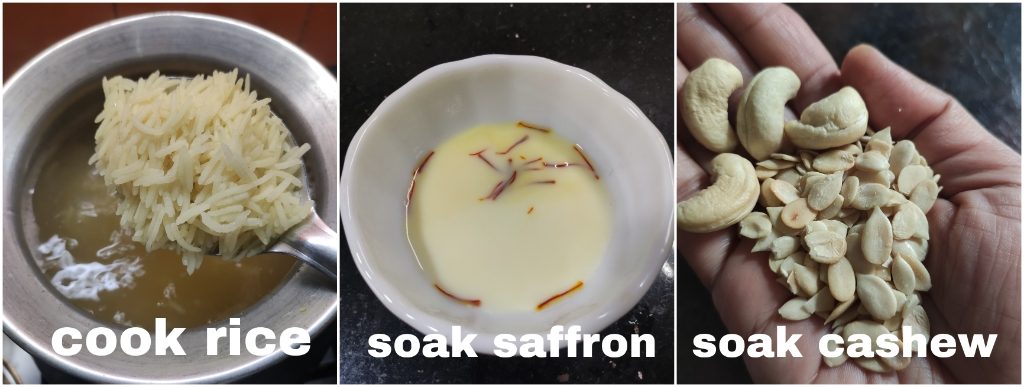
-Soak Saffron in a two tbl spoon of hot milk and keep it aside.

-Soak Cashew and melon seeds in hot milk, keep it ready.

-Boil water in a saucepan, add a pinch of salt and give one boil for the soya chunks; drain and keep it aside.
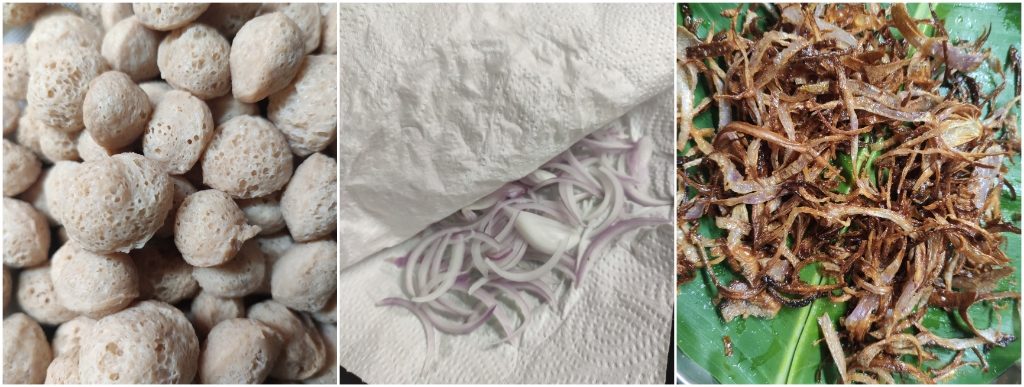
-Slice 2 onions, drain the excess moisture and deep fry and keep it aside. I usually sprinkle little salt and garam masala to this and mix it delicately.

-Now onwards, use leftover oil from the deep-fried onions.

Let us move towards grinding masala:

-Take one Kadai, add little oil, add all the masalas from Coriander seeds, Cinnamon, Bayleaf, clove, Star anise, Cardamom,  Black cardamom, Black peppercorns, Red chillies fry well. Add chopped two onions, fry until it is transparent. Add ginger-garlic paste fry for 2 minutes. Add in coconut fry for 2 minutes. Cool the mixture, grind with soaked Cashew and make a fine /smooth paste.

Next step is making veggie and soya nuggets gravy: 
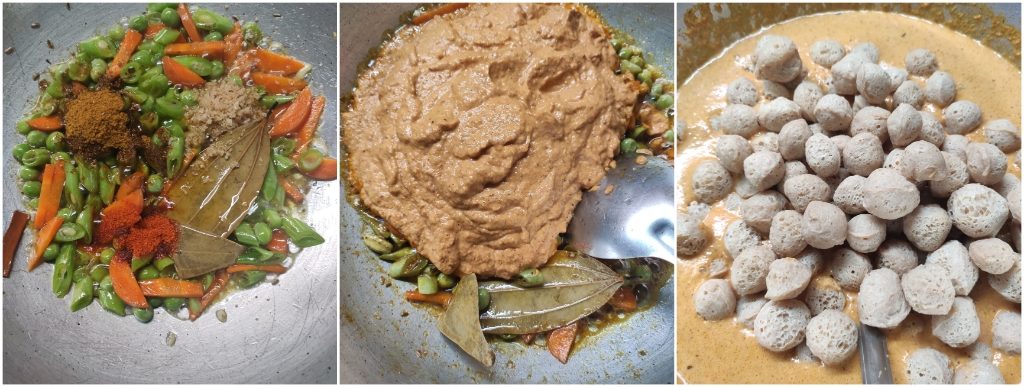
Take one Kadai, Add little oil, drop everything from shah jeera, cardamom, star anise, cinnamon, bay leaf, black cardamom, stone flower. After frying for 2 minutes, add in chopped veggies (beans, carrot, peas). Fry nicely by adding salt, a pinch of sugar, garam masala/biryani masala and red chilli powder. Add in ground masala, fry until oil oozes out. Adjust the consistency by adding water. When it starts boiling, add in drained soya chunks and give one boil. Switch off. Now, gravy is ready, and we are moving towards preparing dum by layering this with cooked rice and other elements.

To Make Dum:

We need to layer the veggie and soya nuggets gravy, cooked rice, chopped coriander and pudina, lemon water, rose water, saffron milk, deep-fried onions and leftover oil after deep frying onions. Hence, keep everything in your hands reach.

I use my pressure pan or big Kadai to assemble Dum.
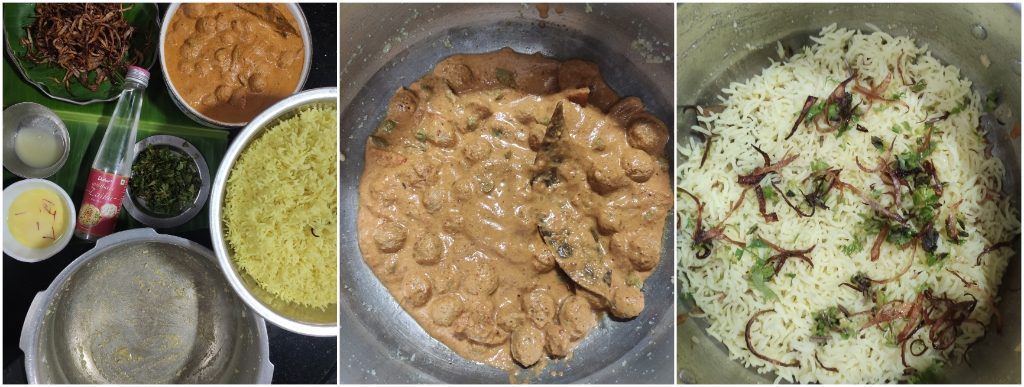
-Apply ghee or oil to the surface of Kadai or pan. Roughly, take one-third of the soya gravy and spread it at the bottom of the vessel.

Next, take 1/3 of the rice, spread it over the soya gravy. Now, Sprinkle 1/3 of each rose water, saffron milk, lemon juice, fried onions, chopped pudina and coriander.

-Next, 2nd layer of gravy, rice and repeat the process.

-Next, 3rd layer of gravy, remaining rice, lemon water, saffron milk, Rosewater, chopped greens, fried onions.

Now, make a hole at the centre by using your forefinger, pour all the remaining onion fried oil to the bottom, close the lid, and keep it in a simmer for 7 to 10 minutes.



Jackfruit seeds Rasam:

Jack seeds Rasam, perfect for rainy weather. It is a nutritious, authentic way to soothe our souls.

Traditionally, we use freshly roasted and ground masala to prepare the jack seed Rasam. Here, I took a shortcut method to ease my work, without affecting the outcome.

I usually keep the jack seed in my freezer, and the procedure is here. Other than that, I have a couple of other jack seed recipes in my blog. One is jack seed with Bamboo shoot, and another one is with Mangalore cucumber; both are our traditional recipes. Other than that, I have tried and shared jack seed Hummus, which is tasty, creamy and delicious.

Now, let us see the procedure of Rasam. It hardly needs any ingredients. A fistful of jack seeds and Rasam powder creates the magic.

Ingredients:

Jack seeds – 10 -15

Green chillies – 1 or 2

Rasam powder – 1 to 2 tbl spoons

Coconut – 1 to 2 tablespoons

Tamarind – small gooseberry size

Hing – ¼ tsp

Salt – to taste

Jaggery – to taste

Seasoning:

Coconut Oil – 1 tsp, Mustard – 1 tsp, red chilli – 1, curry leaves – 1 spring.

Method:

– Here, I add a little more seeds than the required amount. I like to retain those seeds in the rasam to enjoy the creaminess.

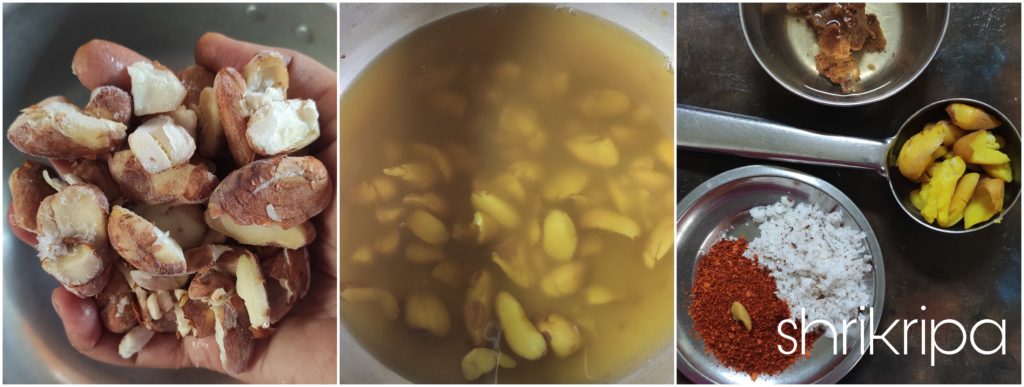
-Cook a fistful of jack seeds in an open vessel or cooker for one whistle. Peel the outer skin ( pink in colour)

-Take one serving spoon of cooked seeds, Rasam powder, coconut and grind into a smooth paste.

-Now take remaining cooked jack seeds with water, salt, jaggery, slit green chillies, hing and boil for 5 minutes.

– Add ground paste, tamarind pulp, adjust the consistency, boil well. Add seasoning and enjoy with hot rice and some papad.


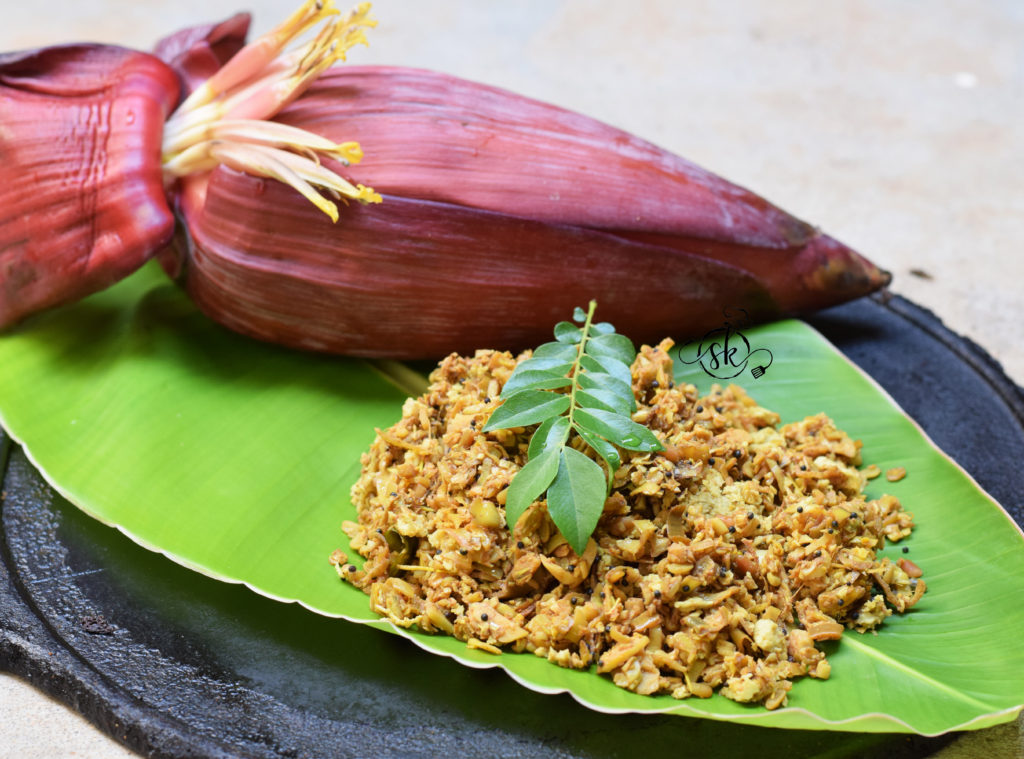
Plantain flower palya:

Plantain flower, aka Banana flower, is a superfood for humans. It contains various vitamins, minerals and fibres. The abundance in every aspect makes them an excellent source of healthy nutrients for diabetes, nursing mothers, and anaemic persons to increase their haemoglobin level.

We usually use the whole flower, which we call Kundige / Baale Mothe, and I have already shared a delicious traditional chutney recipe and dosa recipe by using Banana/ plantain flower.

The age-old practice of soaking chopped banana flowers in buttermilk laced water will be beneficial in two ways. It would control blackening due to oxidization and eliminate the bitter sap that would turn bitter after cooking. The recipe is straightforward and earthy in taste.

Ingredients:

Banana flower – 1

Tamarind – 1 tsp

Salt

Turmeric – ½ tsp

Jaggery – 1 to 2 tsp

Red chilli powder – 1tsp

Grated coconut – 1 cup

For Seasoning:

Coconut oil– 1 tablespoon

Mustard – 1 tsp

Urad dal – 1tsp

Cumin – ½ teaspoon

Red chilli -1

Curry leaves – 1 spring

To soak:

Water – 1 bowl

Curd – 1 serving spoon or  little Tamarind

Method:

-Soak tamarind in a cup of water and keep aside.

-Wash banana flower from outside and remove outer purple bract (remove 2 layers) and discard.

-Now, take one bowl of water with 1 serving spoon of curd and mix and keep it ready. (This water will avoid decolouration of the choppings)

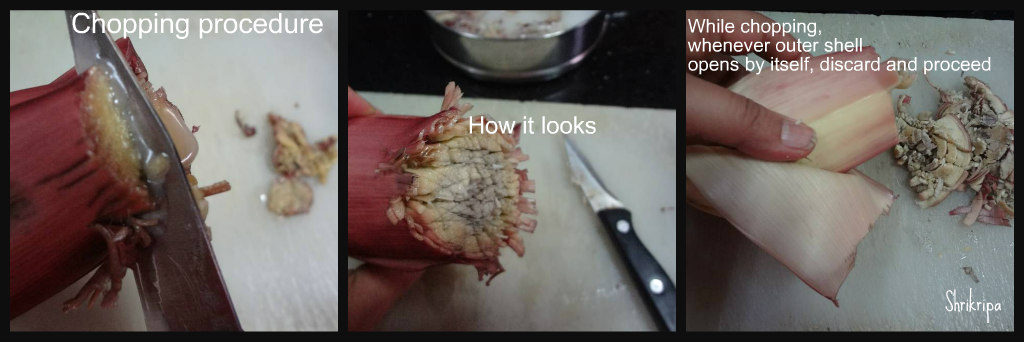
-Start chopping banana flower from the tip (refer to the above picture)

-Keep on adding the chopped part to curd water.

-While chopping, whenever the outer shell opens by itself, discard that and proceed to chop.

– After the chopping, drain the curd water and collect the banana flower choppings.

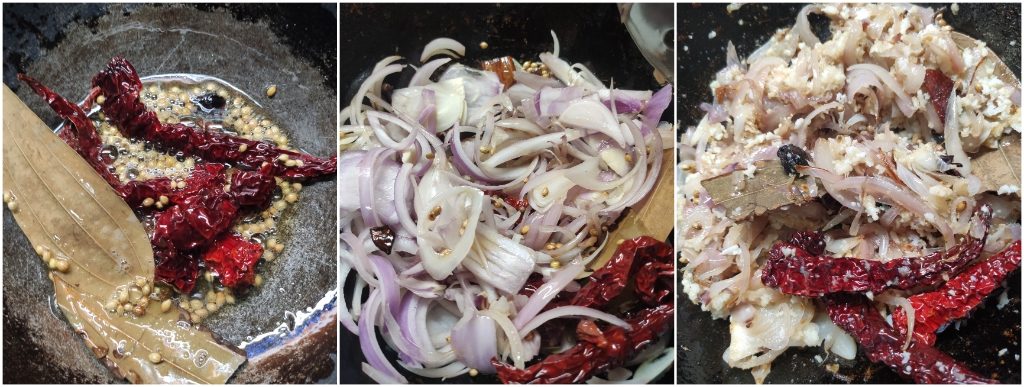
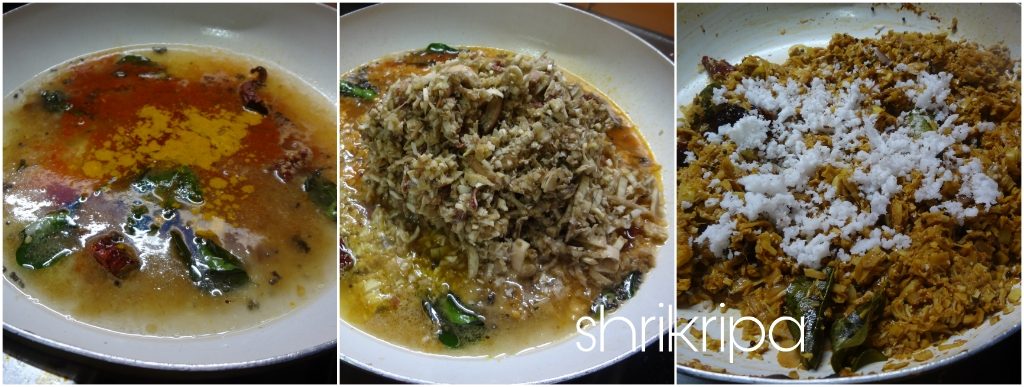
-Take one Kadai/ wok. Do seasoning, heat oil, splutter mustard, urad dal, cumin, red chilli, curry leaves.

-Add tamarind water, salt, turmeric, jaggery, red chilli powder, and drained choppings and cook in a low flame by closing the lid.

-When it is cooked and water drained, garnish with coconut and mix nicely. Serve with hot rice.

NOTE: For the vegan version, instead of curd, use diluted tamarind water


Vegetable/Egg Soba Noodles:

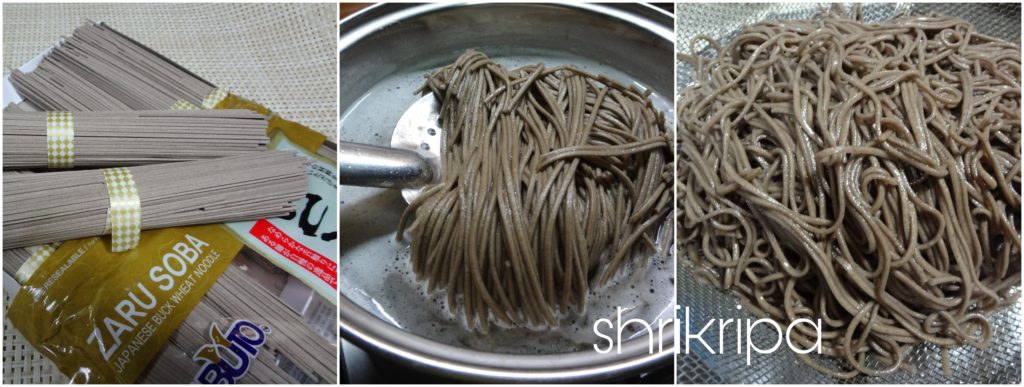
Firstly, we will see what soba noodles is? Soba noodles are Japanese noodles made from buckwheat flour. Buckwheat flour is greyish, so the noodles have a dull grey colour, and it is gluten-free. Due to this, noodle is slightly brittle.

 As 100% buckwheat, gluten-free noodle tends to break, people add some wheat flour when preparing their noodles. Using the noodles as is, with 100% buckwheat, I needed to be extra cautious while boiling and cooling.

Earlier I did try it by adding honey and sesame as well. The advantage of sweetened with honey, it is like a one-pot meal. No need for a side dish 😀

But, if you want to relish with side dishes, you can make a savoury version by adding veggies and opt to add a bit of scrambled egg as well. Soba noodles do not need much seasoning. It has its earthy flavour.

Now we will see how to cook noodles as well as the preparation.

Ingredients:

Soba noodles – 2 bundle

Spring onion bulbs or shallot – 2 tablespoons (chopped)

Veggies – 1 bowl ( beans, carrot, broccoli, cabbage, capsicum)

Salt

Pepper – little

Ginger – 1 tablespoon (juveniles) 

Garlic – 1 tablespoon (chopped) 

Soya sauce – 1 spoon

Vinegar – 1 spoon

Spring onion greens – to garnish (optional)

Method:

-Take water in a big vessel, add a little salt and a tsp of oil, boil. when water starts to boil, add noodles, and cook. When it Aldante, strain the water and keep it aside.

-Reserve the strained water to prepare side dish/Chinese curry (it is healthy as well as give an excellent texture to the prepared curry)

-Now cool the noodle and proceed towards seasoning.

-Take a wide wok, heat oil, fry garlic or ginger. You can add both as well. Add white spring onions or shallots and fry a little.

-Next, add chopped veggies, fry nicely. Add salt, soya sauce, vinegar, and fry for 2 minutes.

-Add cooled noodle and toss. Sprinkle salt, pepper and adjust the seasoning.

Suppose you are ok with the addition of egg, nothing like it. Go ahead, scramble a couple of eggs, add to noodle, serve your favourite Chinese side dish, or eat as it is and enjoy the wholesome meal.

Note: you can cook the noodle a little early and keep it under refrigeration. It gives an excellent result as well.

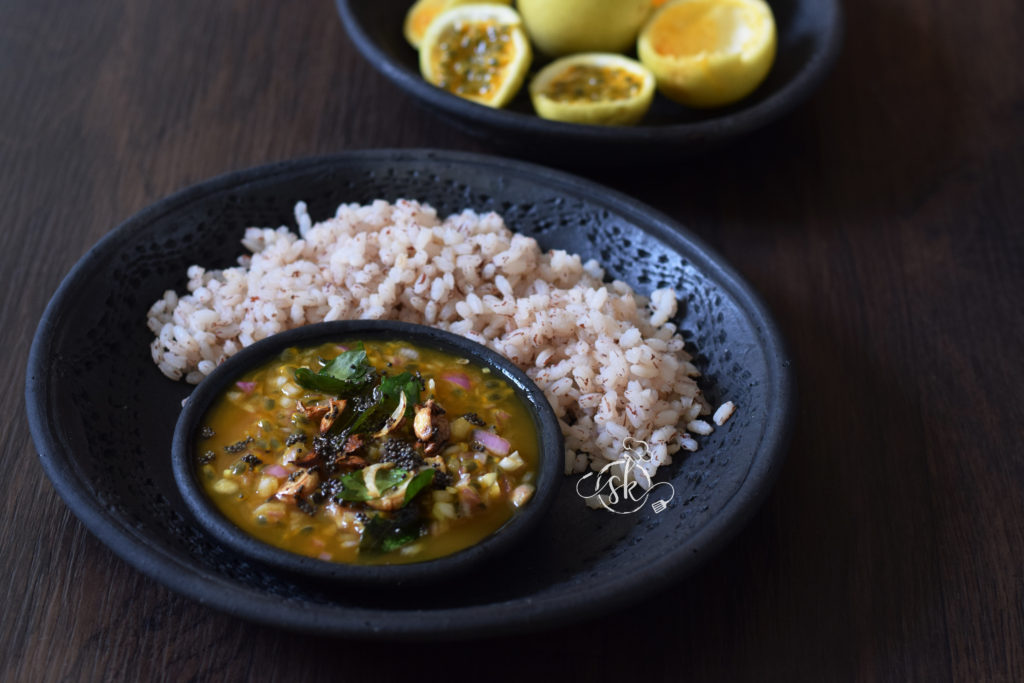
Passion fruit Gojju:

Passion fruits/Passiflora grows in hill stations of India or the colder region during the May -July months. It contains a hard outer shell and pulpy inner core with a lot of black seeds. As my daughters hate the texture, I love it and include it in my juice or lunch.

Passion fruit has a tart mixed sour taste. The fruit has many beneficial nutrients and a low glycemic index; hence, it is ideal for a diabetic condition. It is my way of indulging the sour fruit in its whole raw form. I followed our traditional charred brinjal gojju recipe and tried it. I loved the fresh fruit flavour, crunchy seeds in this gojju and enjoyed it with red parboiled rice.

Ingredients:

Fruit pulp – from 2 fruits

Green chillies -1 – 2

Jaggery – as per taste (grated)

Salt

Onion – 1 (chopped)

Seasoning: Coconut oil – 2 tsp, mustard – 1tsp, crushed garlic cloves – 6 -8, curry leaves – 1 string.

Method:

-Cut passion fruit in half, remove the pulp with those seeds. 

-Add salt, grated jaggery, crush green chilli by using your hand (it emits a lovely aroma to the gojju) and chopped onion. Adjust the consistency by adding little water.

-Season with coconut oil, mustard, crushed garlic. Fry until garlic is brown. Add curry leaves and pour the seasoning on the gojju.

-Enjoy with hot rice or with curd rice. If you like sweet and sour gojju, it is the perfect recipe.

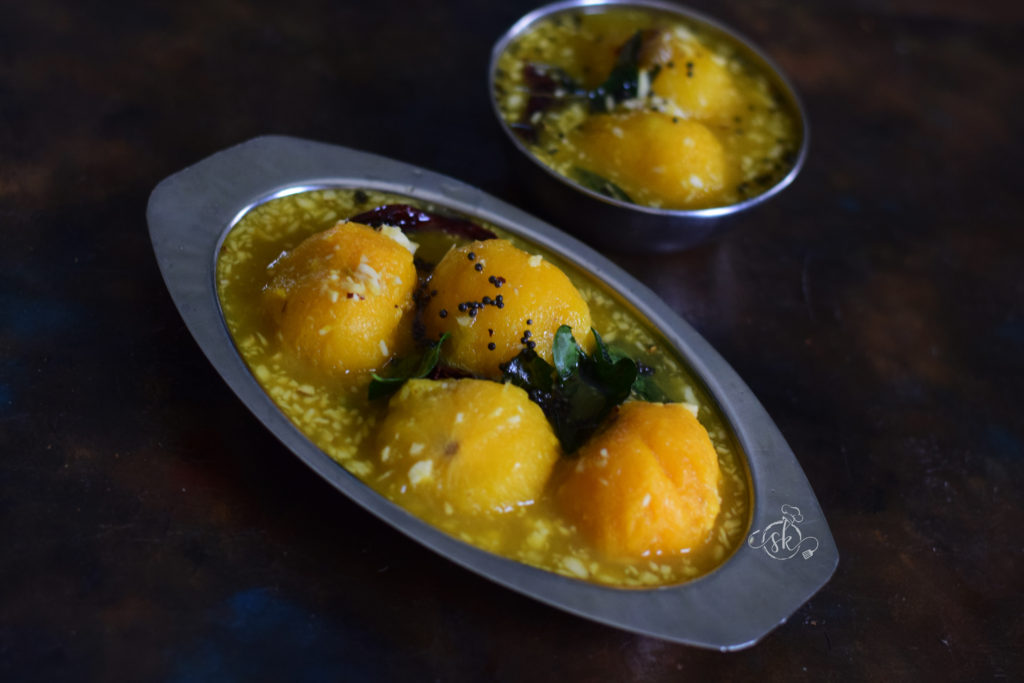
Wild mango Rasam :

Kadu Mavinahannina saru: is a traditional delicacy of coastal Karnataka, which is a must during mango season. We have several recipes of wild mangoes in the coastal region, and each has its charm and taste. Some varieties are sour and fibrous, and some are sweet and juicy; some mangos do not have much pulp. According to their types, their usage also varies 😉

If tiny wild mangoes are sour, not so sweet, and fibrous, they go into the cooked form of saru / Beyisida gojju.  In this way, we can enhance the taste by adding additional jaggery and enjoy even the sourest mangoes.

Sigh!! These are all nostalgic memories for me. Here, In Bangalore, I do manage to cook all these varieties by using tiny mango, which is also known as Sakkara gutti or Sugar baby 😀

The recipe is simple and goes like this –

Ingredients:

Wild mangos / tiny mangos – 6

Green chillies – 2

Jaggery

Salt

Method:

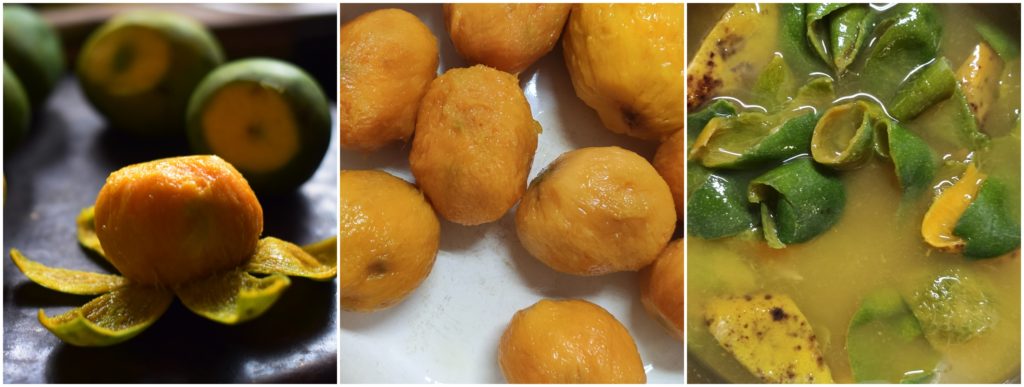
-Clean the mangoes, remove the peel, put it in the vessel containing half a cup of water, squeeze and collect mango pulp; repeat the process until skin sheds all the pulps.

-Now, take mangoes, squeezed the water into a vessel. Add salt, crush two green chillies by using your hand ( it indeed a vital part to enhance the taste), jaggery ( little more),  1 tbsp of grated fresh coconut and boil until mango cooks. 

-Adjust the water content according to your taste. -Season it with Coconut oil, mustard,  red chilli and curry leaves. Serve with hot rice.

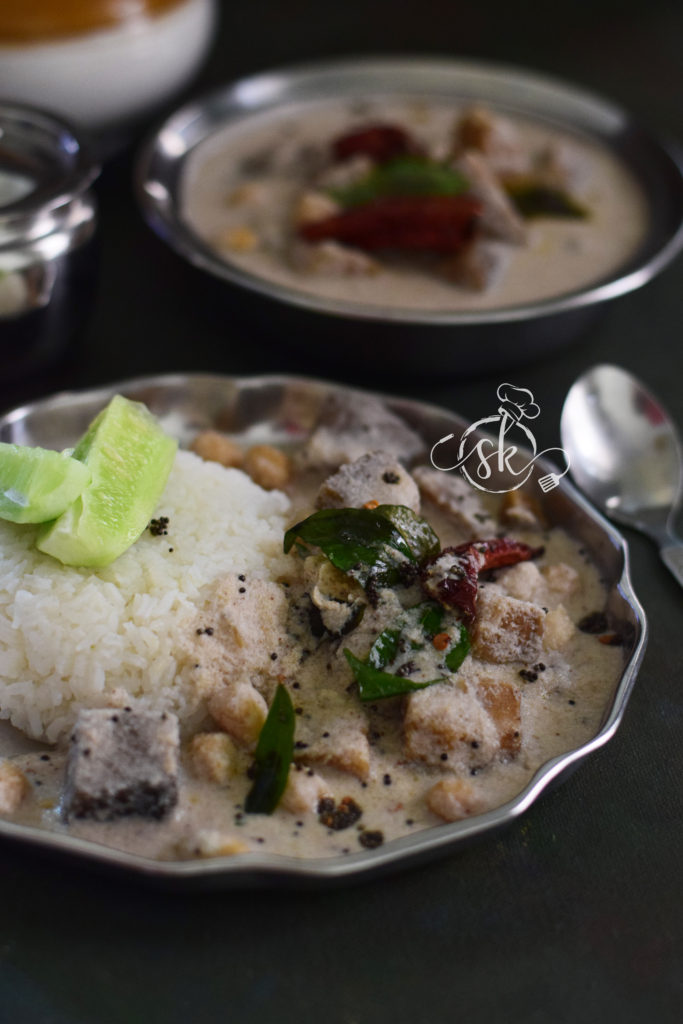
Suvarna gadde- Kadle Melara / Elephant foot yam -Kabuli chana Kayi Huli :

Yam and Chana Melara is the Most loved dish of our community. It is an absolute favourite of my family as well. Today, I will share one more traditional recipe of our region and one of the favourite dishes you find on our wedding menu.

-Now prepare the Elephant foot yam or simply Yam;  if you are new to the usage of Yam, please go through my detailed description of handling Yam, how to chop etc., in “Understanding the roots and tubers.” And go down until Tubers, and you would find the Yam under Number 6, and it is HERE.

Ingredient:

yam – around ¼ kg

White chickpeas – ½ cup

Salt- as needed.

Green chillies – 2

tamarind – one gooseberry size (soak in 1 cup of water)

To grind: Fresh Coconut – 1 ½  cup

For Seasoning: Ghee or Coconut oil- 1 tablespoon, mustard – 1tsp, red chilli – 1 (optional), curry leaves- 1 spring.

Method:

-Soak dry chickpeas overnight and cook in a pressure cooker for 3 to 4 whistles or until done.

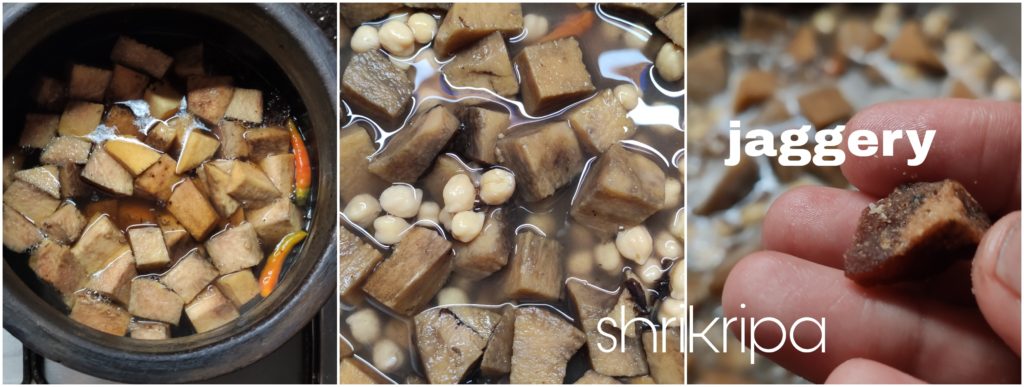
-Cook Yam until it is half done, add tamarind pulp, slit green chillies, cooked chickpeas, salt, jaggery and cook until Yam is soft and perfect.

Now, grind the coconut into a fine paste, add the paste into cooked veggies, adjust the consistency, and boil for 2 minutes.

-Add buttermilk or beaten curd, and when it starts to boil, switch off.

-Prepare seasoning, heat oil, splutter mustard, add red chilli and curry leaves, fry and pour over Melara. Serve with Rice.