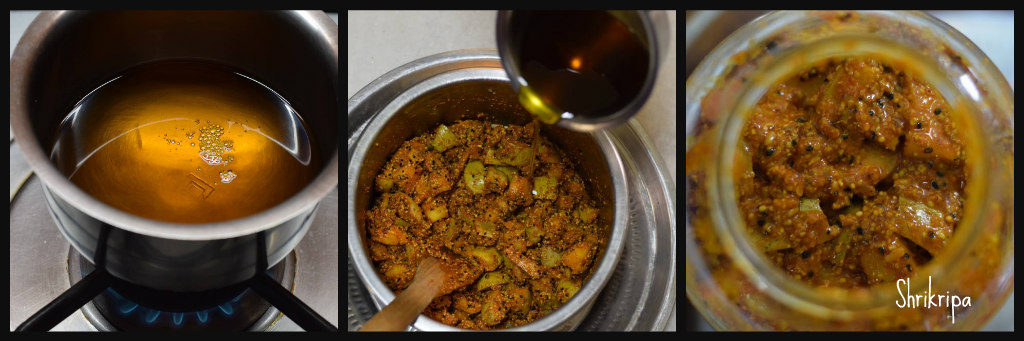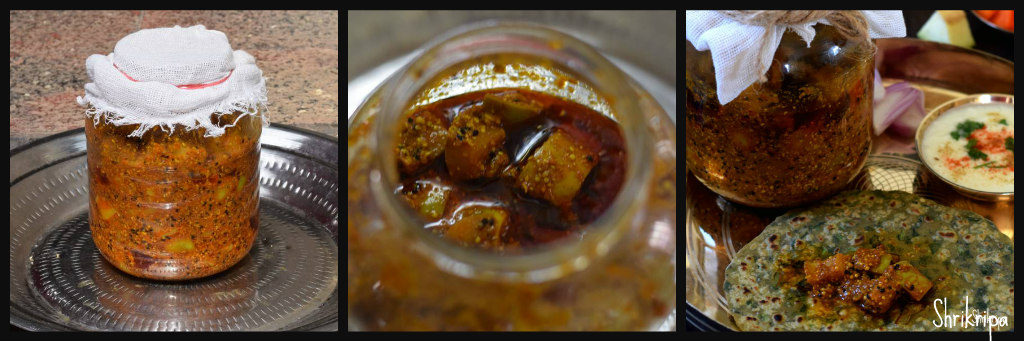
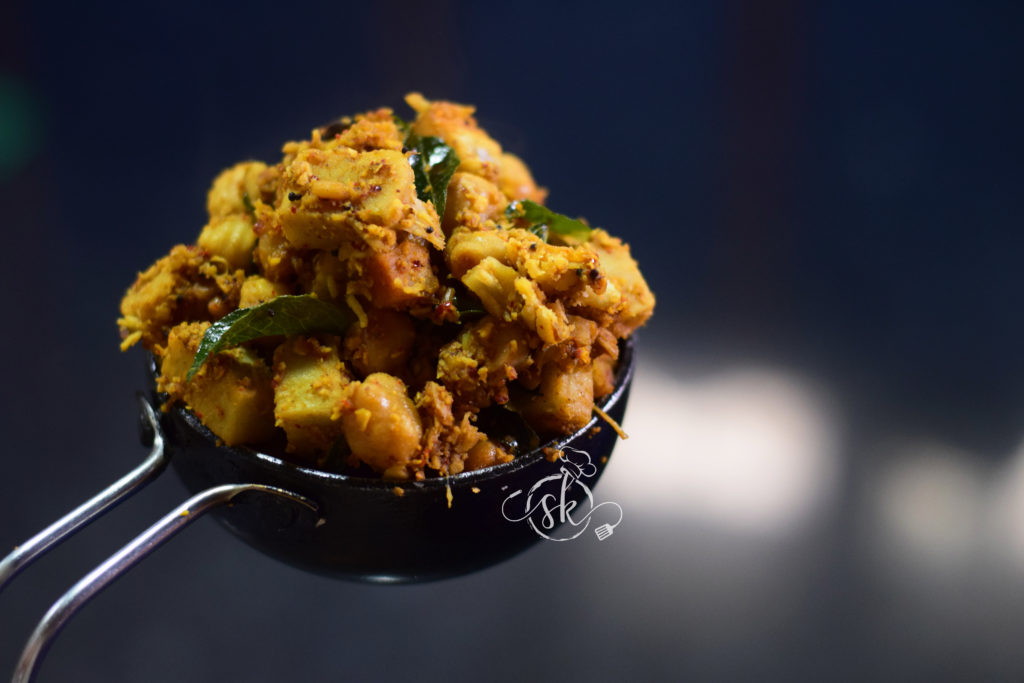
Mundi Gedde – chana palya /Giant taro and dry chickpea curry :

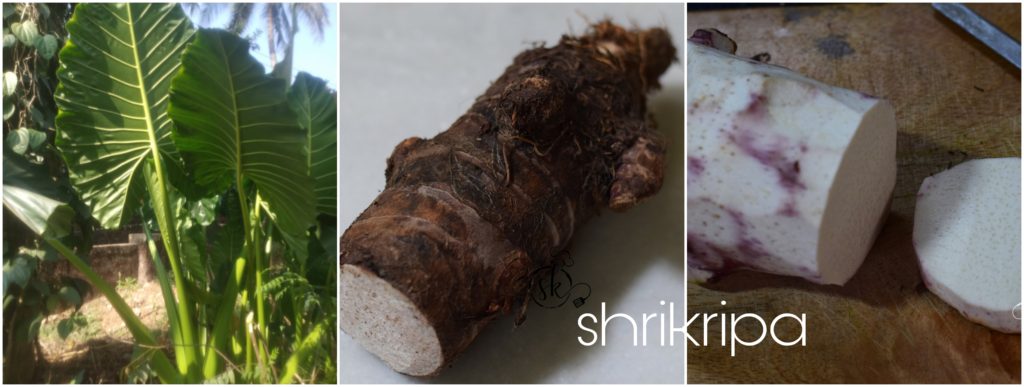
Belong to the Alocasia family, and leaves are giant, glossy, resembles an elephant ear. Hence, it is also known as Elephant’s ear plant. Alocasia means “like the colocasia but not the colocasia”. Giant Taro is a good source of Vitamin C, Iron, and phosphorus.

In our native, leaves are used as an alternative to the plastic sheet, while sun drying papads or fryums in Summer months.

Which is best described as a “Stem crop” as the edible starchy stem is seen above the ground, which is light brown in colour, coarse outer surface grows upright, erect, in a  cylindrical shape.

I have shared the details regarding Mundi Gedde/ Giant Taro in this post,

As most plant in this taro family, even this has Calcium oxalate, which itches our hand or mouth while eating if we do not handle it properly. Here, using hot boiling water and using the right amount of tamarind takes care to emit the itchiness.

Today, I will share one more traditional recipe of our region and one of the favourite side dishes you find in our wedding menu.
Ingredient:

Mundi/ Giant taro – around ¼ kg

White chickpeas – ½ cup

Salt- as needed

Jaggery – as needed

Red chilli powder – ½ tsp to 1 tsp

Turmeric powder – ½ tsp

tamarind – one gooseberry size (soak in 1 cup of water)

For Masala: Coconut – ¼ cup, Methi – ¼ tsp,  Red chillies – 3

For Seasoning: Coconut oil- 1 tablespoon, mustard – 1tsp, urad dal – 1 tsp, red chilli – 1 (optional), curry leaves- 1 spring.

To garnish: raw coconut oil – 1tsp and curry leaves – 2 springs.

Method:
-Soak dry chickpeas overnight and cook in a pressure cooker for 3 to 4 whistles or until done.

-Now prepare the giant taro;

-We usually do not wash the Giant taro stem before cutting nor peeling. Spread one newspaper, remove all the outer brown woody skin, chop the stem into pieces as you needed.

-Wash those pieces in water by using a spatula, drain and put immediately in boiling water,  cook until it is almost done, drain and proceed to the actual cooking. Now it is ready to cook.

-For palya, prepare the seasoning. Heat oil, splutter mustard, fry urad dal, add curry leaves.

 -Add tamarind extract, salt, jaggery, red chilli powder, turmeric and, boil until water evaporates.
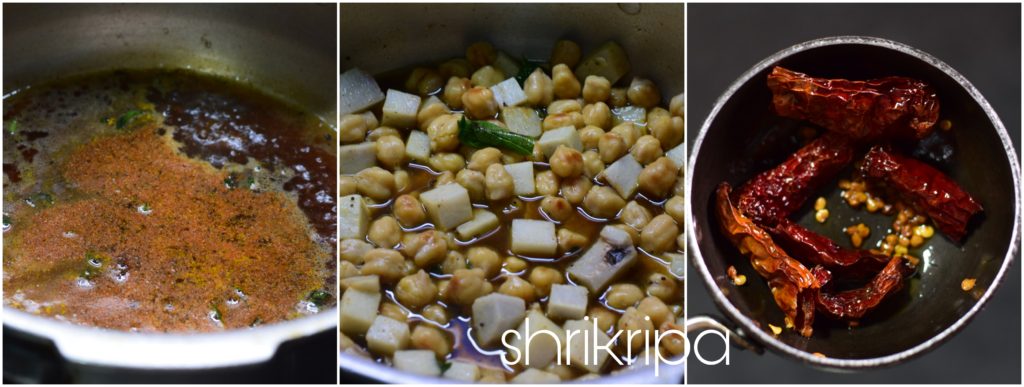
-Meanwhile, prepare the masala. Fry methi seeds in little oil, when it is light brown, add dried red chillies, fry until it is crisp. Dry grind these ingredients with coconut.

-Add the ground powder to cooked veggies and mix nicely, allow it to cook for 2 minutes by closing the lid.

-Now, garnish with raw coconut oil and curry leaves. Close the lid, switch off the gas. Leave this for a while. Before serving, mix nicely and serve.
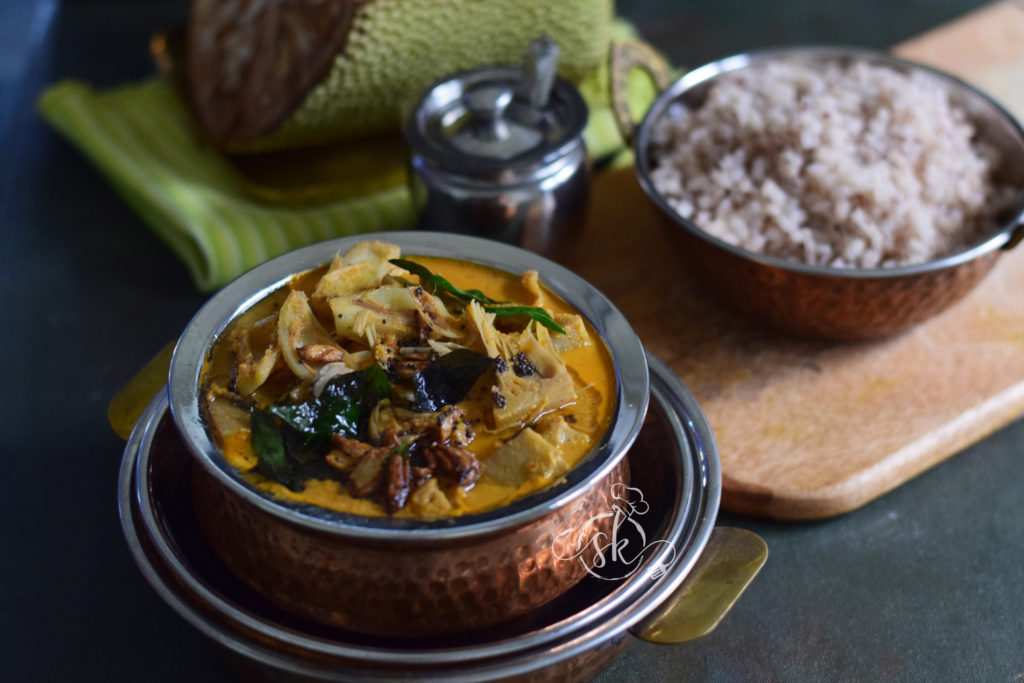
Gujje Huli menasu / Tender jackfruit curry:

In our region, Raw jackfruit curry relished in every possible way and every possible stage of its growth. Huli Menasu is nothing but tamarind and dried chillies. The speciality of this sambar is no frying or roasting the masala. It is no fuss masala but, the flavour is unthinkable. It is an experience by itself. It is one of our family favourites, and today, sharing it with you all.

I have many raw jackfruit recipes in my blog, including “how to chop” the young jackfruit for beginners.

To get an authentic taste, one should use coconut oil and fresh grated coconut for this curry.

Now we will see the recipe part.

Ingredients:

Raw jackfruit cubes – 1 bowl

Salt

Red chilli powder – 1 teaspoon

Fresh coconut – 1 bowl

Red Byadagi chillies – 3 to 5

Tamarind – gooseberry size

Turmeric powder – ½ teaspoon

For seasoning:

Coconut oil – 1 tablespoon

Mustard – 1 teaspoon

Red chilli – 1

Curry leaves – 2 springs

Garlic – 10 cloves (crushed)

Method:

-Cook Raw jackfruit pieces in a sufficient amount of water. Add salt and red chilli powder, turmeric as well.

-In the meantime, grind smooth masala by putting coconut, tamarind, red chillies.

-When jack pieces are soft/ cooked, add ground masala, adjust the consistency and boil.

-When the mixture boils nicely, switch off the gas.

-Prepare seasoning, heat oil, splutter mustard, add garlic, red chilli, curry leaves.

-When garlic becomes deep brown, add the seasoning over boiled gravy.

-Keep this closed for a while before serving to absorb all the flavours.

-Serve with hot rice.

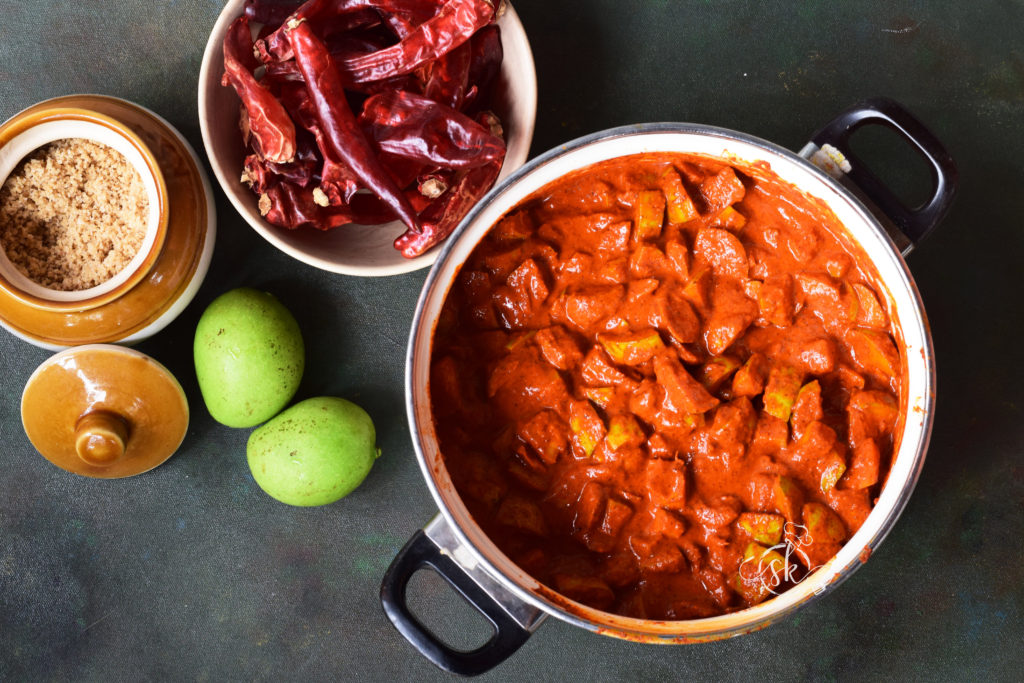
Mango pickle (Midi Uppinakai Masala)

Mangalore is known for tender mango pickle, locally known as “Midi uppinakai.” Unlike other pickles, it is made up of hardly any ingredient. It needs Dried chillies, mustard, turmeric and hing as an optional. The proportion of the chillies and mustard varies from family to family, hence the pickle’s taste.

The procedure is straightforward. First, after selecting a fresh, tender mango, the cleaning process happens, wiping, drying.

Then comes the pickling part; take a fist full of tender mango spread it at the bottom of the container, usually ceramic Bharani or glass jar. Then, a fist full of crystal salt. Repeat the process until mango reaches the brim of the bottle.

Mango shrinks within a couple of days, and the colour turns green to pale green. Now, it is time to make a pickle masala and finish the process. Isn’t it simple and straight forward 😀 It is one of the must condiments in our family. The recipe which I follow is handed down to me by my mother in law and stamped by my dear husband 😀 

My father in law was very particular about the chilli usage, which he used to source after checking the freshness.  The variety of chilli he used to prefer is called Harekala Menasu, a native variety of Mangalruru and cultivated in Harekala and nearby villages along the river Netravati. Chillies are spicy, fiery red when it is grounded, and smooth in texture.

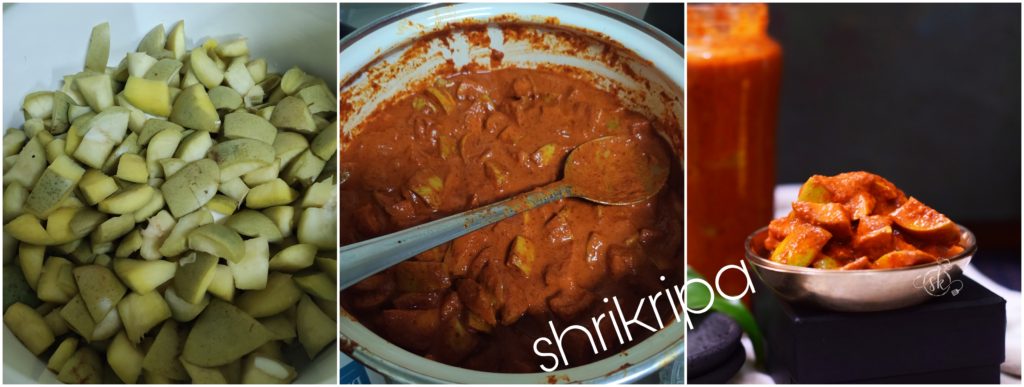
As a city dweller, sourcing a tender mango within a short seasonal period becomes very difficult for me. Hence, I use the same masala and prepare cut mango pickle using freshly bought wild mangoes from my native. Instead of Harekala chillies, I opted for half Kashmiri chillies and half Byadagi variety. Hence, it worked out best for me.


Ingredients:

Wild Mangoes – 15 (medium size)

Red chillies – 100 grams ( I have used 50 grams of Kashmiri chillies and 50 grams of Byadagi)

Mustard – 50 grams

Hing – small peanut size.

Turmeric – 1 to 2 tsp

Sea Salt – 1 cup(crystal)

Method:

-Wash mangoes, wipe them, cut them into pieces.

-Take a porcelain jar or glass bottle, put a fistful of mango pieces at the base, sprinkle one tablespoon of salt.

-Again, put a layer of mango, then salt. Continue until mango pieces are over.  Close the lid and keep it aside.

-Next day, mix everything and press a little and keep it until the skin becomes a little pale and wilted.

-When skin becomes pale, strain all the salted water, drain the content and collect the water.

-Now, it is time to prepare salted water. This flavourful drained water adds a little more salt and extra water to make boiled salted water. Boil nicely, remove skum, which appears at the top, strain the salty water, and cool it.

-Next comes the Pickle masala part: I usually prefer my wet grinder to make masala.

At first, Put mustard, red chillies and give a pulse in the mixer jar. When chillies and mustard become chunks, it is effortless to proceed in a wet grinder.

Put churned chillies, mustard, turmeric, hing and salted (cooled) water little by little and make a thick masala paste. When it is smooth and finely ground, remove the masala.

Add the required quantity of masala to wilted mango, adjust the consistency by adding salted water. Store it in a dry porcelain jar or bottle.

-If any extra masala or salted water is remaining, store it in a glass bottle. It can be handy to adjust the pickle after 2 or 3 days if needed. Or you can use the masala to make any instant pickle.

-After one week, you can start to use it, and this pickle stays good for a year or more. If the procedure handled well, you could keep it under room temperature, or you can keep it under refrigeration as well.


Lemon pickle:

Pickle is an essential part of our Indian meal and we South Indians enjoy our pickle with curd rice as the last leg of our meal, which will tickle and will remain for some time in our taste bud with its right amount of salt, spice, sour, tangy and tartness.

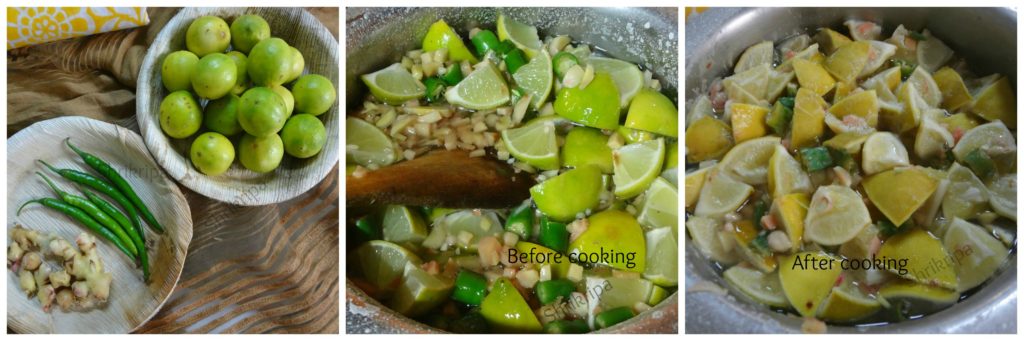
This particular pickle is the non-oily, south Indian style, which I learnt from my mom. This pickle has lemon, green chillies and ginger and goes very well with curd rice.

Ingredients:

Lemons – 15

Ginger – 50 Gms

Green chillies – 5

Salt – ¾ cup

Water – 1 ½ to 2 cups.

Masala:

Dried red chillies – 28 -30

Mustard – 2 Table spoons

Hing – peanut size

Fenugreek – 1 tsp

Cumin – 1 tsp

Turmeric powder – 1 tsp

Oil- 1 to 1 ½ tsp

Method:

-Wash lemon, ginger and green chillies. Pat dry and chop however you like it.

-Boil water and salt together.

-When it is ready, you could see the glossy, shiny layer at the top.

-Drop all the chopped items to this. Boil till lemon rind becomes pale. Switch off and keep this for cooling.

-Gradually while cooling, the lemon rind will wilts and rind will fold backwards, don’t worry. It would become normal once it sets/marinates properly.

-Next, we will prepare the pickle masala.

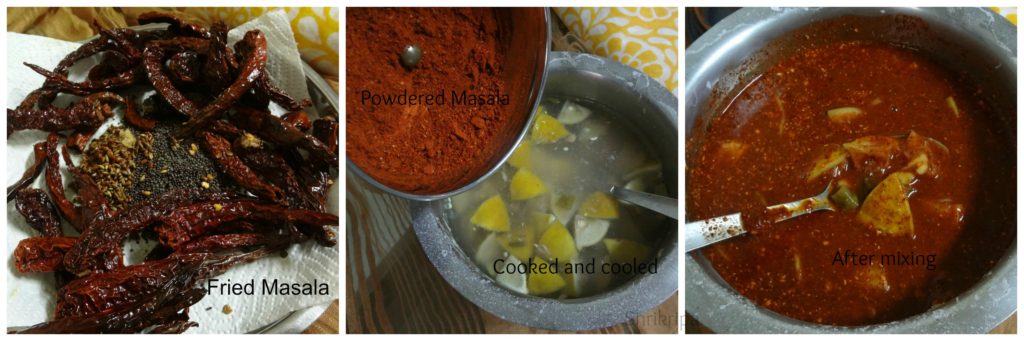
-Dry roast mustard until it pops, remove and keep aside.

-Take one teaspoon of oil, roast fenugreek, cumin, hing one by one and keep it aside.

-Lastly, fry red chillies until it forms crisp with very little oil.

-Cool everything, make powder all these by adding turmeric.

-When salted lemon cools down, add this masala, mix and store this in an airtight bottle.

-After ten days, you can use this.

-I suggest storing this in a fridge so that its shelf life will be one year or more.

NOTE:

– If you want a little thicker consistency to take one and a half cup of water. If you wish to get, a thin consistency takes 2 cups of water.

  -Here I have taken 2 cups of water.

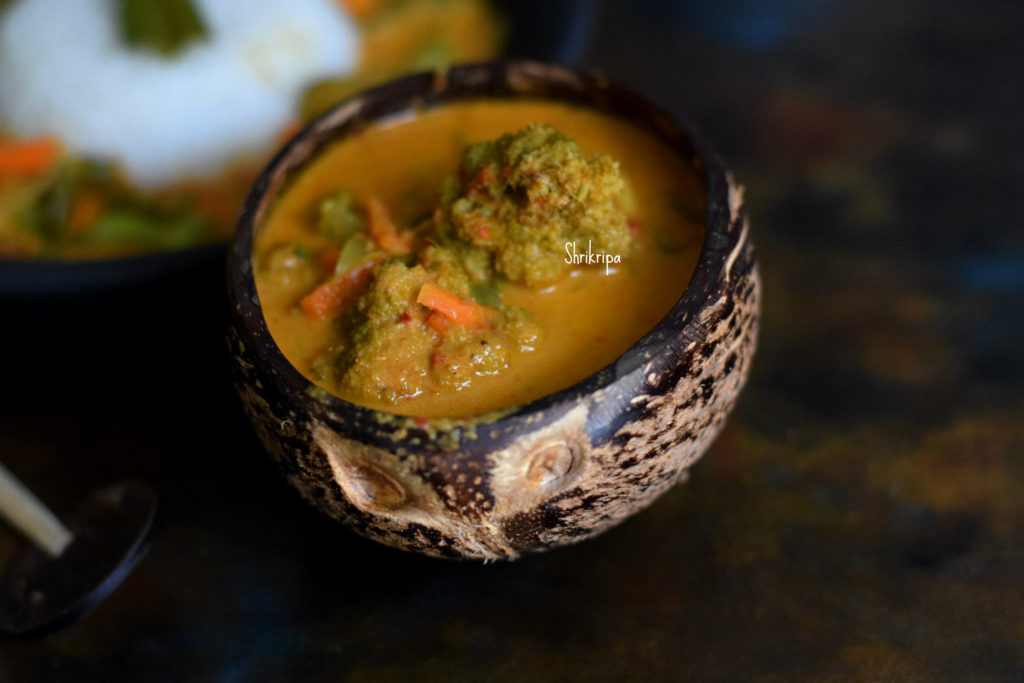
Vegan/ Vegetarian Thai Massaman Curry:

Massaman curry, is a wholesome, flavourful ,peanut based Thai curry. It originated from the south part of Thailand, near Malaysia. It has Red fresh masala, which includes Red chilli, whole spices, lemon grass, galangal and roasted peanuts to give a creamy texture as well as the richness of coconut flavour by adding coconut milk.

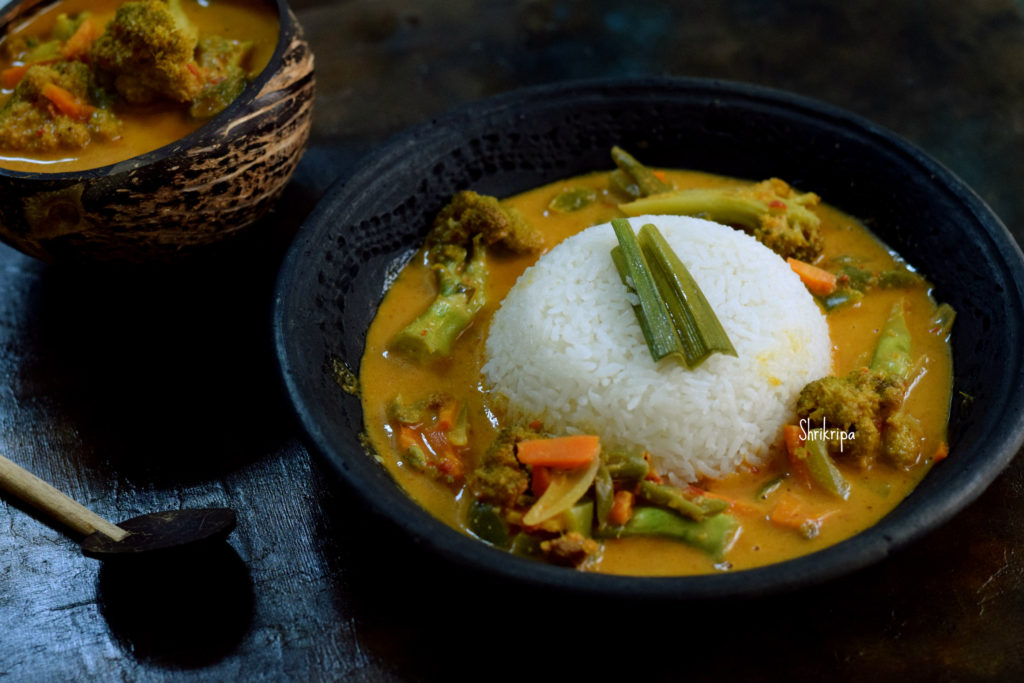
Massaman curry pairs really well with small grain rice either steamed, normal or flavoured one.

Vegetables which I have used are Broccoli, beans, capsicum and carrots. Since the lock down, I am not finding all the options due to my restricted outing. Hence, it is also proved as a non-fussy curry 😉

How I made:

For homemade Massaman Curry paste: (For single use/Serves 4)

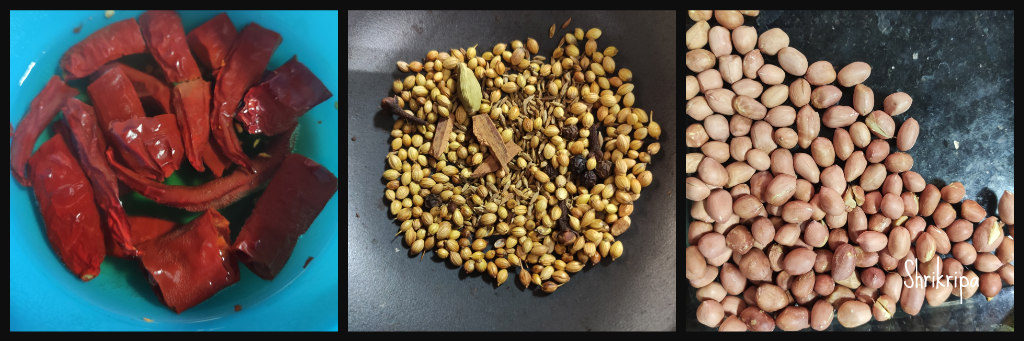
Dried red chilli – 3 to 4 (According to the required hotness)

Whole coriander – 1 tablespoon

Cumin – ¾ tsp

Cinnamon – 1” piece

Clove – 3

Whole black pepper corns – 4

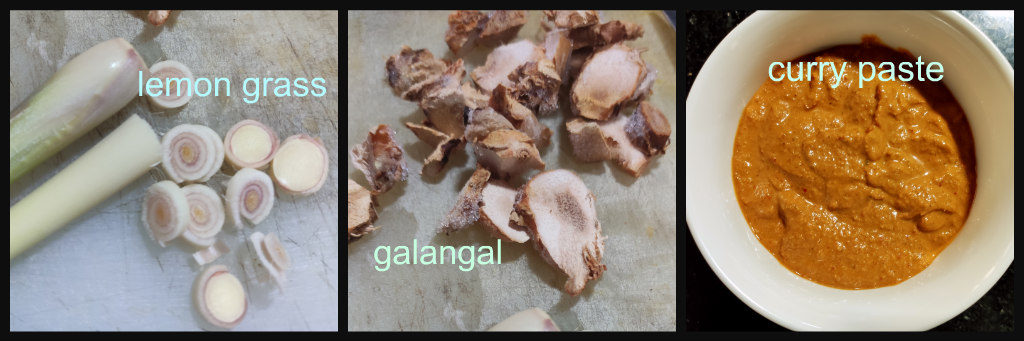
Galangal – 1” piece (you can substitute with ginger as well) 

Lemon grass bulbs – 2

Garlic cloves – 3

Shallot/ tiny onion – 1

Lemon rind – From 1 small lemon

Soy sauce – 1 tablespoon

Maple syrup / jaggery syrup – 1 tablespoon

Juice of lemon – from 1 small lemon

Roasted peanuts – ½  to ¾ cup

Method:

-Take ½ cup of water, boil and add broken red chillies , close and keep aside to soak.

-Dry roast Coriander ,cumin, whole pepper corns, clove, cinnamon until it changes colour and you feel the aroma.

-Dry roast peanuts and keep aside.

-Grate lemon rind, make it half, take out the juice from the same lemon and keep it ready.

-Slice shallot,  lemon grass bulbs, galangal ( I had my home-grown harvest, sliced and frozen)

-Now, take one mixer jar, powder peanuts, add roasted masala, soaked chilli with water, lemon rind, lemon juice, maple syrup, soy sauce, shallot ,lemon grass ,galangal and make a fine paste. Now you have a fresh homemade curry paste with you 😀

Next Comes the Easy part:

For Vegetable Massaman Curry:

Ingredients:

Massaman Curry paste – Whatever you have prepared and kept.

Vegetables of your choice – 1 bowl (Broccoli, beans, carrot, capsicum)

Shallot – 1 (sliced)

Oil – 1 tablespoon

Salt

Coconut milk –1- 1 ½  cup fresh or 1 tetra pack or 1 coconut milk powder sachet.

Method:

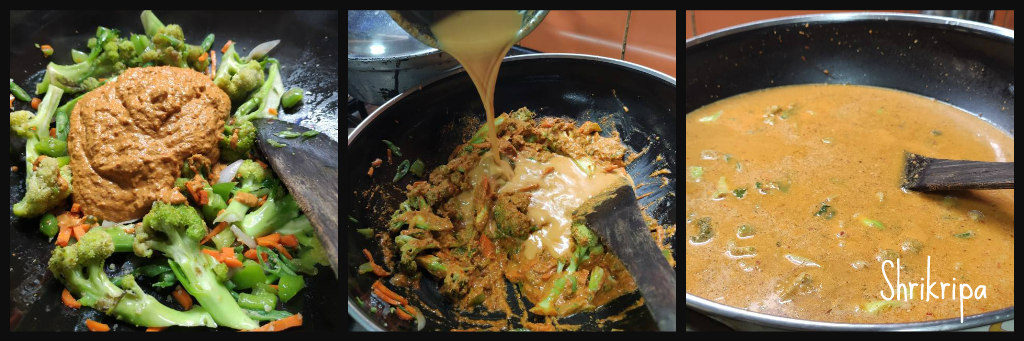
-Take one wok, heat oil, fry sliced onion, add washed ,cleaned veggies and fry for a while.

-Add salt and when vegetables start wilting, add prepared curry paste mix everything and fry for 2 minutes.

-Add sufficient water, allow to boil , adjust salt. Lastly add coconut milk and allow to boil once and switch off.

-Serve with choice of rice you wish to have. I normally make small grain flavoured steamed rice.


Mango ginger Thokku:

Malabar spinach and Raw papaya curry:

Malabar spinach is commonly known as Basale in our coastal area. It is a common creeping vein in the backyard of every household.

Its leaf is very rich in iron, fibre, antioxidants and vitamins and low in calorie. Malabar spinach is a go getter veggie at any given point of time. You can harvest, as soon as the main stem is growing and spreads all over. Snip the leaves and use the stems as well.

On the other hand, raw papaya is also a power house of nutrients and it is a natural cleanser of intestine and colon.

Like Malabar spinach, Papaya tree also plays an integral part in our garden. May be because of the easy availability, we have a couple of traditional dishes with Raw papaya and one curry is this. Our elders had so much knowledge to include all the goodness in their cooking. One such recipe is Raw papaya and Malabar spinach with a freshly ground coconut masala. It can be relished with Boiled rice or white rice. It is an overall package of health benefits from both the veggies.

Ingredients:

Malabar spinach – one small bundle

Raw papaya – 1 small

Onion – 1

Salt

Jaggery (optional)

Red chilli powder – 1 tsp

Toor dal – ½ cup

For Masala paste:

Coriander – 1-2 tablespoon

Cumin – 1 tsp

Methi – ½ tsp

Dried red chillies – 5 to 6

Tamarind – 1 tsp

Coconut – 1 to 1 ½ cup

Seasoning:

Coconut oil – 1 tablespoon

Mustard – 1 tsp

Red chilli – 1

Small onion – 1

Curry leaves – 1 spring

Method:

-Wash Malabar spinach leaves, chop them and keep them aside. Cut it into 2 to 3-inch pieces if you are using its stem.

-Chop Raw papaya by removing the outer skin and the inner seeds. Dump in a water bowl to remove all the oozed latex and drain.

-Wash Toor dal; if you have chopped Malabar spinach stem, combine it and cook with dal by adding turmeric and salt.

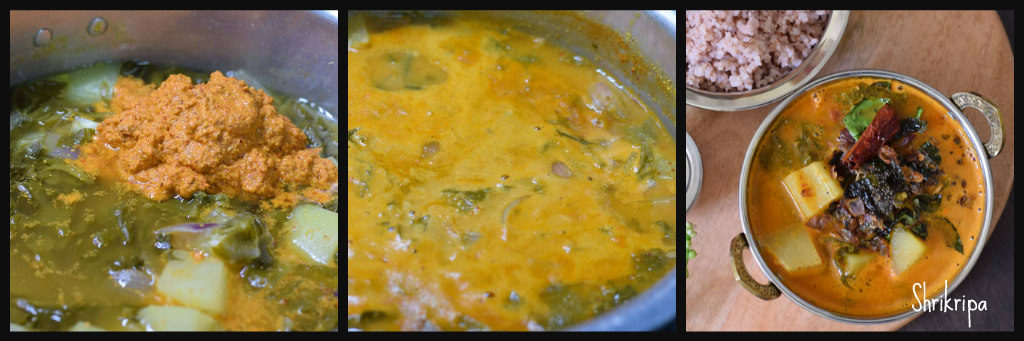
-When toor dal is ready, remove the lid, add a little water, salt, jaggery, red chilli powder, Papaya pieces, and chopped leaves. Cook for one whistle.

-Now prepare masala by roasting methi, coriander, cumin and red chillies in a little oil. Grind into a paste by adding coconut, tamarind and water.

-Add the ground paste to cooked veggies, adjust everything, boil and add seasoning.

-To season, heat oil, splutter mustard, red chilli, curry leaves and chopped onion. When the onion becomes brown, add it to the curry.

-Serve with Hot rice.

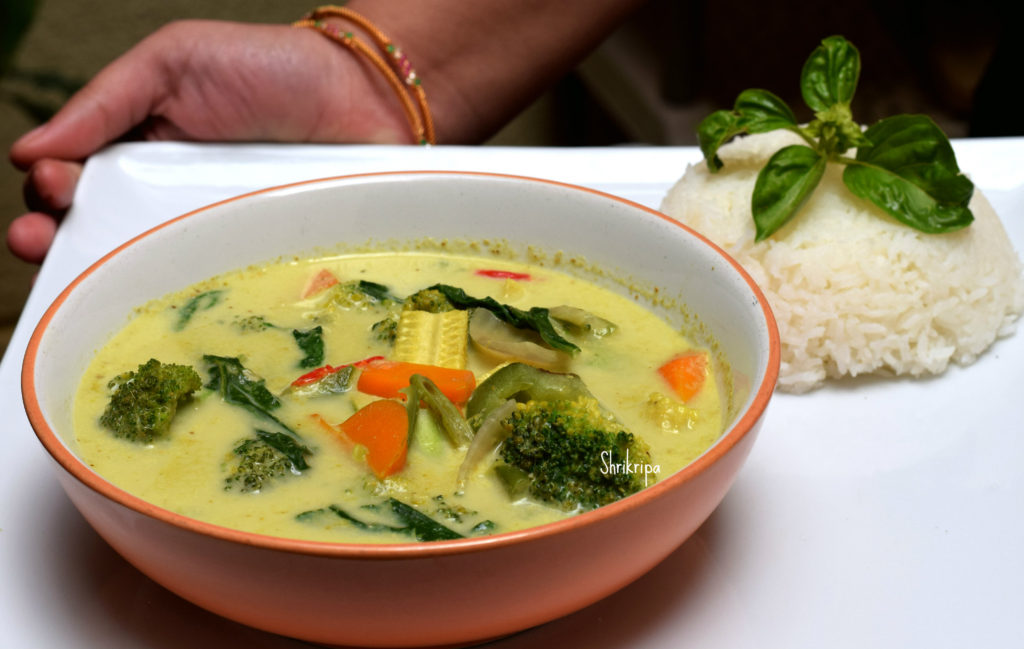
Homemade Vegetarian Thai Green curry paste /Curry:

Being a coconut eater, born and brought up in Coastal Karnataka, we like Thai food over any other cuisine. Thai green curry is our favourite and when it is with homemade fresh paste, nothing like it.

Homemade curry paste is very simple to make and loaded with rich flavour as well as delicious. It is the perfect menu for weekend family lunch.

      Pic credit: My daughter

Three main ingredients which are very important is lemon grass, galangal (Thai ginger), Thai sweet basil and tender lemon leaves.

Instead of lemon leaves one should be able to use grated lemon rind (only outer layer) as well.

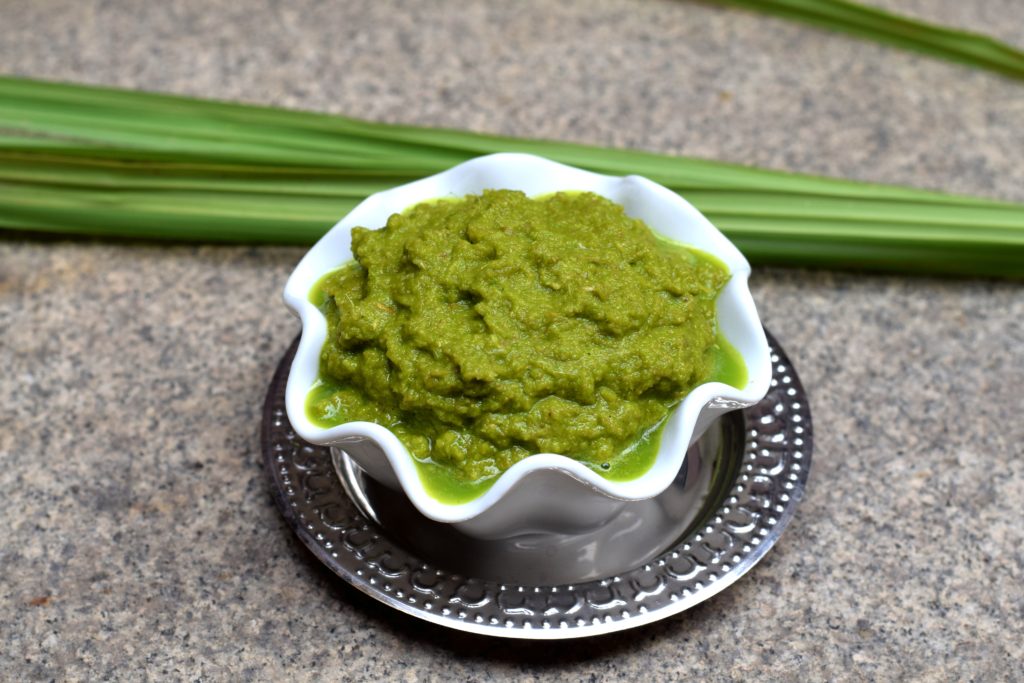
First, we will see the procedure for Fresh Green curry paste:

Ingredients:

Coriander seeds – 1 table spoon

Cumin seeds – 1 tea spoon

Turmeric – ½ tea spoon

Ginger – ½ inch

Garlic – 6 cloves

Galangal – ¾ to 1 inch (Thai Ginger)

Coriander leaves – 4 sticks

Onion – 1 small size

Green chillies – 8-10

Lemon grass bulb – 2

Pink salt – 1sp

Tender Lemon leaves – 3

Method:

-Slice ginger, galangal, onion, green chillies. Mine was home grown heirloom variety, which is less spicy. If your chilli is spicier, please remove inner seeds.

-Remove outer stiff cover from the lemon grass bulb. Then slice it and keep it ready.

-Put everything in the mixer jar and make a paste by adding very minimal water. Store this paste in an air tight bottle. This portion suffice for twice.

How to make Curry:

Ingredient:

Vegetables – Choice of yours

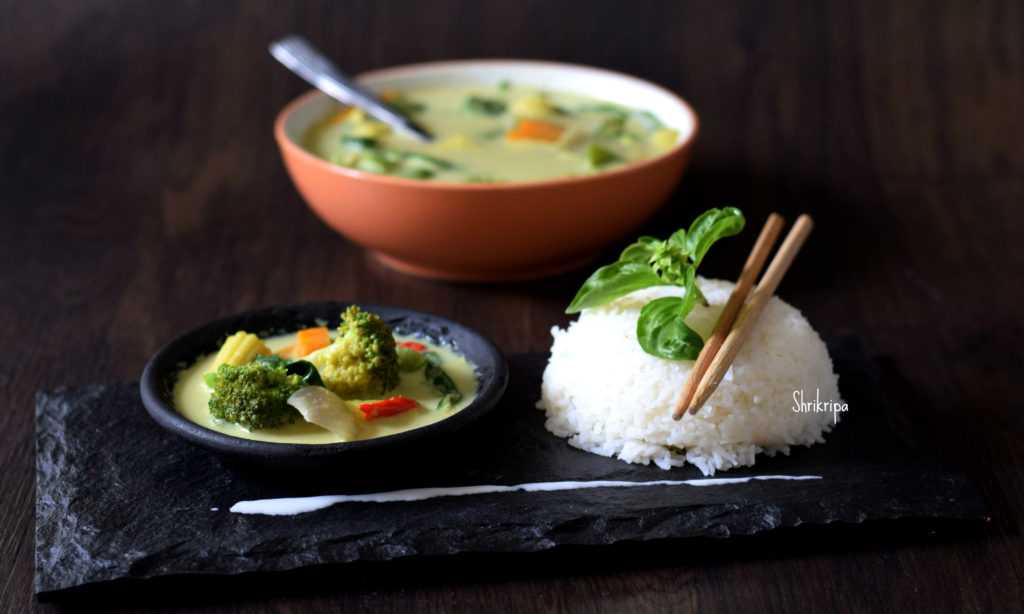
I have used Broccoli, baby corn, capsicum, carrot, beans and baby spinach.

Green curry paste – 2 table spoons

Salt

Sugar – 1 tsp

Corn flour – 1 tsp

Coconut milk – 1 tetra pack

Oil – 2 table spoons

Onion – 1

Basil leaves – 8

Red bird eye chillies – 2 (optional)

Method:

-Chop veggies, dice onions and separate each layer and keep aside.

-Heat oil, add onion and fry for 2 min. Add chopped veggies and fry for a while.

-Add green curry paste, salt, sugar and fry until raw smell vanishes.

-Add water,corn flour and boil, until veggies are half cooked. Add Coconut milk and give only one boil.

-Garnish with basil and red tiny chillies and serve with small grain rice.


Dum Aloo:

Dum Aloo is originally from Kashmir. Normally baby potatoes are deep fried and dunked in a mild and flavorful gravy. Here I have made it without deep frying as well as without peeling the outer skin. I normally avoid removing outer skin of potatoes due to its nutritional value as well as the taste.

In dum aloo, curd is the main ingredient, which is used as a souring agent with the additional Indian spices. Dum aloo tastes very good with any Indian flat breads or with mild Pulav.

Ingredient:

Baby potatoes – 15

Onions – 3 medium size

Green chillies – 2

Ginger – 1 tsp (freshly chopped)

Oil – 3 to 4 table spoons

Fennel seeds – ½ tsp

Turmeric – ½ tsp

Red chilli powder – 1tsp

Garam masala – 1 tsp

Salt

Coriander powder – 1 tsp

Coriander leaves – 3 to 4 table spoons

Hung Curd – ¼ cup

Cashew chunks – 2 table spoons

Hot milk – ¼ cup

Kishmish / Dried grapes – 2 table spoons

Method:

-Soak cashews in Hot milk and keep aside.

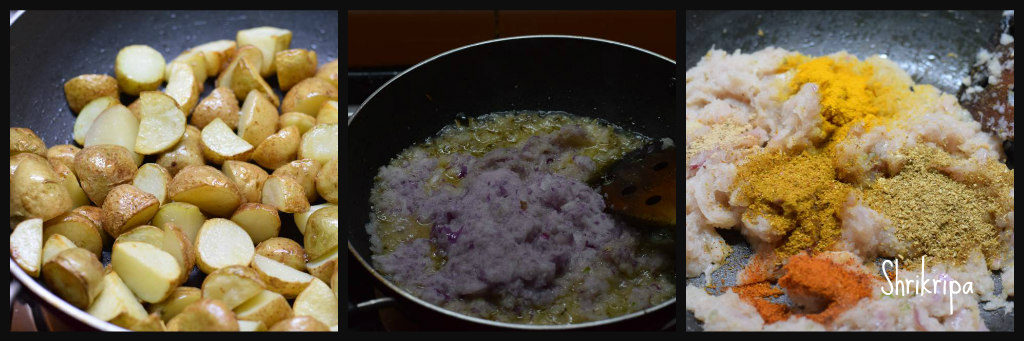
-Wash potatoes, make half or quarter pieces according to its size.

-Heat 1 table spoon of oil and roast potato pieces a little and keep aside.

-Take one mixer jar, dry churn onions, ginger and green chillies.

-Heat oil in a kadai, add fennel seeds, roughly churned onion – ginger- chilli.

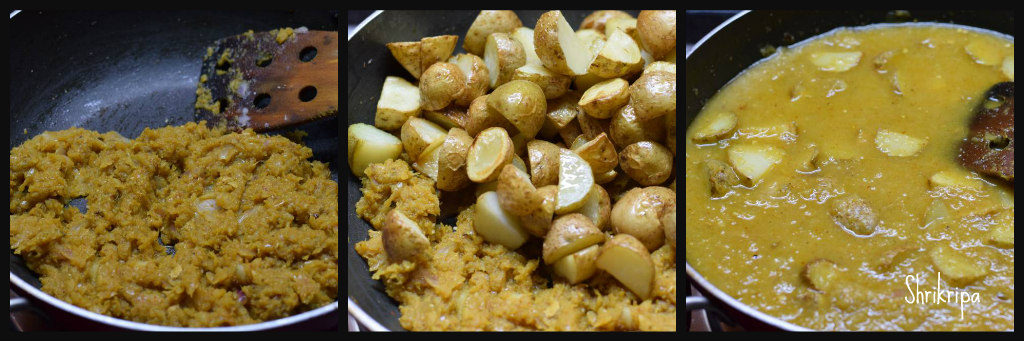
-Fry until it is light brown, add all the powders, salt and fry for a while and add roasted potatoes, cup of water and cook in a low flame.

-When potato is done, it is a time to switch off the gas. Never add curd while boiling the mixture, it curdles immediately.

-Now mix in curd, chopped coriander and mix everything, adjust the consistency by adding water and boil this mixture by switching on the gas.

-When gravy is ready, you would see a shiny layer at the surface. Switch off the gas.

-Now make a paste of cashew and milk and garnish the curry with cashew paste and dry grapes and serve with Roti or Pulav.


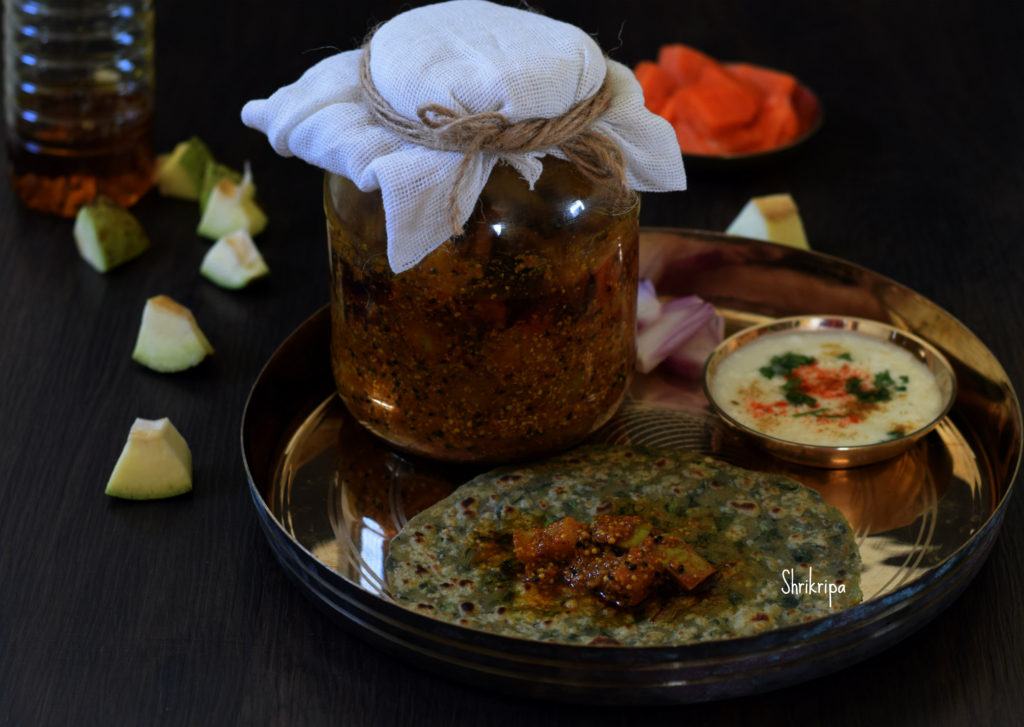
Mango Pickle (North Indian style):

This pickle happened due to my daughters. It is a perfect accompaniment for any parathas or Thepla. I came to know about this recipe from my friend Kavita, who had gifted me this pickle, prepared by her. When it was about to finish my daughters insisted that I prepare it at home and this is the result of their insistence. I want to thank Kavita, who did answer all my queries patiently and guided me through the process.

According to my friend, Thothapuri variety of mango tastes good for this masala. Hence I tried with the same.

Ingredients:

Mango – 1 kg (used Thothapuri variety)

Salt

Turmeric – 1 table spoon

Mustard oil – 1 cup

For Masala:

Red chilli powder – 2 table spoons

Hing – 1 table spoon

Fennel seeds -2 table spoons

Kalonji – 2 table spoons

Yellow mustard seeds – 3 table spoons

Fenugreek/Methi seeds- 1 ½ table spoons

Method:

-Wash, dry and cut the mango into pieces.

-Marinate these pieces with 2 fistful of salt, 1 table spoon of Haldi/ turmeric and mix thoroughly by using dry hand.

-Keep this for two hours and drain the oozed-out water and reserve it for future use.


-Spread these marinated mango pieces over dry cloth and dry under partial sun light or air dry.

-In the evening , remove those shrunken mango pieces and once again mix it with oozed out salted water which we have reserved from previous Marination process.

– The next (second) morning, drain and repeat the process of drying.

-On the second evening, those mango pieces will be ready to mix masala.

-First heat half a cup of mustard oil until it is very hot, then cool it.

-Take all the ingredients from fennel seeds to methi seeds and lightly pound in a small mixer jar by using pulse option. Don’t make fine powder.

-Now take one bowl, mix in all the masalas, sun dried mango, additional salt and mix nicely by using your clean and dry hand.

-Fill the mixture in a glass bottle and pour cooled mustard oil and cover the bottle with muslin cloth and keep it under sunlight for 1 week or partial sunlight.

-After one week, pickle would reduce in quantity. Pour remaining half of mustard oil by heating at first, then cooling it.

-Cover the cloth and repeat the process of keeping it in sunlight for some more days.

-Now it is ready to consume.