Lemongrass Tambli:

Lemongrass is used as a culinary as well as medicinal herb in the Asian continent. It has a mild citrus flavour with sweetish taste. It can be used in a dried, powdered or fresh form in various things like teas, soups and curries. This particular curry is called “Tambli” and it is prepared by grinding fresh leaves with coconut and mixing in buttermilk and it doesn’t need boiling. You can savour this like an appetiser or mixing with piping hot rice in this really hot summer. It has healing properties and is very good for the digestive system.

How to prepare this:

Ingredients:

Lemongrass sticks – 5-6

Fresh grated Coconut – ½ cup

Green chilli -1

Salt –to taste

Lemon – ½

Buttermilk – ½ cup

Method:

  • Chop lemongrass into bite size.
  • Take your mixer jar, grind lemongrass pieces, coconut gratings, green chilli and salt by adding ½ cup of water into smooth paste. Sieve this mixture to get smooth liquid. (Sieving is very important over here, otherwise lemongrass will irritate your throat)
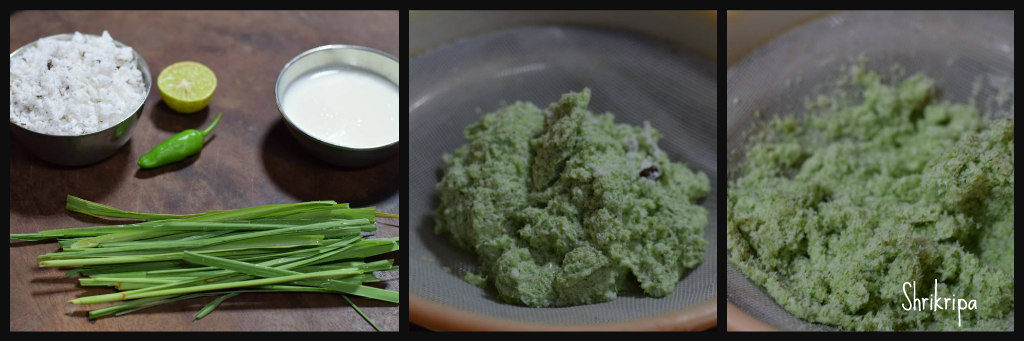
  • Once again add half cup of water, do exactly like earlier and repeat this process for two or three times, so that we will remove all the traces of liquid and discard the remaining fibre.
  • Now mix in buttermilk, adjust the consistency by adding water. Check the salt and add lemon juice.
  • Now your Tambli is ready to savour.
  • If you want to add the seasoning, heat one tsp of ghee, fry little cumin and curry leaves and add to Tambli.
  • Beat the heat by having this either as an appetiser or with hot rice.

NOTE:

  • To make vegan version, please omit the buttermilk and rest you can proceed as it is.
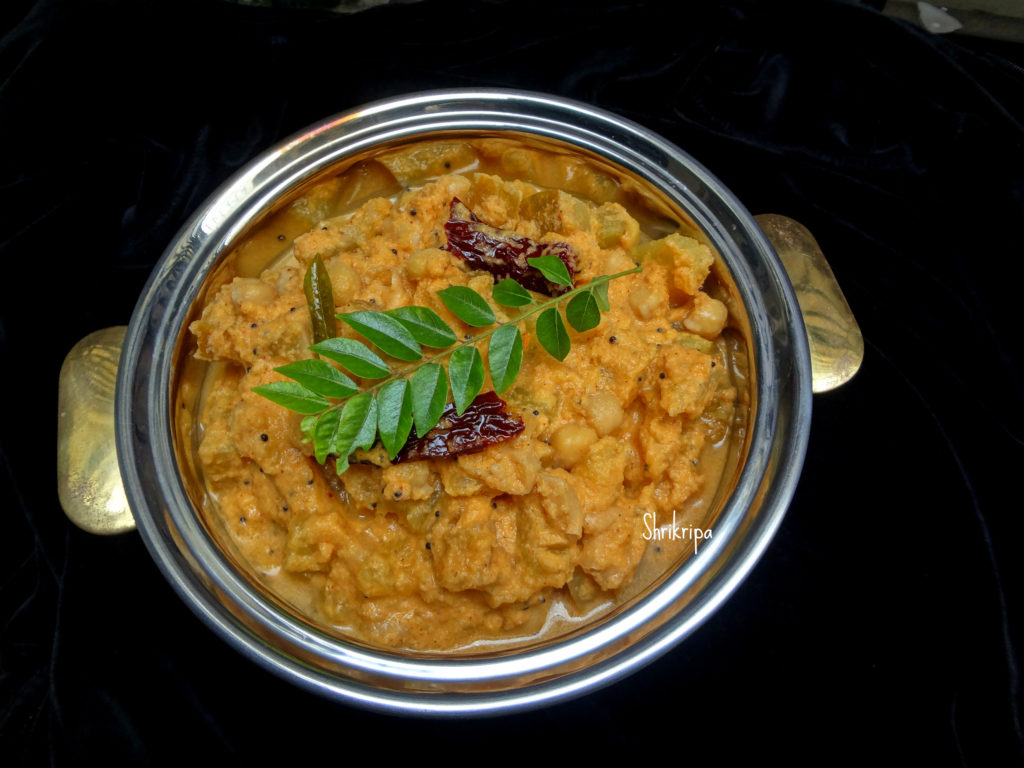


Pumpkin/Cheenikayi Kalasu:

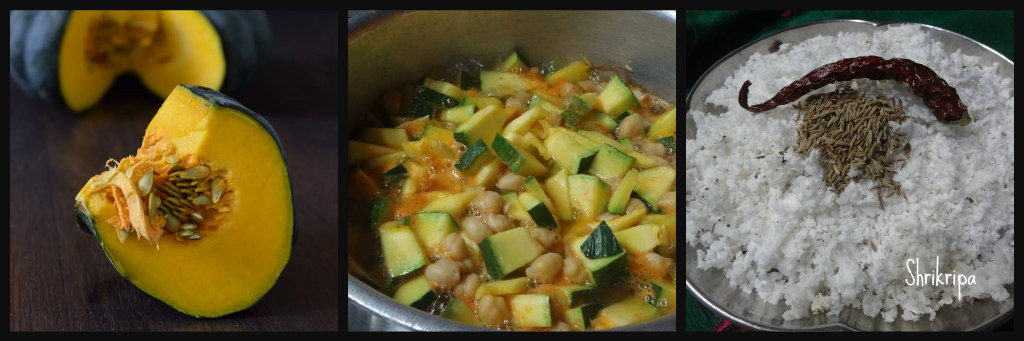
Pumpkin Kalasu is a traditional recipe of our community. It is a semi solid, sweetish coconut based curry, which goes very well with hot rice or Chapati.

Usually we use tender, greenish sweet pumpkin for this curry, paired with white Kabuli chana.

Ingredients:

Green sweet pumpkin – ½

White chana – 1 cup

Coconut – 1 bowl

Cumin – 1 tsp

Red chilli – 1 to 2

Salt

Jaggery

Red chilli powder – ½ tsp

Seasoning:

Coconut oil – 1 tsp

Mustard – 1 tsp

Red chilli – 1

Curry leaves – 1 string

Method:

  • Soak white chana for 7 to 8 hours or overnight.
  • Cut pumpkin into half; remove inner soft pith and seed. Chop this into small pieces with skin intact.
  • Wash soaked chana, put fresh water and cook in a pressure cooker for 3 whistles.

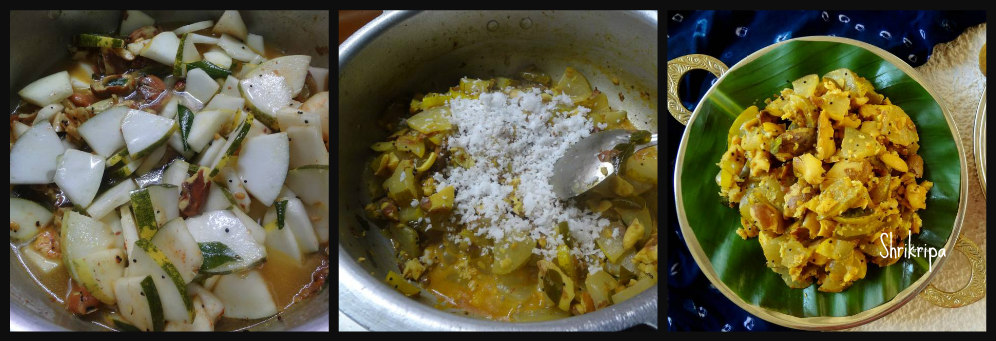
  • When pressure relieves, open the lid and add chopped pumpkin, salt, red chilli powder and jaggery. If needed add little more water and cook until pumpkin is done.
  • Now grind coconut, cumin and red chilli into fine paste by adding required amount of water.
  • Add this masala to cooked veggie. Adjust the consistency by adding water. Consistency should be semi solid. Boil this and add seasoning.
  • For seasoning heat coconut oil, mustard, red chilli and curry leaves.
  • Enjoy this curry with hot rice or Chapati.


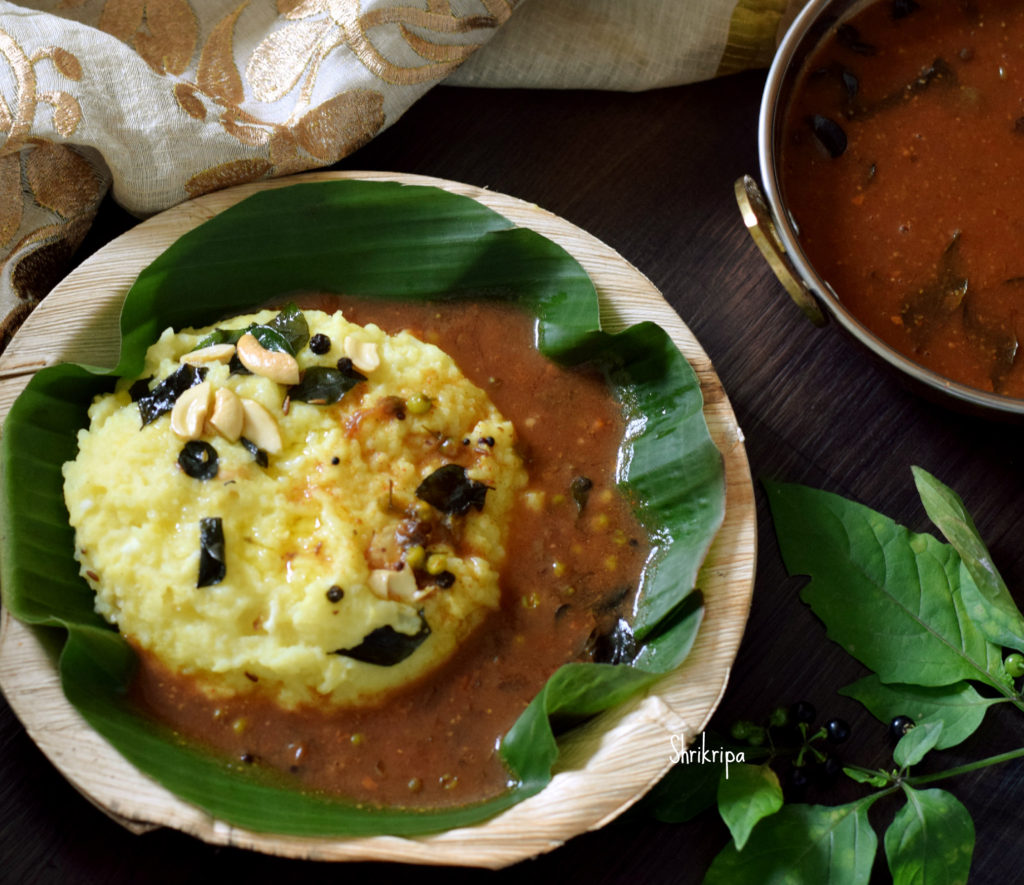
Ganike hannu Gojju, side dish for Pongal / Black nightshade fruit curry:

Have you ever tasted this wonder fruit? If no, you should pluck next time when you see in your vicinity and should enjoy it and feed all the goodness to your body. When we were young, it was our pass time, while walking towards school. We would pluck all these edible different berries though we never knew the goodness that we were getting form these.

Traditionally, in our region, these berries are not at all used in cooking. As I know, it is used only in Tamilnadu in a dry form, after soaking it in buttermilk and sun drying. Normally these dried berries are made into sweet and tangy curry called Vathal Kuzhambu and I tried the fresh berries to include in my regular Pongal Gojju, as a side dish.

As I said in the earlier post, black night shade has many names and these berries are also known as Ganike Hannu, Kakke Hannu, Chavi Hannu in Karnataka. Manathakkali, Sukkuti in Tamil. Nakoi in Hindi.

Black Nightshade (solanum nigrum) is sometimes confused with Deadly Nightshade (Atropa belladonna) of which berries grow individually and in this, we see a bunch formation of berries.

It has a whole lot of health benefits. It is a major source of anti-oxidants and moreover anything else, it is pesticide-free and free of cost 😀

For me, it is a gift of mother nature. I have not potted the plant and it is growing wildly in my garden and feeding me with greens and berries. This time, I have added these berries in my usual side dish, which I prepare for Pongal and liked as well.

Now we will move towards the details –

Ingredients:

 Ganike Hannu – 1 cup (I have used black as well as green unripe one)

Tamarind – One gooseberry size

Jaggery

Salt

Sambar powder – 1 to 2 teaspoons

Rice flour – 1 to 1 ½ teaspoon

Sesame Oil / any cooking oil– 1 tablespoon

Fenugreek seeds – ½ teaspoon

Hing – ¼ teaspoon

Mustard – 1 teaspoon

Cumin – ½ teaspoon

Dried Red chilli – 1

Curry leaves – 1 spring

Method:

-Soak tamarind in a cup of water.

-Wash berries and keep them ready.

-Keep the vessel for seasoning, heat oil, first fry fenugreek seeds.

-Splutter mustard, cumin, hing, chilli and curry leaves and drop berries and fry until it wilts.

-Add tamarind water, salt, jaggery (jaggery should be a little more)

-Boil until berries are cooked and soft. Time to add Sambar powder.

-Mix rice flour in ¼ cup of water, mix and pour it into the curry.

-Boil this nicely, until the top of the curry looks glossy. In the meantime, adjust and add salt, jaggery or sambar powder if needed.

-Serve this Gojju with Pongal as a side dish or you can have it with white rice as well.

-It is sweet, sour and Hot in taste and pairs very well with Pongal.


Kanile palya/Bamboo Shoot and jack seed palya:

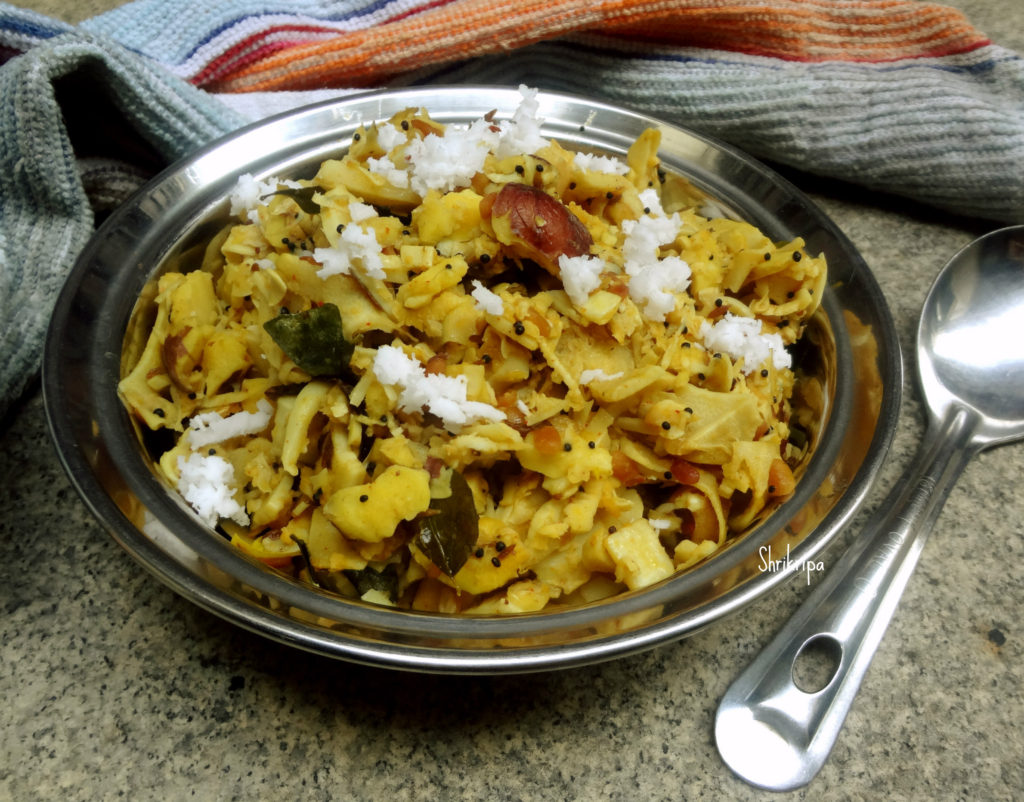
Kanile is nothing but Bamboo shoot. We coastal people, prepare some delicacies from this seasonal high fiber veggie, such as Bamboo shoot and green gram gravy or this dry Subzi/palya is prepared by mixing with crushed Jackfruit seed. It is protein rich, subtle in flavor, blends very well with bamboo shoot. This palya goes very well with hot Rice with a dollop of ghee or as a side dish with any kind of gravy, Rasam or sambar.  So, it is a seasonal monsoon season’s treat for us.

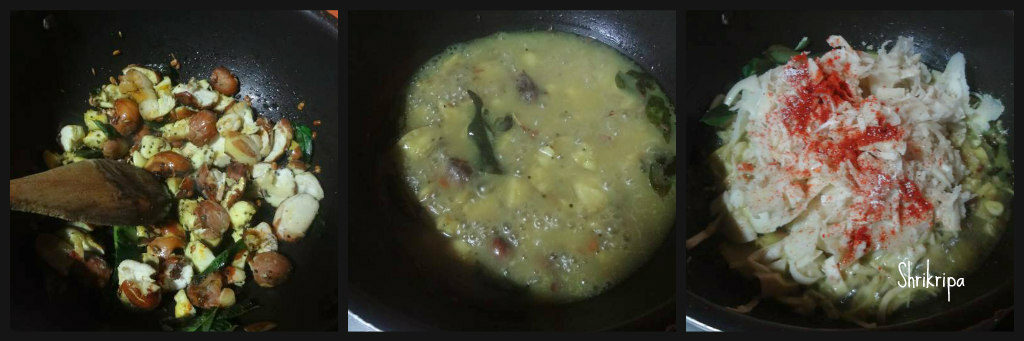
We normally use fresh bamboo shoot and chop it in circular manner. (please refer to the Post of How to chop Bamboo shoot)

I normally preserve jack seeds in frozen form and procedure is already shared in my blog as well.

Ingredients:

Ready Bamboo shoot – 1 cup

Fresh or Frozen jack seeds –2 fists full

Grated coconut – 3 table spoons

Turmeric – ½ tea spoon

Red chilli powder – 1 tea spoon

Salt- as needed

Jaggery – as needed (optional)

Seasoning:

Coconut oil – 1 table spoon

Mustard – 1 tea spoon

 Urad dal – 1 tea spoon

Cumin – ½ tea spoon

Red chilli -1

Curry leaves – 2 springs

Method:

-I normally crush and store the jack seeds. So, no need of chopping or crushing. If you have fresh seeds with you, please crush the seed by using hitting stone and remove outer stiff cover and use inner seed.

– Take one thick bottomed pan, do seasoning. Heat oil, splutter mustard, add urad dal. When dal becomes light brown, add cumin, red chilli and curry leaves.

-Now add in crushed jack seeds, a cup of water and cook at low fire by closing the lid.

– When it is half done, add chopped and ready bamboo pieces, Red chilli powder, salt and jaggery, required amount of water.

-Close the lid and cook this in a low flame, until it is cooked or up to water drains.

-If water drains first, add some more water and make sure to cook properly.

Garnish with fresh grated coconut and mix, cook for 2 minutes and switch off the gas.

-Serve with hot rice and enjoy as a side dish.


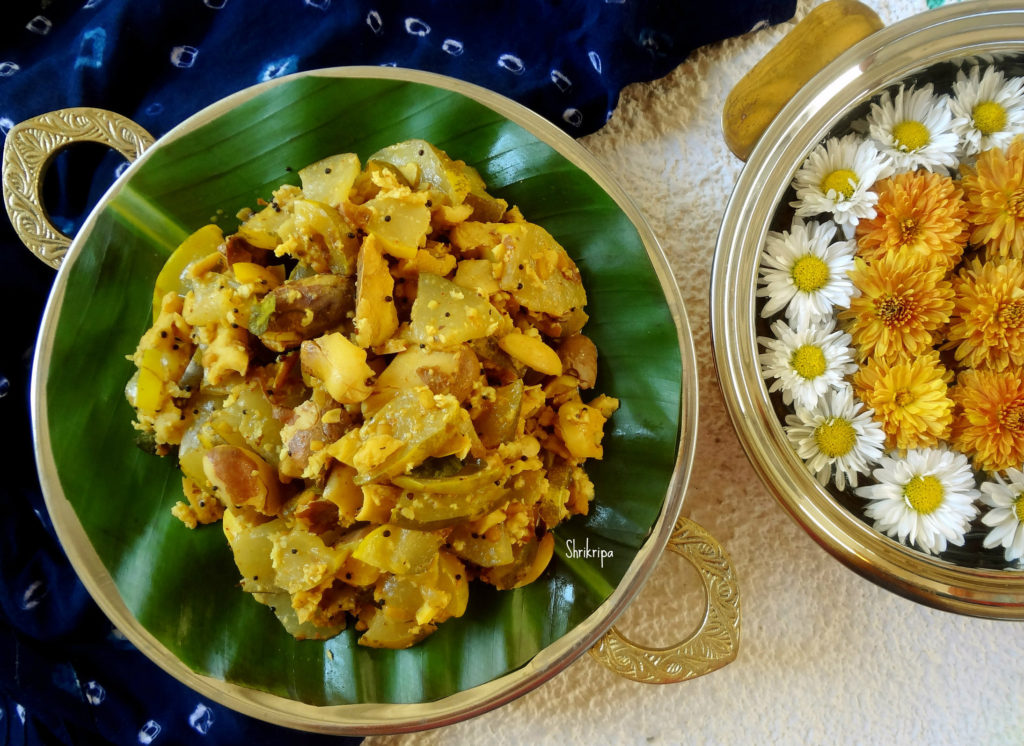
Kendathadya/ Baked Cucumber-Rice cake:

Every adult has a nostalgic dish from their childhood. I have a “secret” love for this dish because of fond memories of my maternal Ajji (grandmother), who used to pamper me to the core and prepare many such dishes by using the fresh produce that she grew in her kitchen garden.

Kendathadya is a traditional recipe of our Coastal Karnataka region, a special baked dish made by putting “Kenda” (hot burning firewood) on top and at the bottom of the earthen pot or thick metal vessel. Creating an oven affects burning firewood at the top and bottom of the closed vessel containing the batter.

Here, Cucumber used is our heirloom (local) variety, known as Mullu southe, which is light in colour, watery, and flavourful. Soaked rice is mixed with grated Cucumber, jaggery syrup, and fresh coconut to make a flavorful cake with homemade ghee. 

In modern life, we don’t have access to traditional firewood chulha. So, I make this age-old recipe in my OTG and satisfy my craving year after year and relive my childhood while having it.

Ingredient:

Raw Rice/Dosa rice – 1 cup

Cooked rice – 1 serving spoon. ( Red boiled rice or white rice)

Well grown Cucumber – 2 cups (grated)

Coconut – ½ cup (fresh, grated)

Jaggery – ¾ cup (grated)

Cardamom powder – 1 tsp

Ghee –2 to 3 tbl spoons

Salt – as needed

Eno or Cooking soda – 1 tsp

Method:

-Wash and soak the rice for 3 to 4 hours.

-Make jaggery syrup by adding ¼ cup of water to the grated jaggery, boil until its raw smell goes away, strain the liquid and keep it ready.

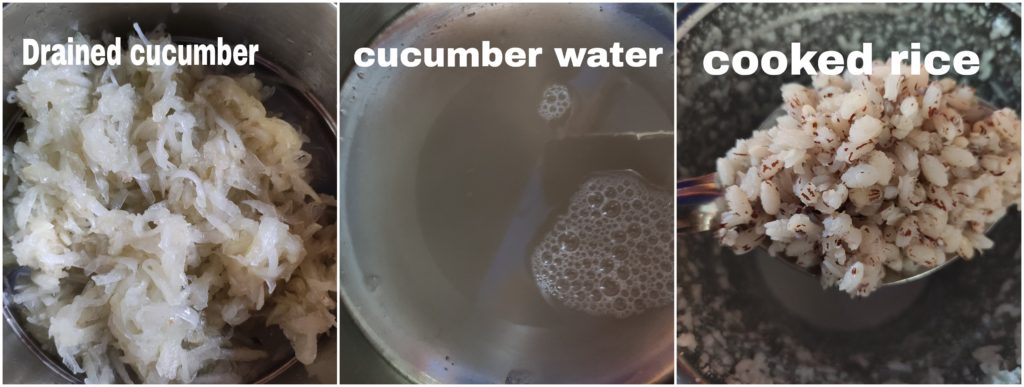
-Peel the outer skin, make halves, remove the seeded inner core. Grate it. Mix salt and allow the Cucumber to release its water.

-Drain the water from the soaked rice and discard.

-Collect water from grated Cucumber by sieving it in a strainer and using it for grinding as needed.

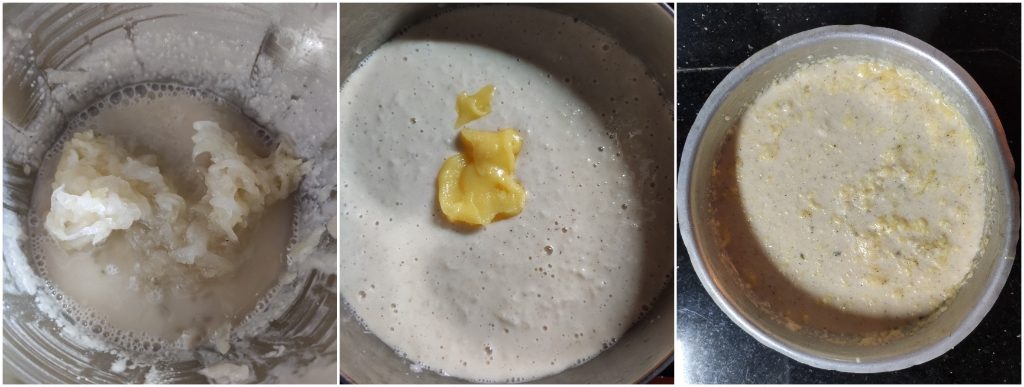
-Grind drained rice into a slightly coarse paste by adding collected water from the Cucumber, cooked rice, grated coconut, jaggery syrup.

-At the last round, add grated Cucumber and whip once and remove. Add ghee, Eno fruit salt and give a nice whip. The batter should not be too runny or too thick.

-Pour this into greased, lined baking tin and bake this in a pre-heated oven at 180C for 40 to 50 minutes, and a knife comes out clean when you insert it into the baking cake.

-Serve Hot with a drop of ghee.

Note:

– Addition of Eno fruit salt is optional. If you wish for a softer and lighter cake, add Eno or cooking soda.

-Without Eno, it turns out to be a firm and dense cake. I sometimes don’t add Eno and enjoy my dense cake to relive my memories of Ajji.

Jack seed and Mangalore cucumber palya:

Jack seed is halasina beeja, which is a seed of jackfruit and most underrated protein rich nature’s gift to mankind. All thanks to our elders, who have gifted us with the knowledge of lots of combinations of ingredients, vegetables. One such combination is coloured cucumber which is also known as Mangalore cucumber/ sambar cucumber with jack seed.  It is an ultimate, tasty side dish from our region and I am eager to share this recipe with you all –

I normally preserve jack seeds in a frozen form and procedure is already shared in my blog as well.

Ingredients:

Coloured cucumber – ½ or 1

Fresh or Frozen jack seeds –2 fists full

Grated coconut – 3 table spoons

Turmeric – ½ tea spoon

Red chilli powder – 1 tea spoon

Salt- as needed

Jaggery – as needed

Seasoning:

Coconut oil – 1 table spoon

Mustard – 1 tea spoon

 Urad dal – 1 tea spoon

Cumin – ½ tea spoon

Red chilli -1

Curry leaves – 2 springs

Method:

-Wash Mangalore/Coloured/sambar cucumber.

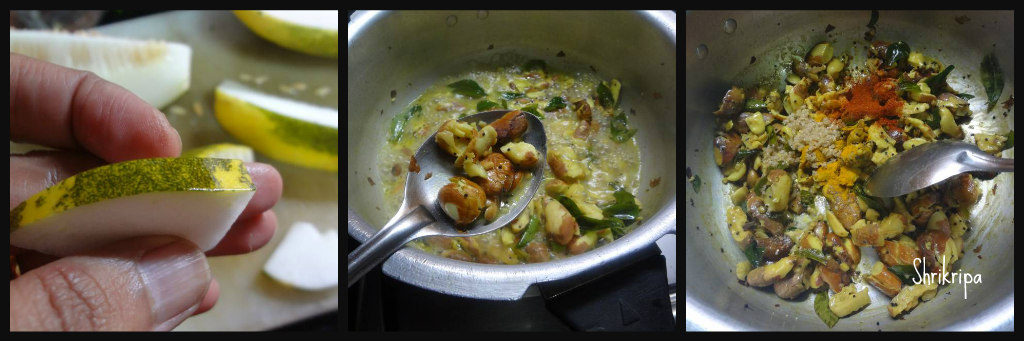
-Chop off 2 ends, slice in to 4 pieces and remove inner core (seed part) and chop into thin slices. (see the picture)

-Check now for the taste. If it is bitter in taste, soak the pieces in plain water for 5 minutes.

-Discard the water and proceed.

-If cucumber tastes good, no need to soak in water and you can directly proceed in cooking.

-I normally crush and store the jack seeds. So, no need of chopping or crushing. If you have fresh seeds with you, please crush the seed by using hitting stone and remove outer stiff cover and use inner seed.

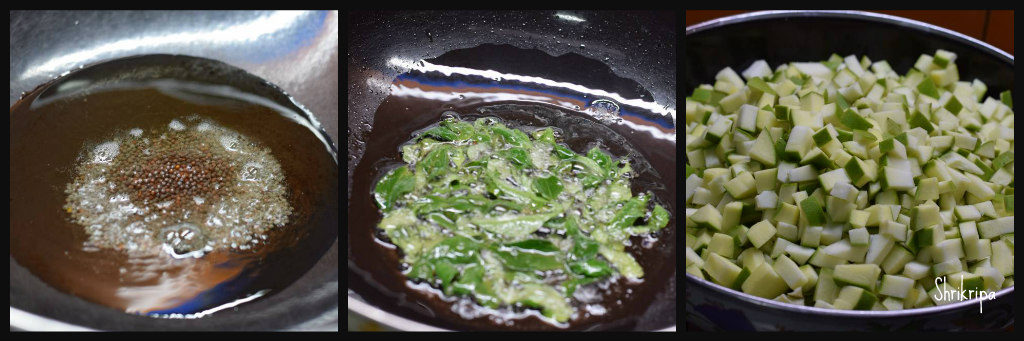
– Take one pressure pan or cooker, do seasoning. Heat oil, splutter mustard, add urad dal. When dal becomes light brown, add cumin, red chilli and curry leaves.

-Now add in crushed jack seeds, little water and cook for one whistle.

-When pressure releases, remove cooker lid and proceed to make palya.

-Switch on the gas, Add Red chilli powder, salt and jaggery, required amount of water and chopped cucumber pieces.

-Close the lid and cook this in a low flame, until cucumber is cooked or up to water drains.

-If water drains first, add some more water and make sure to cook cucumber.

Garnish with fresh grated coconut and mix, cook for 2 minutes and switch off the gas.

-Serve with hot rice and enjoy as a side dish.

Alasande Palya / Yard long beans dry curry:

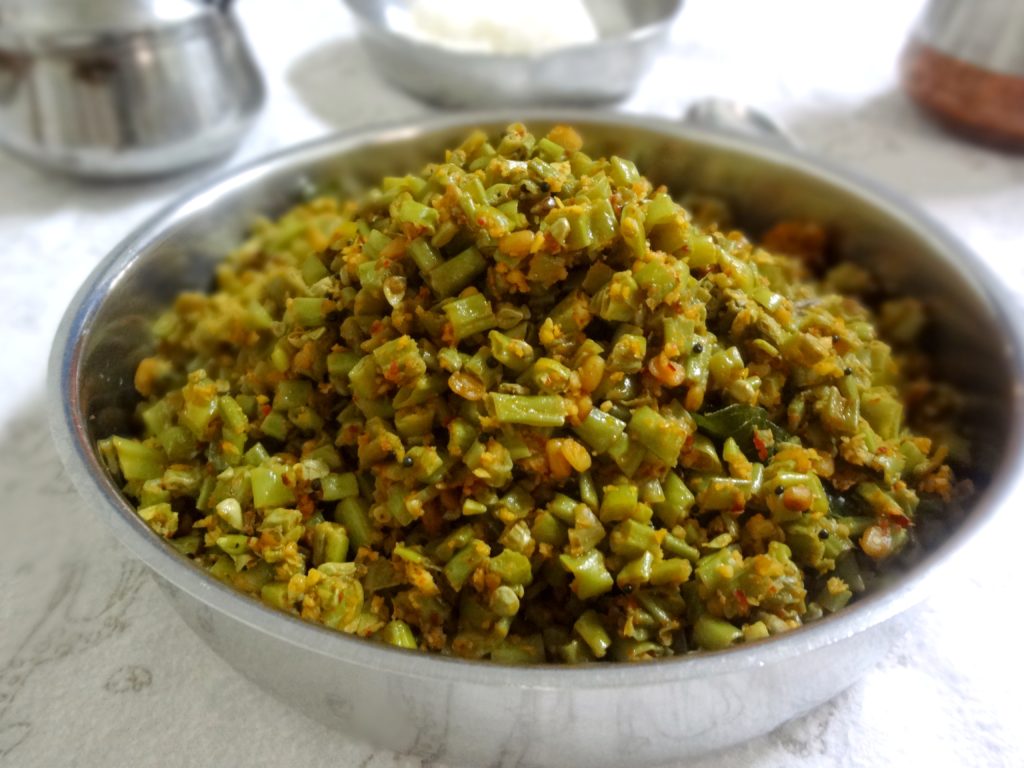
Alasande aka yard long bean is very popular and one of the age old cultivated crops of Mangalore coast. It is tender, immature pods of black eye pea. In rainy season, most of the vegetable kitchen gardeners grow this super tasty veggie for day to day use.

Immature pods are one of the favourite food for little birds as well. It is a low calorie, high in fibre vegetable and tastes little sweetish and texture is little chewy and watery.

Alasande side dish is one of the very popular dishes during the festivities- either in weddings, festival cooking or day to day cooking. For day to day cooking, we normally toss this veggie with mild seasoning and for festivity cooking, we use coconut masala. Today I am going to share the recipe of my house hold which my family relishes whenever I prepare.

Ingredients:

Alasande / Yard long beans – 500 grams

Red chilli powder – ½ tea spoon

Turmeric – ½ tea spoon

Salt

Jaggery – 1 tea spoon

For seasoning:

Coconut oil – 1 table spoon

Mustard – 1 tea spoon

Urad dal – 1 tea spoon

Red chilli – 1 (optional)

Curry leaves – 1 spring

For Masala:

Coconut – ¼ cup

Roasted Byadagi Red chillies – 2 to 3

Cumin – 1 tea spoon

Tamarind – ½ tea spoon

Method:

-Wash, remove two ends of yard long beans and chop as required.

-Dry grind coconut with roasted chillies, cumin and tamarind for masala and keep aside.

-Now take one kadai, heat oil for seasoning, splutter mustard, add urad dal. If you are adding red chilli add that as well.

-When urad dal becomes red, add curry leaves, chopped beans, turmeric, salt, jaggery, red chilli powder and toss for two minutes.

-Add one small cup of water and cook until it is soft and firm.

-Add dry ground masala and mix everything. Keep it covered for two to three minutes and switch off the gas.

-Serve with hot rice or with thali as a side dish.


Totapuri Mango Pickle:

Totapuri is a speciality of southern states of India. These mangoes are large in size, slender, oblong and has a prominent beak like pointed tip. The skin of the mango also tastes really good  and sweetish.

Totapuri pickle is unusual. Unlike other mangoes Totapuri is not that sour, usually used in salads, mango rice or raw mango jams. It is also known as Ginimoothi because of its pointed end. This pickle is not that hot and goes very well with curd rice or roti’s. I used to enjoy this pickle from my childhood and now my daughters also like this as much as I do. I learnt this recipe from one of my cousin sisters, who used to gift me a bottle of this pickle every year and hence has fond memories attached to it too.

Ingredient:

Raw Mango –  3 kgs (Totapuri variety works out well)

Sea Salt – 1 to 1 ¼ cup

For pickle Masala:

Dried red chillies – 50 (Byadagi variety)

Black pepper corns – 2 tea spoons

Mustard – ½ cup

Hing – peanut size

Sesame seed – 2 tea spoons

Turmeric – 3 tea spoons

Seasoning:

Sesame oil – 2 table spoons

Refined oil – 2 table spoons

Mustard – 1 table spoon

Curry leaves – 2 to 3 springs

Method:

-Wash and remove upper stalk, chop the mangos into small bite size pieces. Discard inner seed.

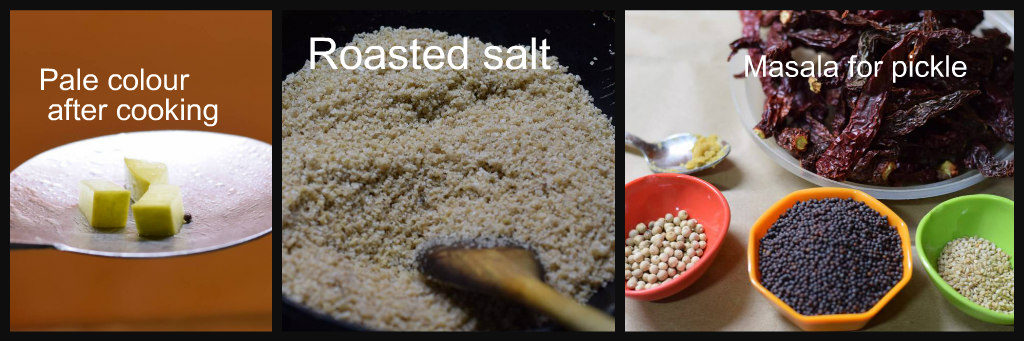
-In small tawa, dry roast crystal/sea salt until it becomes crisp and white in colour. Cool.

-Take one thick bottomed tawa, get it ready for seasoning. If you are accustomed with the taste of sesame oil, go ahead and use only sesame oil. Otherwise take how I have listed.

-Heat oil, splutter mustard, add curry leaves, fry for 2 minutes. Add Mango pieces and cook by mixing in between until skin becomes pale.

-Switch off and mix in dry roasted salt and keep aside for 3 to 4 hours or until it is cool.

-In the meantime, prepare for the pickle masala.

-Take the tawa, in which you have roasted the salt at the beginning.

-Dry roast one by one like this. First mustard, then sesame seed, next pepper corns, hing.

-Now take one tea spoon of oil and fry red chillies in a low flame until it is crisp. Cool it.

-When it is cool, add turmeric with these ingredients and make powder.

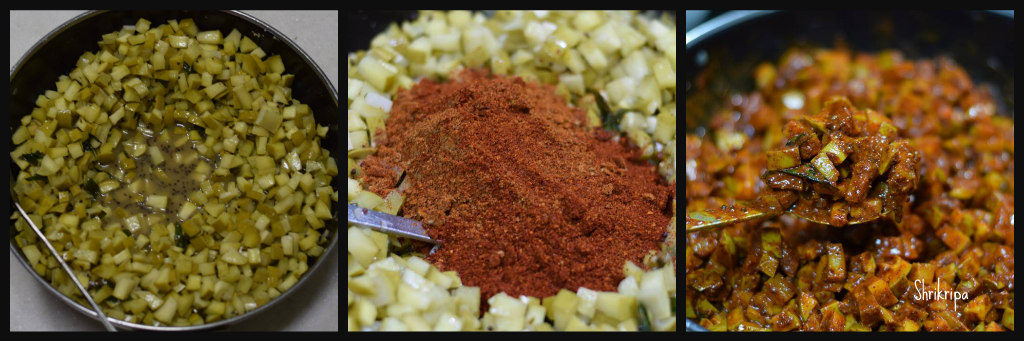
-At this time, mangoes will be ready, and water will be oozed out.

-Mix the powder with mango pieces. Fill the pickle into sterilized bottle and seal.

-After couple of days, you can start using this pickle.


-Store this in a refrigerator for longer shelf life.

-Enjoy with Curd rice, Roti or with any breakfast.


Jackfruit kottige:

Halasina hannu is Jack fruit and Kottige is nothing but idly or kadubu,also known as Halasina Hannina kottige Or Gatti in local language. In which mixture is wrapped in pre-wilted banana leaves like pockets and steam cooked. Like bottle gourd kottige, which I have posted earlier, it is not a savoury kind, it is sweetish and bustling with jackfruit flavour which is enhanced even more with the usage of banana leaves wrap.

Jackfruit season is considered as a feast time in our region. Usage starts from tiny raw fruit form to ripened stage. You will find couple of curry recipes in my blog which I have posted earlier as well as Ripe jack fruit Dosa.

Now we will see how to make kottige, in our traditional method.

Ingredients:

Dosa rice – 2 cups

Jackfruit – 2 cups (cleaned)

Fresh coconut gratings – 1 cup

Grated jaggery – ¼ to ½ cup (according to your taste)

Ghee – 1 table spoon

Salt

Method:

-Wash Dosa rice (white raw rice) and soak for 2 to 3 hours.

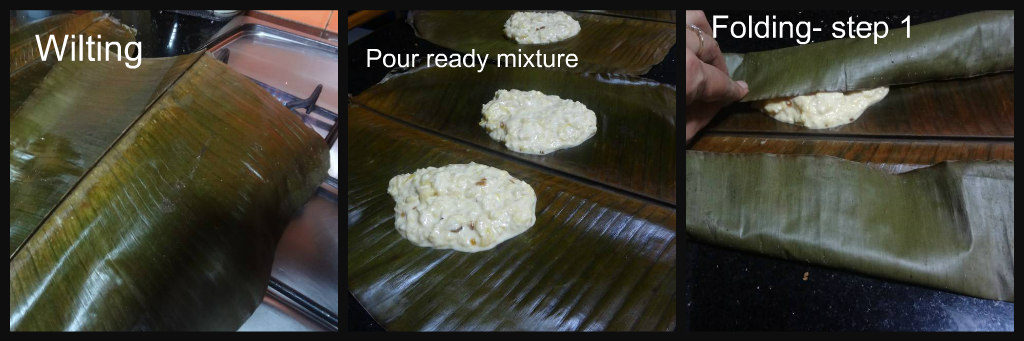
-If you are using banana leaves, wilt the leaves on gas flame, wipe with a wet cloth and keep it ready.

-If you are using idli mould, grease the moulds with little ghee and keep aside.

-Chop jack fruit, separate fruit pods, remove outer thin white fibres as well as inner seed and take only yellow fruit part.

-Mix grated coconut and jaggery as well as ghee and keep aside.

-Grind rice into fine paste by adding very little water and salt.

-Now take jack fruit little by little and whip a little to chop roughly by using same mixer jar in which rice batter is ground.

-Take one wide bowl, mix in ground batter, roughly whipped fruit pulp, coconut-jaggery mixture.

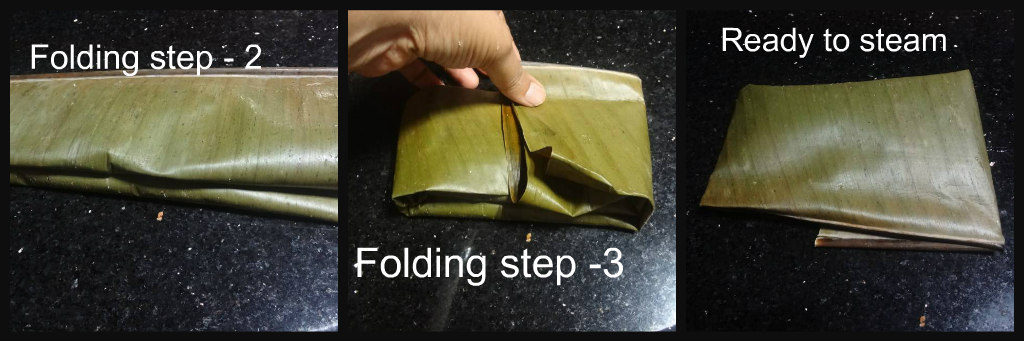
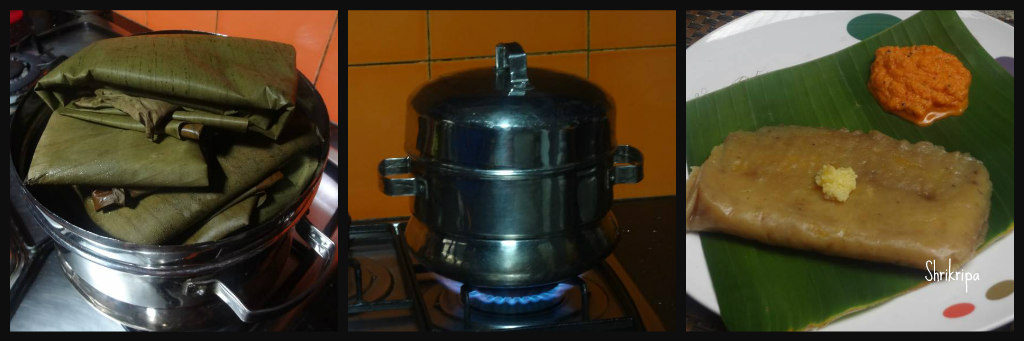
-Mix nicely, spread the wilted banana leaves and pour one spoon and fold it like a sealed pocket. (refer the below pictures)

-Assemble all these packets in a water filled idli steamer or Momo steamer and cook this for half an hour to 40 minutes in medium to slow heat.

-If you are using idli mould, pour required amount of batter and steam cook like an idli.

-Relish this jackfruit idli or kottige with ghee or coconut and ginger chutney.

-We usually steam cook this on the previous night and keep it ready for the next day’s breakfast. In this way, It will be easy in the morning as now you just have to prepare chutney and serve.


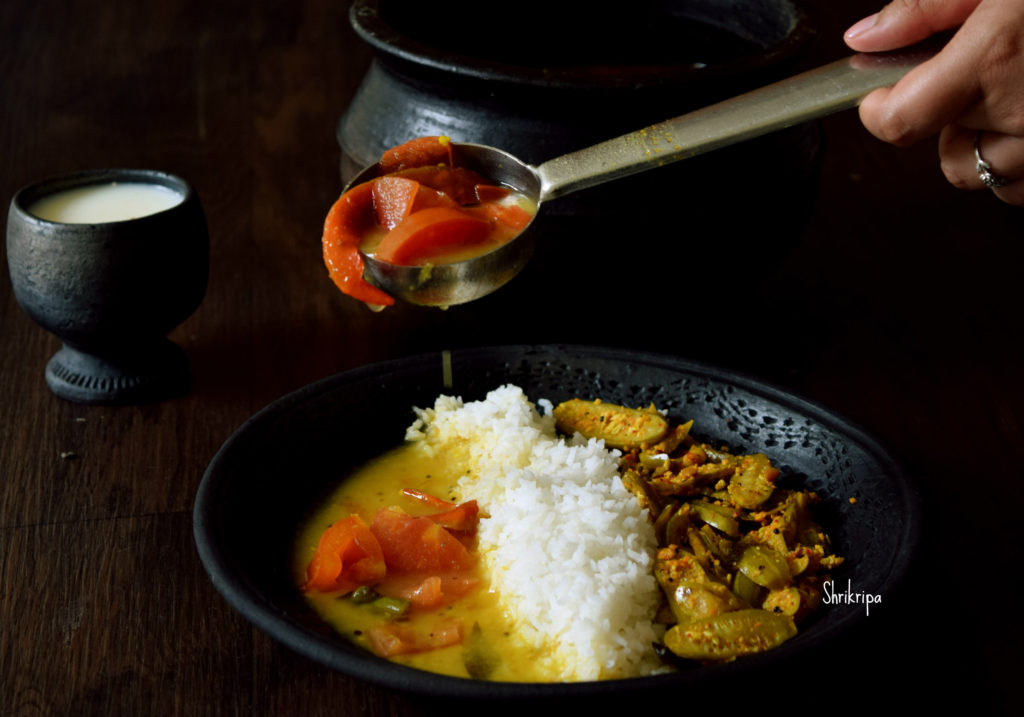
Simple Bele saaru /Rasam:

This Rasam is a very good option, if one has to cook no onion and no garlic meal. Usually it is an option for us during any festivity or “No mood to cook” meal. Olden days usage of onion or garlic was a taboo in our community and our grand moms used to prepare this kind of Rasam, which we call as saaru in local language. My hubby has fond memories attached to this Rasam, which he used to relish as a small child in his grand mom’s place and he usually asks for it and calls this Rasam as Doddajji saaru (grandma’s saaru) to signify. It is a plain Rasam, with ginger and hing flavour. In our region, we see this Rasam in some of the temple meals as well. If it is ginger flavoured one, no Rasam powder will be used and Rasam will be yellow in colour, due to the addition of turmeric and dhal.

DSC_0002_Fotor

Ingredients:

Toor dal – 1 cup

Tomatoes – 3 to 4

Green chillies – 4 to 6

Hing – peanut sized

Ginger – ½ inch (slivered)

Curry leaves – 2 springs

Salt

Jaggery – ½ to 1 tea spoon

Turmeric – ½ tea spoon

Tamarind – 1 tea spoon

Coriander leaves – little (optional)

Seasoning:

Coconut oil or ghee – 1 table spoon

Mustard – 1 tea spoon

Red chilli – 1

Curry leaves – 1 spring

Method:

-Wash and cook toor dal in a pressure cooker, mash a little and keep aside.

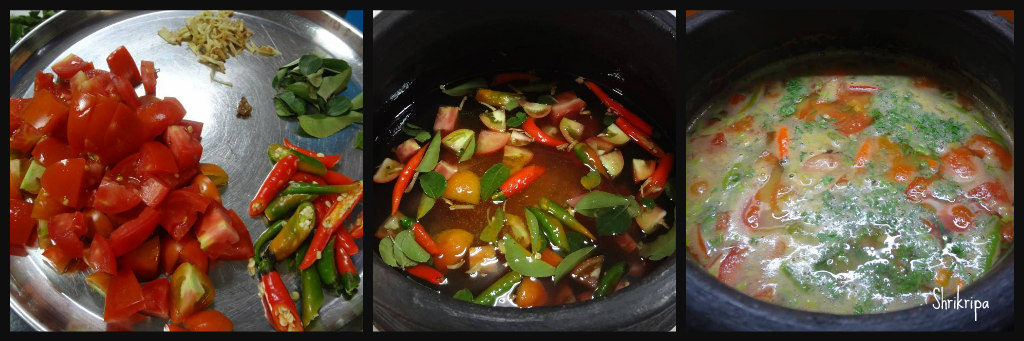
-Soak tamarind, chop tomatoes, green chillies and ginger.

Ribbet collage

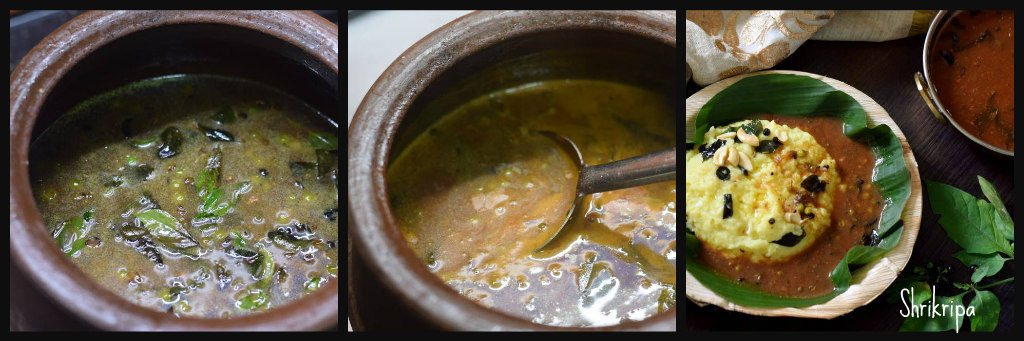
-Take one Rasam pot (I normally use clay pot) and take 3 to 4 cups of water, tomato, green chillies, ginger, hing, curry leaves, turmeric, salt and jaggery.

-Cook this until everything cooks properly.

-Now add toor dal and mashed soaked tamarind.

-Boil this and adjust the consistency and check for salt, ginger and green chilli. If needed adjust by adding extra.

-When it is boiled, add chopped coriander leaves.

Ribbet collage 1

-Season with oil or ghee by spluttering mustard, red chilli and curry leaves.

-Serve with hot rice .