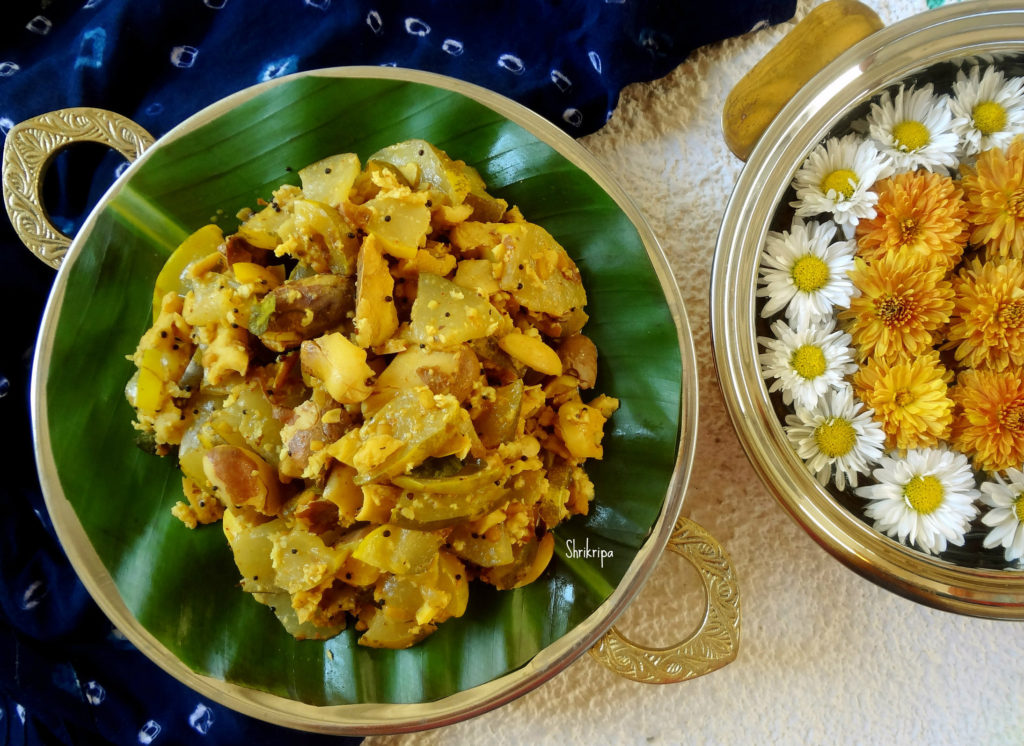
Indian broad beans with ground nut:

It is a very tasty vegetable and is known as Chikdikayi, chapparadavare or Indian broad beans. This subzi/dry curry is one of our favourite and whoever tastes this subzi, usually asks for the recipe. So, I thought of sharing this recipe in my blog as well. I learnt this from our family friend who hails from Gulbarga, Northern part of Karnataka.

How it is made –

Ingredients:

Indian broad beans – 500 Gms

Garlic – 10 -12 cloves

Red chilli powder – 1 to 2 tsp.

Salt

Crushed roasted groundnut – ½ cup

Oil- 2 tbl sp.

Method:

-Remove both side’s fibre and slit open, to see. Slit at the centre and keep aside.

-Now keep one pot of water for boiling, add little salt to it. When it starts boiling, add broad beans including bean as well.

-When it changes colour, drain the water and keep aside.
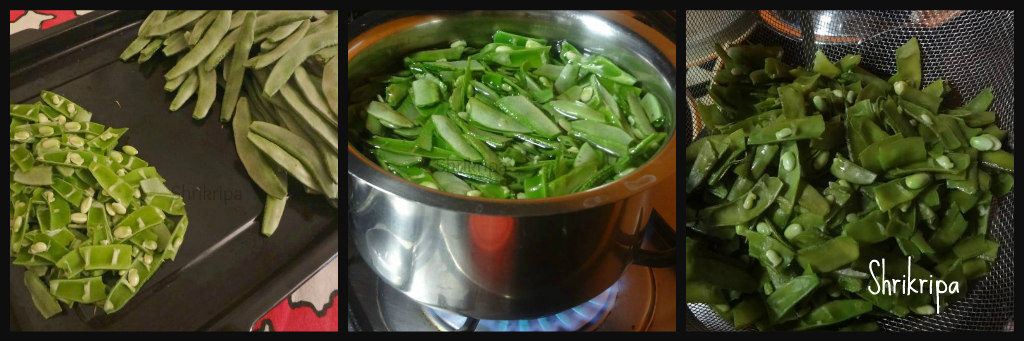
– Keep one thick bottomed kadai, put oil. When oil becomes hot, add crushed garlic and fry a little. Now add cooked and drained beans.

-Add sufficient amount of salt and red chilli powder and mix nicely. Cook until oil leaves from the sides.

-Now add crushed or roughly powdered ground nut and mix for a while.

-Serve with Chapati/phulka’s or rice.

Note: I usually add ready ground nut chutney powder (which has red chilli powder, salt and garlic)

If you are using chutney powder like me, decrease the amount of salt and red chilli powder while adding at the beginning.

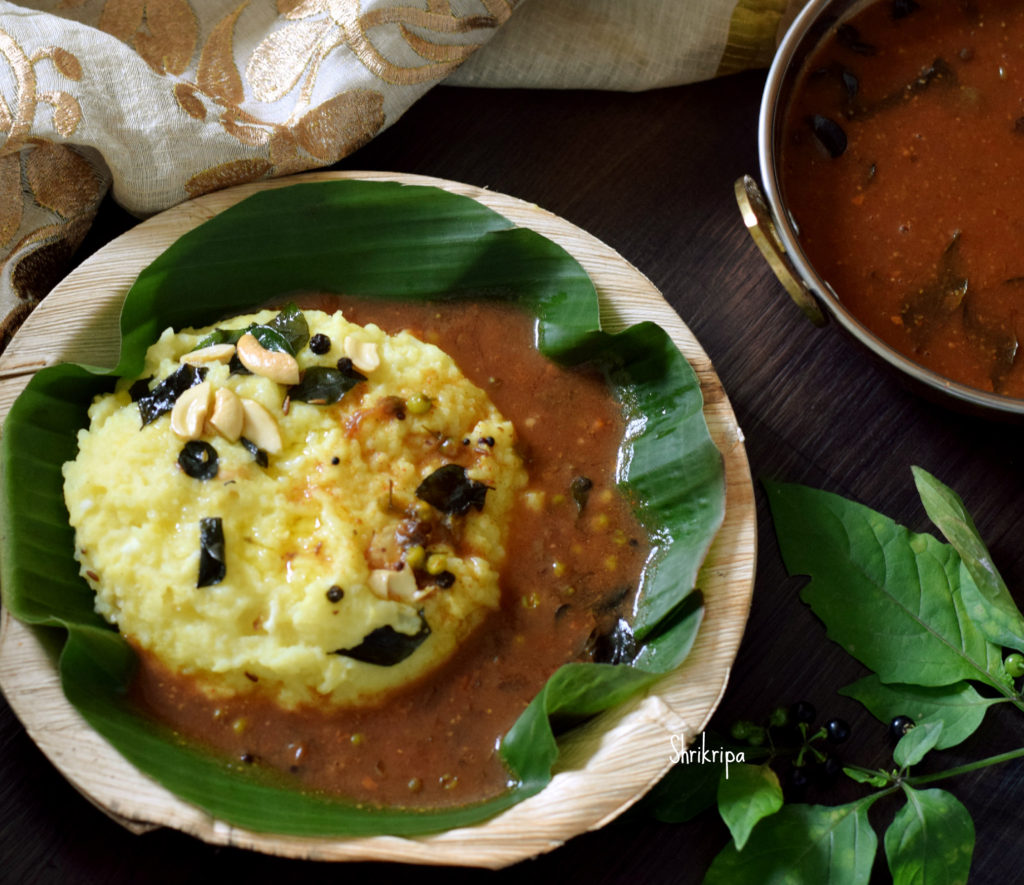
 

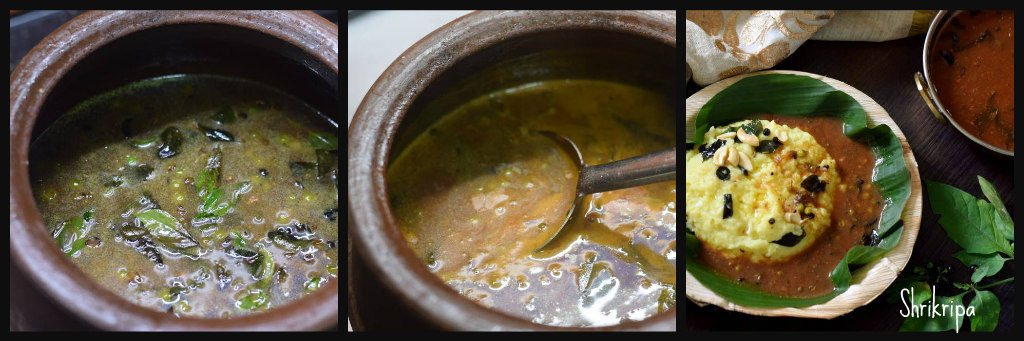
Ganike hannu Gojju, side dish for Pongal / Black nightshade fruit curry:

Have you ever tasted this wonder fruit? If no, you should pluck next time when you see in your vicinity and should enjoy it and feed all the goodness to your body. When we were young, it was our pass time, while walking towards school. We would pluck all these edible different berries though we never knew the goodness that we were getting form these.

Traditionally, in our region, these berries are not at all used in cooking. As I know, it is used only in Tamilnadu in a dry form, after soaking it in buttermilk and sun drying. Normally these dried berries are made into sweet and tangy curry called Vathal Kuzhambu and I tried the fresh berries to include in my regular Pongal Gojju, as a side dish.

As I said in the earlier post, black night shade has many names and these berries are also known as Ganike Hannu, Kakke Hannu, Chavi Hannu in Karnataka. Manathakkali, Sukkuti in Tamil. Nakoi in Hindi.

Black Nightshade (solanum nigrum) is sometimes confused with Deadly Nightshade (Atropa belladonna) of which berries grow individually and in this, we see a bunch formation of berries.

It has a whole lot of health benefits. It is a major source of anti-oxidants and moreover anything else, it is pesticide-free and free of cost 😀

For me, it is a gift of mother nature. I have not potted the plant and it is growing wildly in my garden and feeding me with greens and berries. This time, I have added these berries in my usual side dish, which I prepare for Pongal and liked as well.

Now we will move towards the details –

Ingredients:

 Ganike Hannu – 1 cup (I have used black as well as green unripe one)

Tamarind – One gooseberry size

Jaggery

Salt

Sambar powder – 1 to 2 teaspoons

Rice flour – 1 to 1 ½ teaspoon

Sesame Oil / any cooking oil– 1 tablespoon

Fenugreek seeds – ½ teaspoon

Hing – ¼ teaspoon

Mustard – 1 teaspoon

Cumin – ½ teaspoon

Dried Red chilli – 1

Curry leaves – 1 spring

Method:

-Soak tamarind in a cup of water.

-Wash berries and keep them ready.

-Keep the vessel for seasoning, heat oil, first fry fenugreek seeds.

-Splutter mustard, cumin, hing, chilli and curry leaves and drop berries and fry until it wilts.

-Add tamarind water, salt, jaggery (jaggery should be a little more)

-Boil until berries are cooked and soft. Time to add Sambar powder.

-Mix rice flour in ¼ cup of water, mix and pour it into the curry.

-Boil this nicely, until the top of the curry looks glossy. In the meantime, adjust and add salt, jaggery or sambar powder if needed.

-Serve this Gojju with Pongal as a side dish or you can have it with white rice as well.

-It is sweet, sour and Hot in taste and pairs very well with Pongal.


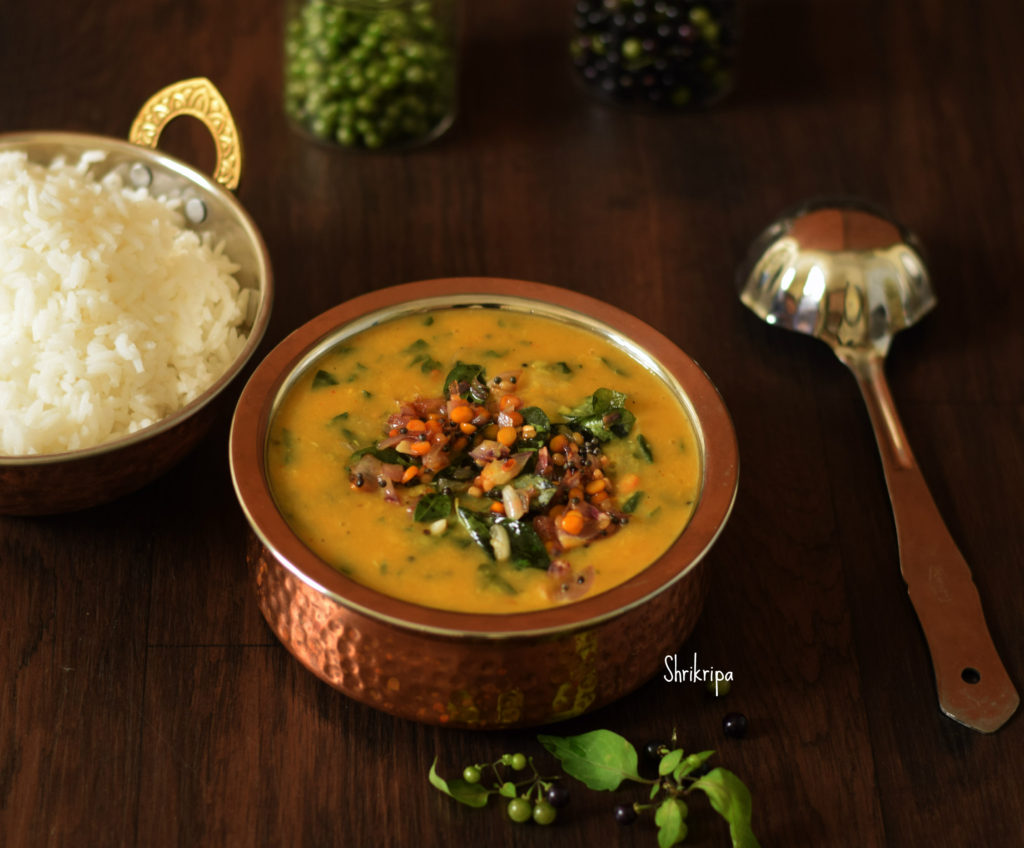
Ganike Soppu Kootu:

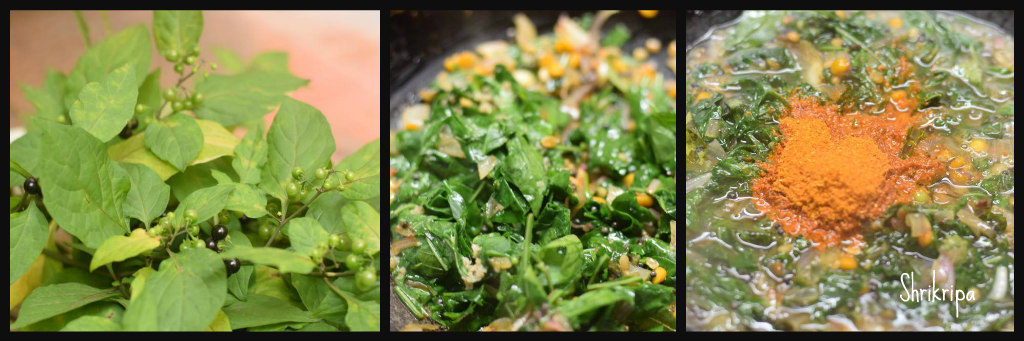
Monsoon Is the time, when my garden is filled with greens and I make use of all the goodness that mother nature is offering to us.  Ganike soppu is a widely known herb by many regional names like Ganike or Kakke soppu in Kannada, Manathakkali keerai in Tamil. Botanical name is Solanum Nigrum which is originated in South Africa and commonly known as Black nightshade.

It is a medicinal herb and very good for stomach ailments, is what I have heard from my elders. Usually green leaves are used to make Tambli and it is believed that, it is a remedy for menstrual cramps as well as stomach related discomforts.

This time I got a bumper harvest from wildly grown plants and tried to make kootu but without adding coconut. It is a sort of dhal cum sambar. We liked it and thought of sharing it with my readers as well.

Kootu recipe, what I have followed is from Jayanthi Senguttuvan aunty and posted on our Foodie group by Senguttuvan uncle. Made some changes according to our requirement and enjoyed it thoroughly with hot rice as well as dosas.

Ingredients:

Toor dal and Moong dal – ½ + ½ cup each

Turmeric – ½ tea spoon

Hing – ¼ tea spoon

Sambar powder – 1 to 2 tea spoons

Salt

Seasoning:

Oil – 1 table spoon

Mustard – 1 tea spoon

Urad dal – 1 tea spoon

Gram dal – 1 tea spoon

Curry leaves – 1 string

Onion -1 medium

Ganike soppu/ greens – As required

Method:

-Take one cooker, wash dals, put required amount of water, turmeric, hing and cook.

-Wash greens. Chop greens as well as onion.

-Prepare seasoning, heat oil, splutter mustard, fry urad dal, chana dal and add curry leaves, chopped onions and fry for a while.

-Add chopped greens and fry until it wilts.

-Add sambar powder, salt and adjust the consistency by adding water.

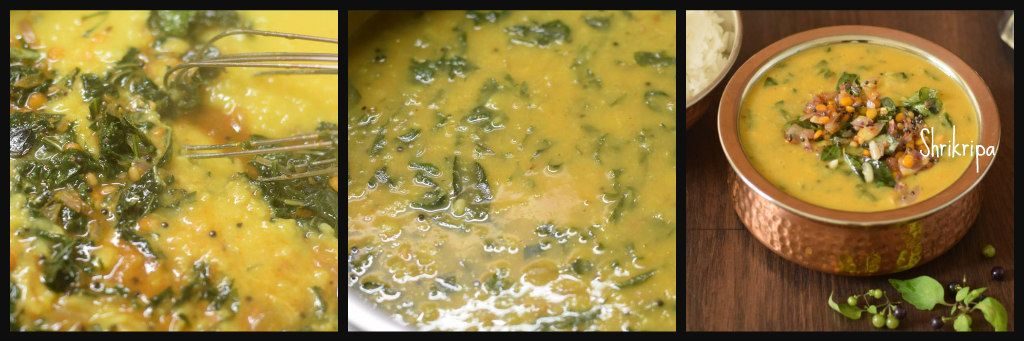
– Add cooked, mashed dal, check for the salt and masala, adjust it.

-Boil nicely and serve with rice, roti or Dosa or as you wish to have.


Kantola Tawa Fry:

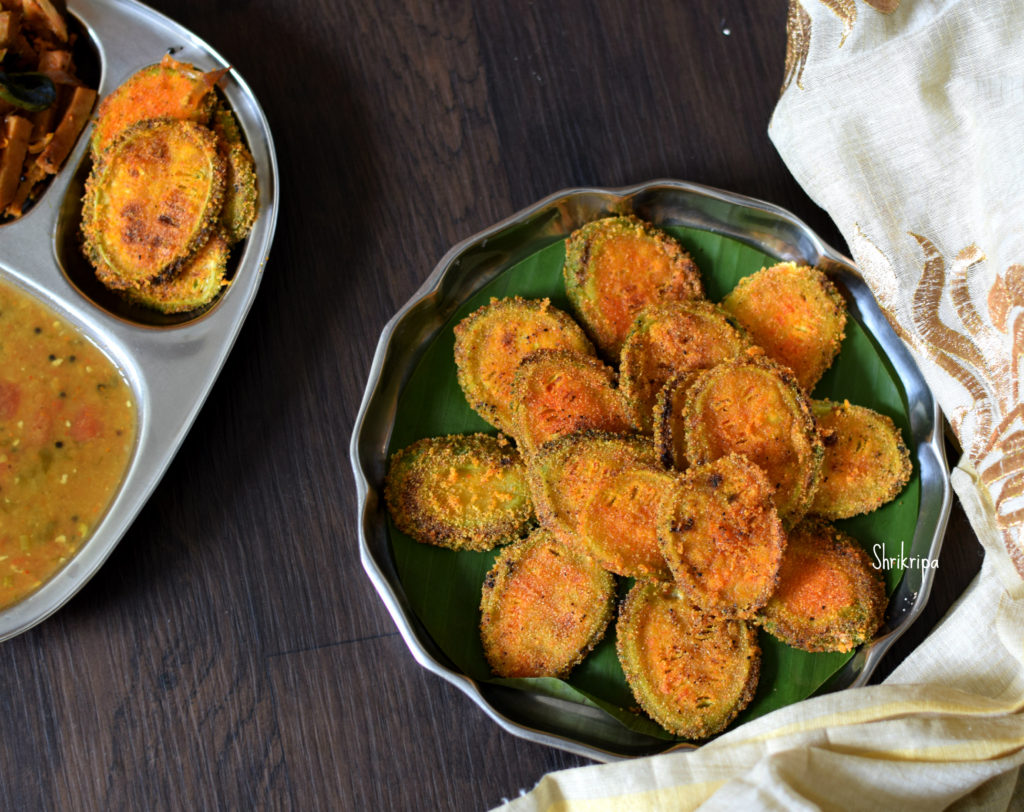
Kantola has many names like Spine gourd, Teasel Gourd, phagila, Mada hagala, locally we call this as “Kaadu peere” in Mangalore. Kantola is one of the famous and nutritious vegetable of coastal region and some Eastern parts of states. This monsoon vegetable is loved by all. This resembles a bitter gourd in structure, but not in taste. It is a crunchy mild flavoured vegetable.  It is a great health food as it is rich in proteins, iron and anti-oxidants and low in calories. It is high in fibre too.       

In my family, we usually relish this in tawa fry form. Let’s see how I do this.

Ingredients:

Kantola: 5 to 6

Salt to taste

Red chilli powder – ½ tsp

Turmeric – ½ tsp

Asafoetida / hing powder – ¼ tea spoon

Coconut oil – to shallow fry

Ingredients for outer cover:

Chiroti/fine rawa – 1 small cup

Rice flour – 1 table spoon

Salt

Asafoetida  powder – ¼ to ½ tsp.

Red chilli powder – 1 tsp

Method:

-Wash Kantola and slice them into a very thin slices. Don’t remove outer skin or inner seeds. Use as it is.

– Sprinkle salt, red chilli powder, hing, turmeric on these slices and mix this nicely by using your hand and   keep aside for 10 to 15 minutes to marinate.

-While marinating it will leave some water and it helps to hold outer coating.

 – Now take one bowl, dry mix all the ingredients like fine rawa, rice flour,salt, asafoetida, red chilli powder, for outer cover.don’t add any water.

– Now take each marinated Kantola piece and roll both the sides over rawa mix, keep aside after coating one by one.     

-Take one iron Dosa tawa ,heat it ,keep 6 to 7 coated pieces over it and pour one or two teaspoon of coconut oil and fry nicely on one side.

-After some time, flip the side, once again pour one tsp of coconut oil and fry this side too.

– After frying both the sides, serve this as a side dish with dhal -rice, Rasam –rice or curd- rice.

  Note: You should use coconut oil and more asafoetida to get authentic taste.


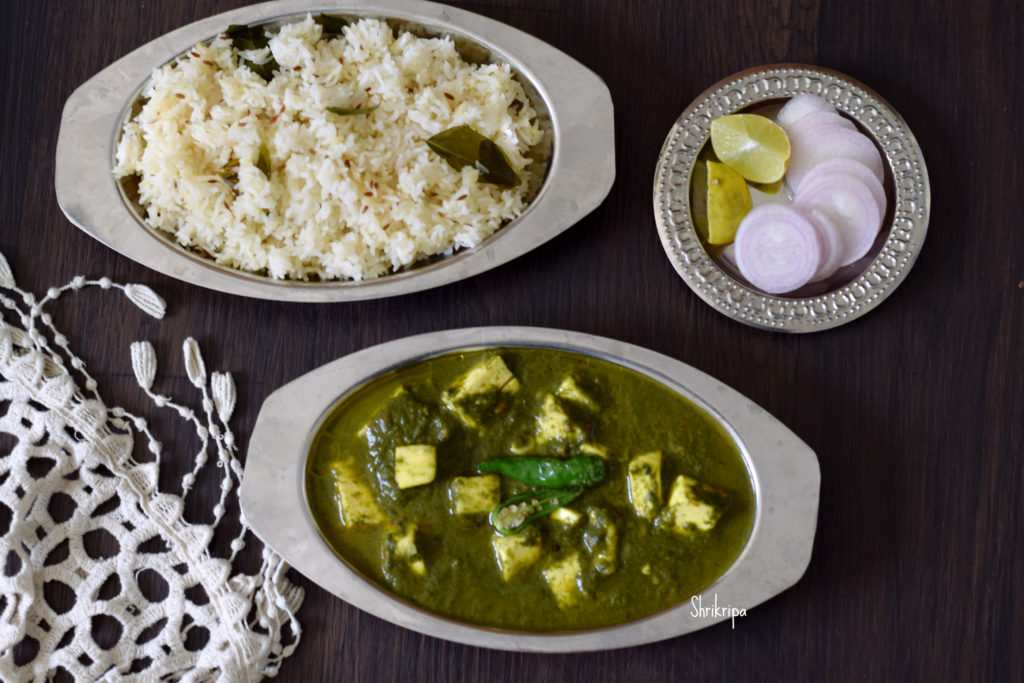
Palak paneer:

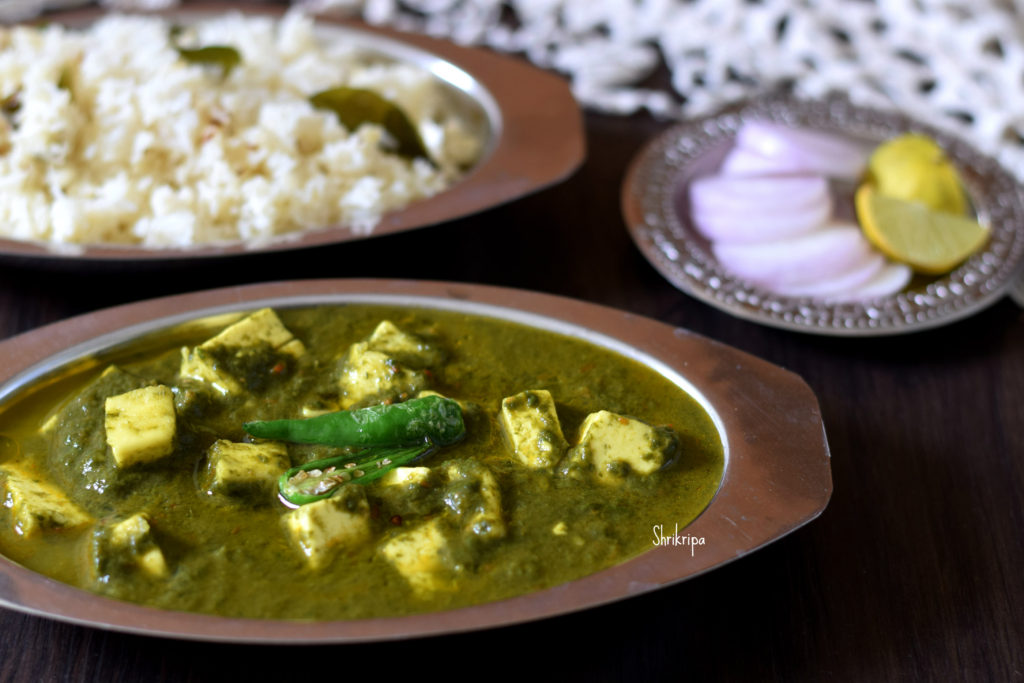
Spinach with cottage cheese is one of the healthiest option of Indian curries. It is the most popular North Indian side dish and goes well with any flavoured rice as well flat breads. We all know the goodness of spinach or paneer. Both are very nutritious- spinach is iron rich, and on the other hand paneer is rich in calcium.

This curry which I make is light, low calorie and creamy without adding any cream or deep fry.

Cottage cheese or paneer is soaked in warm milk and cooked with spinach paste with the added mild spice. This recipe is easy to cook and works just fine as a toddler’s food or for the tiffin box.

How I proceed –

Ingredients:

Palak – 1 big punch

Paneer – 200 or 400 grams

Milk – 1 cup

Tomatoes – 2

Salt

Sugar – ½ tea spoon

Oil – 2 table spoons

Hing – one pinch

Cumin – 1 tea spoon

Garlic – 10 -12 cloves (sliced)

Ginger – 1” (julienne)

Turmeric – ½ tea spoon

Red chilli powder – 1 tea spoon

Cumin powder – 1 tea spoon

Garam masala powder – ½ tea spoon

Method:

-Chop Tomato, spinach and make chunks of paneer and keep it ready. Chop garlic and ginger as well.

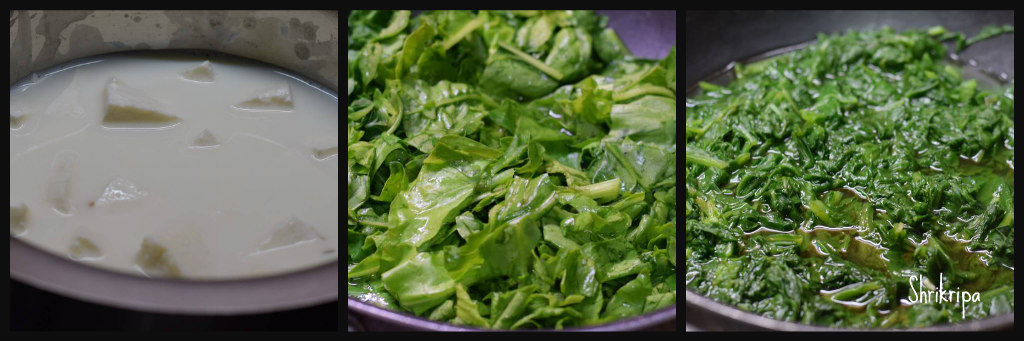
-Heat milk, add chunks of paneer and keep aside by closing the lid.

-Grind tomato in the mixer jar and keep aside.

-Take one kadai, add chopped spinach, sprinkle sugar, little salt and cook until wilts.

– Sugar will help to retain the colour green and salt will help spinach to leave its water to cook.

-Cool this wilted spinach, grind into rough paste and keep it aside.

-Now keep one tawa for seasoning, pour oil, when it is hot, add cumin, hing, ginger and garlic. Fry for 2 minutes.

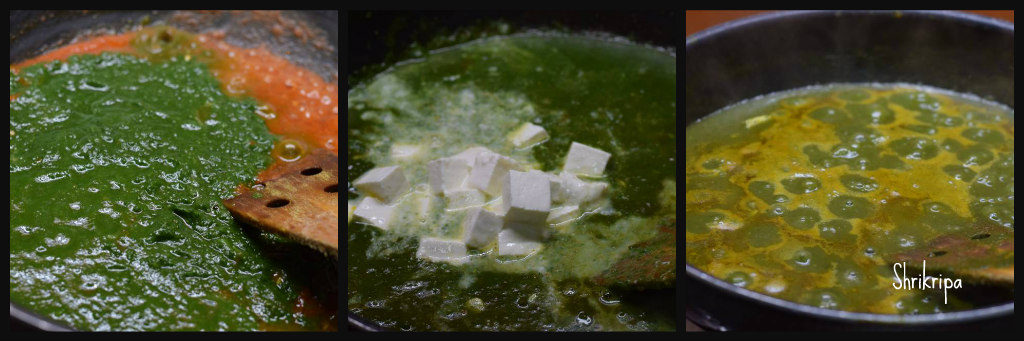
-Add tomato paste, turmeric, red chilli powder, cumin powder, garam masala powder and fry until oil oozes from the sides.

-Now add spinach paste, milk-soaked paneer content and give a stir. Check for the salt and add the required amount.

-After boiling it for some time, you will see a layer of oil or dark coloured layer at the top. Now it is ready.

-Serve this rich gravy with your choice main dish. We always prefer jeera rice as a main dish for this curry.


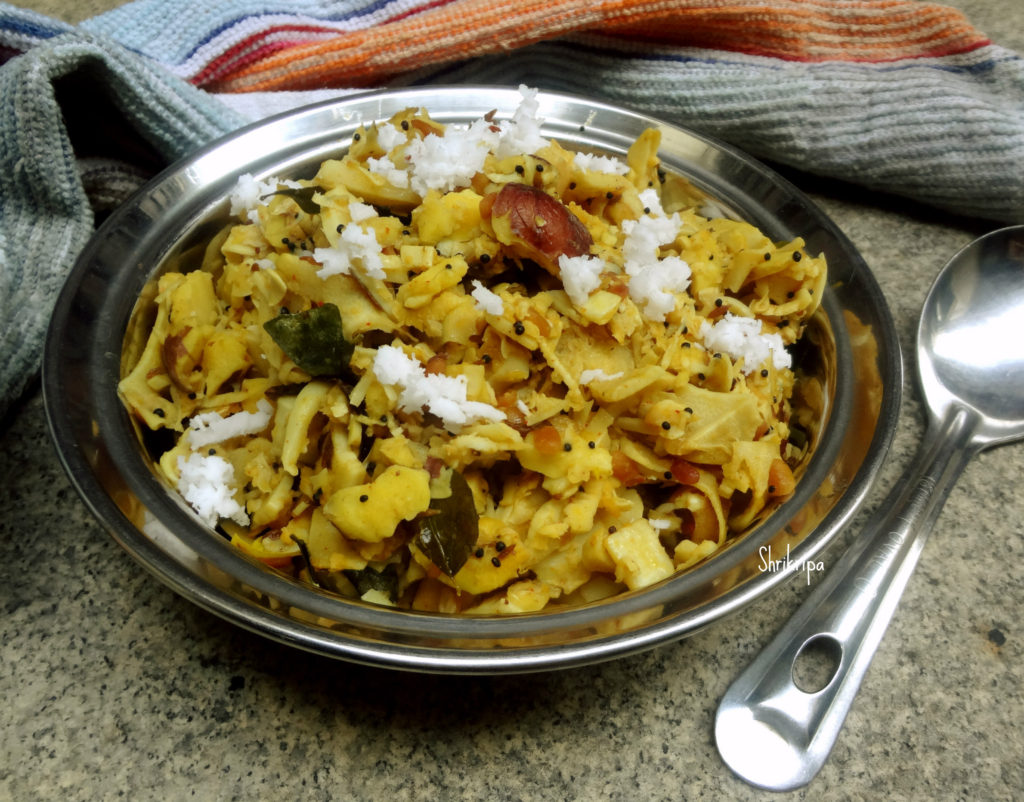
Kanile palya/Bamboo Shoot and jack seed palya:

Kanile is nothing but Bamboo shoot. We coastal people, prepare some delicacies from this seasonal high fiber veggie, such as Bamboo shoot and green gram gravy or this dry Subzi/palya is prepared by mixing with crushed Jackfruit seed. It is protein rich, subtle in flavor, blends very well with bamboo shoot. This palya goes very well with hot Rice with a dollop of ghee or as a side dish with any kind of gravy, Rasam or sambar.  So, it is a seasonal monsoon season’s treat for us.

We normally use fresh bamboo shoot and chop it in circular manner. (please refer to the Post of How to chop Bamboo shoot)

I normally preserve jack seeds in frozen form and procedure is already shared in my blog as well.

Ingredients:

Ready Bamboo shoot – 1 cup

Fresh or Frozen jack seeds –2 fists full

Grated coconut – 3 table spoons

Turmeric – ½ tea spoon

Red chilli powder – 1 tea spoon

Salt- as needed

Jaggery – as needed (optional)

Seasoning:

Coconut oil – 1 table spoon

Mustard – 1 tea spoon

 Urad dal – 1 tea spoon

Cumin – ½ tea spoon

Red chilli -1

Curry leaves – 2 springs

Method:

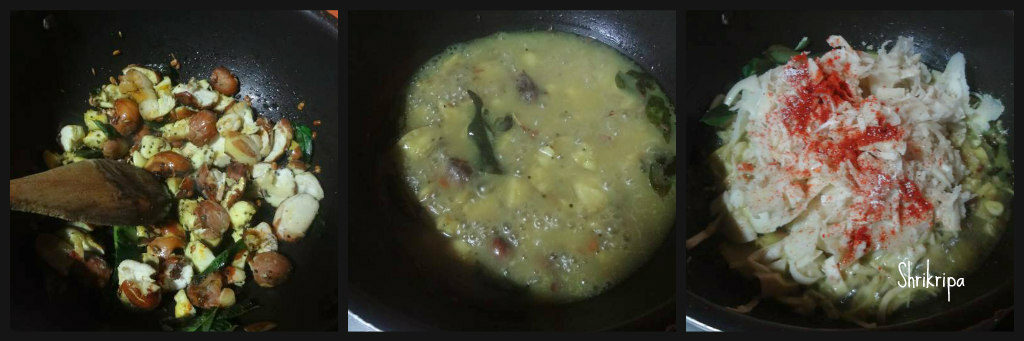
-I normally crush and store the jack seeds. So, no need of chopping or crushing. If you have fresh seeds with you, please crush the seed by using hitting stone and remove outer stiff cover and use inner seed.

– Take one thick bottomed pan, do seasoning. Heat oil, splutter mustard, add urad dal. When dal becomes light brown, add cumin, red chilli and curry leaves.

-Now add in crushed jack seeds, a cup of water and cook at low fire by closing the lid.

– When it is half done, add chopped and ready bamboo pieces, Red chilli powder, salt and jaggery, required amount of water.

-Close the lid and cook this in a low flame, until it is cooked or up to water drains.

-If water drains first, add some more water and make sure to cook properly.

Garnish with fresh grated coconut and mix, cook for 2 minutes and switch off the gas.

-Serve with hot rice and enjoy as a side dish.


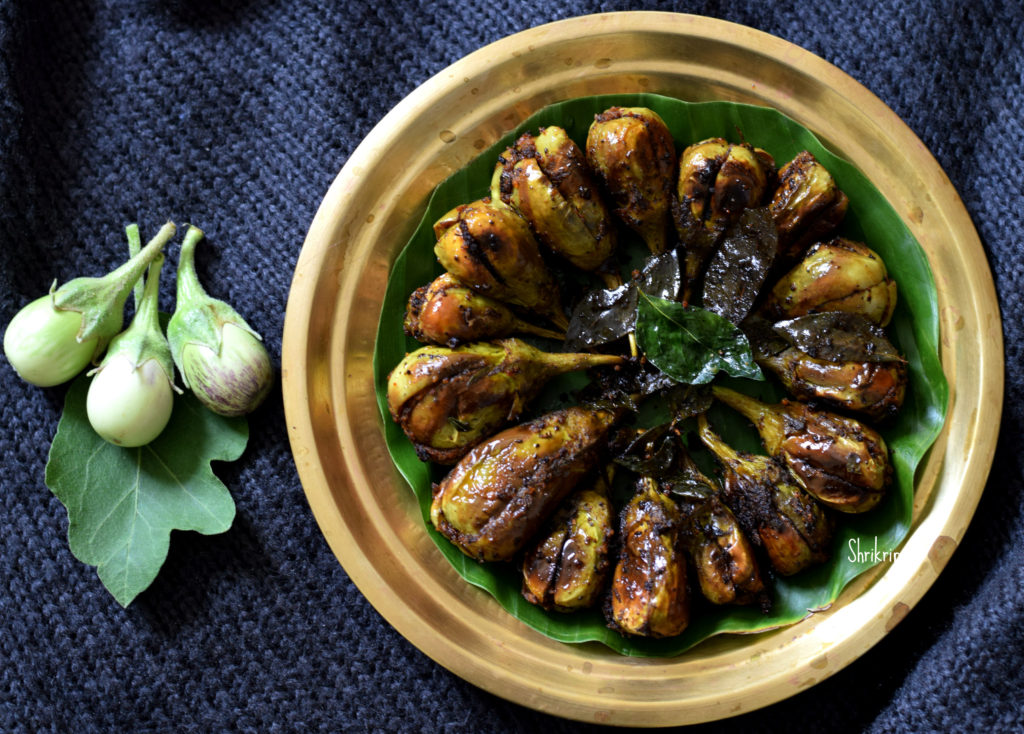
Instant Stuffed Brinjal:

Tiny brinjals are very delicious in dry curries as well as in gravies. When I have plenty of home grown organic brinjals, I normally make this quick dish, which can be handy as well as tasty when you are super lazy to cook. If chutney powder (any chutney powder will do) is around, within no time you will be able to make this delicious dish. It can be relished as a starter, side dish or with curd rice.

Ingredients:

Tiny Brinjals – 12

Garlic Chutney powder – 2 to 3 table spoons

Hucchellu/ gurellu or Nigella seed powder – 1 tea spoon (optional)

Red chilli powder – 1 tea spoon

Amchur powder – ½ tea spoon

Salt

Turmeric – ½ tea spoon

Cooking oil – 2 tea spoons

Method:

-Hucchellu powder is purely optional. If you have roasted Hucchellu powder, use it.

-Take one bowl, mix chutney powder, gurellu powder, salt, turmeric, red chilli powder, amchur powder, salt.

-Wash brinjal, make 2 slits (+ shape) and fill this mixture and keep aside. If any mixture is remaining, keep aside.

-Take one kadai, add oil. When oil becomes hot, add masala filled brinjals and toss for couple of minutes.

-Sprinkle little (1 table spoon) water and close the lid and cook in a low flame.

-Once again sprinkle water in between and cook until brinjal shrinks and cooks properly.

-Lastly, sprinkle remaining masala mixture, give one stir and serve as you wish.


Karkali / Arbi leaves Chutney:

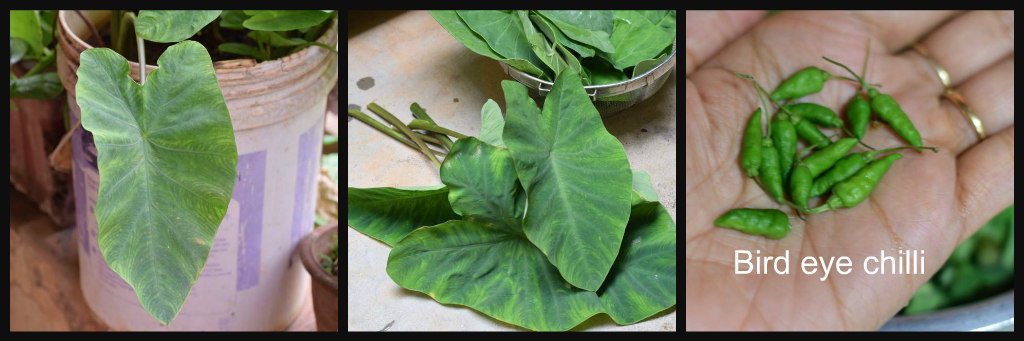
Monsoon is the time, we relish our dose of colocasia leaves, which is known as “Kesavu” in Kannada. Coastal people relish Pathrode, which is a rice batter smeared steam cooked rolls. Apart from this we usually relish its chutney and with mix veg curry as well. It goes very well with hot rice with a dollop of ghee or coconut oil.

Colocasia leaves has many names in India. It is known as Taro leaves, Arbi leaves, pathra leaves, Alu chi bhaji, kesavina ele and so on. Every state has its own speciality with this iron rich leaves. Because it tends to get itchy, we need to add sufficient amount of tamarind and it should get balanced with the taste.

If you learn the trick of this, half the battle is won, and you can master the art of cooking this leaf for sure. In our traditional preparation, we do use bird eye chilli for this chutney and if you don’t have access, you can use normal green chilli as well.

How to make this flavourful chutney:

Ingredients:

Arbi leaves – 12 to 14

Bird eye chillies – 8 -10 (if green chilli use 4 to 6)

Salt

Tamarind powder or tamarind – 1 ½ tea spoon

Garlic – 8- 10 cloves

Seasoning:

Coconut oil – 3 table spoons

Mustard – 1 tea spoon

Curry leaves – 1 spring

Chopped garlic – 4 to 5

Dried Red chilli – 1 (optional)

Method:

-Wash Arbi leaves as well as its stem and bird eye chillies.

-Chop leaves and stem.

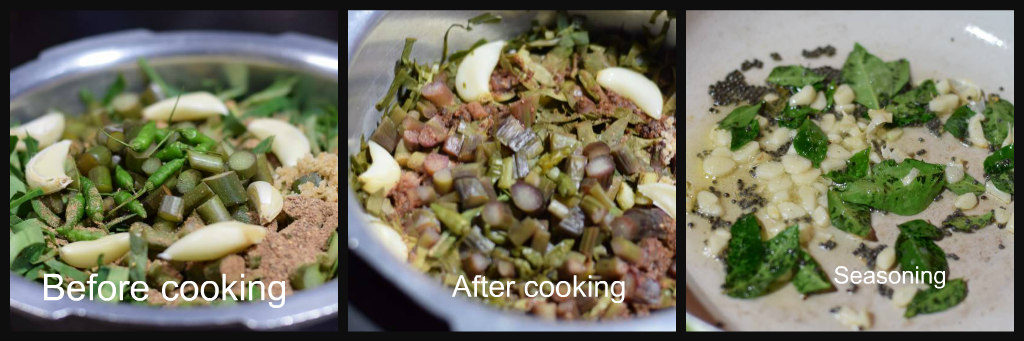
-Take one cooker, add chopped leaves, stem, chillies, garlic, tamarind, salt and cup of water.

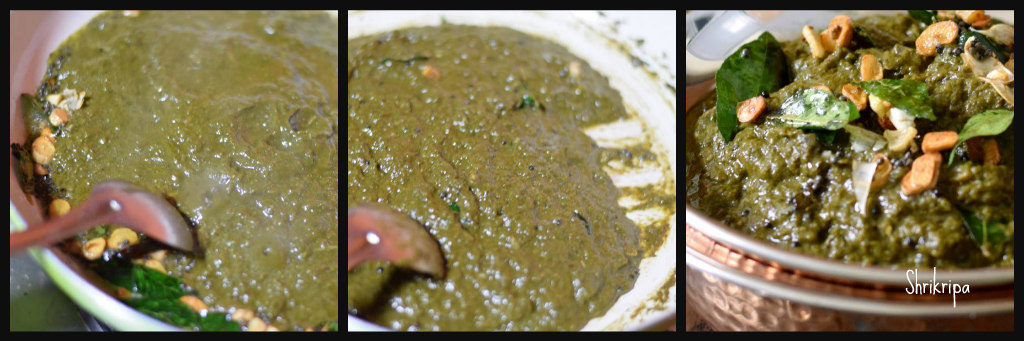
-Cook for 2 whistles, when it is cool, grind the content into smooth paste.

-Prepare seasoning, heat oil, splutter mustard, add curry leaves and chopped garlic and fry.

-To this seasoning, pour the ground mixture and boil it nicely.

-Serve this with hot rice and ghee or coconut oil.


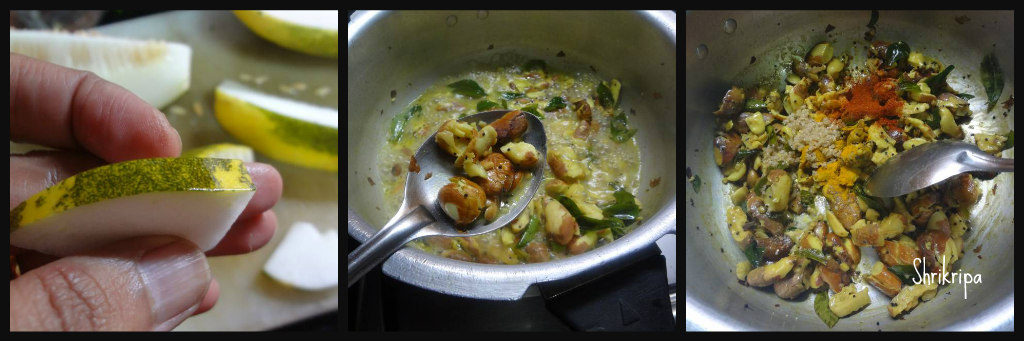
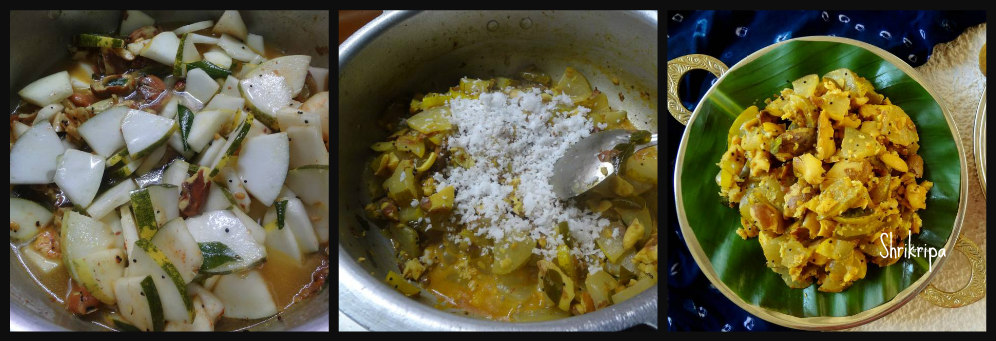
Jack seed and Mangalore cucumber palya:

Jack seed is halasina beeja, which is a seed of jackfruit and most underrated protein rich nature’s gift to mankind. All thanks to our elders, who have gifted us with the knowledge of lots of combinations of ingredients, vegetables. One such combination is coloured cucumber which is also known as Mangalore cucumber/ sambar cucumber with jack seed.  It is an ultimate, tasty side dish from our region and I am eager to share this recipe with you all –

I normally preserve jack seeds in a frozen form and procedure is already shared in my blog as well.

Ingredients:

Coloured cucumber – ½ or 1

Fresh or Frozen jack seeds –2 fists full

Grated coconut – 3 table spoons

Turmeric – ½ tea spoon

Red chilli powder – 1 tea spoon

Salt- as needed

Jaggery – as needed

Seasoning:

Coconut oil – 1 table spoon

Mustard – 1 tea spoon

 Urad dal – 1 tea spoon

Cumin – ½ tea spoon

Red chilli -1

Curry leaves – 2 springs

Method:

-Wash Mangalore/Coloured/sambar cucumber.

-Chop off 2 ends, slice in to 4 pieces and remove inner core (seed part) and chop into thin slices. (see the picture)

-Check now for the taste. If it is bitter in taste, soak the pieces in plain water for 5 minutes.

-Discard the water and proceed.

-If cucumber tastes good, no need to soak in water and you can directly proceed in cooking.

-I normally crush and store the jack seeds. So, no need of chopping or crushing. If you have fresh seeds with you, please crush the seed by using hitting stone and remove outer stiff cover and use inner seed.

– Take one pressure pan or cooker, do seasoning. Heat oil, splutter mustard, add urad dal. When dal becomes light brown, add cumin, red chilli and curry leaves.

-Now add in crushed jack seeds, little water and cook for one whistle.

-When pressure releases, remove cooker lid and proceed to make palya.

-Switch on the gas, Add Red chilli powder, salt and jaggery, required amount of water and chopped cucumber pieces.

-Close the lid and cook this in a low flame, until cucumber is cooked or up to water drains.

-If water drains first, add some more water and make sure to cook cucumber.

Garnish with fresh grated coconut and mix, cook for 2 minutes and switch off the gas.

-Serve with hot rice and enjoy as a side dish.

Potato Sagu:

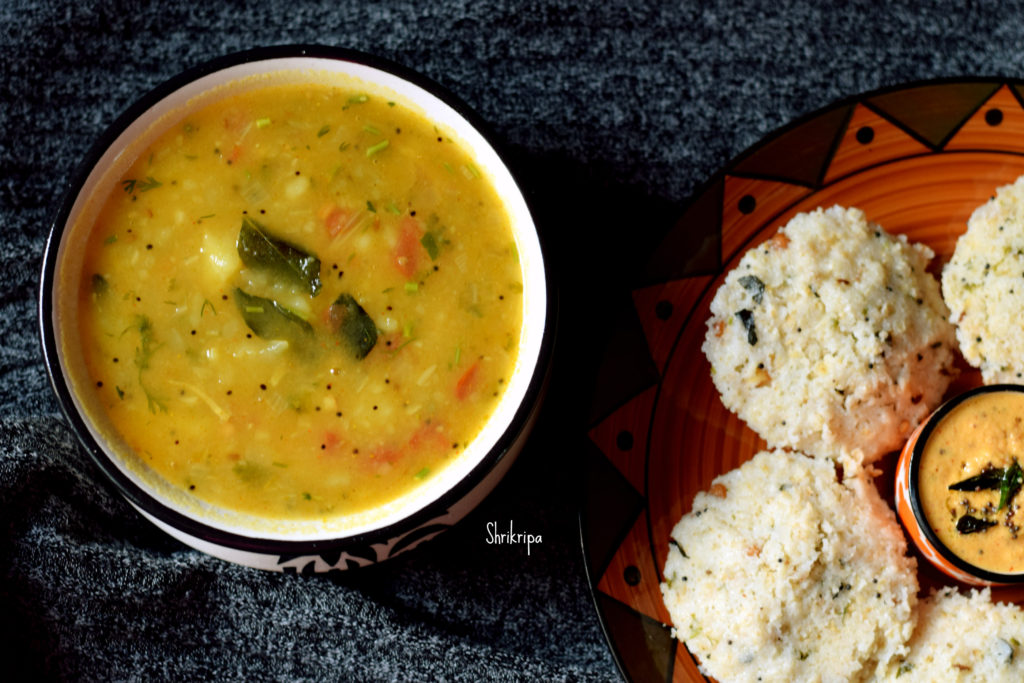
Potato Sagu is an ultimate combo for Rava idli, here in Bangalore. I came to know about Rava idli or Sagu only after coming to Bangalore, after my marriage. Earlier, we never found this combo in Mangalore. I like potato Sagu which is served with Rava idli in MTR hotel, Bangalore. It is here, that the invention of Rava idli happened, during the world war II. At that time, making of idli was so difficult, due to short supply of the rice, this is how they experimented with semolina to prepare idli and it is now history and Rava idli has become a staple diet of south Indians throughout the world.

Earlier I used to use MTR or Mayya’s Potato Sagu masala to this side dish to get a taste as close as their Sagu. But, now they have stopped the product. To replace it, I started using my own masala. 

My preparation goes like this-

Ingredients:

Potato – ½ kg

Onion – 2

Ginger – ½ “

Green chillies – 2

Tomato – 2

Coriander leaves – 2 table spoons

Salt

Sugar/ jaggery

Turmeric – ½ tea spoon

Sagu masala powder – 1 ½ to 2 tea spoons (Mixture of Puffed chana/ Putani powder, coriander powder, jeera powder, little garam masala and tamarind powder) 

Seasoning:

Cooking oil – 2 table spoons

Mustard – 1 tea spoon

Urad dal – 1 tea spoon

Chana dal – 1 tea spoon

Cumin – ½ tea spoon

Hing – one pinch

Curry leaves – 2 springs

Method:

-Wash potato, cut it into half and cook in sufficient water for 2 whistles in a pressure cooker.

-When it is cool, remove skin, mash and keep aside.

-Chop onion, ginger, green chillies, tomatoes and coriander leaves.

-Take one deep pan, add oil for the seasoning, when it is hot, splutter mustard, fry urad dal and chana dal. Next add hing, cumin, curry leaves.

-Next- fry onion, green chillies, ginger. While frying add turmeric powder as well.

-When onion is light brown, add tomatoes, salt, sugar or jaggery, Sagu masala and fry until tomato is mushy.

-Add 2 to 3 cups of water and when it starts boiling, add mashed potato, coriander leaves and cook for 5 to 10 minutes or until it becomes a homogeneous mix in a low fire.

-Serve with Rava Idli Or Rava and Oats idli  as a dip.