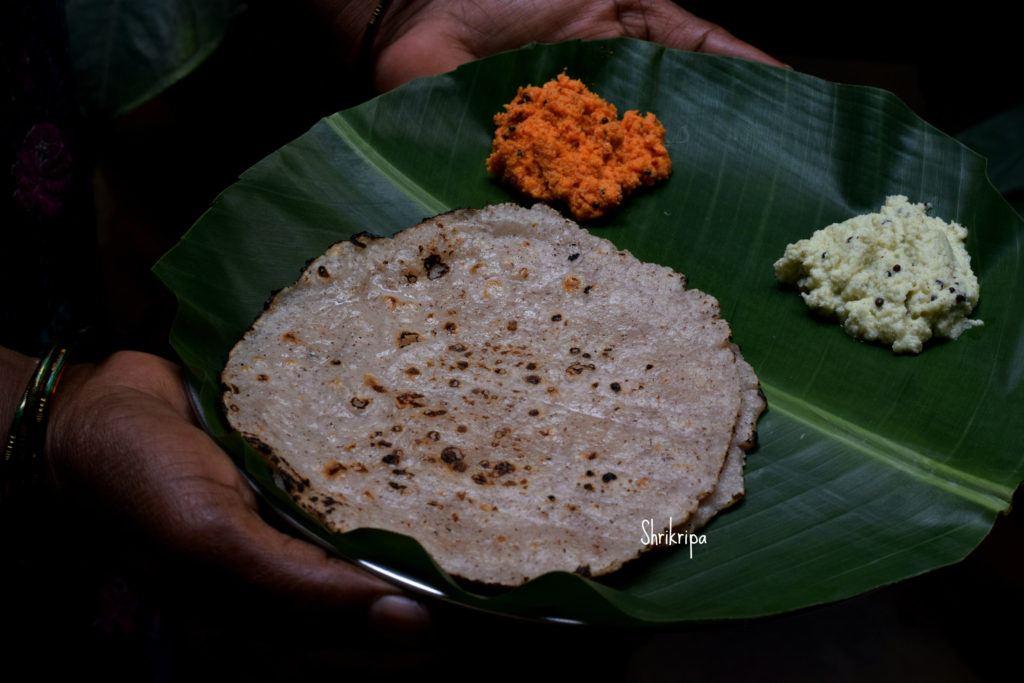
Ubbu Rotti : ( In a Traditional way)

Made Ubbu Rotti for today’s lunch, one of the most laborious and very tasty dishes of south canara region. It is a simple rice flat bread and made by soaking Red rice. This is an age old, gluten free and healthy flat bread.

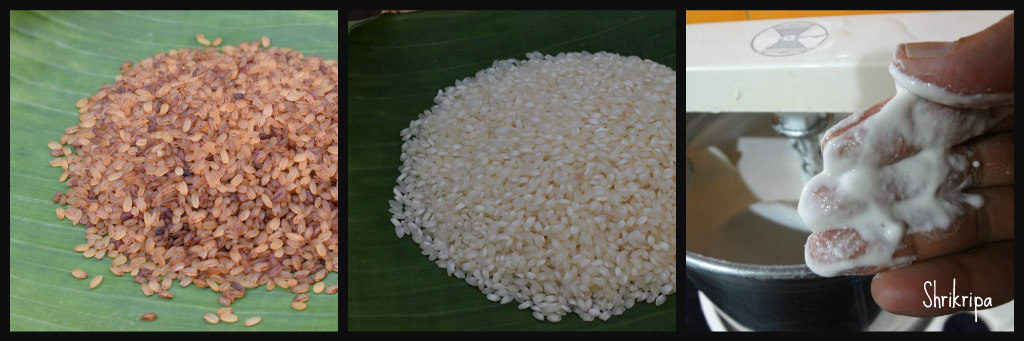
Ubbu Rotti is made as well as served in different styles. Each household has their own method even though the basic ingredient is the same Red rice which is also known as boiled rice or Kerala Matta rice.

In our household we make the Rotti by soaking Red rice and Idli rice in hot water and ground to smooth batter with salt. The ready batter is then cooked on a low heat to make a dough. Then it is pressed into discs by keeping in-between the two plantation leaves. In our native, people use clay tawa to cook the roti. I normally use my Iron Roti tawa. After cooking on both the sides, normally in villages, we put it on “Kenda” (hot burning firewood) to puff up nicely. Here I normally use direct gas flame to do the same. It is low in calorie as well as very healthy and tasty.

While serving, some families prefer chutney and some Malabar spinach gravy. It depends on one’s family preference. In our household, my Mom used to serve Garlic or Onion chutney and Mom -in -law used to serve with Raw mango chutney.

I have mentioned that it is laborious at the beginning itself. You must be thinking by now, why? It is very simple and straight forward and sounds easy as well. I am telling you, it is one of the most difficult recipes to master! Because it needs a lot of patience and time. Roti cooks really slow and vanishes very fast as well 😉 Once you get a hold of it, you can make it very easily. So, if you attempt and practice you will get the hang of it and can make easily.
Ingredients:

Boiled rice – 1 cup

Idli rice – 1 cup

Salt

Coconut oil – to apply

Method:

-Wash rice and soak it for one to two hours by adding hot boiling water and close the lid.

-Grind into smooth batter by adding enough water.
-Cook the batter( I normally add 1 tsp of coconut oil to batter to enhance the taste)  until it forms a dough consistency.
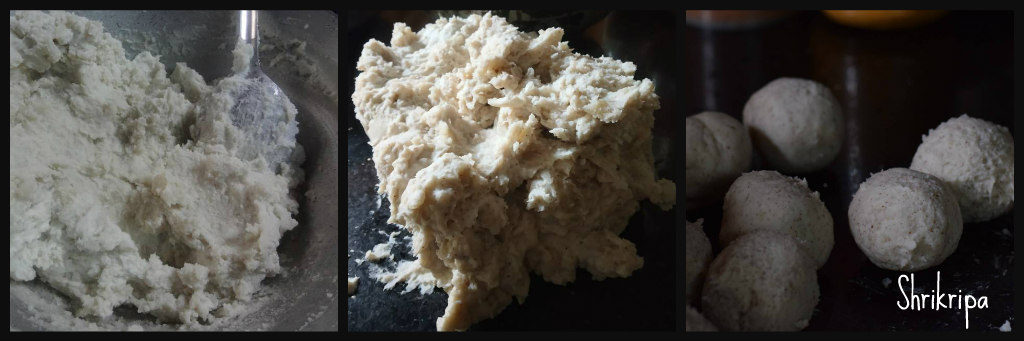
-Take out and cool a little and start making the discs.

-Take small banana leaves, wash and keep it ready as well as a roti presser or two wooden planks to press.

-Take a big lemon size dough and knead a little and form a round shape.

-Take one banana leaf, place it on a roti presser. Place the dough roundel over it and close it with another leaf and press the presser. If you are using plank, do it exactly like this by using the plank.
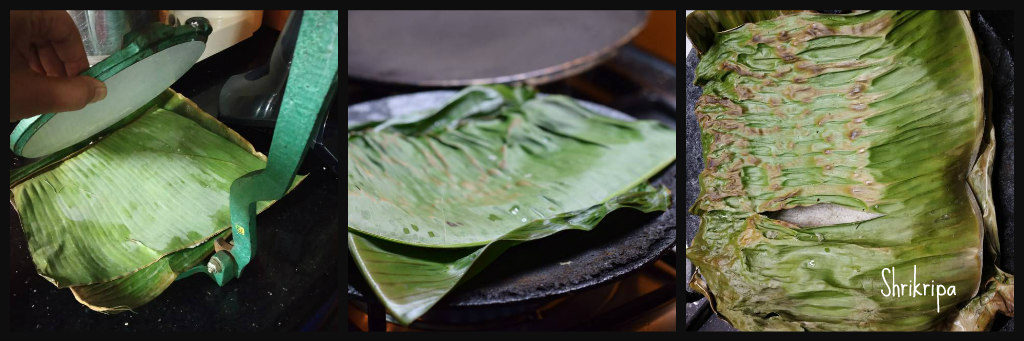
-Heat the griddle, place the discs (including banana leaf) over the hot iron griddle. Cook in a medium heat.

-Flip the sides couple of times, when roti cooks, leaf will become loose and at that moment, remove the leaf and discard it.

-continue to cook the roti, until you see the light brown spots. Now it is the time to place it on the direct fire and do it. Some would puff, some would not or partially puff.

-That is it. Remove, apply some coconut oil and enjoy with Onion/garlic chutney or Raw mango chutney or Malabar spinach curry.



Indian broad beans with ground nut:

It is a very tasty vegetable and is known as Chikdikayi, chapparadavare or Indian broad beans. This subzi/dry curry is one of our favourite and whoever tastes this subzi, usually asks for the recipe. So, I thought of sharing this recipe in my blog as well. I learnt this from our family friend who hails from Gulbarga, Northern part of Karnataka.

How it is made –

Ingredients:

Indian broad beans – 500 Gms

Garlic – 10 -12 cloves

Red chilli powder – 1 to 2 tsp.

Salt

Crushed roasted groundnut – ½ cup

Oil- 2 tbl sp.

Method:

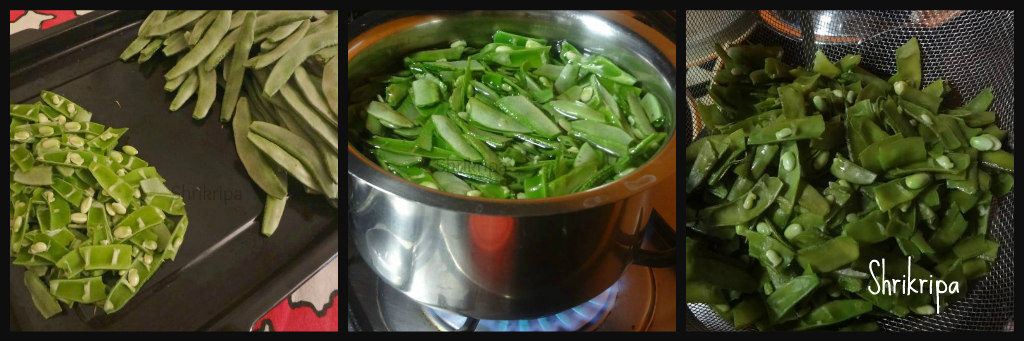
-Remove both side’s fibre and slit open, to see. Slit at the centre and keep aside.

-Now keep one pot of water for boiling, add little salt to it. When it starts boiling, add broad beans including bean as well.

-When it changes colour, drain the water and keep aside.

– Keep one thick bottomed kadai, put oil. When oil becomes hot, add crushed garlic and fry a little. Now add cooked and drained beans.

-Add sufficient amount of salt and red chilli powder and mix nicely. Cook until oil leaves from the sides.

-Now add crushed or roughly powdered ground nut and mix for a while.

-Serve with Chapati/phulka’s or rice.

Note: I usually add ready ground nut chutney powder (which has red chilli powder, salt and garlic)

If you are using chutney powder like me, decrease the amount of salt and red chilli powder while adding at the beginning.


Steel cut Oats and lentil Dosa:

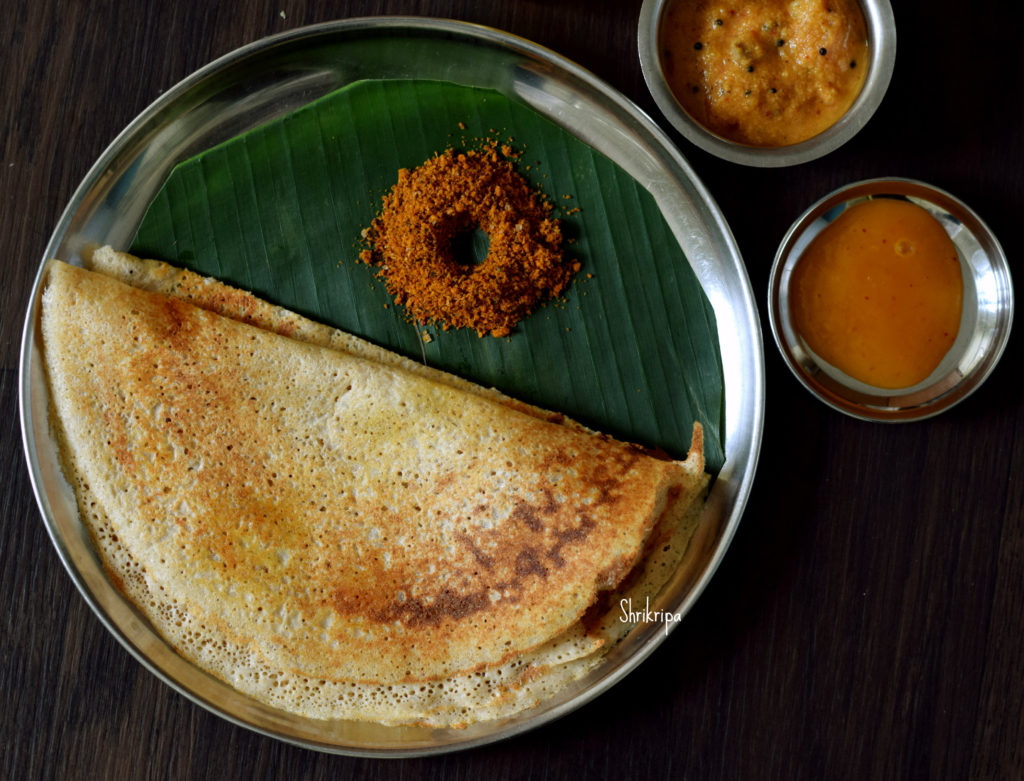
It is a no rice urad dal Dosa. I have used Steel cut oats  or broken Oats instead of rice and avoided rice fully in this batter. These oats are considered as cut pieces of original grain. It is healthy compared to quick cooking oats. It takes much longer time to cook but when it is soaked and ground, almost tastes like rice and you can’t figure out the difference. This is Gluten free, high in fibre, protein and iron. It is low in glycaemic index.

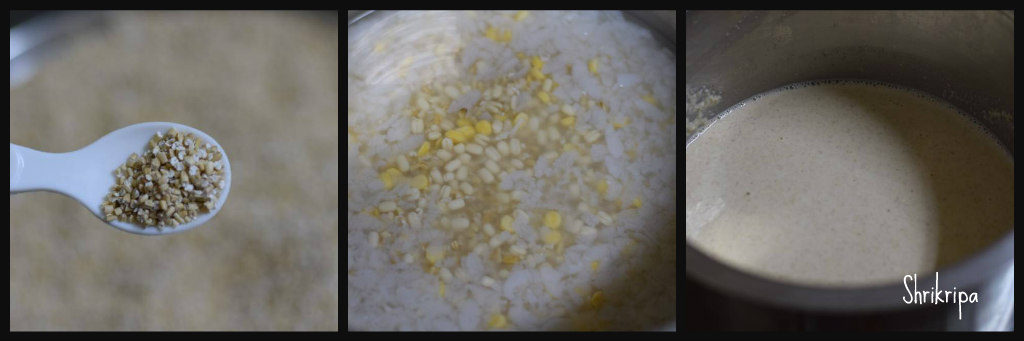
I have bought Kosh broken oats to try out my experiment and it is whole oat grains cut into smaller pieces. It looks like broken wheat. When it is cooked, tastes like our broken wheat with outer thick skin with nutty taste. Loaded with insoluble fibre which helps in our gut health as well. Because of its low glycaemic property, it is a very good option for diabetic people and its fibre level will help to keep them full for longer hours.

I have used my regular plain Dosa batter recipe. I simply avoided rice and added broken oats.

Ingredients:

Steel cut Oats – 2 cups

Urad dal – ½ cup

Methi – 1 tea spoon

Chana dal – 2 table spoons

Poha – 1 fist full (optional)

Salt

Method:

-Wash oats, urad dal, methi, chana dal twice and soak this with poha (if you are using) for 3 to 4 hours.

-Grind this soaked ingredient by adding soaked water little by little with added salt.

-Ferment this batter over night or 8 to 10 hours according to the climatic condition.

-When it is ready, mix nicely, adjust the consistency of the batter and start making dosas by heating iron griddle.

-Take one ladle spoon of batter, spread into thin Dosa, pour oil or ghee and roast on one side, then flip and cook the other side, remove and serve with chutney or sambar.

Homemade Pumpkin Puree/Preserve:

Pumpkin is usually considered as fall / Winter vegetable even though it grows all year round without any issues. Pumpkin vine needs least attention compared to growing other vegetables. It is low in calories, high in anti-oxidants, Vitamins, minerals as well as high on natural source of Beta carotene.

I normally make use of pumpkin in many forms and one such form is Pumpkin Puree. When home grown, organic pumpkin is available, it is an awesome way to store the goodness and use it as needed in your cooking from making pastas to baking.

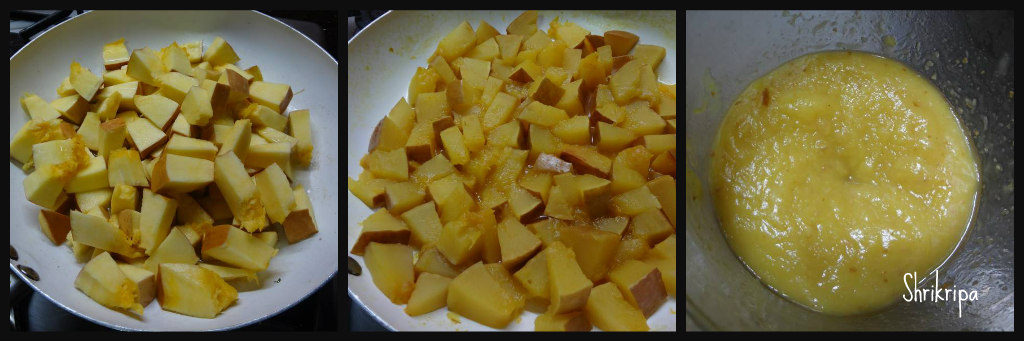
Usually puree can be made by using two methods. Either on stove top or by baking. I normally prefer stove top method. In this method, I don’t even remove the outer skin. In this way, we can retain the added goodness.

How I make is –

Ingredients;

Pumpkin – 1 kg

Water – 1 cup

Method:

-Wash pumpkin, remove inner core and seed part.

-Chop pumpkins into bite size pieces.

-Take one tawa, spread all the pieces and sprinkle water and cook those pieces until done.

-When pumpkin pieces are well cooked, water also evaporates.

-Cool and grind this into puree.

-Store this in a freezer by putting it in an air tight container and use whenever it is needed.

Pumpkin/Cheenikayi Kalasu:

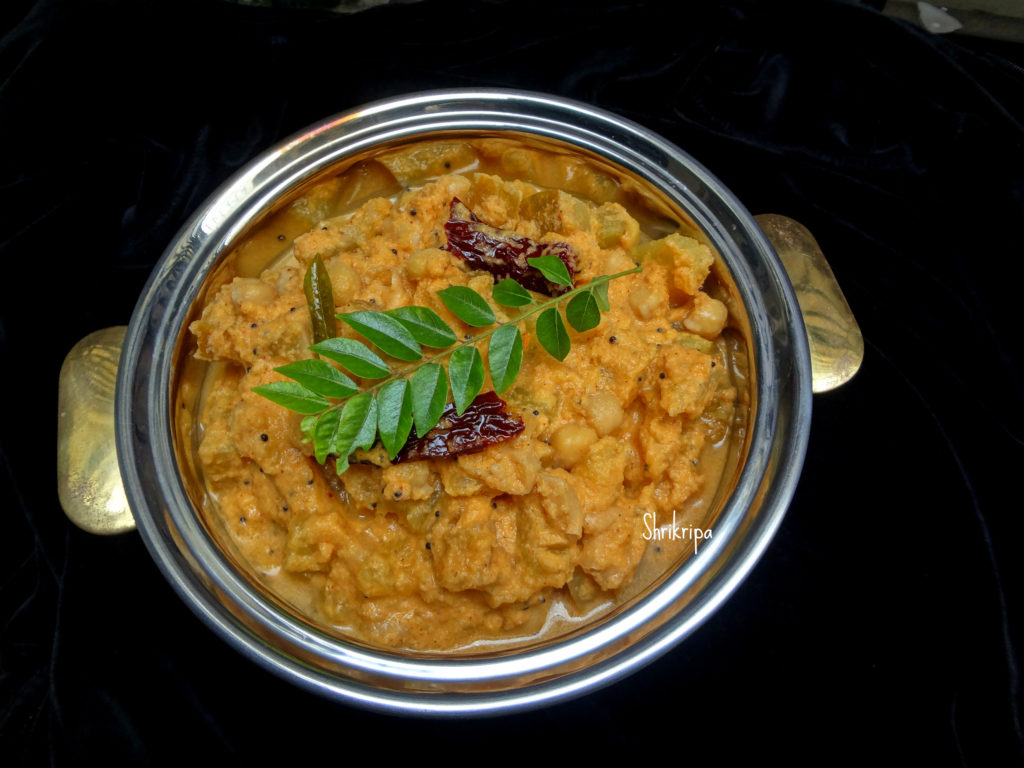
Pumpkin Kalasu is a traditional recipe of our community. It is a semi solid, sweetish coconut based curry, which goes very well with hot rice or Chapati.

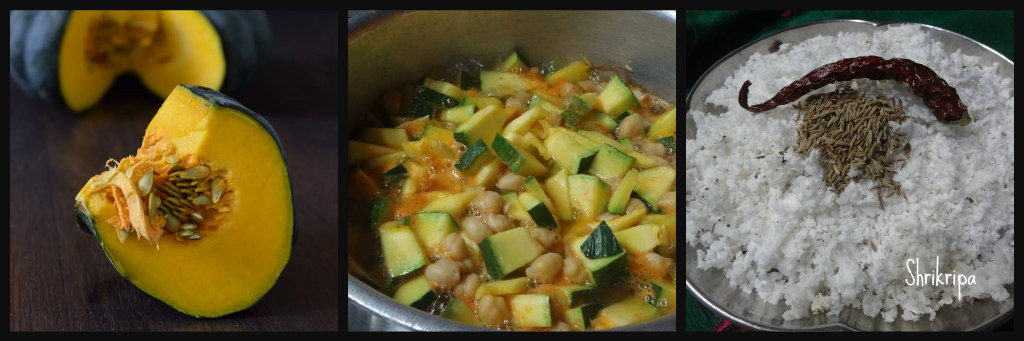
Usually we use tender, greenish sweet pumpkin for this curry, paired with white Kabuli chana.

Ingredients:

Green sweet pumpkin – ½

White chana – 1 cup

Coconut – 1 bowl

Cumin – 1 tsp

Red chilli – 1 to 2

Salt

Jaggery

Red chilli powder – ½ tsp

Seasoning:

Coconut oil – 1 tsp

Mustard – 1 tsp

Red chilli – 1

Curry leaves – 1 string

Method:

  • Soak white chana for 7 to 8 hours or overnight.
  • Cut pumpkin into half; remove inner soft pith and seed. Chop this into small pieces with skin intact.
  • Wash soaked chana, put fresh water and cook in a pressure cooker for 3 whistles.

  • When pressure relieves, open the lid and add chopped pumpkin, salt, red chilli powder and jaggery. If needed add little more water and cook until pumpkin is done.
  • Now grind coconut, cumin and red chilli into fine paste by adding required amount of water.
  • Add this masala to cooked veggie. Adjust the consistency by adding water. Consistency should be semi solid. Boil this and add seasoning.
  • For seasoning heat coconut oil, mustard, red chilli and curry leaves.
  • Enjoy this curry with hot rice or Chapati.


Chapati Roll /Kati roll (with White Chana):

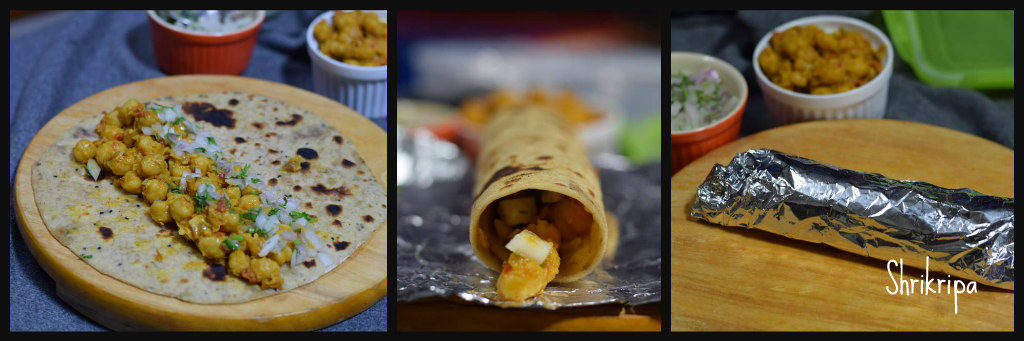
Rolls are very easy to have, when you are on the move. Kati roll is a generic name for any kind of rolls. This is a famous Indian street food, which is originated from Calcutta.  in its original form, Skewer roasted kebab was placed and wrapped with a roti. Over the years, many variants have evolved and any filling either veg or non-veg all of which now comes under this category and called as Kati roll with the name of the filling attached with it. Hence, we can call this roll as Chana Kati roll 😉

It is another easy, healthy, nutritious and tasty recipe. This recipe is well balanced with the required amount of carbohydrate, protein, fiber and fat. Easy to prepare and eat for busy people and for school going kids. Here I have used Sweet Potato roti to enhance the nutrition. You can use plain roti as well.

Ingredients:

Ready Roti’s – 6 to 8 (sweet potato roti or plain roti)

For the filling:

White chick peas/Kabuli chana – 1 cup

Onion – 1 (chopped)

Tomato – 1 Chopped

Ginger garlic paste – 1 tsp.

Cumin seeds -1 tsp

Red chilli powder – 1 tsp.

Cumin powder – ½ tsp.

Garam masala – ½ tsp.

Coconut milk powder – 3 tsp. (I use Maggi coconut milk powder)

Turmeric powder – ¼ tsp.

salt to taste

 Oil – 1Tblsp.

For the topping:

 Onion chopped – ½

Coriander leaves- chopped

Salt pinch

Lemon – half

Method:

-Soak Chana at night or 7 to 8 hours. Cook with salt and required amount of water. Drain and keep aside.

Now to prepare the stuffing:

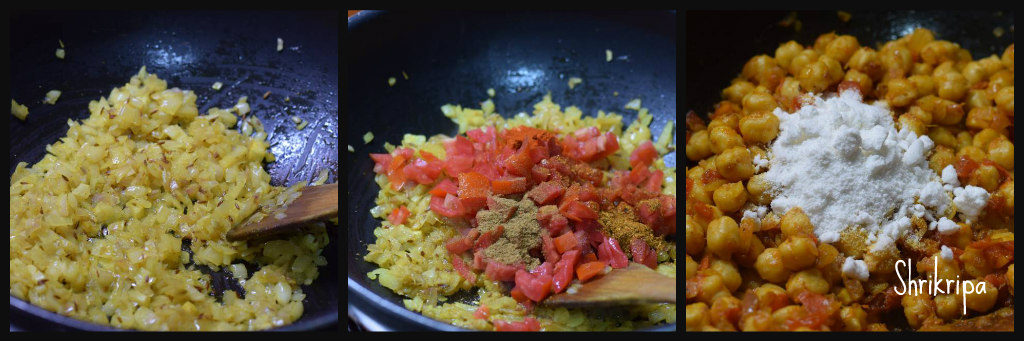
Take one Tawa and put 2 tsp. of oil, cumin and chopped onion. Sauté till it is done. Sprinkle little turmeric, add ginger garlic paste, fry till raw smell disappears.

-Now add tomato, and all the powders (red chilli, garam masala, cumin, salt), add cooked chana, coconut milk powder and sprinkle water (2 to 3 tbsps.)

-Mash a little and when it starts boiling and masala coats well, remove from the flame.

How to assemble:

-Mix all the ingredients from the Topping together (onion, chopped coriander leaves, salt, lemon juice) and keep the mixture aside.

-I normally make little bigger, elongated Roti’s (not round) for rolls.

-When Roti, Filling mixture, everything becomes cool, take one aluminium foil and keep one Roti over it.

-Spread the prepared Chana at one end, sprinkle onion topping.

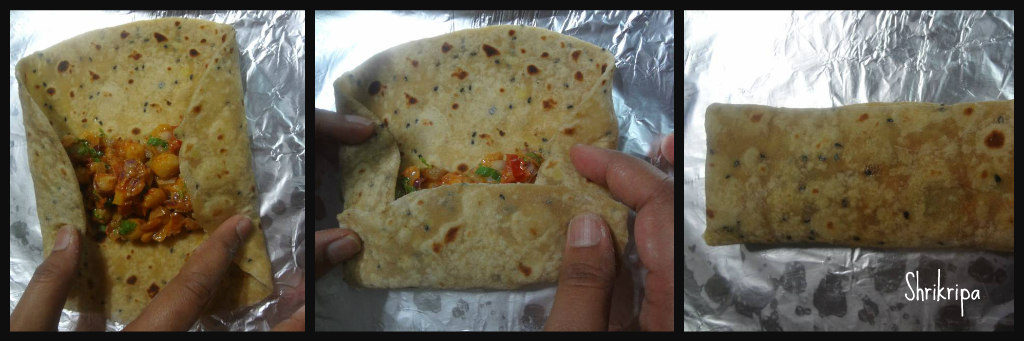
-Now comes the folding part. You can roll in two methods.

-One is straight away, roll and both the ends can be sealed by folding aluminium foil.


-Second method is, Fold at each end of the roti, then roll like a mat.

-In this way, roll is automatically sealed by itself and here you can avoid usage of an Aluminium foil and can carry directly in a Lunch box.


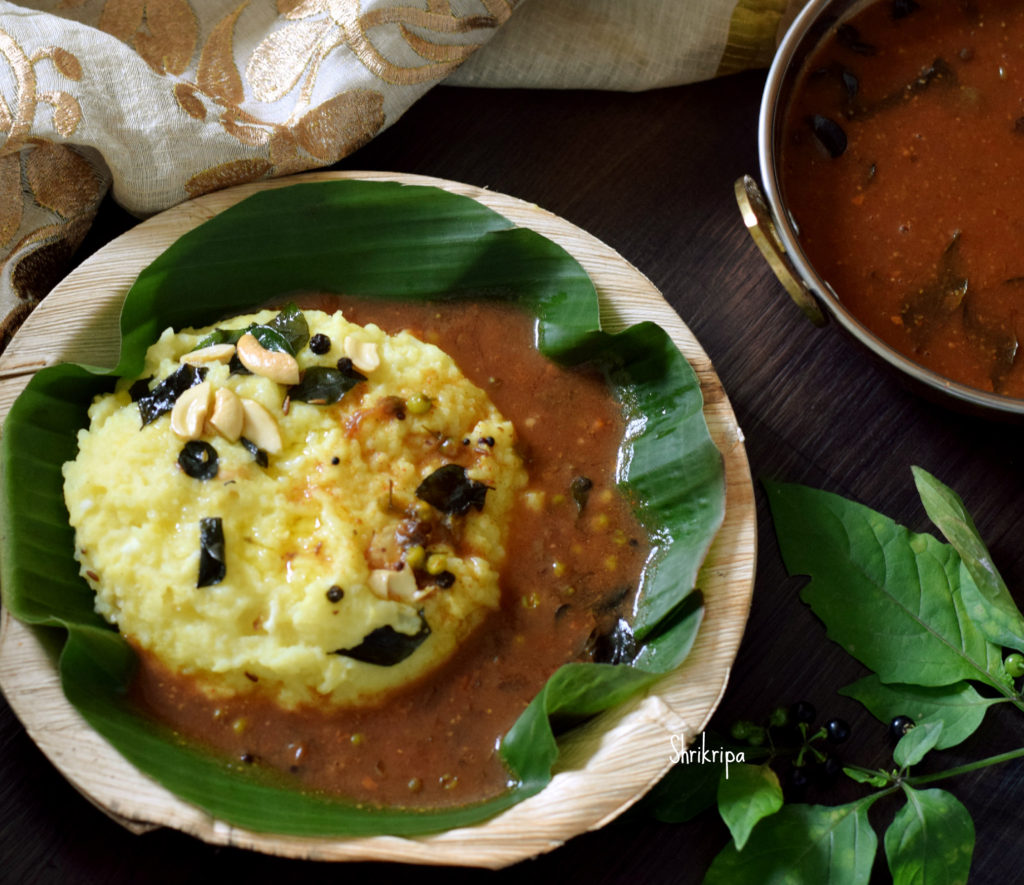
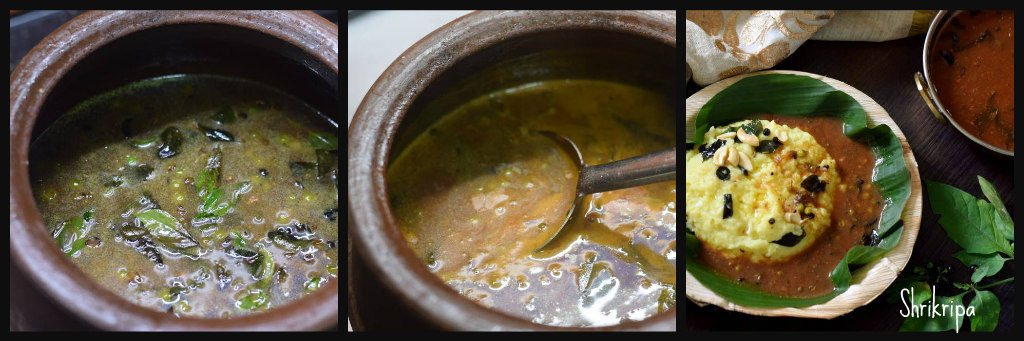
Ganike hannu Gojju, side dish for Pongal / Black nightshade fruit curry:

Have you ever tasted this wonder fruit? If no, you should pluck next time when you see in your vicinity and should enjoy it and feed all the goodness to your body. When we were young, it was our pass time, while walking towards school. We would pluck all these edible different berries though we never knew the goodness that we were getting form these.

Traditionally, in our region, these berries are not at all used in cooking. As I know, it is used only in Tamilnadu in a dry form, after soaking it in buttermilk and sun drying. Normally these dried berries are made into sweet and tangy curry called Vathal Kuzhambu and I tried the fresh berries to include in my regular Pongal Gojju, as a side dish.

As I said in the earlier post, black night shade has many names and these berries are also known as Ganike Hannu, Kakke Hannu, Chavi Hannu in Karnataka. Manathakkali, Sukkuti in Tamil. Nakoi in Hindi.

Black Nightshade (solanum nigrum) is sometimes confused with Deadly Nightshade (Atropa belladonna) of which berries grow individually and in this, we see a bunch formation of berries.

It has a whole lot of health benefits. It is a major source of anti-oxidants and moreover anything else, it is pesticide-free and free of cost 😀

For me, it is a gift of mother nature. I have not potted the plant and it is growing wildly in my garden and feeding me with greens and berries. This time, I have added these berries in my usual side dish, which I prepare for Pongal and liked as well.

Now we will move towards the details –

Ingredients:

 Ganike Hannu – 1 cup (I have used black as well as green unripe one)

Tamarind – One gooseberry size

Jaggery

Salt

Sambar powder – 1 to 2 teaspoons

Rice flour – 1 to 1 ½ teaspoon

Sesame Oil / any cooking oil– 1 tablespoon

Fenugreek seeds – ½ teaspoon

Hing – ¼ teaspoon

Mustard – 1 teaspoon

Cumin – ½ teaspoon

Dried Red chilli – 1

Curry leaves – 1 spring

Method:

-Soak tamarind in a cup of water.

-Wash berries and keep them ready.

-Keep the vessel for seasoning, heat oil, first fry fenugreek seeds.

-Splutter mustard, cumin, hing, chilli and curry leaves and drop berries and fry until it wilts.

-Add tamarind water, salt, jaggery (jaggery should be a little more)

-Boil until berries are cooked and soft. Time to add Sambar powder.

-Mix rice flour in ¼ cup of water, mix and pour it into the curry.

-Boil this nicely, until the top of the curry looks glossy. In the meantime, adjust and add salt, jaggery or sambar powder if needed.

-Serve this Gojju with Pongal as a side dish or you can have it with white rice as well.

-It is sweet, sour and Hot in taste and pairs very well with Pongal.


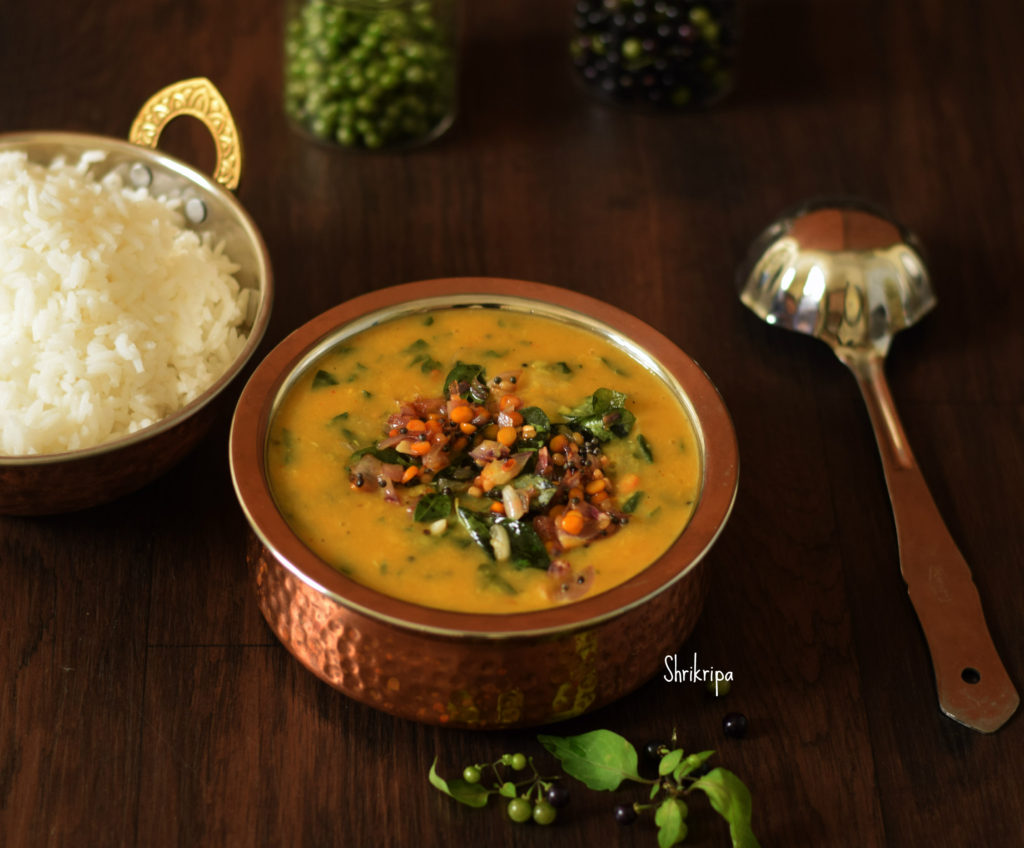
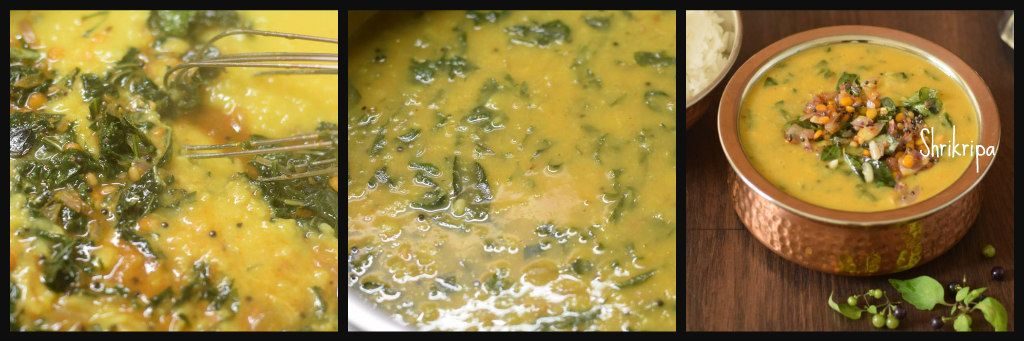
Ganike Soppu Kootu:

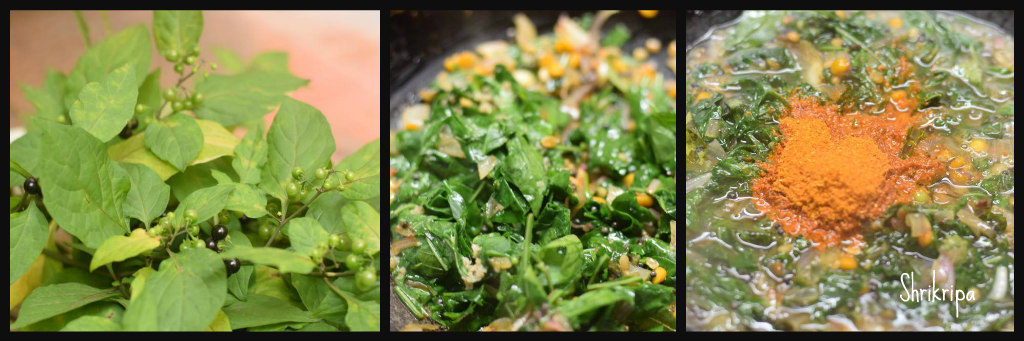
Monsoon Is the time, when my garden is filled with greens and I make use of all the goodness that mother nature is offering to us.  Ganike soppu is a widely known herb by many regional names like Ganike or Kakke soppu in Kannada, Manathakkali keerai in Tamil. Botanical name is Solanum Nigrum which is originated in South Africa and commonly known as Black nightshade.

It is a medicinal herb and very good for stomach ailments, is what I have heard from my elders. Usually green leaves are used to make Tambli and it is believed that, it is a remedy for menstrual cramps as well as stomach related discomforts.

This time I got a bumper harvest from wildly grown plants and tried to make kootu but without adding coconut. It is a sort of dhal cum sambar. We liked it and thought of sharing it with my readers as well.

Kootu recipe, what I have followed is from Jayanthi Senguttuvan aunty and posted on our Foodie group by Senguttuvan uncle. Made some changes according to our requirement and enjoyed it thoroughly with hot rice as well as dosas.

Ingredients:

Toor dal and Moong dal – ½ + ½ cup each

Turmeric – ½ tea spoon

Hing – ¼ tea spoon

Sambar powder – 1 to 2 tea spoons

Salt

Seasoning:

Oil – 1 table spoon

Mustard – 1 tea spoon

Urad dal – 1 tea spoon

Gram dal – 1 tea spoon

Curry leaves – 1 string

Onion -1 medium

Ganike soppu/ greens – As required

Method:

-Take one cooker, wash dals, put required amount of water, turmeric, hing and cook.

-Wash greens. Chop greens as well as onion.

-Prepare seasoning, heat oil, splutter mustard, fry urad dal, chana dal and add curry leaves, chopped onions and fry for a while.

-Add chopped greens and fry until it wilts.

-Add sambar powder, salt and adjust the consistency by adding water.

– Add cooked, mashed dal, check for the salt and masala, adjust it.

-Boil nicely and serve with rice, roti or Dosa or as you wish to have.


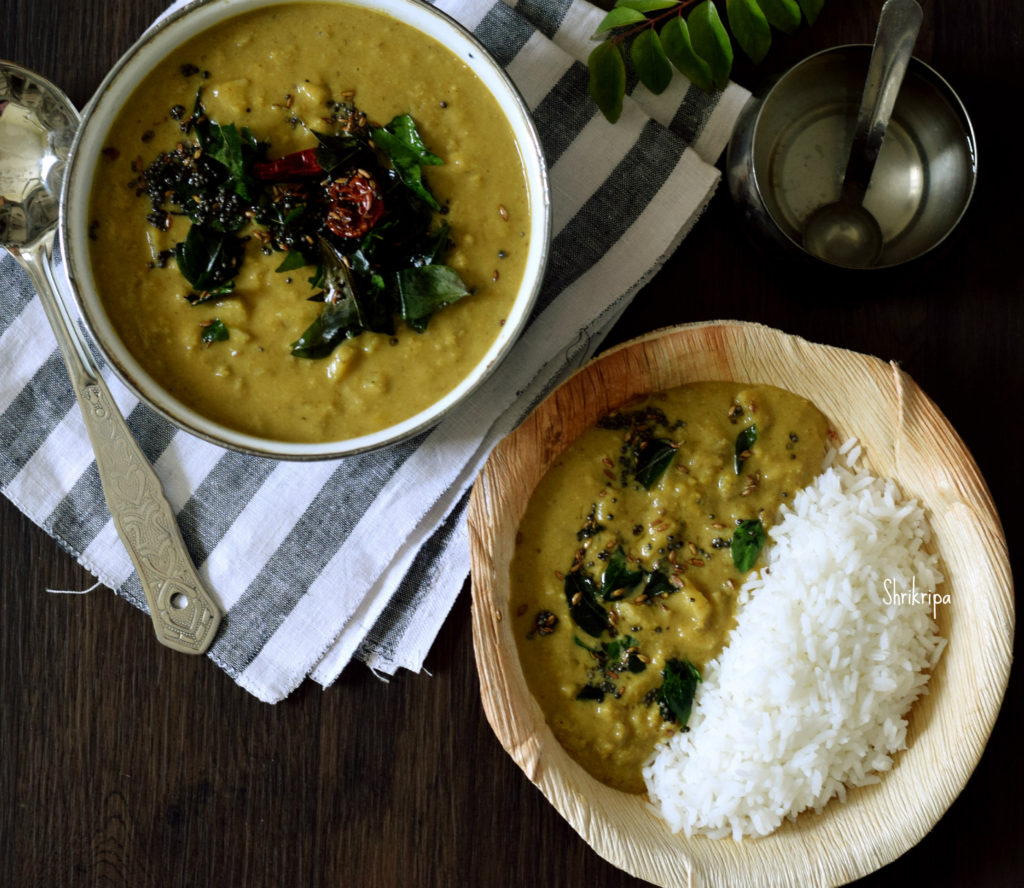
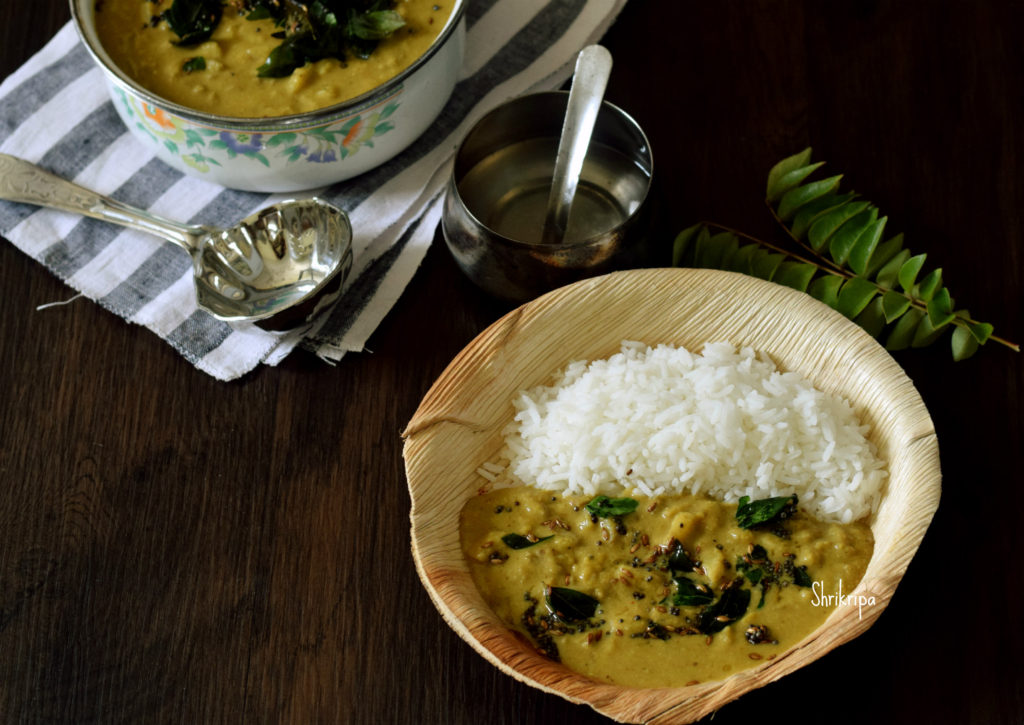
Raw Plantain / Raw Banana Pepper Curry

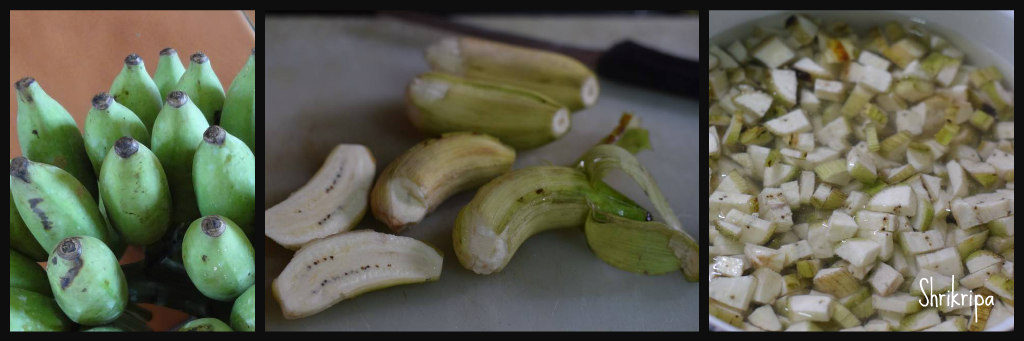
This is an age old recipe, which we used to enjoy during our childhood. Usually my paternal aunt used to make this curry by using the small variety of banana. Banana I have used is home grown, small variety which we call as Kadali / Yelakki banana. Non-ripe, green one.

This curry is prepared using little bit of Toor dal and good amount of pepper for heat. Plantain pepper curry is tangy, spicy and little bit sweet all at the same time. This curry goes along with plain rice with a dollop of ghee or Coconut oil.

Ingredients:

Plantain/Raw banana – 7-8 (if it is small variety) 1 or 2 (if it is big variety)

Toor dal – ¾ cup

Salt – to taste

Jaggery – 1 to 2 tsp.

Red chilli powder – 1 tsp.

Turmeric powder – ½  tsp.

Tamarind – 1 small lemon size.

For masala: Toor dal – ½ tsp, Fenugreek seeds-¼ tsp, coriander- 1tsp, Cumin – ½ tsp, black pepper – 2 tsp, garlic – 5 -6 cloves, coconut- 2 tsp.

Seasoning: Coconut oil – 2tsp, mustard -1 tsp, Cumin – ½ tsp, red chillies -1 to 2, curry leaves –little.

Method:

-Cook toor dal in sufficient water and keep aside.

– Peel banana and chop it into a tiny bit, immerse in water to avoid discoloration.

– Now take one vessel and prepare tamarind water (by putting tamarind in 2 cups of water). Keep it for boiling.

-To this, add salt, red chilli powder, jaggery, and turmeric powder. When it starts boiling, add banana bits by draining the water in which it was immersed.

-Now prepare masala by roasting toor dal, fenugreek, coriander, Cumin, pepper and garlic with little oil (preferably coconut oil) .

-When dal becomes light brown, remove from the flame and grind this into a smooth paste with coconut.

– When banana is done, add cooked dal, ground paste, required amount of water (adjust according to your requirement), check for salt and sweetness.

-Boil this mixture and add seasoning by using all seasoning ingredients.

-Serve with hot rice with dollop of ghee or coconut oil.


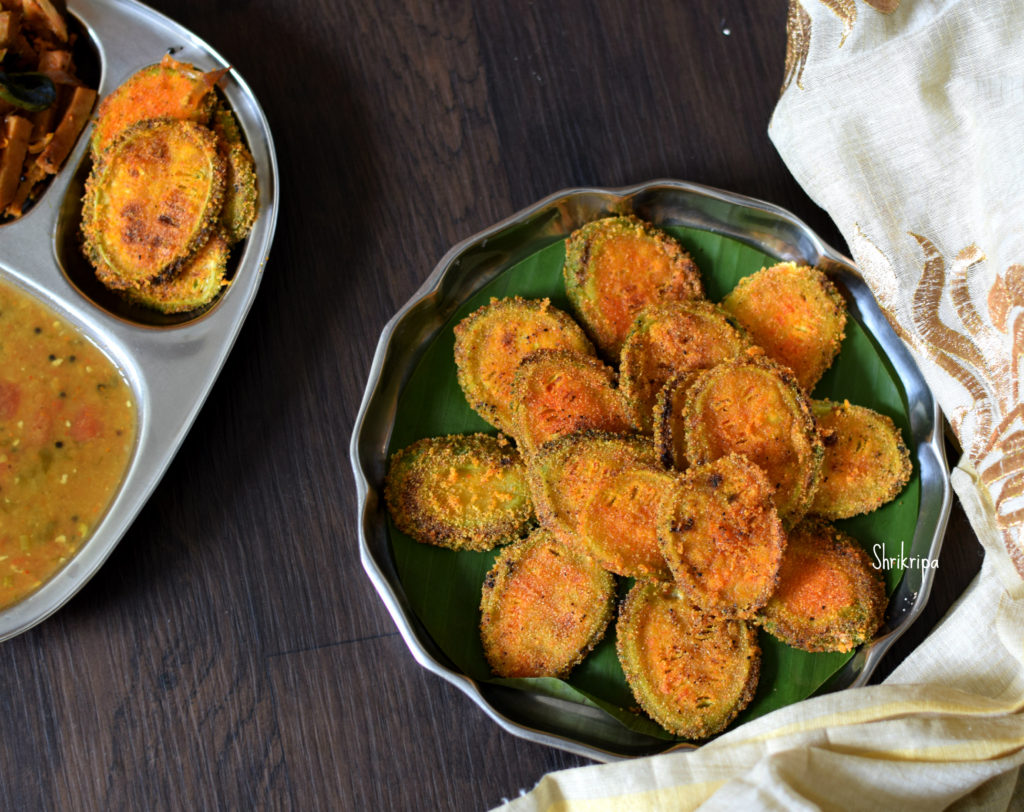
Kantola Tawa Fry:

Kantola has many names like Spine gourd, Teasel Gourd, phagila, Mada hagala, locally we call this as “Kaadu peere” in Mangalore. Kantola is one of the famous and nutritious vegetable of coastal region and some Eastern parts of states. This monsoon vegetable is loved by all. This resembles a bitter gourd in structure, but not in taste. It is a crunchy mild flavoured vegetable.  It is a great health food as it is rich in proteins, iron and anti-oxidants and low in calories. It is high in fibre too.       

In my family, we usually relish this in tawa fry form. Let’s see how I do this.

Ingredients:

Kantola: 5 to 6

Salt to taste

Red chilli powder – ½ tsp

Turmeric – ½ tsp

Asafoetida / hing powder – ¼ tea spoon

Coconut oil – to shallow fry

Ingredients for outer cover:

Chiroti/fine rawa – 1 small cup

Rice flour – 1 table spoon

Salt

Asafoetida  powder – ¼ to ½ tsp.

Red chilli powder – 1 tsp

Method:

-Wash Kantola and slice them into a very thin slices. Don’t remove outer skin or inner seeds. Use as it is.

– Sprinkle salt, red chilli powder, hing, turmeric on these slices and mix this nicely by using your hand and   keep aside for 10 to 15 minutes to marinate.

-While marinating it will leave some water and it helps to hold outer coating.

 – Now take one bowl, dry mix all the ingredients like fine rawa, rice flour,salt, asafoetida, red chilli powder, for outer cover.don’t add any water.

– Now take each marinated Kantola piece and roll both the sides over rawa mix, keep aside after coating one by one.     

-Take one iron Dosa tawa ,heat it ,keep 6 to 7 coated pieces over it and pour one or two teaspoon of coconut oil and fry nicely on one side.

-After some time, flip the side, once again pour one tsp of coconut oil and fry this side too.

– After frying both the sides, serve this as a side dish with dhal -rice, Rasam –rice or curd- rice.

  Note: You should use coconut oil and more asafoetida to get authentic taste.