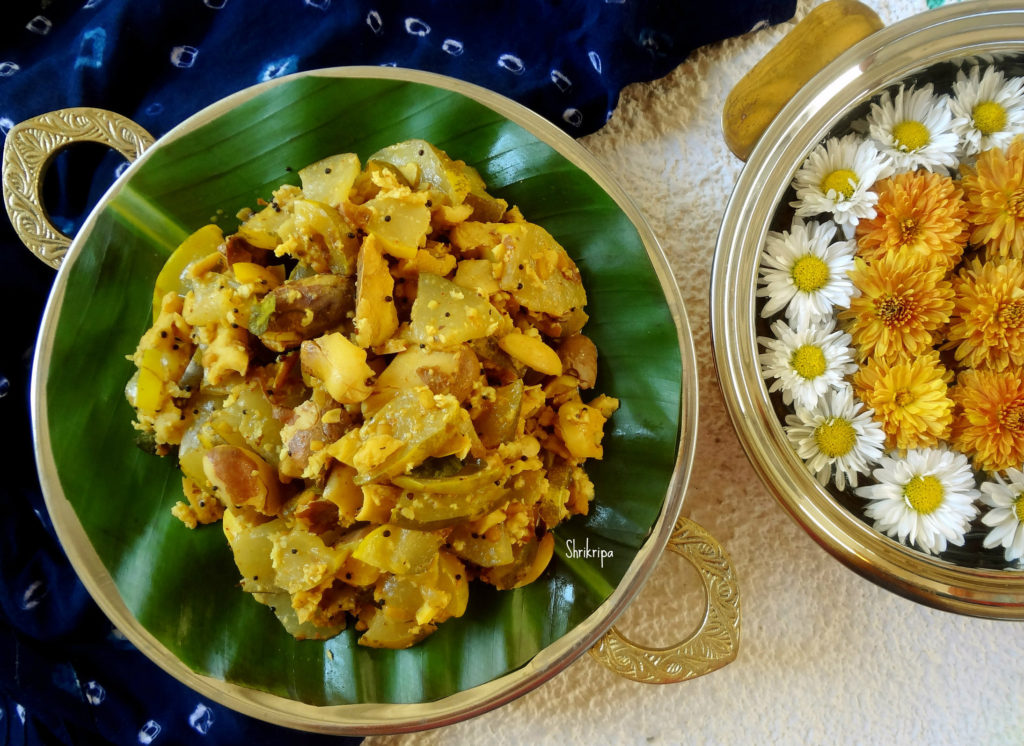
Jack seed and Mangalore cucumber palya:

Jack seed is halasina beeja, which is a seed of jackfruit and most underrated protein rich nature’s gift to mankind. All thanks to our elders, who have gifted us with the knowledge of lots of combinations of ingredients, vegetables. One such combination is coloured cucumber which is also known as Mangalore cucumber/ sambar cucumber with jack seed.  It is an ultimate, tasty side dish from our region and I am eager to share this recipe with you all –

I normally preserve jack seeds in a frozen form and procedure is already shared in my blog as well.
Ingredients:

Coloured cucumber – ½ or 1

Fresh or Frozen jack seeds –2 fists full

Grated coconut – 3 table spoons

Turmeric – ½ tea spoon

Red chilli powder – 1 tea spoon

Salt- as needed

Jaggery – as needed

Seasoning:

Coconut oil – 1 table spoon

Mustard – 1 tea spoon

 Urad dal – 1 tea spoon

Cumin – ½ tea spoon

Red chilli -1

Curry leaves – 2 springs

Method:

-Wash Mangalore/Coloured/sambar cucumber.

-Chop off 2 ends, slice in to 4 pieces and remove inner core (seed part) and chop into thin slices. (see the picture)

-Check now for the taste. If it is bitter in taste, soak the pieces in plain water for 5 minutes.

-Discard the water and proceed.

-If cucumber tastes good, no need to soak in water and you can directly proceed in cooking.

-I normally crush and store the jack seeds. So, no need of chopping or crushing. If you have fresh seeds with you, please crush the seed by using hitting stone and remove outer stiff cover and use inner seed.
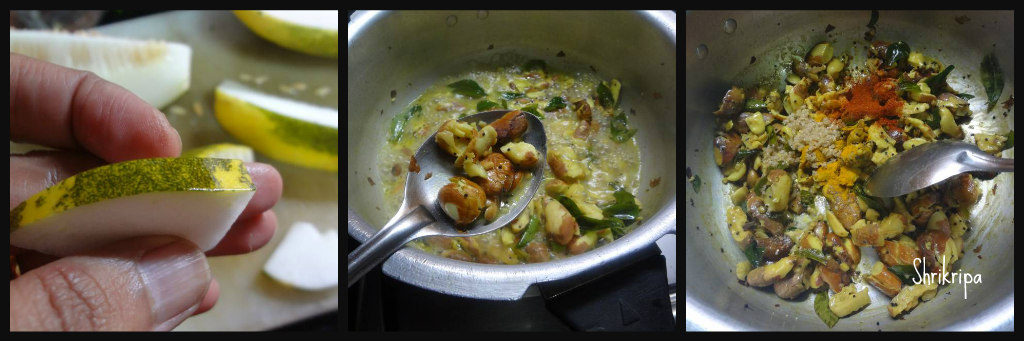
– Take one pressure pan or cooker, do seasoning. Heat oil, splutter mustard, add urad dal. When dal becomes light brown, add cumin, red chilli and curry leaves.

-Now add in crushed jack seeds, little water and cook for one whistle.

-When pressure releases, remove cooker lid and proceed to make palya.

-Switch on the gas, Add Red chilli powder, salt and jaggery, required amount of water and chopped cucumber pieces.
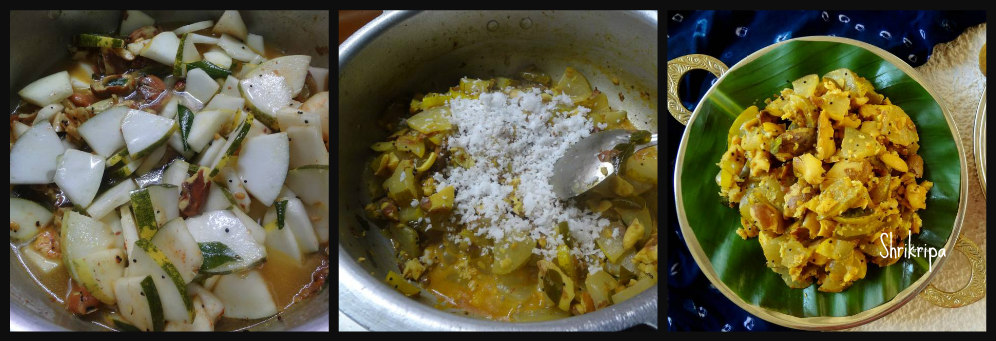
-Close the lid and cook this in a low flame, until cucumber is cooked or up to water drains.

-If water drains first, add some more water and make sure to cook cucumber.

Garnish with fresh grated coconut and mix, cook for 2 minutes and switch off the gas.

-Serve with hot rice and enjoy as a side dish.
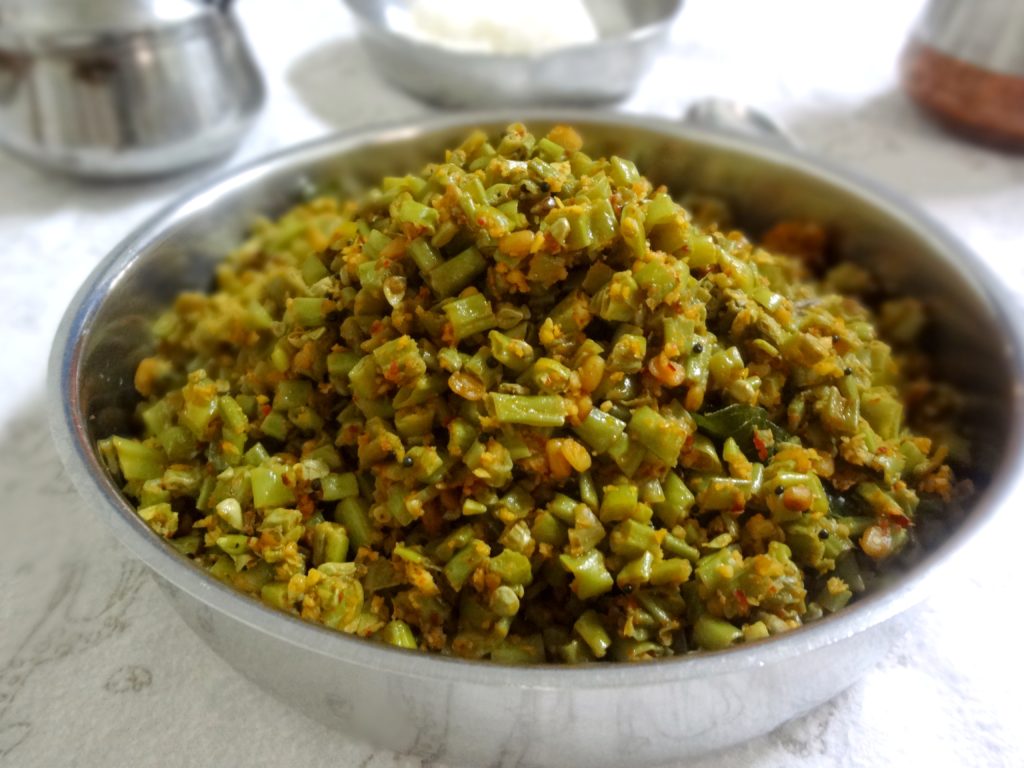
Alasande Palya / Yard long beans dry curry:

Alasande aka yard long bean is very popular and one of the age old cultivated crops of Mangalore coast. It is tender, immature pods of black eye pea. In rainy season, most of the vegetable kitchen gardeners grow this super tasty veggie for day to day use.

Immature pods are one of the favourite food for little birds as well. It is a low calorie, high in fibre vegetable and tastes little sweetish and texture is little chewy and watery.

Alasande side dish is one of the very popular dishes during the festivities- either in weddings, festival cooking or day to day cooking. For day to day cooking, we normally toss this veggie with mild seasoning and for festivity cooking, we use coconut masala. Today I am going to share the recipe of my house hold which my family relishes whenever I prepare.

Ingredients:

Alasande / Yard long beans – 500 grams

Red chilli powder – ½ tea spoon

Turmeric – ½ tea spoon

Salt

Jaggery – 1 tea spoon

For seasoning:

Coconut oil – 1 table spoon

Mustard – 1 tea spoon

Urad dal – 1 tea spoon

Red chilli – 1 (optional)

Curry leaves – 1 spring

For Masala:

Coconut – ¼ cup

Roasted Byadagi Red chillies – 2 to 3

Cumin – 1 tea spoon

Tamarind – ½ tea spoon

Method:

-Wash, remove two ends of yard long beans and chop as required.

-Dry grind coconut with roasted chillies, cumin and tamarind for masala and keep aside.

-Now take one kadai, heat oil for seasoning, splutter mustard, add urad dal. If you are adding red chilli add that as well.

-When urad dal becomes red, add curry leaves, chopped beans, turmeric, salt, jaggery, red chilli powder and toss for two minutes.

-Add one small cup of water and cook until it is soft and firm.

-Add dry ground masala and mix everything. Keep it covered for two to three minutes and switch off the gas.

-Serve with hot rice or with thali as a side dish.


Jackfruit kottige:

Halasina hannu is Jack fruit and Kottige is nothing but idly or kadubu,also known as Halasina Hannina kottige Or Gatti in local language. In which mixture is wrapped in pre-wilted banana leaves like pockets and steam cooked. Like bottle gourd kottige, which I have posted earlier, it is not a savoury kind, it is sweetish and bustling with jackfruit flavour which is enhanced even more with the usage of banana leaves wrap.

Jackfruit season is considered as a feast time in our region. Usage starts from tiny raw fruit form to ripened stage. You will find couple of curry recipes in my blog which I have posted earlier as well as Ripe jack fruit Dosa.

Now we will see how to make kottige, in our traditional method.

Ingredients:

Dosa rice – 2 cups

Jackfruit – 2 cups (cleaned)

Fresh coconut gratings – 1 cup

Grated jaggery – ¼ to ½ cup (according to your taste)

Ghee – 1 table spoon

Salt

Method:

-Wash Dosa rice (white raw rice) and soak for 2 to 3 hours.

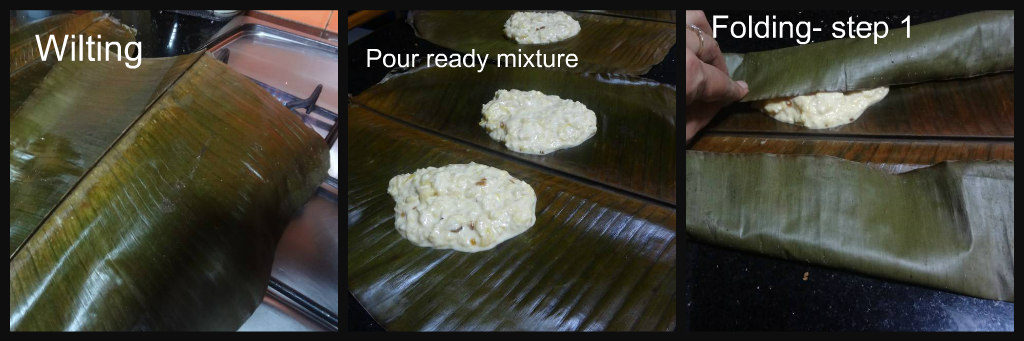
-If you are using banana leaves, wilt the leaves on gas flame, wipe with a wet cloth and keep it ready.

-If you are using idli mould, grease the moulds with little ghee and keep aside.

-Chop jack fruit, separate fruit pods, remove outer thin white fibres as well as inner seed and take only yellow fruit part.

-Mix grated coconut and jaggery as well as ghee and keep aside.

-Grind rice into fine paste by adding very little water and salt.

-Now take jack fruit little by little and whip a little to chop roughly by using same mixer jar in which rice batter is ground.

-Take one wide bowl, mix in ground batter, roughly whipped fruit pulp, coconut-jaggery mixture.

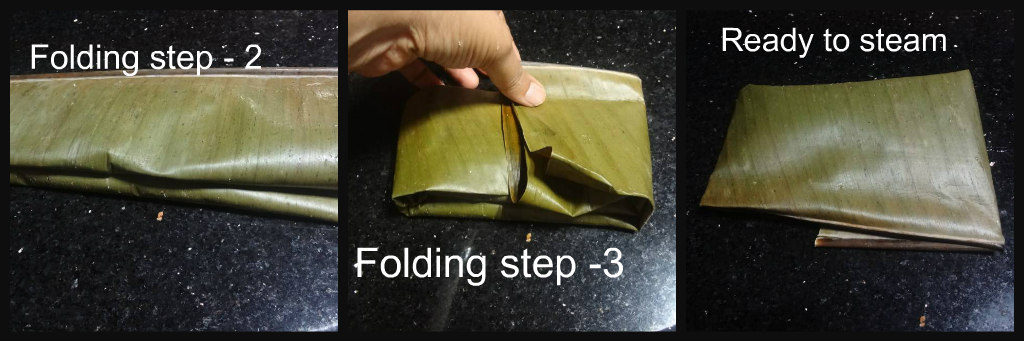
-Mix nicely, spread the wilted banana leaves and pour one spoon and fold it like a sealed pocket. (refer the below pictures)

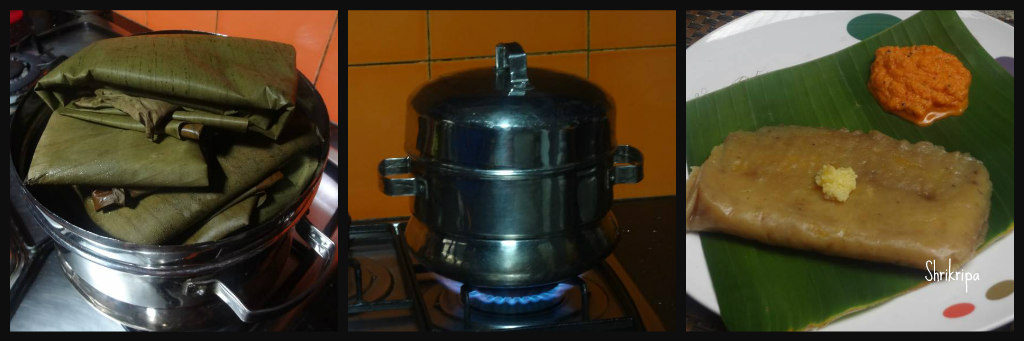
-Assemble all these packets in a water filled idli steamer or Momo steamer and cook this for half an hour to 40 minutes in medium to slow heat.

-If you are using idli mould, pour required amount of batter and steam cook like an idli.

-Relish this jackfruit idli or kottige with ghee or coconut and ginger chutney.

-We usually steam cook this on the previous night and keep it ready for the next day’s breakfast. In this way, It will be easy in the morning as now you just have to prepare chutney and serve.


Barley Pongal:

Come Summer, our ancestors used to drink Barley water to keep their body cool. Otherwise Barley gruel or water is used mainly during illness- diarrhoea, urinary tract infection. As it is a natural diuretic, it increases urination and helps to flush out any toxins or infection causing bacteria from the body. Here I have used this super cool grain in making Pongal, south Indian breakfast dish.

Barley has two varieties, one is with outer cover which is called hulled barley and other one is more processed, without outer cover and is called De hulled or pearl barley. Compared to hulled, pearl is little less in fibre but cooks faster and is ideal for our day to day cooking.

Barley is known for its low glycaemic index, which makes it an excellent option for diabetics. Over all it is good for all and we can include it in our day to day cooking in one form or the other and take a benefit from this age-old grain for sure.

Although Barley is very good for health, it contains gluten and people who have sensitive digestive system or are allergic to gluten should avoid this grain.

Recipe is like this-

Ingredients:

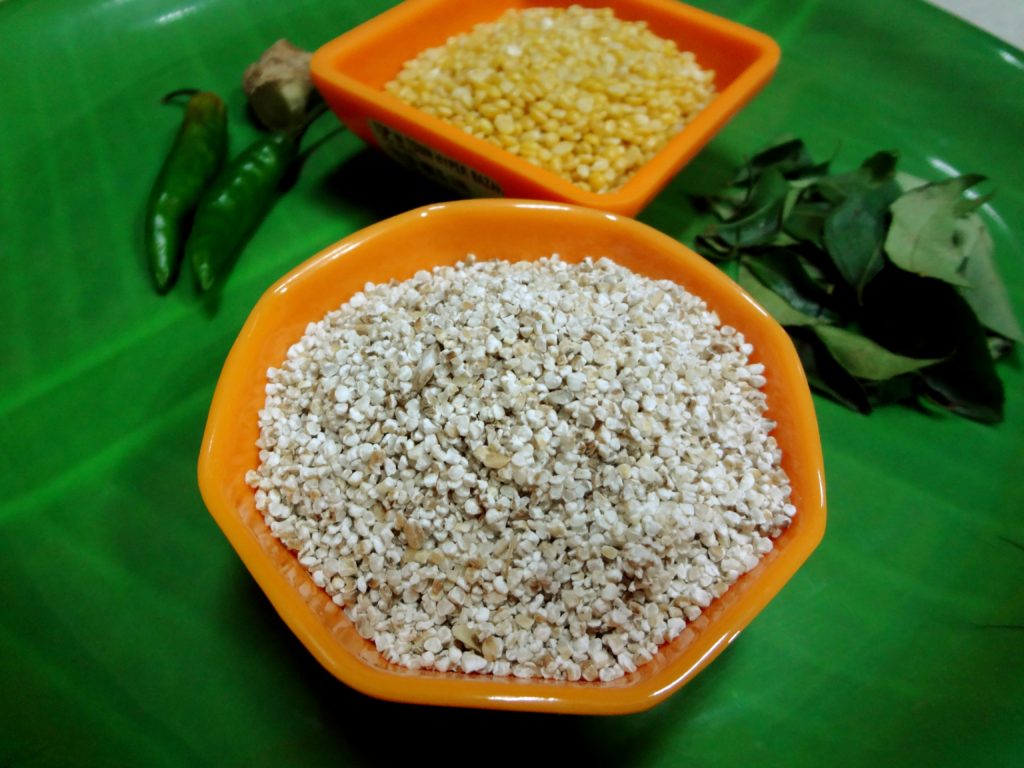
Barley Rawa/ grits – 2 cups

Green gram/moong dal – 1 cup

Green chillies – 2

Ginger – ½ inch

Grated coconut – 3 table spoons

Ghee – (to serve)

Seasoning:

Ghee – 1 table spoon

Mustard – 1 tea spoon

Cumin – ½ tea spoon

Hing – ¼ tea spoon

Curry leaves – 1 spring

Method:

-Dry roast moong dal for 2 to 3 minutes.

-Wash moong and barley grits together and keep aside for a while.

-In the meantime, prepare for the seasoning.

-Take one cooker vessel, do seasoning, heat ghee, splutter mustard, add cumin, hing, curry leaves, chopped green chillies, chopped ginger (slivered) and fry for two min.

-Add water (around 8 to 9 cups) and boil. Add salt, coconut gratings and keep it for boiling.

-Add soaked dal and barley mixture and close the cooker lid.

-Cook for 3 whistles and switch off the gas.

-When pressure releases, open the cooker lid, give a stir and adjust the consistency.

-Pour a couple of spoons of ghee to enhance the taste or you can completely skip the ghee if you are into low calorie diet.

-Serve with coconut-ginger flavoured chutney.


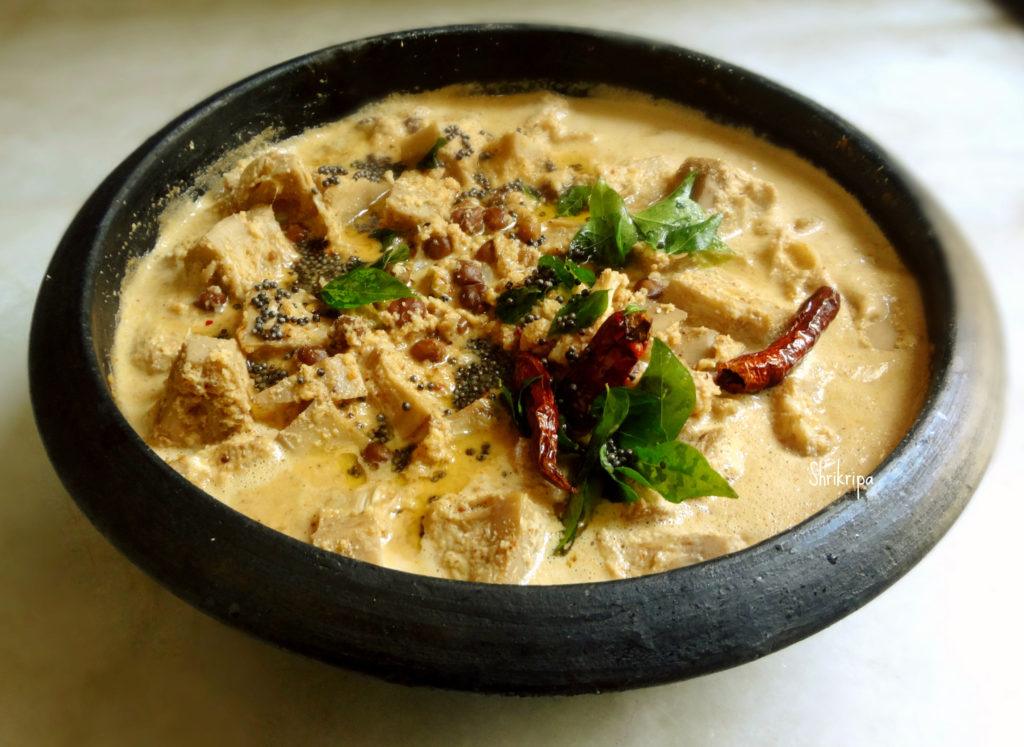
Gujje kadle gashi / Tender jackfruit and whole black chickpeas curry:

Tender jackfruit is an integral part of our traditional cooking. Till now I have shared a couple of recipes and today I am going to share one more tender jack recipe which is prepared by pairing it with protein rich black chickpea, which is also known as kala chana, black chana in India.

Tender jackfruit is a super food, which is high in vitamins, minerals and dietary fibers and at the same time, less in calories, salt and fats. Now a day, it is available in almost all parts of the globe as fresh or frozen.

This curry is double beneficial because of additional benefit by adding black chickpea. Which is also known as Bengal grams, Garbanzo beans or Kala chana which has darker skin and thick outer cover and has high roughage.

DSC07426_Fotor

Ingredients:

Tender jack or Gujje pieces – 1 bowl.

Black chick peas/chana – 1 cup

Salt

Jaggery – 1 tea spoon

Red chili powder – 1 tea spoon

Coconut oil – 1+2 tea spoon

Masala:

Grated Coconut – from half coconut

Coriander seeds – 1 tea spoon

Urad dal – 1 tea spoon

Methi – ¼ tea spoon

Hing – one pinch

Red chillies – 3 to 4

Tamarind – ½ tea spoon

Season:

Coconut oil – 1 tea spoon

Mustard – 1 tea spoon

Red chilli – 1 (optional)

Curry leaves – 1 or 2 springs

Method:

-Wash and soak Black chana overnight. Drain the soaked water the next morning.

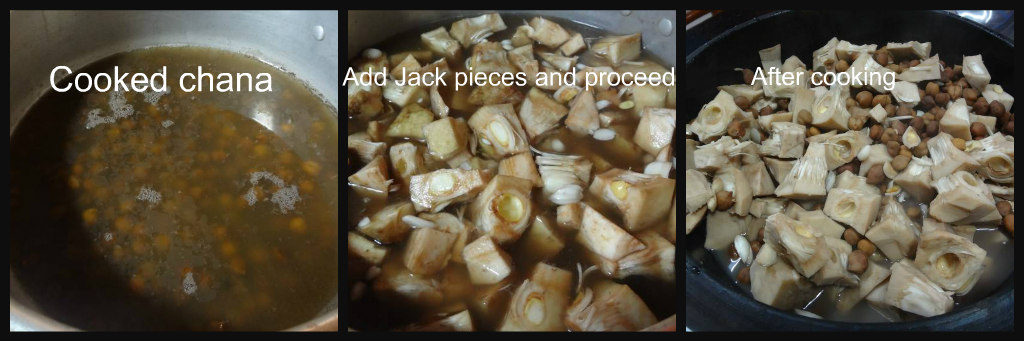
-Take one pressure cooker, cook chana by adding sufficient water. It requires around 4 to 5 whistles.

Ribbet collage

-Add Tender jack pieces into cooked chana, if needed some water, salt, red chilli powder and jaggery and cook in an open fire, until jack pieces are soft.

-In the meantime, prepare masala:

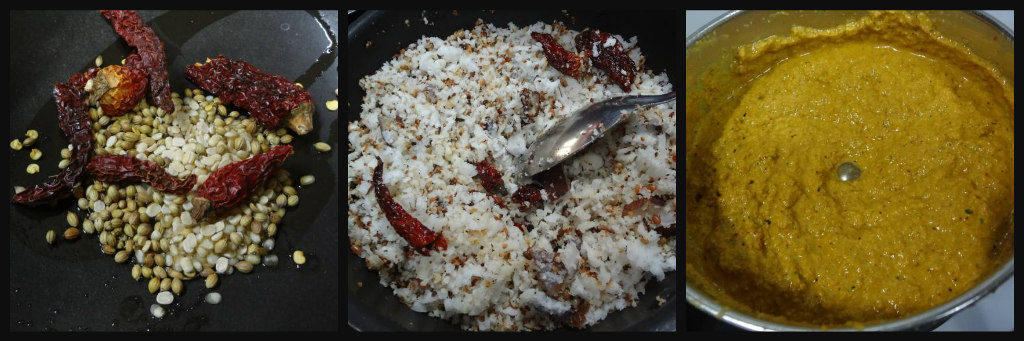
-Take 1 tsp of coconut oil in a tawa, fry methi, add coriander, hing, urad dal, red chillies and fry until urad dal becomes red. Next add coconut and fry until it emits fragrance.

Ribbet collage 2

-Cool the mixture, add tamarind and grind into little rough paste by adding water.

-Add the ground masala into cooked veggie mixture, boil.

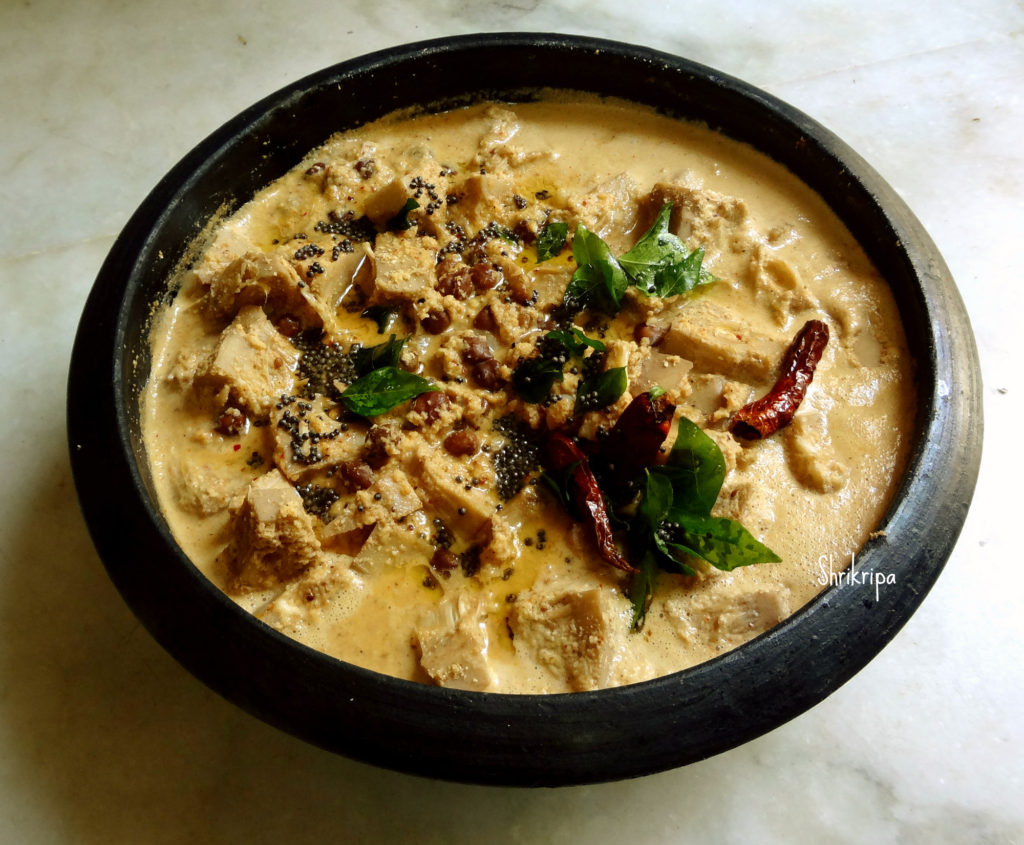
-Add seasoning, heat coconut oil, splutter mustard, add red chilli (optional), curry leaves into oil and pour the mixture over boiled curry.

DSC07427_Fotor

-After adding the seasoning, add 2 tsp of raw coconut oil and keep it covered until u serve. This is to get an authentic taste.


Mavinakai Chutney/ Raw Mango and Coconut chutney:

There are so many ways to make lip smacking good Mango chutney. This is traditional mango chutney from Mangalore, South of Karnataka and it is mostly ground to a thicker consistency and is also called as Gatti chutney, which means thick raw mango chutney and is served with Kanji (Brown rice gruel) and ghee. It is our comfort food.     DSC_0037_Fotor

Ingredients:

Grated Fresh coconut – 1 cup

Grated fresh green mango – ¼ cup

Green chillies – 2 to 3

Salt

Seasoning: Coconut oil, mustard, curry leaves.

Method:

-Put freshly grated coconut, grated green mango, green chillies and salt in a mixer grinder.

-Instead of green chillies, traditionally people use small bird eye chillies too. If you have that, you can use those chillies as well.

– Now blend the mixture in the mixer grinder coarsely, without adding any water. If juice from the raw mango is not sufficient, then add 1 to 2 tsp of water and grind to get this thick consistency.

-Prepare the seasoning and serve with Brown rice kanji and ghee.

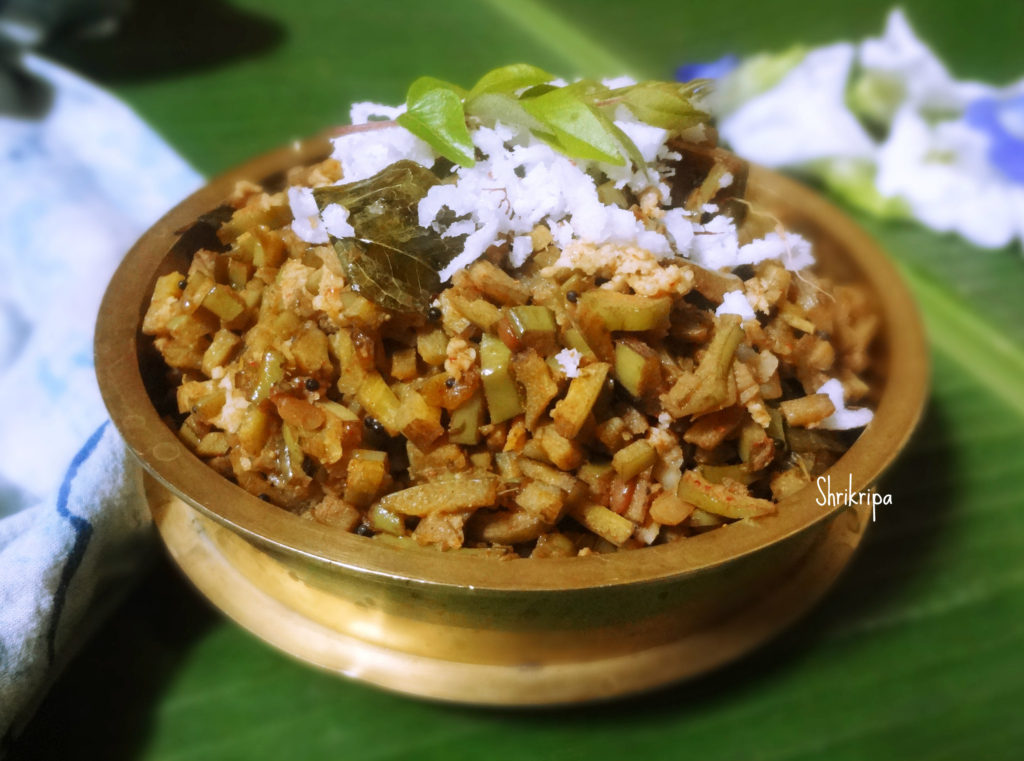
Nendra Sippe Palya/Plantain peel dry curry:

Nendra is also known as Kerala Banana. Which is mainly used in chips, if it is raw and firm or Halwa making, when it is ripe and black.

When Chips is made, all the healthy, iron rich and fibre rich peel will be wasted, and it is some what a bi -product of chips making activity.

This palya is normally prepared on previous night of wedding celebrations in our region. Normally plantain chips are an integral part of any festivity meal and it is prepared well in advance, usually process starts from the previous afternoon and peels will be fresh and ready to be used in the previous night’s dinner menu.

It is a very tasty side dish with hot Rasam or as it is with hot rice topped with ghee.

Taste of this dish will be a mixture of sweet, hot and sour and only Raw Nendra banana peel can be used to make this palya.

DSC03635_Fotor

Ingredients:

Plantain Peel – of 8 to 10 Raw bananas

Tamarind water – ½ to 1 cup

Salt

Jaggery – 1 to 2 table spoons

Red chilli powder – 2 tea spoons

Fresh grated coconut- ¼ cup

Seasoning:

Coconut oil – 2 table spoons

Mustard – 1 tea spoon

Urad dal – 1 tea spoon

Red chilli – 1

Curry leaves – 2 springs

Method:

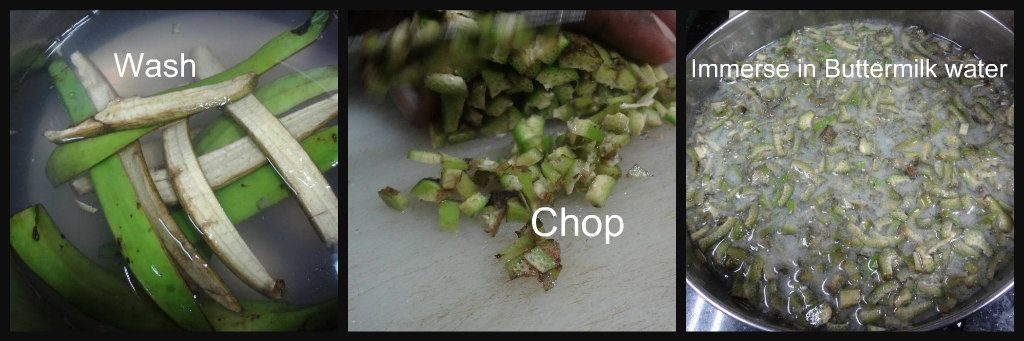
-Make thin buttermilk water to immerse the chopping’s:-Take one vessel, put 1 spoon of curd or butter milk and add two cups of water.

-Soak one tea spoon of tamarind in a half to one cup of hot water and make tamarind water and keep.

Ribbet collage 1

Wash Plantain peel and keep aside.

-Chop plantain peel into thin strips and put it into thin buttermilk water.

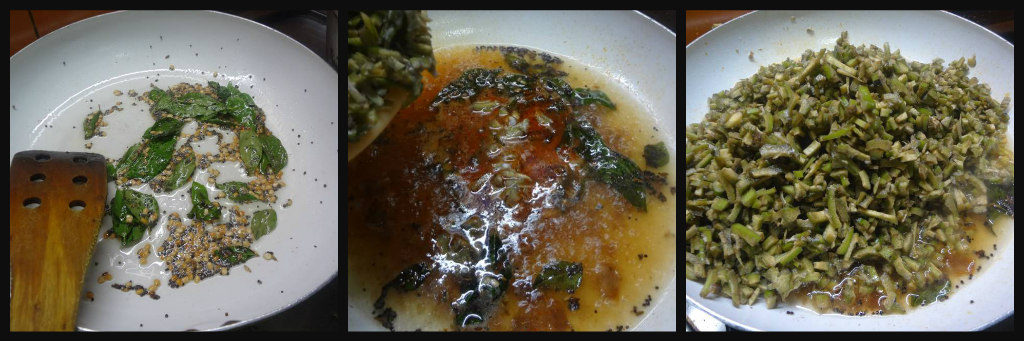
-Take one tawa, add one table spoon of oil, splutter mustard, add urad dal, red chilli and fry until dal becomes red. Add one spring of curry leaves.

Ribbet collage 2

-Pour tamarind water, salt, jaggery, red chilli powder and boil.

-Discard butter milk water and keep chopping’s ready for use.

-When it starts boiling, add drained plantain peel chopping’s.

-Close the lid and cook this in a simmer.

-Check for water in-between. If peel is not cooked add some more water.

-When chopping’s are soft and cooked, after water drains, add grated coconut, remaining 1 table spoon of oil and one spring curry leaf.

-Mix everything and cook for 2 to 3 minutes and then switch off.

-Serve with hot rice topped with ghee or as a side dish with rice and Rasam.

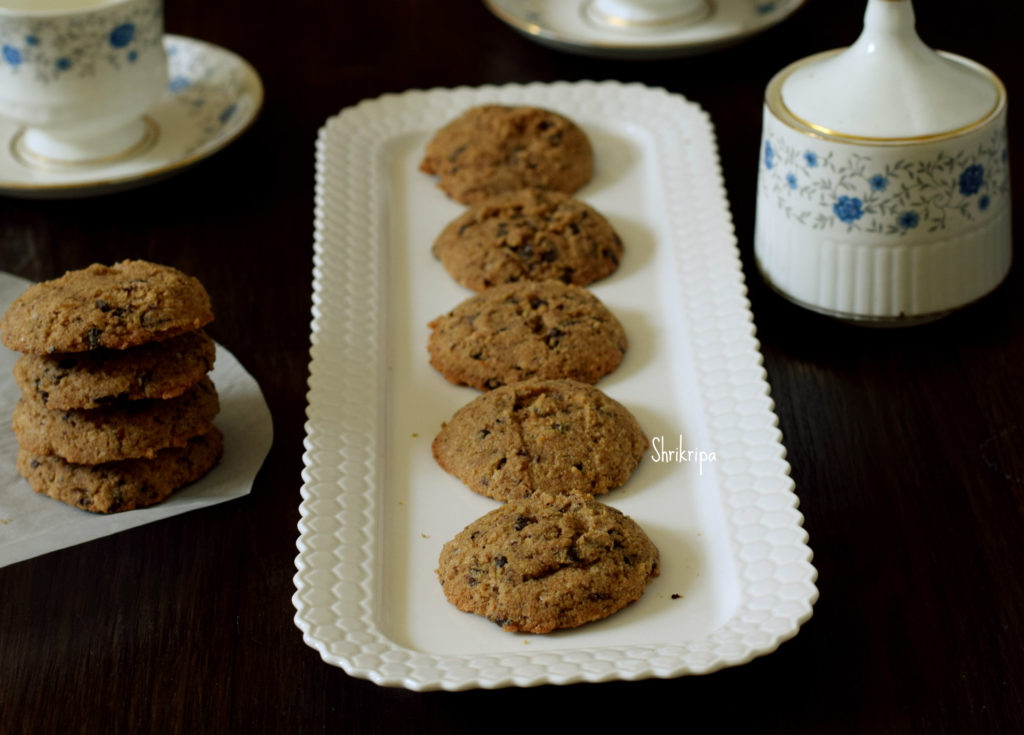
Eggless Coconut Flour Choco chip cookies:

In my last post I have discussed regarding homemade coconut flour. Previously I did try one recipe from coconut residue (without drying and making flour), but this is my first trial or recipe after making the flour, and I am really exited and happy.

One thing we must keep in our minds while using coconut flour is, don’t under estimate its absorption power by seeing its light and airy texture. It absorbs moisture like a sponge. What I learnt from this experience is, it needs almost equal amount of moisture content as flour volume.

Here I have taken flax gel as an egg replacer, mainly because of its gel like texture. Coconut flour doesn’t have any holding capacity, so thought of using flax gel.

In this experiment I have taken half cup of coconut flour and it did absorb the liquid, swell and gave me 9 cookies . More than everything, this was interesting!! Chocolate Chip Coconut Flour Cookie. This was a little experiment, and the results were not bad at all! I got the big thumbs up from my twins 😀

DSC_4745main_Fotor

Let us see the procedure-

Ingredients:

Coconut flour – ½ cup

Flax gel – ½ cup

Ghee or Oil – 1 table spoon

Choco chip – ¼ cup

Organic Natural brown sugar – ½ cup (you can use normal sugar as well)

Sea salt – ½ tea spoon

Vanilla – 1 tea spoon

Method:

– How to make flax gel: Take 2 tsp of flax seed, make powder. Put this powder in thick bottomed small pan, add one cup of water and boil until it is thick, slimy and reduced to almost half.

-Pre heat oven at 170 °C. Line the baking tray with the butter paper.

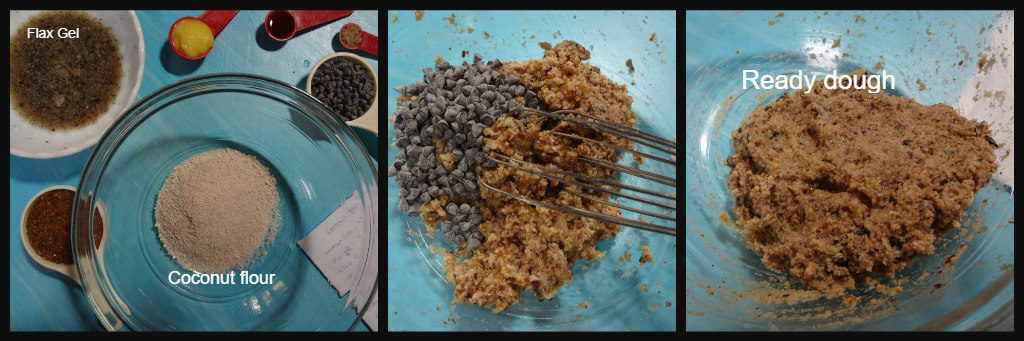
-Take one glass bowl, put flour, sugar, salt crystals, ghee, flax gel, vanilla and mix. Dough will be little wet. Mix in Choco chip and mix once more.

Ribbet collage 1

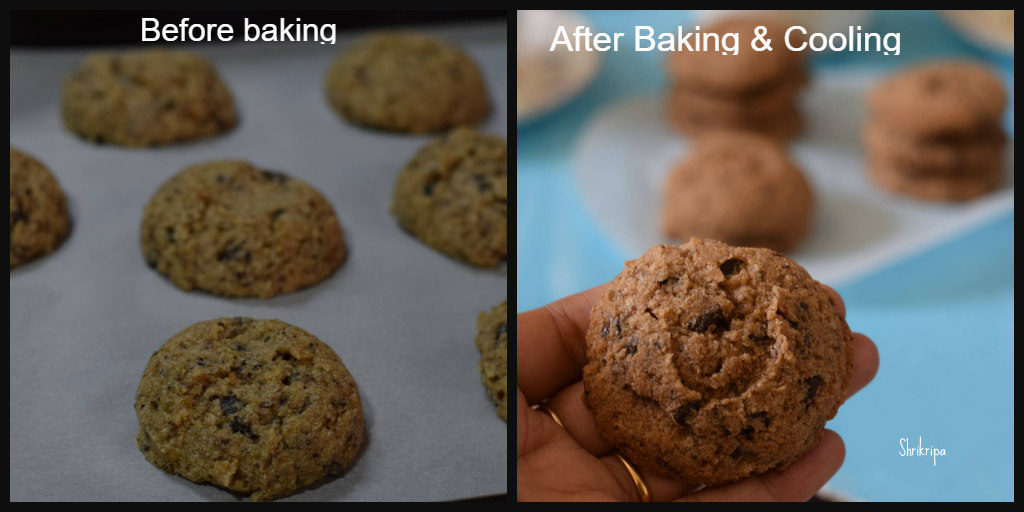
-Scoop out the mix by using ice cream scooper and arrange in a lined baking tray.

-Bake this in a pre-heated oven for 15 to 20 minutes.

Ribbet collage 2

-Don’t touch while removing, it will be very soft. Remove the tray and cool as it is.

-After cooling, it will harden a bit. After it cools down completely, store it in an air tight container.

– These cookies are slightly crunchier at outer circle, soft and chewy at the centre.

– It becomes a little more harder and firm the next day .


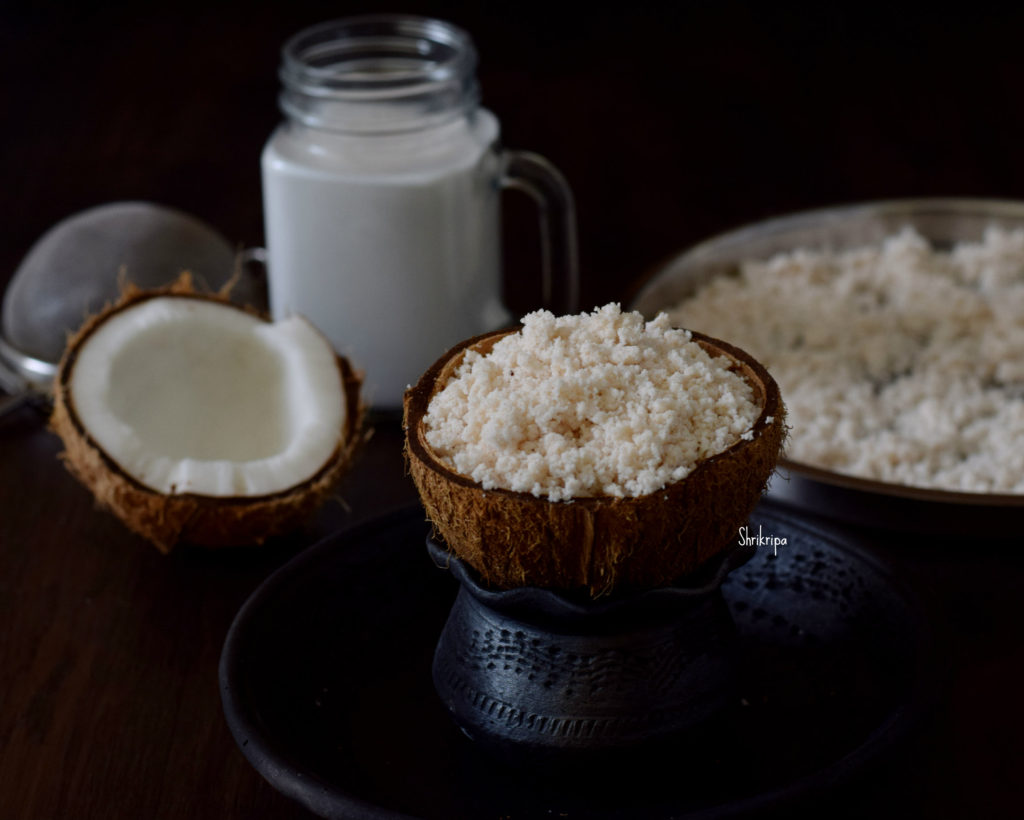
How to make Coconut Milk and Flour at Home:

If you are a person, who extracts coconut milk for kheer/ payasam like me, it is best suited for you.

Coconut flour is rich in fibre, low in calorie as well as carbohydrate, gluten free and very popular in flour less or grain free baking.

From past two years I am experimenting with various home made healthy flours and last week when I extracted milk from couple of fresh coconuts, I wanted to try this and proceeded.

Method:

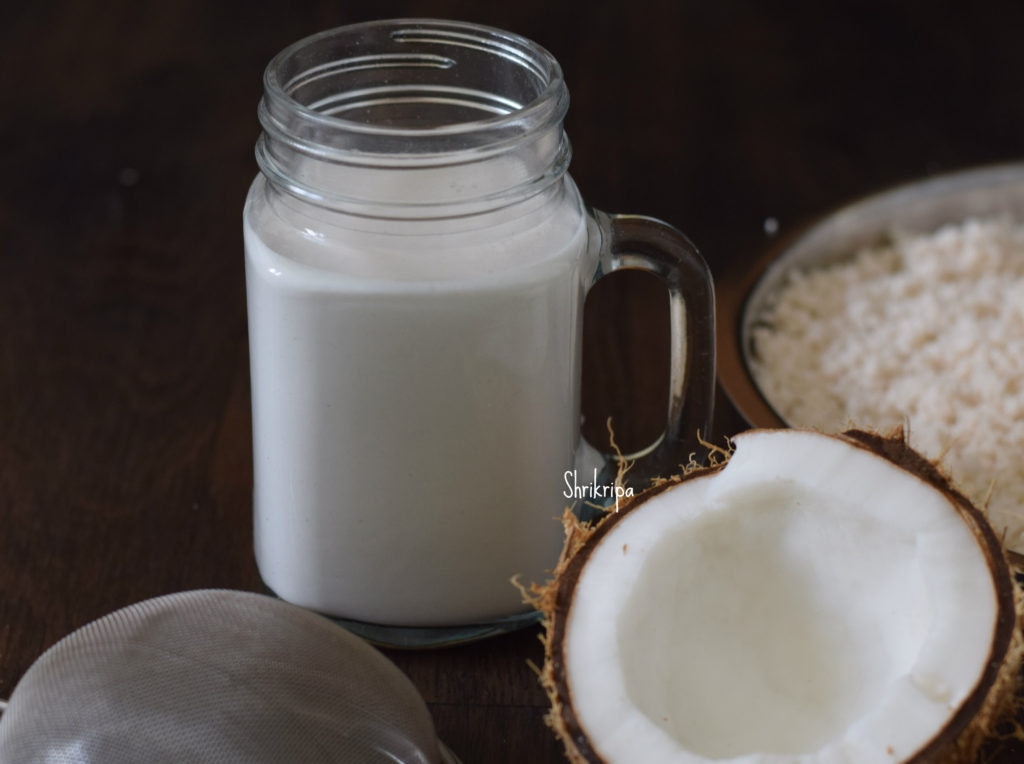
First, we will see the Procedure for Coconut Milk Extraction:

DSC_4524_Fotor

Ingredients:

Fresh coconut– 1 or 2

Water – 3 cups

Strainer – to extract the milk.

Procedure:

-Grate the coconut and collect the gratings. (If you are using some frozen fresh gratings, you can thaw and proceed).

-Next is a coconut milk extraction:

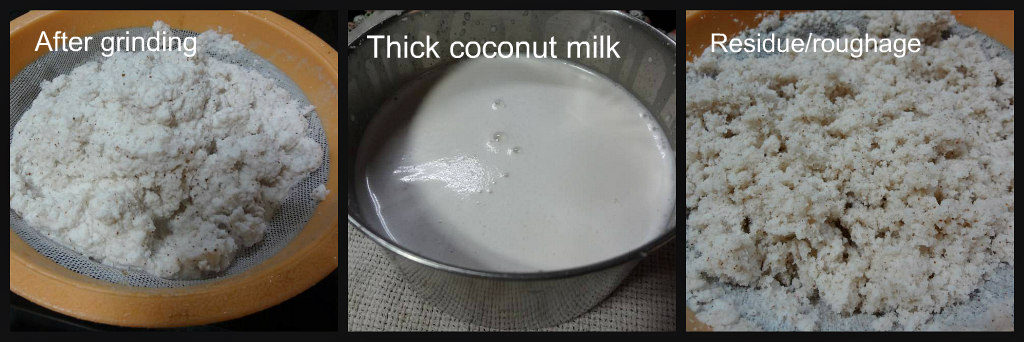
-Take fresh gratings, put one cup of water and grind into smooth paste and extract milk through sieve. This milk is a thick milk.

Ribbet collage 2

-Now once again take roughage of the coconut, put one more cup of water and grind, sieve the paste and it is our second extraction of milk.

-Repeat the process and take out a third extraction as well and Collect the roughage and it is the Raw material what we need to make coconut flour.


Now we will see how to make coconut Flour:

DSC_4523_Fotor

Now you will know, what is coconut flour?

It is nothing but dried form of this roughage that we have, after the extraction of coconut milk.

Take a dry towel, spread this roughage and air dry in a shaded place for a couple of days. That is it.

DSC_4553_Fotor

Your coconut flour is ready to use. When it has dried, it will be very dry and airy. It will appear like small beads.


Temple Style Vegetable Sambar:

Usually people ask me regarding recipe of sambar, which is served in Coastal Mangalore temples. In our coastal temples, prasadam is served in the form of afternoon lunch. It is a simple lunch, served on a plantain leaf. which usually includes palya, rice, Rasam, sambar, payasam and buttermilk. Speciality of this lunch is, taste of the Rasam or sambar will linger in your mouth even after some time.

Commonly used vegetable for this kind of sambar is Ash gourd, sweet pumpkin or Coloured cucumber. You can take any one of these above-mentioned veggies and make. Here freshly roasted and ground masala has been used and onion or garlic is a taboo ingredient in prasadam lunch.

DSC_4627_Fotor

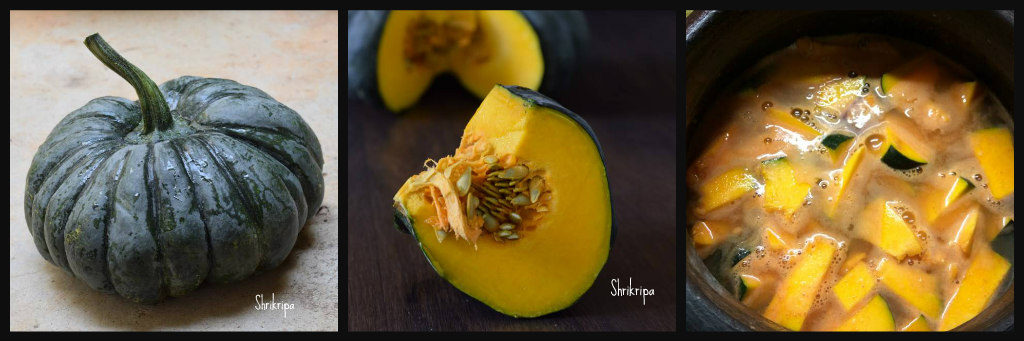
Here I have used home grown Sweet pumpkin –

Ingredients:

Sweet pumpkin – ½ kg (you can use coloured cucumber or Ash gourd as well)

Salt

Jaggery – 1 to 2 tea spoons (adjust according to your taste)

Red chilli powder – ½ tea spoon

Coriander seeds – 1 table spoon

Cumin – 1 tea spoon

Methi – ¼ tea spoon

Hing – pea nut size (hard hing) or ½ tea spoon of powdered hing.

Urad dal – 1 tea spoon

Chana dal – 1 tea spoon

Red chillies – 3 to 4

Coconut – ½ cup

Curry leaves – 1 spring

Toor dal – ¼ cup

Turmeric – ½ tea spoon

Tamarind – ½ – 1 tea spoon

Seasoning:

Coconut oil – 1 table spoon

Mustard – 1 tea spoon

Red chilli – 1

Curry leaves – 1 spring

Method:

-Cook toor dal after washing and keep aside. (don’t use more dal)

-Remove central seed part. Chop veggies, as bigger chunks.

Ribbet collage 1

– Cook chopped veggie by adding sufficient water, salt, jaggery, red chilli powder.

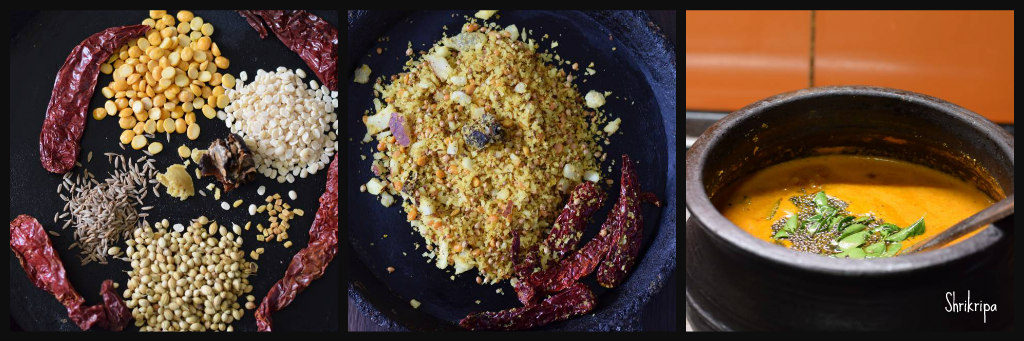
-In the meantime, roast masala for grinding.

Ribbet collage 2

-Take one thick kadai, add 1 tea spoon of coconut oil, fry methi seeds until light brown.

-Add in coriander, cumin, Hing, Red chillies, urad and Chana dal and proceed frying until dal becomes light brown and red chillies puffs and roasts.

-Add in coconut, curry leaves and turmeric, proceed frying for 2 to 3 minutes or until you feel the aroma of coconut.

-Cool this mixture and grind into not so smooth paste by adding tamarind and sufficient water.

– Now mash cooked dal add dal and freshly ground masala to cooked veggie and boil.

-Check for salt, jaggery and adjust. When it boils add seasoning.

-Heat coconut oil, mustard, red chilli, when mustard splutters, and curry leaves and pour over the prepared(boiled) sambar.

-Serve with hot rice.