Karkali / Arbi leaves Chutney:

Monsoon is the time, we relish our dose of colocasia leaves, which is known as “Kesavu” in Kannada. Coastal people relish Pathrode, which is a rice batter smeared steam cooked rolls. Apart from this we usually relish its chutney and with mix veg curry as well. It goes very well with hot rice with a dollop of ghee or coconut oil.

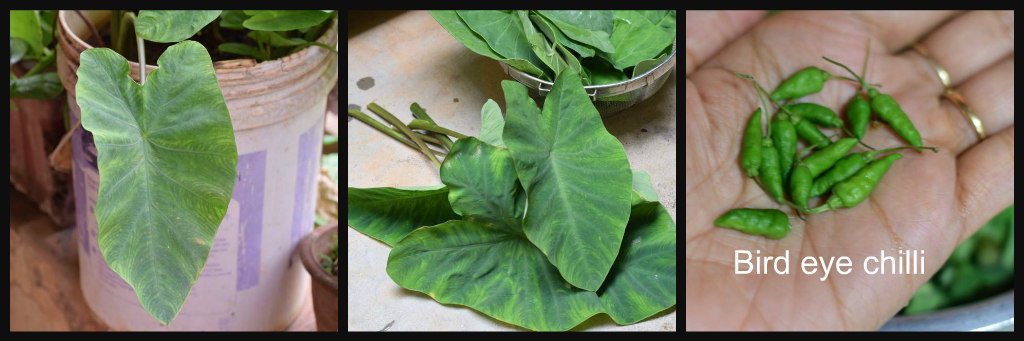
Colocasia leaves has many names in India. It is known as Taro leaves, Arbi leaves, pathra leaves, Alu chi bhaji, kesavina ele and so on. Every state has its own speciality with this iron rich leaves. Because it tends to get itchy, we need to add sufficient amount of tamarind and it should get balanced with the taste.

If you learn the trick of this, half the battle is won, and you can master the art of cooking this leaf for sure. In our traditional preparation, we do use bird eye chilli for this chutney and if you don’t have access, you can use normal green chilli as well.

How to make this flavourful chutney:

Ingredients:

Arbi leaves – 12 to 14

Bird eye chillies – 8 -10 (if green chilli use 4 to 6)

Salt

Tamarind powder or tamarind – 1 ½ tea spoon

Garlic – 8- 10 cloves

Seasoning:

Coconut oil – 3 table spoons

Mustard – 1 tea spoon

Curry leaves – 1 spring

Chopped garlic – 4 to 5

Dried Red chilli – 1 (optional)

Method:

-Wash Arbi leaves as well as its stem and bird eye chillies.

-Chop leaves and stem.

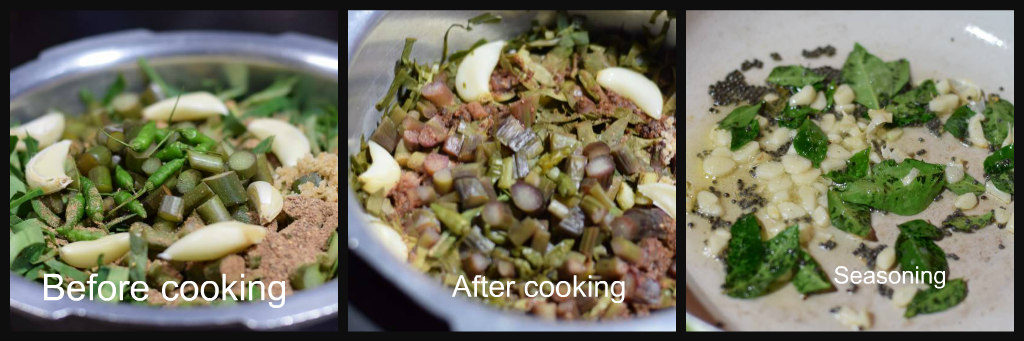
-Take one cooker, add chopped leaves, stem, chillies, garlic, tamarind, salt and cup of water.

-Cook for 2 whistles, when it is cool, grind the content into smooth paste.

-Prepare seasoning, heat oil, splutter mustard, add curry leaves and chopped garlic and fry.

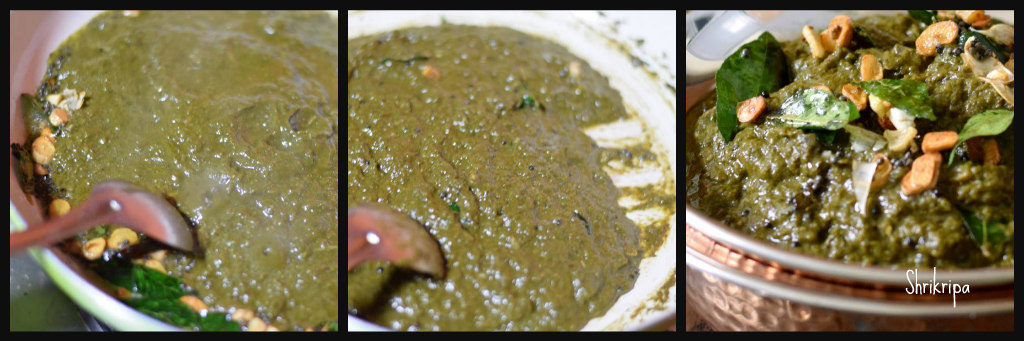
-To this seasoning, pour the ground mixture and boil it nicely.

-Serve this with hot rice and ghee or coconut oil.


Halasina Hannina Berati / Jackfruit Preserve:

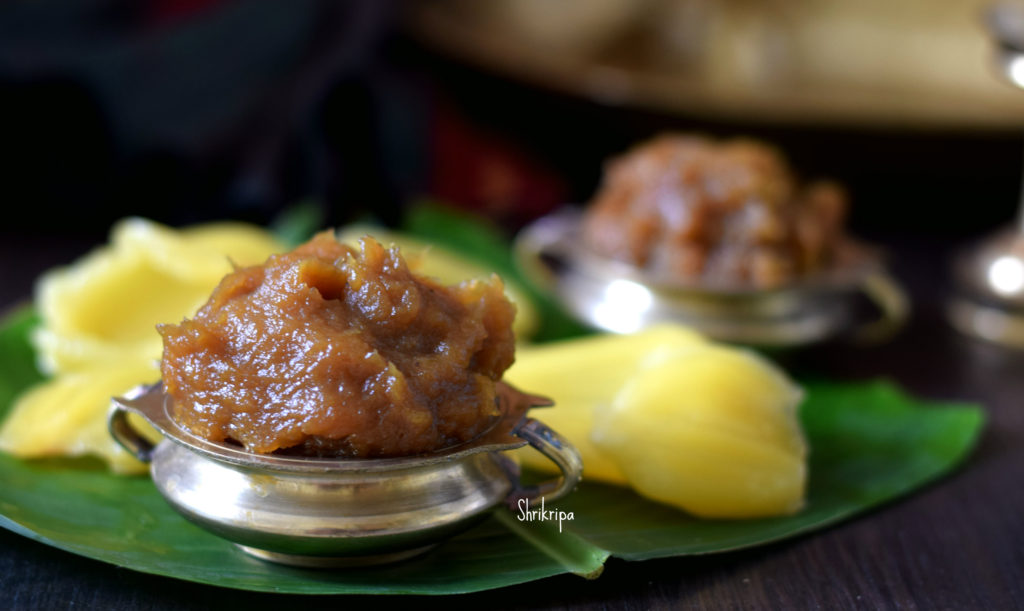
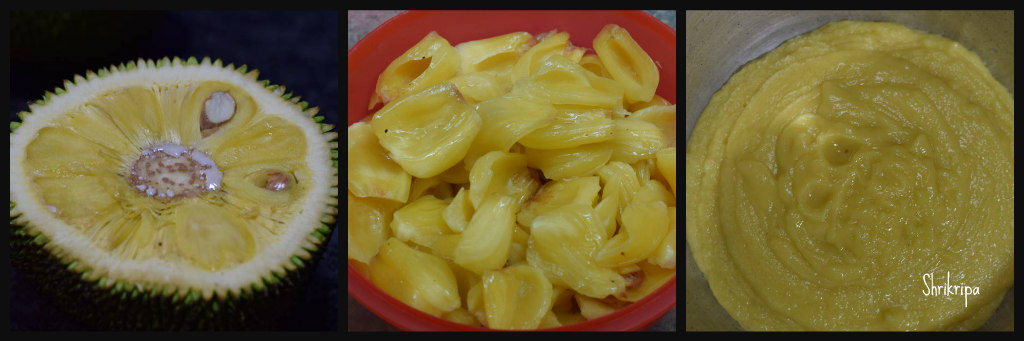
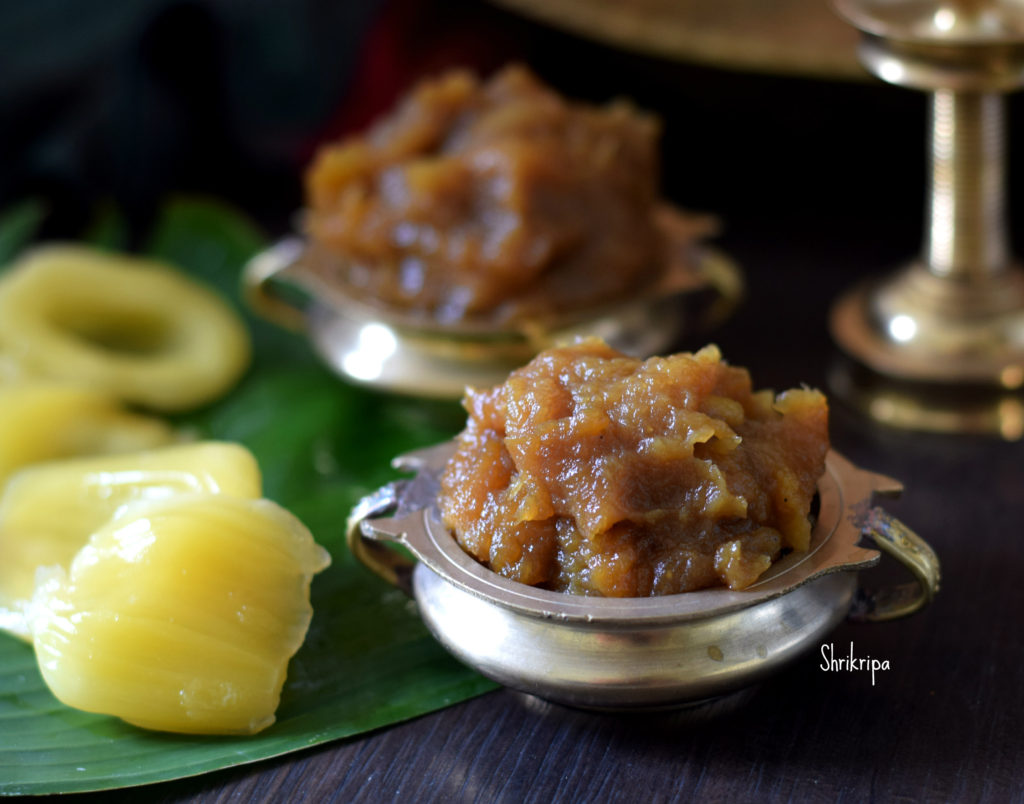
When summer ends, a whole lot of your favourite fruits also vanish from your eye sight and you will surely miss the season!! The best thing one can do is, prepare some jams or preserves and try to store this for future use.  This jackfruit preserve stays good for almost a year or more in the freezer. It is very handy when you want to make payasam for any festivals or any special occasions. Here is my recipe for homemade jackfruit preserve, which we make every year and use it for Prathamam, which is nothing but kheer or payasam from the preserve!!!

Ingredients:

Jack fruit – 1 big bowl (cleaned)

Jaggery – 2 blocks (I have used organic one)

Method:

  • Put little by little jack bulbs and make a smooth paste in a mixer grinder.
  • Take one thick bottomed kadai, put this paste and keep gas flame in a very low flame and cook for a while.

  • When it changes its colour from bright yellow to a pale colour and when you smell the cooked jackfruit flavour in the air, add jaggery and mix this in a regular interval.
  • After some time, it will turn into a light brown then to darkish colour and it will start to leave the sides of the kadai. Now it is the time to remove it from the fire.
  • Keep as it is and when it reaches room temperature; store it in an airtight container or a zip lock.
  • Keep it under refrigeration/ freezer.

  • You can do this in a microwave as well. Only thing, you should remove the glass bowl at regular intervals and give a stir and proceed as given above.

Note:

-You can use sugar or regular jaggery as well.

-Traditionally we use jaggery in our region.

Punarpuli Saaru aka Kokum Rasam:

To start with this wonder fruit, I should introduce its plant, benefit, procedure to preserve the outer skin, to rest of the world. Kokum is belonging to Guttiferae family, same as mangosteen and its botanical name is Garcinia Indica, is a fruit bearing plant only found in western Ghats and coastal southern India.
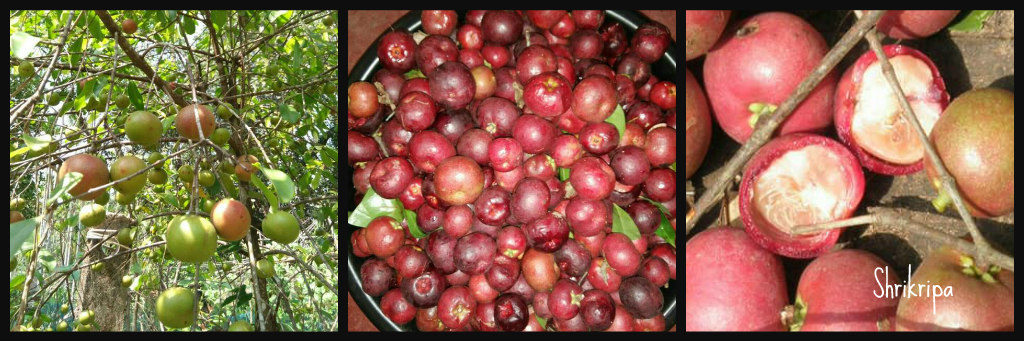
 (pic source : From, Vidya lakshmi of SAHAJA FARMS ) 

It is a summer fruit, which is widely used for juices or Rasam in our region to quench thirst as well as to balance body heat. It has so many health benefits as well. It is a natural healer for acidity.

It is a ritual in our native to dry the outer skin in summer months to preserve to use whenever it is needed. Fresh fruit of Kokum is often halved, discard the inner pulpy white part which is a fleshy coating of real seed to make Kokum butter, which is used in medicinal as well as cosmetic products as a raw material. Then outer dark maroon skin will be sun dried and when it becomes crispy, it’s stored in an air tight manner. During this process, we used to prepare fresh pulp to make juice and I used to love fresh juice from its inner pulp. It is much tastier than the outer dried skin juice.

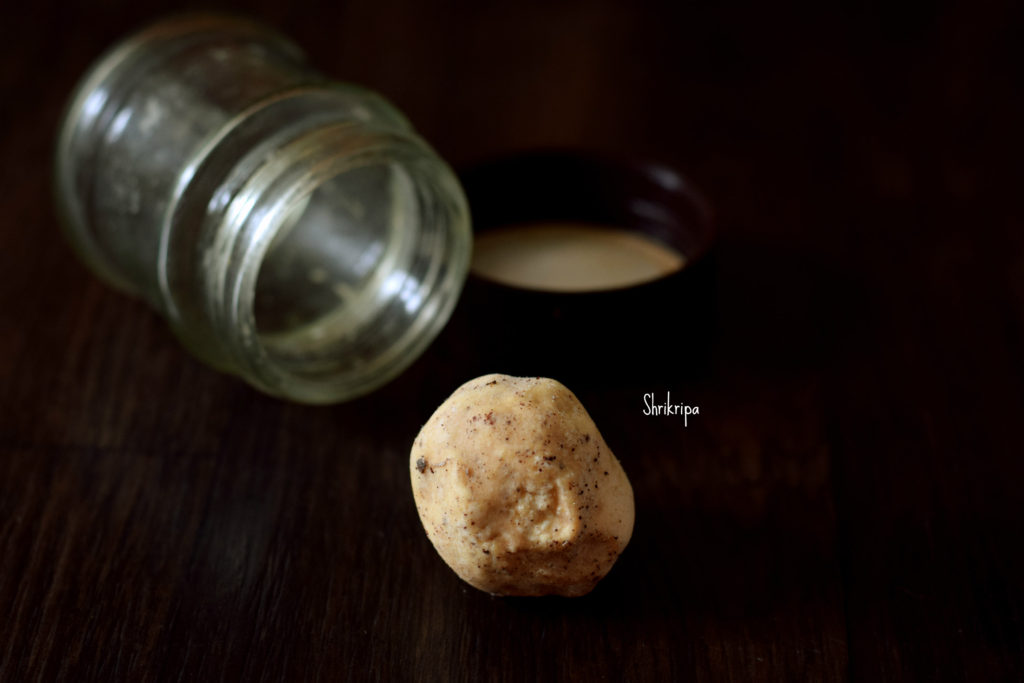
The seed kernels which are coated with white flesh (fruit) has oil content, which is solid at room temperature. When I was young, our grand mom used to prepare kokum butter from these seeds and it used to be like a wax ball and she always used to keep this ball in hand’s reach to treat any accidental burns (that time, cooking was much more tedious and burning episodes were very frequent, due to fire wood cooking). She used to hold the ball against the fire for 2 min, oil used to start dripping and she used to apply this over the wound. She used to say, in this way, healing is very fast, and it acts as a coolant on burning wound as well. I have one kokum butter ball with me, which she has prepared almost 20 years back and when my kids were small, Amma has handed this wonder medicine to me by saying, keep this ball for emergency and it is still with me as a souvenir. ( Seen in below picture)
In urban dwellings, it is sold as a dried rind, dark purple, little sticky and shiny with curved edges. If you infuse these dried skins in water, it releases very nice colour. If dried skin is darker, you will get darkish pink and if it is little old and turned black, your dish will become dark and pale in colour. Taste wise it is tangy like tamarind and used exactly like tamarind in cooking to give tart taste.

If you want to prepare Rasam you need hardly 7 to 8 dried rind or if you want to add to any curry, you need very less, hardly 2 or 3 rinds according to the requirement. It is usually used, without any chopping.

Thanks for reading, I appreciate your patience. Now we will see the procedure of our traditional recipe for simple Rasam by using dried rind or kokum concentration.

Ingredients:

Dried Kokum – 7 to 8 (If you are using kokum extract or pulp, use 2 to 3 table spoons)

Onion – 1 big

Red chilli powder – 1 to 2 tea spoons

Jaggery – As needed

Salt

Seasoning:

Coconut oil – 1 table spoon

Mustard- 1 tea spoon

Red chilli – 1

Garlic – 8 to 10

Curry leaves – 1 spring

Method:

-Soak kokum in sufficient water for 1 to 2 hours.

-When you boil, add sliced onion, red chilli powder, salt, jaggery (I prefer little sweetish Rasam, so usually I add little more)

-When onion cooks, do seasoning.

-heat oil, splutter mustard, red chilli, curry leaves and add crushed garlic.

-When garlic turns brown, add this to Rasam and close the lid for 2 minutes.
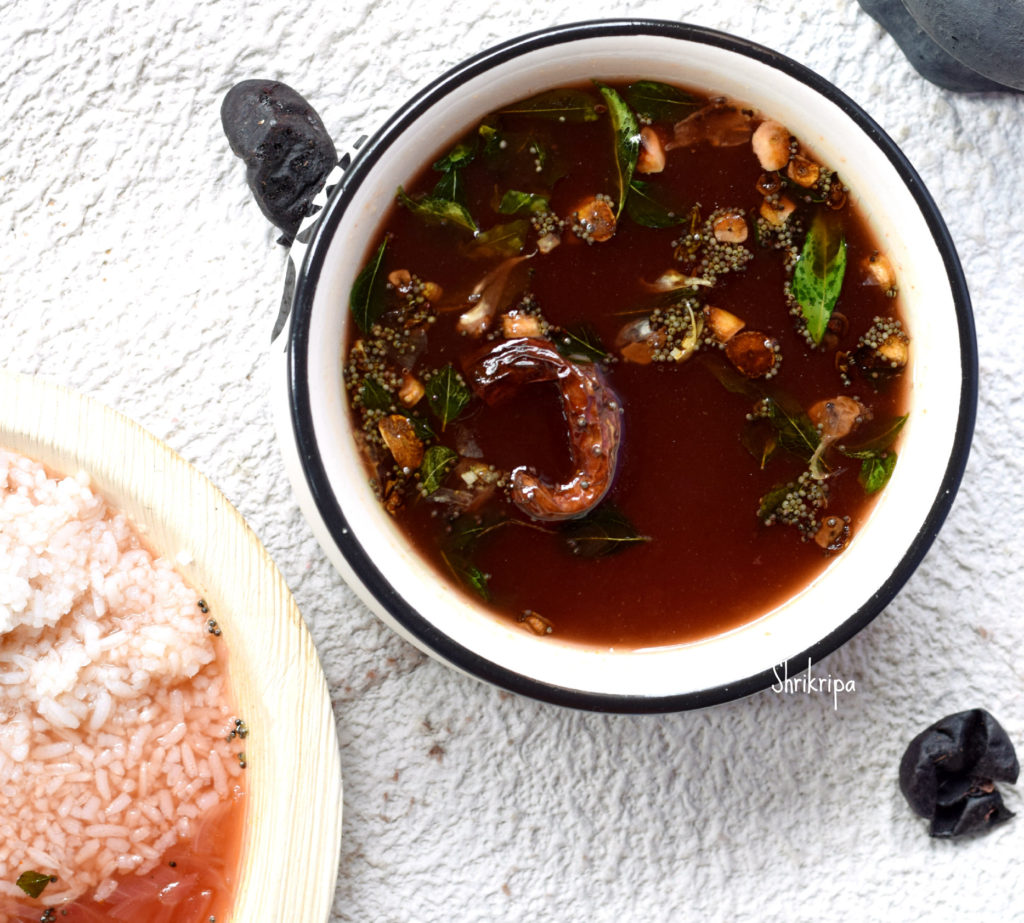
-Serve hot with rice or drink as an appetizer.



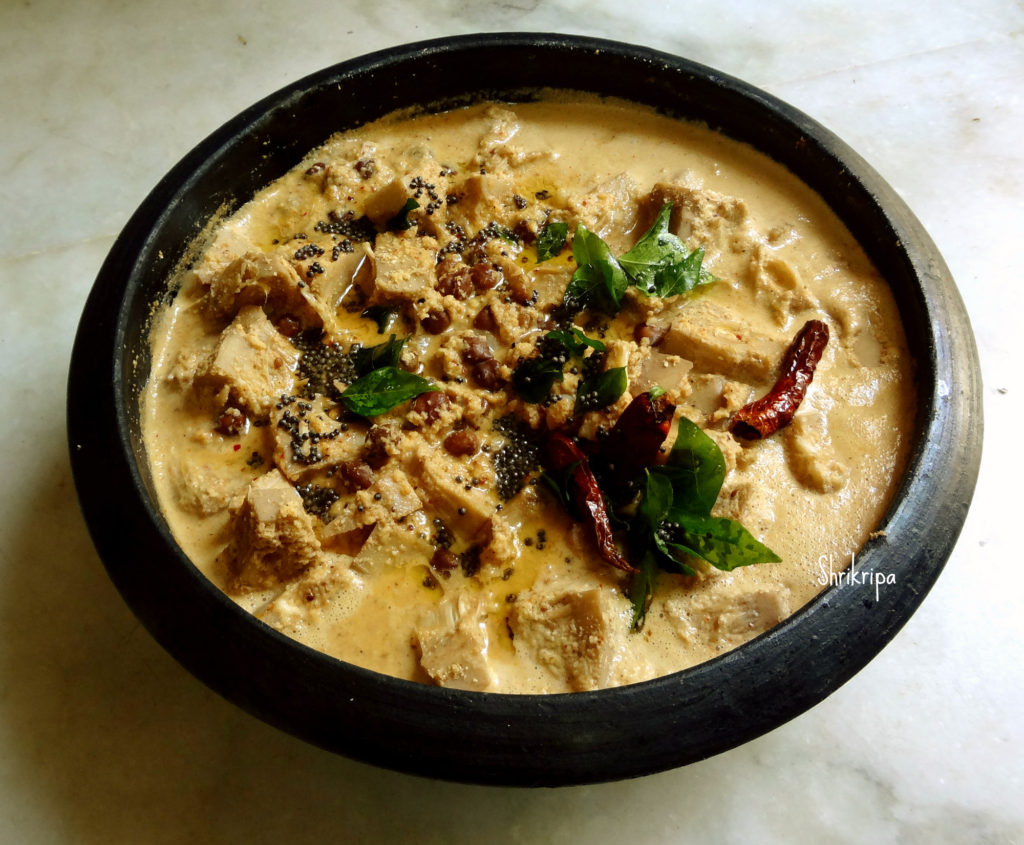
Hog Plum/Ambatekayi Gojju:

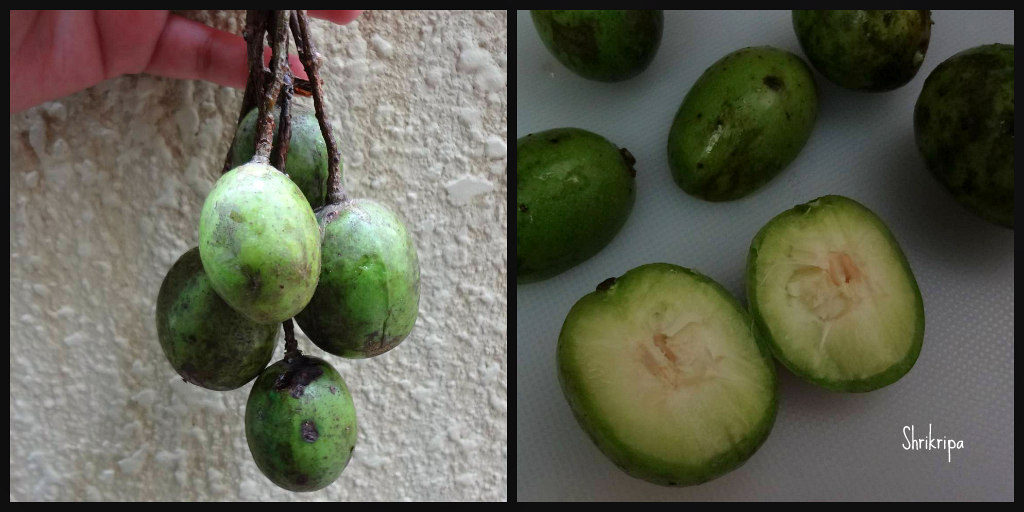
We call hog plum as “Amtekai” in Kannada and as “ambate” in our local language. In our region you will find 2 varieties of hog plums. One is Wild variety which is also known as Indian sour hog plum and the other one is known as grafted or Kashi Amtekai/ hog plum.  Grafted variety is nothing but Hog plums which we normally find in South America or South East Asia. Also known as Ambarella or Golden apple which belongs to the specie – spondias dulcis.

Wild variety is normally used in pickle making or as a souring agent in some of the traditional curries because of its sour taste. When it matures, seed becomes hard and skin becomes thin. Here I have used normal hog plum, which has a fibrous core and when it matures, skin will turn green to yellow and sweetish in taste. People use this as a fruit as well.

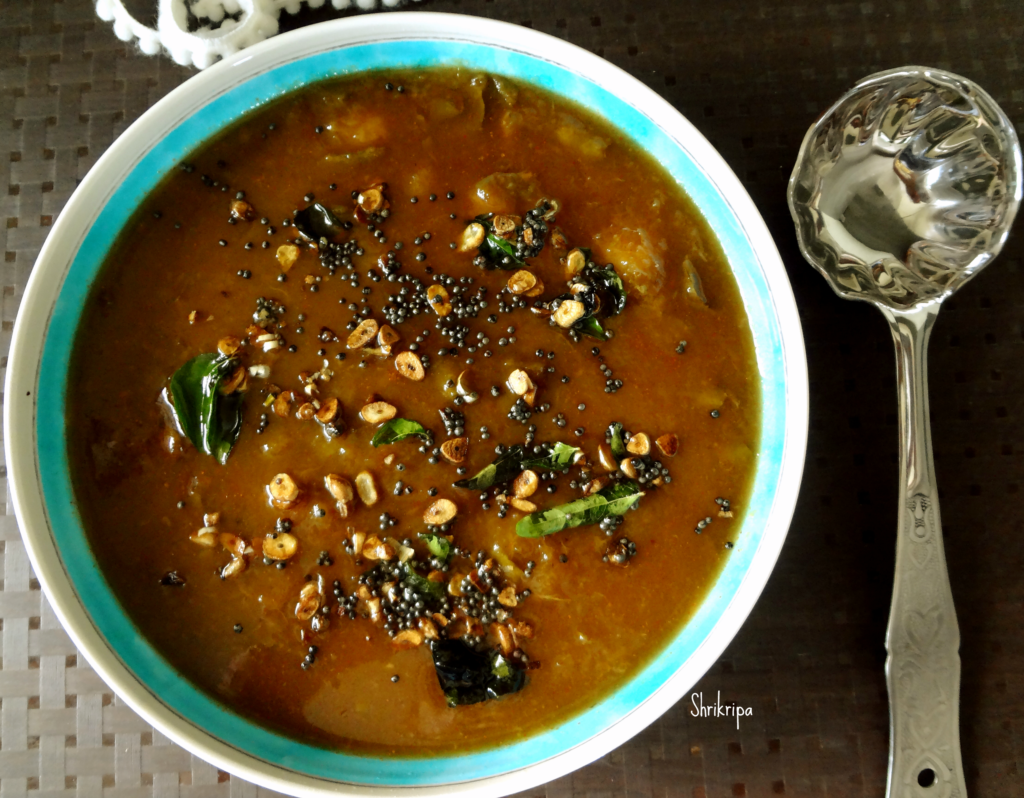
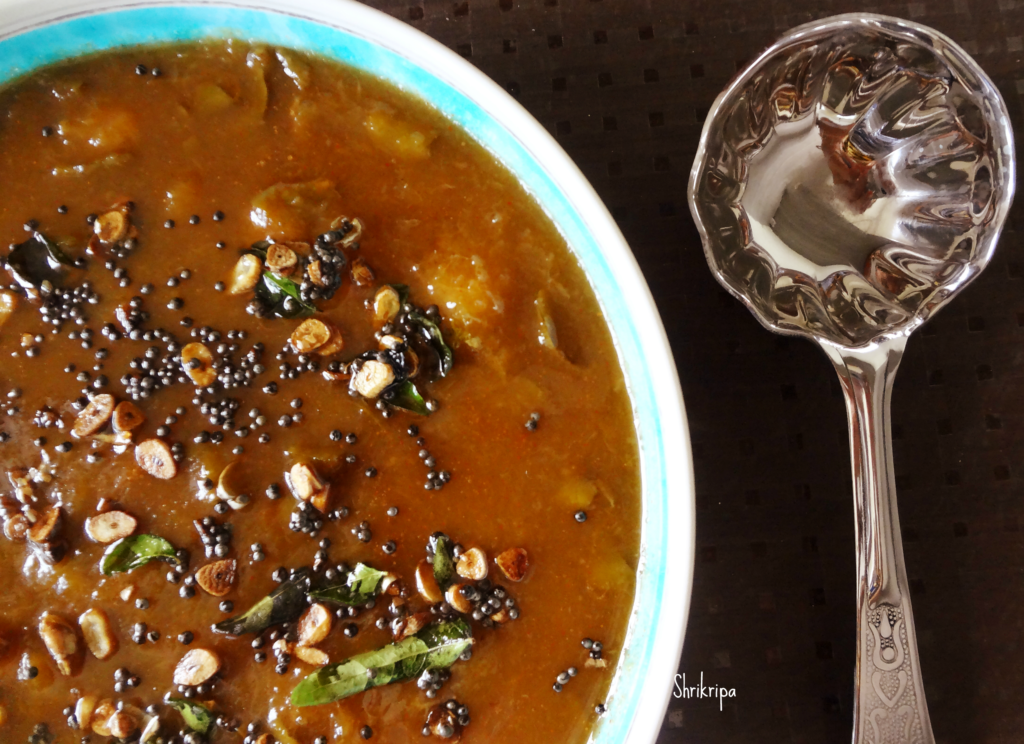
Gojju/ Gojji is an essential side dish of our community. Which is a semi solid, tamarind based, sweet and sour curry, which can be relished as it is with hot rice, or as an accompaniment with curd rice as well. Some of the gojjus taste good with Dosa or Idli as well.

Ingredients:

Hog plums – 7 to 8

Jaggery – 2 to 4 table spoons

Salt

Red chilli powder – 1 tea spoon

Seasoning:

Coconut Oil – 1 table spoon

Mustard – 1 tea spoon

Garlic cloves – 8 to 10 (sliced)

Curry leaves – 1 spring

Method:

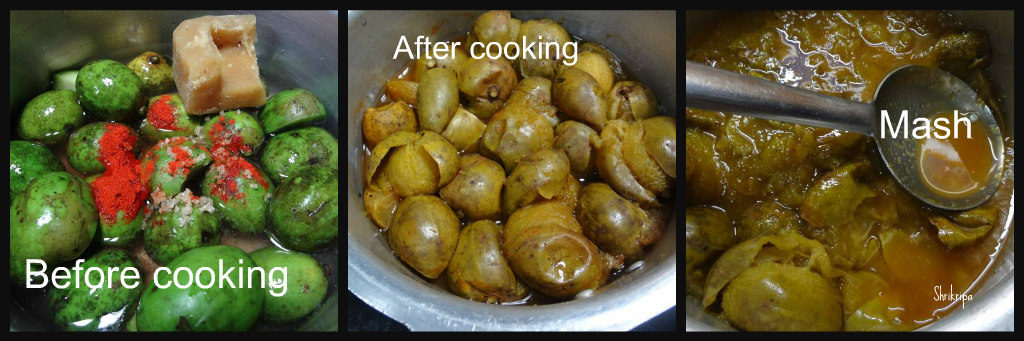
-Wash and cook hog plums in sufficient water by adding salt, jaggery, red chilli powder in a pressure cooker.

-One whistle is more than enough for this veggie to cook.

-When it is cooked, outer skin layer will separate, inner flesh will become soft.

-Mash a little by using back of the serving spoon, to give a texture to the curry.

-Mix everything and check for salt, hot and sweet. Add whatever is needed.

-Curry should taste tangy, hot and sweet.

-Boil this and add seasoning.

-Heat oil, splutter mustard, add sliced garlic. When garlic becomes brown, add curry leaves and pour this over curry.

-Serve as a side dish with rice or curd rice.

Note:

-Usage of garlic is purely optional.


Jackfruit kottige:

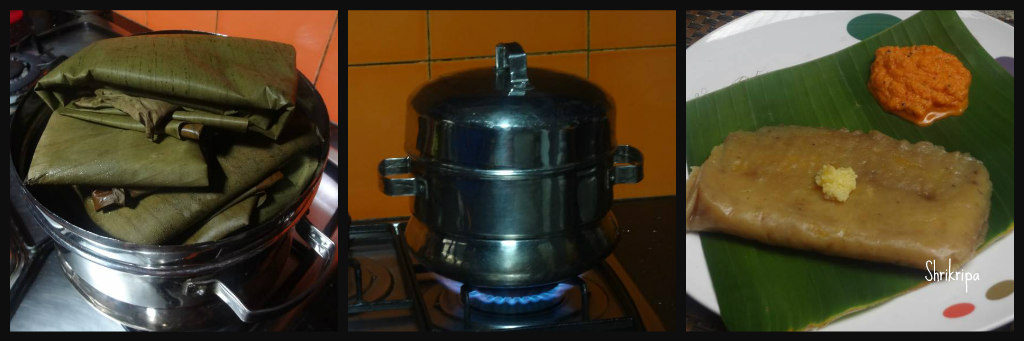
Halasina hannu is Jack fruit and Kottige is nothing but idly or kadubu,also known as Halasina Hannina kottige Or Gatti in local language. In which mixture is wrapped in pre-wilted banana leaves like pockets and steam cooked. Like bottle gourd kottige, which I have posted earlier, it is not a savoury kind, it is sweetish and bustling with jackfruit flavour which is enhanced even more with the usage of banana leaves wrap.

Jackfruit season is considered as a feast time in our region. Usage starts from tiny raw fruit form to ripened stage. You will find couple of curry recipes in my blog which I have posted earlier as well as Ripe jack fruit Dosa.

Now we will see how to make kottige, in our traditional method.

Ingredients:

Dosa rice – 2 cups

Jackfruit – 2 cups (cleaned)

Fresh coconut gratings – 1 cup

Grated jaggery – ¼ to ½ cup (according to your taste)

Ghee – 1 table spoon

Salt

Method:

-Wash Dosa rice (white raw rice) and soak for 2 to 3 hours.

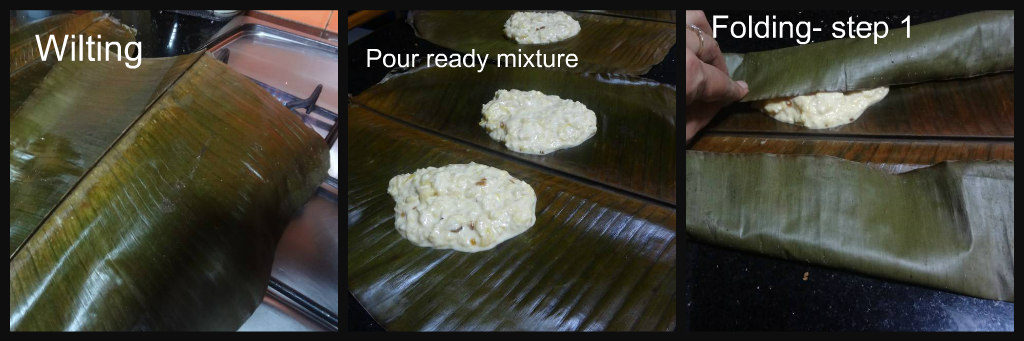
-If you are using banana leaves, wilt the leaves on gas flame, wipe with a wet cloth and keep it ready.

-If you are using idli mould, grease the moulds with little ghee and keep aside.

-Chop jack fruit, separate fruit pods, remove outer thin white fibres as well as inner seed and take only yellow fruit part.

-Mix grated coconut and jaggery as well as ghee and keep aside.

-Grind rice into fine paste by adding very little water and salt.

-Now take jack fruit little by little and whip a little to chop roughly by using same mixer jar in which rice batter is ground.

-Take one wide bowl, mix in ground batter, roughly whipped fruit pulp, coconut-jaggery mixture.

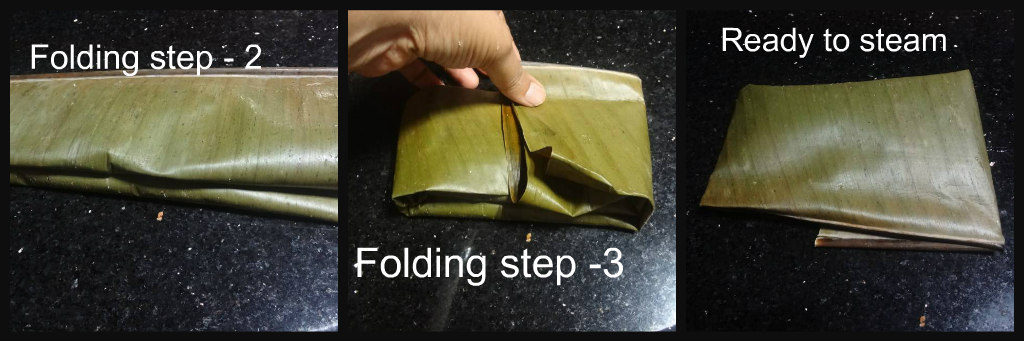
-Mix nicely, spread the wilted banana leaves and pour one spoon and fold it like a sealed pocket. (refer the below pictures)

-Assemble all these packets in a water filled idli steamer or Momo steamer and cook this for half an hour to 40 minutes in medium to slow heat.

-If you are using idli mould, pour required amount of batter and steam cook like an idli.

-Relish this jackfruit idli or kottige with ghee or coconut and ginger chutney.

-We usually steam cook this on the previous night and keep it ready for the next day’s breakfast. In this way, It will be easy in the morning as now you just have to prepare chutney and serve.


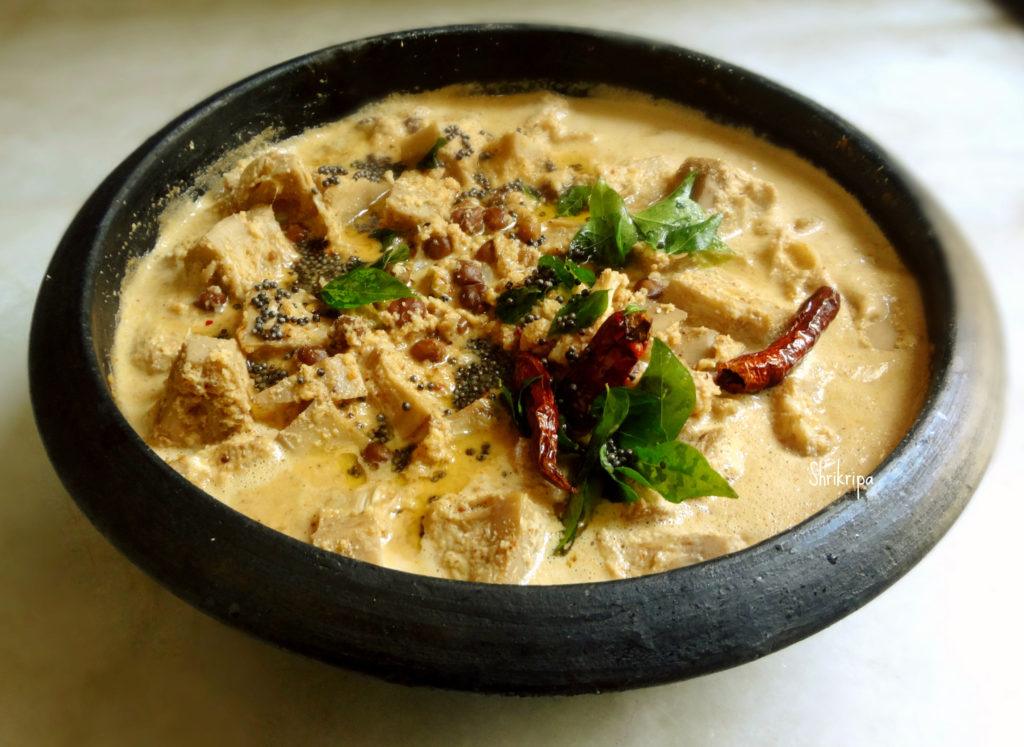
Gujje kadle gashi / Tender jackfruit and whole black chickpeas curry:

Tender jackfruit is an integral part of our traditional cooking. Till now I have shared a couple of recipes and today I am going to share one more tender jack recipe which is prepared by pairing it with protein rich black chickpea, which is also known as kala chana, black chana in India.

Tender jackfruit is a super food, which is high in vitamins, minerals and dietary fibers and at the same time, less in calories, salt and fats. Now a day, it is available in almost all parts of the globe as fresh or frozen.

This curry is double beneficial because of additional benefit by adding black chickpea. Which is also known as Bengal grams, Garbanzo beans or Kala chana which has darker skin and thick outer cover and has high roughage.

DSC07426_Fotor

Ingredients:

Tender jack or Gujje pieces – 1 bowl.

Black chick peas/chana – 1 cup

Salt

Jaggery – 1 tea spoon

Red chili powder – 1 tea spoon

Coconut oil – 1+2 tea spoon

Masala:

Grated Coconut – from half coconut

Coriander seeds – 1 tea spoon

Urad dal – 1 tea spoon

Methi – ¼ tea spoon

Hing – one pinch

Red chillies – 3 to 4

Tamarind – ½ tea spoon

Season:

Coconut oil – 1 tea spoon

Mustard – 1 tea spoon

Red chilli – 1 (optional)

Curry leaves – 1 or 2 springs

Method:

-Wash and soak Black chana overnight. Drain the soaked water the next morning.

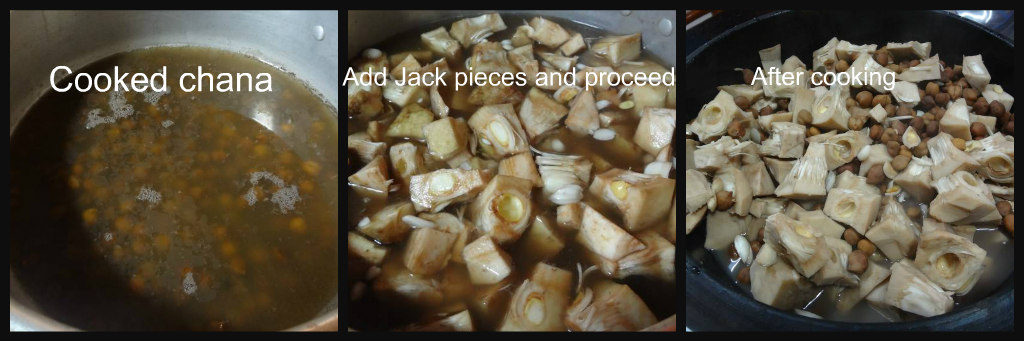
-Take one pressure cooker, cook chana by adding sufficient water. It requires around 4 to 5 whistles.

Ribbet collage

-Add Tender jack pieces into cooked chana, if needed some water, salt, red chilli powder and jaggery and cook in an open fire, until jack pieces are soft.

-In the meantime, prepare masala:

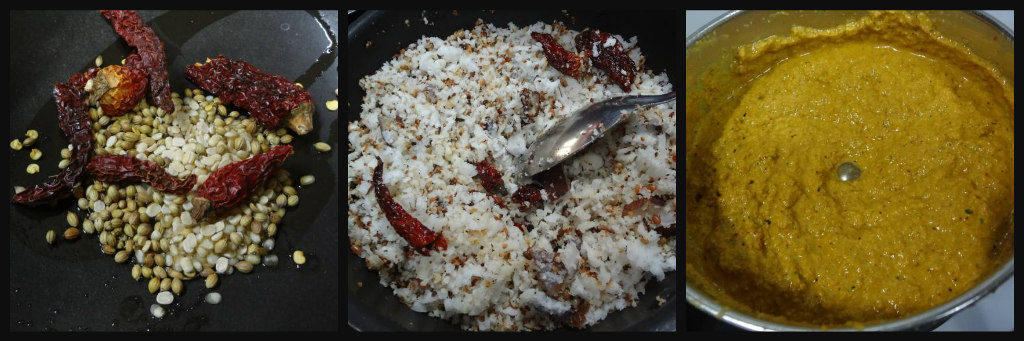
-Take 1 tsp of coconut oil in a tawa, fry methi, add coriander, hing, urad dal, red chillies and fry until urad dal becomes red. Next add coconut and fry until it emits fragrance.

Ribbet collage 2

-Cool the mixture, add tamarind and grind into little rough paste by adding water.

-Add the ground masala into cooked veggie mixture, boil.

-Add seasoning, heat coconut oil, splutter mustard, add red chilli (optional), curry leaves into oil and pour the mixture over boiled curry.

DSC07427_Fotor

-After adding the seasoning, add 2 tsp of raw coconut oil and keep it covered until u serve. This is to get an authentic taste.


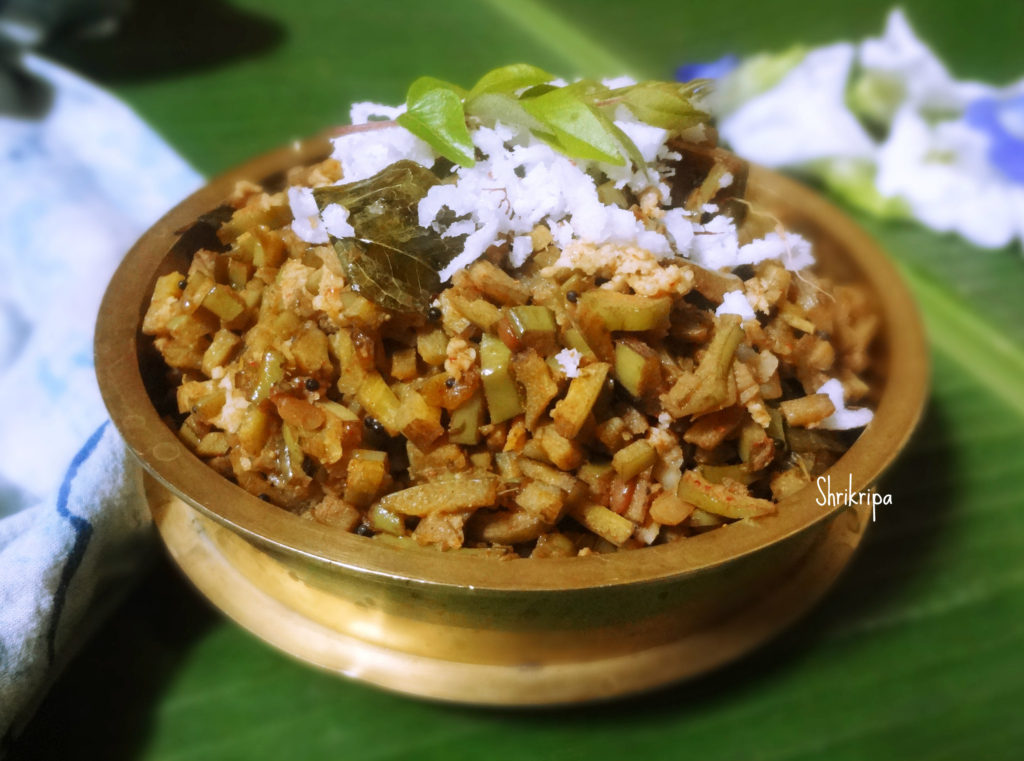
Nendra Sippe Palya/Plantain peel dry curry:

Nendra is also known as Kerala Banana. Which is mainly used in chips, if it is raw and firm or Halwa making, when it is ripe and black.

When Chips is made, all the healthy, iron rich and fibre rich peel will be wasted, and it is some what a bi -product of chips making activity.

This palya is normally prepared on previous night of wedding celebrations in our region. Normally plantain chips are an integral part of any festivity meal and it is prepared well in advance, usually process starts from the previous afternoon and peels will be fresh and ready to be used in the previous night’s dinner menu.

It is a very tasty side dish with hot Rasam or as it is with hot rice topped with ghee.

Taste of this dish will be a mixture of sweet, hot and sour and only Raw Nendra banana peel can be used to make this palya.

DSC03635_Fotor

Ingredients:

Plantain Peel – of 8 to 10 Raw bananas

Tamarind water – ½ to 1 cup

Salt

Jaggery – 1 to 2 table spoons

Red chilli powder – 2 tea spoons

Fresh grated coconut- ¼ cup

Seasoning:

Coconut oil – 2 table spoons

Mustard – 1 tea spoon

Urad dal – 1 tea spoon

Red chilli – 1

Curry leaves – 2 springs

Method:

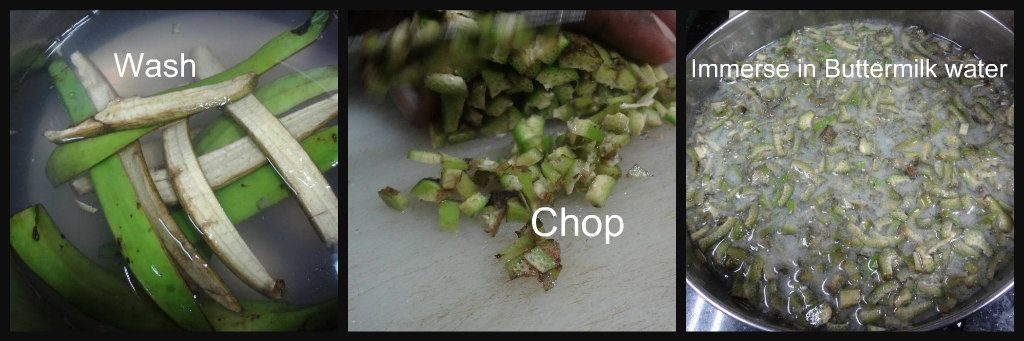
-Make thin buttermilk water to immerse the chopping’s:-Take one vessel, put 1 spoon of curd or butter milk and add two cups of water.

-Soak one tea spoon of tamarind in a half to one cup of hot water and make tamarind water and keep.

Ribbet collage 1

Wash Plantain peel and keep aside.

-Chop plantain peel into thin strips and put it into thin buttermilk water.

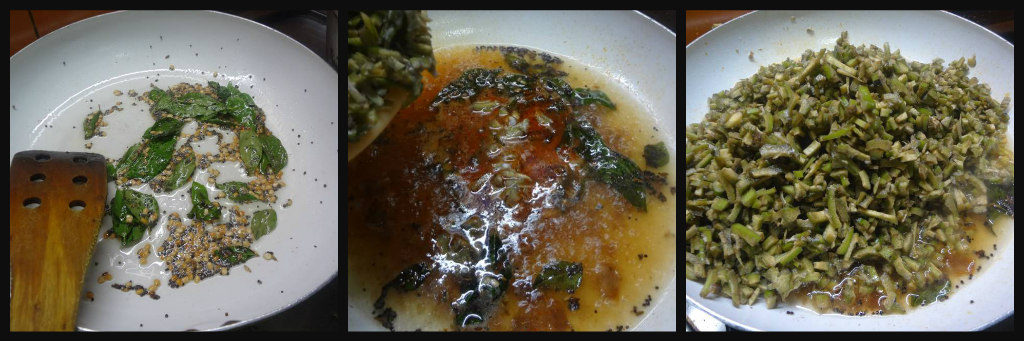
-Take one tawa, add one table spoon of oil, splutter mustard, add urad dal, red chilli and fry until dal becomes red. Add one spring of curry leaves.

Ribbet collage 2

-Pour tamarind water, salt, jaggery, red chilli powder and boil.

-Discard butter milk water and keep chopping’s ready for use.

-When it starts boiling, add drained plantain peel chopping’s.

-Close the lid and cook this in a simmer.

-Check for water in-between. If peel is not cooked add some more water.

-When chopping’s are soft and cooked, after water drains, add grated coconut, remaining 1 table spoon of oil and one spring curry leaf.

-Mix everything and cook for 2 to 3 minutes and then switch off.

-Serve with hot rice topped with ghee or as a side dish with rice and Rasam.

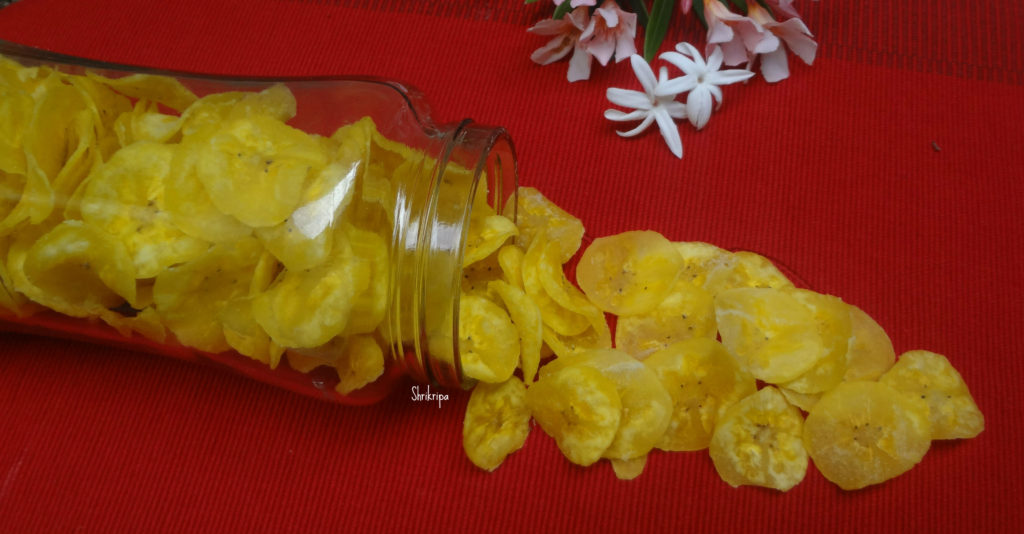
Nendra Balekai Chips / Kerala plantain chips:

A person who can resist chips, let alone not like them, is unheard of.

Nendra is a variety of banana, which is very popular in Kerala and our coastal region. We usually use this in various snack preparations. Raw banana chips are very popular in South India and it’s usually served as a savoury side dish in a traditional meal or just as munchies. This is very addictive and has a distinct flavour due to usage of coconut oil for frying.

I got this raw banana from my cousin brother’s farm and prepared these chips after ages. All thanks to them.

DSC08387

Now we will proceed towards the recipe-

Ingredients:

Green Nendra Banana – 10

Salt – 1 tbl sp

Water – 1 small cup

Coconut oil – To deep fry.

Chips slicer – to slice

Method:

Apply some oil to your hand. To some extent it will protect your hand from blackening.

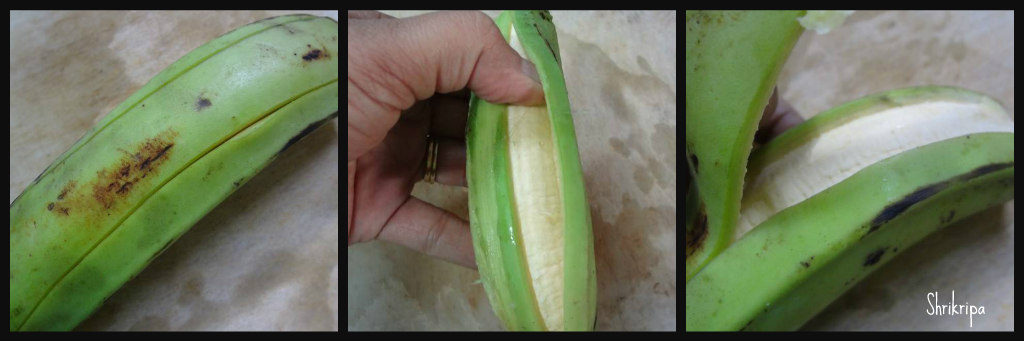
Take fresh, green plantain, wash properly. Take one small sharp knife, remove top and bottom part and give slits on outer skin at regular intervals (may be 4 to 5) from top to bottom.

Ribbet collage

Now slowly insert your thumb at the slit and open the outer skin.

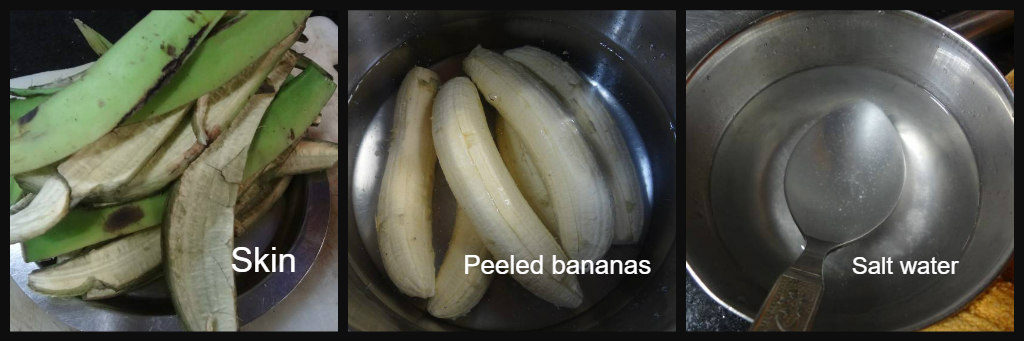
Don’t throw away this skin; you can make very tasty palya/Subzi out of this.

Immerse these peeled bananas in a bowl of water.

Ribbet collage 2

Take one small bowl of water and mix salt and keep aside.it is your salted water, which is used while frying chips.

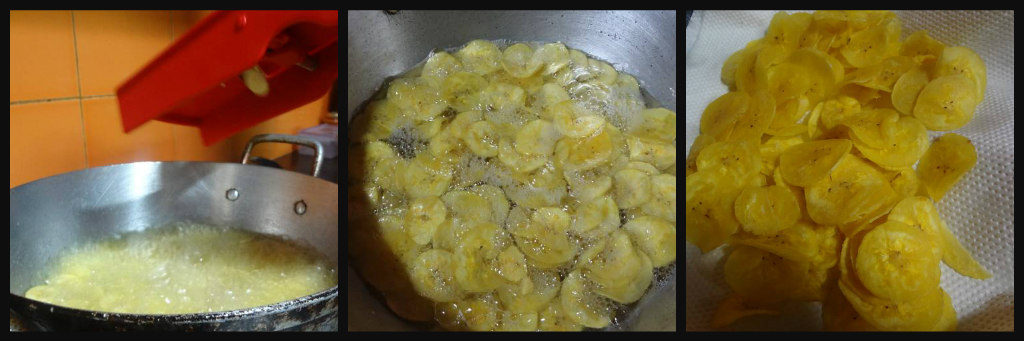
Now you can keep coconut oil for heating. When it is very hot, start making chips. To test the hotness of oil, drop one small piece of plantain, if it pops up immediately, it is ready.

Take out plantain from water, pat dry and start slicing directly to the hot oil by using slicer.

Ribbet collage 3

Use one or two plantains at a time.

Keep flame at medium. When the slices of plantain cook, the bubbling sound of the oil becomes faint. Now you can add 1 tbl spoon of salted water, and you will hear lot of bubbles and bubbling sound. When the sound reduces, the chips are ready to be removed from the oil.

Remove the chips from the oil and keep them on a tissue-laid plate.

After cooling store, it in an air tight container and proceed with the remaining plantain.


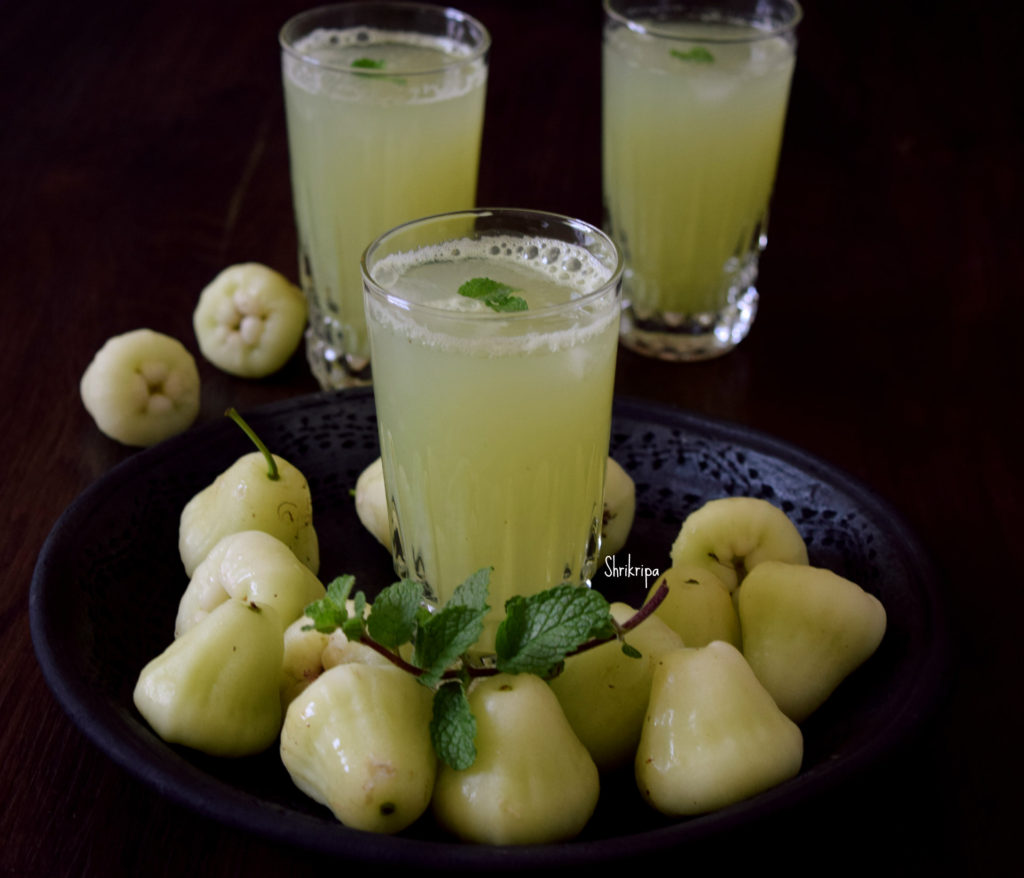
Bell fruit -Raw Mango- Mint juice:

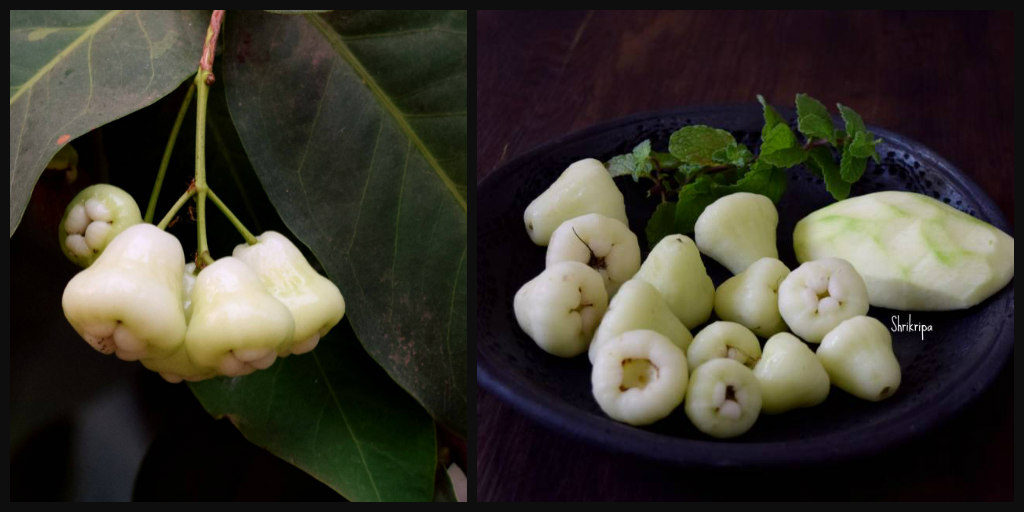
Summer is the season, when we need lot of water to keep our body hydrated. The humble bell fruit is one such fruit, which we had in our front yard while I was a kid. It is the most underrated fruit when I was growing and other than eating, fruits used to be wasted on the ground after it fell from the tree.

 Almost all the household has one or the other watery fruit plant in our native. It has several names like wax apple, java apple, water apple, Syzygium, Jambi fruit or jambu nerale.

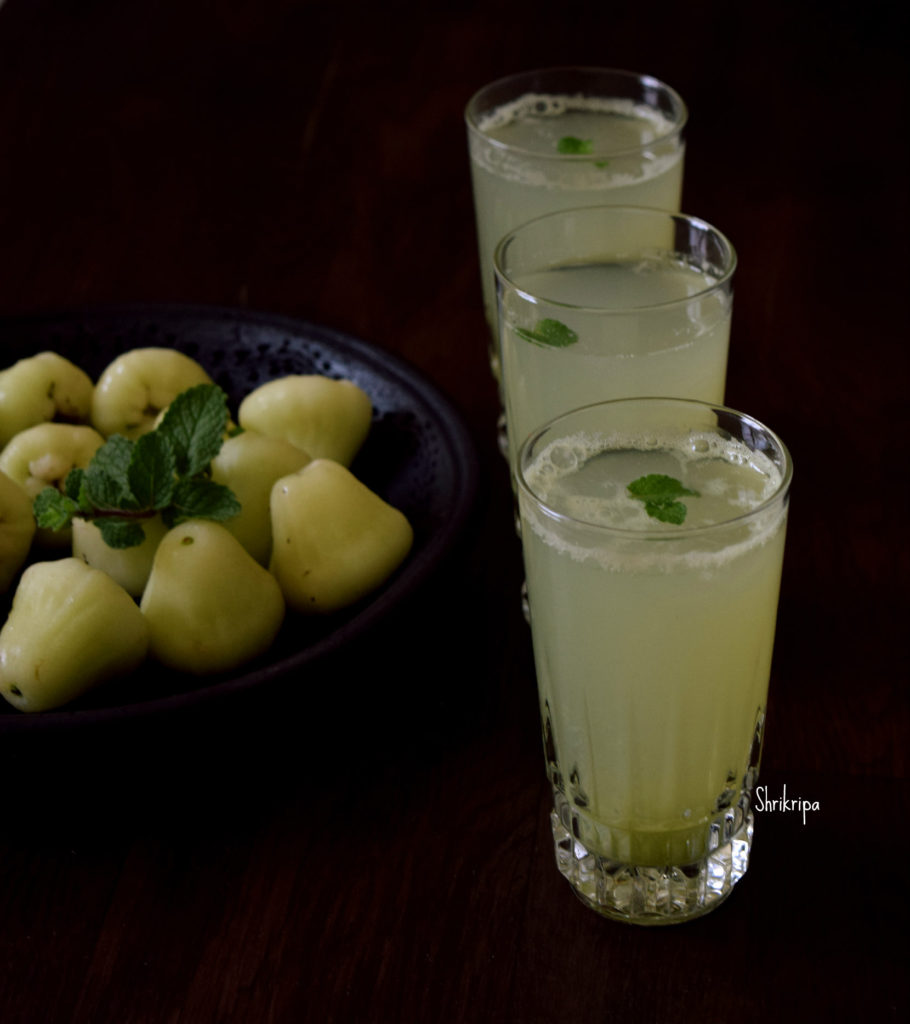
Last week when I tried this otherwise bland, watery fruit with Raw mango and mint in the form of juice, we liked the flavour and enjoyed it.

DSC_1045_Fotor

Recipe goes like this-

Ingredients:

Bell fruits – 8 to 10

Raw mango – ¼ piece of one mango

Mint – 1to 2 strings

Sea Salt – ¼ teas poon

Sugar – as needed.

Water – 2 cups

Ice cubes – if needed

Method:

-Wash, make half, remove seed and clean the bell fruit.

Ribbet collage

-Chop mango

-Take one juicer jar and put everything and churn until sugar dissolves.

DSC_1058_Fotor

-Strain the juice, pour this into a serving glass, put couple of ice cubes and serve.

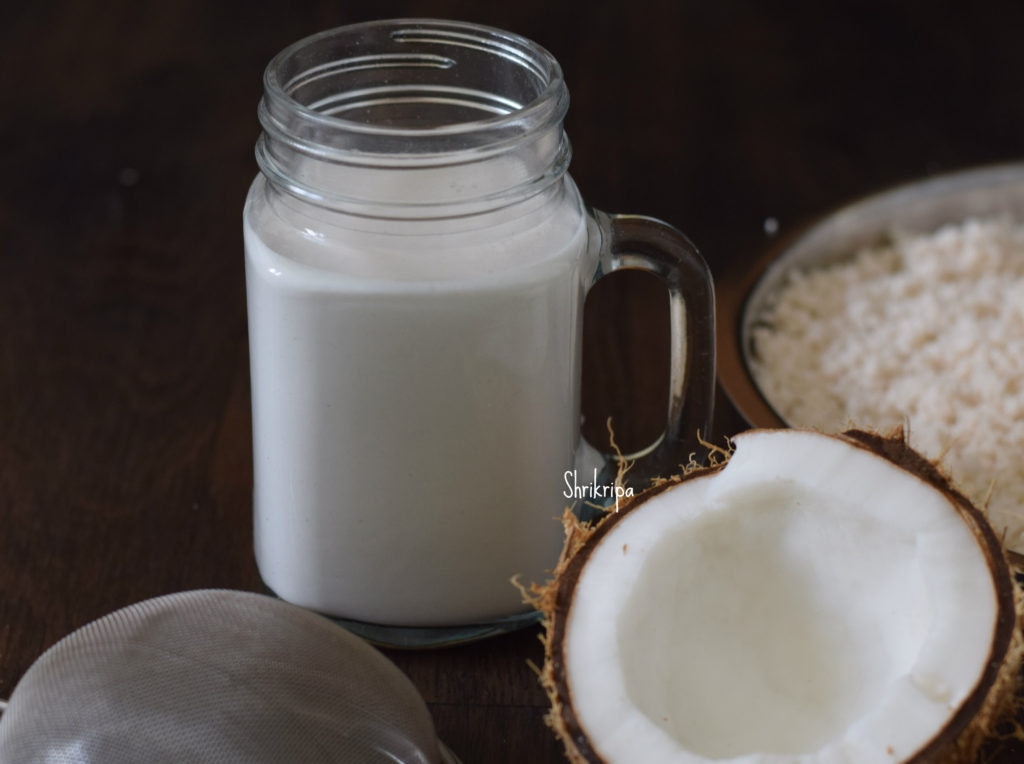
How to make Coconut Milk and Flour at Home:

If you are a person, who extracts coconut milk for kheer/ payasam like me, it is best suited for you.

Coconut flour is rich in fibre, low in calorie as well as carbohydrate, gluten free and very popular in flour less or grain free baking.

From past two years I am experimenting with various home made healthy flours and last week when I extracted milk from couple of fresh coconuts, I wanted to try this and proceeded.

Method:

First, we will see the Procedure for Coconut Milk Extraction:

DSC_4524_Fotor

Ingredients:

Fresh coconut– 1 or 2

Water – 3 cups

Strainer – to extract the milk.

Procedure:

-Grate the coconut and collect the gratings. (If you are using some frozen fresh gratings, you can thaw and proceed).

-Next is a coconut milk extraction:

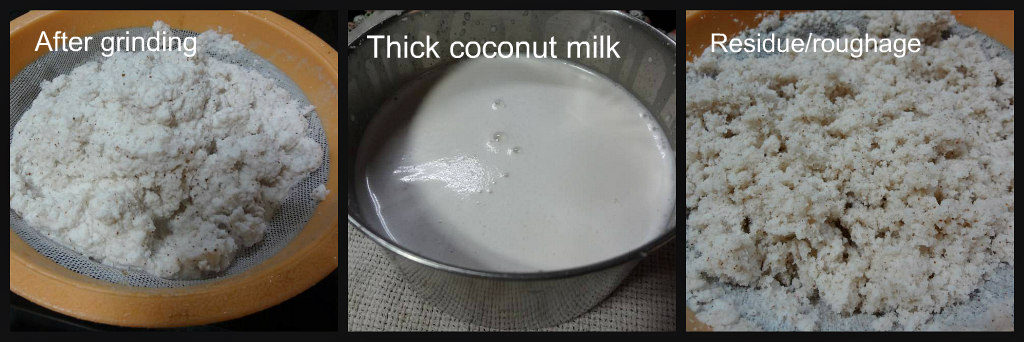
-Take fresh gratings, put one cup of water and grind into smooth paste and extract milk through sieve. This milk is a thick milk.

Ribbet collage 2

-Now once again take roughage of the coconut, put one more cup of water and grind, sieve the paste and it is our second extraction of milk.

-Repeat the process and take out a third extraction as well and Collect the roughage and it is the Raw material what we need to make coconut flour.


Now we will see how to make coconut Flour:

DSC_4523_Fotor

Now you will know, what is coconut flour?

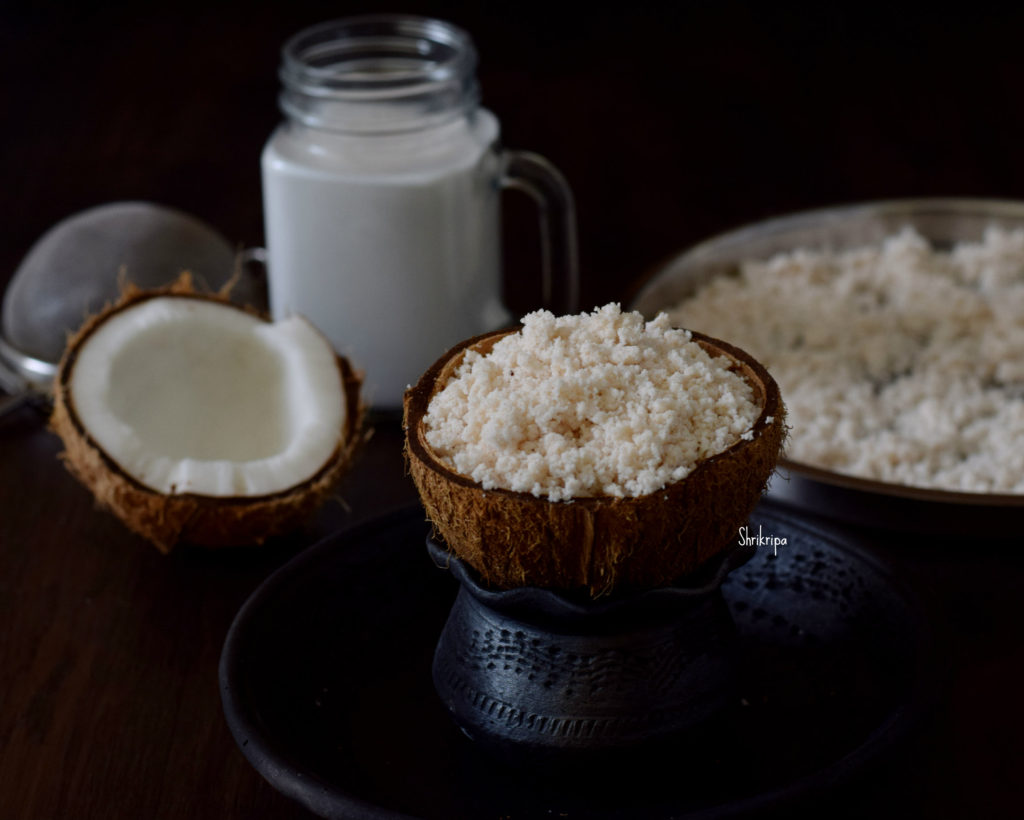
It is nothing but dried form of this roughage that we have, after the extraction of coconut milk.

Take a dry towel, spread this roughage and air dry in a shaded place for a couple of days. That is it.

DSC_4553_Fotor

Your coconut flour is ready to use. When it has dried, it will be very dry and airy. It will appear like small beads.