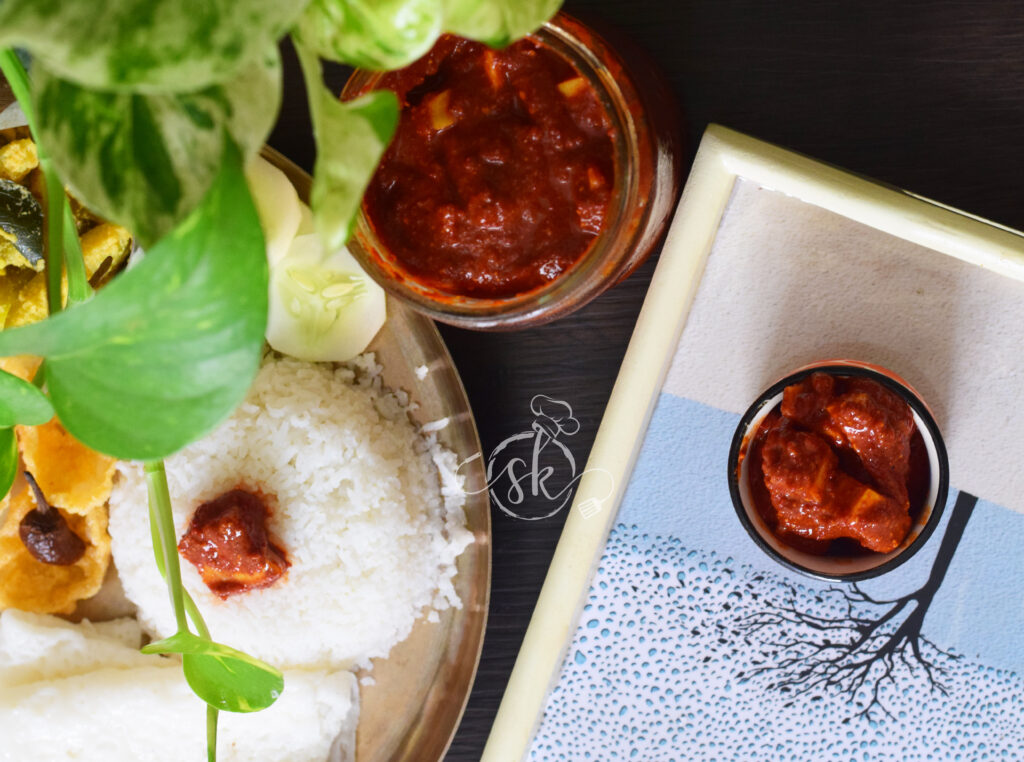
Kanile Uppinakai/ Bamboo shoot-Lemon Pickle:

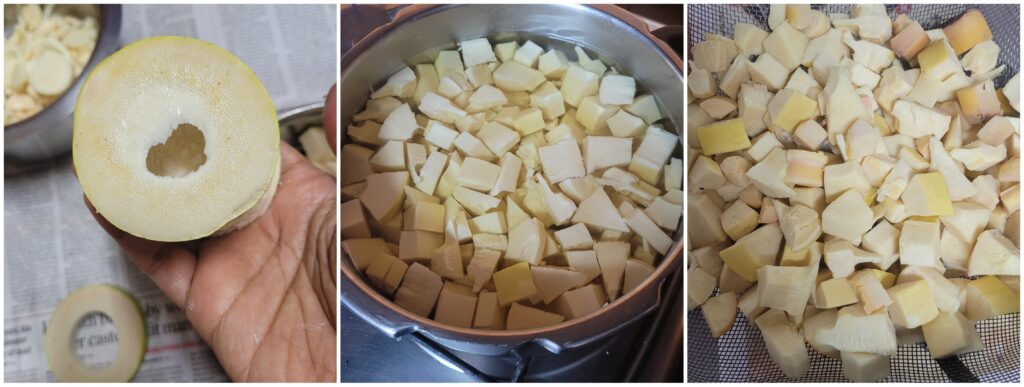
As I mentioned earlier in my “How to Chop Bamboo Shoot” Post, usually, while chopping bamboo shoots for any curries, we use Bamboo shoot’s knots or their nodes in pickle making. Usually, pickles require some souring agent to give a balanced taste. So, the Bamboo shoot needs some souring agent to enhance the taste and the shelf life. That is why we use lemon, Houglum or raw mango as an accompaniment. This image has an empty alt attribute; its file name is DSC_0631-blog-1-1-1024x762.jpg  Here, I have used Lemon with bamboo shoots. Bamboo shoot – 1 bowl (chunks from the 4 to5 nodes) Lemon -12 Water -1 lit Salt- 250 grams Byadagi Red chilli -100 grams (around 56) 25 grams of mustard 1.5 tsp – methi 1.5 tsp – turmeric powder 1/4 tsp – hing Method: -At First, Cook Bamboo shoots chunks in adequate water for one whistle in a cooker. Discard that water; air dry those bamboo shoot chunks.
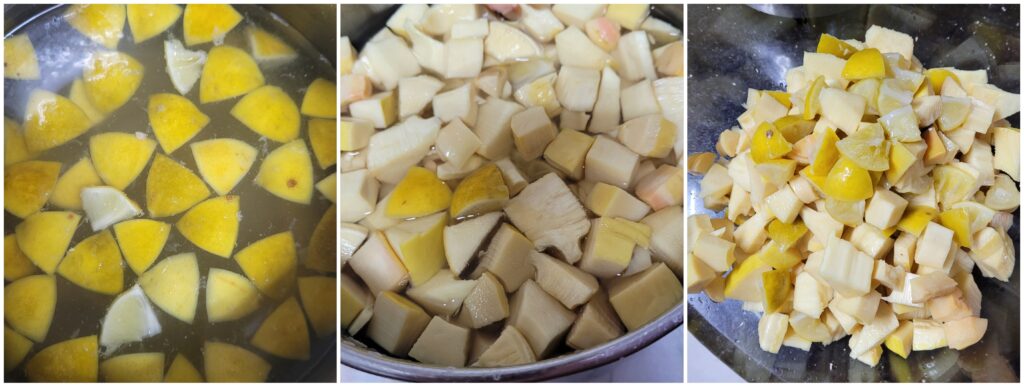
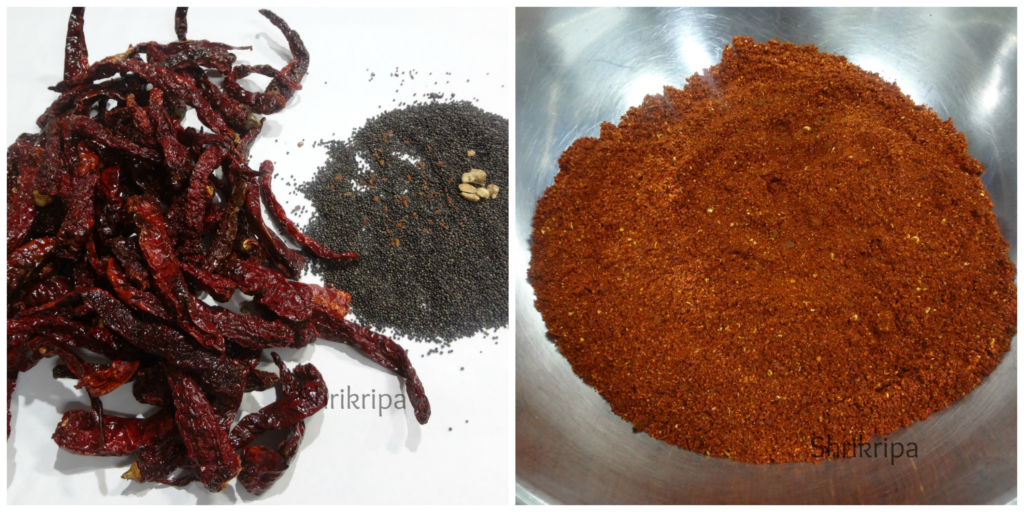
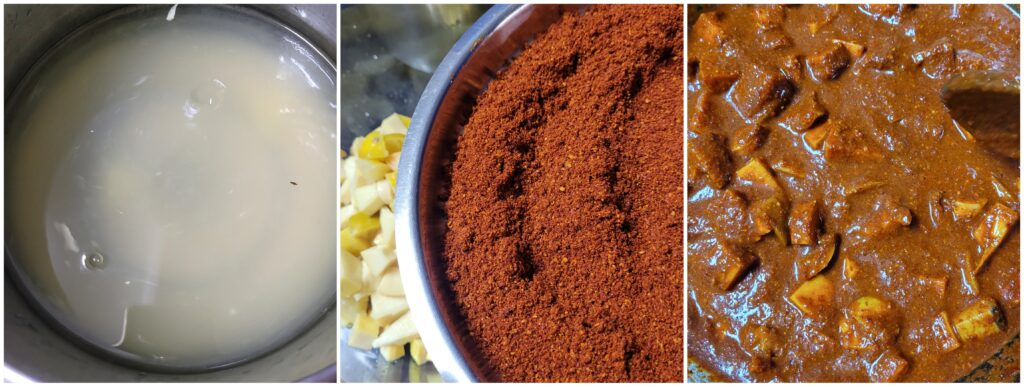
-Wash lemons, wipe and quarter lemon, remove seeds and keep it ready. -In the meantime, Boil water and salt until you find a crystal-like, white, shiny surface. -Now, put lemon pieces into hot, salted water and allow to cool. When the saltwater turns cool, the lemon peel becomes pale in colour. This image has an empty alt attribute; its file name is Picsart_24-09-05_13-35-40-332-1024x387.jpg -Add cooled, drained bamboo shoot pieces to lemon and salt water. Allow to soak and marinate overnight. -Next day, prepare masala. Dry roast methi until dark brown and allow it to cool. -Dry roast mustard, remove it and allow it to cool. -Add a little oil and roast red chillies in the same kadai. When red chilli is puffed and roasted, switch it off, add turmeric powder, and mix well. pic 33 -When everything becomes cool, make a powder in a mixer jar, add a pickle masala powder. -Drain the salt water,from the marinated lemon and bamboo shoot, and mix the pickle masala and required amount of drained salt water and mix everything well. This image has an empty alt attribute; its file name is Picsart_24-09-05_13-34-56-437-1024x387.jpg -Close the lid and allow them to absorb all the flavours for at least a day. Then, mix this pickle again, bottle it in a clean, dry bottle, and store it under refrigeration. It stays good for 6 to 8 months under refrigeration.

Bendekayi/Okra Palya:

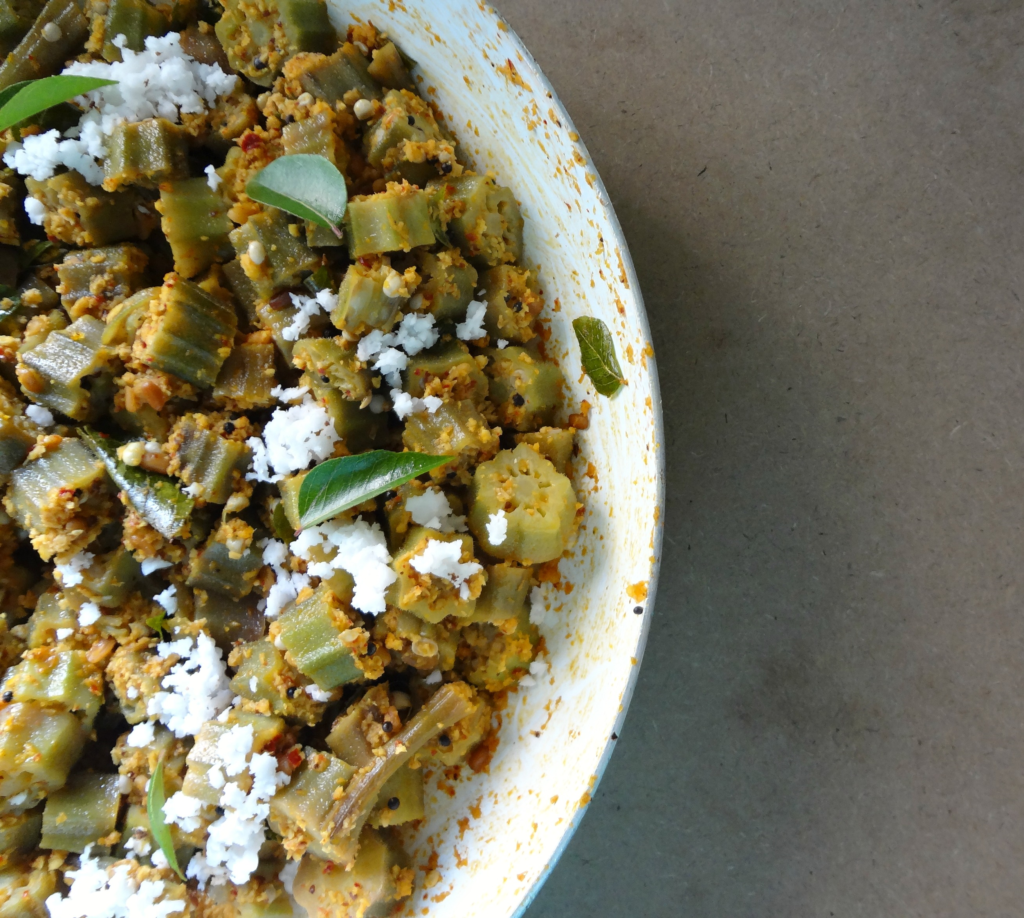
Bendekai/lady’s finger/okra/bhindi- so many names for this simple, high fibre, low calorie vegetable. Some people just avoid this slimy vegetable without knowing how to cook. It is just simple, if you know the right technique.

We normally don’t use any onion, garlic or tomato in festive cooking. In Mangalore, we prefer this simple coconut based side dishes for any weddings or festivities.

Here we use tamarind base to cook Bendekai to remove its slime. To avoid sliminess , you should remember 2 to 3 things. First thing, drops the veggie, only after tamarind water starts boiling. secondly, don’t over mix the veggie, while cooking. Thirdly, don’t cover the lid, while cooking lady’s finger. These are all the tricks I learnt from my elder’s while learning cooking from over the years.

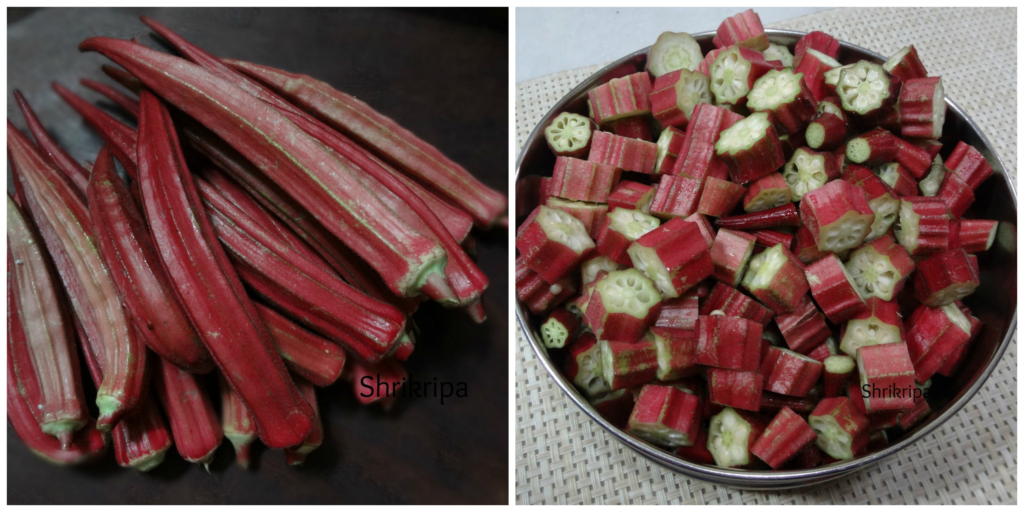
You can use any varieties of lady’s finger for this recipe. Here I have used local variety from Mangalore which I have grown and harvested from my terrace garden. It is Red Okra and after cooking, it becomes like any other okra.

pic 1

Ingredients:

Ladies’ finger – ½ kg

Tamarind – 1 tsp

Salt

Jaggery

Red chilli powder – ½ tsp

To grind:

Fresh Coconut – 1 small cup

Red chillies – 2 to 3

Mustard – ½ tsp

Hing – very little

Seasoning:

Coconut oil – 1 tbl sp

Mustard – 1tsp

Urad dal – 1 tsp

Red chilli – 1

Curry leaves – 1 string

Method:

-Wash and cut the bhindi into half inch pieces.

collage 2

-soak tamarind in one cup of water.

-Roast red chillies and hing in a drop of coconut oil.

-Dry grind coconut, roasted red chillies, hing, mustard and keep it aside.

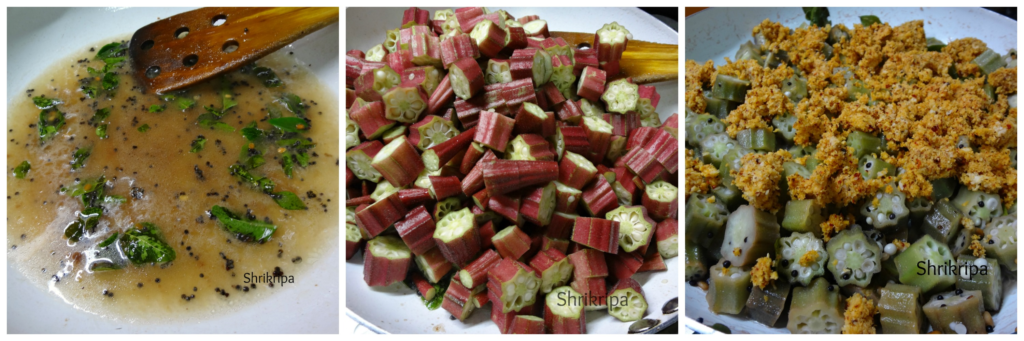
– Take one tawa, do the seasoning by putting oil, mustard seeds, urad dal, red chilli.

collage 3

-When mustard starts spluttering, add curry leaves and pour tamarind water (squeeze soaked tamarind in water and use)

-Add required amount of salt, jaggery and red chilli powder.

-When it starts boiling, add chopped Bendekai and cook this in a low flame.

-when water drains or Bendekai cooks, add ground coconut mixture and mix thoroughly and keep this in a simmer for couple of minutes.

pic 3

-serve this as a side dish with hot rice or Chapati.

Patholi / Sweet rice dumpling, steamed in turmeric leaves:

Patholi is an offering which we make on the day of “Nagara Panchami”, or the snake festival in our house hold. Monsoon is the season in which we get lot of greens in abundance.     Maybe that is the reason this dish is made in turmeric leaves.

Patholi is coconut and jaggery filled steamed kadubu or steamed rice cake, usually folded and steam cooked in turmeric leaves. Turmeric leaf gives beautiful aroma and good taste and this pleasantly aromatic dish is favoured by everyone in our family.

pic main 2

Ingredients:

Dosa rice /white rice – 2 cups

Grated coconut – 1 ½ cup

Grated Jaggery – ½ cup (to taste).

Ghee/ Clarified butter – 4 tsp.

Salt to taste

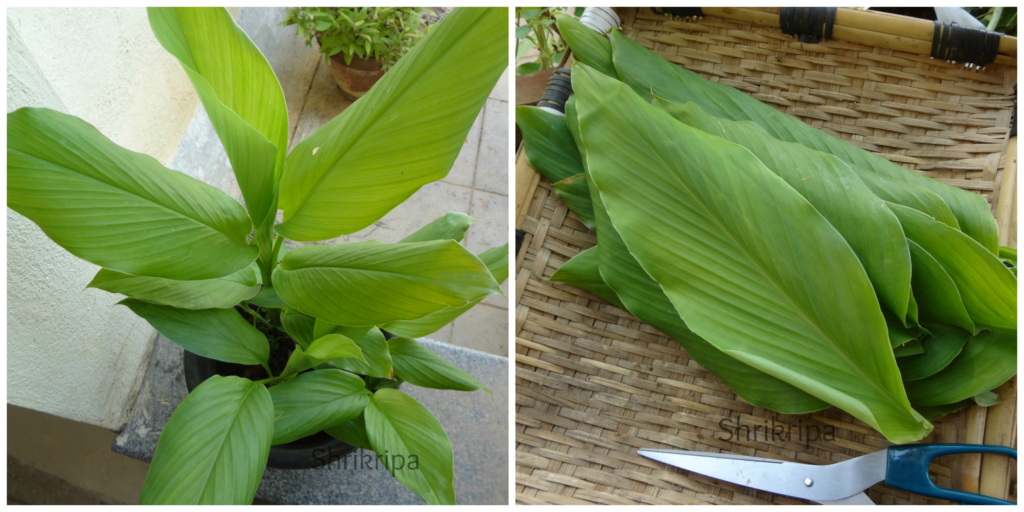
Turmeric leaves – 8 to 10

Method:

– Wash rice and soak it for 2 to 3 hours.

– Wash turmeric leaves and keep it aside.

collage 1

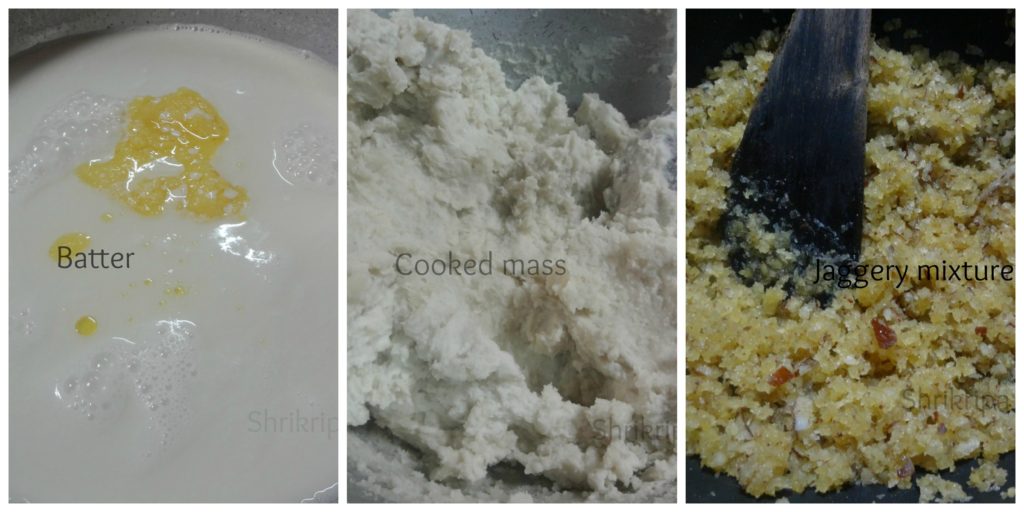
– Grind this soaked rice in to smooth paste by adding ½ cup of coconut, water and salt and little jaggery.

– Now keep thick bottomed kadai, pour this ground batter and add some water to make thin consistency. Now add 2 tsp of ghee and start heating this mixture by continuous stirring. When it becomes little thick and forms a mass, switch off the gas and keep it aside to cool to handle it further.

patholi 1

– In the meantime, make sweet coconut-jaggery mixture. In thick bottomed vessel add jaggery and ½ cup of water and heat. If you find some impurities in jaggery syrup, sieve this liquid and heat further and add fresh grated coconut and cook until it is sticky and forms mass. Add remaining ghee to this and mix. Now stuffing is ready.

– Method to make Patholi:

– Take little water in a bowl to dip your hand in between, while applying rice batter over turmeric leaf.

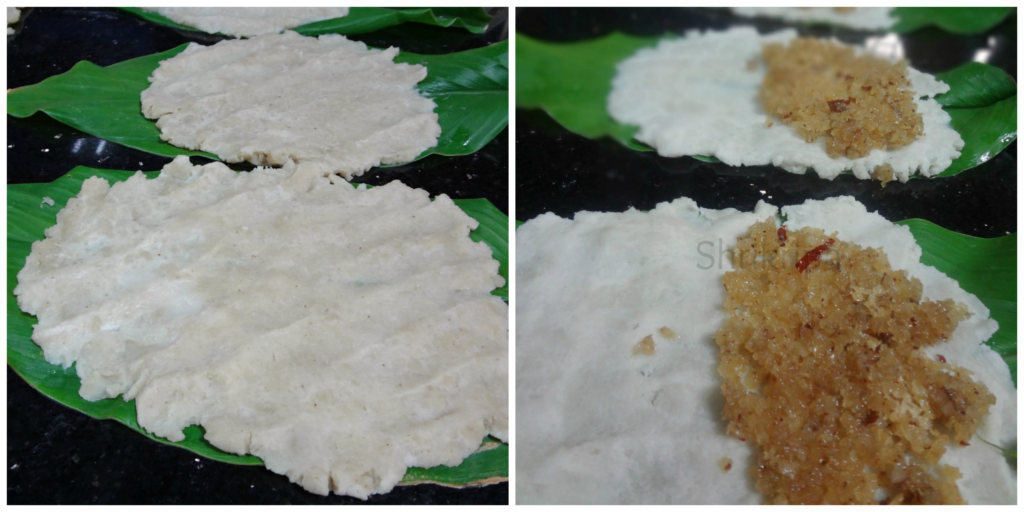
– Now take lemon sized rice batter ball, apply as thin as possible by using your hand by dipping your hand in bowl of water in between.

collage 2

– After applying ,spread coconut –jaggery mixture to half of every leaf in which batter is spread (please refer pictures)

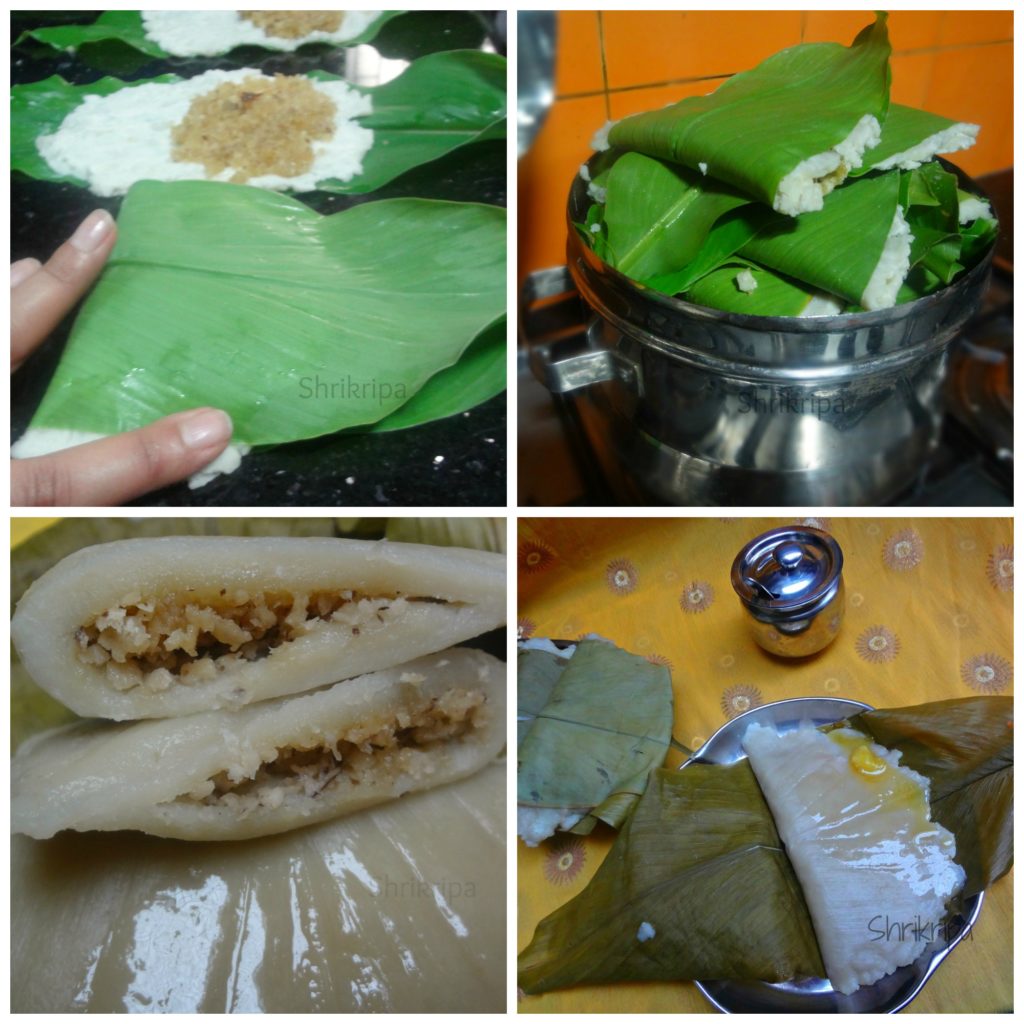
– Now fold this in to half and keep this in a idly steamer and cook for 20 to 30 minutes or until done.

patholi 3

– Serve with ghee.

Marakesavu Pathrode:

Pathrode, name itself will make any Mangalorean drool. That too if it is marakesavu leaf, fun is even more. Marakesavu is non-itchy, seasonal colocasia leaves. It is one more classic monsoon special from Mangalore. Pathrode is usually served with coconut oil either plain or pan fried by slicing.
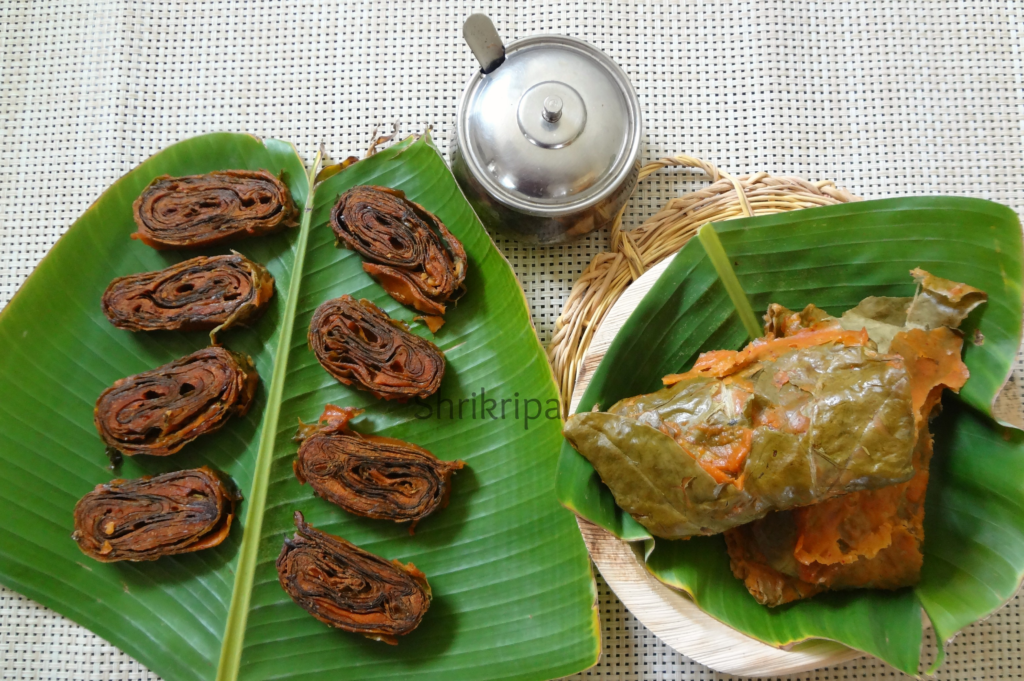
pic main

Marakesavu is commonly known as hitchhiker elephant ear and botanical name of this leaf is Remusatia vivipara. Leaf is large, oval, leathery textured, glossy on both the sides. Foliage disappears in winter and emerges after the first rain during monsoon. Grows widely on big tree trunks or in-between the stones, mainly emerges from the moss bed. The name itself suggests about its habitat. Here, “Mara” is Tree and “Kesavu” is colocasia.
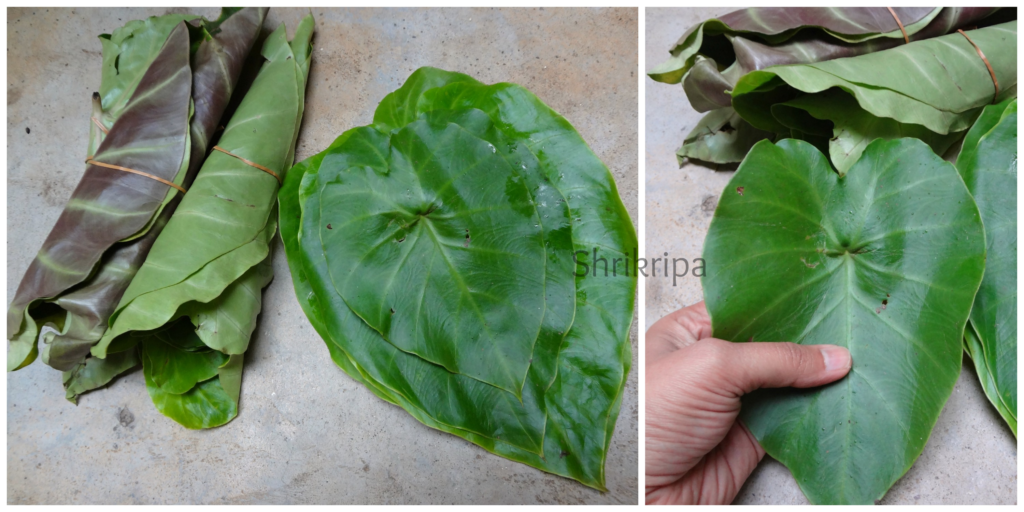
collage 1

We will see the Procedure-

Ingredients:

Dosa rice – 3 cups

Fresh Coconut – 1 ½ cup

Dried red chillies – 12 (Roasted)

Hing – ¼ teaspoon

Salt

Jaggery – 1 table spoon

Tamarind – 1 table spoon (if normal colocasia use little more)

Marakesavu – 3 bundles

Coconut oil – for serving

Method:

Wash the leaves, remove stem and trim.

  Wash and soak rice for 3 hours.

  Fry red chillies by putting very little oil.

collage 2

Grind soaked rice, coconut, tamarind, jaggery, salt, roasted red chillies into smooth paste by adding sufficient water.

  Batter consistency should be like Dosa batter.

  Now, we are ready to make Pathrode.

collage 3

  Take biggest leaf from the lot, place upper glossy part downwards and apply ground batter on back side of the leaf. (pc:step 1)

 After applying on the first leaf, keep second one (slightly smaller than the first one)

Proceed with the application. After applying on second leaf, keep the third leaf then fourth one and proceed.(pc: step 2&3)

collage 4

  Now lift sideways, and fold. Make it like a mat. Apply some batter on these folds as well.

  Roll from the tip and proceed until the end and apply some batter on outer shell and keep this in a water filled idly steamer.
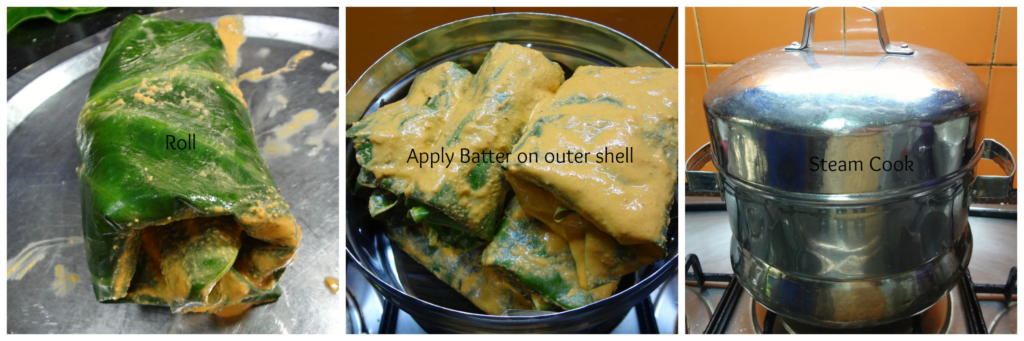
collage 5

  Cook this for 45 minutes to one hour, depending on the quantity of the content inside the vessel, in a low fire.

collage 6

  Serve fresh with coconut oil by slicing these cooked rolls or apply coconut oil and fry these in an iron tawa on both the sides and enjoy as it is for breakfast or with lunch or dinner.

NOTE:

-Tamarind is a key ingredient while making Pathrode.

– If it is Mara Kesavu, it is non-itchy and quantity of the tamarind doesn’t matter.

– If you are using normal colocasia leaves, tamarind plays a very crucial part, in removing the itchiness of the leaves. Use little more quantity than normal.

– You can prepare this same recipe by using big spinach leaves as well.

Tadka dal- Seasoned lentil :

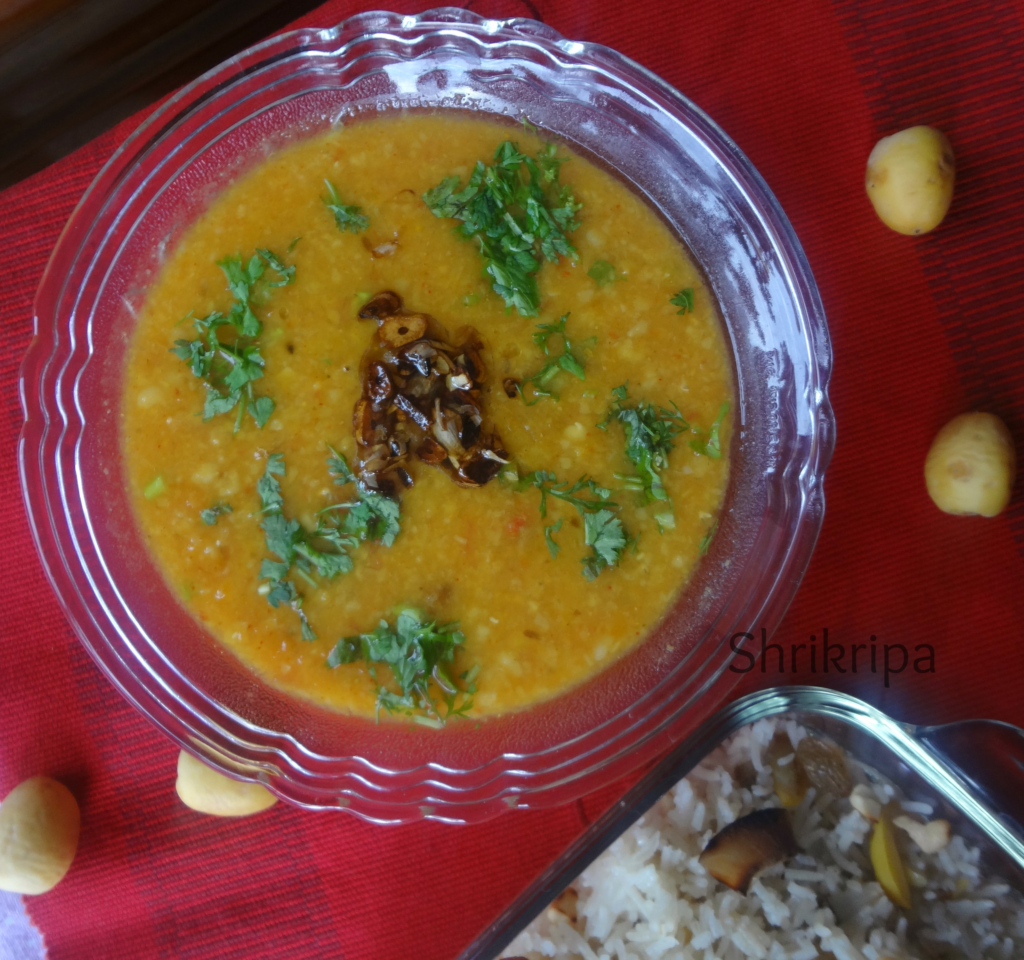
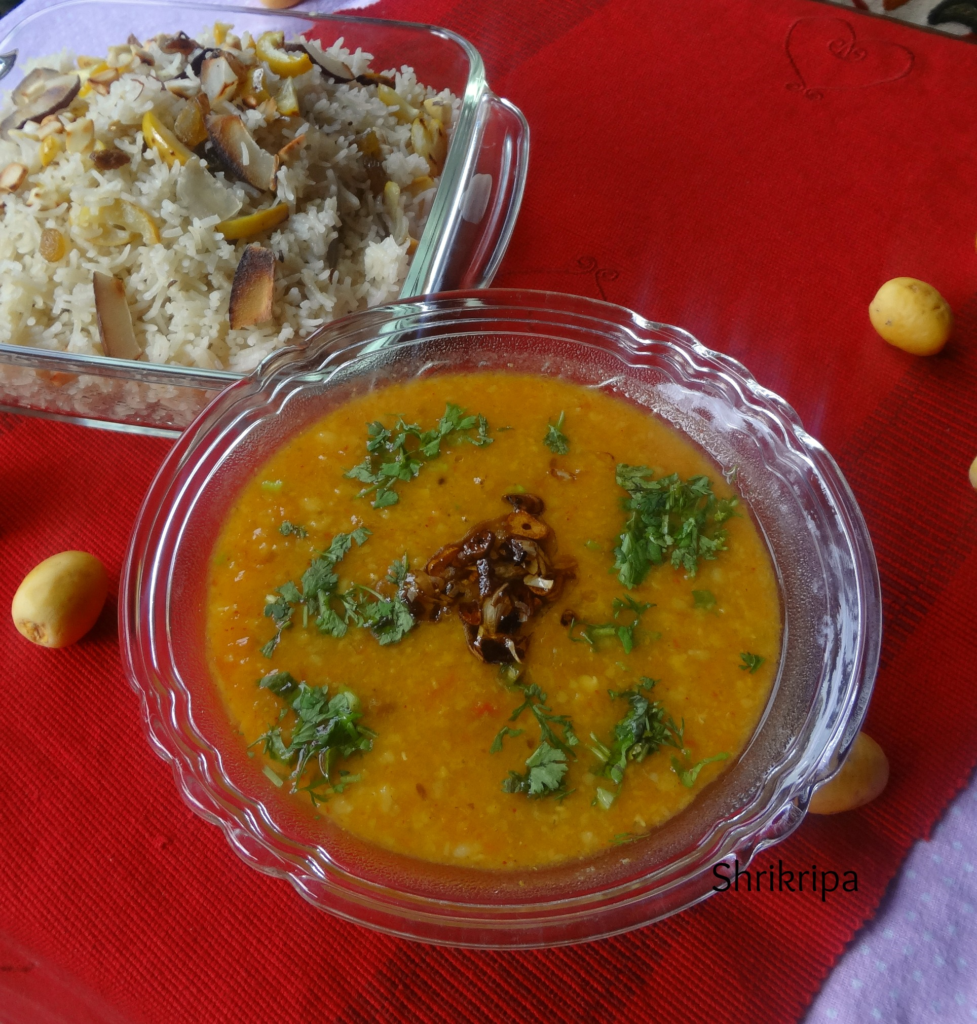
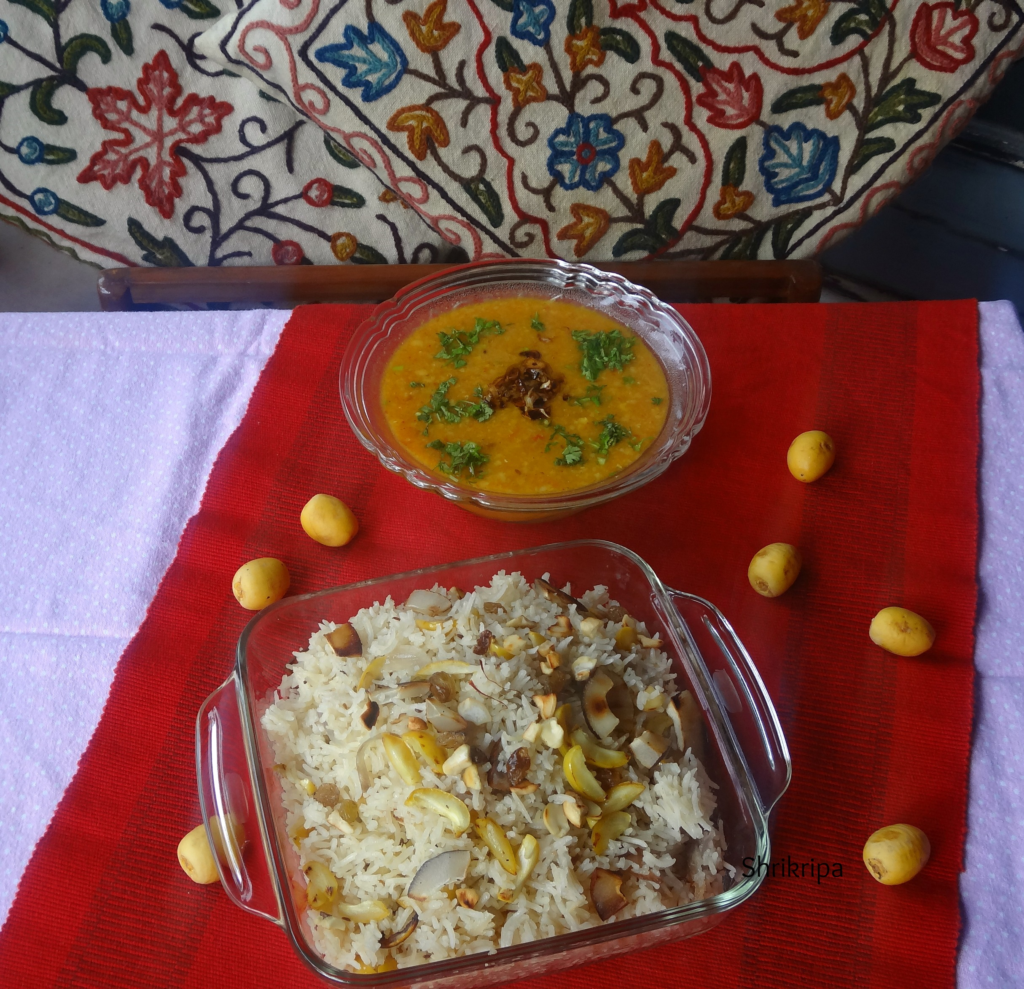
Tadka dal is a simple, nutritious side dish from northern India. Tadka dhal is a blend of a couple of lentils, cooked and seasoned with ghee as well as butter. It is a very good side dish and goes very well either with roti, plain rice, jeera rice or Kashmiri Pulav.

pic 1 Ingredients:

Toor dal/ Pigeon peas – ½ cup

Masoor dal/Red lentil – ½ cup

Ghee – 1 tbl sp

Cumin – 1tsp

Turmeric – ½ tsp

Onion – 1 small

Garlic – 4 to 5 cloves

Ginger – ½ inch

Tomato – 1 big

Coriander powder – 1 tsp

Cumin powder – 1 tsp

Red chilli powder – 1 tsp

Salt

To Garnish – Chopped coriander, sliced garlic – 3 cloves, butter – ½ tbl sp

 Method: 

-Wash both the dals, cook with sufficient water.

– Take chopped onion, garlic and ginger in a small mixer jar and make rough paste and keep aside.

– grind tomato as well and keep aside.

-Now take one kadai, put ghee. When it is hot add Cumin then ground onion mixture, turmeric and fry until it is light brown.

-Now add ground tomato and fry this until raw smell vanishes and add Coriander, Cumin and Red chilli powders.

– Add cooked dal, salt and sufficient water. Boil.

-Garnish with chopped coriander leaves.

-Fry chopped garlic in little butter and add this into dal.

pic 2

 Enjoy this Dal with Kashmiri Pulav, plain rice or roti.

Kashmiri Pulav:

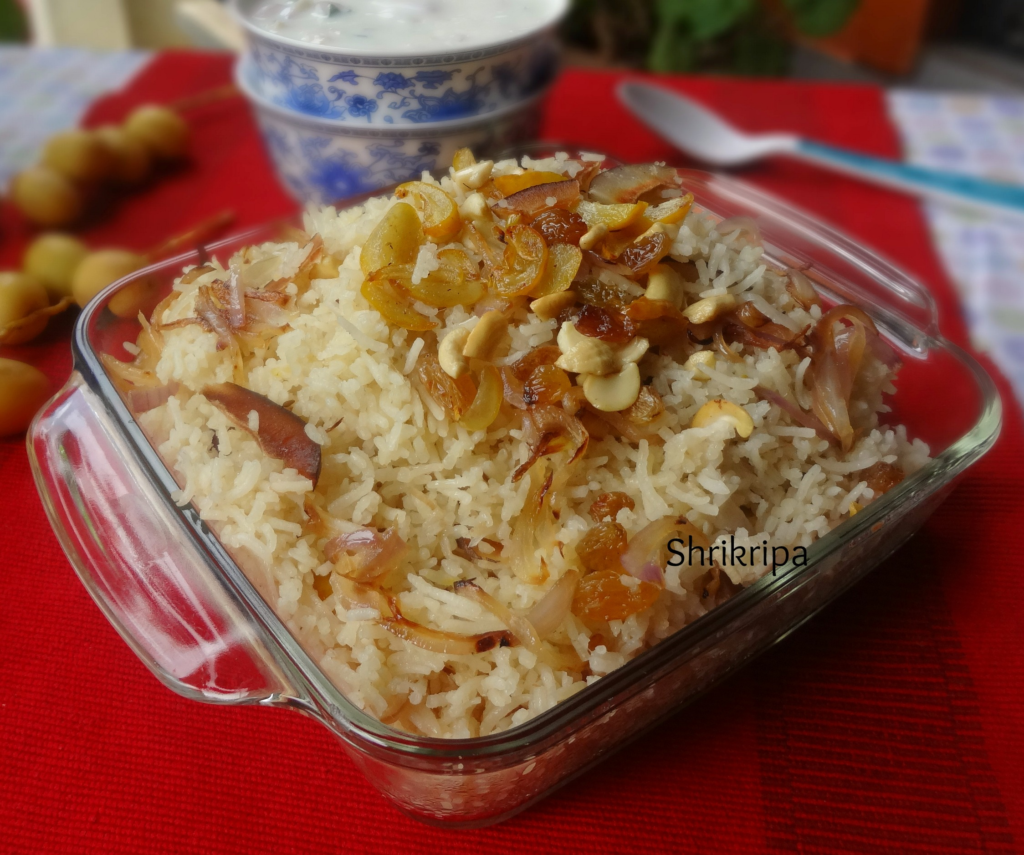
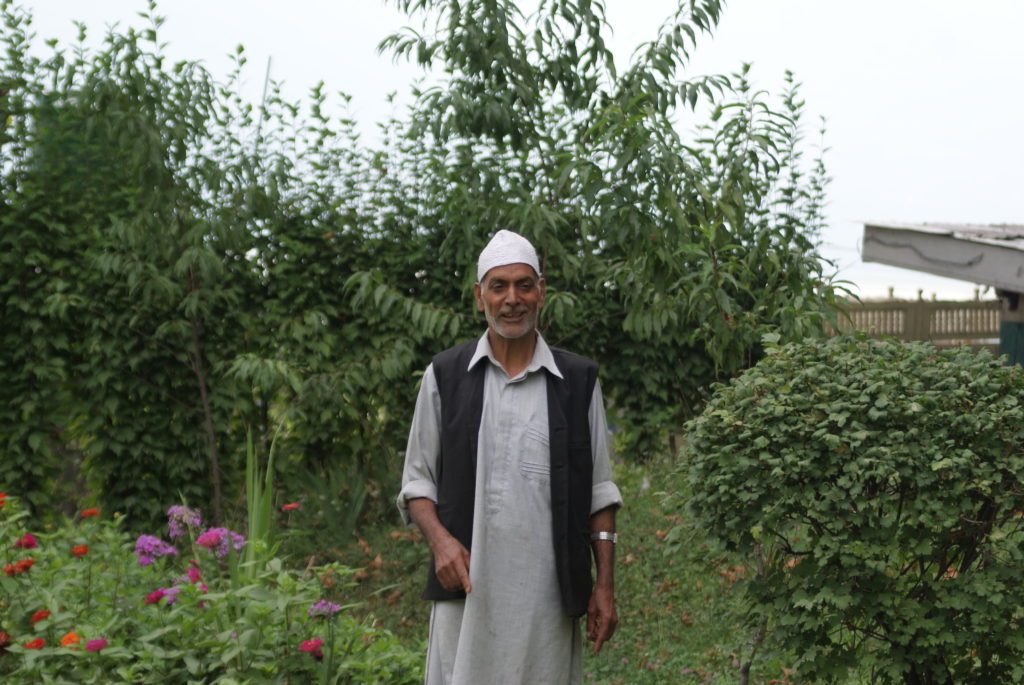
The Kashmiri Pulav what we see in restaurants have so many fresh fruits and dry fruits and are sweetish in taste as well. But in 2011, when we went to Kashmir, the care taker of our boat house made this wonderful Pulav which he served with tadka dal. That Pulav neither had fresh fruits nor so many dry fruits and it was not that sweet. It had raw yellow fresh dates, coconut chunks, cashew and raisins. My family liked this very much and wanted to note down the recipe to try it out. When I asked for the same.

pic 4

Our care taker Mahdha kaka was very happy to share his recipe and I want to dedicate this blogpost of mine to this humble man. 

SONY DSC

here we go for detailed account – 

Ingredients:

Basmati rice – 3 cups

Ghee – 150 Gms

Onion – 2 (sliced)

Ginger garlic paste – 1 tbl sp

Shahi jeera- 1 tsp

Bay leaf – 1

Salt

Saffron – 7 -8 strings

Hot milk – ¼ cup

Yellow dates, Raisins, cashew and dry coconut bits – as you wish.

 Method:

    At first wash rice, soak for 10 min and drain the water and keep aside.

   Soak saffron in hot milk and keep aside. Slice dates, coconut etc.

   Now take one thick bottomed pan, put little ghee, fry cashew, raisin, coconut slices and dates one by one and keep aside.

   Now fry half of the onion in to dark brown and keep aside.

   Pour remaining ghee, put Shahi jeera, bay leaf then remaining sliced onion and fry for a while.

– When it becomes brown add ginger garlic paste and fry until raw smell vanishes.

   Add drained rice, fry for a while.

   Now add 6 cups of water, salt and cook this rice by closing the lid and keeping it in a simmer.

  When rice is almost done, add soaked saffron with milk, fried onion, dates, raisins and cashew.

   Mix everything and keep it in a fire for little more time until all the water evaporates or until rice is done.

pic 7

         Enjoy this Kashmiri Pulav with Tadka dal.

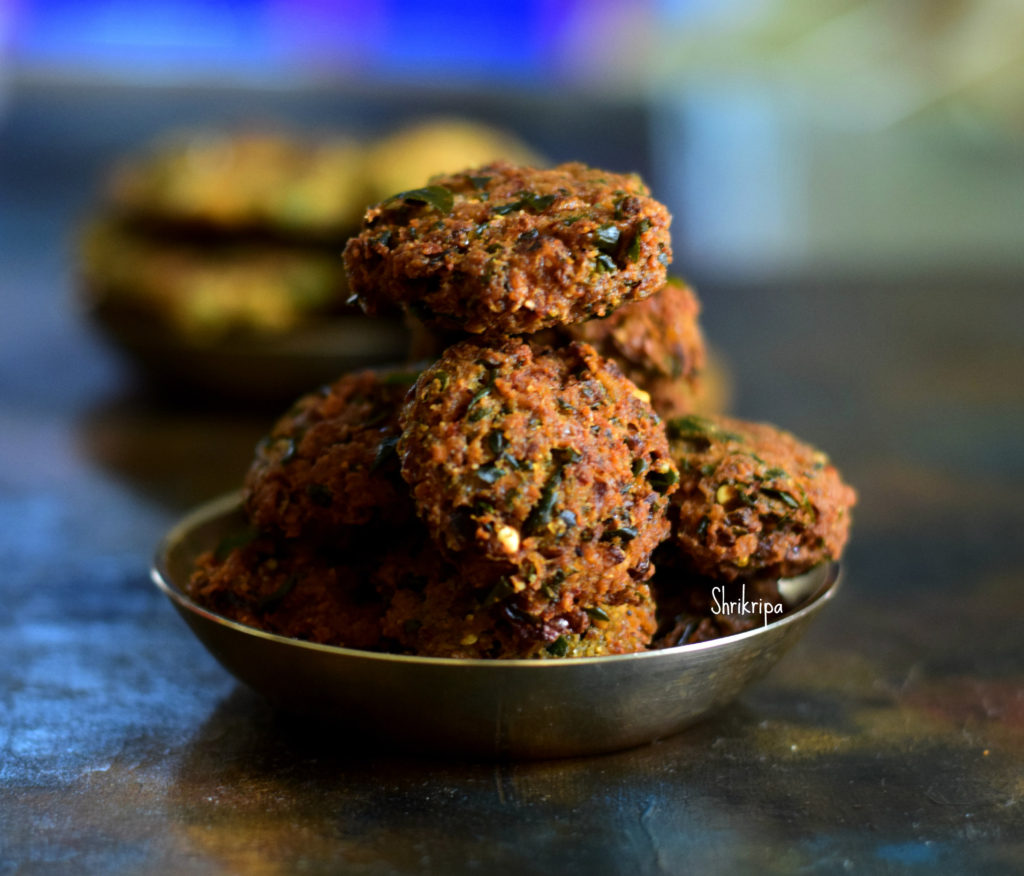
Thagathe Soppina Vada/Cassia Tora Fritters:

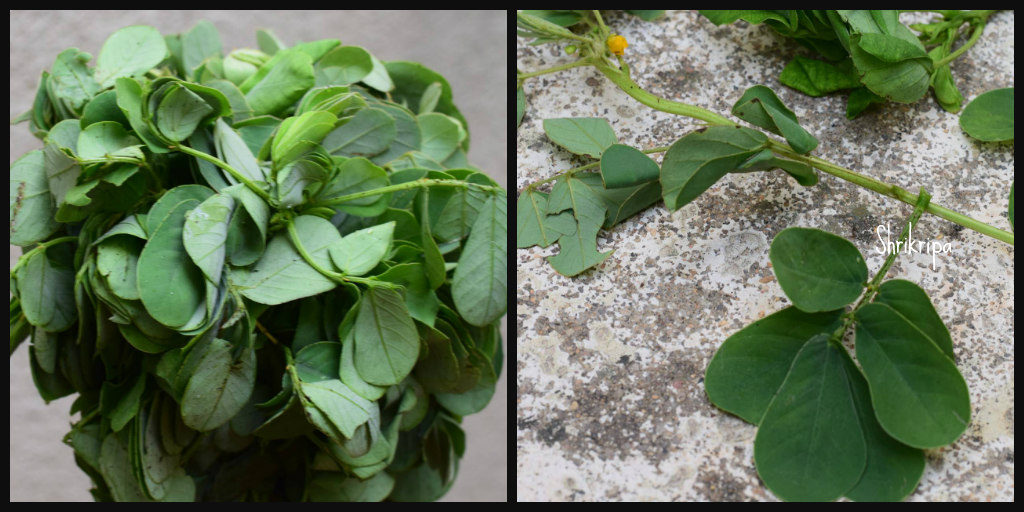
Thagathe soppu is nothing but Cassia Tora or Senna Tora in English. It mainly grows as a weed in open grounds or road side in Rainy season. It is a very useful plant and mostly ignored by all. Leaves of this plant are not only used as a medicine; its seeds are also used widely in Ayurveda.
In our coastal belt, we do prepare lots of delicacies from its young leaves and this vade or fritters is one among them. These fritters are served as a snack or as a starter for lunch/dinner. This monsoon delicacy is also called dangar in Konkani. 

Ingredients:

Dosa rice – ¾ cup

Toor dal – 2 tablespoons

Dried red chillies – 5 – 8 ( Byadagi)

Salt

Hing – generous pinch

Tamarind – ½ tsp

Coconut – ½ cup

Chopped greens – 1 to 2 cups ( as needed)

Chopped onion – 1

Method:

– Wash and Soak rice and dal for 3 hours.

-Roast red chillies, chop onions , Clean the leaves, remove stalks, wash thoroughly ,chop the leaves and keep it ready.

– At first grind coconut, hing, salt, red chillies in to paste.

– To this, add soaked rice and dal mix, grind this into a small rava consistency by adding very little water.

– Remove from the mixer grinder, add chopped leaves , onion and mix thoroughly. 

-Heat oil in a small kadai. When it is hot, take bite size of batter and pat a little in your palm and deep fry.
-Serve this as a side dish with Dal – Rice or Rasam and rice.
 

Note: If you don’t have access to Cassia Tora leaves, instead you can use chopped Moringa or Methi or fenugreek leaves as well.


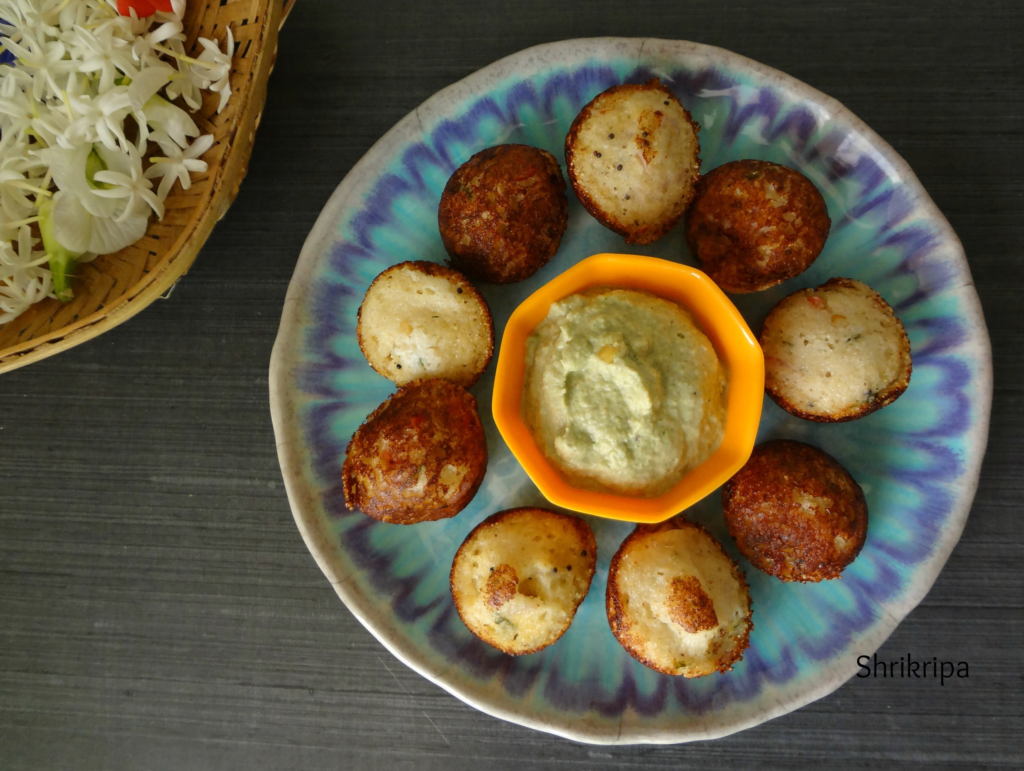
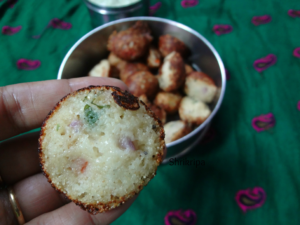
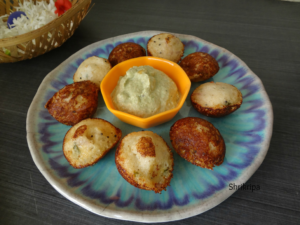
Instant Paddu:

This Recipe happened by fluke and I felt it was a very good option for kid’s tiffin boxes and basically my daughters loved it and they were asking me to include this as a regular item. So, I was thinking of sharing it with you all, lovely readers.

Last week when I made some biryani for kids and hubby’s tiffin box, no one was interested to carry a raita with them and I was left with one big bowl of onion and tomato raita. I wanted to utilise that sweetish raita in some way and thought of preparing rawa Paddu.

I took an inspiration from rawa idly mix and proceeded like that. Instead of adding only Rawa, I included millet idly rawa too and believe me, it was so tasty and the kids were saying “it was oozing with flavour and no side dish or chutney was needed” for this.

pic 7

Now we will see, how I proceeded –

Ingredients:

Normal Rawa – 1 cup

Millet rawa- 1 cup

Ghee – 1 table spoon

Mustard – 1 tsp

Urad dal- 1 tsp

Cumin- ½ tsp

Hing- ¼ tsp

Curry leaves – 1 or 2 springs(chopped)

Eno fruit salt – 1 Tsp

Curd – 2 cups

Chopped onion -1

Chopped tomato – 1

Chopped coriander – little

Salt

Sugar

Method:

-Make seasoning by taking ghee in one pan, when it is hot, add mustard. After mustard splutters, add urad dal, cumin, hing, chopped curry leaves and fry for a minute.

-Add plain rawa and millet rawa fry until it becomes grainy in texture.

pic 1

-Remove from the flame and cool the mixture into room temperature.

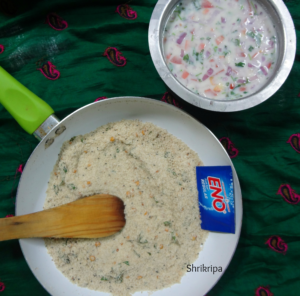
– Before preparing batter, take the curds, chopped onions, tomato, coriander leaves, salt and sugar mix nicely by adding Eno fruit salt.

pic 2   pic 3

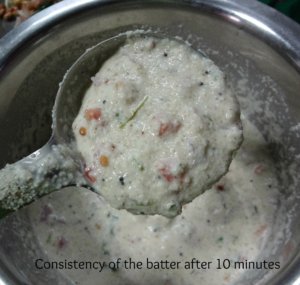
– Now add seasoned, cooled rawa mix and give a stir. Mixture should be little watery kind at this point. Keep aside for 5 to 10 minutes so that batter will become thick now due to soaking of all the moisture by rawa.

-If batter is too thick you can add little more curds and adjust the consistency. It should be like idly batter and consistency should be little thick.

pic 4   pic 6

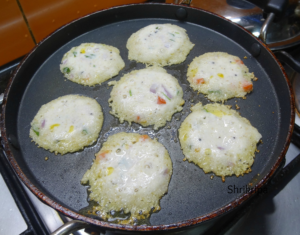
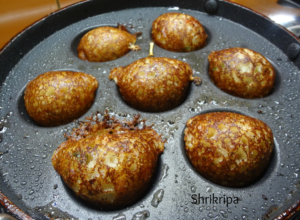
-Keep Appam or Paddu tawa, when it is hot keep it in a simmer, pour ½ tsp of ghee to every hole and pour the required amount of ready batter.

pic 5  pic 8

-Close the lid, cook for a while. Then flip and cook other side as well and then serve either as it is or with any chutney.

Note:

-Here I have used little millet idly rawa, you can use any millet rawa as well.

-If you don’t have access to millet rawa, you can use only rawa too.

– Here I have used Uppittu rawa/plain semolina/Bombay rawa.

-I did seasoning part on previous night and kept it aside for cooling. So that, morning it will be easy to mix and proceed to make Paddu.

-You can make this rawa mix and store it for a future use.

Badam Halwa / Almond Halwa :

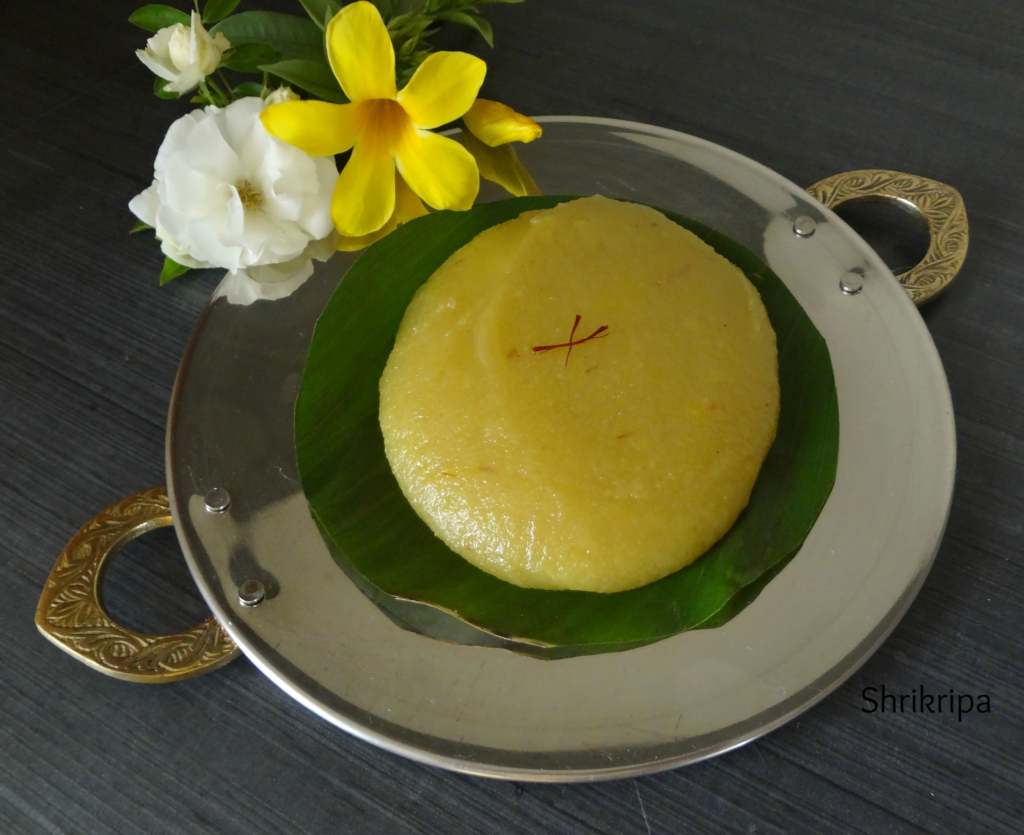
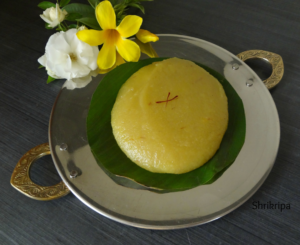
Badam halwa, the name itself brings back so many fond memories of my two kiddos’ as well as of my late father in law. My memories go back to my delivery time. When my father in law heard about my twin daughter’s arrival, he celebrated his joy by preparing and distributing this sweet to our near and dear ones. While growing up, even my kids used to enjoy this sweet and used to refer to this as “Yellow sweet”. After so many years last weekend I prepared this to celebrate my hubby’s birthday and enjoyed every bit of the preparation by cherishing all these fond memories. 

pic 1

I Normally follow this age-old method-

Ingredients:

Almonds – 500 grams

Sugar – 750 grams

Milk – ½ to ¾ litre

Ghee –  1 to 1 ½ cup

Saffron – 1 tsp

Cardamom powder – ½ teaspoon

Method:

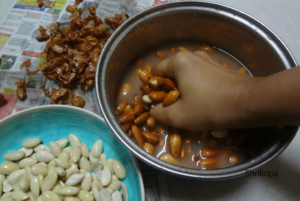
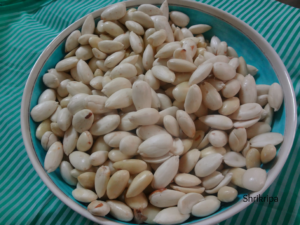
  Soak almond overnight.

pic 2   pic 3

   The next morning, peel the skin. Usually three fourth of the content will shed their skin, if you mash those swelled almonds inside the water, by using your palm.
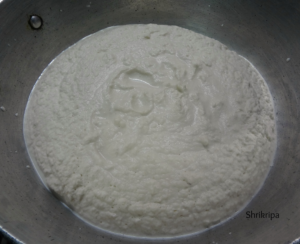
    After removing the outer skin, put these in a mixer grinder jar, make paste by adding sufficient milk.

pic 4    pic 5

   Soak saffron in half cup of hot milk and keep aside.

   After grinding paste will look like idly batter with grainy texture.

    Put this paste into thick bottomed vessel and heat.

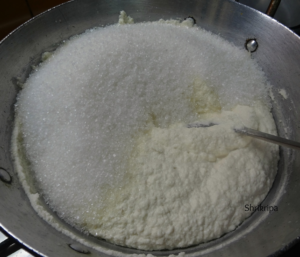
    Add sugar and boil for a while.

pic 6  pic 7

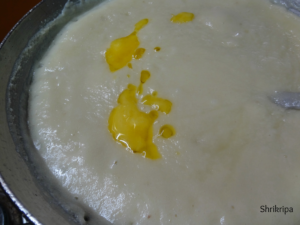
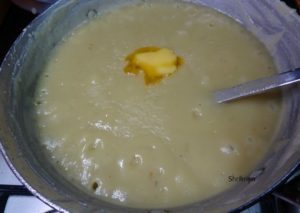
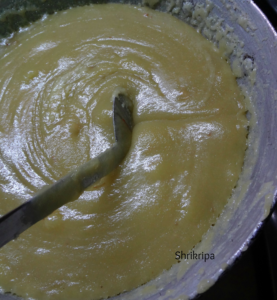
  When it starts bubbling, add ghee little by little at regular intervals until mixture becomes glossy.

   At this point, you can add saffron soaked milk and cardamom powder and proceed.

    When mixture starts to leave from the sides of the vessel and edges become dry and bubbly, switch off the fire and keep aside to cool.

pic 8   pic 1

   When it reaches room temperature, store this in a stainless steel or glass container.

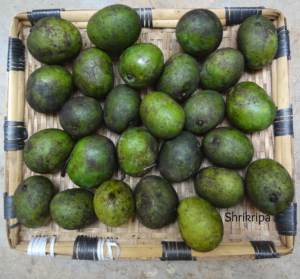
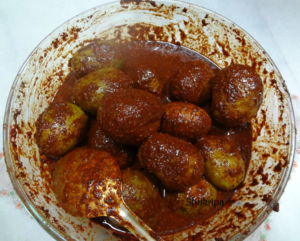
Idikayi Uppinakai / Whole mango pickle in roasted masala:

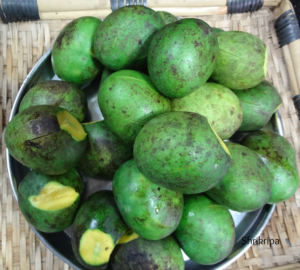
Happiness is when your reader as well as a distant cousin of yours messages you and requests you to post one of our traditional age-old pickle recipe. When you respond saying, this variety of mango (wild raw mango) is not available where you reside. Immediately comes the response, he will bring and give it to you. Not only bringing this raw mango from 250 km away, he has not forgot to remind me, “Don’t forget to post”. This post is dedicated to him, Rajendra. G.

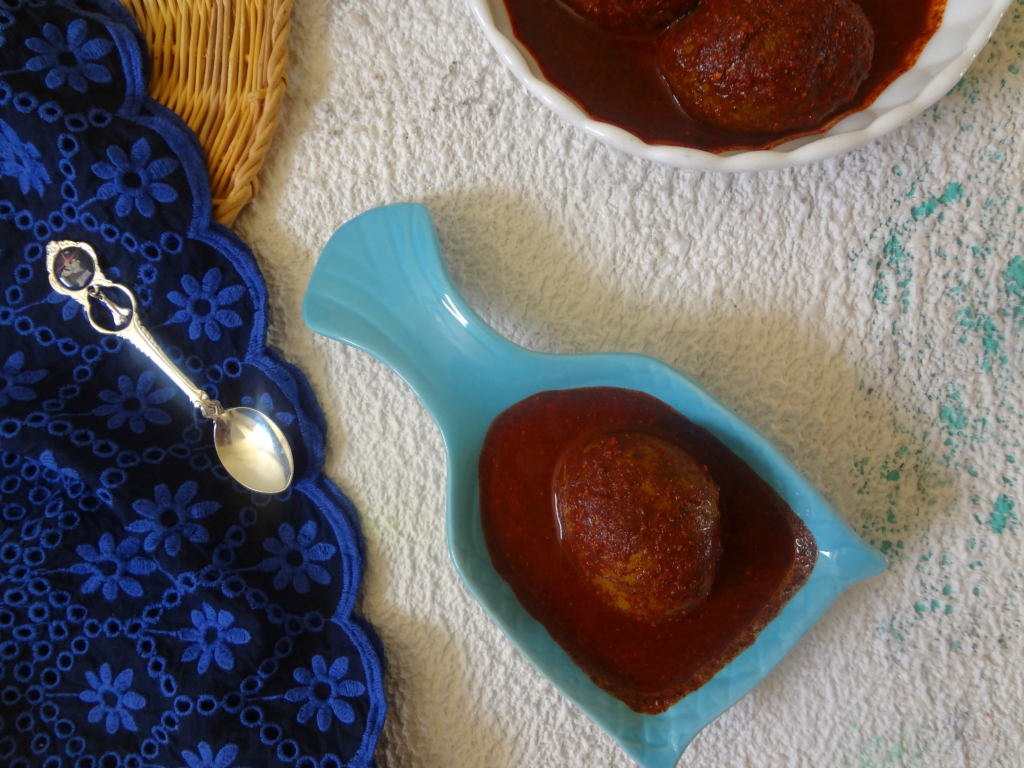
Idikayi is nothing but whole mango. We use wild whole mango in this pickle. Speciality of this pickle is, it is fully grown, just before ripening stage of mango. So, while eating, you can enjoy and savour salted seed as well. Usually we relish this with Kerala matta rice kanji or normally we call as, kucchilakki ganji with this pickle.

Masala is used in this pickle is roasted and fried with very little oil. So literally it is very mildly hot pickle without oil. Even small kids relish this.

pic 2

Ingredients:

Whole mango – 23

Red chillies – 250 gms (I normally use Byadagi variety)

Mustard – 100 gms

Fenugreek /methi seed – 1 table spoon

Hing – ½ tsp

Turmeric – 2 tsp

Salt – 2 to 3 cups

Water – 4 cups

To boil mangoes:

Water – half of the vessel

Salt – 1 fist full.

Method:

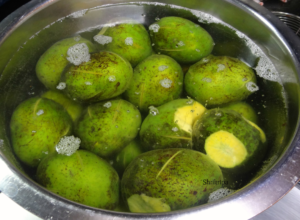
          First let’s start the pickle making by preparing the mangoes. Wash mangoes, remove its stalk part and give 3 to 4 slits here and there.

pic 3         pic 4

          Boil water in a big vessel (take half of the vessel). Add one fist full of salt to this water.

pic 5    pic 6

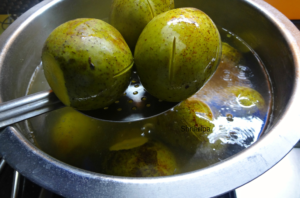
          Drop all those mangoes, cook until outer skin become pale green and remove from the water and drain.

          Cool this into room temperature.

          Make salt water: Take 3 cups of salt and 4 cups of water in a pan and boil this in a medium heat. How to check the doneness? Whenever salt and water quantity is right, salt will form a glossy layer at the top. If you don’t find any mirror layer, add little more salt and proceed boiling. When it is ready, switch off the gas and cool this water. It should reach room temperature, before using.

          Start making pickle masala.

          Dry roast methi, mustard and hing separately.

          Fry red chillies little by little by putting 1 tsp of oil.

          Cool everything and make powder in a mixer jar.

          After making powder, mix everything together nicely and take required amount of powder, pour required amount of cooled salted water and make a paste.

pic 8     pic 9

          It should be a little flowy. Because mango should immerse in this liquid.

          Add cooled mangoes and mix.

          Adjust the consistency either by adding powder or salted water.

          Store this in an air tight glass jar.

          Next 3 to 5 days every day, make it a point to mix it and keep it aside by closing the lid.

pic 1

          After one week, you can start consuming and store this in a fridge to extend its shelf life.