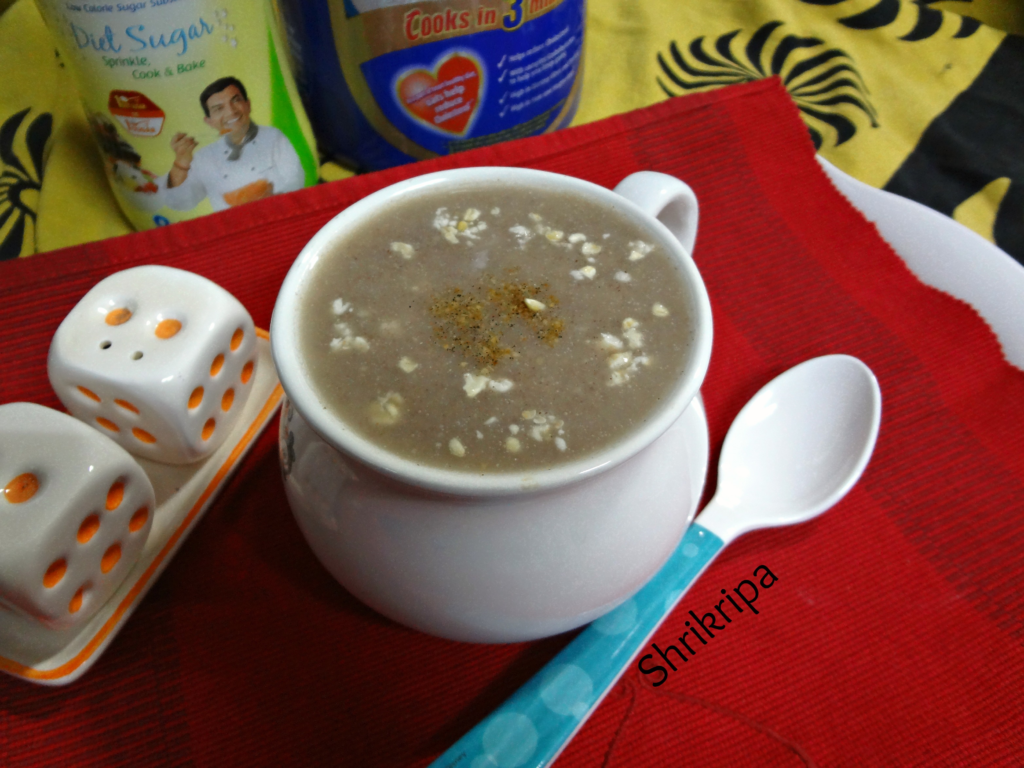
Millet and Oats porridge:

A low calorie Diet is very difficult to manage. You feel constantly hungry and can’t concentrate on your work. To attain fullness, we should think of adding millets in our diet as it is very nutritious, gives strength and increases immunity. It is low on starch, high on minerals and fibre.

This is a 3 spoon miracle filling diet. If you have this porridge in the morning, you will surely not feel hungry until your lunch.

ragi porridge

Ingredients:

Mixed millet flour – 1 spoon

Finger millet flour – 1 spoon

Oats – 1 spoon

Water – 1 ½ cups

Salt- ¼ teaspoon

Cardamom powder – ¼ teaspoon

Sugar free natura – 1 teaspoon

Method:

  • Take one thick bottomed vessel, mix all the ingredients.
  • Boil this mix by stirring in-between.
  • While boiling, mixture becomes glossy, when it is done.
  • Switch off the gas and serve.
  • It is a very good breakfast option for weight loss or diabetic patients.
  • Adjust the consistency by adding extra water if you want a runny texture.

Akki Happala/Rice Papad:

This is a very light and tasty papad, which is relatively very easy and there is no need to keep it under the sun to dry as it dries under the fan or partial sun at balcony or wherever.

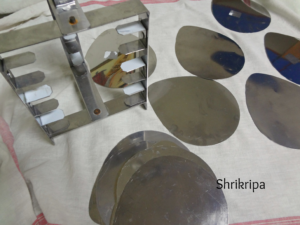
Previously I used to struggle to make this by keeping my tiny 3 steel plates in idly steamer to cook but this year, when I visited Chennai; I bought one papad stand, which is known there as an Elai Vadam Stand and its plates are known as Elai Vada plates. This is my most treasured asset and I wanted to own it from so long. If you don’t have this stand and still want to make this, you can use your thatte idly stand or simply you can keep any small plates or banana leaves and still you can make.

akki happala 1

I usually use Dosa Rice for this and for seasoning; I add chopped green chillies, cumin and salt. You can add any seasoning of your choice.

Ingredient:

Dosa rice – 2 cups

Salt

Cumin – 2 tsp

Green chillies – 4 to 6

Method:

-Soak Dosa rice in the afternoon.

-Around night, grind this into smooth batter by adding salt and little water. Batter should be like Dosa batter. Add Cumin and Keep aside for overnight fermentation.

pic 1          pic 2

-The next morning, when you are ready to prepare papad, dry grind green chillies in small mixer jar and add this to ready fermented batter.

-Adjust the consistency by adding extra water. Batter should be a little thinner than regular Dosa batter.

-Check for salt and adjust that as well.

-Now keep idly steamer on gas stove with little water at the bottom.

-Apply little oil to steel Elai vada plates. In this stand 6 plates will be there. I recommend you to buy extra set of 6 plates with this stand, so that process will finish off in a jiffy.

pic 3    pic 4

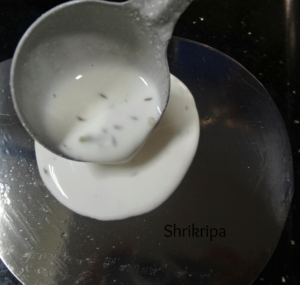
– Now pour a little batter on each plate and spread the batter. Place them in the stand and steam cook this only for 2 minutes.

pic 5     pic 6

-At this time, take out the other set of Elai vada plates and apply some oil and spread the batter.

-There is no need to apply oil every time, only once at the beginning is more than enough.

-Now remove adai stand from the steamer, remove those leaves from the stand and replace with the new set and keep it inside the steamer for 2 minutes.

pic 7    pic 8

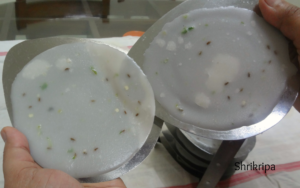
-Now remove all those cooked papad’s from the leaves by using other leaf’s edge and slightly lift that and peel off.

-Transfer these peeled papad’s over clean cloth and sun-dry wherever you want. If you have access to sun light, dry under the sun (very partial sunlight is required). If you don’t have access to sunlight, you can dry it indoors, but it will take an extra day  or two.

pic 9    pic 10

-Dry for 3 days and store it in a tight container.

akki happala main

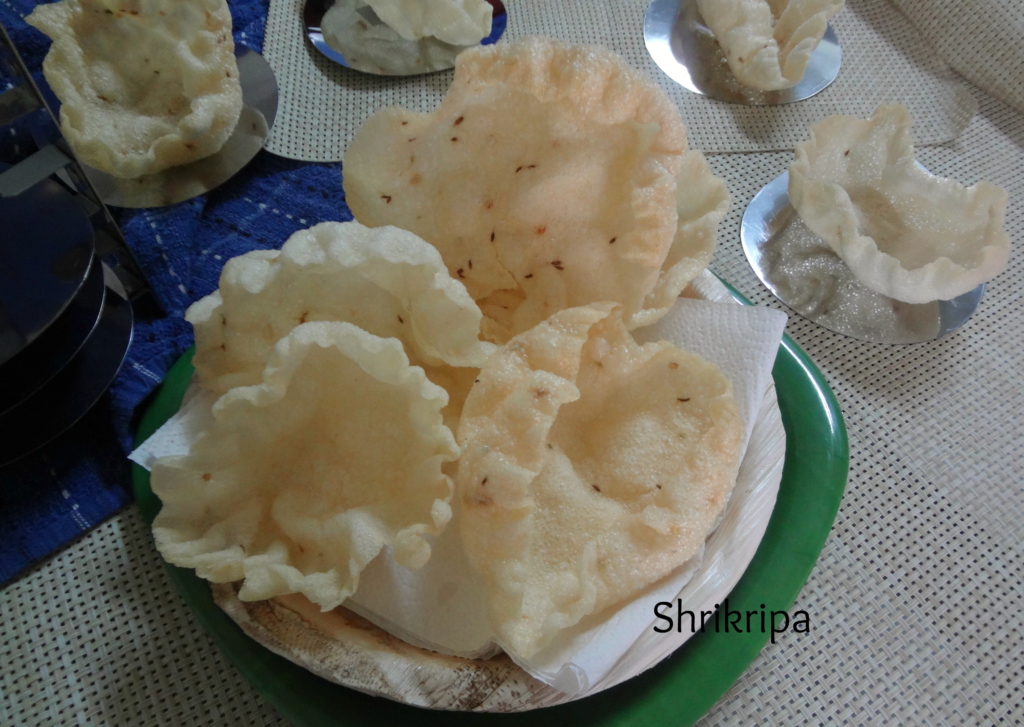
Fry this whenever you want and Enjoy as it is or with Rice- Rasam/dhal.


Ridge gourd Tambli:

Here is a low calorie option with ridge gourd, which is healthy, refreshing as well as soothing in this summer season. This particular Tambli is prepared by grinding tossed ridge gourd with fresh grated coconut and mixing in buttermilk and it doesn’t need boiling. You can savour this like an appetiser or mixing with piping hot rice .It has healing properties and is very good for the digestive system. Recently I tasted this curry at my sister in laws place and just loved this.

ridge gourd tambli

How to prepare this:

Ingredients:

Ridge gourd – 6” with skin

Cumin – ½ tsp

Black pepper – 5

Bird eye chilli – 2

Ghee – 1 tsp

Coconut – ½ cup

Salt

Butter milk – ½ cup

Seasoning: ghee – ½ Tsp, cumin – ½ tsp, curry leaves – 1 spring.

Method:

-Chop ridge gourd with skin intact.

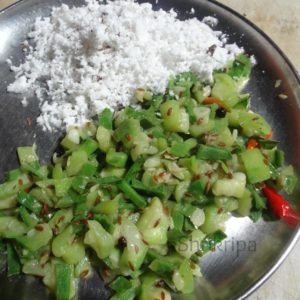
-take 1 tsp of ghee in a small kadai. When it is hot, add jeera, pepper and bird eye chilli. If you don’t have bird eye chillies, instead you can use half green chilli and roast. Then add chopped ridge gourd and fry until it wilts.

– Now take out all these fried items and cool.

pic 1

-Grind this into smooth paste by adding coconut, salt and little water.

-remove this into a vessel, add buttermilk, and adjust the consistency by adding little water if needed.

-Consistency should be like normal milk.

– Add seasoning by heating ghee, cumin and curry leaves.

– Enjoy this with hot rice.

Tamarind Pickle:

pic 1

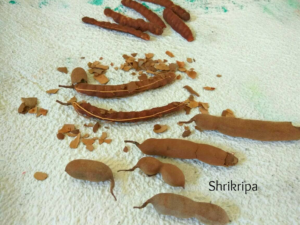
Tamarind has a very important place in the Indian kitchen and it has loads of health benefits as well as it is a treasure of anti-oxidants and dietary fibres.

Indians love its tangy and sweetish taste and enjoy this in chutney, relish, digestive candies, pickles and more.

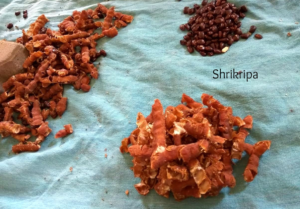
tamarind 1            tamarind 2

From childhood, I used to enjoy tamarind pickle and never knew about the recipe. Thanks to my brother-in-law who sourced the recipe and made it possible for me to enjoy this relish after so many years.

This is a family recipe of one of our friends from Mangalore and speciality of the local Jain community form coastal region.

Ingredients:

Tamarind- 100 grams

Dried red chillies – 200 grams (Byadagi variety)

Jaggery – 250 grams

Salt – 8 to 10 teaspoons

Water – 3 to 4 cups

Fenugreek /methi seeds – 1 tea spoon

Cumin – 2 tea spoon

Gingelly oil – 1 to 2 table spoon.

Mustard – 1 tea spoon

Garlic – 5 to 6 cloves (crushed)

Curry leaves – 1 spring

Method:

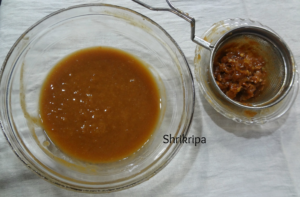
  • Soak tamarind and grated jaggery in water for some time.
  • When it becomes soft, nicely squeeze out and sieve the liquid.

pic 9           pic 10

  • Discard all the roughage and fibres.
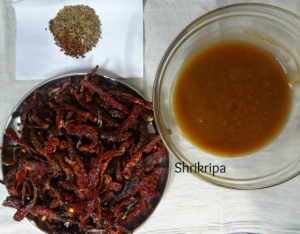
  • Dry roast methi and cumin.
  • Roast red chillies by putting very little oil.
  • Powder all the roasted items by using dry mixer jar.
  • Now keep one thick bottomed vessel on the gas stove, put oil and do seasoning.
  • When oil is hot, splutter mustard seeds, then add crushed garlic and curry leaves.

pic 11                pic 12

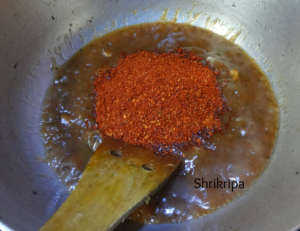
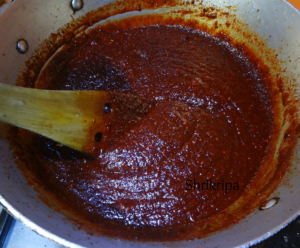
  • Pour tamarind and jaggery concentrate, salt, ground masala powder and boil.
  • After boiling it for some time, upper layer of the mixture will look glossy and it is the sign for its doneness.
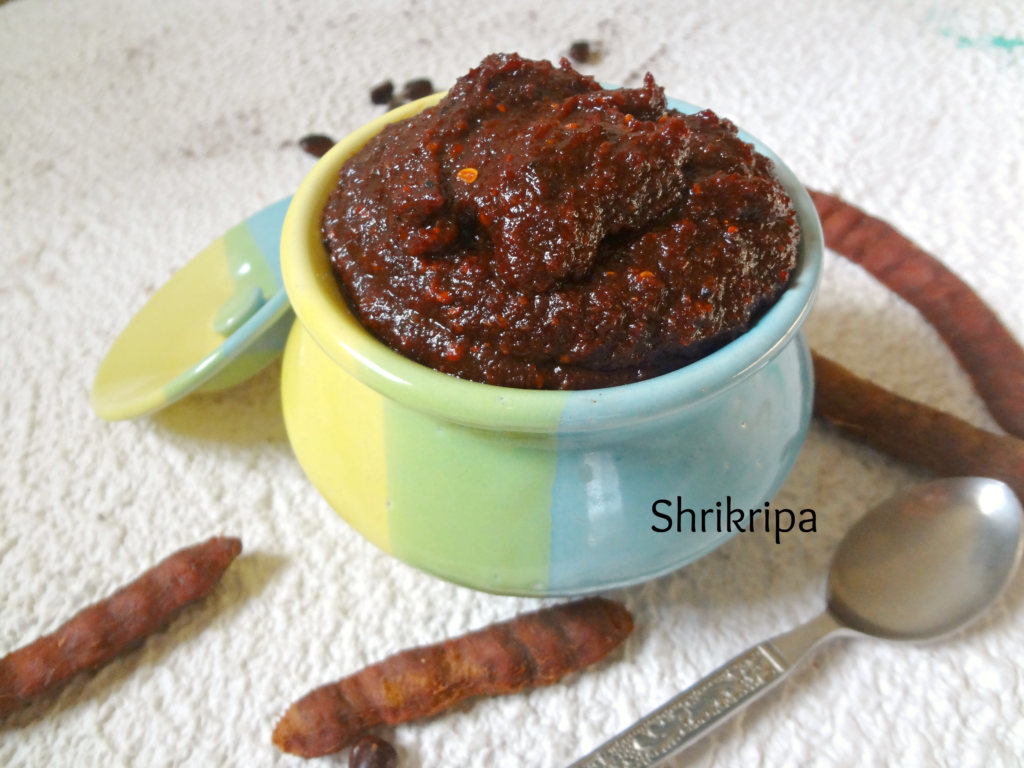
  • Switch off the gas, cool this mixture completely and store it in dry glass bottles and keep outside for two days to set and afterwards keep it in the fridge.

pic 6

  • It will stay up to one year if you store it in the fridge.


Alasande- Hesaru kaalu Jeerige Bendi:

It is nothing but Yard long beans and whole green gram with cumin flavoured coconut gravy.

This is an age old combination and a traditional recipe from Mangalore. Jeerige Bendi is very mild, flavourful and not spicy. It can be enjoyed with hot rice, Whole wheat Roti’s, Dosa or Rice rotti.

main

Ingredients:

Yard long beans / Alasande – 250 grams

Green gram – 1 cup

Coconut – 1 bowl

Cumin – 1 teaspoon

Dried Red chilli – 2

Salt

Jaggery – ½ teaspoon

Red chilli powder – ½ teaspoon

Tamarind – peanut size.

Seasoning: Coconut oil – 1tsp, mustard – 1 teaspoon, Red chilli -1, curry leaves – 1 spring.

Method:

  • Wash green gram and soak it overnight.
  • Next day, wash yard long beans and make one inch pieces.
  • Cook Soaked green gram with sufficient water, salt, jaggery and red chilli powder.
  • When it is half done, add chopped yard long beans and cook.

collage

  • Meanwhile, grind coconut, red chillies, cumin and tamarind into a smooth paste and add this paste to cooked vegetable and boil.
  • Check for the salt and add seasoning.
  • For seasoning, heat oil, add mustard, red chilli. When mustard starts spluttering, add curry leaves and pour this into boiled curry.

pic 4

  • It can be enjoyed with hot rice, Whole wheat Roti’s, Dosa or Rice rotti.

Chikki from ellu bella/ Energy bar from left over sesame mixture:

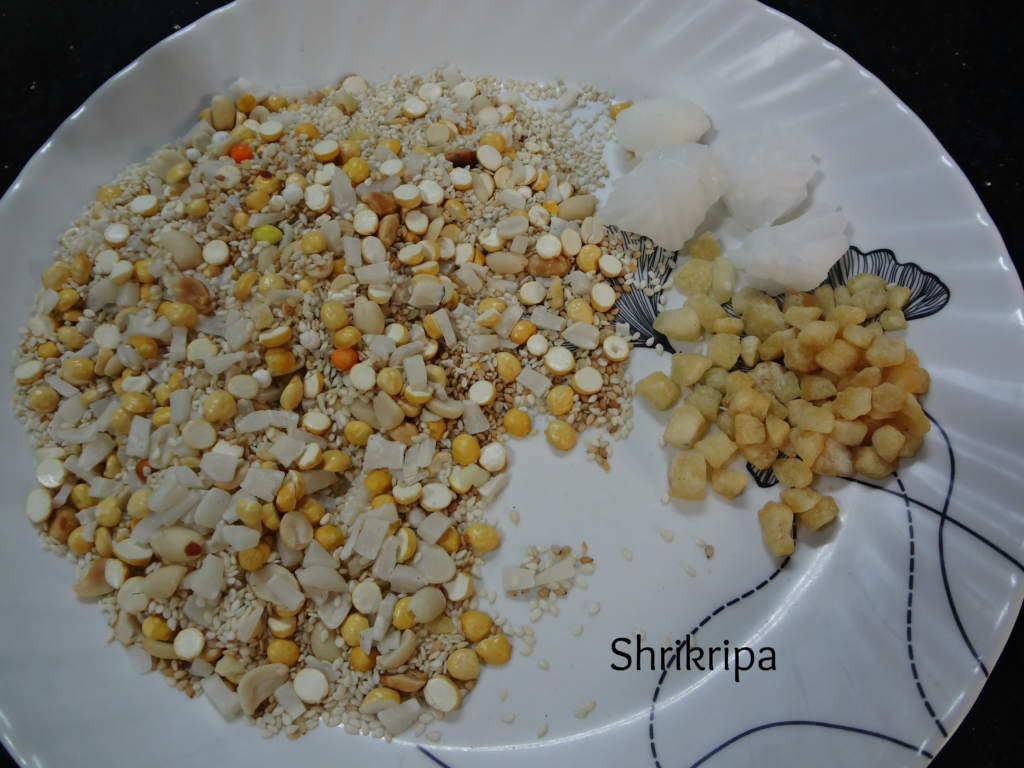
Makara sankranti festival is over and you may have left over Ellu Bella which you got from your near and dear ones during distribution to each other.Usually there will be no takers for this after two days of festival. Even I had some left over sesame mixture and tried this Indian Chikki or energy bar from these power packed ingredients.This mixture usually has lots of sesame seed, which is a high iron source, peanuts, coconut bits etc.

pic 6

Ingredient:

Left over ellu bella mix – as much as you have

Sugar – 3 to 4 spoons (What I took)

Butter – 1 table spoon

Cardamom powder – ¼ teaspoon

Method:

  • Separate Sugar blocks as well as jaggery chunks from the mixture.

pic 1

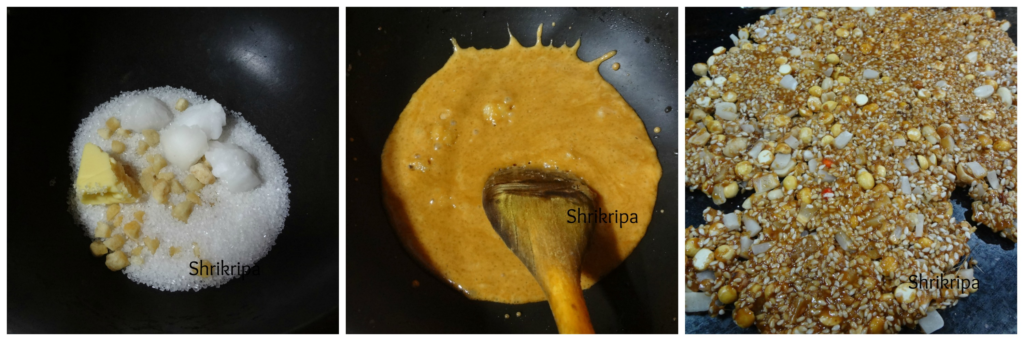
  • Take one thick bottomed vessel; add all these jaggery and sugar chunks as well as extra sugar with butter.
  • Heat this by constant stirring, until it becomes caramelized liquid.
  • Immediately mix in the rest of the sesame mixture and cardamom powder mix nicely to coat caramel liquid uniformly.

chikki collage

  • Spread this on a clean kitchen counter or butter paper laid baking tray and press this nicely till it is uniformly flat.
  • You can use either pav bhaji masher or roti belan to press this mix.
  • Make a mark when it is hot by using sharp knife.pic 5
  • When it is cool, store this in an airtight container.


Home-made Turmeric powder :

Turmeric is one of the most important spices we use in everyday cooking. It has so many health benefits and is commonly used to heal Cold and cough in infants. When my kids were small and when I started to give them turmeric milk to heal their sour throat, I was really thinking about making homemade turmeric powder as I was very uncomfortable using readymade powder, after hearing about it being adulterated.

So I started growing turmeric at home. Every year, usually at the time of June, fresh turmeric will start sprouting and we should plant them at that time .It will take six months to grow and when it is ready, the plant will start wilting and leaves will become yellowish brown and become dry. This happens during end of December and is then ready to harvest.

unnamed (3)

This method is what my maternal grandmother used to follow-

Method:

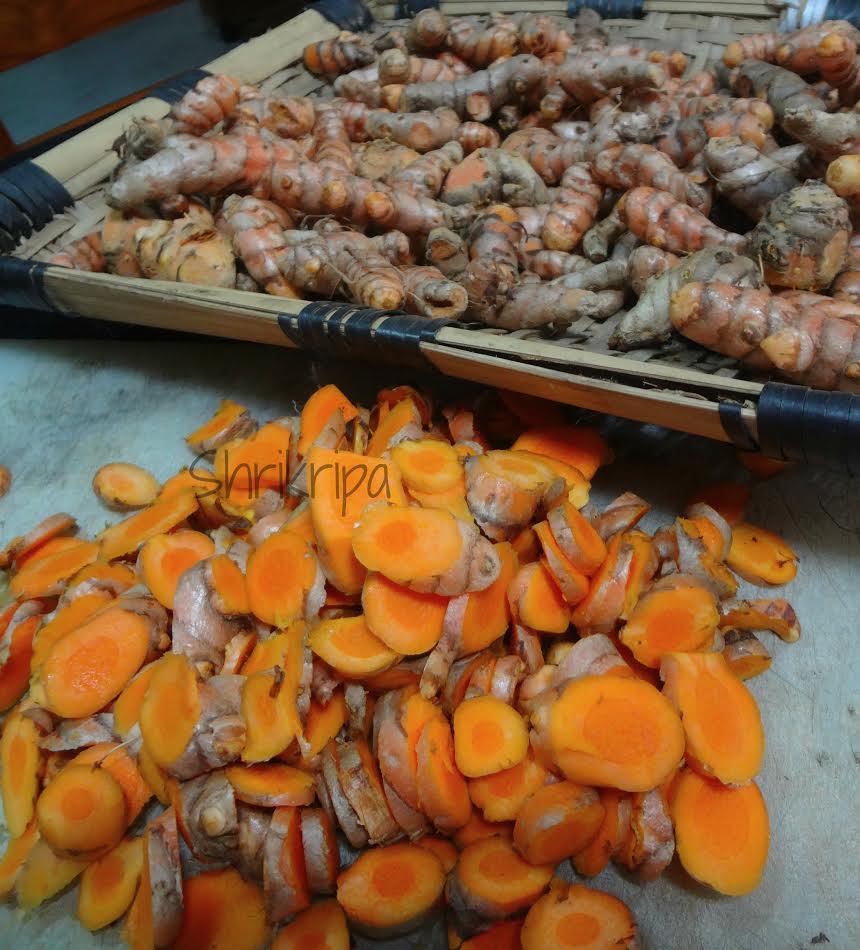
-Take fresh turmeric rhizomes, remove mud, extra roots etc. Wash it several times until it is clean.

-Now slice those rhizomes.

unnamed

-Take one cooker vessel and put all these sliced pieces and steam cook (without cooker weight) in a cooker or idly steamer for 10 to 15 minutes.

unnamed (1)

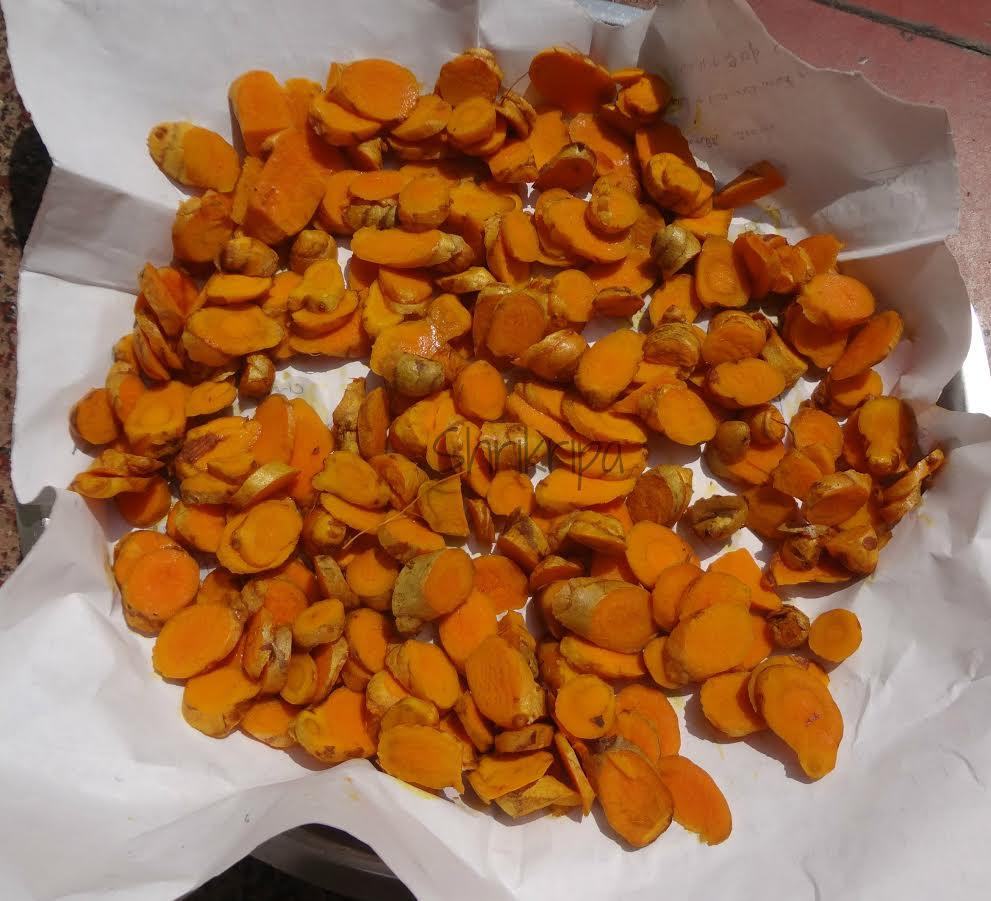
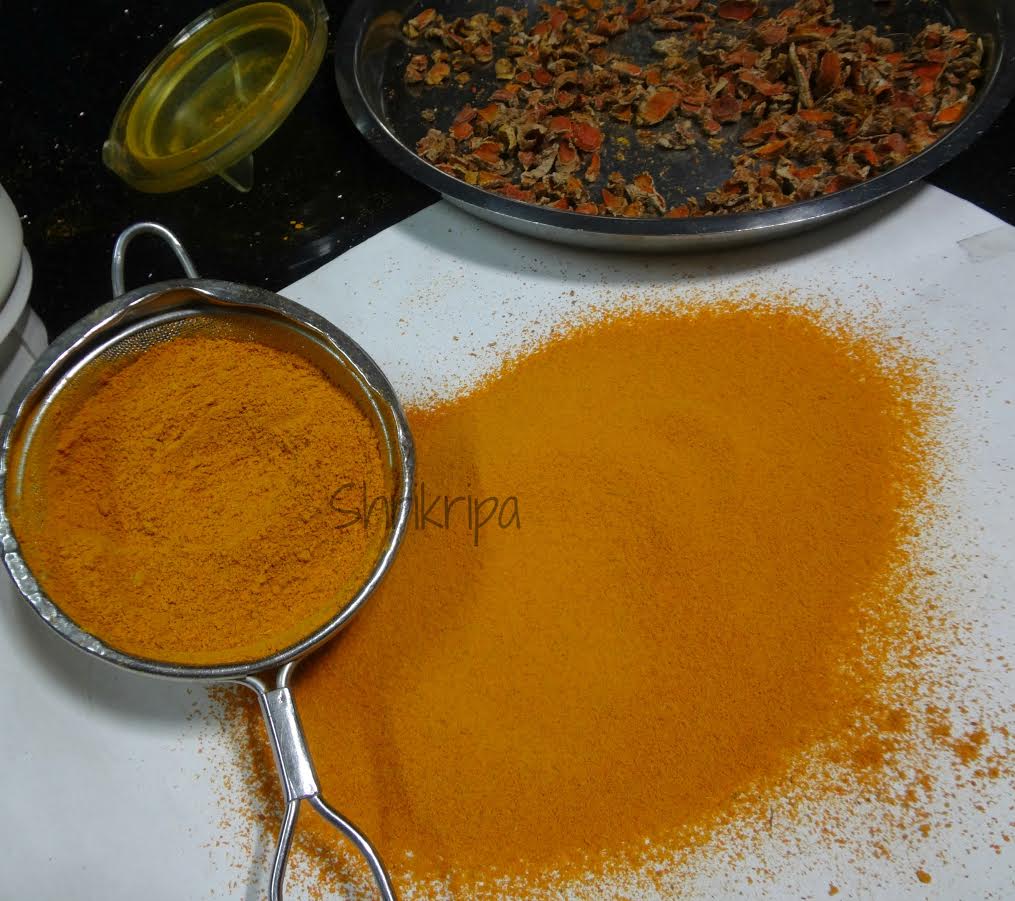
-Remove this and dry under the sun for 2 to 3 days or until it is crisp. Usually it takes 2 to 3 days.

unnamed (2)

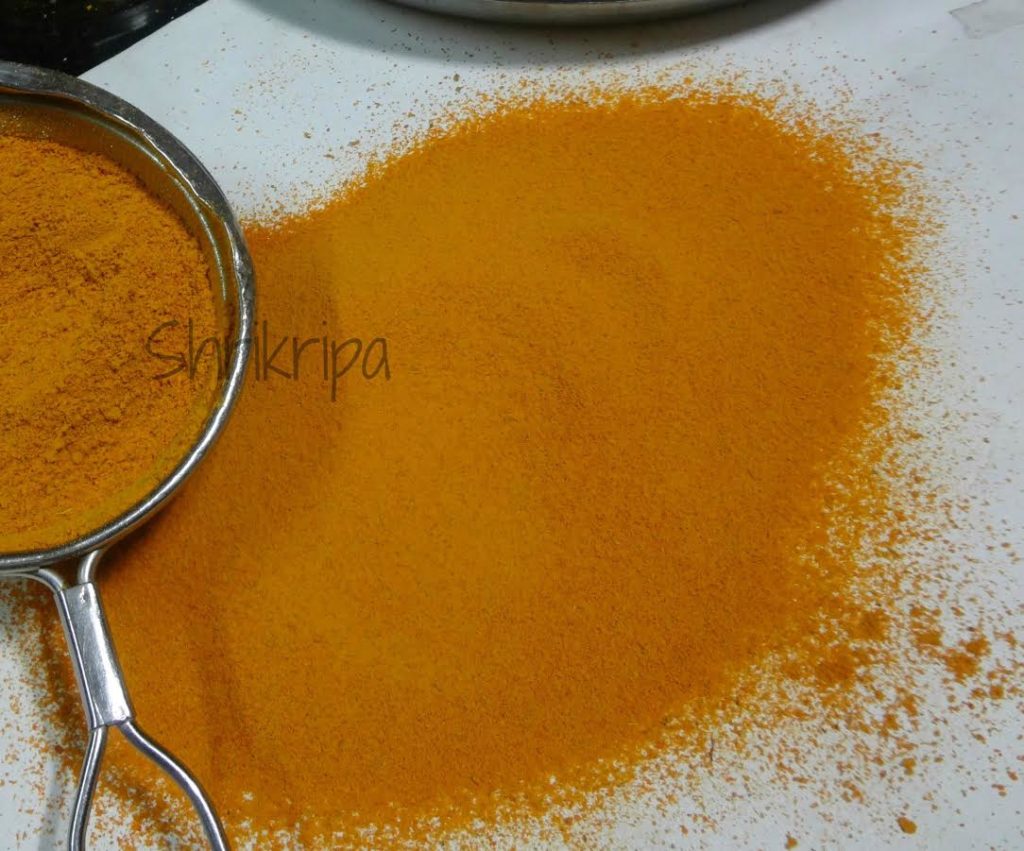
-When it is crisp, take small mixer jar and powder it.

– Sieve this and collect fine powder and repeat this process until all the dried slices are powdered.

unnamed (4)

-Store this in a dry airtight container.

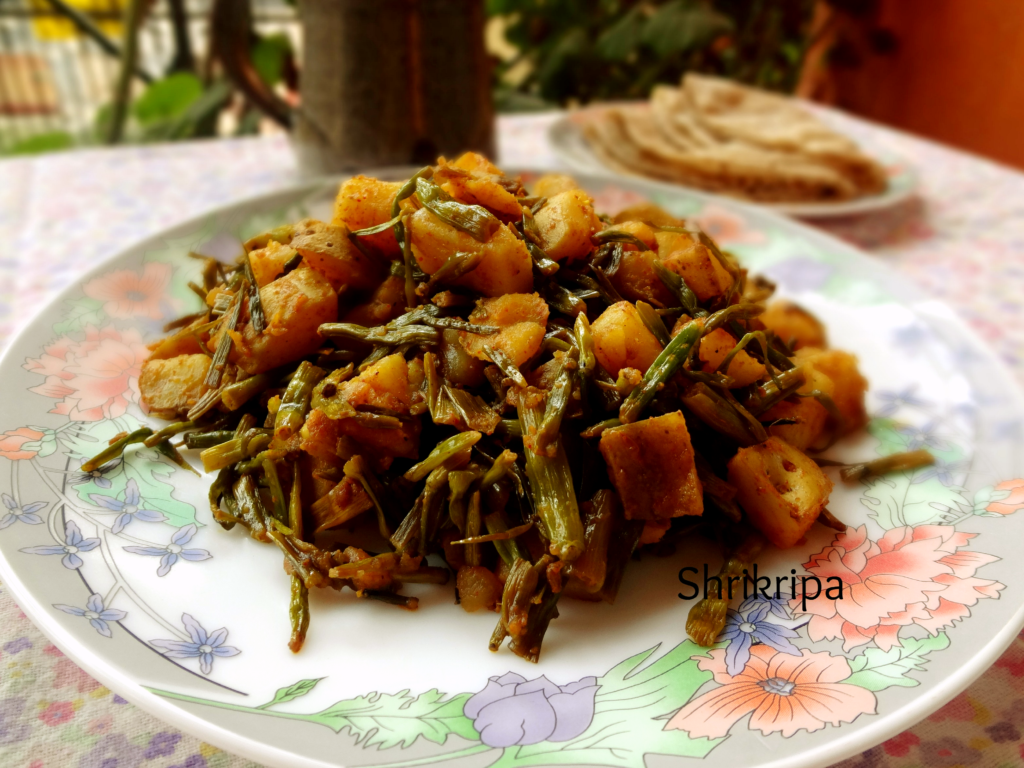
Aloo Mungre Ki subzi / Potato and radish pods dry curry:

Radish pods are available only in winter and after coming to Bangalore, I tasted this almost ten years back and initially I felt it was very pungent and not for me kind of a flavour. But the foodie in me couldn’t keep quiet and I kept on trying it every season and now it is our favourite too.

I don’t promise that you will like it on your first bite. But when you start getting accustomed to it, you’ll start to like it. Radish pods are known as Mungre in Punjabi language and it is the staple food of Punjab. They usually pair it with potato and make a dry curry and which goes very well with whole wheat roti.

I love Radish pods for their distinct taste. If you pair it with potato, that is it. Pure bliss with hot phulka!!!!

Radish main 1_Fotor

Ingredients:

Potato – 4 to 5

Radish pods – ¼ kg

Mustard oil- 2 table spoon

Refined oil – 1 table spoon

Cumin – 1 teaspoon

Hing – ¼ teaspoon

Salt

Sugar – ½ tsp

Turmeric – ½ teaspoon

Red chilli powder – 1 to 2 teaspoon

Amchur powder – ½ teaspoon

Garam masala powder – ½ teaspoon

Method:

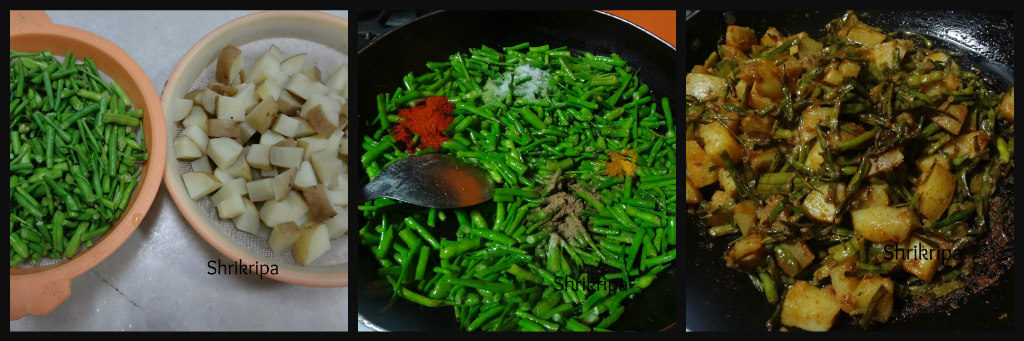
Wash potatoes and dice it. Don’t peel the outer skin.

Boil one cup of water with little salt and Par boil these potato pieces .Potato should cook but pieces should be firm.

Drain water and keep aside.

Wash radish pods and chop this according to your taste. I prefer around 1 inch pieces.

Ribbet collage

Take one tawa; put both the oils, when it is hot add cumin and hing.

Drop chopped radish pods; add all the powders like turmeric, red chilli powder, Garam masala, Amchur powder, salt and sugar.

Mix nicely, add in par boiled and drained potatoes and mix and keep it covered and cook for a while.

Sprinkle 2 teaspoon of water and mix it and keep it covered until all the masalas are absorbed and coated in really well.

Switch off the gas and enjoy with phulka or any roti’s.

Til Chikki /Indian Sesame Brittle:

Makara Sankranti and Sesame/Til seed are very much associated with each other. Every year my kids look forward to having their favourite Chikki on this auspicious day. This time I wanted to make a different type by enhancing its nutritional value by adding other ingredients too. Finally came up with this recipe. 

chikki main

Here I have taken one big water tumbler as a measuring cup.

Ingredients:

Peanut: 1 cup

Sesame seed – ½ cup (white and black mix)

Sunflower seed -1/2 cup (de-skinned one)

Roasted gram – ½ cup

Almond – ½ cup (slice or chunks)

Cashew bits – ½ cup

Desiccated coconut – ½ cup

Sugar – 2 ¼ to 2 ½  cups  ( if light sweet, add 2 1/4 cup otherwise, add more) 

Ghee/clarified butter – 2 tablespoons

Cardamom powder – 1/2 tsp 

Method:

-Dry roast peanuts, remove the outer skin and make halves.

-Now dry roast sesame seeds, Sunflower seeds, Roasted gram, almond chunks, and Cashew bits one by one and keep aside. For roasting, you can use a stovetop method or microwave.
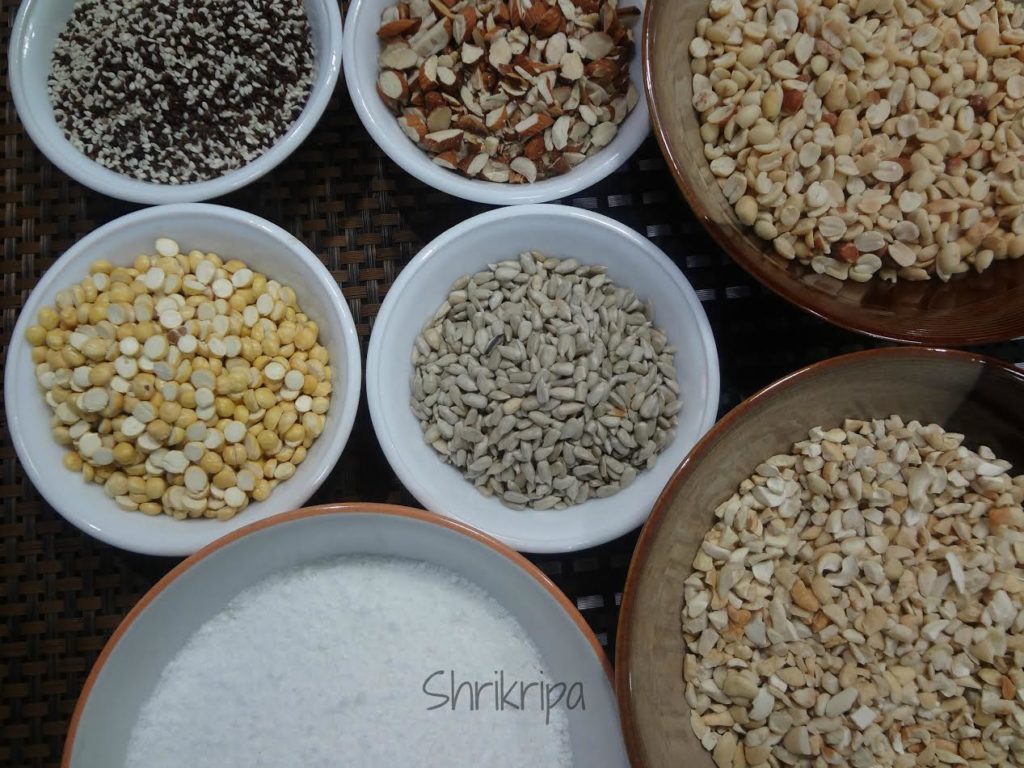
pic 1

-When it’s a little cool, add desiccated coconut, cardamom powder and mix nicely. Keep it aside.

-Take one rolling pin and apply little ghee and keep aside.

-Now we have to make the caramel by adding sugar and ghee in a thick bottomed vessel/tawa. Keep this on a stovetop, heat it until it attains liquid form and becomes light brown in colour. This is caramel. (Please refer to the below picture for stages to attain light brown colour)
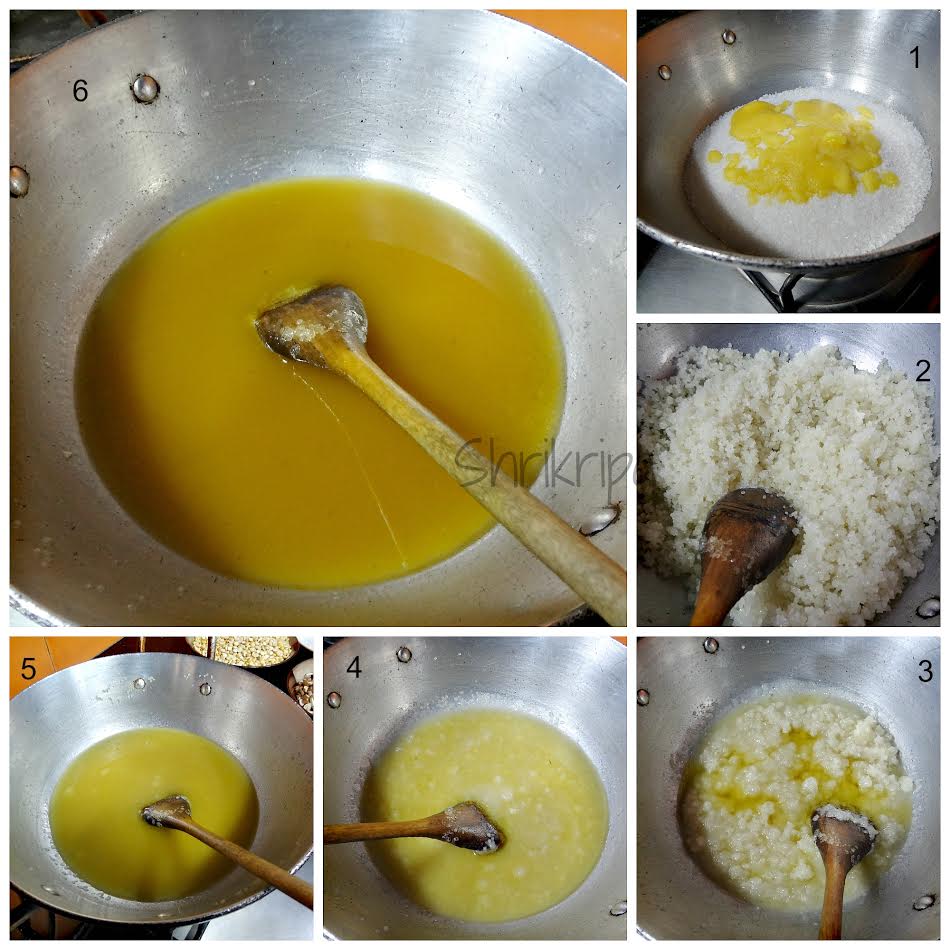
pic 2pic 3

-Without wasting any time, mix in the nuts and spread this on a wooden plank or on a clean kitchen platform. Use ghee applied chapati rolling pin (belan) and spread this mixture nicely till it is uniformly flat.

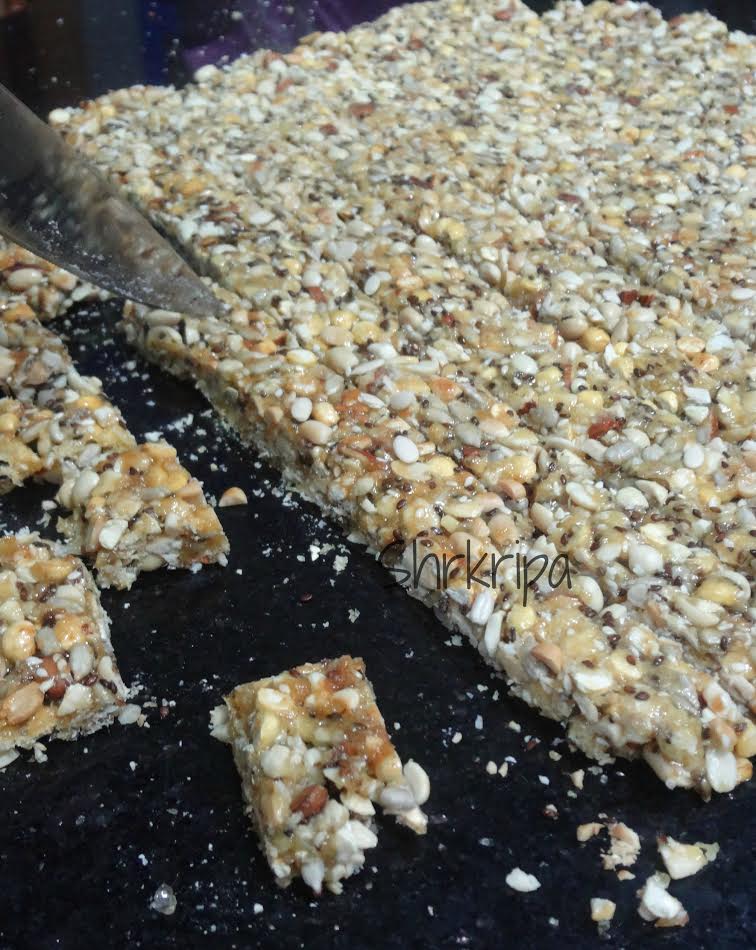
-Leave this for 5 minutes. Take one knife and mark, cut it into the desired shape. After it cools down completely you can store this in an airtight container.

Chikki Preparation by Using Jaggery: (Ratio should be 1 part of dry fruits: ½ part of jaggery)
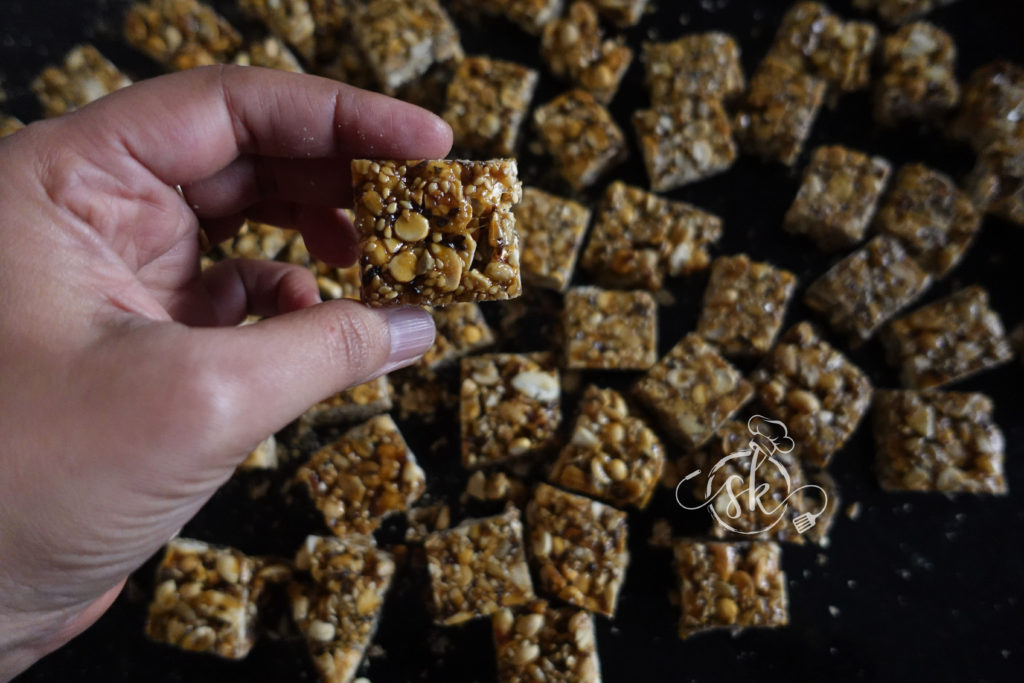
Follow all the steps precisely like Sugar added chikki. You can omit or add any ingredients according to your wish.

Instead of Sugar, take grated jaggery, loosely fill the cup and measure, by using the cup in which you are taking the ingredients.

-First, take the jaggery, put water, ghee. Heat the solution and strain. If any sediment or tiny particles, it would go away, and the final result would be perfect.

-Then start boiling, until it reaches the frothy, thick. At this stage, pour one drop of the liquid in a small cup of water and check. It should come together, like a crystal and you should be able to break it easily.

-If it is not yet ready, it will come(extend) like a chewy thread. You will not be able to break it.

-If it is ready, pour all the roasted dry fruit, mixed and kept into the solution. Switch off the gas. Give a stir, spread, and follow all the steps like a sugared one, which I have dealt earlier.
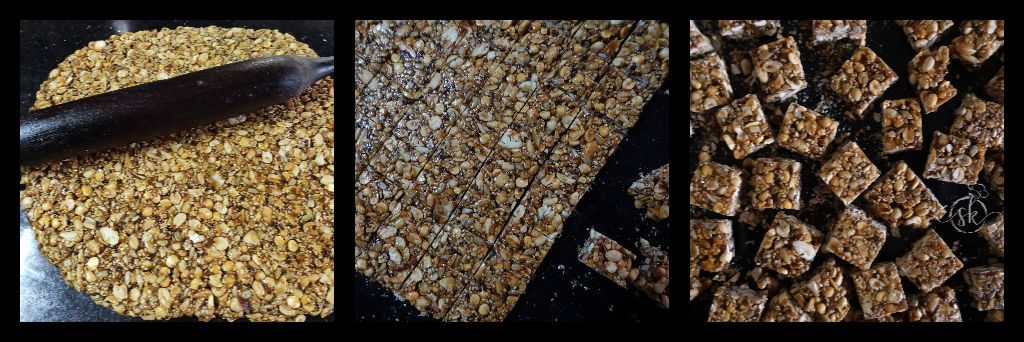
-Enjoy all the goodness without a pang of guilt.

NOTE: -I would suggest the usage of Sugar for the first-timers. It is foolproof and easy.

-After a couple of trials with Sugar, you would be knowing about the stages and gradually shift to jaggery.

-Here, I have taken round, organic ball jaggery, made into chunks by using the stone pestle.



Makki di Roti/Maize flour flatbread:

Makki Ki roti/Makki di roti is the staple food of Punjab and tastes really good when we pair this with Sarson Ka Saag. Usually Makki Ka roti is made by using maize flour and patted by hand. It is slightly thick and firm in texture. We like our roti to be soft and puffy like regular phulka.
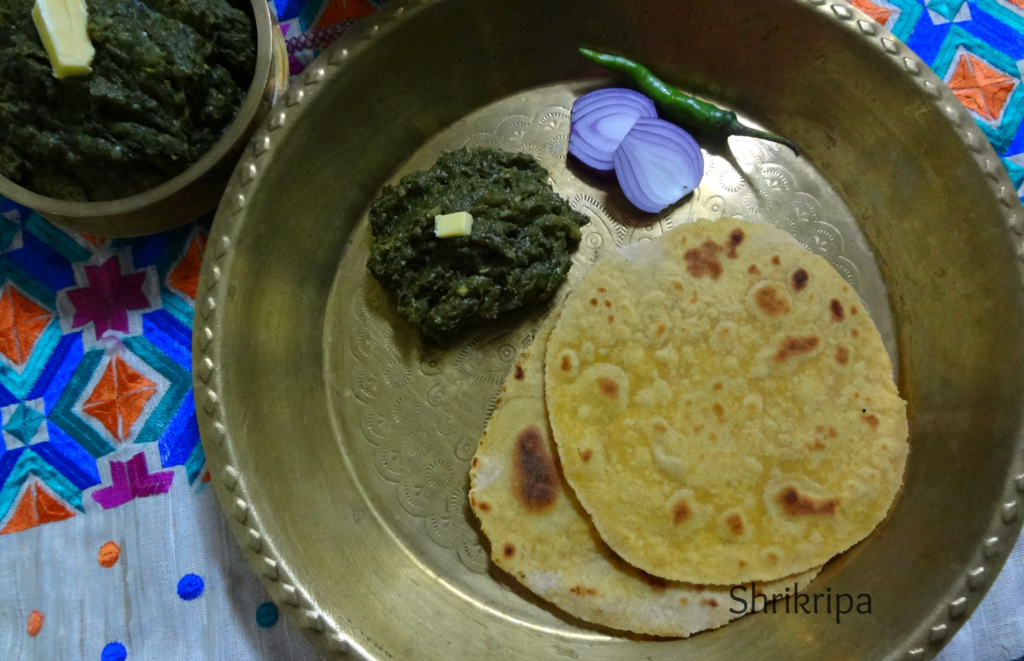
That is the reason I do this by adding whole wheat flour and roll like a regular roti. So, my version is light and soft but has Makki Ka flavour.

roti-main

Ingredient:

Maize flour – 2 cups

Water – 2 cup

Whole wheat flour – to bind

Salt

Ghee – 1 tsp

Method:

-Boil water, put salt, ghee and maize flour and mix by using one spoon.

-Mixture will be sticky so adjust this by adding the required amount of whole wheat flour to make firm dough.

-Keep it covered and keeps aside for 5 to 10 minutes.

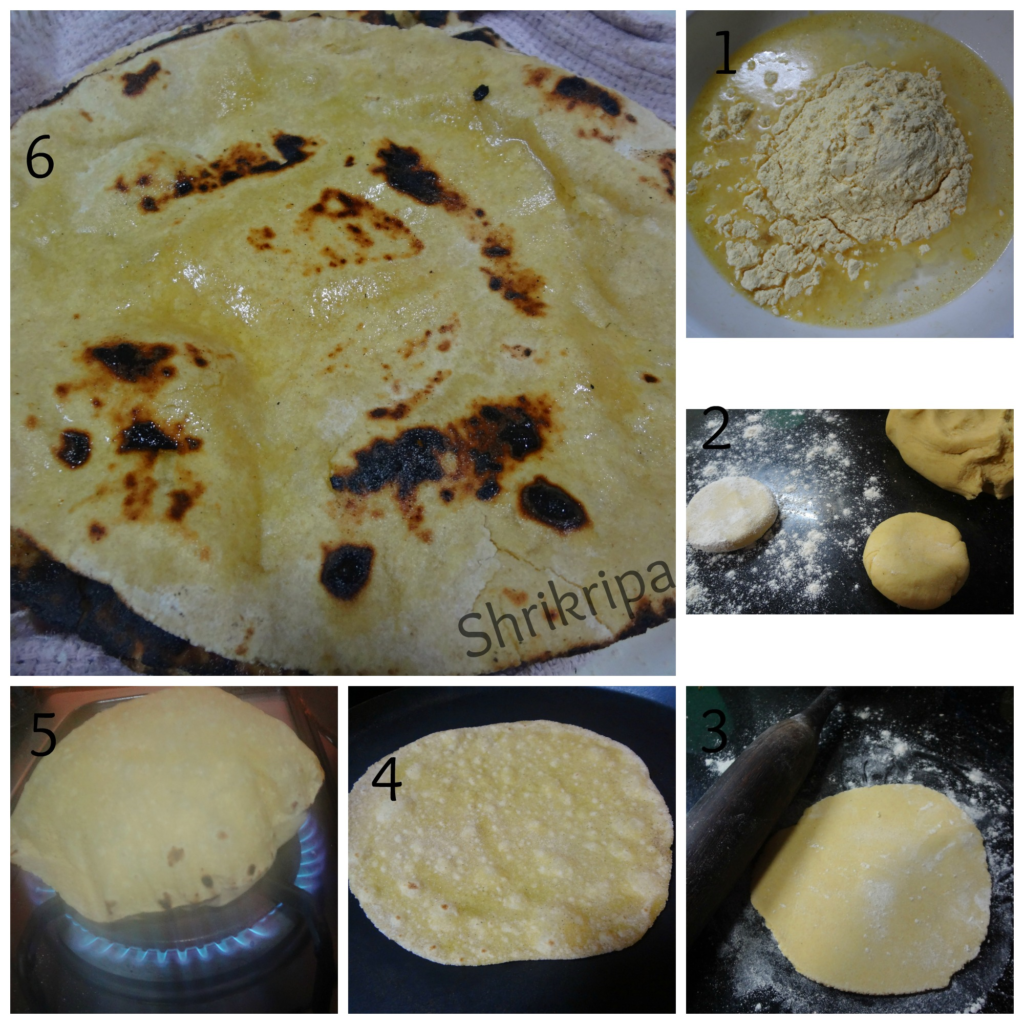
roti-collage

– Roll out roti’s like a regular Chapati.

-Keep Dosa tawa on fire, when it is hot, cook both the sides of this roti, and hold the roti over the gas flame.

-when it fluffs, remove and keep it on the plate.

roti-main

-Apply some ghee or butter and serve. Enjoy this roti with Sarson Ka Saag or any other side dish of your choice.