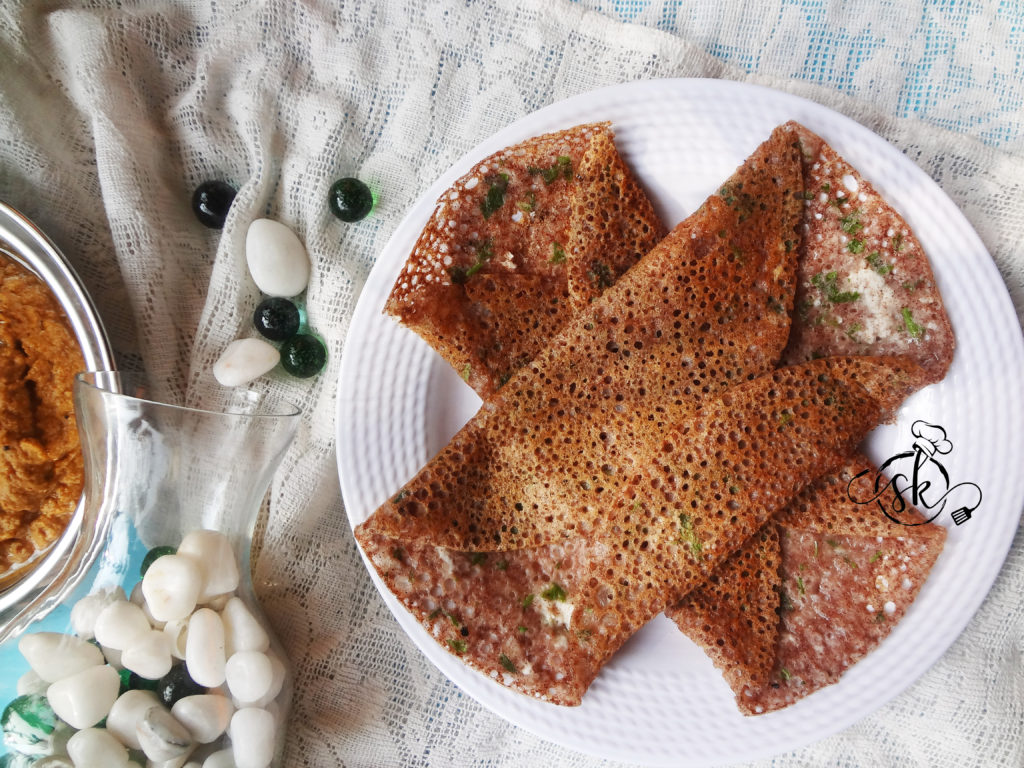
Mundi Gedde – chana palya /Giant taro and dry chickpea curry :

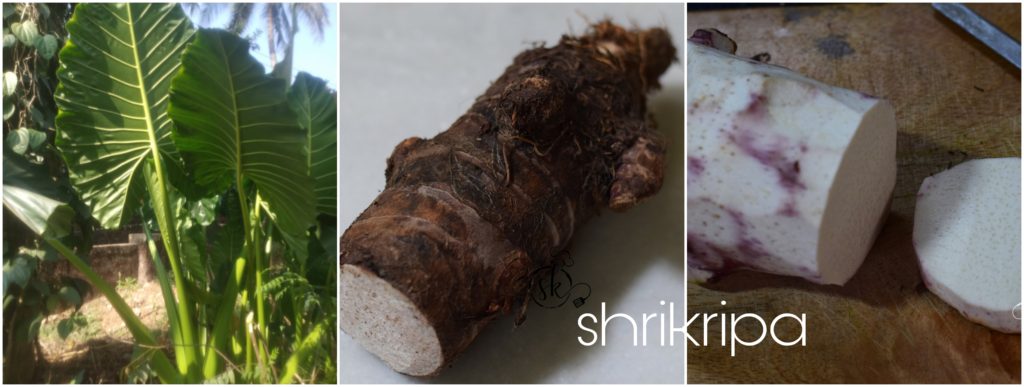
Belong to the Alocasia family, and leaves are giant, glossy, resembles an elephant ear. Hence, it is also known as Elephant’s ear plant. Alocasia means “like the colocasia but not the colocasia”. Giant Taro is a good source of Vitamin C, Iron, and phosphorus.

In our native, leaves are used as an alternative to the plastic sheet, while sun drying papads or fryums in Summer months.

Which is best described as a “Stem crop” as the edible starchy stem is seen above the ground, which is light brown in colour, coarse outer surface grows upright, erect, in a  cylindrical shape.

I have shared the details regarding Mundi Gedde/ Giant Taro in this post,

As most plant in this taro family, even this has Calcium oxalate, which itches our hand or mouth while eating if we do not handle it properly. Here, using hot boiling water and using the right amount of tamarind takes care to emit the itchiness.

Today, I will share one more traditional recipe of our region and one of the favourite side dishes you find in our wedding menu.
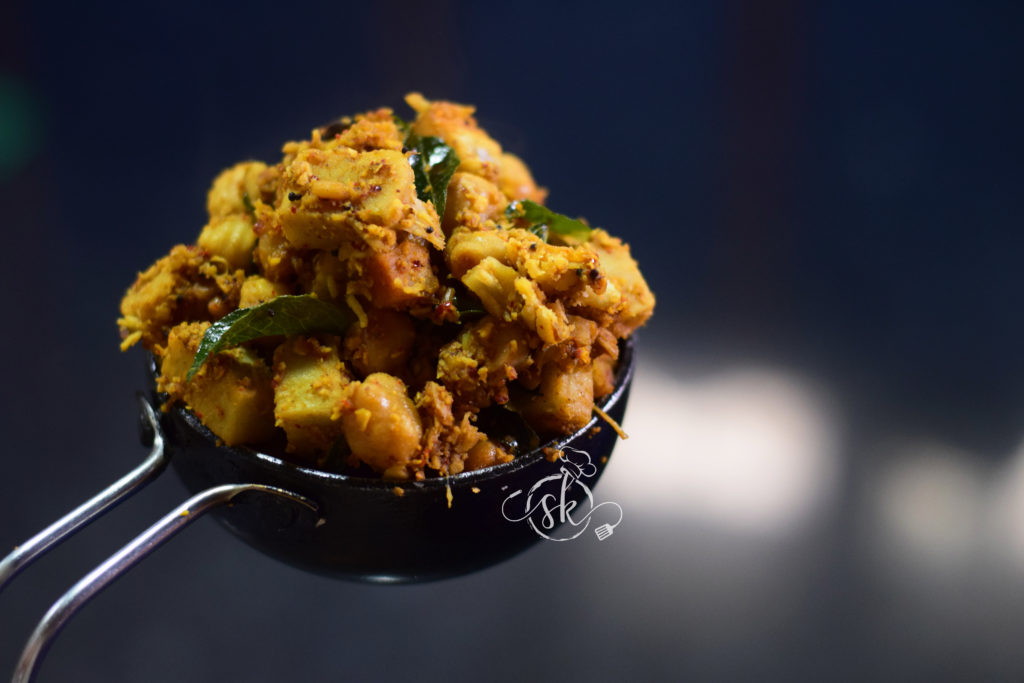
Ingredient:

Mundi/ Giant taro – around ¼ kg

White chickpeas – ½ cup

Salt- as needed

Jaggery – as needed

Red chilli powder – ½ tsp to 1 tsp

Turmeric powder – ½ tsp

tamarind – one gooseberry size (soak in 1 cup of water)

For Masala: Coconut – ¼ cup, Methi – ¼ tsp,  Red chillies – 3

For Seasoning: Coconut oil- 1 tablespoon, mustard – 1tsp, urad dal – 1 tsp, red chilli – 1 (optional), curry leaves- 1 spring.

To garnish: raw coconut oil – 1tsp and curry leaves – 2 springs.

Method:
-Soak dry chickpeas overnight and cook in a pressure cooker for 3 to 4 whistles or until done.

-Now prepare the giant taro;

-We usually do not wash the Giant taro stem before cutting nor peeling. Spread one newspaper, remove all the outer brown woody skin, chop the stem into pieces as you needed.

-Wash those pieces in water by using a spatula, drain and put immediately in boiling water,  cook until it is almost done, drain and proceed to the actual cooking. Now it is ready to cook.

-For palya, prepare the seasoning. Heat oil, splutter mustard, fry urad dal, add curry leaves.

 -Add tamarind extract, salt, jaggery, red chilli powder, turmeric and, boil until water evaporates.
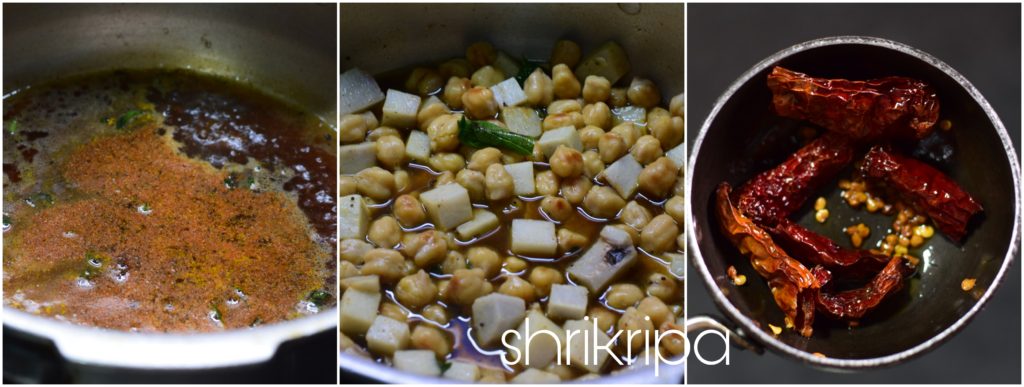
-Meanwhile, prepare the masala. Fry methi seeds in little oil, when it is light brown, add dried red chillies, fry until it is crisp. Dry grind these ingredients with coconut.

-Add the ground powder to cooked veggies and mix nicely, allow it to cook for 2 minutes by closing the lid.

-Now, garnish with raw coconut oil and curry leaves. Close the lid, switch off the gas. Leave this for a while. Before serving, mix nicely and serve.
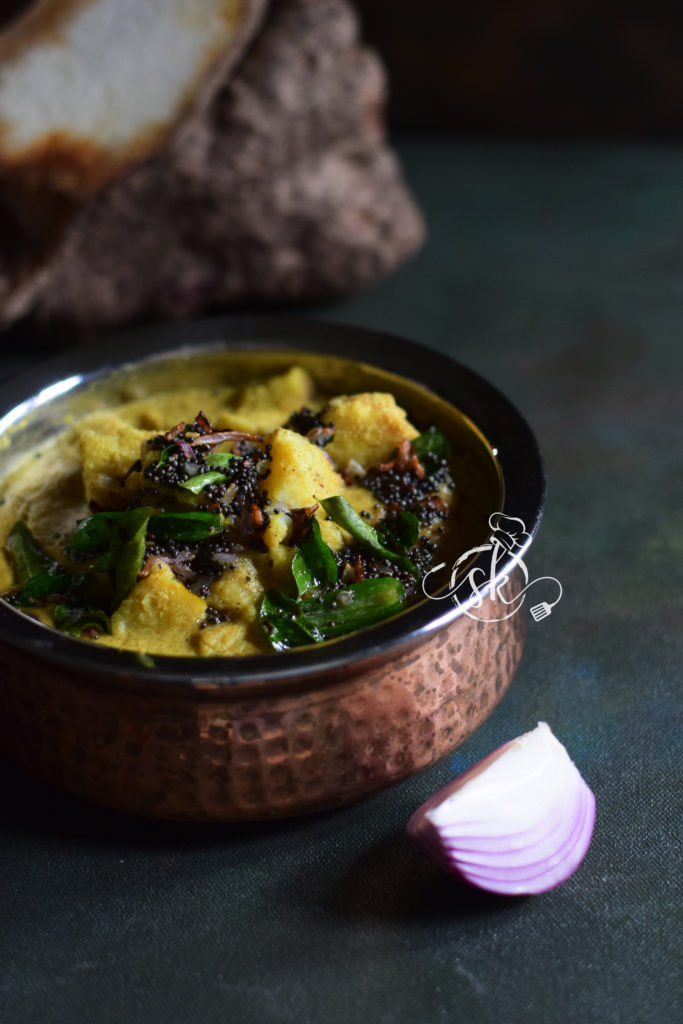
Greater Yam curry /Kachil curry :

In my last blog post, I have shared Greater yam Melara, and today I am going to share Kerala style kachil curry, which I prepare at home.

I have shared the details regarding Greater yam / Dioscorea alata in this post, and our traditional recipe, Melara, is here.

Kachil curry is Cumin flavoured, coconut-based curry. It is seasoned with coconut oil and shallots.

Ingredients:

Kachil cubes – 1 bowl

Turmeric – ½ tsp

Salt and jaggery – to taste

Tamarind – ½ tsp

Green chilli – 1

Red chilli powder – ½ tsp

Curry leaves – 1string

Shallots – 3

For masala paste: Coconut – 1 cup, Cumin – 1 tsp, Garlic – 1 clove

Seasoning: Coconut oil – 1 tbl spoon, mustard – 1 tsp, shallot – 3, green chilli – 1, curry leaves – string

Method:

-Pressure Cook kachil cubes for two whistles by adding salt, jaggery, little tamarind, one slit green chilli, red chilli powder, one spring of curry leaves, 2 or 3 sliced shallots with sufficient water.

-Make a smooth masala paste by adding coconut, Cumin, Garlic with little water.

-Mix in the ground paste to cooked veggie, adjust the consistency, boil.

-Add seasoning, heat oil, splutter mustard, sliced shallots, slit green chilli and curry leaves, fry until shallots turn brown and pour it on the curry.


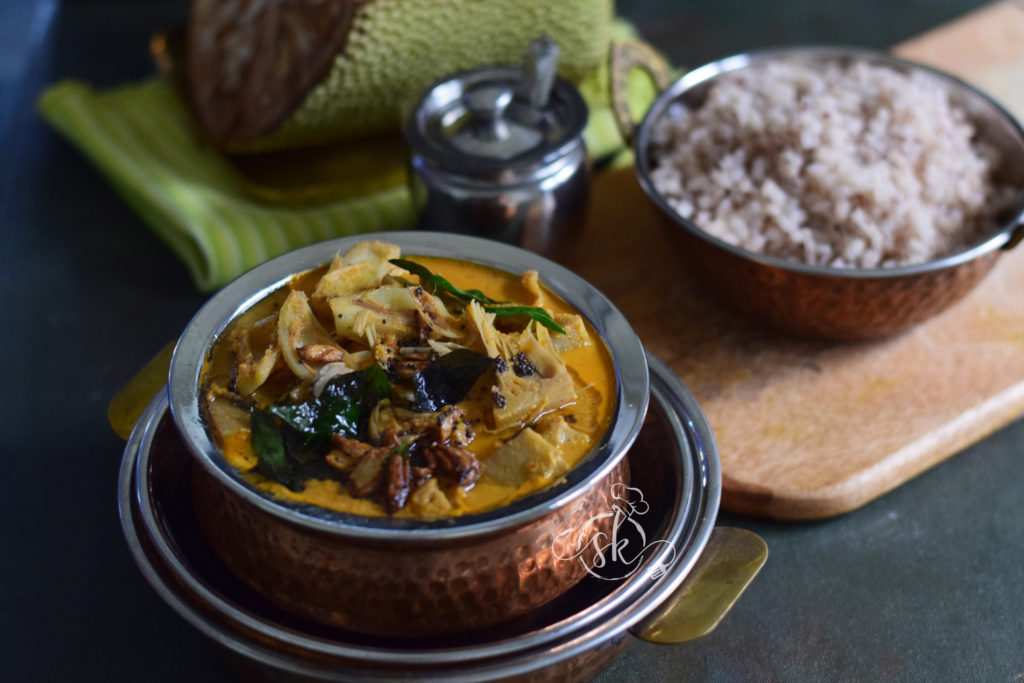
Gujje Huli menasu / Tender jackfruit curry:

In our region, Raw jackfruit curry relished in every possible way and every possible stage of its growth. Huli Menasu is nothing but tamarind and dried chillies. The speciality of this sambar is no frying or roasting the masala. It is no fuss masala but, the flavour is unthinkable. It is an experience by itself. It is one of our family favourites, and today, sharing it with you all.

I have many raw jackfruit recipes in my blog, including “how to chop” the young jackfruit for beginners.

To get an authentic taste, one should use coconut oil and fresh grated coconut for this curry.

Now we will see the recipe part.

Ingredients:

Raw jackfruit cubes – 1 bowl

Salt

Red chilli powder – 1 teaspoon

Fresh coconut – 1 bowl

Red Byadagi chillies – 3 to 5

Tamarind – gooseberry size

Turmeric powder – ½ teaspoon

For seasoning:

Coconut oil – 1 tablespoon

Mustard – 1 teaspoon

Red chilli – 1

Curry leaves – 2 springs

Garlic – 10 cloves (crushed)

Method:

-Cook Raw jackfruit pieces in a sufficient amount of water. Add salt and red chilli powder, turmeric as well.

-In the meantime, grind smooth masala by putting coconut, tamarind, red chillies.

-When jack pieces are soft/ cooked, add ground masala, adjust the consistency and boil.

-When the mixture boils nicely, switch off the gas.

-Prepare seasoning, heat oil, splutter mustard, add garlic, red chilli, curry leaves.

-When garlic becomes deep brown, add the seasoning over boiled gravy.

-Keep this closed for a while before serving to absorb all the flavours.

-Serve with hot rice.

Jowar/Sorghum Dosa:

My experiment turned out to a super hit, crispy dosa. As usual, I followed my regular dosa batter recipe by replacing dosa rice with Jowar grains.

Jowar or Sorghum is a gluten-free grain loaded with nutrients and fibre, great in taste. When it is high fibre, it becomes useful for anyone who follows a healthy diet. Being a complex carbohydrate, Jowar gets digested slowly, reduces appetite making it an ideal whole grain option for weight management.

If you are looking for ways to reduce the rice intake, this recipe for you – Enjoy in any form of dosa, like crisp or fluffy. Cone or masala filled, with chutney or sambar.

Ingredient:

Jowar grains -1 cup

Idly rice -1 cup

Urad dal – ½ cup

Bengal gram/Chana dal – 1 TBL sp

Fenugreek /methi seeds – 1 tsp.

Beaten rice – ¼ cup

  Method:

-Wash all these ingredients a couple of times. Soak this insufficient water for 3 to 4 hours.

-Drain water from the rice and keep it aside. This water should be used while grinding according to the requirement.

-Grind soaked rice –dal mixture by adding salt into a very fine /smooth batter using a wet grinder or mixer grinder.

-Now, Mix the batter, adjust the consistency, keep this ground batter for fermentation in a big vessel to allow room for puffed/fermented batter.

– It will take anywhere between 8 to 16 hours (according to the outside weather)

-Next morning, mix the batter, check the consistency, adjust and prepare dosas and enjoy.

Note: In Bangalore, I usually soak my lentils around morning, grinding happens around afternoon 2 to 3 pm, and until the following day, I keep the batter for fermentation.


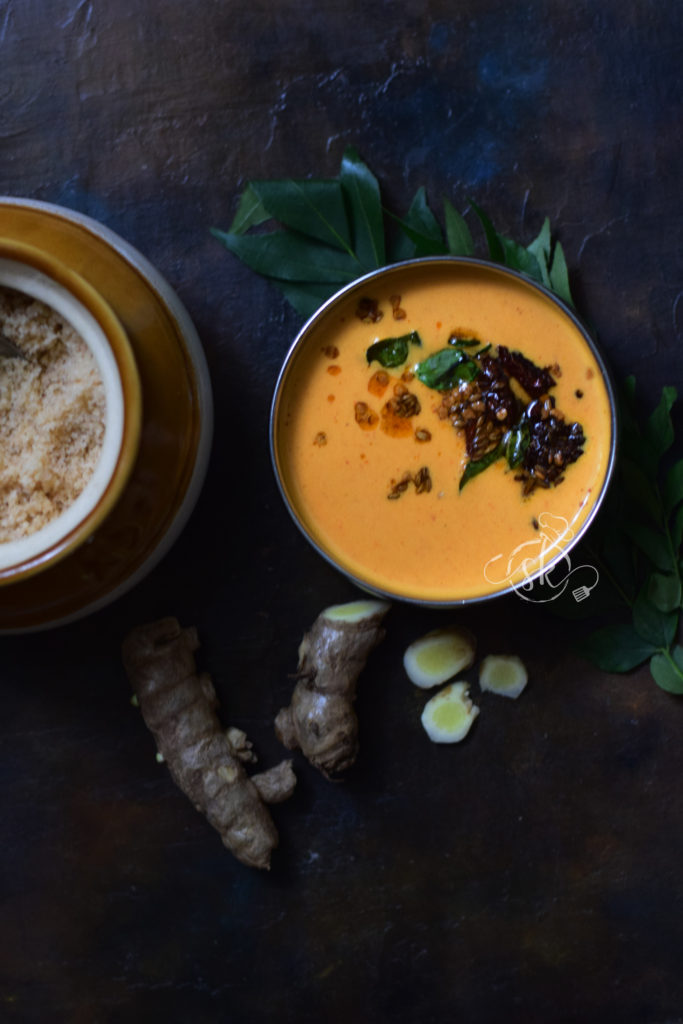
Mango ginger Tambli:

Mango Ginger or Curcuma amada is a plant of the ginger family Zingiberaceae and is closely related to turmeric. It is locally known as kukku shunti/ Mangannari or Ambe kombu. Mavinakai shunti in Kannada and Aam Haldi in Hindi. Mango ginger is antioxidant,anti-fungal, antibacterial as well as anti-inflammatory in nature.

Our traditional cooking includes mango ginger in many forms. One such recipe is Tambli. Come summer, tambli is an integral part of our lunch platter. Tambli is a coconut-based, uncooked gravy enriched with any one of the herbs, with minimal spices and buttermilk to soothe our system.

It is a quick, instant,  no involvement recipe. It can be had as an appetizer or mixed with rice like any other curry. 

Ingredients:

Mango ginger – 1” piece

Sesame seeds – ½ tsp

Dried red  chilli – 1

Coconut – ½ cup

Salt

Jaggery – ½ tsp

Buttermilk – ½ cup

For the Seasoning: ghee – ½ Tsp, cumin – ½ tsp, curry leaves – 1 spring.

Method:

-Peel the outer skin of mango ginger, slice.

-Dry roast sesame seeds, then fry red chilli in a drop of oil.

-Take a Mixie jar, grind coconut, red chilli, sliced mango ginger, salt, jaggery and grind into smooth paste by adding water.

-remove this into a vessel, add buttermilk, and adjust the consistency by adding little water if needed.

-Consistency should be like regular milk.

– Add Seasoning by heating ghee, cumin and curry leaves.

– Enjoy this coolant with hot rice.

NOTE: If you want to prepare a vegan version, omit buttermilk and add little tamarind while grinding, or after preparing, add lemon juice and enjoy.

For the Seasoning: You can Opt for cold-pressed coconut oil.

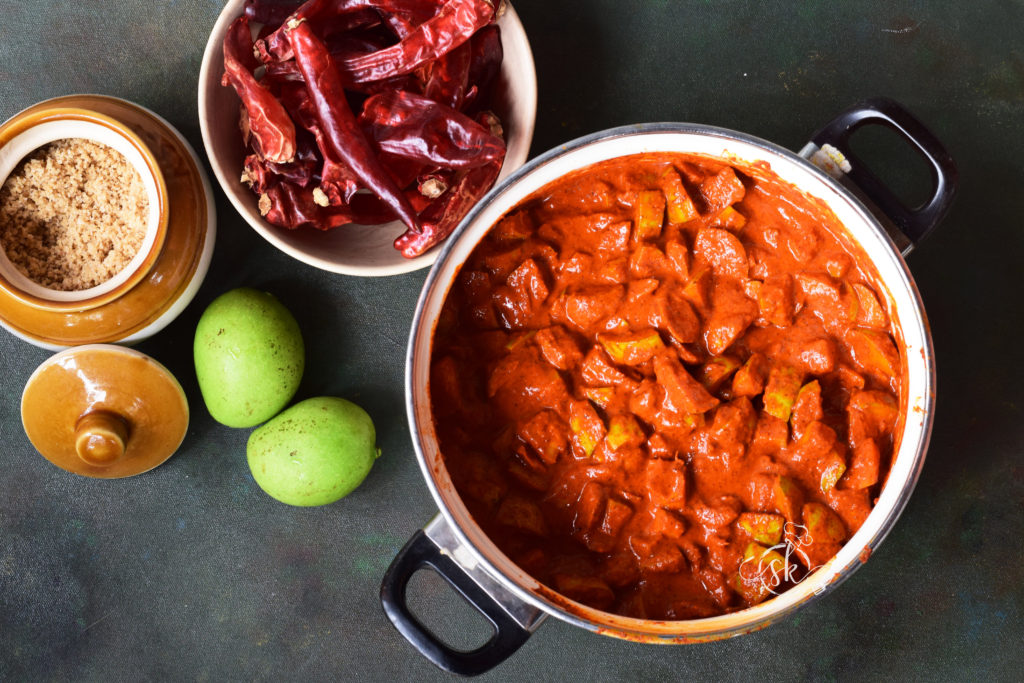
Mango pickle (Midi Uppinakai Masala)

Mangalore is known for tender mango pickle, locally known as “Midi uppinakai.” Unlike other pickles, it is made up of hardly any ingredient. It needs Dried chillies, mustard, turmeric and hing as an optional. The proportion of the chillies and mustard varies from family to family, hence the pickle’s taste.

The procedure is straightforward. First, after selecting a fresh, tender mango, the cleaning process happens, wiping, drying.

Then comes the pickling part; take a fist full of tender mango spread it at the bottom of the container, usually ceramic Bharani or glass jar. Then, a fist full of crystal salt. Repeat the process until mango reaches the brim of the bottle.

Mango shrinks within a couple of days, and the colour turns green to pale green. Now, it is time to make a pickle masala and finish the process. Isn’t it simple and straight forward 😀 It is one of the must condiments in our family. The recipe which I follow is handed down to me by my mother in law and stamped by my dear husband 😀 

My father in law was very particular about the chilli usage, which he used to source after checking the freshness.  The variety of chilli he used to prefer is called Harekala Menasu, a native variety of Mangalruru and cultivated in Harekala and nearby villages along the river Netravati. Chillies are spicy, fiery red when it is grounded, and smooth in texture.

As a city dweller, sourcing a tender mango within a short seasonal period becomes very difficult for me. Hence, I use the same masala and prepare cut mango pickle using freshly bought wild mangoes from my native. Instead of Harekala chillies, I opted for half Kashmiri chillies and half Byadagi variety. Hence, it worked out best for me.


Ingredients:

Wild Mangoes – 15 (medium size)

Red chillies – 100 grams ( I have used 50 grams of Kashmiri chillies and 50 grams of Byadagi)

Mustard – 50 grams

Hing – small peanut size.

Turmeric – 1 to 2 tsp

Sea Salt – 1 cup(crystal)

Method:

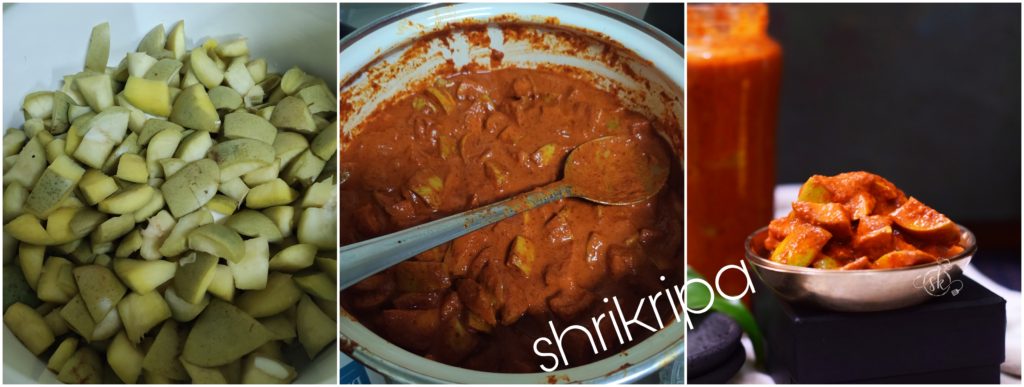
-Wash mangoes, wipe them, cut them into pieces.

-Take a porcelain jar or glass bottle, put a fistful of mango pieces at the base, sprinkle one tablespoon of salt.

-Again, put a layer of mango, then salt. Continue until mango pieces are over.  Close the lid and keep it aside.

-Next day, mix everything and press a little and keep it until the skin becomes a little pale and wilted.

-When skin becomes pale, strain all the salted water, drain the content and collect the water.

-Now, it is time to prepare salted water. This flavourful drained water adds a little more salt and extra water to make boiled salted water. Boil nicely, remove skum, which appears at the top, strain the salty water, and cool it.

-Next comes the Pickle masala part: I usually prefer my wet grinder to make masala.

At first, Put mustard, red chillies and give a pulse in the mixer jar. When chillies and mustard become chunks, it is effortless to proceed in a wet grinder.

Put churned chillies, mustard, turmeric, hing and salted (cooled) water little by little and make a thick masala paste. When it is smooth and finely ground, remove the masala.

Add the required quantity of masala to wilted mango, adjust the consistency by adding salted water. Store it in a dry porcelain jar or bottle.

-If any extra masala or salted water is remaining, store it in a glass bottle. It can be handy to adjust the pickle after 2 or 3 days if needed. Or you can use the masala to make any instant pickle.

-After one week, you can start to use it, and this pickle stays good for a year or more. If the procedure handled well, you could keep it under room temperature, or you can keep it under refrigeration as well.


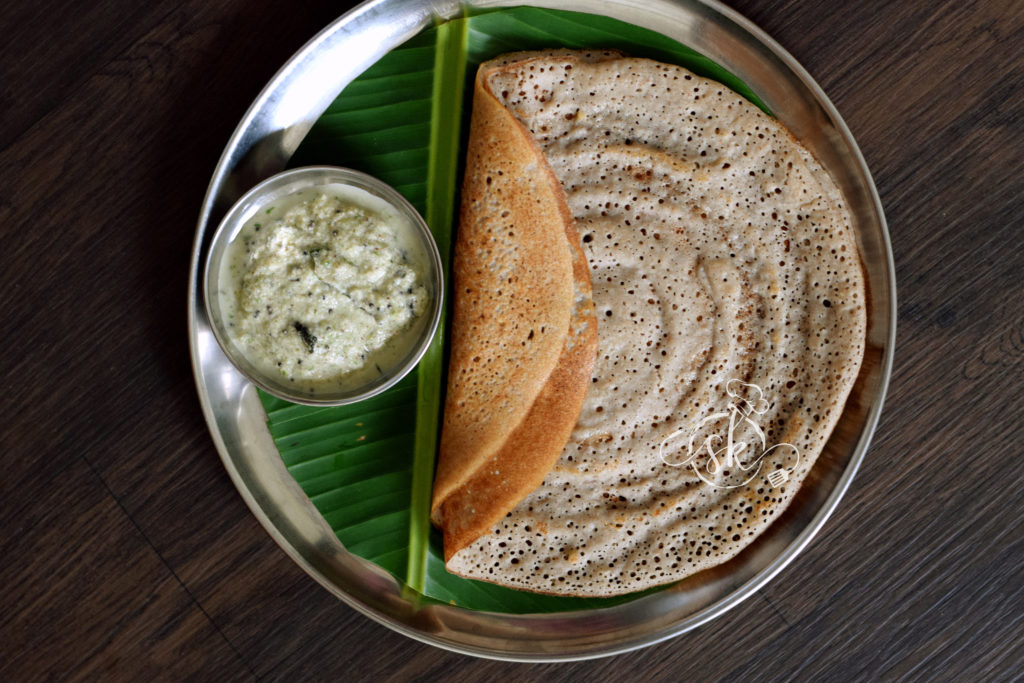
Plantain flower Proso millet dosa :

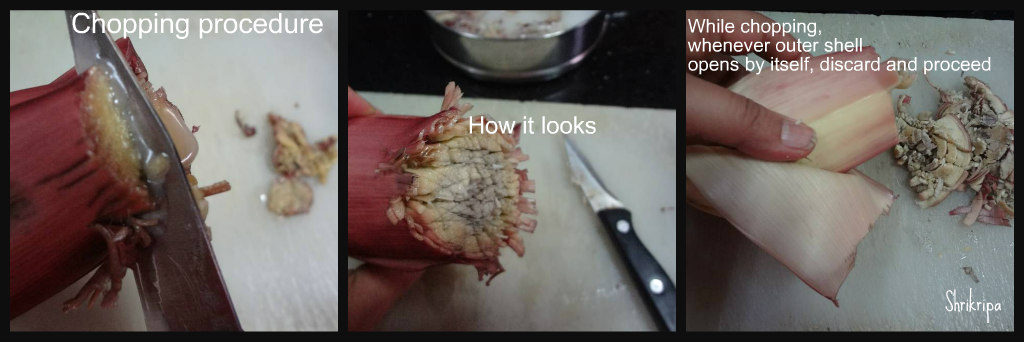
I have discussed plantain flower, traditionally, how to chop, how to use etc., in my earlier blog post, which included my mom’s best chutney recipe. We all know the banana flower is rich in fibre, antioxidants, iron, potassium, calcium, vitamins, and other minerals. It is used mainly to treat constipation and anaemia in villages of our native in and around Mangalore and is part of our day to day cooking.

 I Tried the recipe long ago, liked and finalised it with the recipe for my millet calendar project, which was published in 2019 and filing the recipe under Diabetic friendly recipe in my blog.

Ingredients:

Proso millet – 1 cup

Dosa Rice – 1 cup

Urad dal -1/4 cup

Chana dal – ¼ cup

Methi – 1 tsp

Poha – ½ cup

Jaggery – 1 tsp

Salt

Tamarind – 1tsp

Red chillies – 4

Coconut – ½ cup

Plantain flower – 1

Method:

-Wash, soak millet, rice, chana and urad dal, methi and poha for 3 hrs.

-Take one bowl of water with added one serving spoon of buttermilk.

-Chop whole plantain flower, soak in buttermilk water, drain. You can check the process here as well.

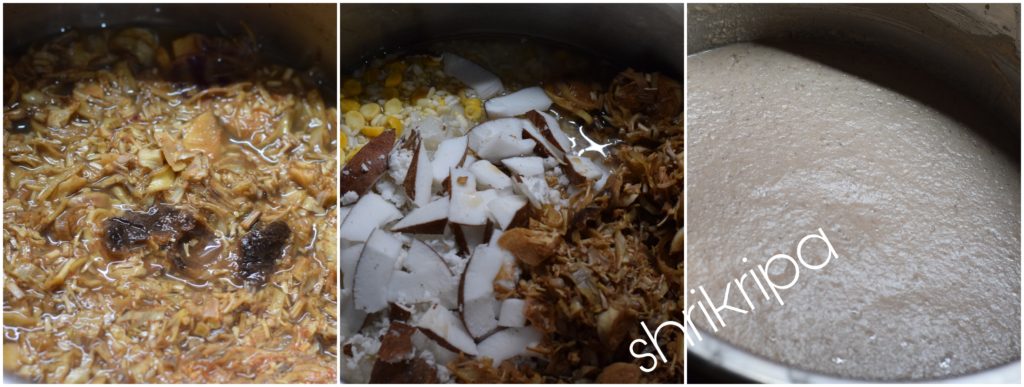
– cook the drained banana flower by adding tamarind water, salt, red chillies, jaggery.

-Cool the cooked mixture, grind with soaked items by adding coconut into a smooth paste.

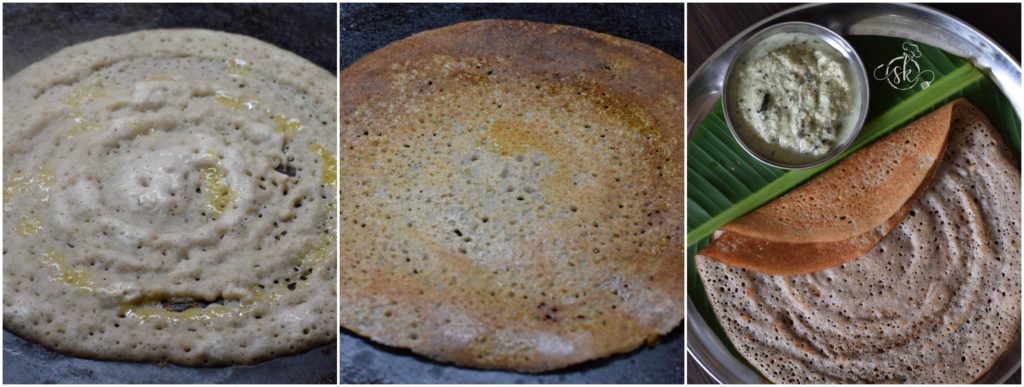
-Ferment and make dosas like any regular dosas and serve with chutney.

NOTE: It can be made as a vegan, instead of buttermilk, use tamarind water and instead of ghee, you can use any vegetable oil. 


Millet roti/ pulka :

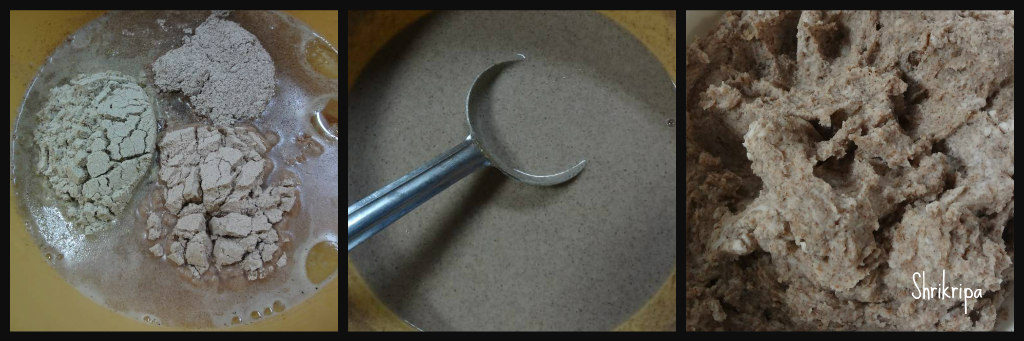
Millets are “no glutenous” flours. To attain soft-edged, easy to roll roti’s, we need to prepare the proper, pliable dough. When you want to prepare roti dough, you can either add little rice flour or whole wheat flour to millet flour. Even though it is not a traditional method, it works out just fine to my family needs. It remains soft even after cooling, easy to make and works out just perfect for any rolls or wraps.

How: First, make a porridge of millet flour or a mixture of two to three millet flours by boiling water, salt,0ne a spoon of any cooking oil. When it starts boiling, add millet flour and cook until it is glossy.

When it is cool, add rice or whole wheat flour and make a dough. In this way, you would get very soft pulkas.

How I usually do is –

Ingredients:

Ragi flour – ½ cup

Bajra flour – ½ cup

Jowar flour – ½ cup

Whole wheat flour- as needed

Water- 2 cup

Salt

 Oil -1 tsp.

Method:

-Take two cups of water, add oil, salt and boil. Now add millet flours and keep this for 2 to 3 minutes or until it cooks. Now remove from the flame and keep aside.

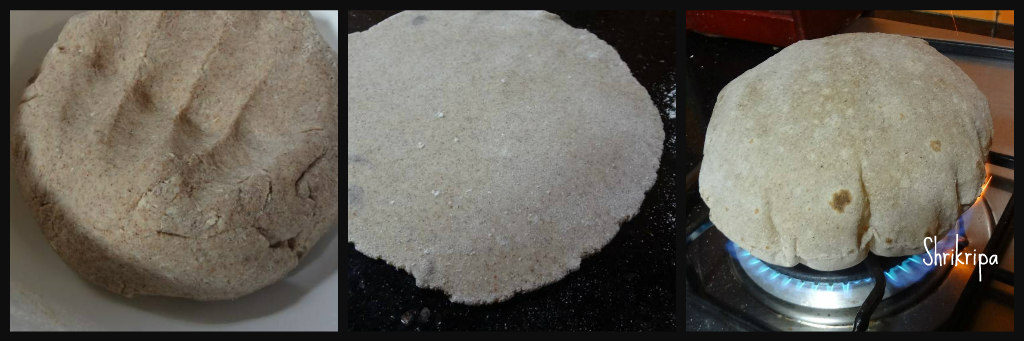
-When it is ready to handle, add whole wheat flour, make a firm ball like Chapati dough. Cover and keep this aside for 10 minutes for resting.

-Then start making a little thicker Chapati than the regular Chapati/ pulka’s and cook both the sides and place it on fire to fluff and serve either as it is or by applying ghee or oil.

NOTE:

-To make Glutenfree roti, add rice flour instead of whole wheat flour. 

-To make an initial porridge, you can use the microwave as well. 


Bottle gourd Thepla:

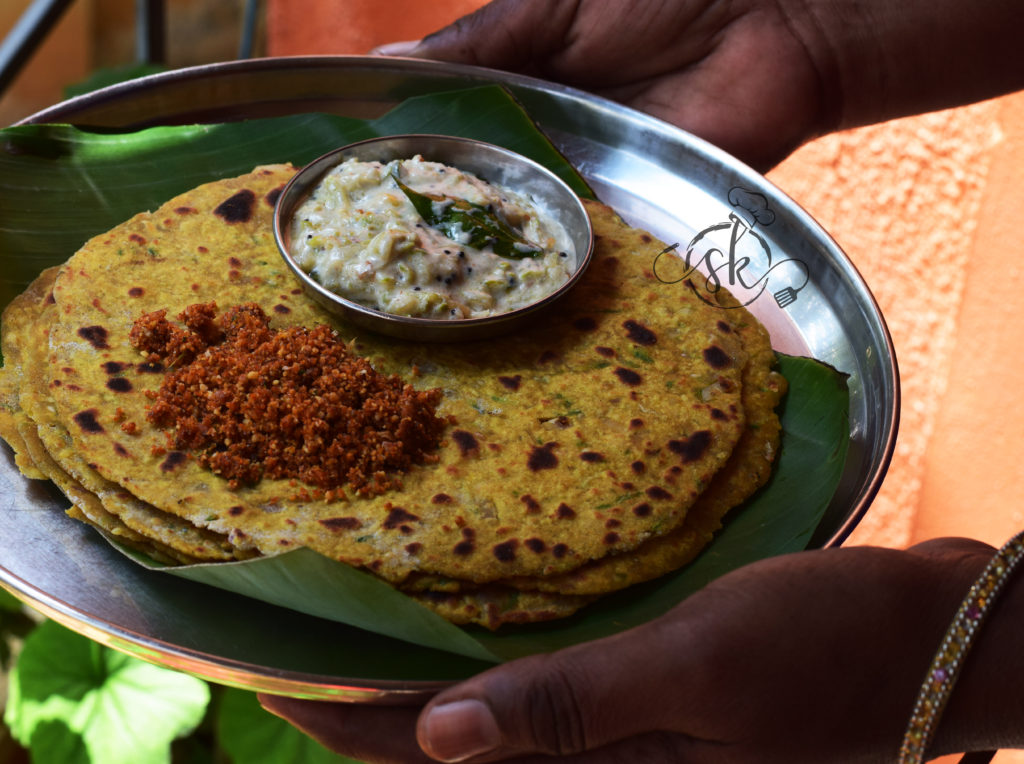
Bottle gourd Thepla is inspired by Dhapate (Thalipeet): Maharashtra #marathwada region special breakfast. Bottle gourd has numerous health benefits. In our native, bottle gourd is used in treating stomach illness or jaundice, which has the power (anti-inflammatory properties) to heal our Liver and intestine during the disease. Bottle gourd has close to 90% water content and is excellent on the stomach and light on digestion. Apart from this, bottle gourd juice is very good for weight watchers, diabetics, and a healthy heart.

Here, I have taken Jowar flour, considered as a high fibre, protein-rich and complex carbohydrate. Hence, the nutrition quotient increases and becomes a wholesome food for anyone, including low cal diet or diabetics.

Ingredients:

2 cups – Whole wheat flour

½ cup – Besan

1 cup – White Jowar flour

You can increase any of the flour or decrease acc to your wish.

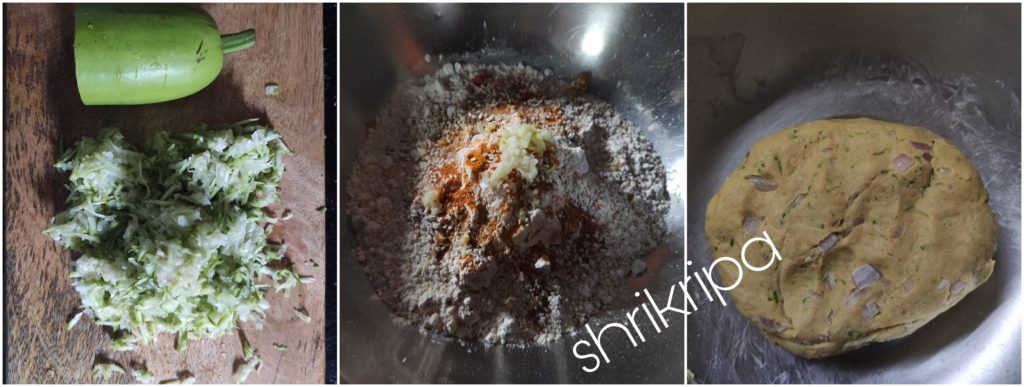
Grated bottle gourd –  almost 200 to 250grams

Chopped onion – 1

Salt, turmeric powder,  cumin powder – 1tsp, garlic paste – 1 tsp, Sesame seeds – 2 tsp

method:

-Add all these, mix thoroughly, by adding sufficient water and make a dough.

-Keep it aside for half an hour, to rest by closing it.

Now take lemon sized chapati dough in hand and roll this ball using a roller, like regular chapati.

-Cook both sides by using either oil, ghee, or butter, of course as minimal as possible.

Serve with sweetish bottle gourd raita, groundnut chutney powder.

-OR-

If you want to make glutenfree Roti, please omit whole wheat flour, add any preferred flour of your choice. Make a roti dough by using little hot water.

-Pat the dough on a banana leaf or parchment paper and proceed to cook both sides. If you want to see the rotti patting and cooking procedure, please refer to this post.

NOTE: if Bottle gourd is tender, don’t remove the peel. Grate and use it.

Instant Ragi Rava Dosa:

Instant preparations are always handy when you are in a hurry or in a “no mood to cook” situation. I usually prefer Ragi Rava dosa to make, because it has the goodness of Ragi/ finger millet and everyone likes it in this form. Dosa turns out very crispy and tasty. One can have it with coconut chutney or any leftover sambar or with pickle or as it is. It has a nice natural flavour as well.

If you plan to make Rava dosa, you can mix the batter and keep it at night itself. Otherwise, no worries, mix and proceed to make dosas. Even some ingredients are optional; if you add coconut, greens, it would surely enhance the taste. 

Ingredients:

Ragi flour – ½ cup

Fine Rava – ½ cup

Rice flour – ¼ cup

Salt

Hing – a pinch

Black pepper – ½ tsp

Cumin – ¼ tsp

Grated coconut – ¼ cup (optional)

Coriander leaves – 2 tablespoons (optional)

Methi leaves – 2 tablespoons (optional)

Method:

-Crush black pepper and cumin in a mortar and pestle.

-For dosa mix: Mix in Rava, rice flour and Ragi flour, salt, hing, crushed cumin -pepper and a little water and keep aside at night (optional) otherwise mix in the morning and proceed.

– If you have mixed and kept it at night, add in grated coconut, chopped coriander leaves or methi leaves in the morning.

-Make batter into pourable consistency like Rava dosa or neer dosa batter and check for the salt.

-Now keep Iron griddle for heat.

-When it is ready, grease with oil, pour one serving spoon of batter-like how we make Rawa Dosa, you can see it in the picture below.

-Now close the lid by keeping the gas on full flame.

-After two minutes, remove the lid and keep the gas in simmer. The edges of the Dosa rise a little.

-Now flip this Dosa on the plate, leave for 2 minutes, then fold like this.

– Now keep repeating this with the remaining batter and stack one over the other or take one big plate and stalk one opposite another alternately.   

-Serve these Dosa with coconut chutney or with any other gravy of your choice or have it as it is.