Eggless Coconut Flour Choco chip cookies:

In my last post I have discussed regarding homemade coconut flour. Previously I did try one recipe from coconut residue (without drying and making flour), but this is my first trial or recipe after making the flour, and I am really exited and happy.

One thing we must keep in our minds while using coconut flour is, don’t under estimate its absorption power by seeing its light and airy texture. It absorbs moisture like a sponge. What I learnt from this experience is, it needs almost equal amount of moisture content as flour volume.

Here I have taken flax gel as an egg replacer, mainly because of its gel like texture. Coconut flour doesn’t have any holding capacity, so thought of using flax gel.

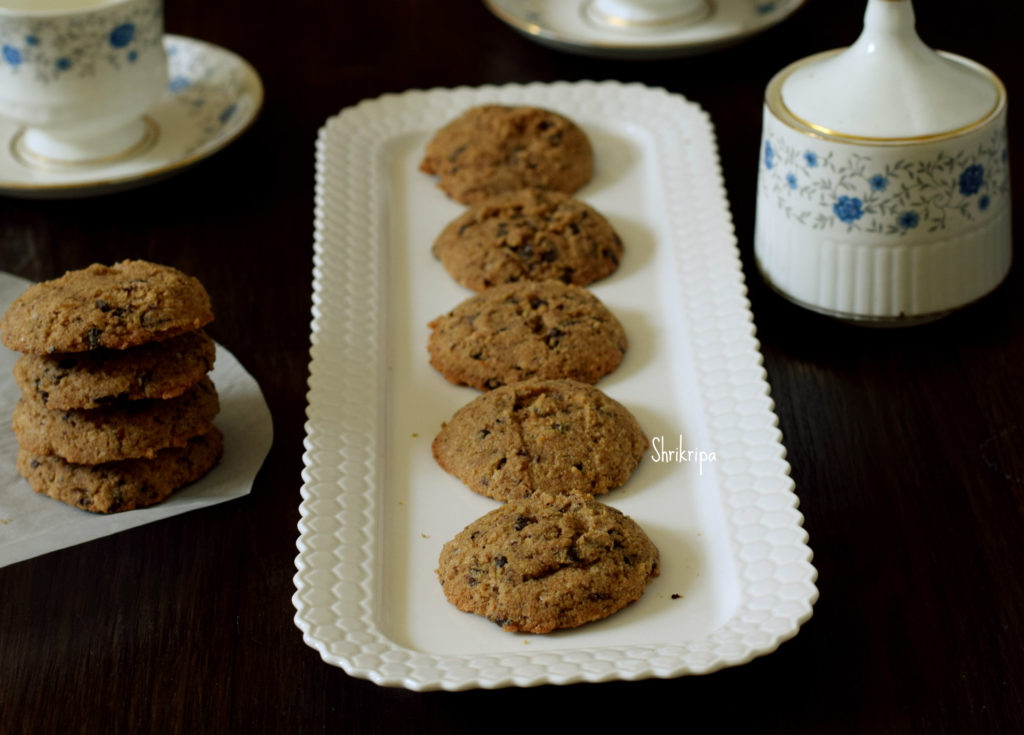
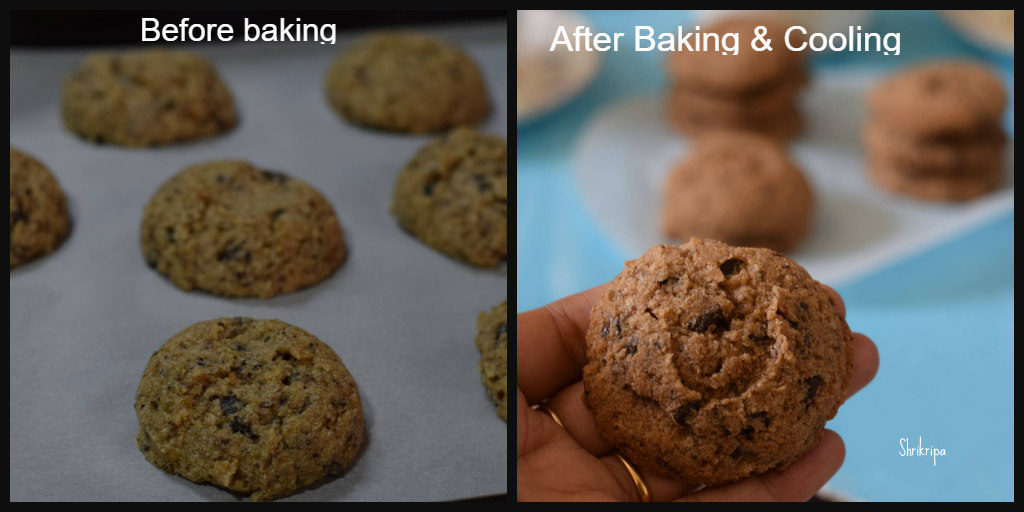
In this experiment I have taken half cup of coconut flour and it did absorb the liquid, swell and gave me 9 cookies . More than everything, this was interesting!! Chocolate Chip Coconut Flour Cookie. This was a little experiment, and the results were not bad at all! I got the big thumbs up from my twins 😀
DSC_4745main_Fotor

Let us see the procedure-

Ingredients:

Coconut flour – ½ cup

Flax gel – ½ cup

Ghee or Oil – 1 table spoon

Choco chip – ¼ cup

Organic Natural brown sugar – ½ cup (you can use normal sugar as well)

Sea salt – ½ tea spoon

Vanilla – 1 tea spoon

Method:

– How to make flax gel: Take 2 tsp of flax seed, make powder. Put this powder in thick bottomed small pan, add one cup of water and boil until it is thick, slimy and reduced to almost half.

-Pre heat oven at 170 °C. Line the baking tray with the butter paper.

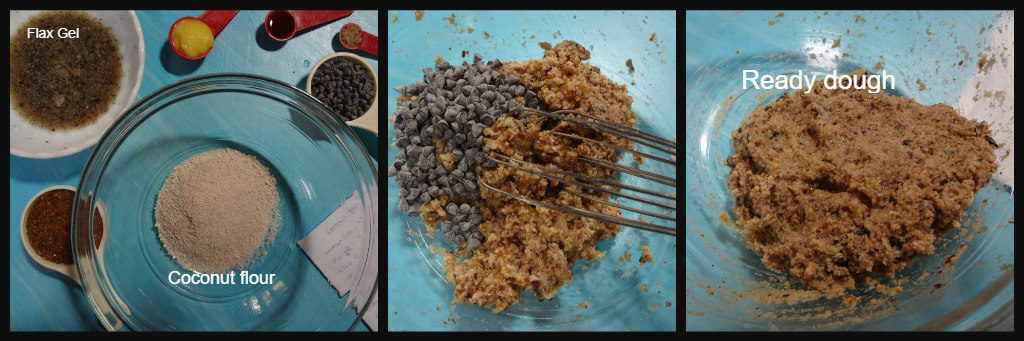
-Take one glass bowl, put flour, sugar, salt crystals, ghee, flax gel, vanilla and mix. Dough will be little wet. Mix in Choco chip and mix once more.
Ribbet collage 1

-Scoop out the mix by using ice cream scooper and arrange in a lined baking tray.

-Bake this in a pre-heated oven for 15 to 20 minutes.
Ribbet collage 2

-Don’t touch while removing, it will be very soft. Remove the tray and cool as it is.

-After cooling, it will harden a bit. After it cools down completely, store it in an air tight container.

– These cookies are slightly crunchier at outer circle, soft and chewy at the centre.

– It becomes a little more harder and firm the next day .
 

How to make Coconut Milk and Flour at Home:

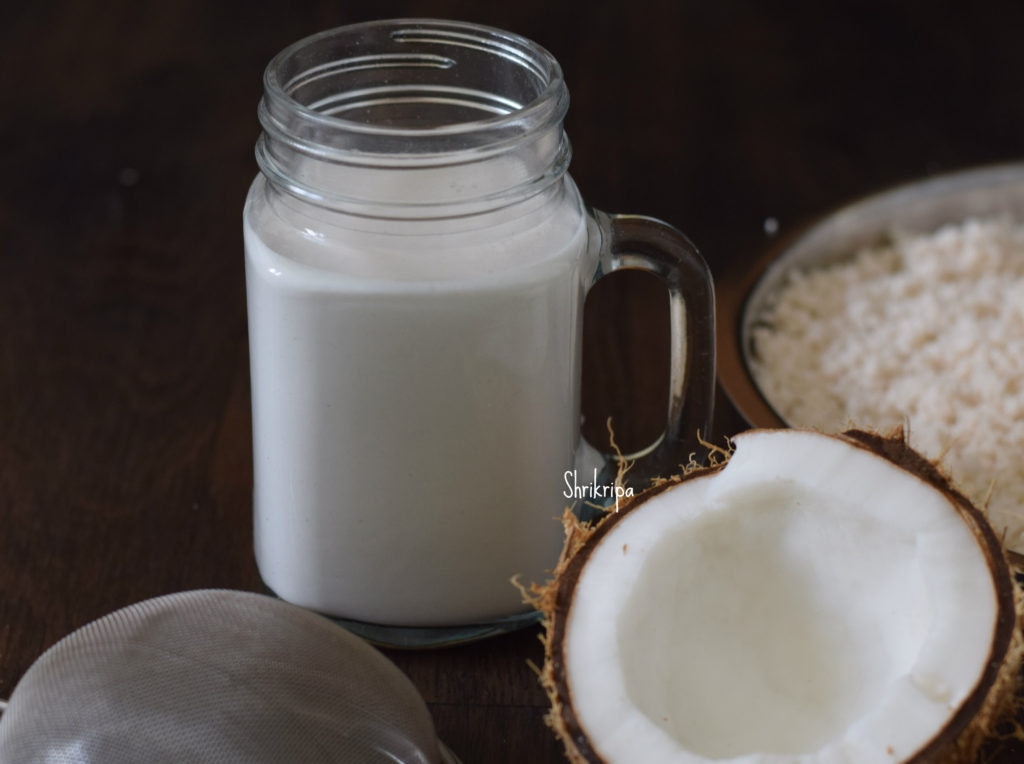
If you are a person, who extracts coconut milk for kheer/ payasam like me, it is best suited for you.

Coconut flour is rich in fibre, low in calorie as well as carbohydrate, gluten free and very popular in flour less or grain free baking.

From past two years I am experimenting with various home made healthy flours and last week when I extracted milk from couple of fresh coconuts, I wanted to try this and proceeded.

Method:

First, we will see the Procedure for Coconut Milk Extraction:

DSC_4524_Fotor

Ingredients:

Fresh coconut– 1 or 2

Water – 3 cups

Strainer – to extract the milk.

Procedure:

-Grate the coconut and collect the gratings. (If you are using some frozen fresh gratings, you can thaw and proceed).

-Next is a coconut milk extraction:

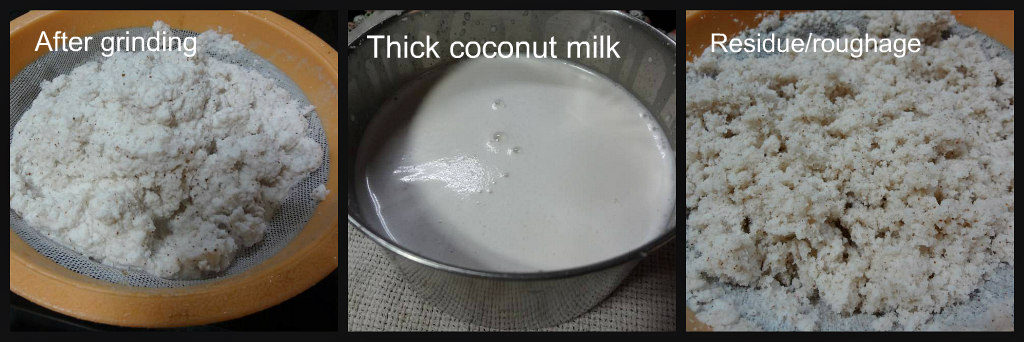
-Take fresh gratings, put one cup of water and grind into smooth paste and extract milk through sieve. This milk is a thick milk.

Ribbet collage 2

-Now once again take roughage of the coconut, put one more cup of water and grind, sieve the paste and it is our second extraction of milk.

-Repeat the process and take out a third extraction as well and Collect the roughage and it is the Raw material what we need to make coconut flour.


Now we will see how to make coconut Flour:

DSC_4523_Fotor

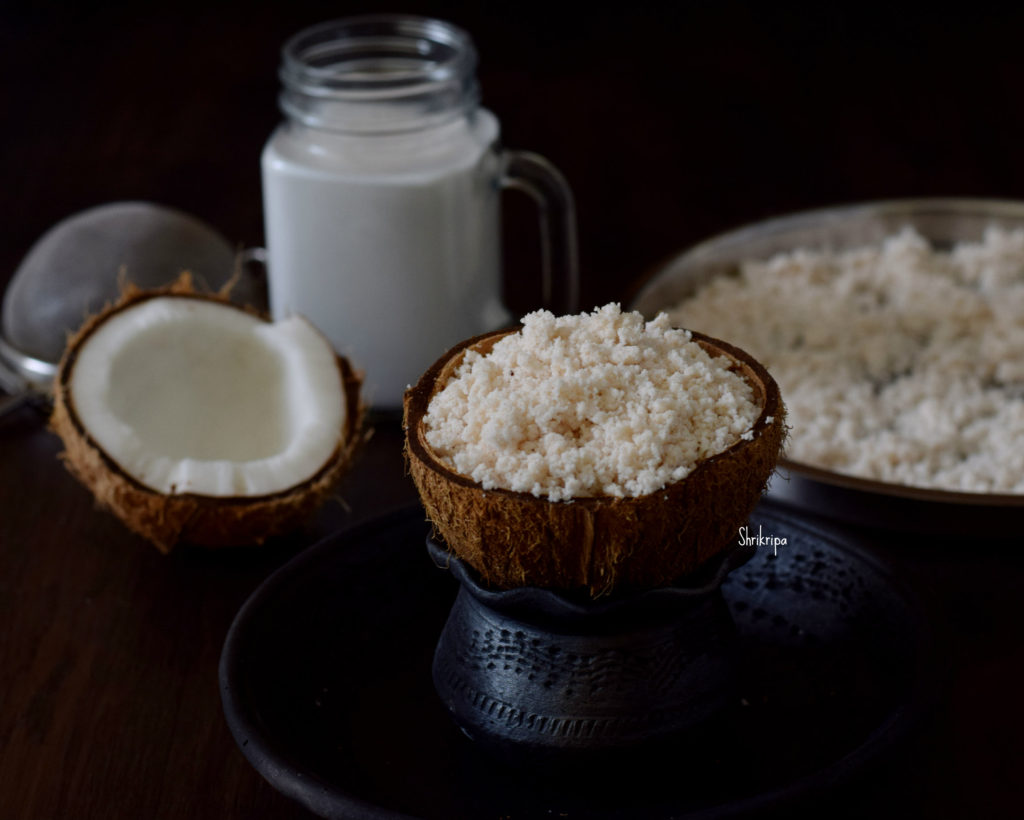
Now you will know, what is coconut flour?

It is nothing but dried form of this roughage that we have, after the extraction of coconut milk.

Take a dry towel, spread this roughage and air dry in a shaded place for a couple of days. That is it.

DSC_4553_Fotor

Your coconut flour is ready to use. When it has dried, it will be very dry and airy. It will appear like small beads.


Temple Style Vegetable Sambar:

Usually people ask me regarding recipe of sambar, which is served in Coastal Mangalore temples. In our coastal temples, prasadam is served in the form of afternoon lunch. It is a simple lunch, served on a plantain leaf. which usually includes palya, rice, Rasam, sambar, payasam and buttermilk. Speciality of this lunch is, taste of the Rasam or sambar will linger in your mouth even after some time.

Commonly used vegetable for this kind of sambar is Ash gourd, sweet pumpkin or Coloured cucumber. You can take any one of these above-mentioned veggies and make. Here freshly roasted and ground masala has been used and onion or garlic is a taboo ingredient in prasadam lunch.

DSC_4627_Fotor

Here I have used home grown Sweet pumpkin –

Ingredients:

Sweet pumpkin – ½ kg (you can use coloured cucumber or Ash gourd as well)

Salt

Jaggery – 1 to 2 tea spoons (adjust according to your taste)

Red chilli powder – ½ tea spoon

Coriander seeds – 1 table spoon

Cumin – 1 tea spoon

Methi – ¼ tea spoon

Hing – pea nut size (hard hing) or ½ tea spoon of powdered hing.

Urad dal – 1 tea spoon

Chana dal – 1 tea spoon

Red chillies – 3 to 4

Coconut – ½ cup

Curry leaves – 1 spring

Toor dal – ¼ cup

Turmeric – ½ tea spoon

Tamarind – ½ – 1 tea spoon

Seasoning:

Coconut oil – 1 table spoon

Mustard – 1 tea spoon

Red chilli – 1

Curry leaves – 1 spring

Method:

-Cook toor dal after washing and keep aside. (don’t use more dal)

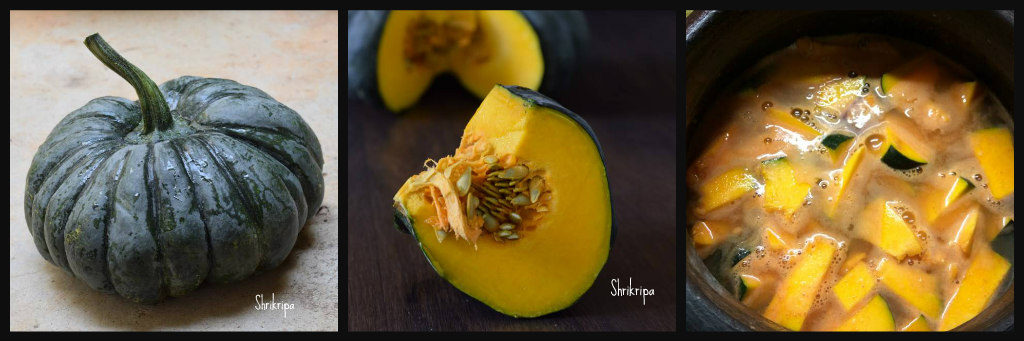
-Remove central seed part. Chop veggies, as bigger chunks.

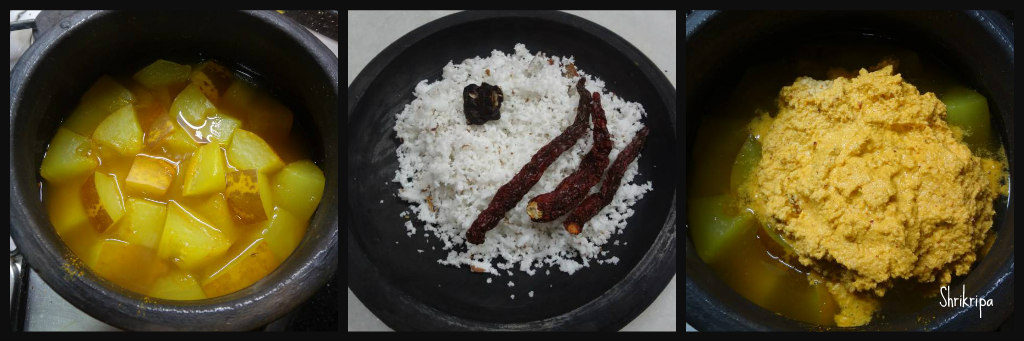
Ribbet collage 1

– Cook chopped veggie by adding sufficient water, salt, jaggery, red chilli powder.

-In the meantime, roast masala for grinding.

Ribbet collage 2

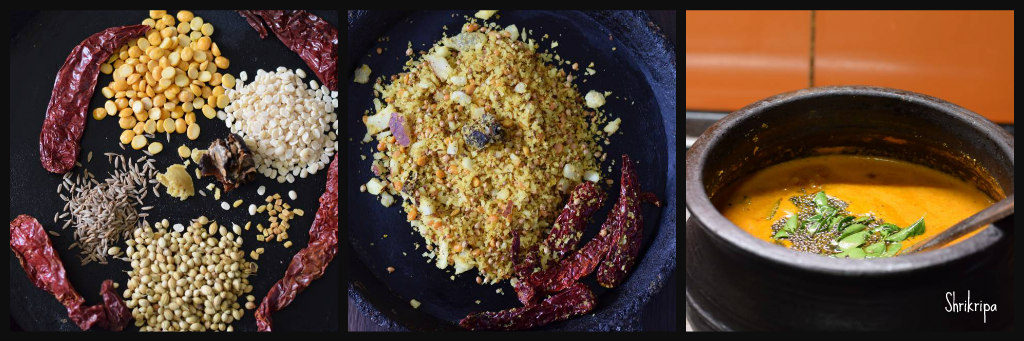
-Take one thick kadai, add 1 tea spoon of coconut oil, fry methi seeds until light brown.

-Add in coriander, cumin, Hing, Red chillies, urad and Chana dal and proceed frying until dal becomes light brown and red chillies puffs and roasts.

-Add in coconut, curry leaves and turmeric, proceed frying for 2 to 3 minutes or until you feel the aroma of coconut.

-Cool this mixture and grind into not so smooth paste by adding tamarind and sufficient water.

– Now mash cooked dal add dal and freshly ground masala to cooked veggie and boil.

-Check for salt, jaggery and adjust. When it boils add seasoning.

-Heat coconut oil, mustard, red chilli, when mustard splutters, and curry leaves and pour over the prepared(boiled) sambar.

-Serve with hot rice.


Neeru mavinakai Gojju/ Brined mango curd curry:

Neeru Mavinakai” is what we call brined mango, which is basically a firm fully grown, matured but un-ripened mango which is preserved in salt water. We usually relish this in the rainy season or in the off season by preparing some of our traditional dishes. I have shared how to preserve mangoes in my earlier post.  Today I am going to share one of our favourite simple curd curry, which we used to relish even in our childhood days. It is a simple curd curry, seasoned with curd chillies (known as majige menasu), curry leaves and garnished with chopped onions to give the extra zing.

DSC_4350_Fotor

Ingredients:

Preserved raw mangoes – 2

Curd – 1 cup

Coconut milk – 2 table spoons

Green chilli – 1 (chopped)

Onion – 1 (chopped)

For Seasoning;

Coconut oil – 1 table spoon

Mustard – 1 tea spoon

Curd chillies – 1 to 2 (chopped)

Urad dal – 1 tea spoon

Hing – ¼ tea spoon

Curry leaves – 1 spring

Method:

-Remove required number of mangoes from the brine water.

-Immerse these mangoes in fresh water for some time to reduce its salt content.

-Sometimes brined mangoes will be soft or hard. If it is soft, mash it and use.

Ribbet collage

-If it is very hard, cook for a couple of whistles in a cooker by adding little water and try to mash or grate.

-What I had was very hard, and I used it by grating.

-After this is done, mix in curd and coconut milk.

-If you don’t have coconut milk, you can use maggi or some other brand of coconut milk powder as well. (addition of coconut milk will reduce the tartness)

-Mix in chopped onion, green chilli.

-Do seasoning, heat coconut oil, put in mustard. When mustard starts to splutter, add in urad dal, Hing, chopped curd chillies and fry until chillies turns out dark brown.

– Add curry leaves to this hot mixture and add the seasoning over Gojju.

-Traditionally we enjoy this Gojju either with Boiled rice ganji (gruel) or with curd rice as an accompaniment.


Coloured Cucumber Seeds Rasam:

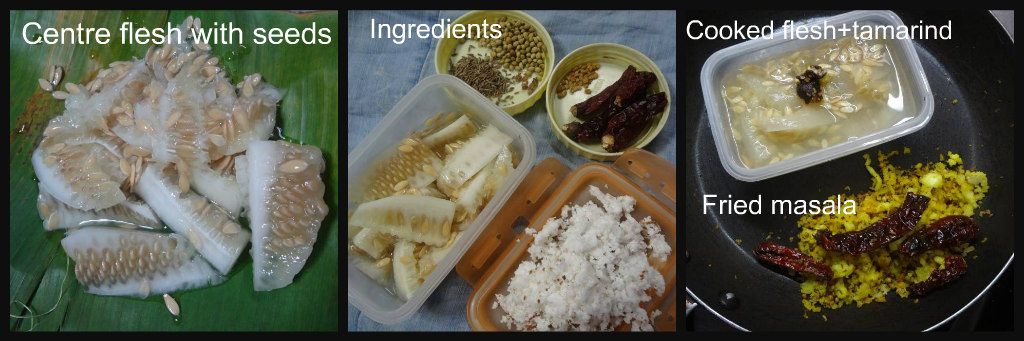
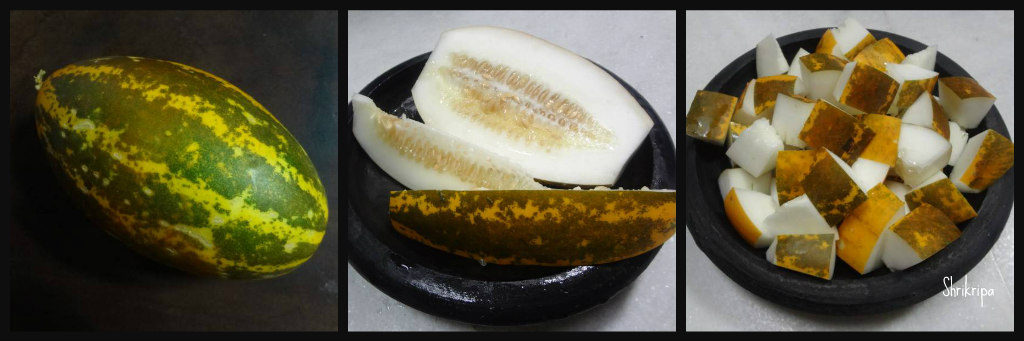
Coloured or Mangalore cucumber has fleshy interior centre part, which has jelly like watery fleshy part with edible seeds. Which are rich minerals and rich in nutrition. Traditionally we call this Rasam as Sauthe kai beeja da saaru. Literal translation of this is, sauthe kai beeja means cucumber seed, saaru is Rasam, which is watery in texture and consumed as an appetizer or with hot rice during summer season to maintain our body temperature.

Before using the core, check the fleshy part for bitterness. If it has bitterness, discard and don’t use in cooking. If you find core part to be flavourful or without bitterness, go ahead and use it in your cooking to enrich your body, like our elders did.

DSC03506_Fotor

How to make this traditional goodness –

Ingredients:

Fleshy seeded part – of one coloured cucumber

Coriander seeds – 1 table spoon

Cumin seeds – 1 tea spoon

Hing – peanut size

Fenugreek seeds – ¼ tea spoon

Red chillies – 4 t0 5

Turmeric – ½ tea spoon

Coconut – ½ cup (grated)

Tamarind – ½ to 1 tea spoon

Coconut oil – 1 tea spoon

Salt – as needed

Jaggery – ½ tea spoon (optional)

For Seasoning:

Coconut oil – 1 tea spoon

Mustard – 1 tea spoon

Red chilli – 1

Curry leaves – 1 spring

Method:

-Collect seed coated flesh part of one coloured cucumber.

-Cook this in a small cooker for one whistle (cooking will help in extracting the pulp) and cool.

Ribbet collage 1

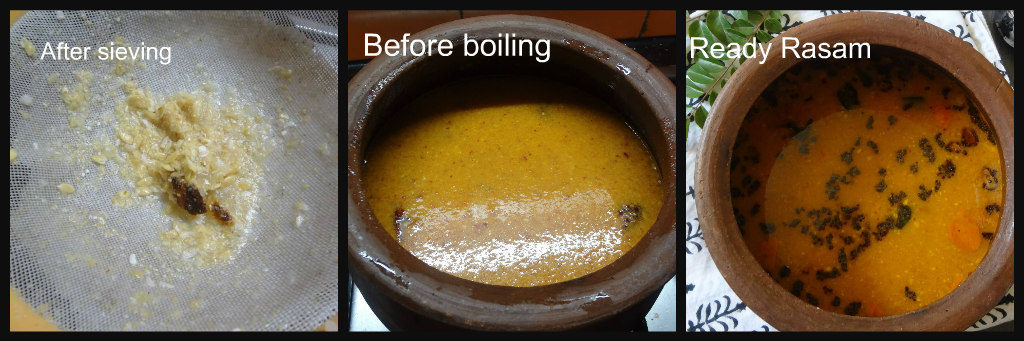
-Grind cooked pulp by adding one cup of water and tamarind and collect the liquid by sieving.

-Grind the roughage one more time, by adding one more cup of water and sieve once more.

Ribbet collage 2

-Discard the remaining roughage if any.

-Now prepare masala by heating oil. Add fenugreek at first.

-When it becomes light brown, add coriander, cumin, hing, red chillies and fry until fenugreek becomes dark and coriander becomes light brown.

-Add coconut, turmeric and fry for two minutes or until you get nice aroma.

-Cool this roasted masala and grind into smooth paste by adding sufficient water.

-Add the masala to extracted cucumber seed water.

-Adjust the consistency, add salt, jaggery and boil the Rasam.

-Add seasoning, heat oil, add mustard, red chilli.

-When mustard starts spluttering, add curry leaves and add the seasoning to boiled Rasam and close the lid.

-Serve this as an appetiser or with hot rice with a couple of papads.


Mangalore Cucumber curry:

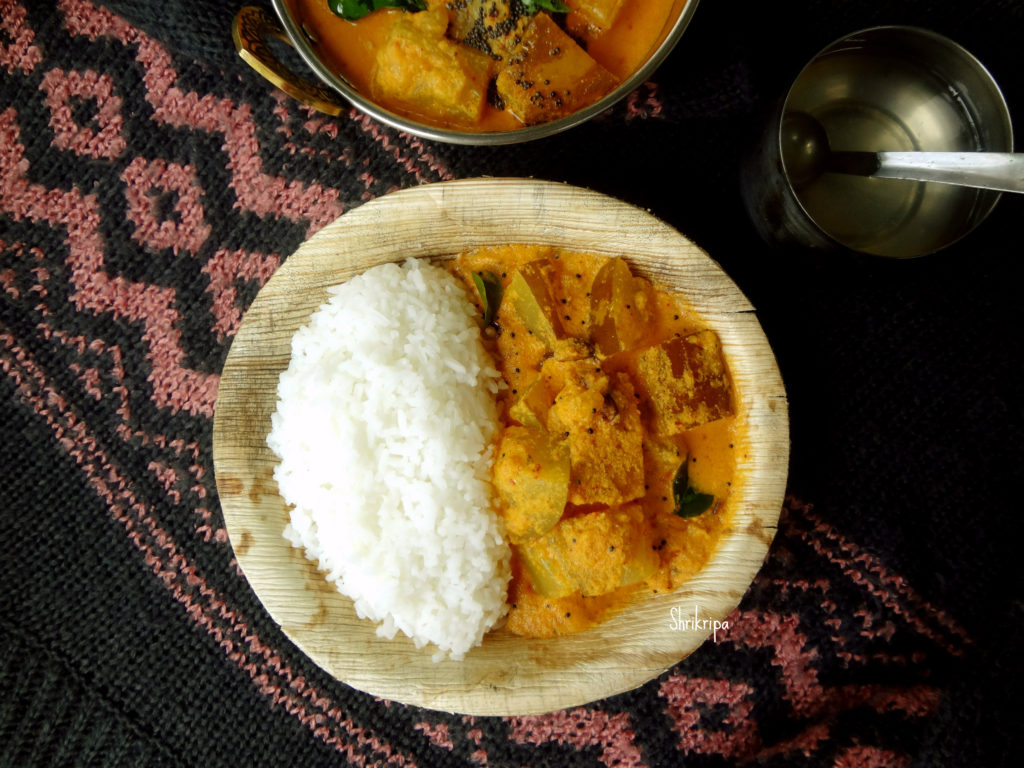
Traditionally we call this Sauthe kai Huli menasina Kodilu/Koddel. The literal translation of this is, Sauthe kai means sambar cucumber, Huli is tamarind, menasu is chilli, koddel is sambar or curry. It is sambar cucumber or coloured cucumber curry with a raw masala of fresh coconut flavoured with non-roasted masala.

Here we only use fresh coconut, Byadagi red chillies, tamarind as the main ingredient, and after boiling, seasoned with curry leaves, roasted garlic by using coconut oil.

To get an authentic taste, one should use coconut oil and freshly grated coconut for this curry.

DSC03963_Fotor

Now we will see the recipe part.

Ingredients:

Coloured cucumber – 1

Salt

Red chilli powder – 1 teaspoon

Fresh coconut – 1 bowl

Red Byadagi chillies – 2 to 3

Tamarind – gooseberry size

Turmeric powder – ½ teaspoon

For seasoning:

Coconut oil – 1 tablespoon

Mustard – 1 teaspoon

Red chilli – 1

Curry leaves – 2 springs

Garlic – 10 cloves (crushed)

Method:

-Wash Mangalore/Coloured/sambar cucumber.

Chop off two ends, slice into four pieces, remove the inner core (seed part), and chop into bite-sized pieces.

Ribbet collage 1

-Check now for the taste. If it is bitter, soak the pieces in plain water for 5 minutes.

-Discard the water and proceed. If cucumber tastes good, there is no need to soak in water, and you can directly proceed with cooking.

-Cook these pieces in a sufficient amount of water. Add salt and red chilli powder as well.

Ribbet collage 2

-In the meantime, grind masala by putting coconut, tamarind, red chillies and turmeric.

-When cucumber cooks well, add ground masala, adjust the consistency and boil.

-When the mixture boils nicely, switch off the gas.

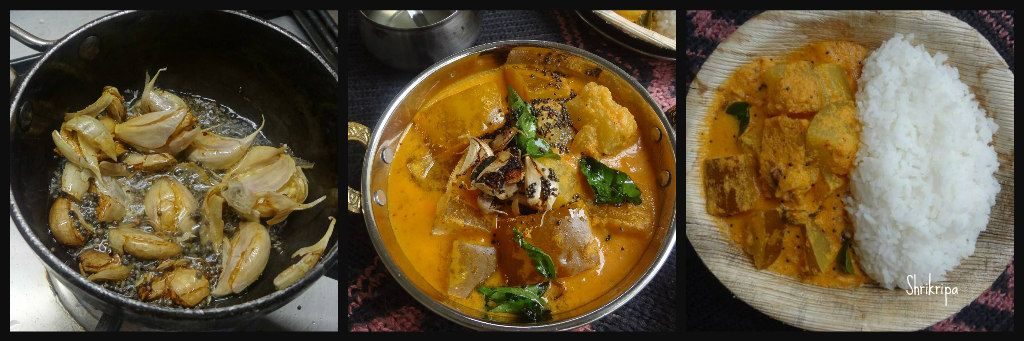
-Prepare seasoning, heat oil, splutter mustard, add garlic, red chilli, curry leaves.

Ribbet collage 3

-When garlic becomes deep brown, add the seasoning over boiled gravy.

-Keep this closed for a while before serving to absorb all the flavours.

-Serve with hot rice.

One more variation of this curry is by adding –Turkey berry.

To know about the Turkey berry, you can click the link HERE.  

The method is straightforward. Crush those washed turkey berries/ Kudane, put them in water, rinse them a couple of times, and remove the seeds as much as possible; in this way, the tartness of the berries vanishes. Keep as it is and follow the above procedure to make Cucumber curry.

-When cucumber cooks partially, add those washed and cleaned berries and cook further. Then, add freshly ground masala and curry by following the above description.

Note:

To maintain authentic taste,

-use fresh coconut, Coconut oil.

-Retain the outer skin of garlic and crush.

-Inner core or seed is used in a couple of recipes.

-One is Chutney, and the other one is Rasam. I will update ASAP.


Nuggekai/Drumsticks Curry:

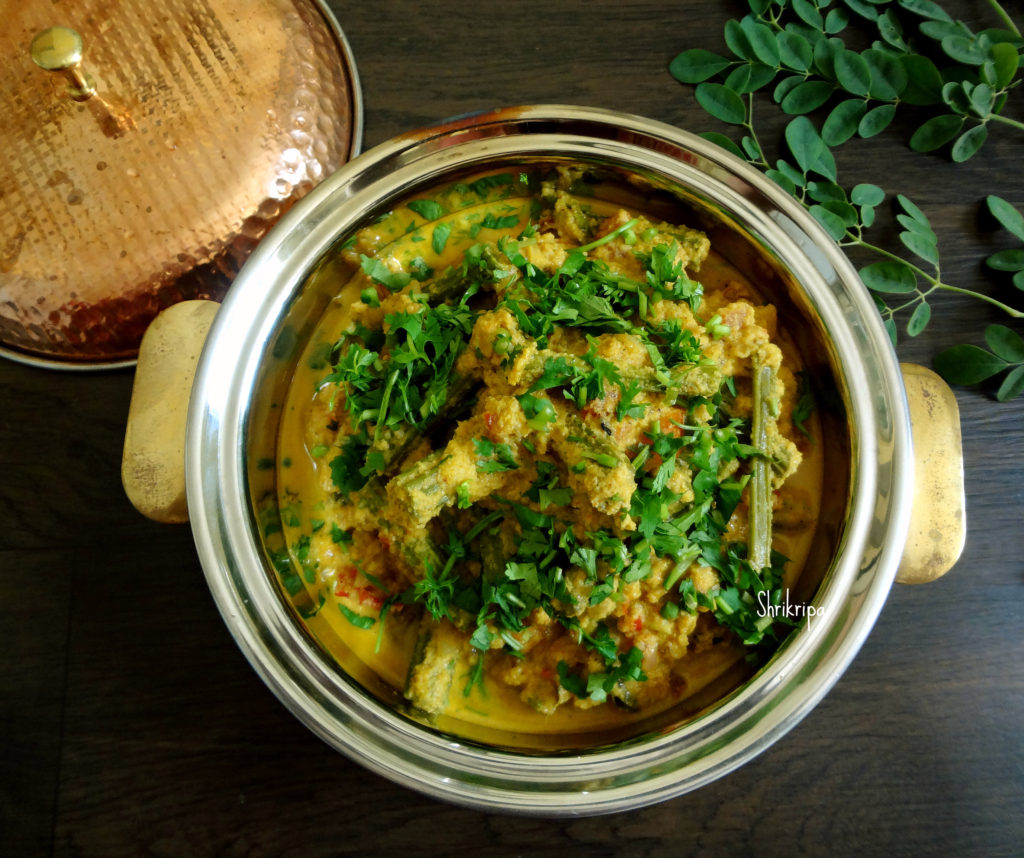
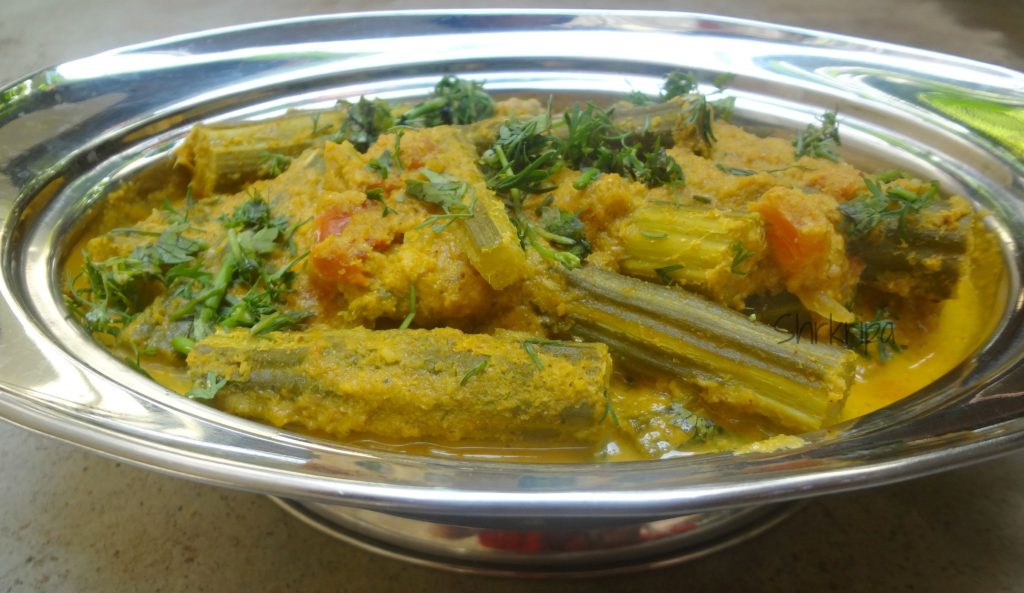
Drumsticks are loaded with essential minerals and nutrients. It is very tasty and highly nutritious, it is a must have ingredient in mixed south Indian sambar. One can enjoy only drumstick in this special curry, which I learnt from my dearest aunty.

DSC05853_Fotor

Ingredients:

Drumsticks -5 to 6

Onion -1

Garlic cloves – 10 to 12

Coriander leaves – 1 table sp. (chopped)

Poppy seeds – 1 tsp. (you can replace this with roasted gram as well)

Red chilli powder – 1 ½ tsp.

Turmeric – ½ tsp.

Coconut – 1 cup

Oil – 1 table sp.

For Seasoning: oil- 1 tbsps., chopped onion -1, chopped tomato -2 and curry leaves.

Coriander leaves for garnishing.

Method:

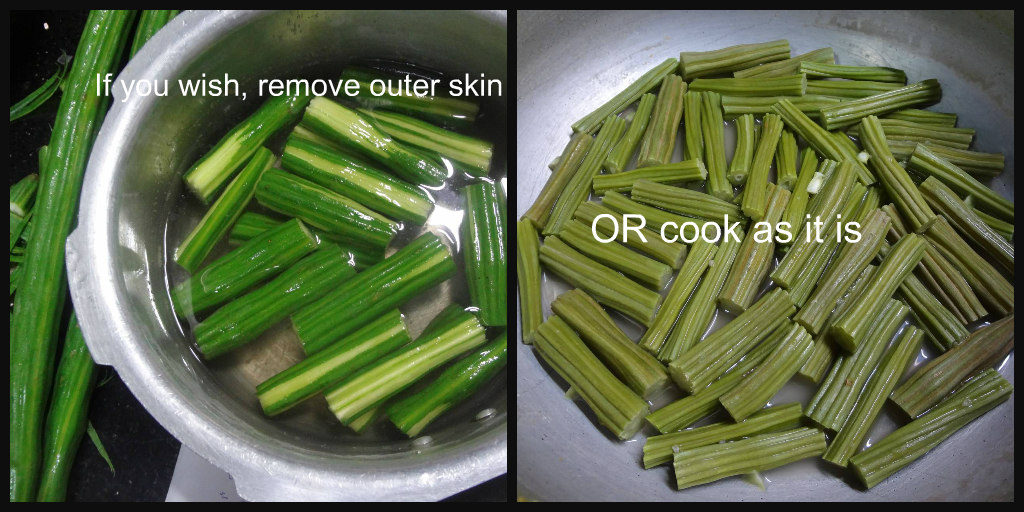
– Chop drumsticks in to 2 to 3-inch pieces, while chopping remove outer thick skin as much as possible. (It is purely optional)

Ribbet collage 1

-Cook chopped drumstick pieces with sufficient water and salt.

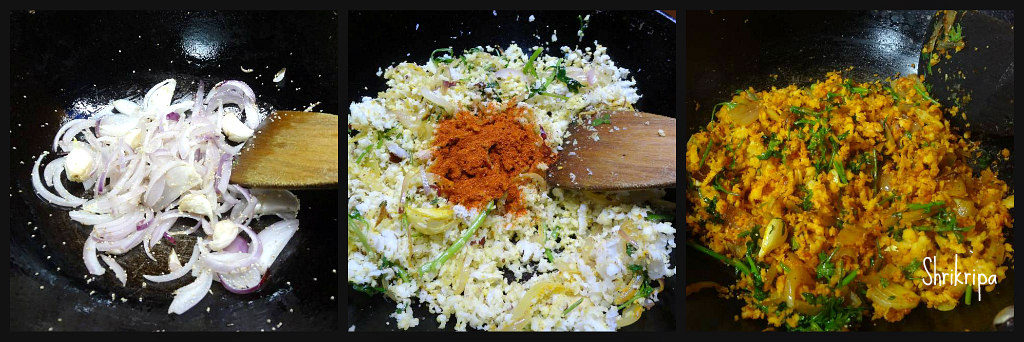
-Now take one tawa, put 1 table spoon of oil and fry poppy seeds, when it is light brown, add chopped onion, crushed garlic, and fry till onion becomes translucent.

-Now add chopped coriander leaves, red chilly powder, little turmeric and grated coconut and fry till you get nice aroma and then switch off and let it cool.     

Ribbet collage 2

-when it cools down, make fine paste by adding sufficient water and keep aside.

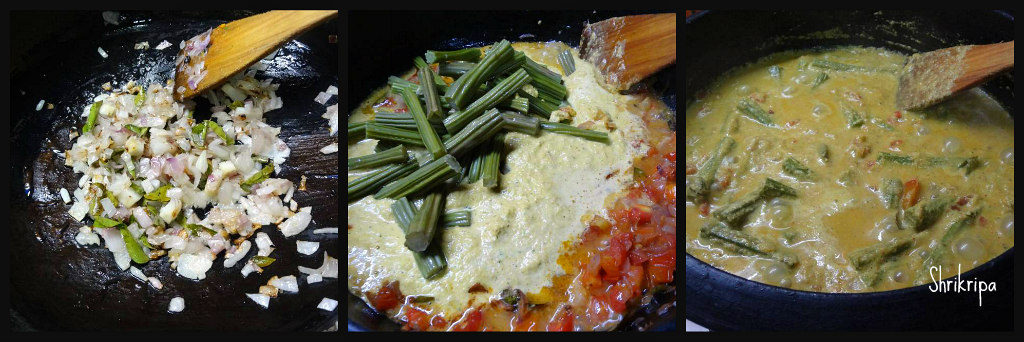
– In that same tawa, add oil. When it is hot, add curry leaves, chopped onion and fry.

Ribbet collage 3

-When it is done add chopped tomato and fry until it is mushy.

-Now add ground masala, cooked drumstick with water and boil nicely.

drumstick main

-Garnish with chopped coriander.

Pumpkin Flower Tawa fry:

Pumpkin flower is bright yellow coloured, which is loaded with essential nutrients, minerals and used in a different cuisine around the world and considered as a rare delicacy in a gourmet cuisine as well. 

Pumpkin plant bears male as well as female flowers separately. Usually Male flowers appears initially, and female flower is a rarity. These flowers last only for a day and wither by the evening. That is the reason why we see only Male flower in cooking. It has a main role in pollination and after that it will wither, and female flower will grow as a Pumpkin. If you have a doubt in distinguishing between male and female flowers, male has only a long stalk and the female has a round green, big swollen structure(ovary) at the base of the petals.

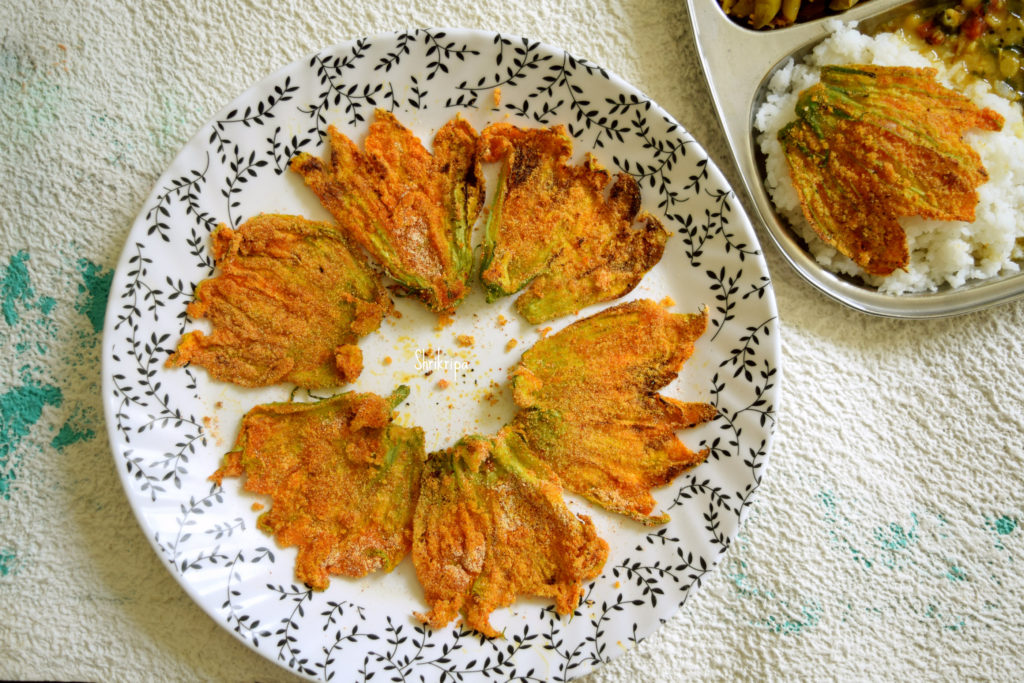
Pumpkin flowers are used either in a raw, tossed, pan fried, cooked forms in various recipes and it is found occasionally in salads, soups or batter fried. Here I am showing Mangalore style tawa fry in which pumpkin flower will be coated with seasoned fine semolina and tawa roasted by drizzling some coconut oil to give coastal touch.

If you have Pumpkin, squash or Zucchini plant in your garden, collect all the male flowers and make this and enjoy your meal. You can collect the fresh flowers every day and store it in an air tight box for 3 to 4 days and utilise in your cooking.

DSC_4222_Fotor main

This is how I make-

Ingredients:

Pumpkin flowers – 5 to 6

Fine semolina – 1 small cup (chiroti rawa)

Salt

Hing – ¼ tea spoon

Turmeric powder – ½ tea spoon

Red chilli powder – 1 tea spoon

Coconut oil – as needed

Method:

-Wash flower, give one fine slit at the bottom of the flower and cut open.

-Remove stamen.

Ribbet collage 1

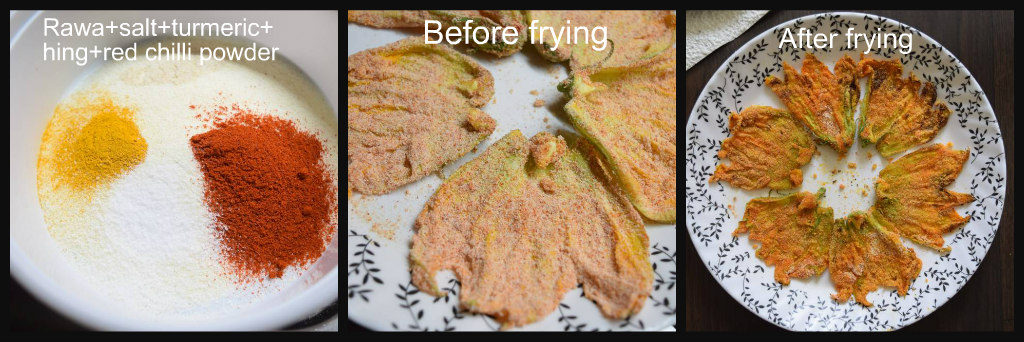
-Dry mix all seasoning items from rawa, salt, red chilli powder, turmeric powder and hing.

-Take each flower and coat with the seasoning, by rolling.

-Heat iron tawa/ griddle, place all these coated flowers.

Ribbet collage 2

-Roast these by using sufficient coconut oil on both the sides.

-Serve these with hot rice and Rasam or dhal.


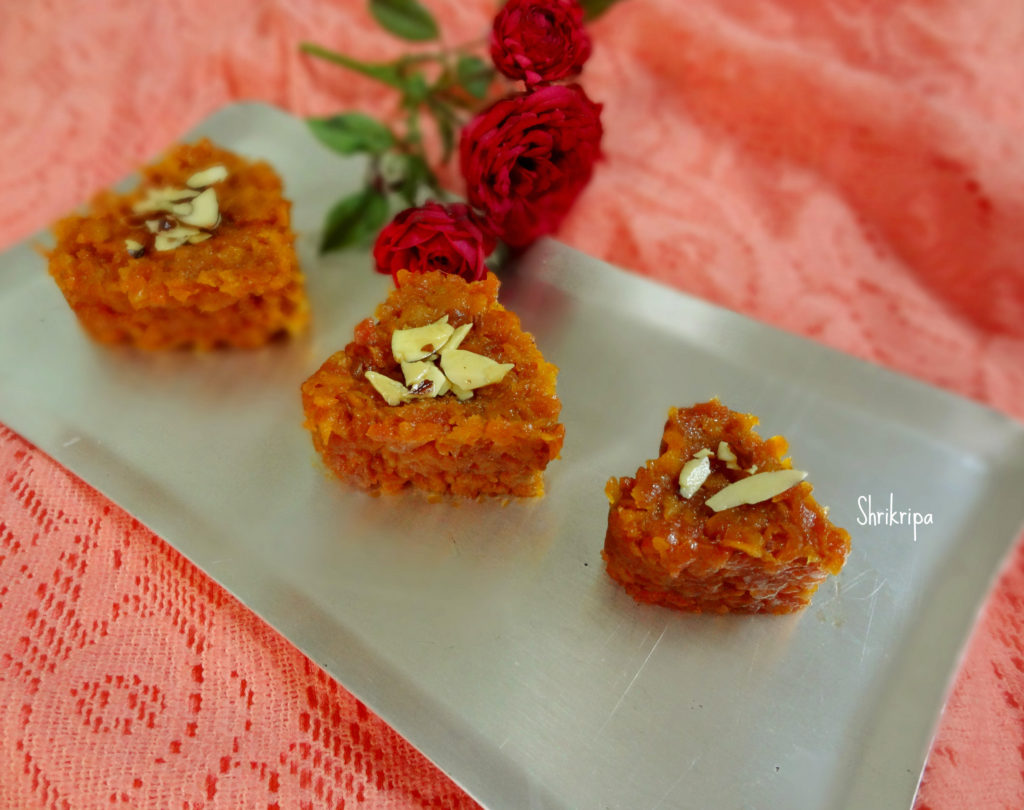
Carrot Halwa (South Indian Style):

Carrot Halwa or Gajar ka halwa is a very popular Indian dessert. This halwa is everyone’s favorite in my place. They love it hot directly from the stove top as it is or with vanilla ice-cream.

It is a south Indian style preparation, which we follow in our homes. i.e. Without khoya/milk solids and it is cooked in whole milk.

DSC09043_Fotor

Now we will see my style of preparation,

Ingredients:

Red Delhi carrot – 1 kg

Regular carrot – ½ kg

Milk – ½ litre

Sugar – ¾  to  1 cup (according to your taste)

Ghee – ¼ cup  

Roasted Slivered almonds – 1  to2 tablespoon

Roasted cashew bits – 1 to 2 tablespoon

Cardamom powder – 1 tsp.

Method:

-Wash and peel the outer skin and grate the carrots.

carrot halwa 1

-Take one thick bottomed pan, heat 2 tablespoons of ghee and fry grated carrots for 10 min, till it completely wilts.

-now add milk, cook until milk evaporates and carrot cooks.

Ribbet collage 1

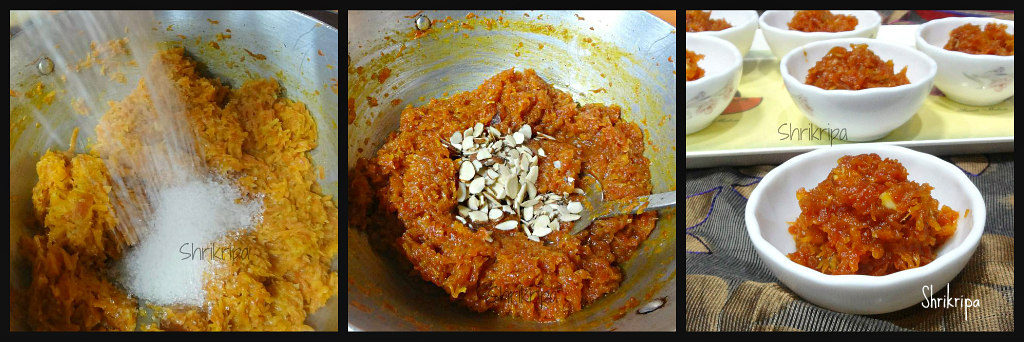
-now add sugar (here we must check for required sweetness, we usually prefer a little less sweet), and mix nicely by adding the remaining ghee until the mixture leaves the sides of the pan.

-now garnish this with cardamom powder, roasted slivered almonds and 1 tablespoon ghee. Mix this nicely.

Serve hot as it is or with vanilla ice cream and enjoy your winter treat.

Plantain / Banana Flower Chutney:

We call Coconut tree as a Kalpavriksha. In my opinion Banana plant also should come under this category, because almost every part of the banana plant is used in some way or the other.

The leaves, flowers, fruits, stem, stem fibre etc. Nothing is wasted over here, and it is very useful in many ways.

The male banana flower is purple coloured, dome shaped, and can be seen hanging at the bottom of every fruit bunch. In banana plant, female flowers appear first and appear as a hand like structure in clusters. These female flowers will develop as the real fruit, which we normally eat, and male flowers will remain intact in layers of purplish outer bracts.

After fruit matures, we harvest the fruit and use the male flower that we see at the end of the fruit bunch in cooking. It is loaded with fibre, anti-oxidants, iron, potassium, calcium, vitamins and all other minerals. Flower is used mainly to treat constipation and anaemia in villages of our native in and around Mangalore.

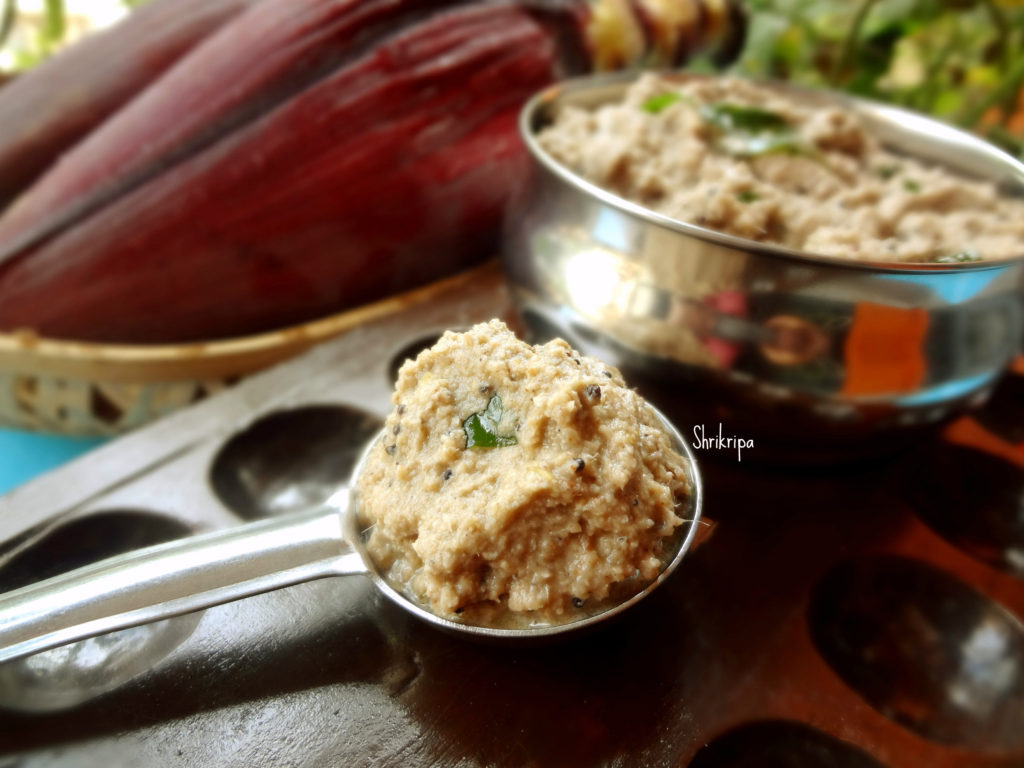
This Chutney recipe is handed down to me by my amma (mother), and I used to relish this from my childhood. It is a perfect combination with hot rice, topped with fresh home-made ghee. We can feed this to small toddlers as well.

DSC04353_Fotor main

Ingredients:

Banana flower – 1

Cumin – 1 tea spoon

Pepper – 1 tea spoon

Tamarind – ½ tea spoon

Salt

Water – 1 bowl

Curd – 1 serving spoon

Grated coconut – 1 cup

For Seasoning:

Ghee – 1 table spoon

Cumin – ½ teaspoon

Curry leaves – 1 spring

Method:

-Wash banana flower from outside and remove outer purple bract (remove 2 layers) and discard.

Ribbet collage 1

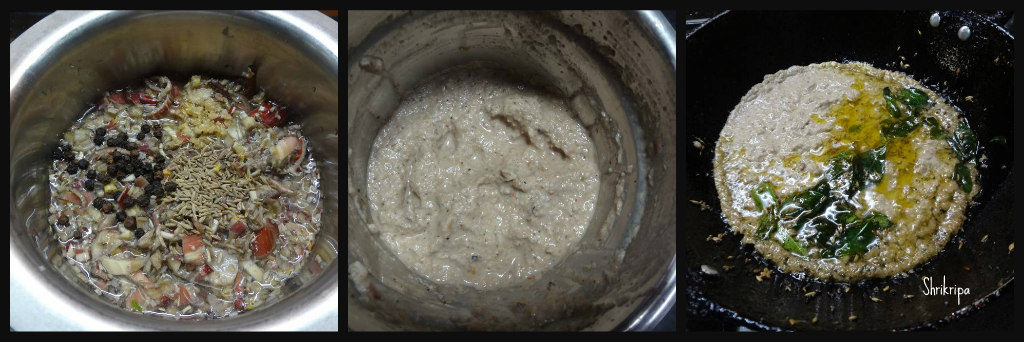
-Now take one bowl of water with 1 serving spoon of curd and mix and keep it ready. (This water will avoid decolouration of the chopping’s)

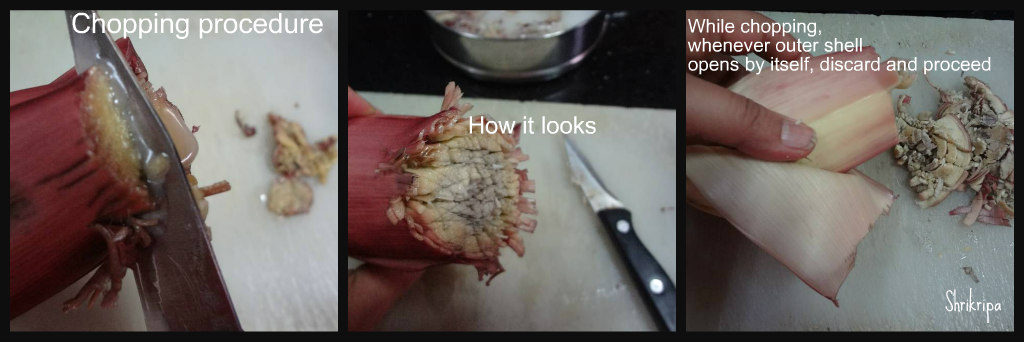
-Start chopping banana flower from the tip (refer picture)

Ribbet collage 2

-Keep on adding chopped part to curd water.

-While chopping, whenever outer shell opens by itself, discard that and proceed chopping.

– After chopping is done, drain the curd water and collect the banana flower chopping’s.

-Take one vessel, add chopping’s, salt, pepper, cumin, tamarind, 1 cup water and cook.

Ribbet collage 3

-When it is done, remove from the fire and cool.

-Add coconut, required amount of water and grind the content.

-Now take one tawa, add ghee, cumin, curry leaves and pour the ground mixture and boil.

DSC04355_Fotor main 1

-This chutney will stay good for a couple of days under refrigeration and can be served either with hot rotis or with rice.