Badam Halwa / Almond Halwa :

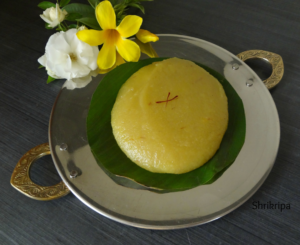
Badam halwa, the name itself brings back so many fond memories of my two kiddos’ as well as of my late father in law. My memories go back to my delivery time. When my father in law heard about my twin daughter’s arrival, he celebrated his joy by preparing and distributing this sweet to our near and dear ones. While growing up, even my kids used to enjoy this sweet and used to refer to this as “Yellow sweet”. After so many years last weekend I prepared this to celebrate my hubby’s birthday and enjoyed every bit of the preparation by cherishing all these fond memories. 
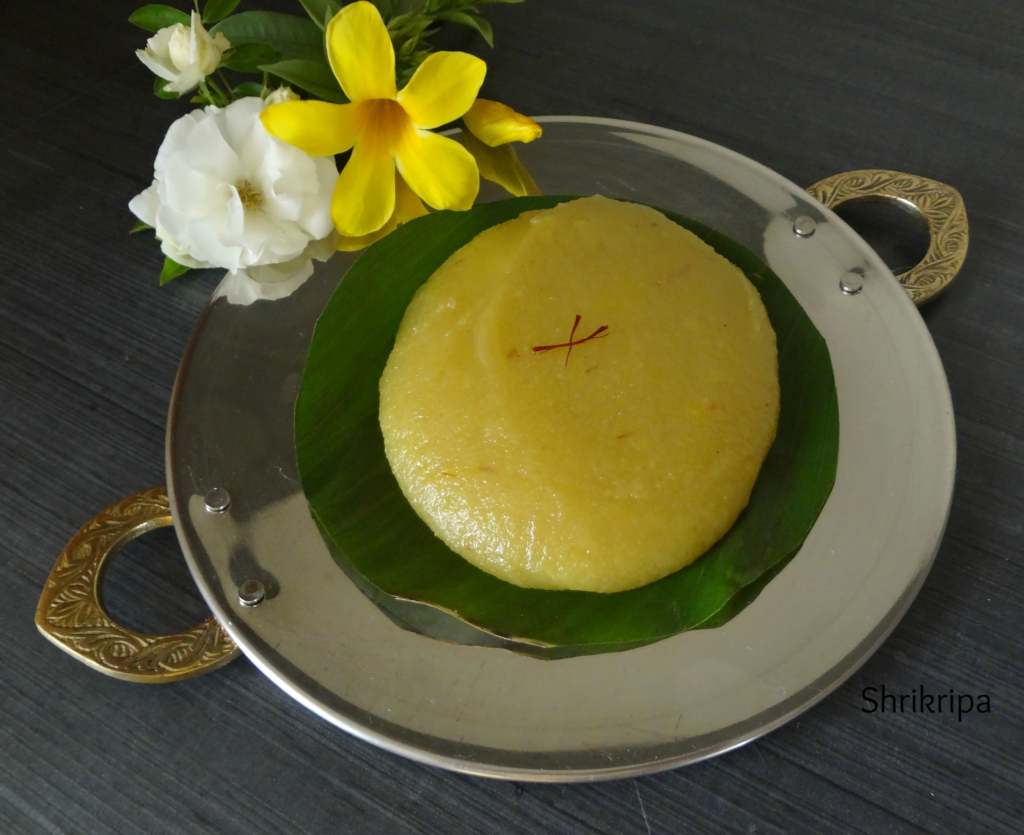
pic 1

I Normally follow this age-old method-

Ingredients:

Almonds – 500 grams

Sugar – 750 grams

Milk – ½ to ¾ litre

Ghee –  1 to 1 ½ cup

Saffron – 1 tsp

Cardamom powder – ½ teaspoon

Method:

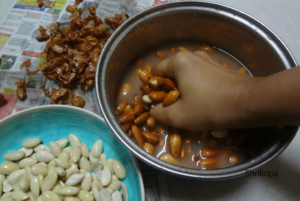
  Soak almond overnight.

pic 2   pic 3

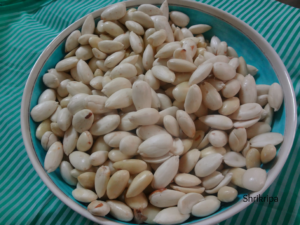
   The next morning, peel the skin. Usually three fourth of the content will shed their skin, if you mash those swelled almonds inside the water, by using your palm.

    After removing the outer skin, put these in a mixer grinder jar, make paste by adding sufficient milk.
pic 4    pic 5

   Soak saffron in half cup of hot milk and keep aside.

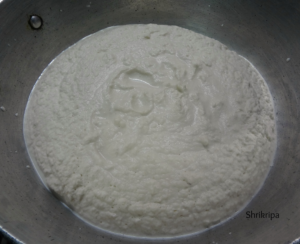
   After grinding paste will look like idly batter with grainy texture.

    Put this paste into thick bottomed vessel and heat.

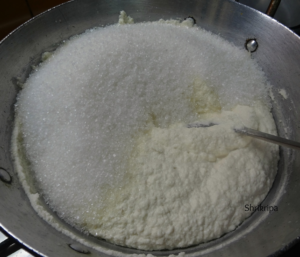
    Add sugar and boil for a while.

pic 6  pic 7

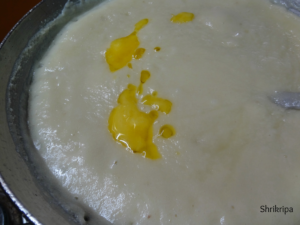
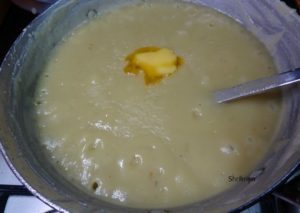
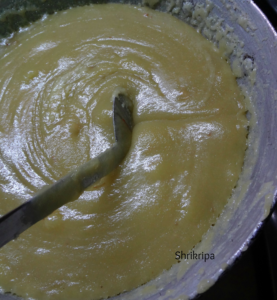
  When it starts bubbling, add ghee little by little at regular intervals until mixture becomes glossy.

   At this point, you can add saffron soaked milk and cardamom powder and proceed.

    When mixture starts to leave from the sides of the vessel and edges become dry and bubbly, switch off the fire and keep aside to cool.
pic 8   pic 1

   When it reaches room temperature, store this in a stainless steel or glass container.
Kanile Gashi /Bamboo Shoot and sprouted moong Gravy:

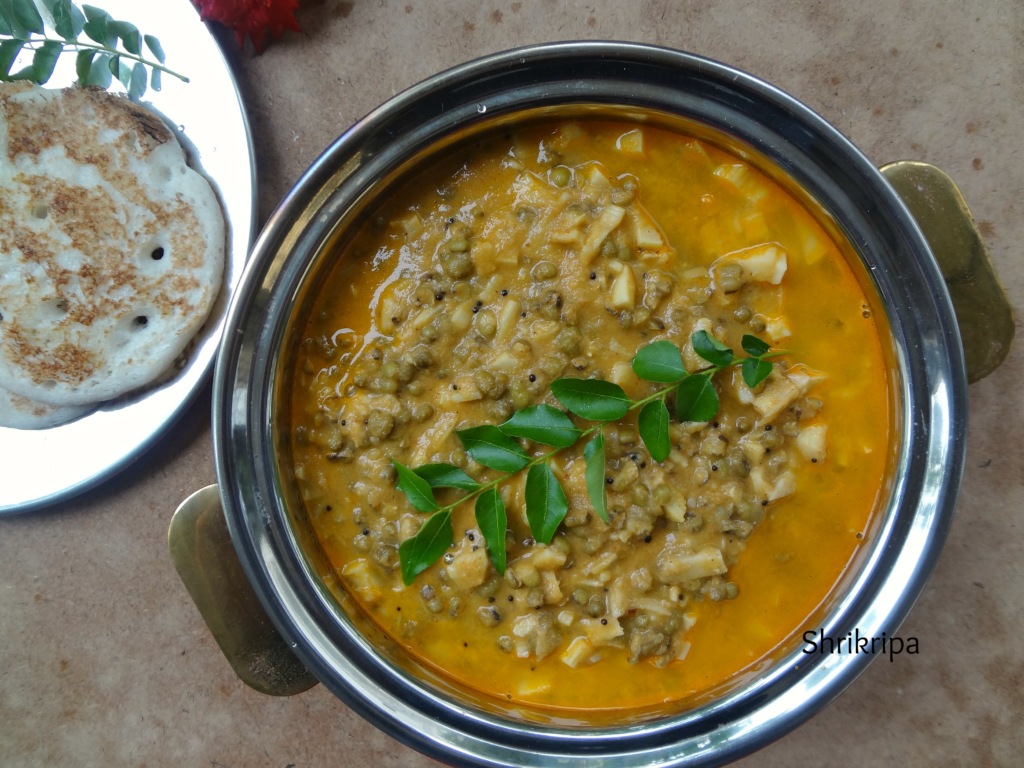
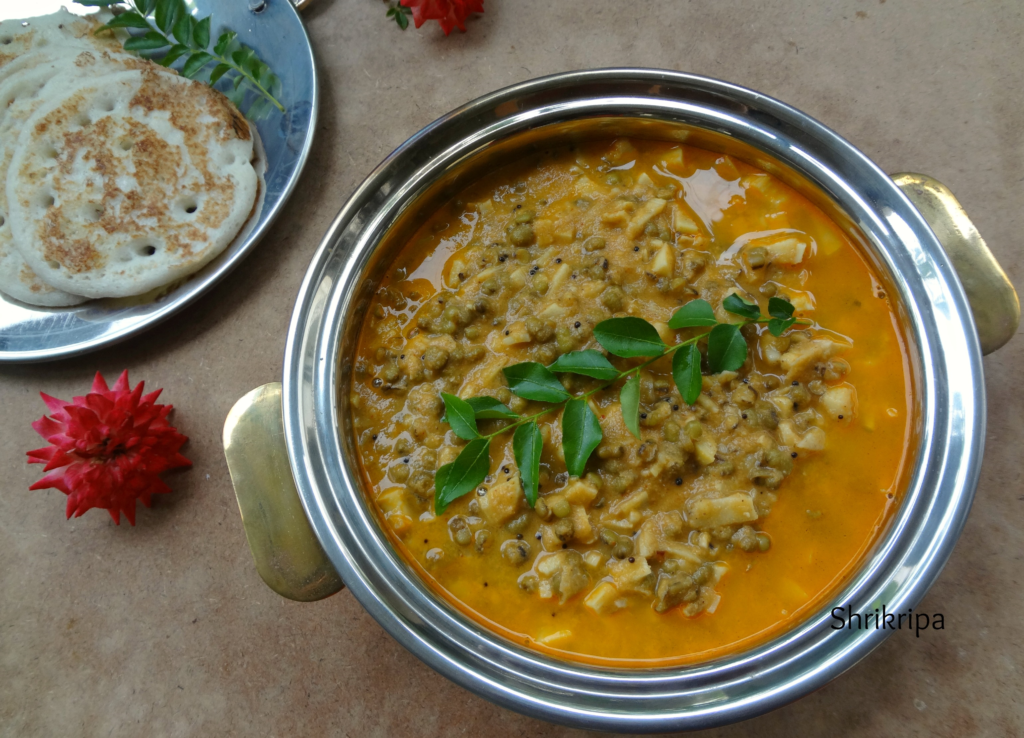
Kanile is nothing but Bamboo shoot. We coastal people, prepare some delicacies from this seasonal high fibre veggie, this curry is prepared by mixing with sprouted Green gram. which is very tasty and goes very well with Dosa or Rice. So, it is a seasonal treat for us.

We normally use fresh bamboo shoot and chop it in this manner. (please refer to the Post of How to chop Bamboo shoot)
pic 19

Ingredients:

Ready Bamboo shoot – 1 cup (you can use frozen or tinned too)

Sprouted green gram /moong – 1 cup

Salt

Red chilli powder – 1teaspoon

Green chilli – 1

Turmeric – ½ tsp

For Masala:

Coriander – 2 tsp

Cumin- 1 tsp

Red chilli – 3

Garlic cloves – 2

Fresh grated Coconut – 1cup

Tamarind – ½ tsp

Seasoning:

Coconut oil – 1tsp

Mustard – 1 tsp

Curry leaves – 1 spring

Red chilli -1

Method:

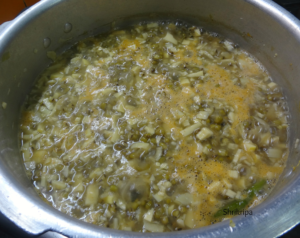
  • – Cook Sprouted moong and ready to cook bamboo shoots in sufficient water, by adding turmeric, red chilli powder, and slit green chilli.

pic 16  pic 15

  • – Roast coriander, cumin, red chilli and garlic by putting little oil for masala.
  • – Grind this into smooth paste by adding coconut and tamarind and sufficient water.
pic 17  pic 18

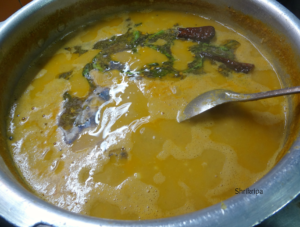
  • – Add this ground masala to cooked mixture and boil nicely.

pic 21

  • – Do the seasoning. Heat coconut oil ,splutter mustard ,add red chilli and curry leaves fry and pour over the curry.

How to Chop Fresh Bamboo Shoot/Kanile:

Kanile or Bamboo shoots are a seasonal, hollow grass which is a young shoot of Bamboo and it is available in a very short period of rainy season. It has very distinct subtle, earthy flavour with crunchy texture while eating. It is considered as one of the health foods because of its high contents of dietary fibres,minerals and low in fat.

pic 2

Preparing Bamboo shoot for cooking is little bit of a work.

Traditionally We follow 2 methods:

 One is Chopping and soaking in fresh water for 3 days by changing the water regularly every day and using.

I personally don’t prefer this method, because it emits little odour of bamboo shoot and prepared curry will also contain that odour.
  I usually follow this second method, which I learnt from my father in law, who was super knowledgeable in all these traditional cooking procedures.
  At first take harvested Bamboo shoots which we get in hilly sides, some shops or in all Mangalore stores of Bangalore in this season.

I usually buy my stock from the Mangalore store. After buying, remove outer tough layer, which is brown in colour by peeling one by one starting from the bottom.

 You can use your hand to peel the outer shell.

pic 3    pic 4

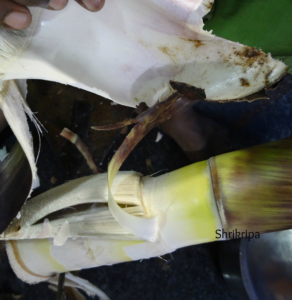
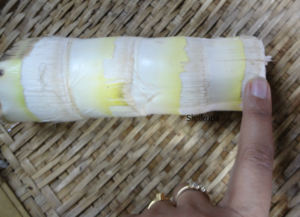
  After removing this outer woody shell, you will see only inner core which will be white in colour.

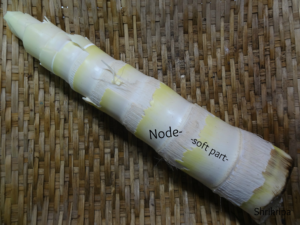
This white inner layer will have 2 parts. One is soft edible part and in between nodes.

Nodes will be thick, little sturdy and can be used in pickle making by adding lemons or mangoes.

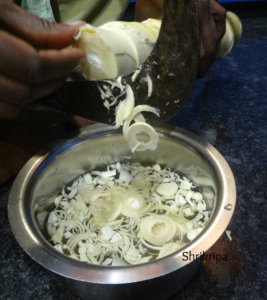
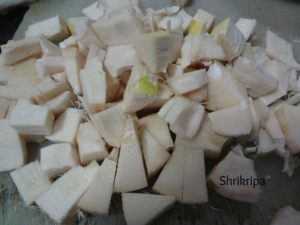
Now this is ready to chop. Take one vessel, which is filled with water and chop and immerse it in a water.

 You can either chop circular fashion or bit size pieces. It is up to one’s choice.

pic 1     pic 5

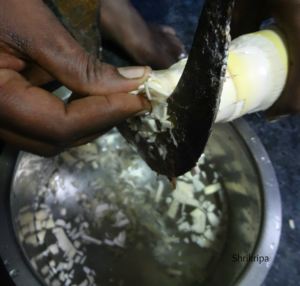
 Start to chop from top of the conical area, proceed until you find a hard node. When you feel the node (here nodes were thick from 5th onwards) discard the node by cutting that part and proceed the chopping.

pic 6   pic 8

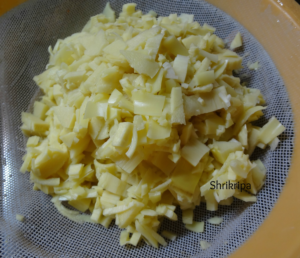
Now Take all the chopped bamboo, sieve the immersed water and put fresh water and cook this in a cooker for one whistle.

pic 12   pic 13

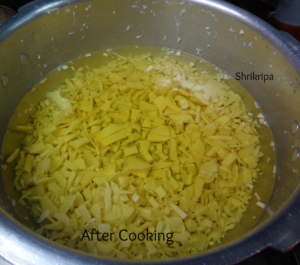
 When you open the cooker lid, you will see the water in yellow shade, discard this water by draining.

pic 14

Now collect the cooked Bamboo shoot and it is ready to cook by removing its impurities and natural bitterness.Use it in whatever dish you want to make.

How to Use nodes in Pickle making –

pic 9  pic 10

-Collect nodes, chop however you want and proceed with the above procedure as bamboo shoot. Cook in a pressure cooker with water and strain the yellow water, cool completely and use in pickle making.


Zucchini Chutney:

Zucchini, a member of gourd family is a popular summer squash, also known as courgette. Personally I like this spongy veggie and include this in so many Indian recipes.

Zucchini chutney is one of them and it is an excellent side dish for any Indian flat breads, Dosa, idly or Paddu.

pic 2.1

Ingredients:

Zucchini – 1

Garlic – 8 – 10 cloves

Green chilies – 3 -4

Salt

Oil – 1 tbl spoon.

Coconut – 1 small cup

Raw mango or tamarind –If mango (2 “small piece) If tamarind (½ tsp).

Seasoning: Oil – 1 tsp, mustard – ½ tsp and curry leaves.

Method:

  • Wash, chop zucchini into pieces.

pic 1

  • Take one small kadai; fry these pieces, garlic and green chillies by putting little oil until it wilts.
  • Switch off the gas, leave this for cooling.

pic 3  pic 2.1

  • When it cools down, add coconut, salt, either mango pieces or tamarind. Grind all this into a smooth paste by putting required amount of water.
  • If you want, add seasoning with mustard and curry leaves.


Jack Fruit Dosa:

Jackfruit Dosa is known as “Halasina hannina dose”. It is a traditional recipe of Mangalore. Here we use Soaked Raw Dosa rice and ripe jackfruit to make the batter. we can call this as a Jack pancake and serve with honey or with ginger chutney.

pic 5

Ingredients:

Dosa rice – 2 cups

Cleaned jack fruit – 1 big bowl

Salt

Method:

-Wash and soak Dosa rice in sufficient water for 3 to 4 hours.

– Chop the jack fruit, remove bulbs and separate outer cover and inner seed.

pic 1

– Collect only the outer yellow shell and put it in a mixer grinder, give couple of whipping sessions and remove.

-So that while grinding it will be easy to handle.

– Now take soaked rice, ground or crushed fruit, put little water and grind this in to a smooth paste by adding sufficient salt. Batter should be a little thicker than normal Dosa.

pic 2

-If you want to use this batter for the next morning, please refrigerate the same and use for the next day.

pic 3

– make Dosa’s by using hot iron griddle. No need to ferment this batter. Use ghee while roasting this Dosa. It should be a little thicker than normal Dosa. (thinner than set Dosa). When it is cooked, flip it and cook on the other side.

pic 4

-serve this with honey or with ginger chutney.

Note:

For ginger chutney: Fry red chillies with little oil and grind it with coconut, salt, little tamarind and piece of ginger.


Mango Jam:

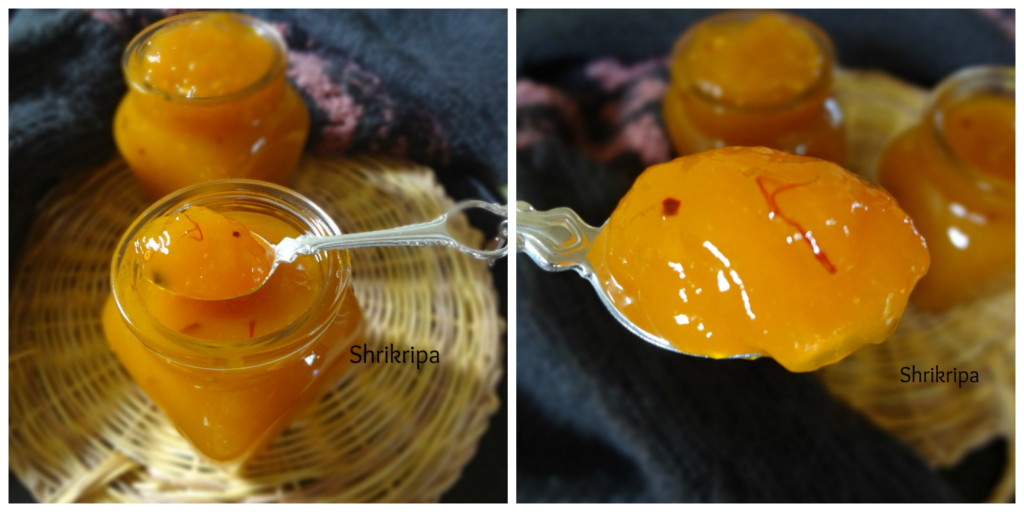
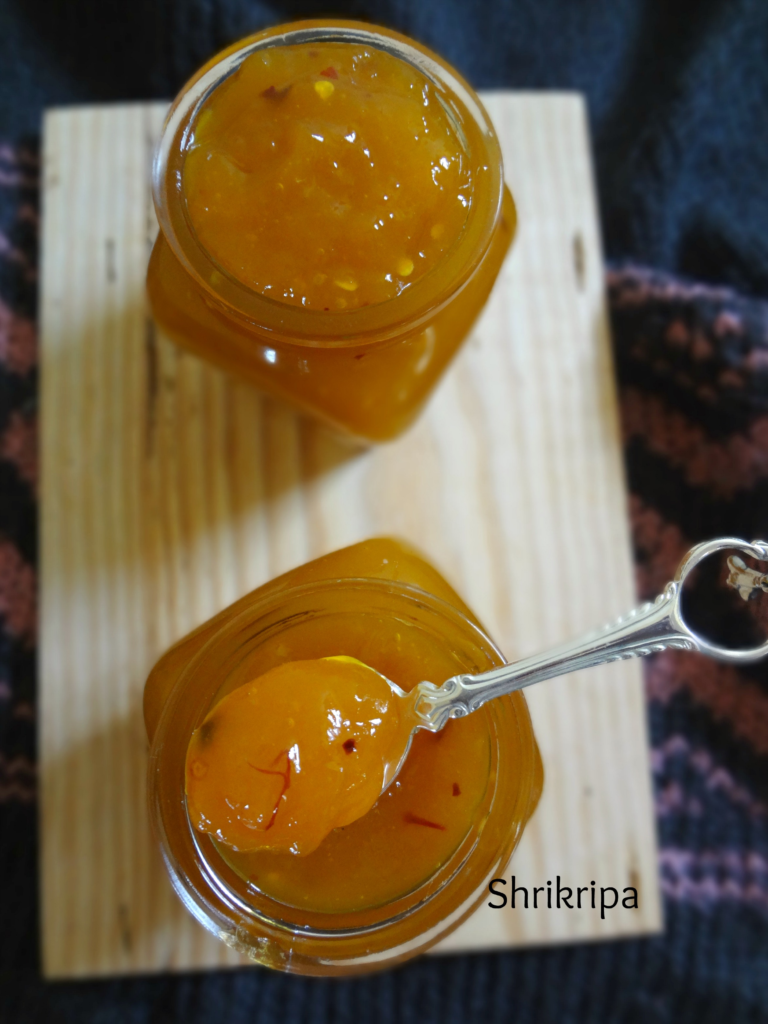
Who doesn’t love Mango? Unfortunately, all good things only last a while, but no worries, one can preserve mango by making some homemade jams to savour even after its season ends.!

I started making this Jam almost 3 years back and want to share my recipe before it vanishes from the market for this year. So, yesterday I made this and I’m sharing it with you all-

Thanks to my dear friend Poornima, who provides me with a whole lot of home grown organic Mango’s from their garden.

collage

Now I will proceed towards the procedure-

Ingredients:

Mango’s – 500 Grams

Sugar- 500 grams

Saffron – 8 to 10 strands

Red chilli flakes – 1 teaspoon

Method:

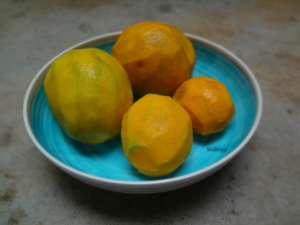
 Wash, Peel the mangoes and chop.

pic 1   pic 2

  Make puree by putting it in a mixer/ juice jar without adding any water.

pic 3   pic 4

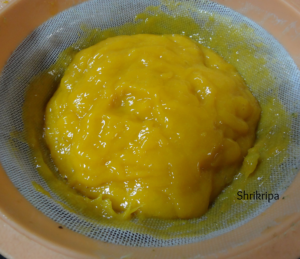
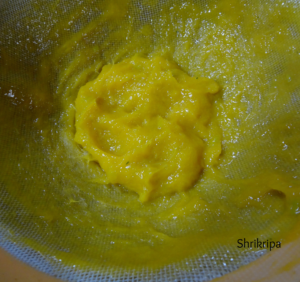
  Sieve this pulp to remove fibres (Here I have taken little fibrous home-grown variety)

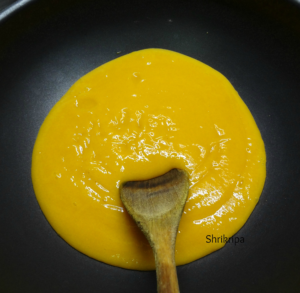
  Collect the smooth pulp and heat it in a low fire, until it starts boiling.

pic 5   pic 6

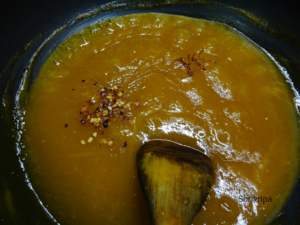
 Add sugar, saffron and red chilli flakes and cook until it is done.

pic 7  pic 8

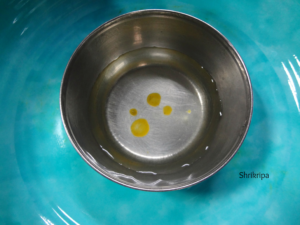
  To check the doneness, take some water in a small bowl, drop the cooked mixture in it, immediately it should form a thick mass. If it dissolves, then you should proceed cooking.

 When it is done, remove from the fire and cool completely.

pic 10

 Store this in a clean, dry bottle and refrigerate.

NOTE:

-If you use very sweet mango, adjust the quantity of sugar.

-If you use Alphonso variety, no need of sieving and you can directly proceed towards cooking after making pulp.

– If Mango is very sweet, then add 1 teaspoon of lemon juice at the end to give little tangy taste.

Honagone soppu Pulav:

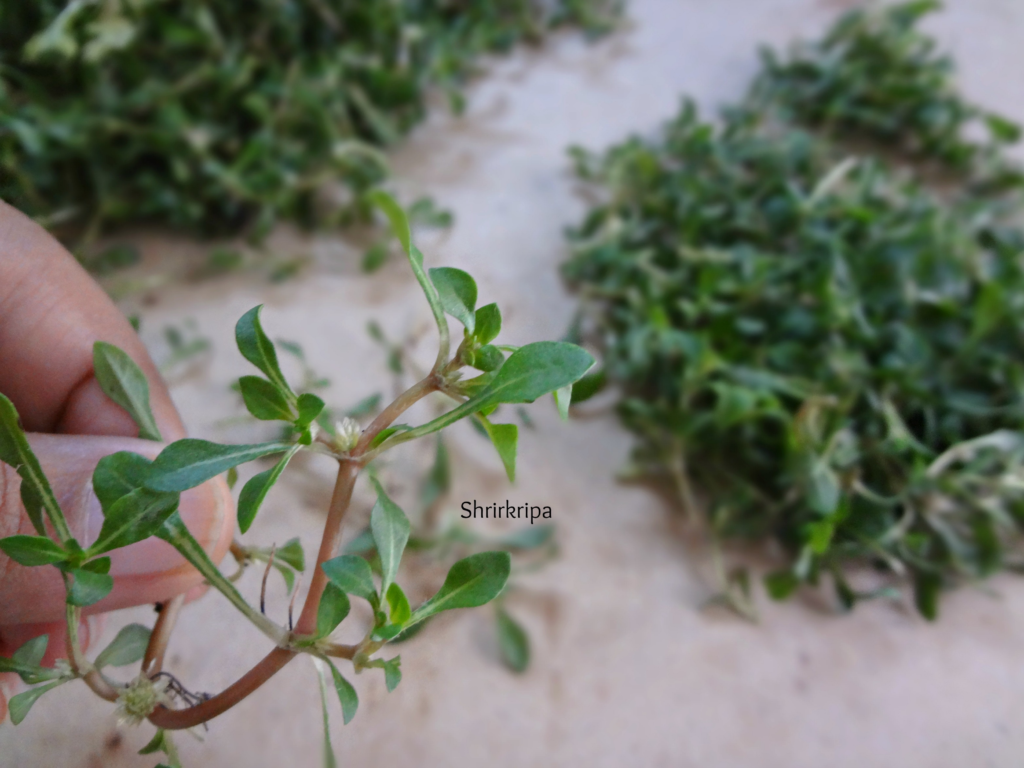
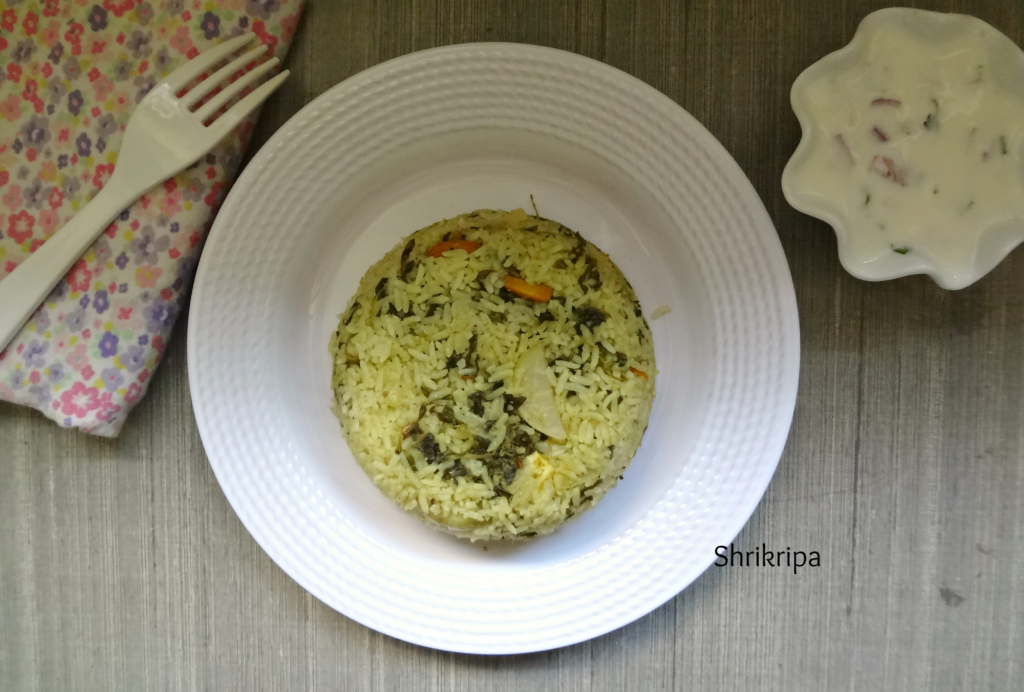
Honagone, Ponnangani, Sessile Joy weed or Alternanthera sessilis is a vegetable which is filled with many nutrients. It is a wild plant, spreads very well during or after the first rain. Tender leaves and stems are consumed as vegetable especially in South India.

pic 1

It has so many medicinal properties and is known for its diuretic, laxative properties. The plant is also used as an ingredient in the making of medicinal hair oils, and believed to be very good for eyes as well.

Usually I make use of these greens in various dhal preparation and this time I tried to make Pulav and it turned out well.

pic 10

Here is the recipe –

Ingredients:

Rice – 3 cups (took sona masuri variety)

Onion – 2

Tomato – 2 (small)

Turmeric – ½ tsp.

Veggies of your choice – 1 bowl

To make masala paste:

Coconut- 2 table spoon

Green chillies -4

Ginger – 1 inch piece

Garlic -7 cloves

Pudina – 2 table spoons

Coriander leaves – 2 table spoons

Whole Coriander – 1 tsp

Cinnamon – 1 inch

Pepper – 4

Clove – 2

Curd – 1 serving spoon

Seasoning:

Ghee – 2 table spoons

Bay leaf – 1

Mace -1

Cumin – 1 tsp

Method:

-Wash rice, drain and keep aside.

-Grind masala by adding all the ingredients under “To make masala paste”

– Slice onion and tomatoes.

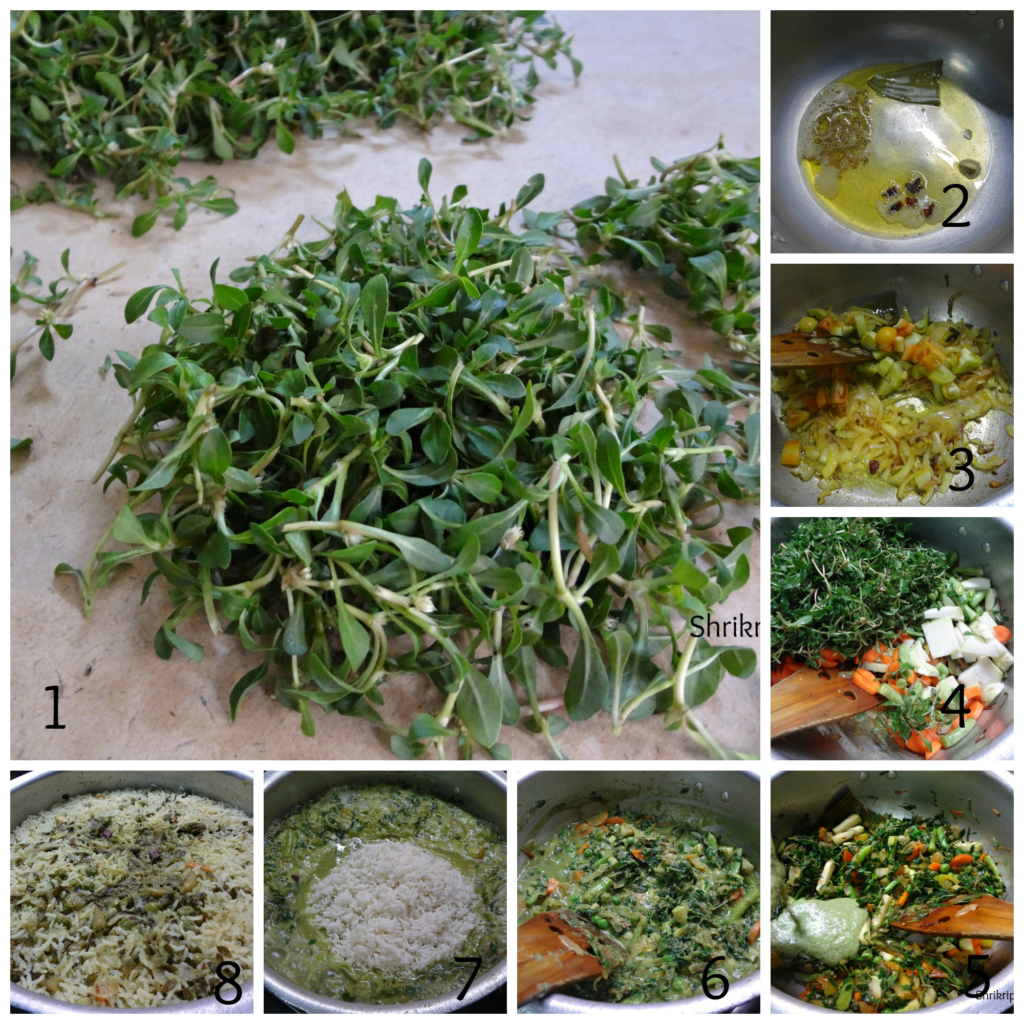
– Take one cooker, add Ghee /clarified butter. When it is hot, put all the ingredients under “Seasoning”.

– Put sliced onion and fry until it becomes light brown. Add turmeric and fry.

-Add sliced tomatoes, sprinkle some salt. When it is done, add chopped veggies.

-Here I have taken beans, carrot, knol kohl, green peas and Honagone greens.

collage

-Fry all these until it becomes transparent. Add ground masala and fry for a while.

-Add salt and 6 cups of water (1:2 cups)

-When water starts boiling, add drained rice and cook this for 2 whistles.

pic 11

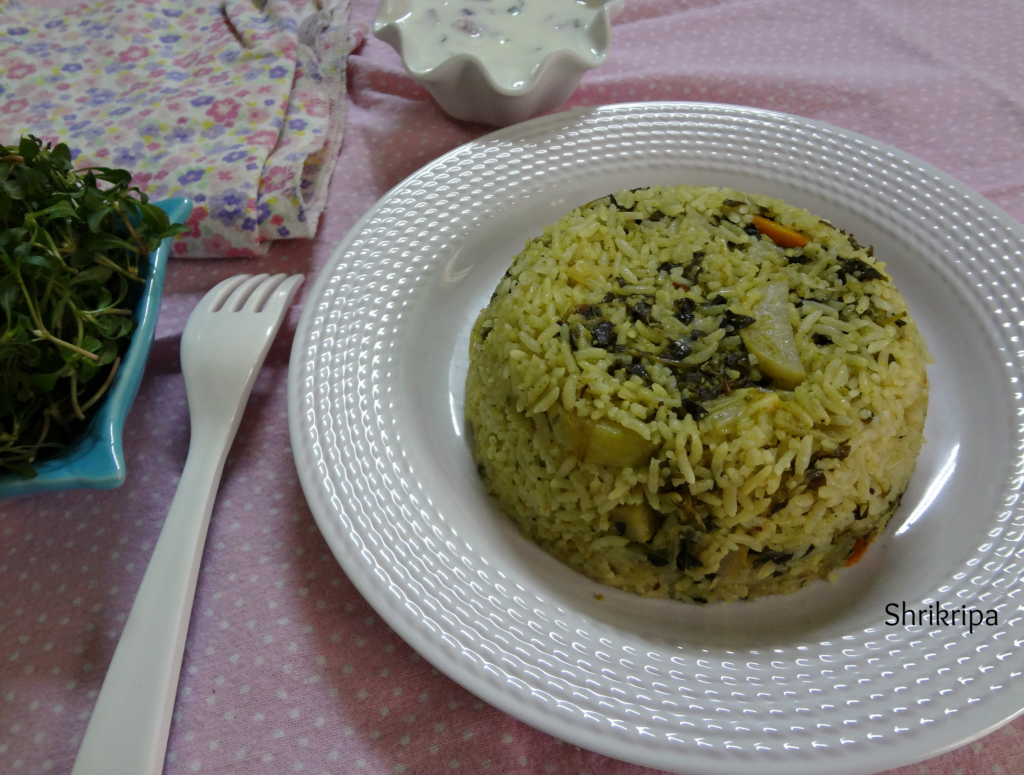
– Serve this with onion raita.

Brined Mango:

“Neeru Mavinakayi” is what we call Brined mango, which is basically a firm fully grown, matured but un-ripened mango which is preserved in salt water. We usually relish this in the rainy season or in the off season by preparing some of our traditional dishes.

pic 8            pic 7

For this we usually use wild mangoes, which are smaller in size and stays and tastes very good too for a long time.

Here in Bangalore, I don’t get wild variety and I usually pick a smaller sized mango, which is sour and locally it is used for pickle.

Now we will see how to proceed with this mango-

Ingredient:

Raw, firm, well grown Mango – 3 kgs

Crystal Salt or table salt – 1 ½ to 2 cup

Drinking water – to immerse.

Glass Bottle – Big size

Method:

  • Select well grown, firm mangoes.
  • Wash, and keep it ready.
  • Take glass bottle or porcelain bottle, fill all these mangoes, put salt and pour water until all the mangoes are immersed.
  • Close the lid and keep this aside.
  • Next day morning, check for the salt and if water is not salty in taste, add little more and adjust.
  • Water should be salty and if it is done, keep this jar in a corner for a couple of months or until its outer skin becomes little lighter in colour.
  • When it is ready, you can use this for any brined mango recipe. I ahve shared Neerumavinayi chutney as well as Gojju and you can select the hyperlink to see.


Kadu Mavina hannina Sasive / Wild Mangoes in coconut and mustard sauce:

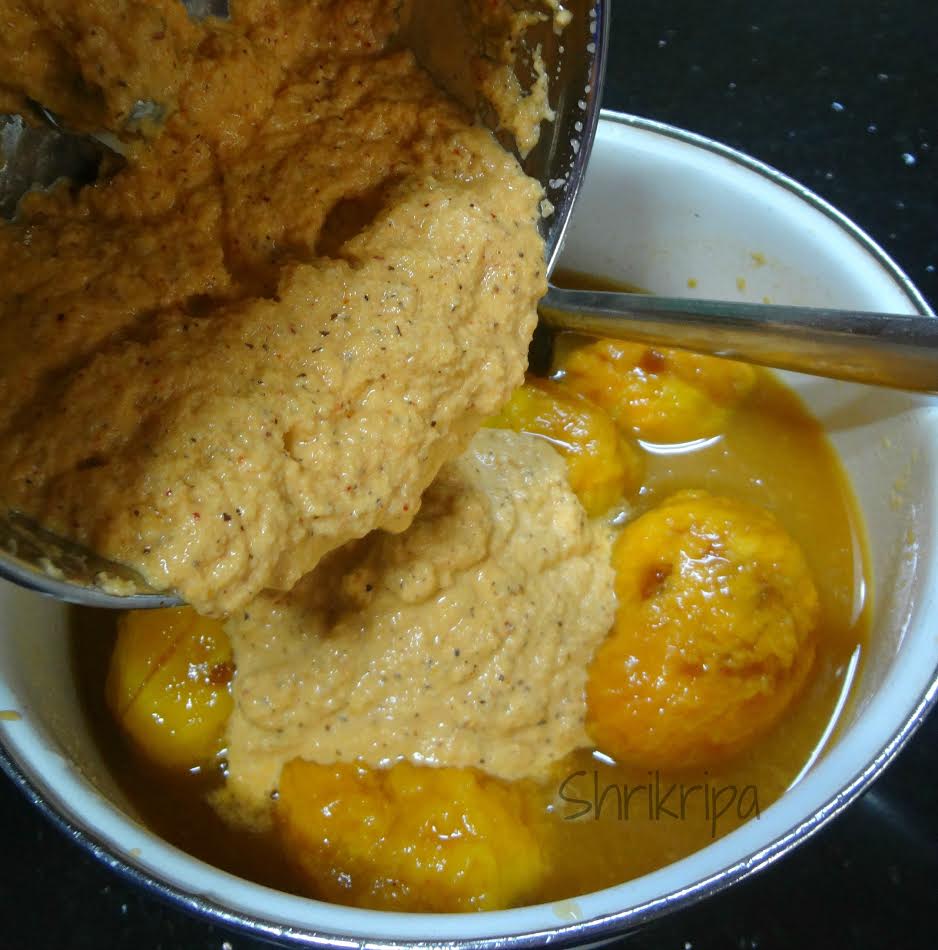
Wild mangoes are known as Kadu mavina hannu in our local language. Which is very fibrous, tangy as well as sweet in taste. It has distinct taste, it is widely used in varieties of curries in our region. This particular curry doesn’t need any heating and is a perfect treat for summer. Usually we enjoy this with hot rice.

unnamed

Ingredients:

Wild mangoes -5-6

Salt – to taste

Jaggery – to taste

Fresh Coconut gratings – 1 bowl

Red chillies – 2

Mustard – 1 tsp

Seasoning: Coconut oil – 1 tsp, mustard – 1 tsp, Red chilli – 1, Curry leaves – little.

Method:

–  Wash wild mangoes, remove top part of the mango, remove outer skin and keep this in a separate vessel. Keep inner fruit part in another vessel.

unnamed (1)

  Add one cup of water to outer skin, mash nicely, collect pulpy water and add this to fruit. Discard outer remaining skin. Add required amount of jaggery, salt and mix.

  Grind fresh coconut, mustard and red chillies to a fine paste by adding little water.(No need to roast Chillies and mustard)

  Add this ground paste to mango and check for the seasoning. If needed add some more grated jaggery or salt.

                      unnamed (2)

  Season by using coconut oil. When it is hot, add mustard, after it splutters, add red chilli and curry leaves, add this to mango curry.

  Enjoy this with hot rice.

NOTE:

-If you don’t have access to wild mango, don’t worry. Pick up any varieties of mango, peel the outer skin and chop the fruit into bite size pieces and proceed with above method.


Thondekayi Ele Geru beeja Palya / Ivy gourd with Tender Cashew stir fry:

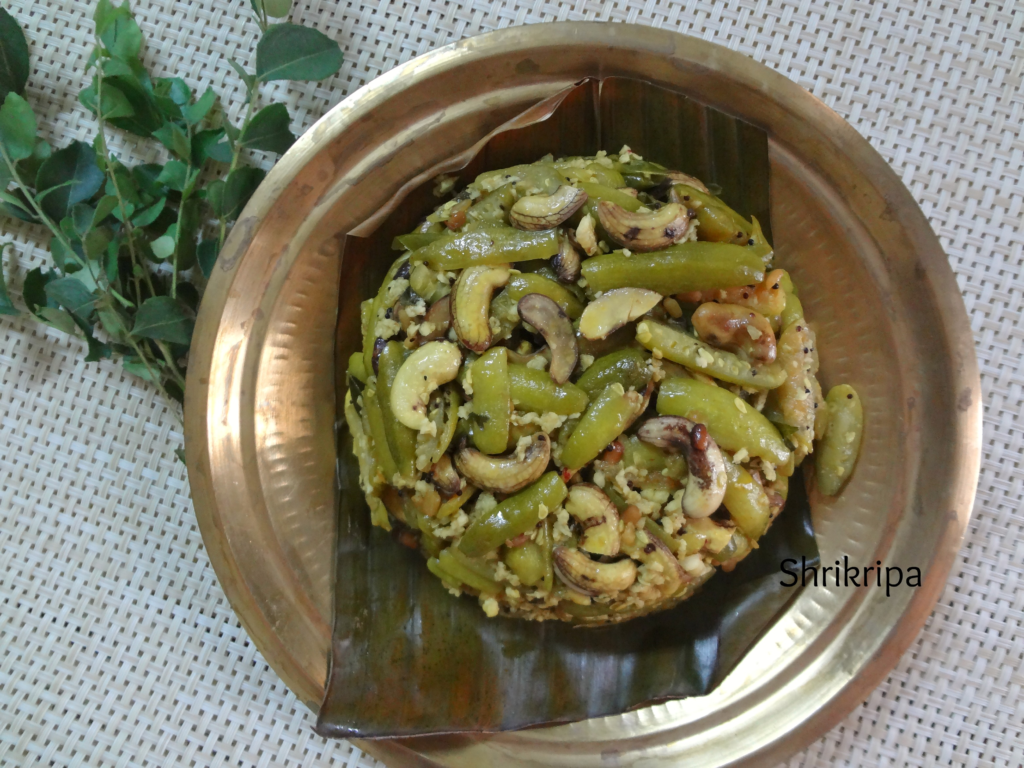
Vishu is one of the important festivals of Kerala and our coastal region. It comes in April and usually on 14th.Traditional rituals are followed to bring in prosperity and we (lady of the house) will assemble Vishu-kani at Pooja room. It comprises all the fresh crops, vegetables, rice, gold, money, flower and pot full of water and one mirror. On the festival day morning, after taking bath, family members will see this “Kani” and seek the blessings of the god and from the elders. Usually at this time of the year, fresh cashew crop starts and cashew is one of the main crops of our region. Only for this festival we pluck fresh raw green cashew and prepare either payasam or kheer with chana dal or cashew and ivy gourd dry curry. This particular side dish is a must in almost all the festivities and weddings. Which is a speciality of Mangalore region.

This side dish has no other masala’s other than green chilli and coconut flavour.

pic 2

Ingredients-

Ivy gourd – 500 gms

Tender cashew – 100 kernels

Green chillies – 3 to 4 (slit)

Coconut oil – 1 table spoon

Mustard seeds – 1 tsp

Red chillies -2

Urad dal – 1 tsp

Curry leaves – 2springs

Turmeric – ½ tsp

Salt

Jaggery – ¼ tsp.

Method:

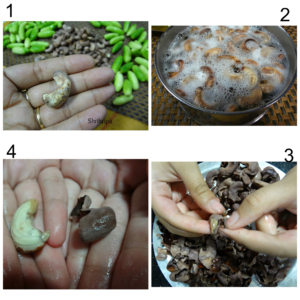
-At first we have to remove outer cover of the young cashew. Take one bowl, put all those young and raw cashew kernels into it, pour boiling water and keep it aside for 10 to 15 minutes by closing the lid.

collage

-When outer cover of the kernels swells, remove the outer cover and keep aside.

-Chop ivy gourd after washing it thoroughly. Make 4 lengthwise pieces of each gourd.

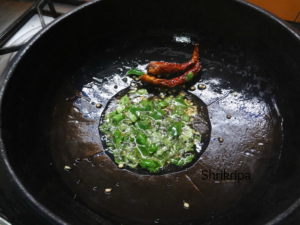
-Now take one thick bottomed kadai or clay pot, heat oil for the seasoning. Put mustard, when it splutters add urad dal, red chillies.

pic 3

-When urad dal becomes red, add curry leaves and slit green chillies and fry a little.

pic 4

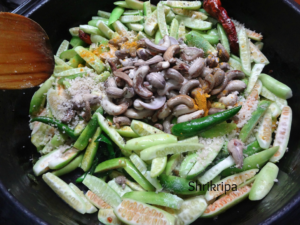
-Next, add chopped ivy gourd and cashew kernels, turmeric, salt, jaggery and fry until it wilts a little.

pic 5

-Now add one cup of water and close the lid and cook this in a low fire until it is done.

pic 6

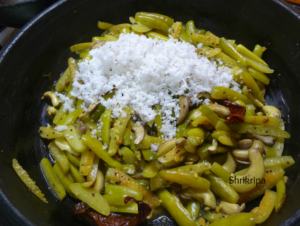
-Lastly add grated coconut and mix and cook until it is done.

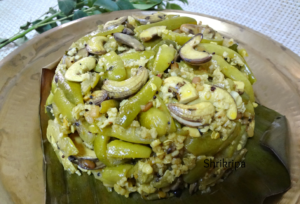
pic 1

Note:

– One pack of Young cashew, that we get in the market has 100 kernels. In Bangalore, I get these from the Mangalore Store (all Mangalore stores will have it when it’s the season)

-If you are using regular cashew, cook the cashew first by putting water and salt in cooker for 2 whistles, drain the water and then proceed as above method.