Bilimbi Saaru /Tree Sorrel Rasam :

Bimbuli / Beempuli, anyone? Yes! It is our local name to Bilimbi 😀
Averrhoa bilimbi, commonly known as Bilimbi, “Cucumber tree”, “tree sorrel”, is a tiny, tangy, juicy fruit that regularly appears in Coastal Karnataka cuisine.

Bimbuli is what we call it, and it is also known as Tree sorrel. It is a common backyard tree, and you would find it in every house of the coastal region. The beauty of our traditional cuisine is impressive. When we take only Mangalore cuisine, we find at least 6 to 7 varieties of souring agents used for specific purposes according to the ingredient and the recipe. For example, Kokum, tamarind, Monkey jack (known as Unde Huli or Kethe Huli), Hog plum, Bilimbi (beempuli), Raw mango and the list goes on.

Before the lockdown, I found this in my locality during our evening walk and introduced it to my daughter.

We used to eat this watery fruit by dipping it in salt and asked her to eat it with salt. She, who is fond of any khatta/ souring agent, enjoyed and asked for more. Besides eating, I loved pickle, which my paternal aunt used to prepare and get it.

While talking, remembering good old memories, my mother in law mentioned Bimpuli saaru, which her mom-in-law used to prepare. As a curious learner, I started asking her about the recipe? How did she use to make etc.?

As always, she said, what is the recipe? There is nothing in that saru—a little bit of cooked dal, green chilli and hing.

The next day, I made the saru, which I never tasted before, and it was indeed flavourful and delicious and thought of documenting it in my blog for future reference.

 Ingredients:

Bilimbi /Tree sorrel – 6 to 7 or acc to your taste

Cooked toor dal – 1 small Katori

Salt

Jaggery – to taste

Green chillies – 6 to 8 (slit)

Hing – peanut size

Seasoning:

Coconut oil – 1 tbl sp

Mustard – 1 tsp

Red chilli -1

Curry leaves – 1 spring

Method:

-Take a one cooking pot, put Chopped tree sorrel, slit green chillies, salt, jaggery, hing, 2 cups of water as well as cooked, mashed dal.

-When chillies and sliced tree sorrels are cooked, adjust the consistency by adding water, if necessary, salt, jaggery or hing. Boil a couple of minutes more and add seasoning.

-To season, heat oil, splutter mustard, red chilli and curry leaves. Yes! It is so simple and tasty.

-This tasty saru is pairs well with hot rice and papad with any vegetable side dish to accompany.
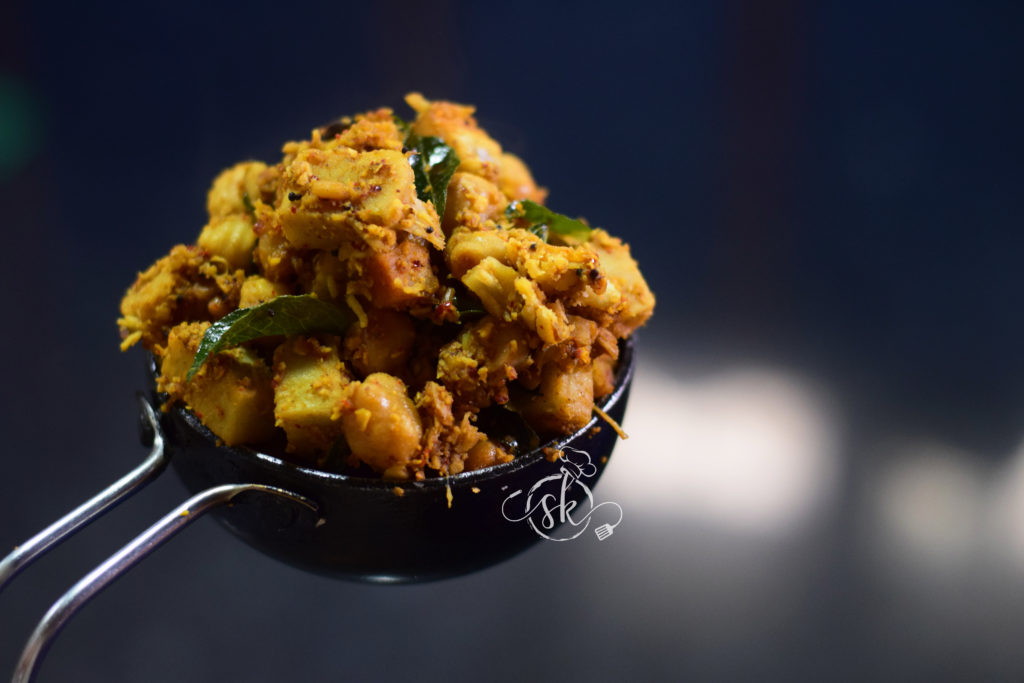
 

Mundi Gedde – chana palya /Giant taro and dry chickpea curry :

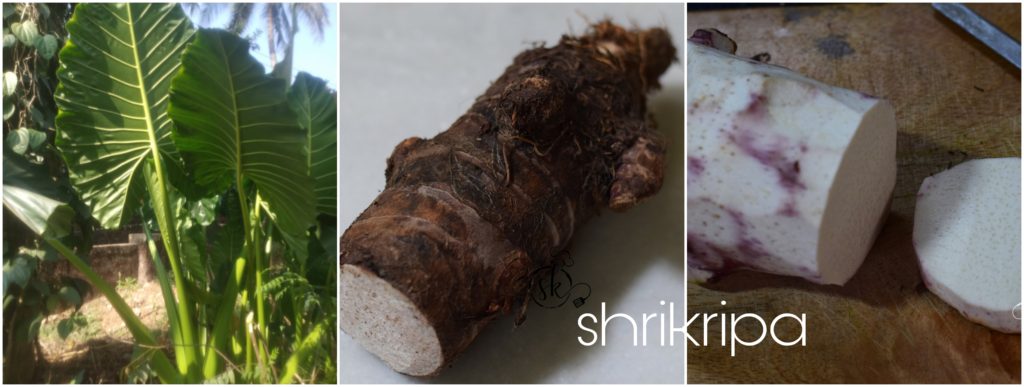
Belong to the Alocasia family, and leaves are giant, glossy, resembles an elephant ear. Hence, it is also known as Elephant’s ear plant. Alocasia means “like the colocasia but not the colocasia”. Giant Taro is a good source of Vitamin C, Iron, and phosphorus.

In our native, leaves are used as an alternative to the plastic sheet, while sun drying papads or fryums in Summer months.

Which is best described as a “Stem crop” as the edible starchy stem is seen above the ground, which is light brown in colour, coarse outer surface grows upright, erect, in a  cylindrical shape.

I have shared the details regarding Mundi Gedde/ Giant Taro in this post,

As most plant in this taro family, even this has Calcium oxalate, which itches our hand or mouth while eating if we do not handle it properly. Here, using hot boiling water and using the right amount of tamarind takes care to emit the itchiness.

Today, I will share one more traditional recipe of our region and one of the favourite side dishes you find in our wedding menu.

Ingredient:

Mundi/ Giant taro – around ¼ kg

White chickpeas – ½ cup

Salt- as needed

Jaggery – as needed

Red chilli powder – ½ tsp to 1 tsp

Turmeric powder – ½ tsp

tamarind – one gooseberry size (soak in 1 cup of water)

For Masala: Coconut – ¼ cup, Methi – ¼ tsp,  Red chillies – 3

For Seasoning: Coconut oil- 1 tablespoon, mustard – 1tsp, urad dal – 1 tsp, red chilli – 1 (optional), curry leaves- 1 spring.

To garnish: raw coconut oil – 1tsp and curry leaves – 2 springs.

Method:

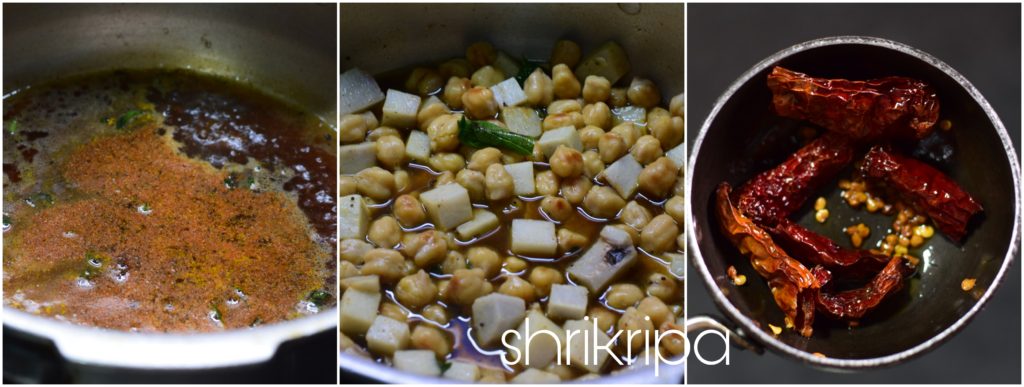
-Soak dry chickpeas overnight and cook in a pressure cooker for 3 to 4 whistles or until done.

-Now prepare the giant taro;

-We usually do not wash the Giant taro stem before cutting nor peeling. Spread one newspaper, remove all the outer brown woody skin, chop the stem into pieces as you needed.

-Wash those pieces in water by using a spatula, drain and put immediately in boiling water,  cook until it is almost done, drain and proceed to the actual cooking. Now it is ready to cook.

-For palya, prepare the seasoning. Heat oil, splutter mustard, fry urad dal, add curry leaves.

 -Add tamarind extract, salt, jaggery, red chilli powder, turmeric and, boil until water evaporates.

-Meanwhile, prepare the masala. Fry methi seeds in little oil, when it is light brown, add dried red chillies, fry until it is crisp. Dry grind these ingredients with coconut.

-Add the ground powder to cooked veggies and mix nicely, allow it to cook for 2 minutes by closing the lid.

-Now, garnish with raw coconut oil and curry leaves. Close the lid, switch off the gas. Leave this for a while. Before serving, mix nicely and serve.

Mango ginger Tambli:

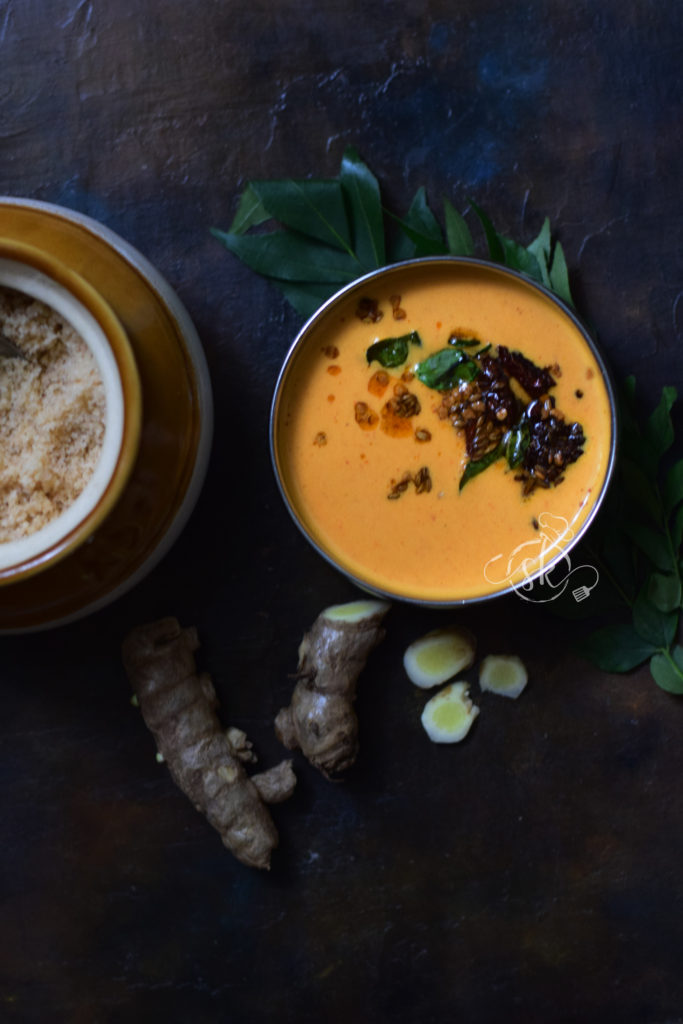
Mango Ginger or Curcuma amada is a plant of the ginger family Zingiberaceae and is closely related to turmeric. It is locally known as kukku shunti/ Mangannari or Ambe kombu. Mavinakai shunti in Kannada and Aam Haldi in Hindi. Mango ginger is antioxidant,anti-fungal, antibacterial as well as anti-inflammatory in nature.

Our traditional cooking includes mango ginger in many forms. One such recipe is Tambli. Come summer, tambli is an integral part of our lunch platter. Tambli is a coconut-based, uncooked gravy enriched with any one of the herbs, with minimal spices and buttermilk to soothe our system.

It is a quick, instant,  no involvement recipe. It can be had as an appetizer or mixed with rice like any other curry. 

Ingredients:

Mango ginger – 1” piece

Sesame seeds – ½ tsp

Dried red  chilli – 1

Coconut – ½ cup

Salt

Jaggery – ½ tsp

Buttermilk – ½ cup

For the Seasoning: ghee – ½ Tsp, cumin – ½ tsp, curry leaves – 1 spring.

Method:

-Peel the outer skin of mango ginger, slice.

-Dry roast sesame seeds, then fry red chilli in a drop of oil.

-Take a Mixie jar, grind coconut, red chilli, sliced mango ginger, salt, jaggery and grind into smooth paste by adding water.

-remove this into a vessel, add buttermilk, and adjust the consistency by adding little water if needed.

-Consistency should be like regular milk.

– Add Seasoning by heating ghee, cumin and curry leaves.

– Enjoy this coolant with hot rice.

NOTE: If you want to prepare a vegan version, omit buttermilk and add little tamarind while grinding, or after preparing, add lemon juice and enjoy.

For the Seasoning: You can Opt for cold-pressed coconut oil.

Thondekai melara / Ivy gourd Kayi huli:

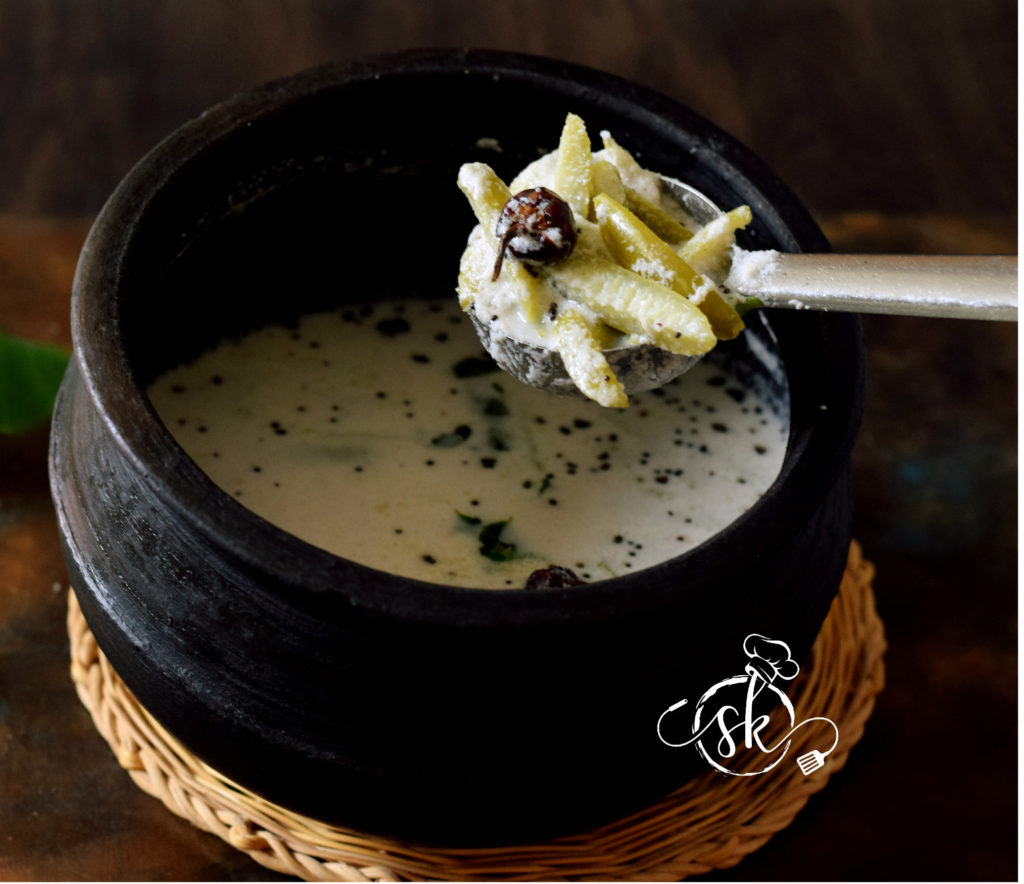
Melara is one of our  specialities, only found in our community and must in our functions or any festivity.  Melara has different names according to the region from which we belong to such as Kayi Huli / Majjige Huli. This post was long due and glad to be able to post at least now.

Kayi is nothing but Coconut. Here, fresh coconut ( which is known as Hasi kayi/ not dried/should be filled with coconut water, not dehydrated one)  is ground without any masala and added to cooked veggie , lastly one serving spoon of slightly sour buttermilk or beaten curd has been added and seasoned.

Melara can be done with extremely limited choices of vegetables. Well known  suitable vegetables which can be used in this curry are, Ivy gourd, Tender Mangalore coloured cucumber( which should be green and white) , Ivy gourd and Mangalore cucumber mixed together, Yam alone or with White Kabuli Chana , Bread fruit ,Giant Taro alone or with White Kabuli chana, White Bitter gourd , Red  Amaranth greens, yard long beans, brined raw jackfruit etc are some of our traditional “qualified” vegetables  to cook melara.

As time passes by, even this list has some additional English vegetables 😉 (Yes! Other than our native veggies are known by this name)  like Raw green tomato, Capsicum, potato, and beans)

Now we would move towards the recipe –

Ingredients:

Ivy gourd – 500 grams ( Or Vegetable of your choice)

Green chillies – 2

Salt

Grated fresh coconut – from ½ to ¾ coconut 

Thick buttermilk – 1 serving spoon

Coconut oil – 2 tsp

Mustard – 1 tsp

Red chilli -1

Curry leaves – 1 string

Method:

-Wash ivy gourd ,chop into 4 pieces lengthwise. Cook with just enough water to immerse, by adding salt, slit green chillies.

-Make a really fine paste of fresh grated coconut. When veggie cooks, add this ground masala, adjust the consistency and boil for 2 minutes.

-Add buttermilk or beaten curd and when it starts to boil, switch off.

-Prepare seasoning, heat oil, splutter mustard, add red chilli and curry leaves fry and pour over melara.


Pomegranate Peel Tambli:

Like coconut tree and banana plant , pomegranate is also an extremely useful plant to mankind. Starting from its bark, young leaves , fruits, and its outer peel have many medicinal properties.

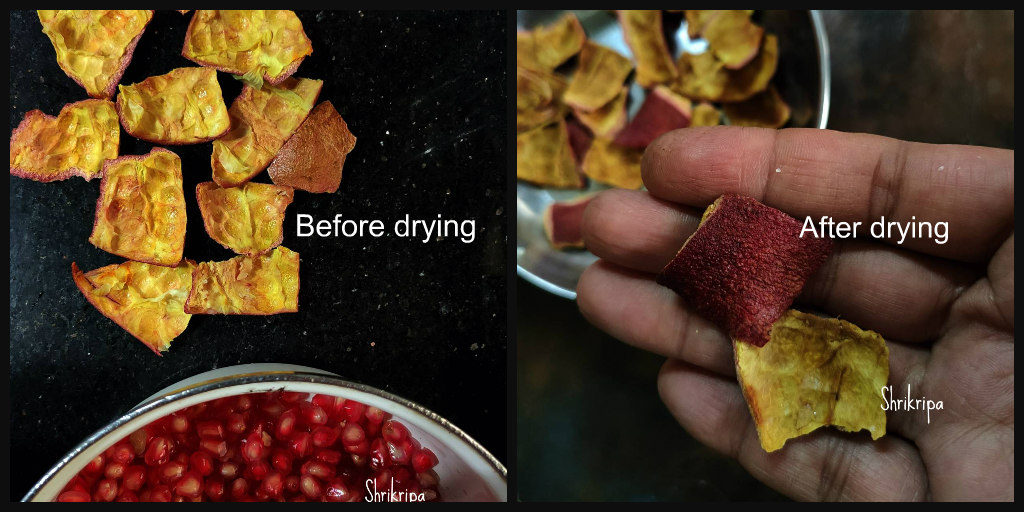
In olden days, people never used to buy a fruit from outside. In our villages, people used to eat home grown seasonal fruits , which included wildly grown many berries, guava, chikoo, mango , bell fruits etc. Banana bunch used to be hanged at one corner of the house and it was the only fruit which was available  365 days. Pomegranate was rare, if any person is ill or recuperating after surgery etc  then only, it used to enter our houses. So, lady of the house used to treat that not less than the gold 😉 . She used to make it a point to clean the peel by removing all those white covers, break it into 4 to 6 pieces, carefully sun drying and used to store it near “chulha” / we call it as a “ole katte” ( it is basically a olden day’s cooking platform, which used wood as fuel). Throwing out the peel was not heard of and it had an enormous importance in every family in our region.

According to my co sister, who is an ayurvedic doctor, Ayurveda holds Pomegranate fruit in higher regards because of its antioxidant, pro biotic nature. Due to its anti-bacterial and anti-microbial quality, it helps to bind the stools and helps to control the diarrhoea. She says, Astringent- bitter taste of the peel is the reason behind its anti-diarrhoea quality. Hence, it can be used to cure diarrhoea and not in constipation. Pomegranate peel powder is good for oily skin. If powder is mixed with rose water and applied as a face pack , it reduces acne and brings glow to oily face.

In traditional home remedies When fruit has been used to treat Anaemia , peel has been used to treat dysentery/ diarrhoea (even with blood) . We normally prepare Kashaya by boiling couple of pieces of dried peel in a cup of water, reduced to half and consumed either plain or by adding little jaggery. Otherwise, every now and then, prepare Tambli and consume to maintain our gut health .

Tambli is preferred to total wellbeing of our gut because , it is more palatable than the Kashaya, as well as it consists  curd ,which again is a pro-biotic. Hence, if we include pomegranate peel in our regular diet every now and then, it helps in intestinal detoxifying and cleansing. In return it would helps to improve digestion.

Now we would see how to dry those fruit peels at first: It is quite simple. Remove all the white sheath beneath the fruit kernels, dry under the sun or keep it near the windowsill . When it is crisp ,breaks while folding, that is it. Store it in an airtight jar or zip lock. Use whenever it is needed.

Tambli preparation:

Ingredients:

Dried Pomegranate peel – 2 pieces

Black whole pepper – 6 to 8

Cumin – ½ – ¾ tsp

Fresh grated Coconut – 1 fistful

Curd – 1 to 1 ½  small serving spoon

Salt

Ghee

Method:

-Fry pepper, cumin, broken pieces of the peel until it is  crispy.

-Grind these into fine paste by adding coconut ,salt and sufficient water.

-Add curd, adjust the consistency by adding water.

-If needed season with ghee, cumin and curry leaves and serve with rice or drink as it is.

NOTE:

1) For vegan version, instead of ghee or clarified butter one can use coconut oil .

2)You can use whole black pepper corns or white pepper corns.


Mango ginger Thokku:

Plantain stem curd curry/ Bale dindina pachadi :

Banana stem or Plantain stem is a rich source of fibre ,potassium and Vitamin B6 which helps to maintain a fluid balance within our body. Banana stem is diuretic which helps to detoxify our body and hence it is used extensively to treat kidney stone naturally.

Banana stem can be consumed in a raw form like Juice, Dosa ,curd based pachadi as well as plain Salad. We can make  Rasam, palya or sambar by cooking.

If you want to see a detailed pictorial guide for “How to chop Banana stem” you can refer this link .

Ingredients:

Plantain stem – 6 – 8 inch

Hing – a generous pinch

Salt

Curd – 1 cup

Green chillies – 2 to 3 ( we normally use Bird eye chillies)

Coconut oil – 1 tsp

Mustard – 1 tsp

Curry leaves – 1 spring

Method:

  • Slice plantain stem into discs, remove thread like fibre while slicing.
  • Chop the roundels into thin slices.

  • After slicing the roundels, stack 5 to 6 roundels one over the other and chop as desired. I usually make square small pieces for this salad.
  • Sprinkle salt, generous amount of hing and mix it thoroughly.
  • If you are using green chillies , chop them. If you are using bird eye chillies, use as it is.

  • Do seasoning, heat oil, splutter mustard, add chillies and curry leaves.
  • Add this seasoning over salad. Crush all the seasoning by using hand. This step would help to release the chilli flavour.
  • Add curd and mix. Serve as a side dish with Rice. It tastes good with Roti’s as well.


Fresh Turmeric Gojju:

Turmeric is a  popular spice of Indian Cuisine and we normally use it in powder form almost in all the recipes. In this time of the year, we do use fresh root in our kitchen. The fragrance of the fresh raw turmeric is very different than the powder. If you haven’t tried fresh turmeric root yet, this recipe is a delicious and refreshing way to get a taste of its earthy, sweet flavour of fresh produce.

Our ancestors had a really nice way to taking care of their health . According to the season, and depending on the local produce, they used to make and consume all the goodness of the nature in a natural way.  This recipe is one of them and it is  one of the age-old recipes which I learnt from my atte .

How it is made-

Ingredients:

Fresh Turmeric rhizome – 2 pieces

Coconut – ½ cup

Coriander – 1 table sp

Urad dal – 1 tsp

White sesame seed – ½ tsp

Red chilli – 3

Tamarind – 1 tsp

Salt

Jaggery – 2 table sp

Coconut oil – 2 tablespoons

Method:

-Clean the turmeric rhizome, grate and keep it ready.

-To prepare masala: Fry coriander, urad dal, red chilli and sesame seed in little oil. Grind this with coconut, into smooth paste.

-Now take one tawa, pour oil, fry grated turmeric, add tamarind water, salt, jaggery and cook .

-When turmeric changes its colour, add ground masala. Check for the salt and jaggery.

-Boil this nicely, serve with Hot rice and ghee. It is indeed  pure bliss and oodles of goodness for your body.


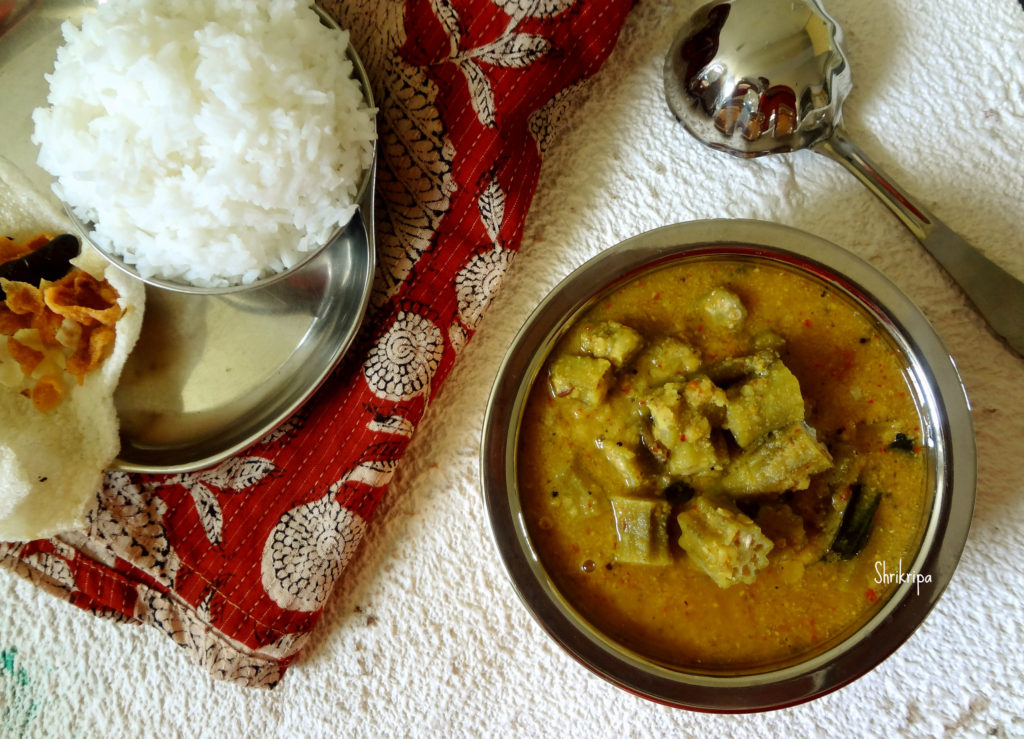
Bendekai sambar/ Okra sambar:

Sambar is a very essential part of south Indian meal. In Mangalore region, we normally use freshly roasted and ground coconut masala for vegetables as well as each vegetable has its own suitable masala recipe.

Normally, the main ingredients will be the same and here and there some additional ingredients or frying techniques will be different.

In this particular recipe, we don’t use coconut as it is.  Masala is fried as well as coconut and made into powder form and added. It is very flavourful and tasty.

We normally use heirloom variety of Bendekai/ ladies’ finger /Okra for sambar. This masala tastes very good even with small variety dark green bhindi as well.

Ingredient:

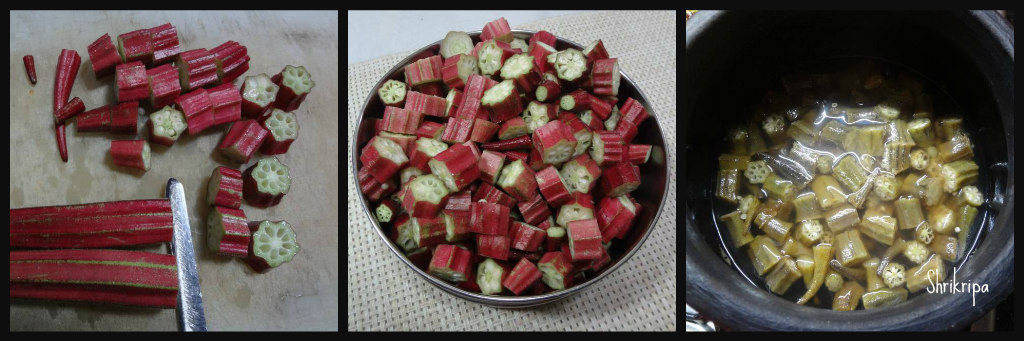
Bendekai/Bhindi /Okra – ½ kg

Toor dal – ½ cup

Tamarind – size of a small lemon

Green chillies – 2

Salt

Jaggery – 1 tsp

Methi – ¼ tsp

Coriander seeds – 1 tablespoon

cumin – 1tsp

Urad dal – 1 ½ tsp

Dried Red chillies – 2 to 3

Curry leaves – 1 spring

Coconut – ½  to ¾ cup

For the seasoning:

Coconut oil – 1 tsp

Mustard – ½ tsp

Red chilli – 1

Curry leaves – 1 spring

Method:

-Cook toor dal and keep aside.

-Soak tamarind, boil with little added water, salt, jaggery, slit green chillies.

-When it starts boiling, add chopped bhindi. Allow to cook in a low flame.

-To avoid sliminess,  don’t close the lid or put a spoon to mix while boiling bhindi.

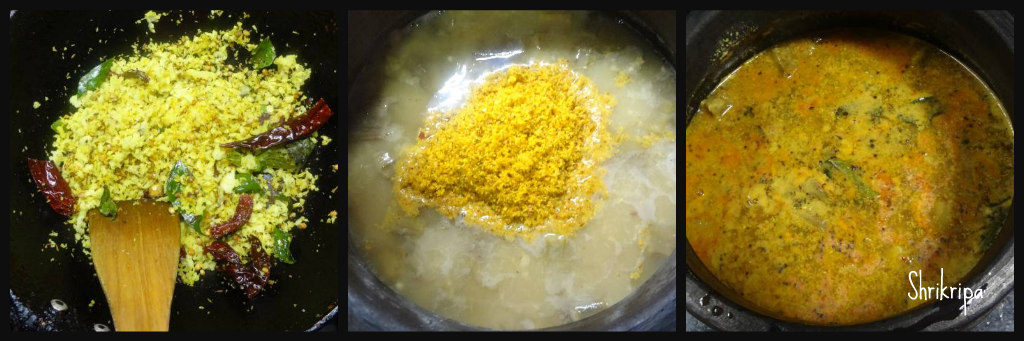
-In the meantime, prepare masala. Heat coconut oil, fry methi, add coriander, cumin , urad dal, red chillies and fry until all the spices are roasted.

-Next add curry leaves, coconut ,turmeric and fry until you get a nice aroma.

-Cool and make a powder of roasted coconut mix and keep aside.

-When bhindi is cooked, add dhal, masala powder and boil nicely by adding sufficient water to adjust the consistency.

-Do the seasoning and serve with hot rice.


Kadu Mavina hannina Hasi Gojji/ Wild Mango Gojju:

Wild mangoes are known as Kadu mavina hannu in our local language. Which is very fibrous, tangy as well as sweet in taste. It has distinct taste; it is widely used in varieties of curries in our region. Hasi Gojju is nothing but, raw form of curry. Which can be prepared in a jiffy and doesn’t need any heating and is a perfect treat for summer. Usually we enjoy this with hot rice as well as devoured like a dessert :D. In Mango season, we do prepare varieties of curries like Sasame or Sasive, saaru and Gojju are the most loved dishes of our region.

Ingredients:

Wild mangoes -5-6

Salt – to taste

Jaggery – to taste

Green chillies – 1 or 2

Seasoning: Coconut oil – 1 tsp, mustard – 1 tsp, Red chilli – 1, Curry leaves – little.

Method:

  • Wash wild mangoes, remove top part of the mango, remove outer skin and keep this in a separate vessel. Keep inner fruit part in another vessel.

  • Add one cup of water to outer skin, mash nicely, collect pulpy water and add this to fruit.
  • Discard outer remaining skin. Add required amount of jaggery, salt and crush green chillies by using your hand.
  • Mix everything, check for the seasoning. If needed add some more grated jaggery or salt.
  • Season by using coconut oil. When it is hot, add mustard, after it splutters, add red chilli and curry leaves, add this to mango curry.

  • Enjoy this with hot rice.

NOTE:

-If you don’t have access to wild mango, don’t worry. Pick up any (little sour) varieties of mango, peel the outer skin and chop the fruit into bite size pieces or mash a little and proceed with above method.