Kadu Mavina hannina Hasi Gojji/ Wild Mango Gojju:

Wild mangoes are known as Kadu mavina hannu in our local language. Which is very fibrous, tangy as well as sweet in taste. It has distinct taste; it is widely used in varieties of curries in our region. Hasi Gojju is nothing but, raw form of curry. Which can be prepared in a jiffy and doesn’t need any heating and is a perfect treat for summer. Usually we enjoy this with hot rice as well as devoured like a dessert :D. In Mango season, we do prepare varieties of curries like Sasame or Sasive, saaru and Gojju are the most loved dishes of our region.

Ingredients:

Wild mangoes -5-6

Salt – to taste

Jaggery – to taste

Green chillies – 1 or 2

Seasoning: Coconut oil – 1 tsp, mustard – 1 tsp, Red chilli – 1, Curry leaves – little.

Method:

  • Wash wild mangoes, remove top part of the mango, remove outer skin and keep this in a separate vessel. Keep inner fruit part in another vessel.

  • Add one cup of water to outer skin, mash nicely, collect pulpy water and add this to fruit.
  • Discard outer remaining skin. Add required amount of jaggery, salt and crush green chillies by using your hand.
  • Mix everything, check for the seasoning. If needed add some more grated jaggery or salt.
  • Season by using coconut oil. When it is hot, add mustard, after it splutters, add red chilli and curry leaves, add this to mango curry.

  • Enjoy this with hot rice.

NOTE:

-If you don’t have access to wild mango, don’t worry. Pick up any (little sour) varieties of mango, peel the outer skin and chop the fruit into bite size pieces or mash a little and proceed with above method.

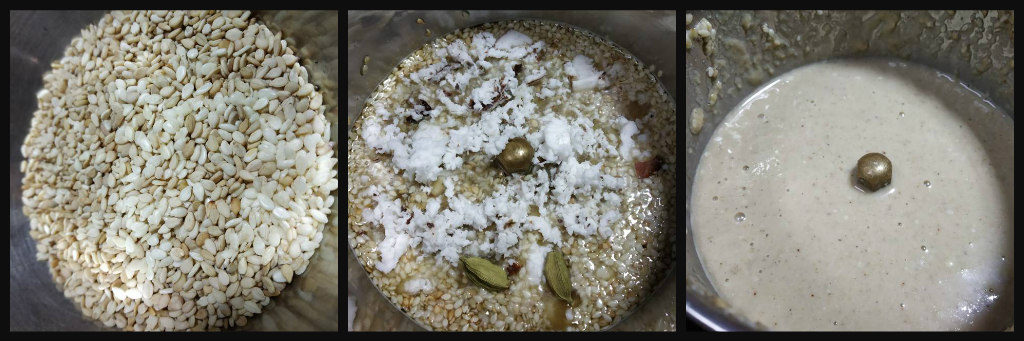
 

Ellu Juice / Sesame Juice:

Ellu juice is a well-known coolant drink of summer, especially in and around Mangalore and Udupi region.  As I grew up in Puttur, little away from the coastal line, never tasted this juice until my marriage. I came to know about this healthy drink very recently, may be around three years back.

Ellu juice and masala buttermilk is sold in and around coastal temples, during summer. After tasting chilled, soothing drink I asked the shopkeeper to elaborate the recipe and noted it down and tried it at home here in Bangalore. According to me, chilled juice tastes really nice in hot weather.

Sesame seeds are tiny, healthy, oil rich seeds. Un-hulled seeds are black or dark brown in colour and hulled seeds look off white and fully polished one look pure white and known as Nylon variety.

To prepare this juice, one can use any type of sesame seeds and can be used raw as well as toasted.

Here I have used raw seeds and mixed coconut milk as well as regular milk. If you want to make Vegan drink, please use coconut little more or replace milk with any other plant-based milk and proceed. Now, we will proceed with the method.

Ingredients:

Sesame seeds – 1 table spoon (for 2 cups)

Coconut – 2 table spoon (grated)

Milk – ½ to ¾ cup

Whole Cardamom – 1 or 2

Jaggery – as needed

Water – approximately one cup

Method:

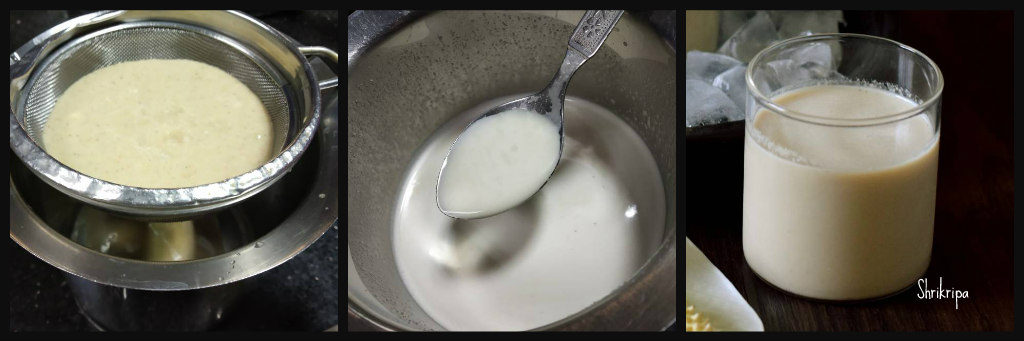
-Wash sesame, grind into paste by adding coconut, cardamom, jaggery and quarter cup of water.

-Strain and collect the sesame milk. Repeat the process by adding little water until coconut and sesame turns into small, rough fibre.

-Now, discard the roughage and use collected milk, add plain milk and adjust the consistency.

-Cool this and serve.


Balehannina Berati Payasa / Payasam by plantain preserve:

First, I want to wish a very very happy “Ugadi” to all my readers.  Ugadi marks the beginning of the new Hindu lunar Calendar, which is based on the change in the moon’s orbit. Ugadi is a Lunar New year for us.

On the eve of this festival I made our traditional payasam and enjoyed with my family.

“Berati” is nothing but preserved fruit pulp, which is cooked until it forms into thick mass and usually made when it is in abundance and stored for future use.

How to preserve jackfruit and Banana / Berati is already shared in my blog. 

In Coastal region we love jack and Banana in many forms. Berati Payasa (preserved Banana or Jack)  is one of them.

Now we will see traditionally how it is made:

Ingredients:

Berati / Banana preserve – 1 bowl

Coconut – 1 (To extract milk)

-OR-

Thin coconut milk – 2cups

Thick coconut milk – ½ cup

Salt – ½ tsp

Cardamom powder – ½ tsp

For Seasoning:

Ghee – 1 tbl sp

Thin Coconut slices – 2 tbl sp

Cashew pieces – 2 tbl sp

OR

Toasted black sesame – 1 table spoon

Fresh coconut slices – 1 to 2 table spoons

Method:

  • Take out Berati from your freezer and keep aside for some time to attain room temperature.

  • Slice coconut by using small knife, chop these sliced pieces into small bits.
  • Toast black sesame and keep aside.
  • Take little ghee and fry coconut bits and keep aside.
  • If you want to, you can add ghee roasted cashew bits as well.
  • Grate coconut (coconut should be fresh), put one cup of water and grind this in a mixer jar and extract milk by sieving this ground mixture. This is thick coconut milk and you should keep this separately. We use this at the end stage of Payasa making.
  • Do this procedure a couple of times to get a thin extract and lastly discard coconut fibre.
  • If you are using readymade coconut milk, please skip this step.
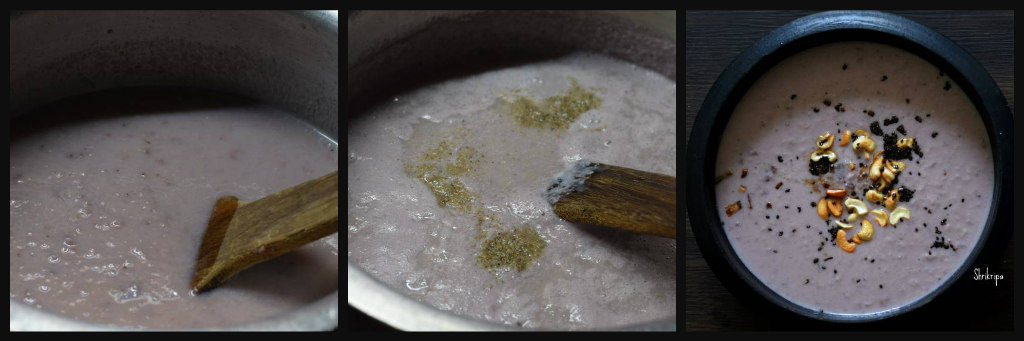
  • Now take one thick bottomed vessel, put Berati, thin coconut milk and dissolve Berati and keep this on a gas stove to boil.
  • Usually while making Berati, we put Sugar, so no need of additional sugar.

  • Lastly add thick extract of coconut milk and give one boil. Don’t boil it much. Add Cardamom powder and mix.       
  • Remove from fire and add fried coconut pieces, toasted black sesame or cashew brittles to prepared Payasa.
  • Serve with lunch thali or as a dessert.

NOTE:

  • Traditionally only toasted sesame and coconut bits are added.
  • Vegans can omit ghee and roast all the items, instead of frying.


Sabudana/Sago idli:

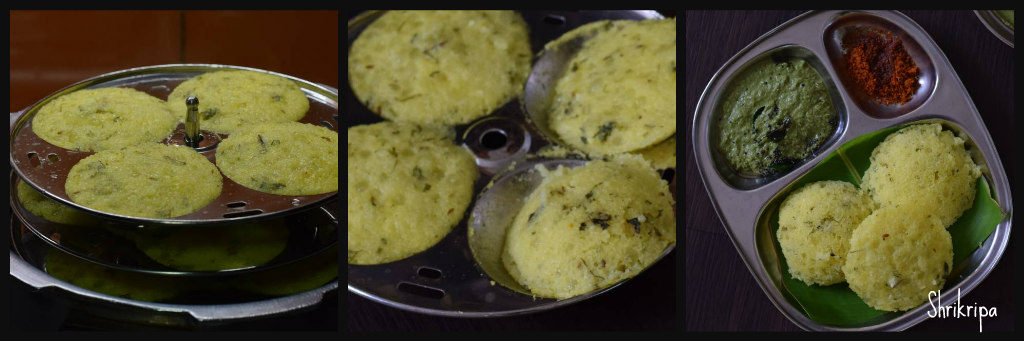
Sago/ Sabudana is also known as Sabbakki, Javasiri in Southern part of India. Yes! It has many names and is one of the favourite staple foods during the festivals or fasting time. Sabudana is rich in complex carbohydrates due to which, it is easy to digest as well as takes longer to breakdown. Hence, you don’t feel hungry for long.

In our tradition, it has been used from ages during the summer time to maintain body heat, during the time of illness or as baby food. During all these situations, people need to take low calorie, high in energy, easily digestible meal option. Traditionally it is combined with rice while making gruel.

In India we normally make sweets as well as savouries from these edible pearls. Sago is usually confused with Tapioca pearls. Sago is extracted from the inner pith of the tropical palm trees. On the other hand, Tapioca pearls are made by using Cassava, it is a tuber.

In Summer, it is a good idea to include Sago, rice as well as curds in your diet to maintain body heat. I have included fresh homemade turmeric powder, fresh coconut, cumin as well as chopped coriander to enhance the taste as well as nutrients.

Ingredients:

Rice Rava / Idli Rava – 2 cups

Sabudana – 1 cup

Curds – 2 cups

Water – 1 cup

Cumin – 1 table spoon

Turmeric – 1 tsp

Salt

Grated coconut – 1 fist full

Chopped coriander leaves – 3 table spoons

Eno fruit salt or cooking soda – 1 tsp

Method:

-Mix Rice Rava and Sabudana, wash twice and drain. Add curd, water, cumin, turmeric powder, salt and keep it covered overnight.

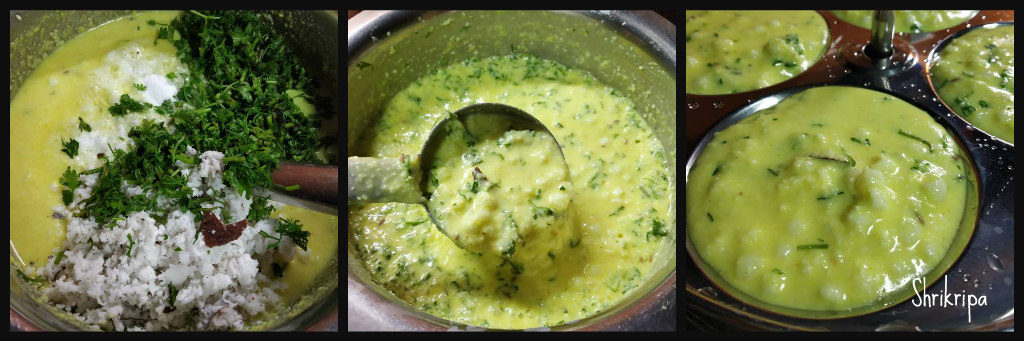
-Next morning, add coconut, Eno fruit salt, coriander. If needed, adjust the consistency of the batter by adding little extra water.

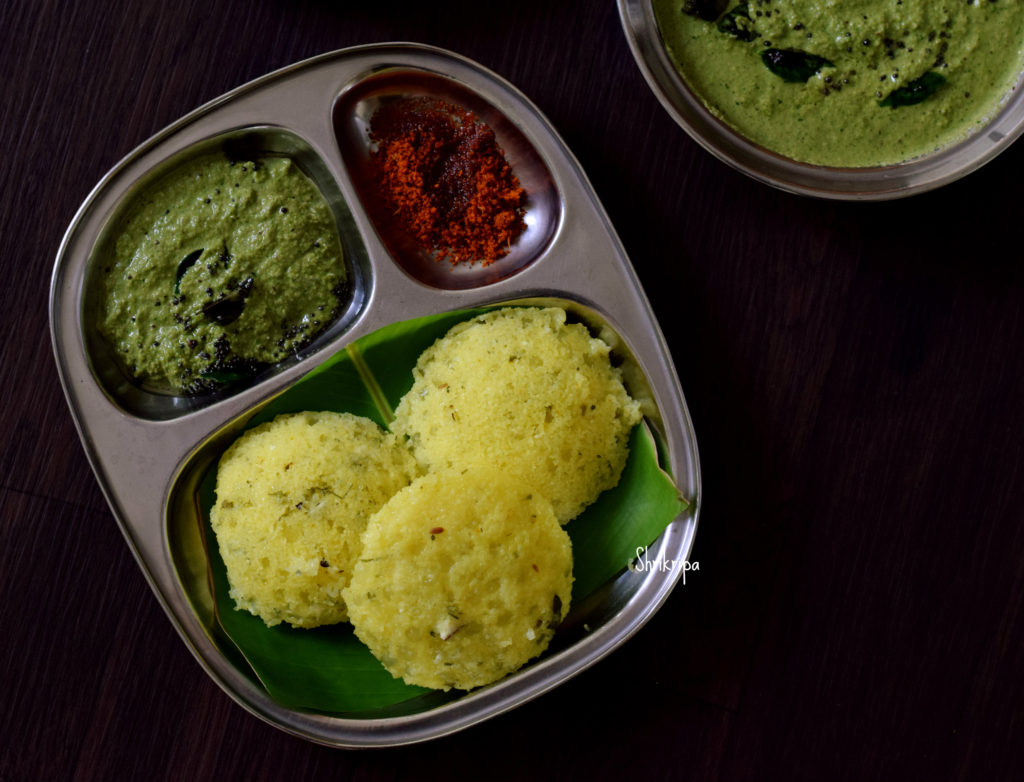
Mix well and make idlies like regular idlies in an idli steamer for about 10 minutes and serve with chutney.

NOTE: Vegans can substitute with any plant based curds to make this batter.


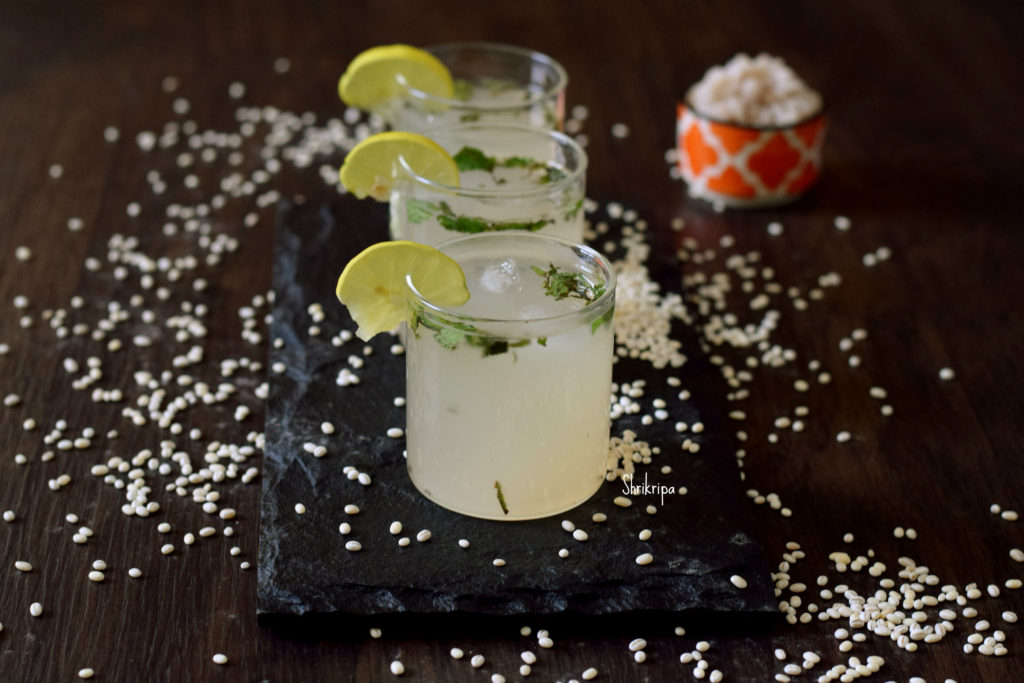
Barley water/Juice:

Barley is an ancient grain and a very popular grain as a healing or soothing food. In olden days, people used to have Barley water or ganji (porridge) to heal vomiting, diarrhoea or Urinary tract infection naturally. People never used to have medicines or chemicals.

It is a wonderful healing, easily digestible food, even during recuperating from any surgery.

Sipping on barley water with a pinch of salt is an excellent remedy to overcome nausea.

Other than all this goodness, barley water when combined with a dash of lime, is recommended for kidney stones.

So, all in all it has several health benefits starting from cooling down our body temperature, detoxifying by flushing toxins from the body and keeping you hydrated, to improve immunity level, to maintain gut health by high fibre content, rich in Vit B as well as E.

This year summer is very harsh, and it is our responsibility to stay hydrated and provide natural supplements to our body according to the situation or season. It is very simple to make Barley water or juice at home. Soak cook and strain. Cooked grains can be used as it is or can be used in making salads by draining.

Ingredients:

Whole barley – 2 to 3 table spoons

Method:

-Wash, soak barley in a cup of water for overnight.

-Next day, cook this in a pressure cooker by adding very little salt for 2 to 3 whistles. When pressure releases add required amount of water. (approximately 3 big glass)

-Boil for 5 to 10 min in a low flame and switch off.

-Stain and use as plain barley water for sipping throughout the day, instead of plain water.

-OR

Make lemonade by adding lemon juice, sugar or any other natural sweetener according to your preference.

-You can add chopped Pudina or mint leaves or a tsp of ginger juice.

-OR

Mix buttermilk and can have as a low-calorie drink. In this way, diabetics or weight watchers can have. One can add pudina and grated ginger to this as well.


Nolen Gur Payesh / Rice kheer with date palm jaggery:

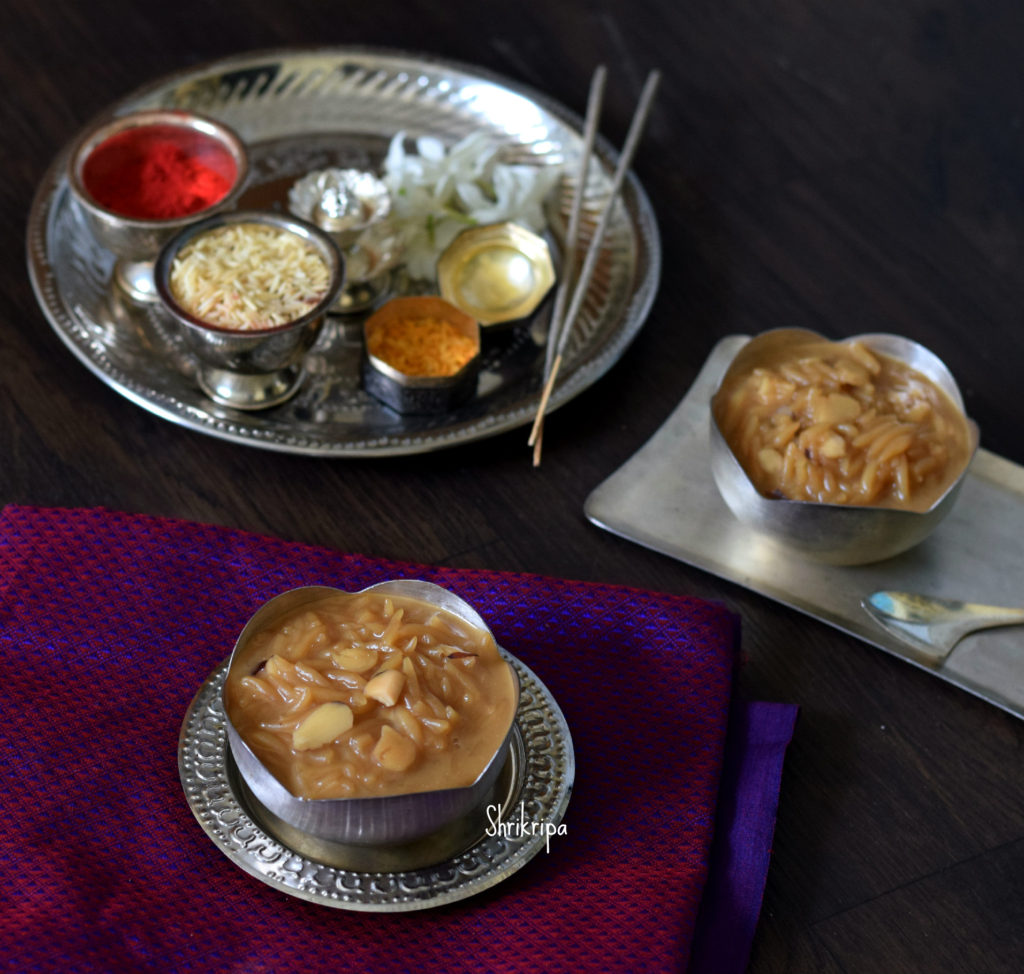
Rice kheer or Paramanna is an integral part of any festivities in many parts of India. Every region has its own method or style. Usage of ingredients would differ according to the region. Such as the addition of plain milk or coconut milk. Usage of Jaggery or sugar. So, in west Bengal, they use date palm jaggery, which is known as Nolen Gur, which is available only during the wintertime; they make a lot of delicacies by using this special jaggery. It ranges from Nolen Gur Payesh, Nolen Gur Rasgulla, Nolen Gur Sandesh are the few.  I wanted to try this out in my cooking and bought it online.

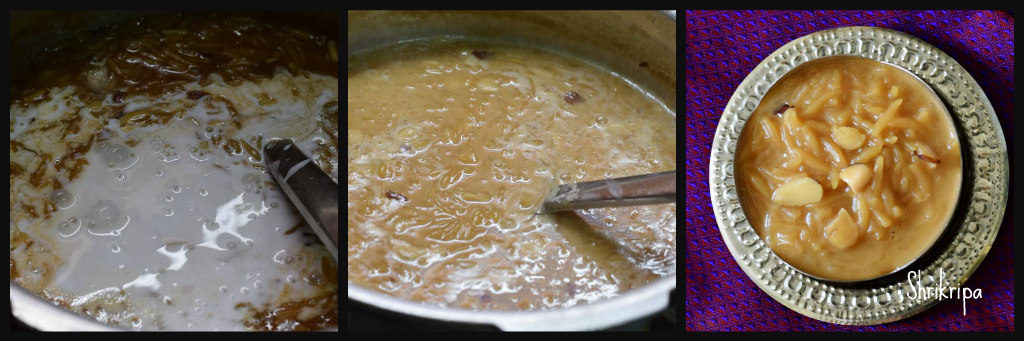
They usually use plain tiny grain rice or dried rice-shaped vermicelli, which is known as Chushi pithe. Chushi pithe is nothing but handmade Rice vermicelli. In Mangalore, we make rice noodles known as Halittu or Paradi and use them in a Payasa/ kheer, and we usually use coconut milk. So, I tried my regional method and proceeded. It tasted divine!! Usage of coconut milk and taste of the palm jaggery was the best decision, and it was very rustic and flavourful in taste.

Ingredients:

Chushi Pithe/handmade rice vermicelli – 200 grams (you can use small grain rice as well)

Almond or Cashew – ½ cup (slivered)

Nolen gur – 300 grams (used Patali gur)

Coconut milk – 200 grams

Cardamom powder – 1 tsp

Ghee – 1 tsp (vegans can skip this)

Method:

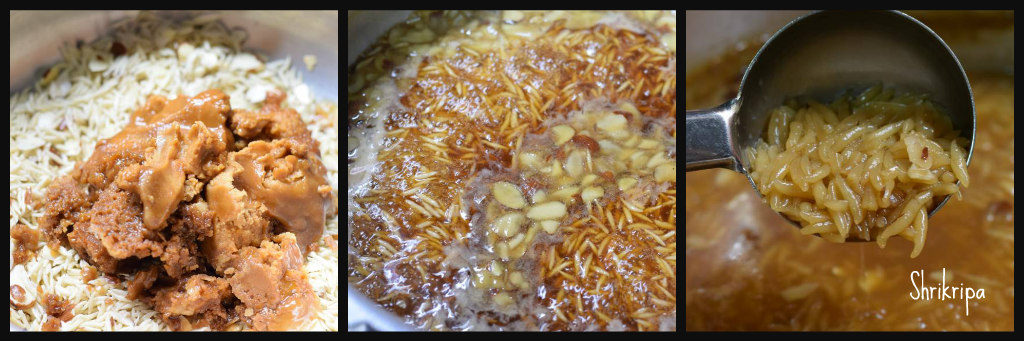
-Take one thick bottomed vessel, add ghee and fry almond and rice vermicelli (Chushi pithe) or if you are using plain rice.

-Add around one litre of water and cook until rice cooks perfectly. Whenever it’s needed, add extra water little by little and cook.

-Now, add jaggery of your choice, boil until it smells divine and the aroma spreads. Here, the raw smell of the jaggery should vanish.

-Lastly, add one tetra pack of coconut milk, give one boil. Garnish with cardamom powder and mix.

NOTE:

-If you are using fresh homemade coconut milk, extract three times, preserve thick (1st extract) and add at the end.

-thin coconut milk of 2nd and 3rd extracts can be added while boiling or cooking rice vermicelli.


Lemongrass Tambli:

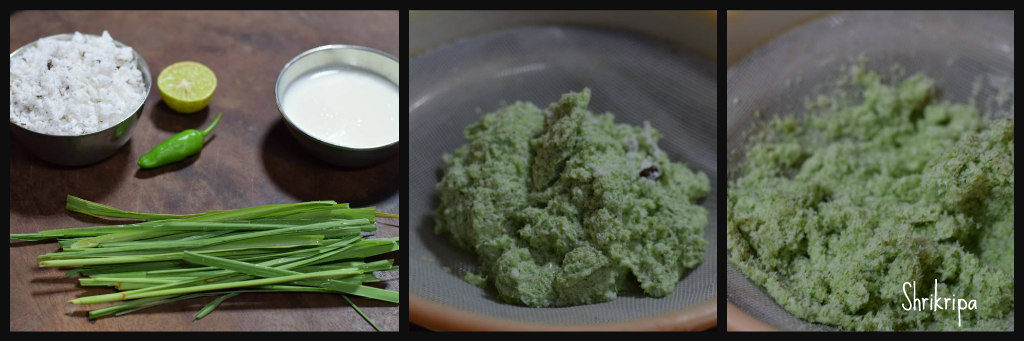
Lemongrass is used as a culinary as well as medicinal herb in the Asian continent. It has a mild citrus flavour with sweetish taste. It can be used in a dried, powdered or fresh form in various things like teas, soups and curries. This particular curry is called “Tambli” and it is prepared by grinding fresh leaves with coconut and mixing in buttermilk and it doesn’t need boiling. You can savour this like an appetiser or mixing with piping hot rice in this really hot summer. It has healing properties and is very good for the digestive system.

How to prepare this:

Ingredients:

Lemongrass sticks – 5-6

Fresh grated Coconut – ½ cup

Green chilli -1

Salt –to taste

Lemon – ½

Buttermilk – ½ cup

Method:

  • Chop lemongrass into bite size.
  • Take your mixer jar, grind lemongrass pieces, coconut gratings, green chilli and salt by adding ½ cup of water into smooth paste. Sieve this mixture to get smooth liquid. (Sieving is very important over here, otherwise lemongrass will irritate your throat)

  • Once again add half cup of water, do exactly like earlier and repeat this process for two or three times, so that we will remove all the traces of liquid and discard the remaining fibre.
  • Now mix in buttermilk, adjust the consistency by adding water. Check the salt and add lemon juice.
  • Now your Tambli is ready to savour.
  • If you want to add the seasoning, heat one tsp of ghee, fry little cumin and curry leaves and add to Tambli.
  • Beat the heat by having this either as an appetiser or with hot rice.

NOTE:

  • To make vegan version, please omit the buttermilk and rest you can proceed as it is.


Malabar spinach and Raw papaya curry:

Malabar spinach is commonly known as Basale in our coastal area. It is a common creeping vein in the backyard of every household.

Its leaf is very rich in iron, fibre, antioxidants and vitamins and low in calorie. Malabar spinach is a go getter veggie at any given point of time. You can harvest, as soon as the main stem is growing and spreads all over. Snip the leaves and use the stems as well.

On the other hand, raw papaya is also a power house of nutrients and it is a natural cleanser of intestine and colon.

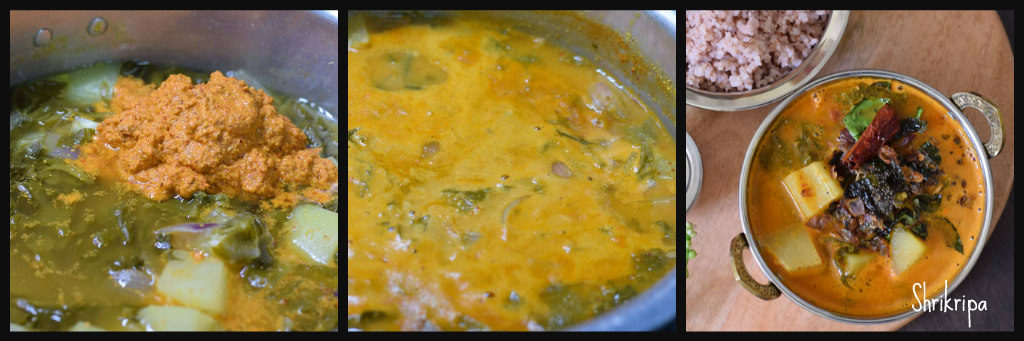
Like Malabar spinach, Papaya tree also plays an integral part in our garden. May be because of the easy availability, we have a couple of traditional dishes with Raw papaya and one curry is this. Our elders had so much knowledge to include all the goodness in their cooking. One such recipe is Raw papaya and Malabar spinach with a freshly ground coconut masala. It can be relished with Boiled rice or white rice. It is an overall package of health benefits from both the veggies.

Ingredients:

Malabar spinach – one small bundle

Raw papaya – 1 small

Onion – 1

Salt

Jaggery (optional)

Red chilli powder – 1 tsp

Toor dal – ½ cup

For Masala paste:

Coriander – 1-2 tablespoon

Cumin – 1 tsp

Methi – ½ tsp

Dried red chillies – 5 to 6

Tamarind – 1 tsp

Coconut – 1 to 1 ½ cup

Seasoning:

Coconut oil – 1 tablespoon

Mustard – 1 tsp

Red chilli – 1

Small onion – 1

Curry leaves – 1 spring

Method:

-Wash Malabar spinach leaves, chop them and keep them aside. Cut it into 2 to 3-inch pieces if you are using its stem.

-Chop Raw papaya by removing the outer skin and the inner seeds. Dump in a water bowl to remove all the oozed latex and drain.

-Wash Toor dal; if you have chopped Malabar spinach stem, combine it and cook with dal by adding turmeric and salt.

-When toor dal is ready, remove the lid, add a little water, salt, jaggery, red chilli powder, Papaya pieces, and chopped leaves. Cook for one whistle.

-Now prepare masala by roasting methi, coriander, cumin and red chillies in a little oil. Grind into a paste by adding coconut, tamarind and water.

-Add the ground paste to cooked veggies, adjust everything, boil and add seasoning.

-To season, heat oil, splutter mustard, red chilli, curry leaves and chopped onion. When the onion becomes brown, add it to the curry.

-Serve with Hot rice.

Bannangayi Dosey /tender (young) coconut Dosa:

When I was a little girl, my mom used to work, and I used to spend the summer vacation at my grandparents’ house. I used to enjoy at the farm house by having an unlimited supply of Mangoes, tender coconut, pineapples etc.

There used to be abundant supply of fallen young coconuts, also called ‘bannangayi’ which have much harder flesh than what we get in the normal tender coconut carts over.

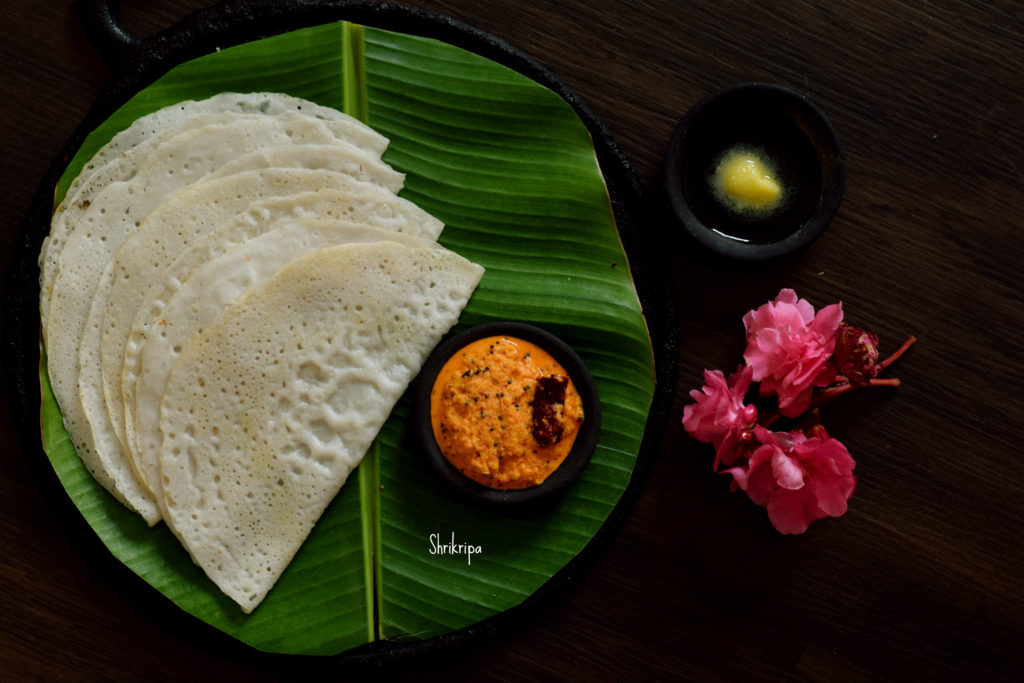
My aunt used to make a very tasty Dosa out of this and we used to relish this along with chutney and Jaggery syrup topped with homemade ghee.

Yesterday, when we had tender coconuts here in Bangalore, inner pulp was very thick and couldn’t eat. So, I thought about Dosa and prepared this after ages. It was such a nostalgic moment for me. Let us see how to make this tasty Dosa.

Ingredients:

Tender coconut – 1

Dosa rice – 2 cups

Salt

Method:

-wash and soak Dosa rice for 3 to 4 hours.

-Grate or chop tender /young coconut and keep aside.        


-Grind soaked rice with grated young coconut by adding little water and salt and make smooth paste. This batter must be like our regular Dosa batter and there is no need of fermentation.                           

-You can make use of this batter straight away. Usually we prepare this batter in the morning itself.

-If you want to prepare this batter in the evening, to make the Dosa in the morning, you can store the batter in the refrigerator.

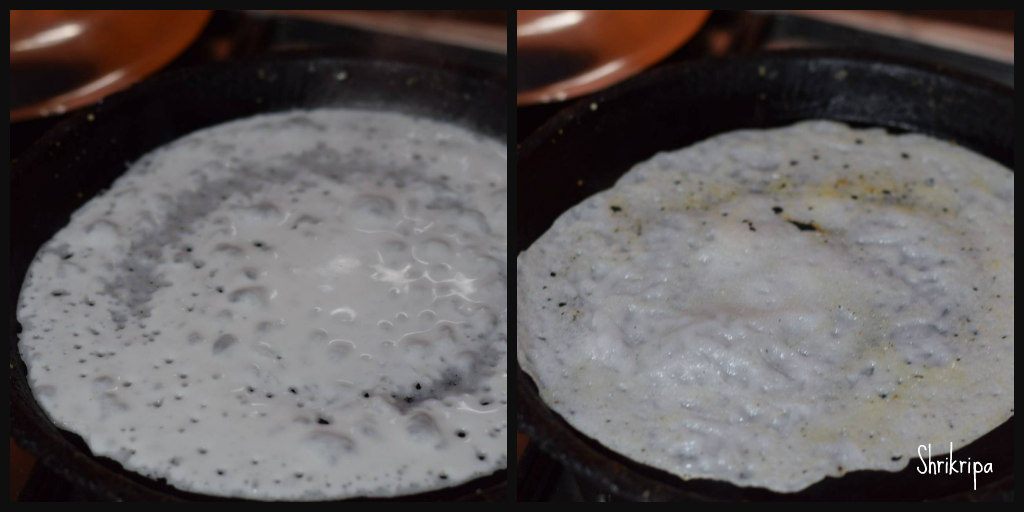
-To prepare Dosa, heat iron Dosa tawa. When it is hot, don’t apply any oil. You can pour one serving spoon of batter and make Dosa like our regular Dosa. Pour ½ tsp of ghee and Close the lid.     


When it shows little brownish spots here and there, flip the side, cook upper side and serve with Coconut and onion chutney , jaggery syrup which is topped with ghee or honey.


Sundried Amla/ Preserved Indian gooseberries:

Amla is good for human kind. It is a great source of Vitamin C and antioxidant as well as anti-inflammatory which boosts the immune system. It is a source of total nourishment for our hair as well as skin.

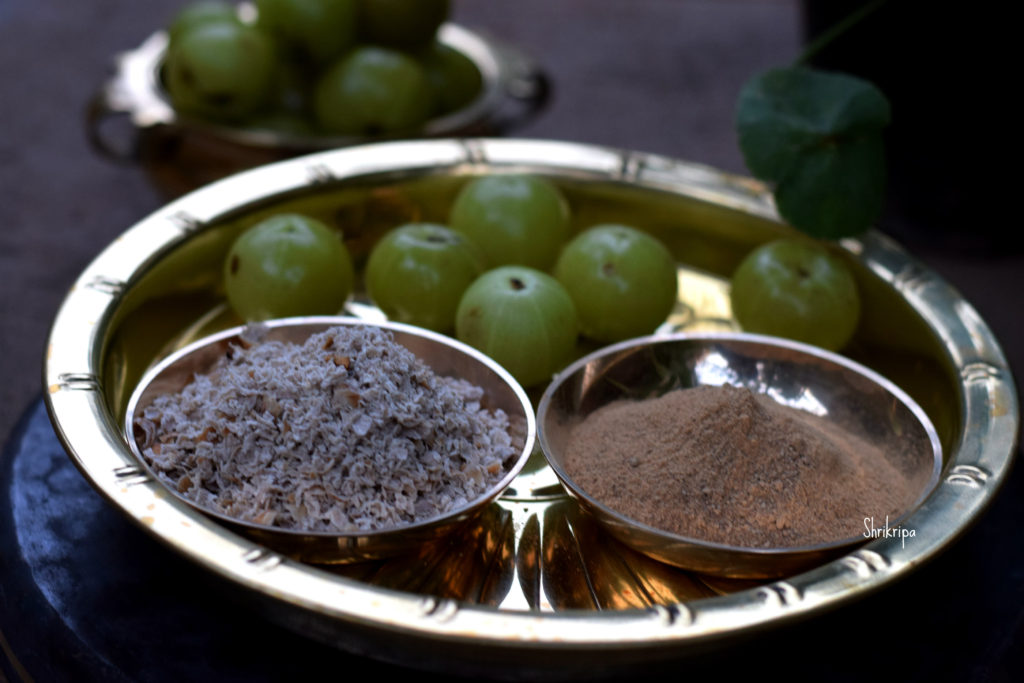
Traditionally each region has its own method to preserve the goodness of Amla. Be it in a morabba form or as a candy.  In our household, I make it a point to preserve it by Sun drying. One with salt and other one with plain, powder form.

Salted Amla is used for making chutney or Tambli for any stomach ailments. To drink with buttermilk by mixing it. (Raw form of goodness)

Powder form for any smoothies, hair pack or face pack.

Method:

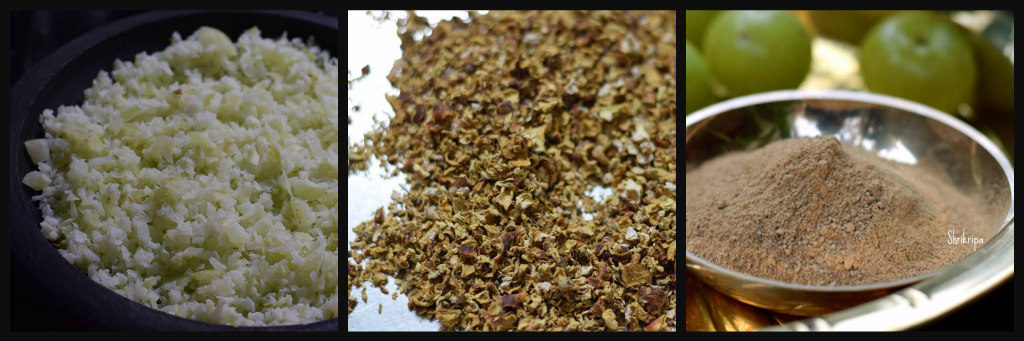
-Wash, either grate it or cut open and remove the seed.

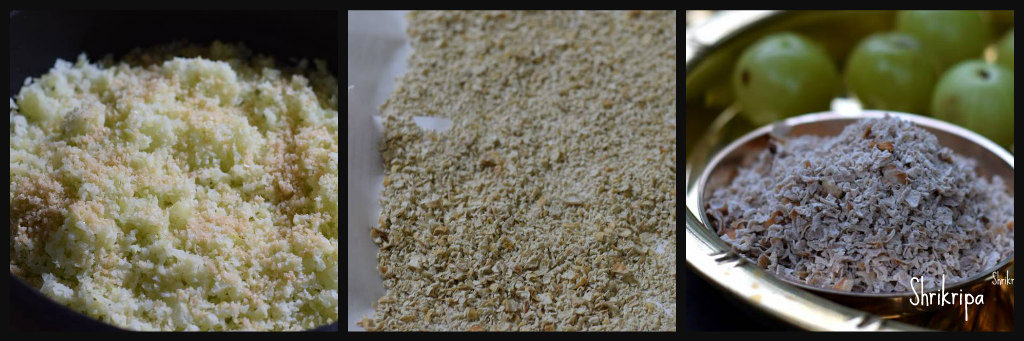
-Put all the pieces in a vegetable chopper / small processor. In this way, you would get nice uniform chunks in an easy way.

-If you want to make powder, don’t add any salt. Straightway sundry until it is crisp and powder and store it.

-If you want a salted one. Add some salt to gratings, mix by hand and sundry until it is crisp and store it in an air tight pouch or container.

-I normally keep it in a fridge.

How to use these salted chunks: Soak 1 tsp of dried amla chunks in a table spoon of water and after 10minutes, use it for chutneys, tambli’s or drink with buttermilk.