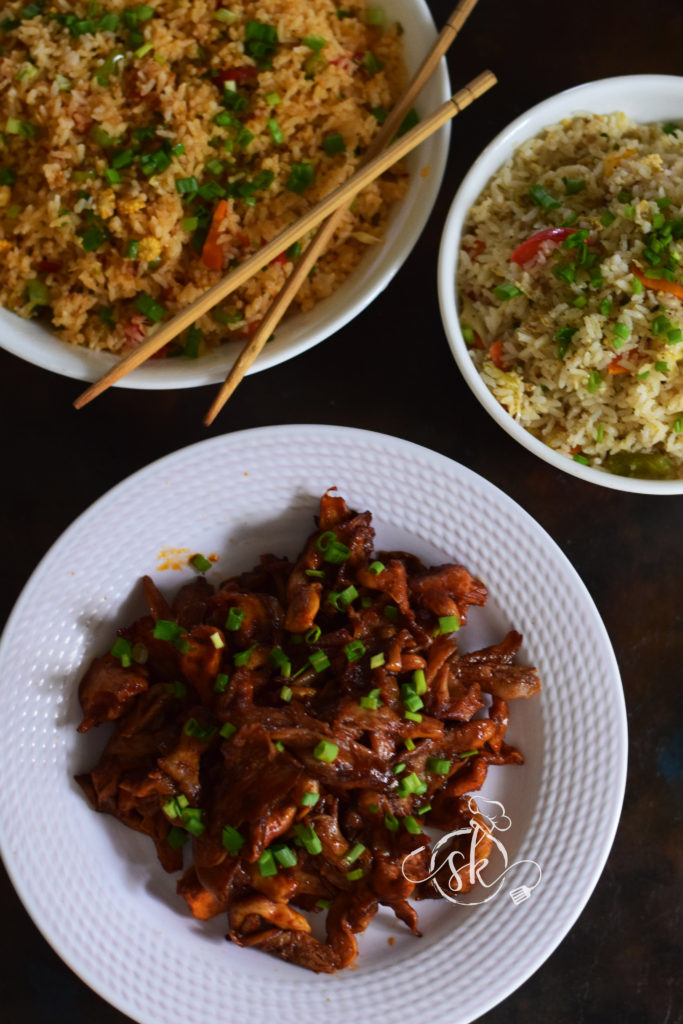
Bottle gourd Thepla:

Bottle gourd Thepla is inspired by Dhapate (Thalipeet): Maharashtra #marathwada region special breakfast. Bottle gourd has numerous health benefits. In our native, bottle gourd is used in treating stomach illness or jaundice, which has the power (anti-inflammatory properties) to heal our Liver and intestine during the disease. Bottle gourd has close to 90% water content and is excellent on the stomach and light on digestion. Apart from this, bottle gourd juice is very good for weight watchers, diabetics, and a healthy heart.

Here, I have taken Jowar flour, considered as a high fibre, protein-rich and complex carbohydrate. Hence, the nutrition quotient increases and becomes a wholesome food for anyone, including low cal diet or diabetics.
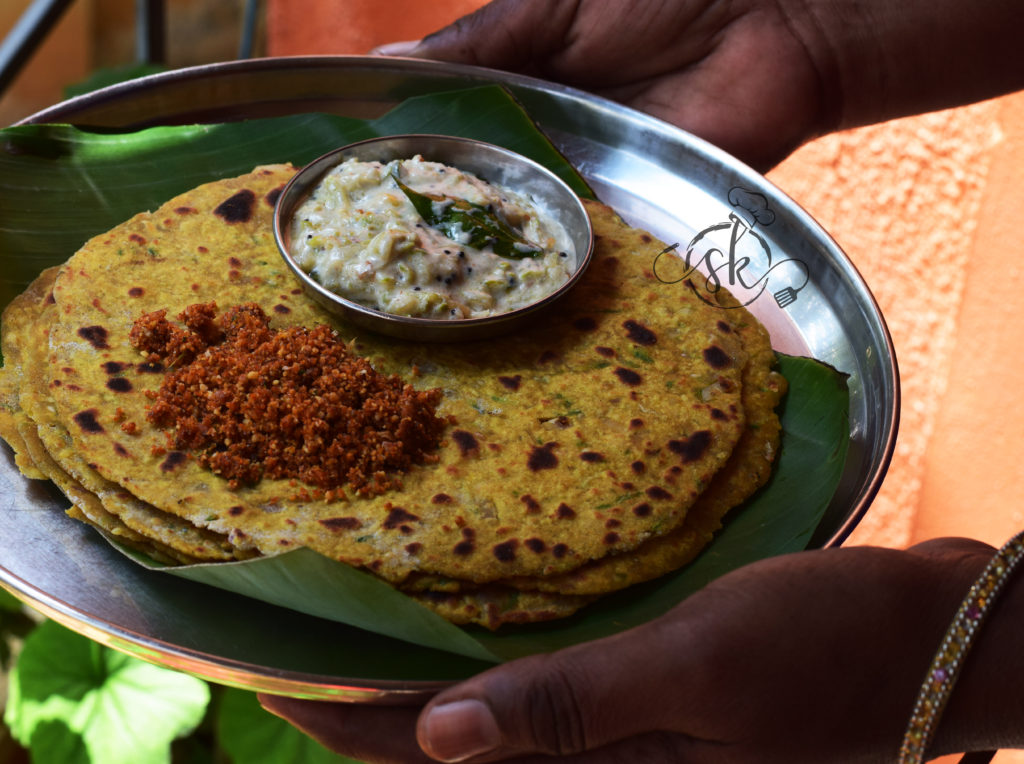
Ingredients:

2 cups – Whole wheat flour

½ cup – Besan

1 cup – White Jowar flour

You can increase any of the flour or decrease acc to your wish.

Grated bottle gourd –  almost 200 to 250grams

Chopped onion – 1

Salt, turmeric powder,  cumin powder – 1tsp, garlic paste – 1 tsp, Sesame seeds – 2 tsp

method:
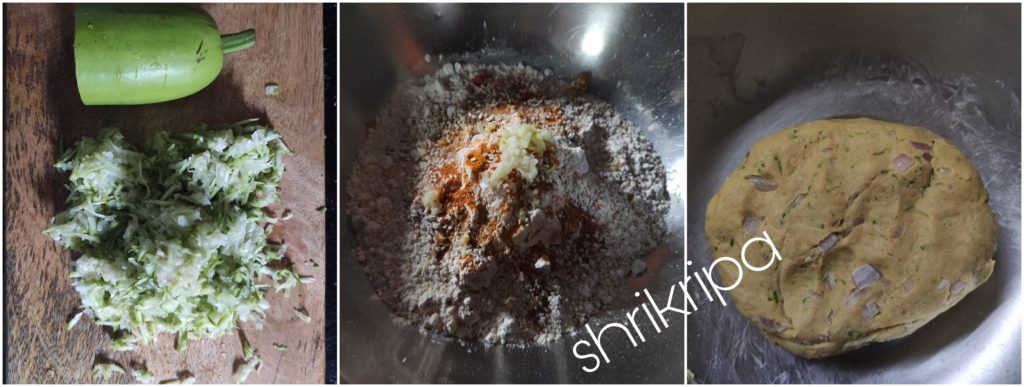
-Add all these, mix thoroughly, by adding sufficient water and make a dough.

-Keep it aside for half an hour, to rest by closing it.

Now take lemon sized chapati dough in hand and roll this ball using a roller, like regular chapati.

-Cook both sides by using either oil, ghee, or butter, of course as minimal as possible.

Serve with sweetish bottle gourd raita, groundnut chutney powder.

-OR-

If you want to make glutenfree Roti, please omit whole wheat flour, add any preferred flour of your choice. Make a roti dough by using little hot water.

-Pat the dough on a banana leaf or parchment paper and proceed to cook both sides. If you want to see the rotti patting and cooking procedure, please refer to this post.

NOTE: if Bottle gourd is tender, don’t remove the peel. Grate and use it.
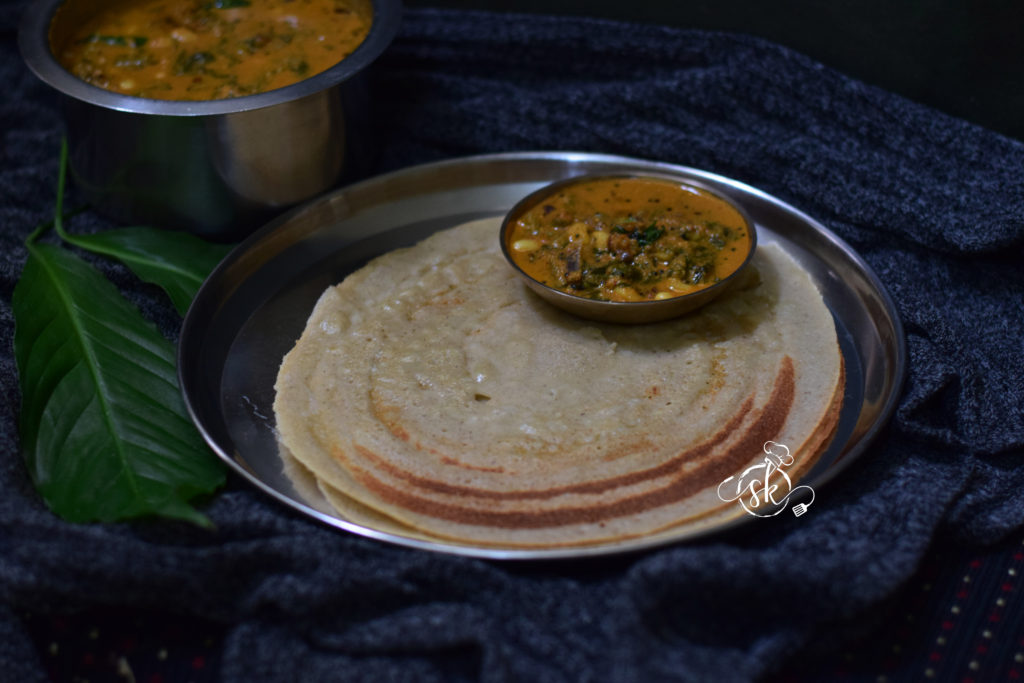
Millet –banana stem dosa:

Every part of the banana plant has its benefits to our health. Banana stem is one such thing, which is high in fibre and filled with nutritious water. It is perfect for Human gut as well as the kidney.

The juice of the banana stem helps in flushing out toxins as well as to prevent kidney stone formation as well. Overall it acts as a healing food for the human body. In coastal Karnataka, we do use plantain stem or flower in various recipes. I have already shared our traditional Dosa recipe, and it is here, and previously I have shared Raw salad, curd salad and Rasam recipe.

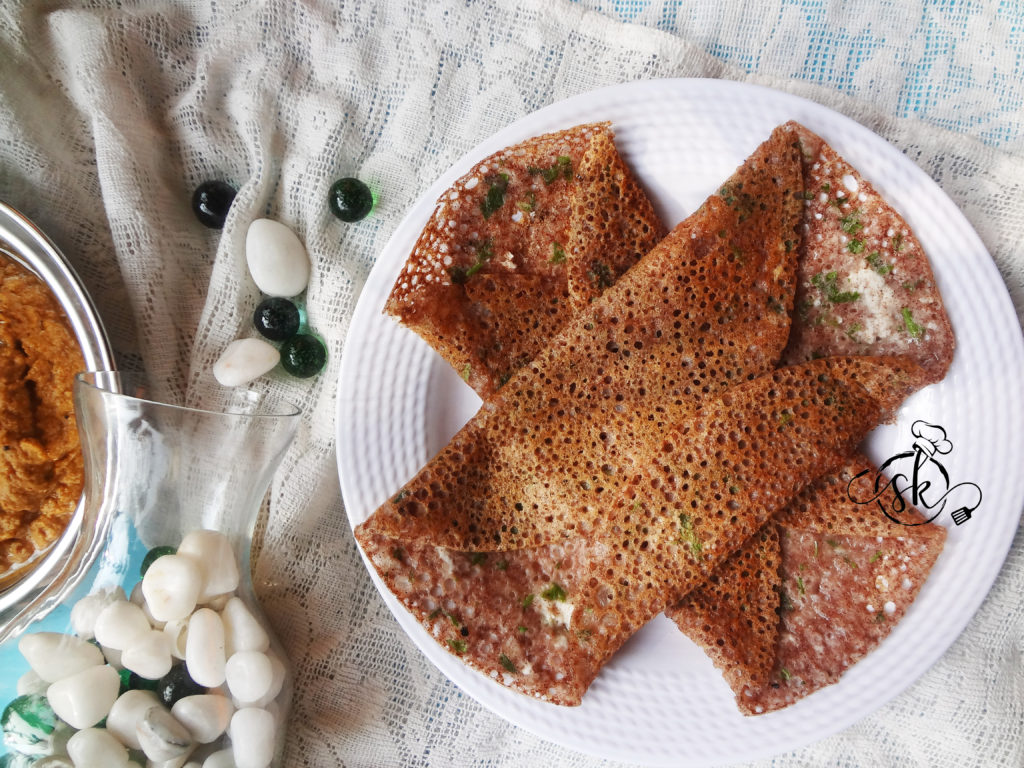
When Plantain stem and millet combine, it is a perfect balance and can be a diet food or whoever is cutting down their rice intake due to their health issues. This dosa turns crispy and goes very well with any side dish of your choice. Tried and did this for my millet calendar project, published in 2017 and filing the recipe under Diabetic friendly recipe in my blog.

Ingredients:

Foxtail Millet – 2 cups

Rice – ¾ cup

Urad dal – ¼ cup

Banana stem – from 6” piece

Methi – ¼ tsp

Poha – ½ cup

Buttermilk – 1 cup

Method:

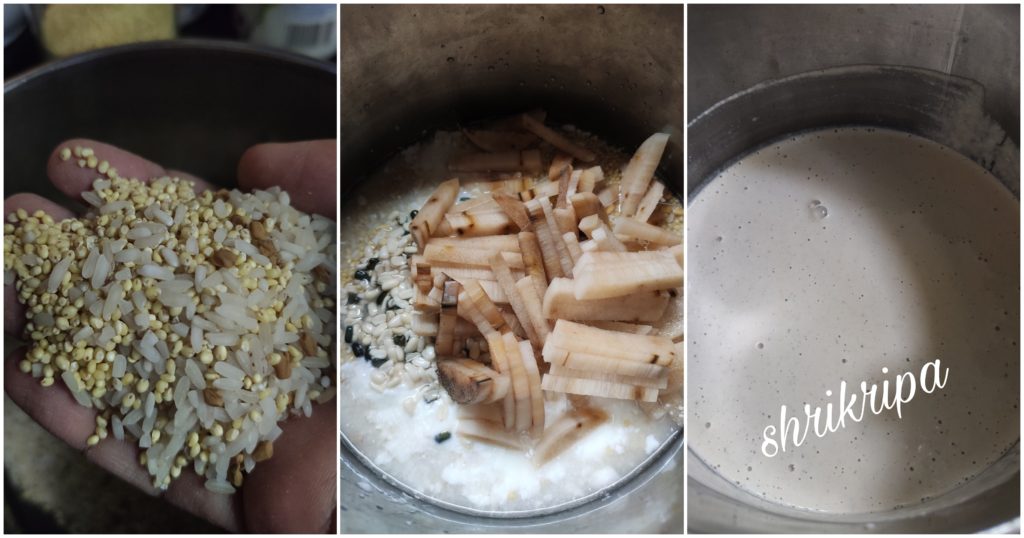
-Wash millet, rice and urad dal together. Add poha.

-Soak in buttermilk for 2 to 3 hours.

– To chop banana stem, remove the outer cover and make slices of inner pith.

-While slicing, you will find little thread-like fibre, discard that by drawing by hand.

-After slicing into round pieces of dice and use this for grinding.

-Grind soaked items with banana stem and salt.

– Ferment overnight and next day morning you can prepare Dosas.

Note: You can use any millet instead of foxtail. Taste doesn’t change.

Instant Ragi Rava Dosa:

Instant preparations are always handy when you are in a hurry or in a “no mood to cook” situation. I usually prefer Ragi Rava dosa to make, because it has the goodness of Ragi/ finger millet and everyone likes it in this form. Dosa turns out very crispy and tasty. One can have it with coconut chutney or any leftover sambar or with pickle or as it is. It has a nice natural flavour as well.

If you plan to make Rava dosa, you can mix the batter and keep it at night itself. Otherwise, no worries, mix and proceed to make dosas. Even some ingredients are optional; if you add coconut, greens, it would surely enhance the taste. 

Ingredients:

Ragi flour – ½ cup

Fine Rava – ½ cup

Rice flour – ¼ cup

Salt

Hing – a pinch

Black pepper – ½ tsp

Cumin – ¼ tsp

Grated coconut – ¼ cup (optional)

Coriander leaves – 2 tablespoons (optional)

Methi leaves – 2 tablespoons (optional)

Method:

-Crush black pepper and cumin in a mortar and pestle.

-For dosa mix: Mix in Rava, rice flour and Ragi flour, salt, hing, crushed cumin -pepper and a little water and keep aside at night (optional) otherwise mix in the morning and proceed.

– If you have mixed and kept it at night, add in grated coconut, chopped coriander leaves or methi leaves in the morning.

-Make batter into pourable consistency like Rava dosa or neer dosa batter and check for the salt.

-Now keep Iron griddle for heat.

-When it is ready, grease with oil, pour one serving spoon of batter-like how we make Rawa Dosa, you can see it in the picture below.

-Now close the lid by keeping the gas on full flame.

-After two minutes, remove the lid and keep the gas in simmer. The edges of the Dosa rise a little.

-Now flip this Dosa on the plate, leave for 2 minutes, then fold like this.

– Now keep repeating this with the remaining batter and stack one over the other or take one big plate and stalk one opposite another alternately.   

-Serve these Dosa with coconut chutney or with any other gravy of your choice or have it as it is.


Little millet Salad

It is a low-calorie lunch or dinner option for weight reduction or diabetic patients- Very filling and at the same time low in calorie and filled with so many nutrients.

Ingredients:

Samai or little millet – ½ cup

Sweet corn kernels – from one cob (boiled)

Sprouted Green gram – ½ to 1 cup

Grated raw mango – ½ mango

Pomegranate – 1

Fresh Coconut – 1 tablespoon

Salt

Coriander leaves.

Seasoning:

Coconut oil – 1 teaspoon

Mustard- ½ teaspoon

Hing- 1 pinch

Curry leaves – 1 spring

Green chilli -1 (chopped)

Method:

-Dry roast little millet for 2 minutes. Wash and cook this in a cooker (one whistle) by adding ¾ cup of water and pinch of salt.

-After cooking, remove the cooker lid and spread the cooked millet in a wide plate and cool.

– When it cools down, mix in boiled corn, sprouted green gram, grated raw mango, pomegranate, fresh Coconut, salt and chopped coriander leaves.

-Do the seasoning by heating coconut oil. Add mustard. When it splutters, add hing, chopped green chilli and curry leaves.

-Add this to salad and mix lightly and enjoy as a meal.

Khara Neer Dosey / Savoury Neer dosa :

Neer dosey is an integral part of coastal breakfast. I usually prepare Neer dosey or my own version of Healthy neer dosey. Leftover neer dosey would turn into another dish, with sweet seasoning for an evening with a cup of tea. Khara neer dosey is one more variety of dosa from our region. 

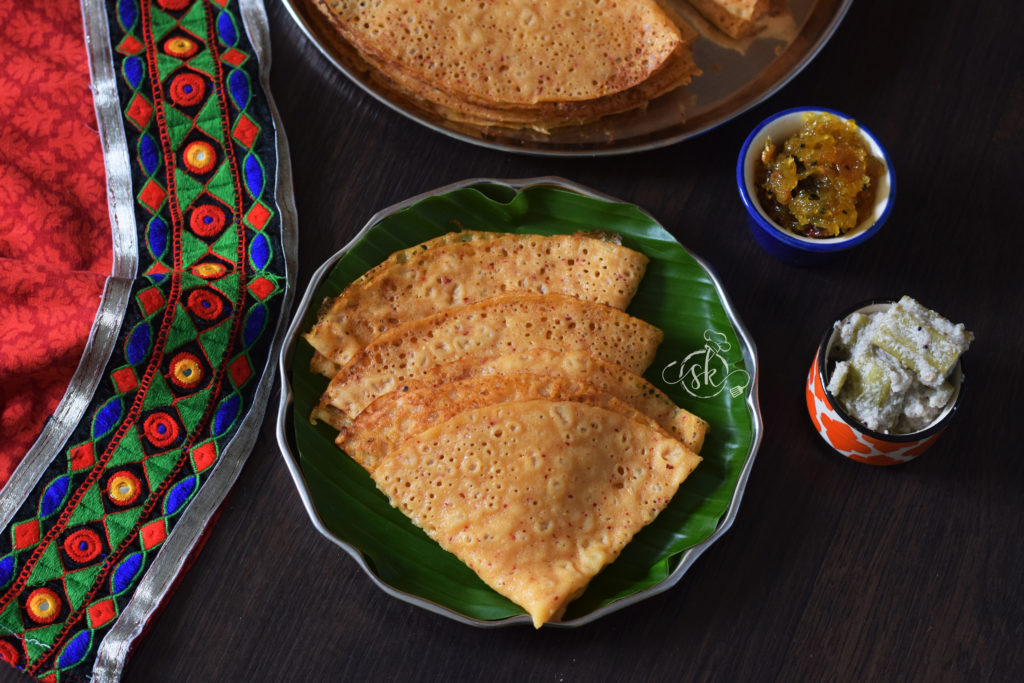
Khara neer dosey is also known as Khara Thellavu /savoury neer dosey which is nothing but a spicy version of normal white neer dosey. It is quick, no fermentation is required. Soak the rice, grind, maintain the right consistency, use a well-seasoned cast-iron tawa to get the super-soft, authentic taste.

Ingredients needed:

Dosa rice -2 cups

Red chillies – 4 to 5

Onion – 1 big  Or Coconut – 1 bowl

Coriander seeds – 1 tablespoon (optional)

Cumin – 1 tsp (optional)

Hing – generous pinch

Salt

Iron griddle /tawa.

Method:

-Wash and soak Dosa rice at night or 2 to 3-hour soaking is needed.

-In the morning grind this soaked rice into fine paste by adding chillies, chopped onion OR Coconut, coriander, cumin, salt with water (I use soaking water while grinding, it gives pleasant aroma for the Dosa) and salt as per requirement.

– Make batter into pourable consistency like this and check for the salt.

-Now keep Iron griddle for heat, smear oil and keep it ready. 

-Pour one serving spoon of batter-like how we make Rawa Dosa, you can see it in the picture below.

-Now close the lid by keeping the gas on full flame.

-After two minutes, remove the lid and keep the gas in simmer, the edges of the Dosa rise a little, like this.

-Now flip this Dosa on the plate, leave for 2 minutes, then fold like this.

-Now keep repeating this with the remaining batter and stack one over the other or take one big plate and stalk one opposite another alternately.

-Serve this Dosa with Coconut and grated jaggery mixture or coconut chutney or as you wish.


Sankranthi Bhogi Palle/ Multi greens and vegetable palya:

Wish you all Happy Bhogi! While it is not a huge festival in our native. After coming to Bangalore, I learnt Some of my favourite North Karnataka recipes from my previous neighbour aunty, who hails from Solapur near Gulbarga. She used to offer some of her preparations. It starts from simple triangle chapati, obbattu, obbattu Saru, chapparadavarekai palya, chavlikai palya and khara byale Saru, Godhi nucchina Huggi, which she used to offer to God, every Friday evening and she used to distribute as a prasadam to us. Aunty used to prepare Sajje rotti and Bhogi palya, a mixed dry curry, with winter veggies, pulses and greens.

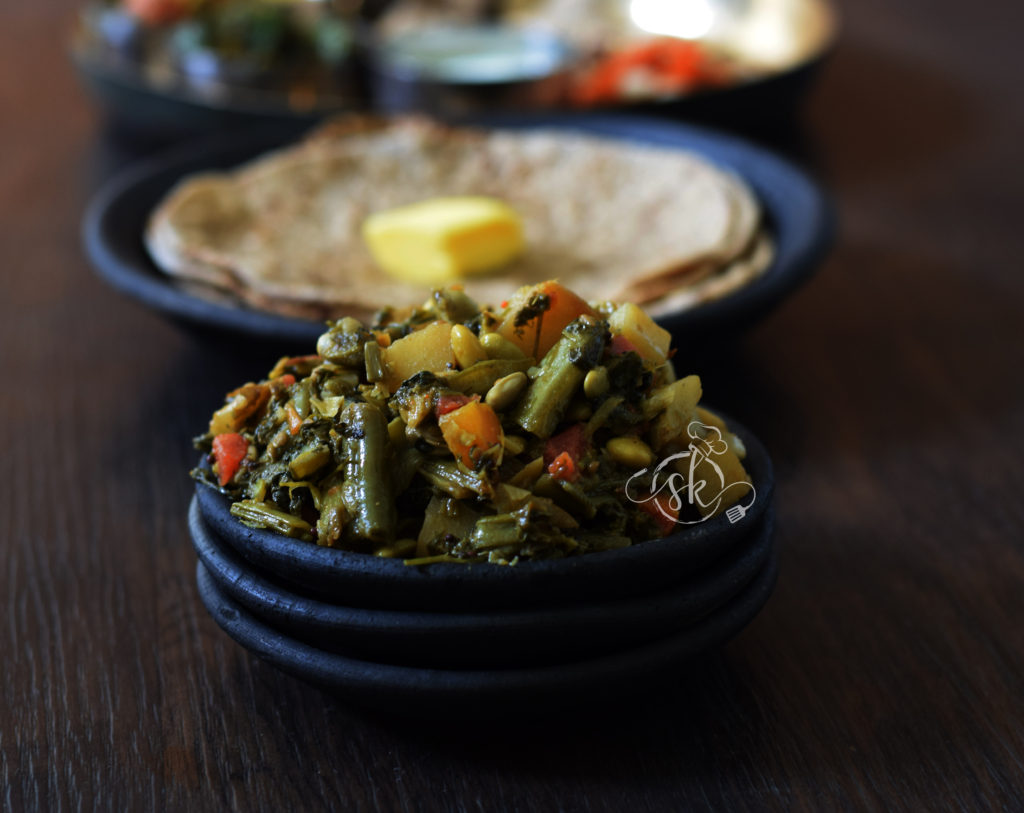
Bhogi Palle or Bhogichi Bhaji is a traditional winter recipe cooked all across Maharashtra and  Uttara Karnataka region on the day of “Bhogi” a day before Makara Sankranti. This dish celebrates the seasonal bounty of winter vegetables and groundnuts and sesame seeds which provide the much-needed warmth and nourishment to the human body during winters. It contains all the nutrients, vitamins, and healthy fat from seasonal fresh harvest with no other added masala other than the ingredients’ flavour.  

Ingredients may differ from family to family. But I like it in this way.

Ingredients:

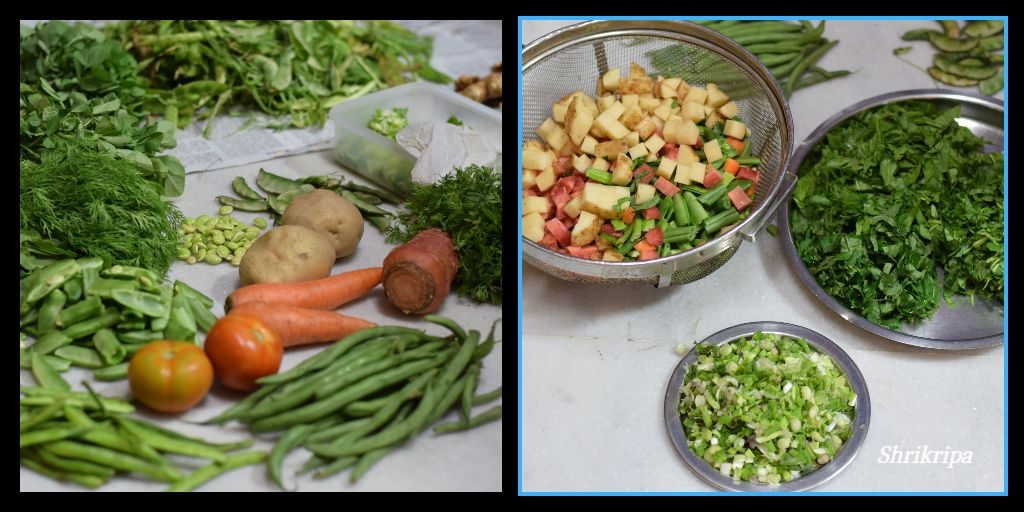
Mix vegetables – 1 bowl ( Potato, Red carrot, regular carrot, beans, brinjal, broad beans, cluster beans etc.)

Mix greens – 1 bowl ( palak, dill, methi, amaranth etc.)

Mix green pulses and nuts – 1 bowl ( lima beans, toor, choli or chana, double beans, groundnuts etc.)

Spring Onion – 1 small bunch

Tomato – 2 to 3 (Round heirloom variety)

Green chillies – 5 to 6 ( chopped)

Ginger – 1inch ( juveniles)

Garlic – 10 – 12 cloves

Turmeric – 1 tsp

Salt

Jaggery – ¼ tsp to balance the flavour ( an optional)

Seasoning: Oil, mustard, cumin

Coriander leaves – 1 small cup.

Garam masala – ½ tsp (an optional to garnish)

Method:

-Clean everything, keep greens, veggies, pulses separate.

-Chop spring onions, green chillies, crush the garlic. Coriander leaves and keep.

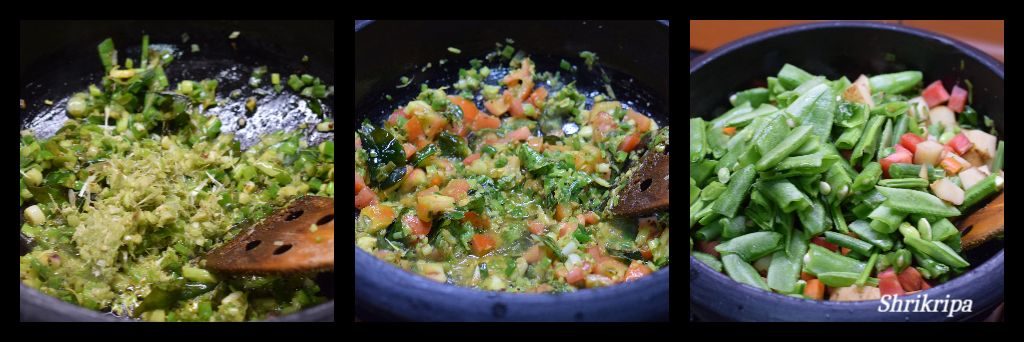
-Take one Kadai, heat oil, splutter mustard, cumin, curry leaves, garlic, ginger, green chillies.

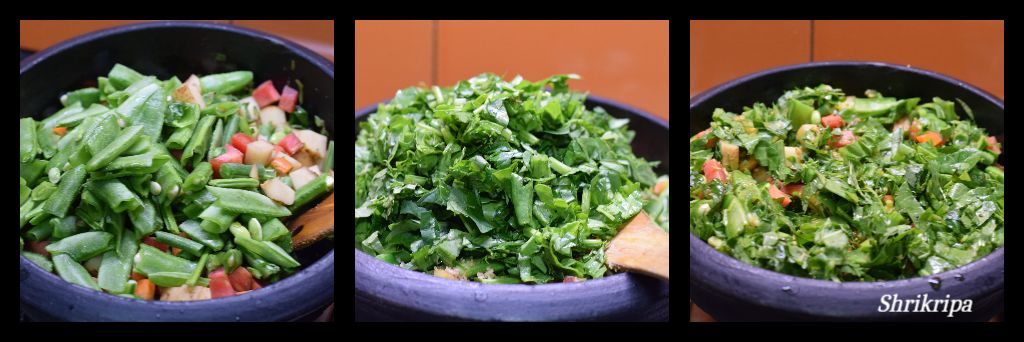
-After frying for a while, add white part of spring onion, then tomato, turmeric, salt, and add jaggery, fry for two minutes. And all the other things from greens to pulses, veggies and give a stir.

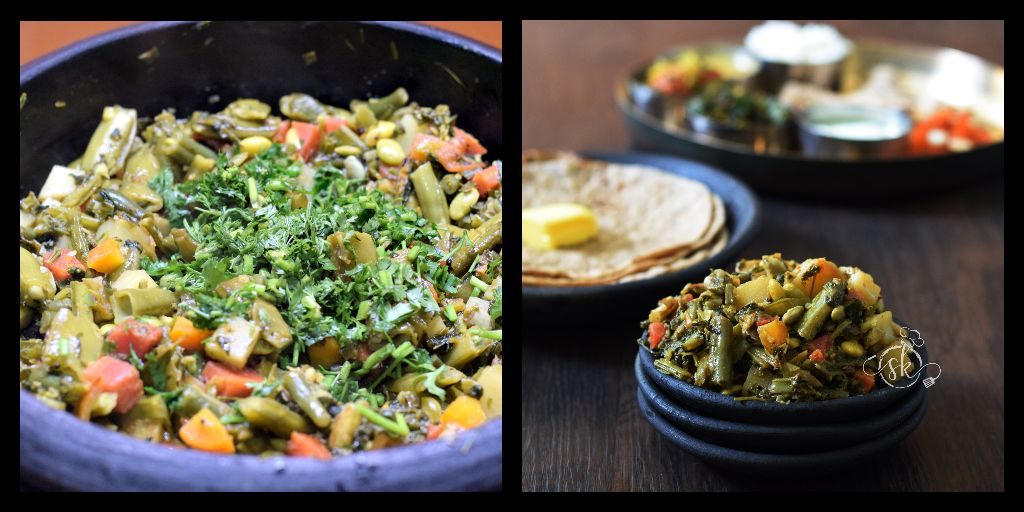
Close the lid and cook in a small flame, When it is ready, garnish with chopped coriander leaves. If you wish, add little garam masala and stir well.

Serve with Sajje roti or any other millet roti or regular chapati. I like to have it as it is as well 😀


Lemon pickle:

Pickle is an essential part of our Indian meal and we South Indians enjoy our pickle with curd rice as the last leg of our meal, which will tickle and will remain for some time in our taste bud with its right amount of salt, spice, sour, tangy and tartness.

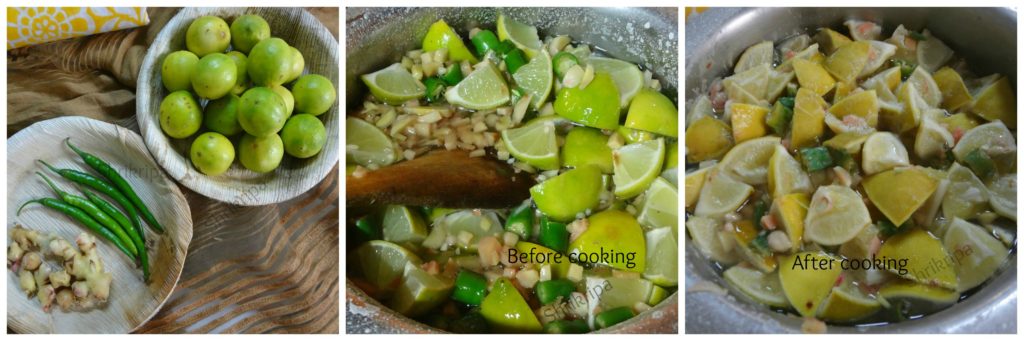
This particular pickle is the non-oily, south Indian style, which I learnt from my mom. This pickle has lemon, green chillies and ginger and goes very well with curd rice.

Ingredients:

Lemons – 15

Ginger – 50 Gms

Green chillies – 5

Salt – ¾ cup

Water – 1 ½ to 2 cups.

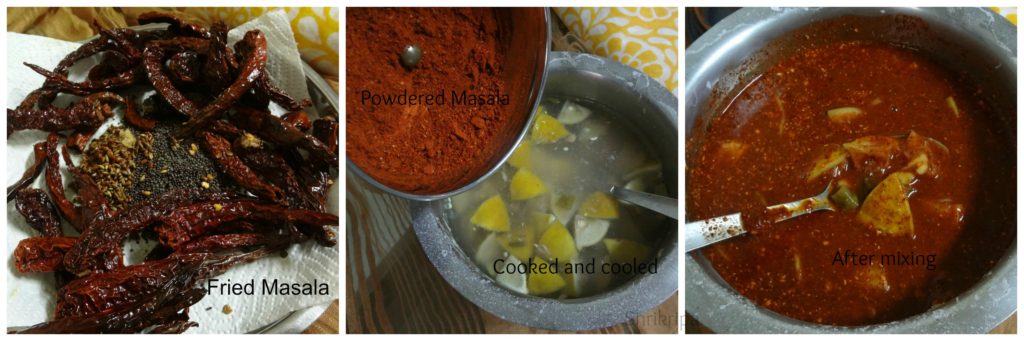
Masala:

Dried red chillies – 28 -30

Mustard – 2 Table spoons

Hing – peanut size

Fenugreek – 1 tsp

Cumin – 1 tsp

Turmeric powder – 1 tsp

Oil- 1 to 1 ½ tsp

Method:

-Wash lemon, ginger and green chillies. Pat dry and chop however you like it.

-Boil water and salt together.

-When it is ready, you could see the glossy, shiny layer at the top.

-Drop all the chopped items to this. Boil till lemon rind becomes pale. Switch off and keep this for cooling.

-Gradually while cooling, the lemon rind will wilts and rind will fold backwards, don’t worry. It would become normal once it sets/marinates properly.

-Next, we will prepare the pickle masala.

-Dry roast mustard until it pops, remove and keep aside.

-Take one teaspoon of oil, roast fenugreek, cumin, hing one by one and keep it aside.

-Lastly, fry red chillies until it forms crisp with very little oil.

-Cool everything, make powder all these by adding turmeric.

-When salted lemon cools down, add this masala, mix and store this in an airtight bottle.

-After ten days, you can use this.

-I suggest storing this in a fridge so that its shelf life will be one year or more.

NOTE:

– If you want a little thicker consistency to take one and a half cup of water. If you wish to get, a thin consistency takes 2 cups of water.

  -Here I have taken 2 cups of water.

Guava Cheese/ Perad/halwa :

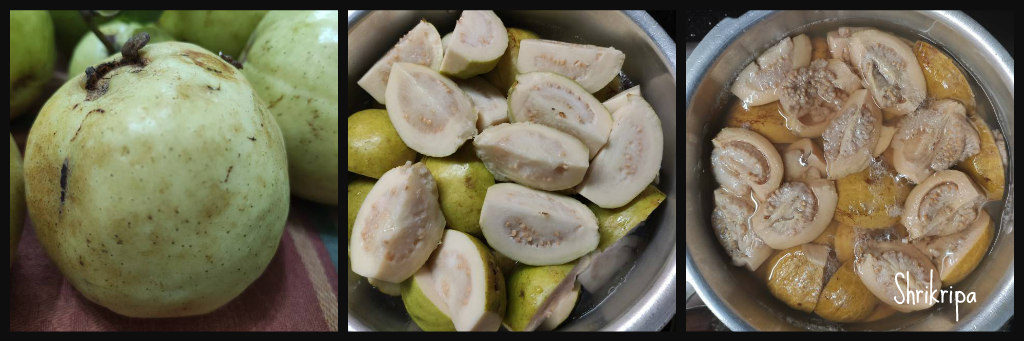
When the neighbour comes and hands me a big bag full of substantial sized overripe guavas, I knew, it is going to be a strenuous task. I need to deal with my mindset of ‘no wastage.’ First thing, came to my mind was my favourite Guava cheese.

When I was reading about the guava cheese, its origin, it traces back to Portuguese settlers in Brazil where it’s known as Goiabada. I am guessing that is how this recipe landed with them in Goa and is known as Perad/Peraad.

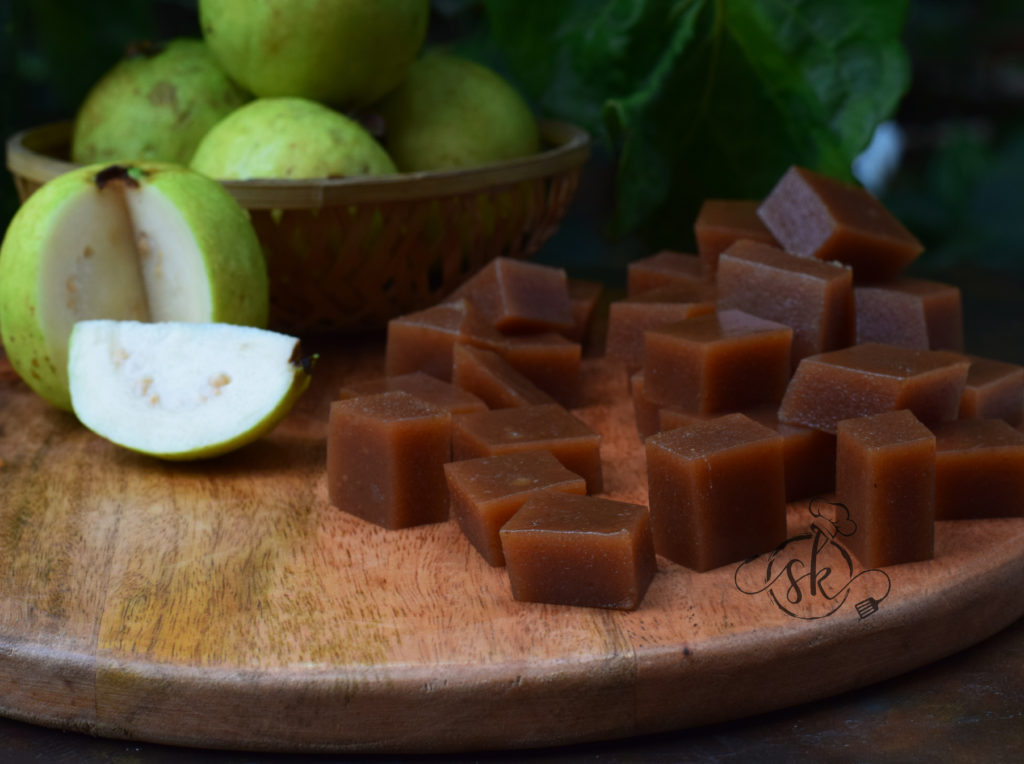
In simple terms, guava cheese is nothing but guava halwa. It doesn’t taste like cheese. Its texture is something you can easily bite into, yet is slightly chewy, somewhat like our Banana halwa, with a grainy texture, of course with added guava taste. Colour of the cheese depends on the variety of the Guava. If it is white, the colour turns our light brown, like mine. I usually mix a half red and half white variety of Guava to get beautiful hue.

Ingredients:

Overripe Guava – 2kgs

Sugar – 800 grams to 1 kg (acc to your palette)

Salt – ½ tsp

Butter – 3 tablespoons

Lemon juice -1 tablespoon 

Method:

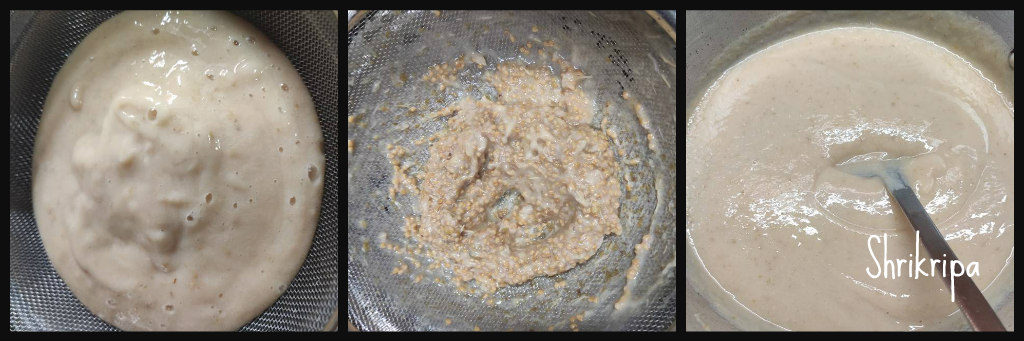
-Wash, chop the fruit into quarters—Cook with sufficient water for two whistles, cool.

-Pulse it in a mixer jar along with cooked water, sieve the Puree, separate the seed and its roughage.

-Weigh the pulp. For 2 kgs of pulp, I have taken 800 grams of sugar. You can take up to one kg if you prefer sweeter.

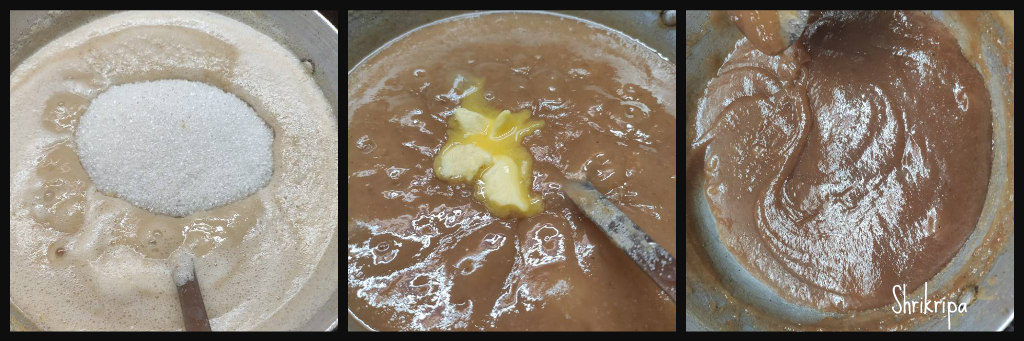
-Take one thick bottomed Kadai, add the pulp and boil for 20 minutes or until it starts boiling. Allow 10 minutes more to boil and add sugar and salt, continue to cook in a low flame.

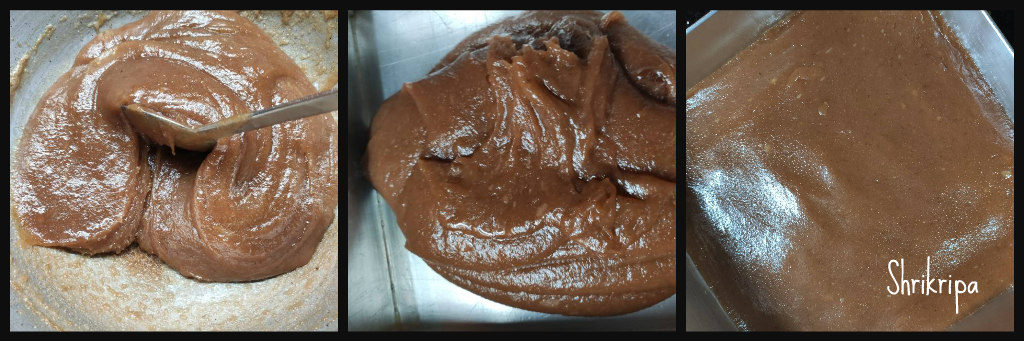
-When the mixture turns pinkish brown add butter and proceeds to cook further. When it starts leaving the sides, add lemon juice, cook ten more minutes.

-Remove the mixture to the greased plate, leave 4 to 6 hours and then cut.

-Stays good for 3 to 5 months without any problem, at room temperature, stored in an airtight container.


Vegetable Pasta in Pumpkin Sauce:

Do you feel strange? While reading “pumpkin”, that too in pasta? No need to feel!! It tastes good at the same time; it is a delicious, nourishing one-pot meal. You can check all my Pasta recipes, which has one thing or the other to make enjoyable of otherwise bland white sauce, which I usually plan for my daughter, who hates bland Bechamel white sauce.

Pumpkin is the most neglected all-round vegetable, even though considered as fall/winter vegetable in other parts of the world. It is low in calories, high in antioxidants, vitamins, minerals as well as high on the natural source of Beta carotene. Hence, whenever I have a fresh homegrown pumpkin is around, I make Pumpkin puree and store it in my freezer. In that way, it is handy whenever it is needed to make pasta or needed for baking.

We would see the procedure –

Ingredients:

Any pasta – 1 cup (of your choice)

Pumpkin Puree – ½ to ¾ the cup (according to your taste)

Veggies – 1 bowl (I have used zucchini, three colour bell peppers)

Butter or olive oil – 2 tablespoons

Whole wheat flour – 2 to 3 tablespoons

Milk – acc to the requirement

Garlic salt

Red chilli flakes

Italian seasoning

Grated cheese  – as you wish (it is purely optional )

Method:

– Drop pasta in boiling water in which,1 tsp of oil and little salt has been added and cooked.

-When it is done, drain the cooked pasta.

-Cool the pasta by pouring cold water and set aside.

– Chop the veggies and keep aside.

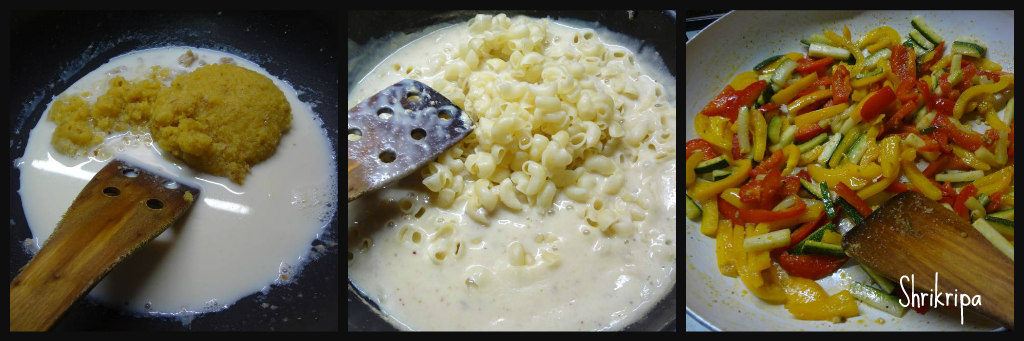
– Make white/pumpkin sauce: put some butter, fry wheat flour (3 TBL sp), add milk and mix nicely. Till it smooths out.

-Add pumpkin puree, drained pasta, garlic salt, red chilli flakes, Italian seasonings and give one boil, keep aside.

-I always keep pumpkin puree in the freezer. The recipe is here.

-In another Tawa, add either butter or olive oil, put chopped or sliced veggies, add req amount of red chilli flakes, garlic salt.

-when it wilts, add ready pumpkin sauce(wth pasta), grated cheese. Check for seasoning. Serve. 


Barbeque Oyster Mushrooms:

Oyster mushrooms are Fan-shaped, soft, with a mild Umami in flavour, when compared to button mushrooms. They appear in different colours starting from white, baby pink, cream, light grey etc. Mushroom is known for its low calorie, rich in protein, low in calorie aspects.

According to my daughters, it tastes much better than the button mushrooms and one of my twins who doesn’t love button mushroom started loving mushrooms by eating a pink variety of Oyster by seeing its cute colour :D. My family prefers simple olive oil, garlic salt and pepper tossed Oyster or Barbecue style (My jugaad style 😉 ) / marinated and baked version as a side dish or salad with fried rice or noodles. 

How I made:

Ingredients:

Oyster Mushroom – 2 packs

Sriracha sauce – 1 tablespoon

Tomato ketchup – 1 tablespoon

Vinegar – 1 tsp

Soy sauce – 1 tsp

Brown sugar or Maple syrup – as needed

Black Pepper powder – ¼ tsp

Olive oil – 1 to 2 tablespoons

Method:

-Clean the mushrooms, drain thoroughly.

-Heat the olive oil, drop Mushrooms, roast it, and remove.

-Prepare the sauce by mixing all the sauces from Sriracha to black pepper. Marinate the roasted mushroom in this sauce for 10 to 20 minutes.

-Bake in a pre-heated oven at 180°C for 10 minutes and serve as you wish.

Note: You can use Iron Tawa to roast, instead of the oven.