Ash gourd Sweet Dosa:

Ash gourd or winter melon or white pumpkin has so many health benefits and it is literally the most ignored veggie of all. In our native we prepare so many varieties of dishes from this white coloured veggie. This Dosa is prepared by using the inner core of the vegetable by removing its seeds. You can make it sweet or plain, that is your choice. I like the sweeter version. It is very soft and melts in your mouth. Today we will see how it’s made.

ribbet 3_Fotor

Ingredients:

Dosa rice – 3 cups

Poha – 1cup

Fenugreek seeds – 1 tsp

Ash gourd inner soft part – 1 cup (you can use white part as well)

Coconut gratings – ½ cup

Turmeric powder – ½ tsp

Salt and jaggery- to taste

If you want sweeter versions add jaggery or else you can omit.

Eno fruit salt – ½ tsp

Method:

-Wash Ash gourd, peel outer skin and remove inner core with seeded part. (Core part can be used to make Dosa batter)

Ribbet collage 1

-Remove seeds and take white part and keep it ready.

-Wash, soak rice, fenugreek seeds with sufficient water by putting beaten rice as well.

Ribbet collage 2

-After 3 to 4 hours of soaking, grind this by putting Ash gourd, jaggery, salt, turmeric, coconut into smooth batter. Check for sweetness or salt.

– Keep this batter for fermentation. In Bangalore weather, I usually grind any batter around afternoon, so that the next morning it will be perfect.

-The next morning add Eno fruit salt, mix nicely and keep aside for 10 minutes.

– Then you can start making Dosa on heated iron griddle. Take one serving spoon of batter and pour, don’t spread. Keep gas flame in simmer, spread little ghee, close the lid and cook. Don’t flip the Dosa. Only one side cooking is needed for this. Here I have used half serving spoon of batter for each small roundel. Personally, I like to serve this as small cute roundels.

-This Dosa tastes good with honey or onion and coconut chutney with red chillies.
Breadfruit Peel Chutney:

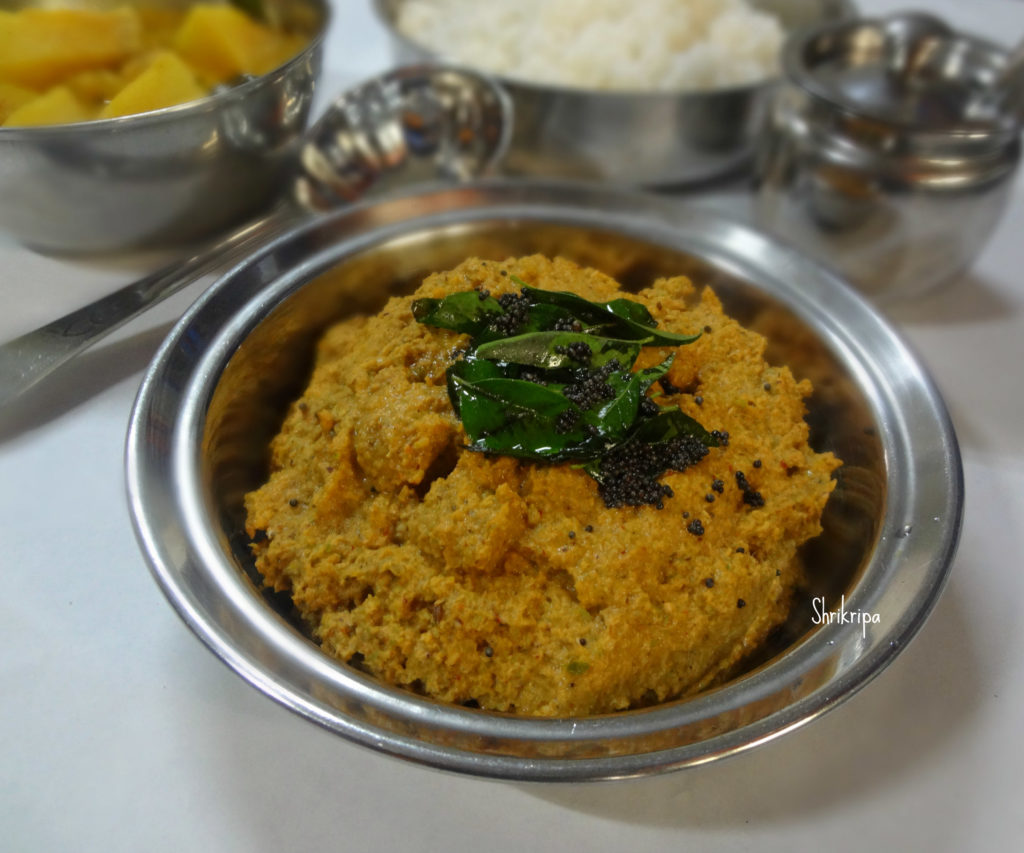
Yes!!! You heard it right. In our household we never throw out nutritionally filled outer peel of the veggie or the seeds. I normally make it a point to use as frequently as possible in one form or the other. Normally vegetable stock is an easy option. If only one variety is available, chutney or relish is an alternative tasty option too.

Don’t throw away organically grown or home-grown veggie skins. These are a real treasure of flavour and vitamins. Normally breadfruit is grown without any pesticide. 

This chutney can be relished with hot plain rice with ghee or with any flat breads. 

chutney main

Ingredients: 

Breadfruit peel – From one fruit

Coconut – ½ cup

Urad dal – 1 tea spoon

Cumin – ½ tea spoon

Dried red chilli – 2

Green chilli – 1 or 2

Garlic – 3 to 4 cloves

Tamarind – ½ tea spoon

Coconut oil – 1 table spoon

Salt

Seasoning:

Coconut oil – 1 tea spoon

Mustard – ½ tea spoon

Curry leaves – 1 spring

Method:

-Wash bread fruit peel before peeling. Once again wash and remove white latex, which oozed out while peeling.

-Take one small kadai, pour oil, when it is hot add urad dal fry until it is light brown.

Ribbet collage 1

-Next add cumin, red chilli, and fry until chilli puffs and becomes crisp.

– Now add peels, garlic, green chilli and fry until outer peel changes its colour and wilts a little.

-Next you can add coconut, tamarind and salt, switch off the gas. Toss for one minute and cool this mixture.

-Grind this cooled mixture in a mixer grinder with enough water.

– Do seasoning by heating oil, splutter mustard and add curry leaves and pour it over the chutney.


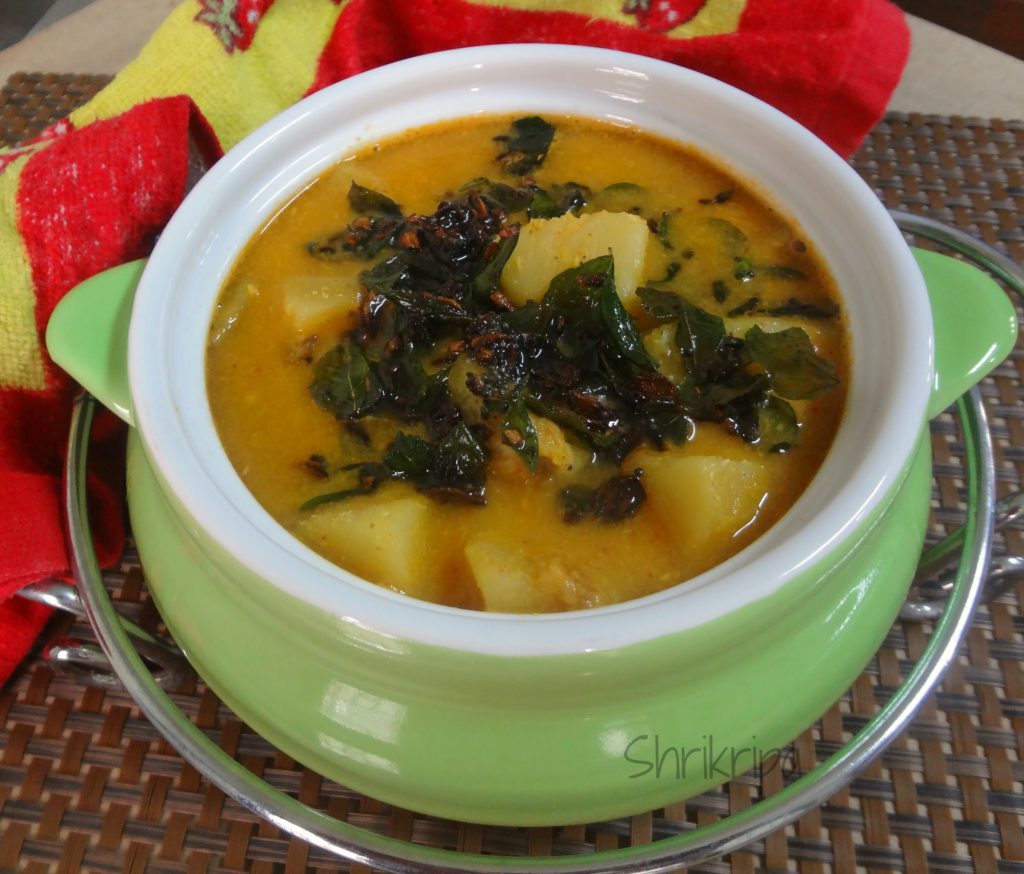
Breadfruit/Deevi halasu sambar:

Breadfruit is seasonal much-loved veggie in our coastal region of Karnataka.

It is something we all grew up with – “a comfort food”

It can be consumed when it is mature, but still firm and can be cooked and eaten in so many forms.

This picture is not enough to bring out the glory of this sambar. This veggie is very soft, melt in the mouth type and combined with this sambar, it makes a heavenly gravy.

breadfruit main

Let us see how to prepare it –

Ingredients:

Bread fruit – 1

Salt

Red chilli powder – 1 tea spoon

Jaggery – 1 to 2 tsp

Toor dal – ¼ cup (cooked)

For masala:

Coriander – 1 table spoon

Cumin – ½ table spoon

Urad dal – 1 ½ table spoon

Hing – ¼ tea spoon

Grated fresh Coconut – 1 bowl

Tamarind – 1 tea spoon

Seasoning:

Coconut oil – 1 table spoon

Mustard – 1 tea spoon

Curry leaves – 1 spring

Onion – ½ (chopped)

Method: 

– Apply some oil to your hand. To some extent it will protect your hand from blackening

– Take fresh breadfruit, wash properly. Take one sharp knife and remove outer skin as thin as possible and reserve this to make chutney. Yup!! you heard it right: D

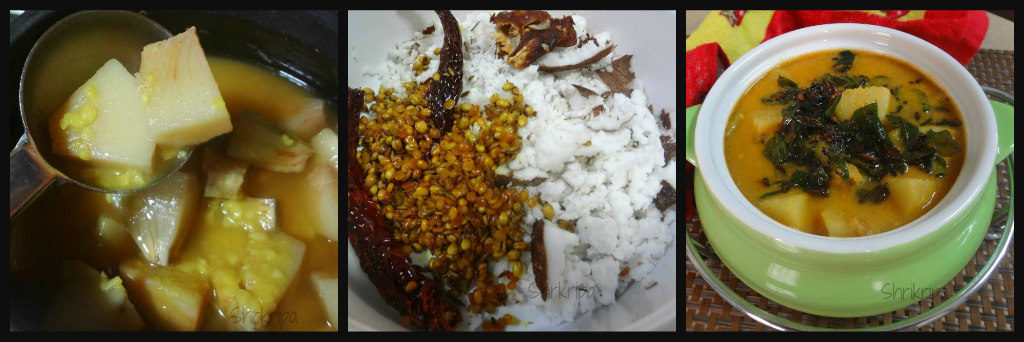
Ribbet collage 1

– Make four longitudinal pieces, remove inner pith (which is slightly harder and rubbery in nature)

-Immerse these pieces in bowl of water for 2 minutes.

– Take out and Make chunk like pieces.

– Cook these pieces with sufficient water, salt, jaggery, red chilli powder.   

Ribbet collage 2                     

–  Now take one kadai, add 1 tsp of coconut oil, put coriander, cumin, urad dal, hing and red chillies – fry in a low flame. When urad dal becomes red, switch off.

-Grind this masala by adding coconut, tamarind and required amount of water to fine paste.                            

-When breadfruit pieces are done, add cooked dal and ground masala. Check for the salt. Keep this on the stove top and boil this mixture.

-After it boils switch off and add seasoning by heating coconut oil, add mustard when it starts spluttering. Add curry leaves and chopped onion. Fry nicely till onion chunks are brown and add this over ready sambar.

-Enjoy this sambar with hot rice.


Genasale/Steamed rice cake with coconut jaggery filling:

Genasale is coconut and jaggery filled steamed kadubu or steamed rice cake, usually folded and steam cooked in banana leaves. Banana leaf gives beautiful aroma and a good taste to this Genasale. Genasale is prepared using few basic ingredients but the end result is mouth watering, everyone’s favourite dish. 

In my ancestral home, Navaratri/Dasara is celebrated by worshiping Goddess Durga. This Genasale is the main offering to the Goddess during night puja. I still vividly remember waiting for this Genasale prasadam to be served, while having a scrumptious traditional dinner. Now let us learn how to prepare this Genasale or kayi kadubu (kayi = coconut).

pic main

Ingredients:

Dosa rice /white rice – 2 cups

Grated coconut – 1 cup

Grated Jaggery –  ½ cup (to taste).

Ghee/ Clarified butter – 4 tsp.

Salt to taste

Banana leaves

Method:

-Wash Dosa rice and soak it for 2 to 3 hours.

 Grind soaked rice in to a fine paste with minimal water and salt.

Batter should be a little thick but of spreadable consistency.

Add 2 tea spoon of ghee and mix nicely, keep aside.

Now prepare filling by mixing coconut, jaggery, and little ghee and mix everything nicely. keep it aside.

Now take banana leaf, hold this on a gas flame (for wilting), then clean it with a wet cloth.

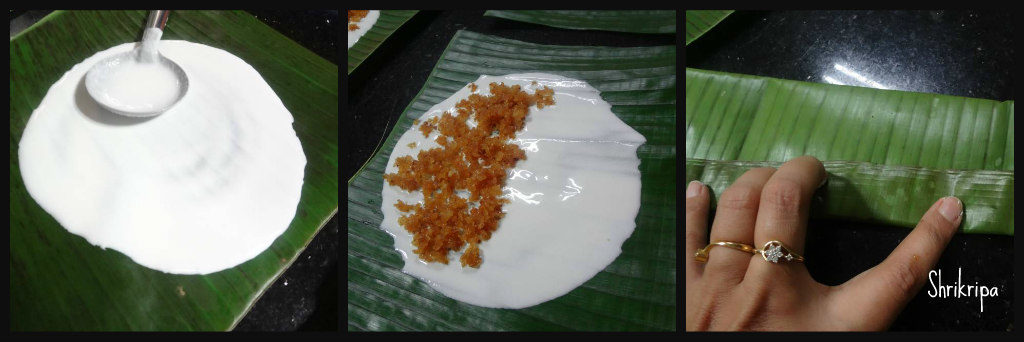
-Now take one spoon of rice batter, apply on banana leaf like a thin Dosa. 

Ribbet collage 1

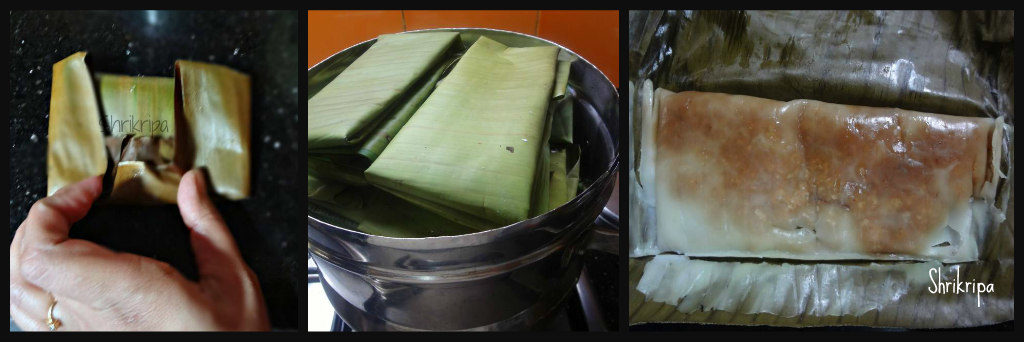
  Take one spoon of jaggery mixture and Spread it over the thin Dosa and fold the banana leaf like a pocket. 

  Steam cook for 30 min.

Ribbet collage 2

Serve this Genasale with dollop of Ghee and Enjoy.

Citrus medica / Dudle huli Chithranna:

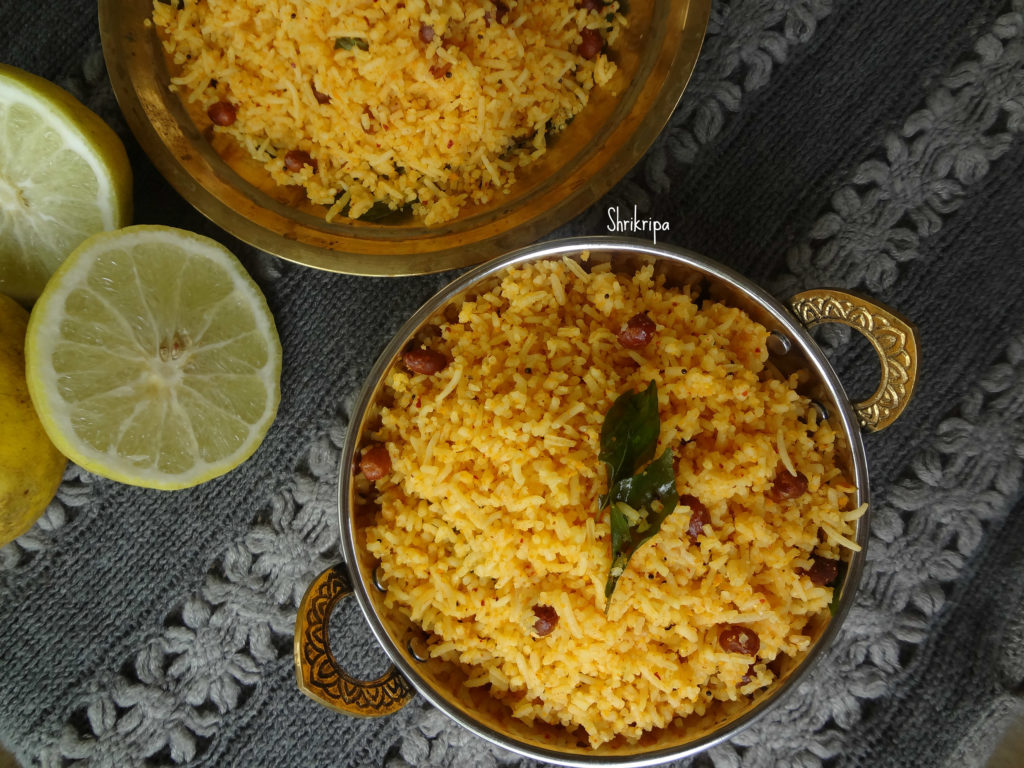
Dudle huli is a big lemon and is known as Citrus medica. Citrus medica is much bigger than normal lemon with thick outer rind and less sour and sweeter than normal lemon, excellent for thin Rasam, juice, pickles or Chithranna. This Chithranna is fragrant, rich in vitamin C and very tasty. We normally serve this in any festivals or weddings. It is a no onion no garlic recipe and we use mustard, dry red chilli and coconut for flavour. This is our traditional and much-loved recipe for Chithranna.

chithranna main

Ingredients:

Rice – 3 cups

Citrus medica – 1 (big citrus fruit)

Dried red chillies – 2 to 3

Mustard – 1 tsp

Coconut – ½ cup

Jaggery – 1 to 2 tsp

Salt

Oil – 1 tsp

Seasoning:

Coconut Oil – 3 tbl sp (any refined oil is ok)

Mustard – 1 tsp

Urad dal – 1 tsp

Cumin – 1 tsp

Hing – ¼ tsp

Curry leaves – 2 springs

Ground nuts – ¼ cup

Method:

-For cooking rice:

Boil water in a big vessel by putting 1 tsp of salt and oil. Add washed rice and cook for 7 to 8 minutes or until it is soft and firm and cooks. Drain cooked water and spread this rice in a colander.

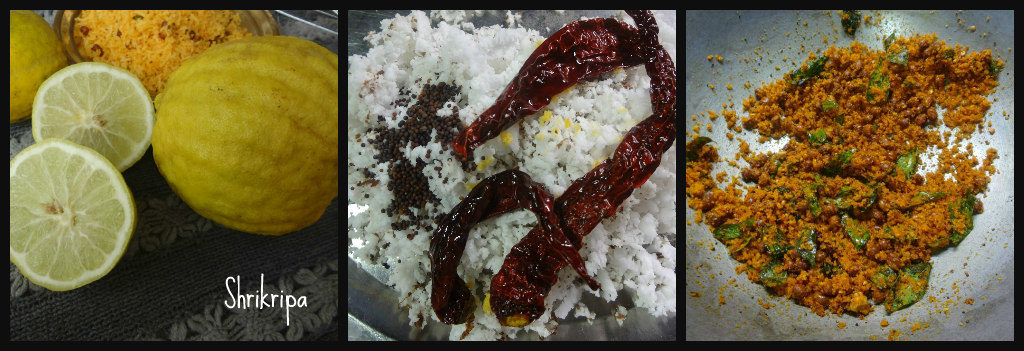
– Grind masala by putting coconut, roasted red chillies, mustard, jaggery and dry run without adding any water.

-Seasoning:

-Take one thick bottomed kadai, add oil and heat. When it is hot, add mustard.

collage 1

-When it starts splutter, add urad dal and ground nut and fry until it becomes little dark. Next add cumin, hing and curry leaves.

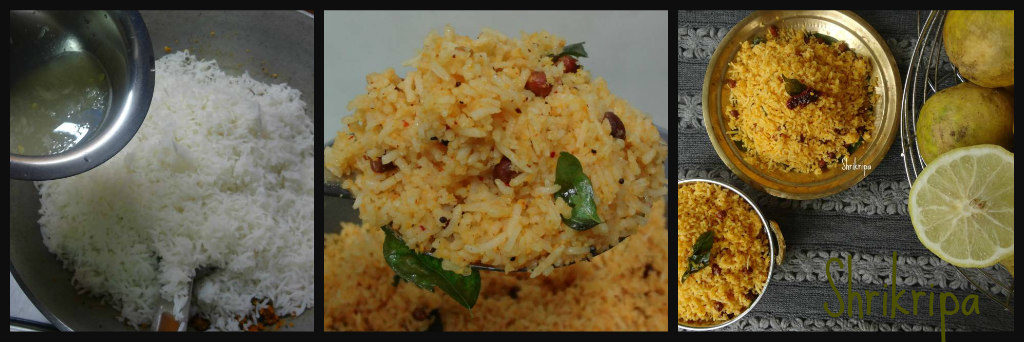
-Now add ground masala and fry for 2 minutes. Add drained rice, juice of citrus medica and salt.

collage 2

-Mix well and switch off the gas. Check for the seasoning and adjust according to your taste.

– This is very ideal vitamin C rich option for tiffin box as well.


Arrowroot Halwa:

Traditionally we call this Arrowroot halbayi. Which is easy to digest and considered as a very light food during fasting or illness. This should be consumed fresh and the shelf life of any halbayi is only 24 hours.

Arrowroot powder is extracted from the arrowroot plant, which is milky white in colour and powdery like corn starch. It has high nutritional content and is a very good substitute for bleached corn starch as a thickening agent in cooking. It is odourless and works well too.

Arrowroot powder’s “Easy to digest” quality is qualified to make infant food as well as to treat diarrhoea. It is usually consumed in a porridge form in our region. Usually, 1 tablespoon of powder is mixed with little water (according to the consistency) and cooked until it is shiny and glossy. Then with preferred seasonings like salt or jaggery.

Although it is a starch, it contains no gluten, so works well in gluten-free baking or cooking as well.

pic main

Ingredients:

Use a small tumbler to measure arrowroot, milk and jaggery or sugar.

Arrowroot powder – 1 cup 

Coconut milk or milk – 1 cup

Jaggery or sugar – 1 cup (grated)

Ghee – 2 tablespoons

Water – 2 cups

Cashew bits – 2 tablespoons

Cardamom powder – 1 teaspoon

Method:

– Mix arrowroot powder in water and keep aside for one hour.

– After an hour, pour the top/soaked water. Add 2 cups of water, mix nicely and sieve this solution to remove any impurities.

collage 1

– Make jaggery syrup by adding little water, boil and sieve the solution to remove any impurities.

– Grease one steel plate with little ghee and keep it aside. Roast cashew bits with a drop of ghee and keep aside.

– Mix sieved mixture, coconut milk, jaggery syrup in one thick Kadai and heat the mixture by stirring continuously on low fire.

collage 2

– Add ghee in-between, when it is half done add cardamom powder, cashew and stir once.

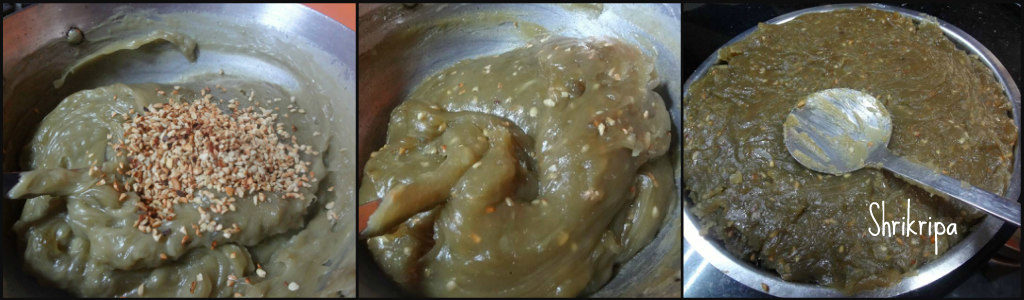
– When the mixture leaves the sides of the vessel and becomes one mass and non-sticky, pour the mixture to a greased plate.

– Take one flat spoon/ladle, apply some ghee to the back of the ladle and press the mixture to give a uniformly smooth texture and even thickness.

– When it cools down a little, mark and cut this into the desired shape and serve.

– Please note, this halwa/ halbayi stands good only for one day. If you want to enjoy this dish over more days, you should store this in a refrigerator and reheat it before serving.


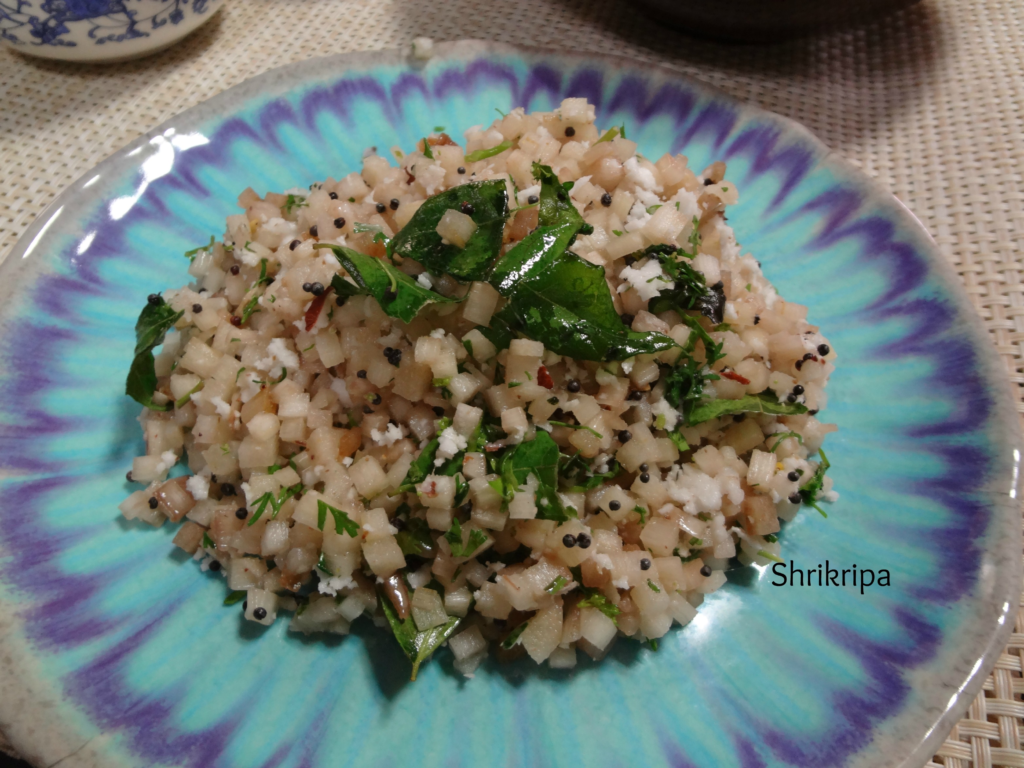
Banana/Plantain Stem Salad:

Traditionally we have used banana stem from ages and it is a super-rich vegetable and neglected by many. Our ancestors were very intelligent and included all the available nutritive vegetables from their surroundings. In our native, usually most of the people rely on agriculture for a livelihood and include all parts of banana plant in day to day cooking. When a bunch of bananas is harvested, the banana tree is cut away. Which is 80% water and 20% fibre.

Eating banana stem is very good for health as well as the kidney. It’s high fibre nature is known for its cleansing property of the digestive system. So, it is very good for diabetic or kidney stone patients.

It has layers of covers which should be peeled off and foot long pieces are made by retaining only a couple of outer layers as a protective layer for this vegetable and they are stored and kept aside for future use.

According to the requirement, before chopping this veggie, chop off required length of the stem, remove outer remaining sheath, until you find the very soft inner core.

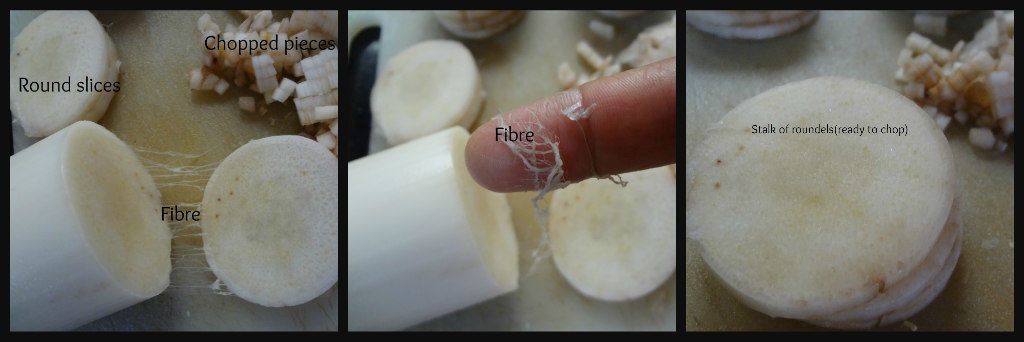
Now comes the chopping part. Make thin slices, while slicing you will see the thread like fibre, which sticks to the knife and sometimes it will stick to the slices itself. If you find any thread like fibre either in sliced pieces or knife, remove it by hand.

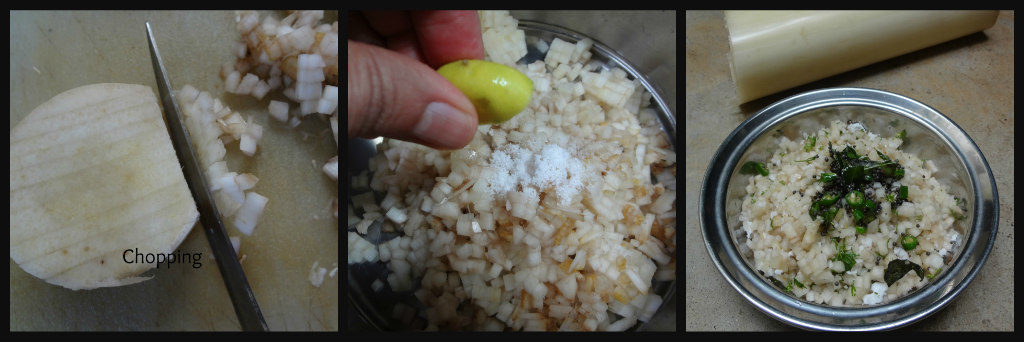
After slicing the roundels, stack 5 to 6 roundels one over the other and chop as desired. I usually make square small pieces for this salad.

pic main

Ingredients:

Plantain stem – 10-inch long.

green chillies – 2 (if available use bird eye chillies)

Fresh Coconut – 2 table spoons

Salt

Lemon – ½

Coriander leaves – 1 table spoon (chopped)

Coconut Oil – 2 tsp

Mustard – 1 tsp

Hing – 1 pinch

Curry leaves – 1 spring

Method:

  Chop banana stem as described in description.

  Now, remove the remaining outer cover.

collage 1

  Slice inner pith into roundels by removing thread like fibre.

  Stack all the roundels and chop as needed. I prefer small square pieces.

collage 2

  Sprinkle salt and lemon juice and mix it thoroughly.

  Chop chillies.

  Do seasoning, heat oil, splutter mustard, add chopped chillies, hing and curry leaves.

  Add this seasoning over salad.

  Garnish with chopped coriander leaves and grated coconut.

  Goes very well with hot rice or curd rice.


Thai Clay Pot Rice with Vegetables:

This recipe is my entry for BetterButter Contest in collaboration with SPRIG.

SPRIG is a brand that scours the world to get the finest gourmet ingredients into kitchens of people who love to experiment in their kitchen.

It was basically an introduction to SPRIG’s range of unique spice blends, to be used in our dishes covering cuisines from Europe to the Middle east to Asia.

To participate, at first there were four choices of spice blends and they made us select one spice blend from the lot and asked us to create a dish and recipe.

I chose Malacca: Oriental spice Blend.

This spice blend is a symphony of fragrant herbs and spices, inspired by the orient. It captures the rustic richness of South East Asian curries, with a twist. Flavourful chilies make for a delightful fusion, best enjoyed when sprinkled into curries, sauces, salad and stir fries. This versatile ingredient can be used as rub, marinade, glaze, paste, crumb, sprinkle or dressing!

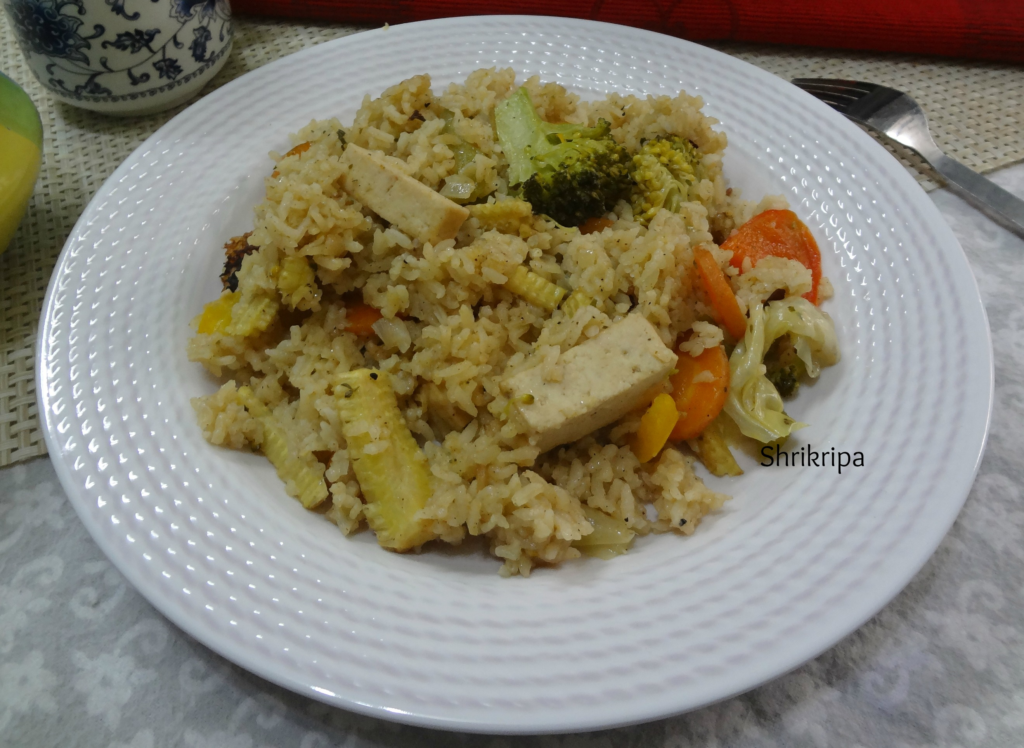
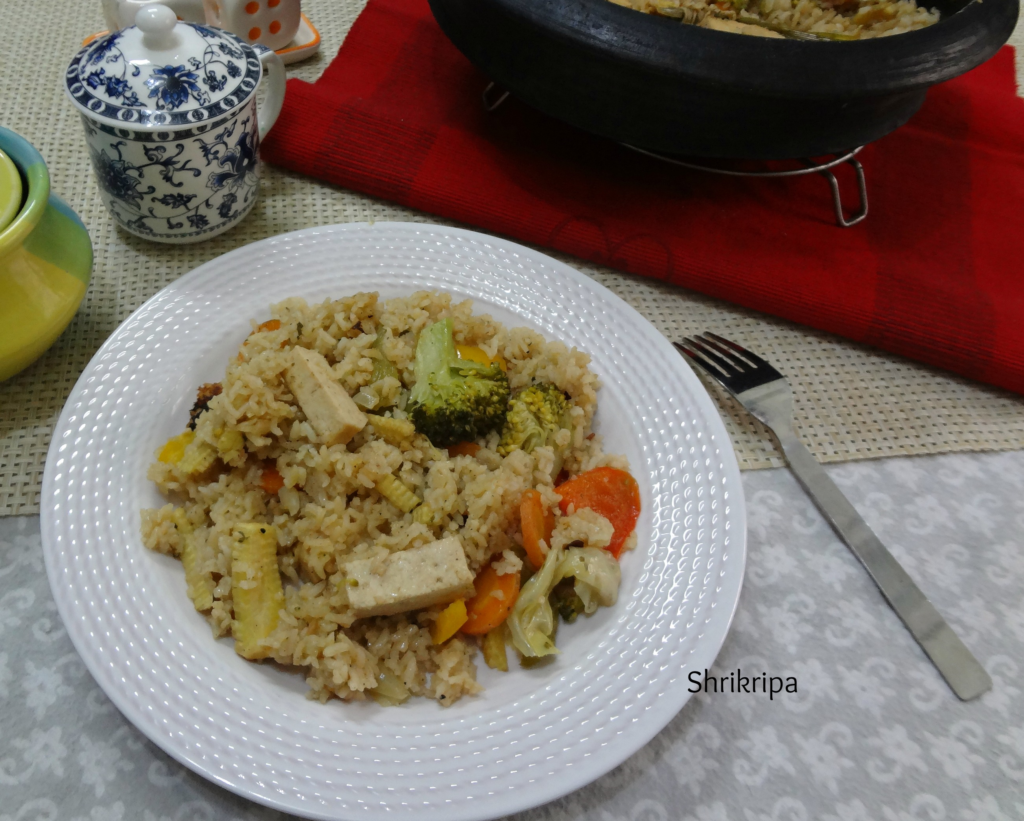
We relish Thai food, lemon grass flavour, one pot meals. Being a Mangalorean, we love our dose of coconut milk too. So, I tried my hand in creating Thai flavoured rice, using clay pot. The dish turned into a super tasty, mildly flavoured one pot meal.

pic main 2


Ingredients:

Rice – 2 cups (small grain rice/ Jeera samba variety)

Vegetables – 1 bowl

Tofu – 100 grams

Onion – 1 medium

Ginger – ½ inch

Thai chillies – 3

Lemon grass – 4 sticks

SPRIG MALACCA spice blend – 2 table spoons

Thick Coconut milk – I tetra pack or 200 ML

Water – 3 ½ cups

Salt – as required

Oil – 2 table spoons (any refined oil)

Sesame oil – 1 table spoon.

Clay pot – for cooking

Method:

– Wash rice and drain the water and keep aside.

– Chop vegetables according to your choice.

pic 1

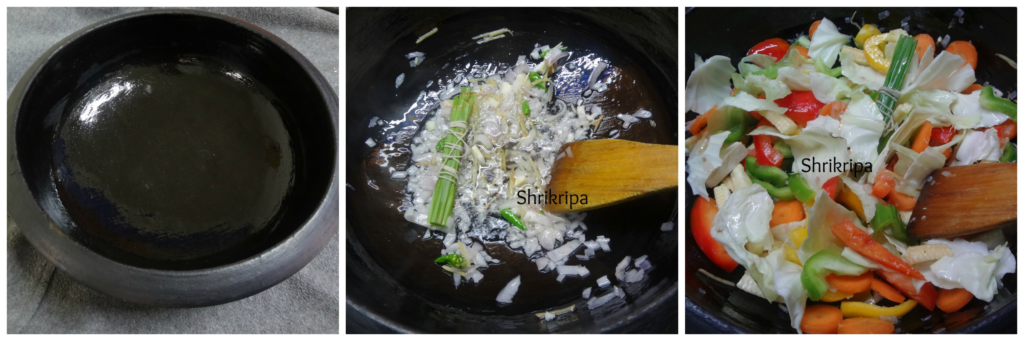
– I have used Broccoli, cabbage, three colours of capsicum and baby corn.

– Chop onion, slice chillies, sliver ginger and keep aside.

– Make 3-inch pieces of lemon grass, make a bunch and tie it with a small piece of cord.

-Take a clay pot and smear it with Sesame oil.

– Sesame oil will act as a non-sticky coat for clay utensil while cooking for long.

collage 1

-Now take oil for seasoning. When it is hot, add onion, chillies, ginger, lemon grass and fry until onion is glossy.

-Add all the vegetables and fry for a while.

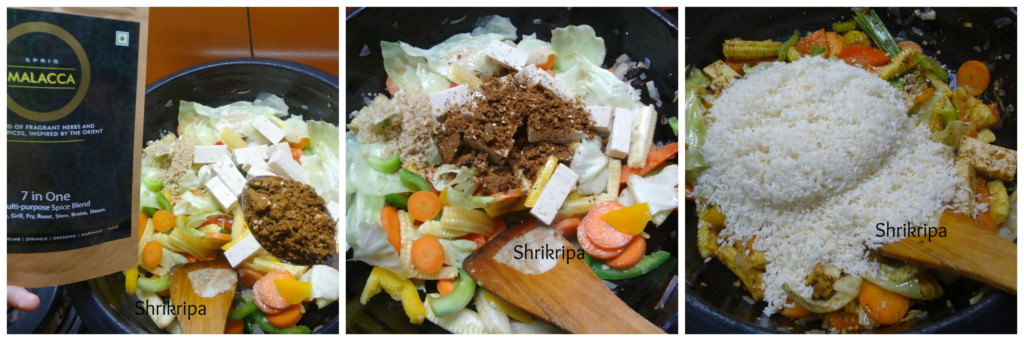
-Now add tofu, Malacca spice, salt and mix everything thoroughly.

collage 2

– Next proceed with addition of drained rice and fry for 2 minutes.

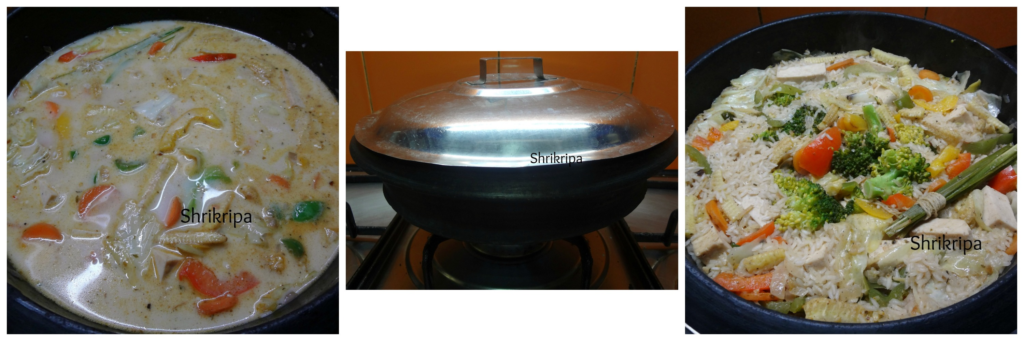
-Add coconut milk, water.

collage 3

-Cook the mixture by closing the lid, in a very low flame for 20 to 30 minutes or until done by mixing twice in between.

-Serve hot by discarding lemon grass sticks. (Used to enhance flavour, since they can’t be swallowed)

pic main 1

NOTE:

  • If Thai chillies are not available, one can use any variety of chilli.
  • I have used bird eye chilli.
  • If sesame oil is not there, one can use refined oil to smear the clay pot.

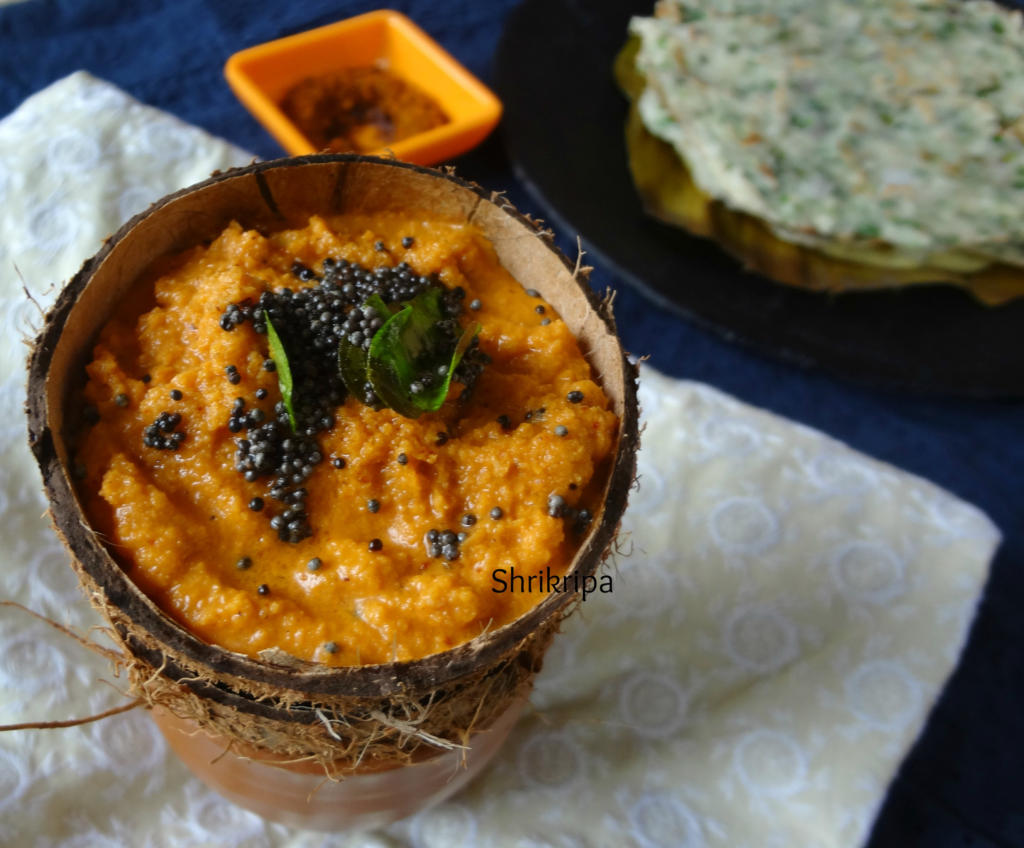
Onion Chutney with Coconut:

We normally refer to this as Neerulli Chutney in Mangalore. Here Neerulli is Onion.Coconut is an integral part of our cooking. This is how we prepare onion chutney traditionally in our households. It can be paired with anything and everything from our breakfast list.

pic 1

Ingredient:

Grated Coconut – 1cup

Red chillies – 2 (Byadagi variety)

Salt – as required

Tamarind – ¼ tsp

Onion – ½ of medium size.

For seasoning-

Coconut oil – 1 tsp

Mustard – ½ tsp

Curry leaves – 1spring

Method:

-Roast the red chillies by putting 2 drops of oil.

-Chop onion

-Grind Coconut, roasted red chillies, tamarind, onion by adding required amount of water and salt into smooth paste.

– Empty out this paste to one small bowl.

-Do seasoning by heating oil, add mustard. When mustard starts to splutter, add curry leaves and pour this over the chutney.

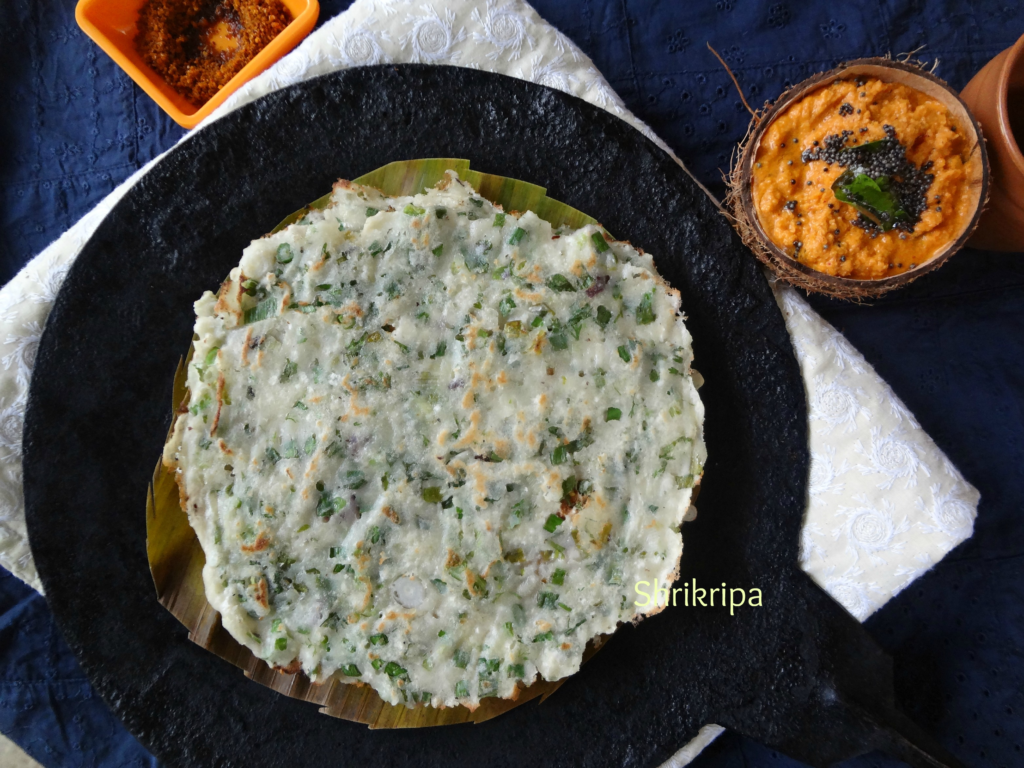
Spring Onion Akki Rotti:

 Akki Rotti is a traditional Breakfast item of Karnataka. Usually it is prepared either by adding chopped greens, grated veggies or only onion. Here I have added chopped spring onion greens as well as bulbs, which is mixed with rice flour to form a thick pliable dough to make super tasty gluten free flat bread. I have served it with coconut and onion chutney, which we traditionally prepare in a Mangalore house hold.

pic main

Ingredients:

Rice flour – 3 cups

Spring onion -1 bundle

Green chillies – 2

Salt

Fresh Coconut gratings – 2 table spoons

Water – to bind

Oil – to fry the rotti.

Method:

  Wash and clean the spring onion and green chillies.

Chop green chillies, spring onion greens and bulbs finely.

 Take one wide steel bowl and mix in rice flour, chopped green chillies, spring onions, coconut gratings, salt.

 Make a pliable dough by adding sufficient water.

Keep it aside for 5 to 10 minutes to absorb all the seasoning as well as to soak.

 When you want to make rotti, take one piece of banana leaf or butter paper.

Take a little rotti dough in your moist hand, and start patting in a circular motion by dipping your hand in a water in-between.

Sprinkle one teaspoon of oil over this patted rotti and keep it ready.

 Heat iron griddle and cook oil sprinkled rotti by putting upside down on it.

After 2 to 3 minutes, peel off banana leaf or butter paper.

Sprinkle little oil over it and flip.

Cook and serve hot with Onion and coconut chutney.

Note:

-Keep one bowl of water in a reachable distance to dip your hand in-between.

-While patting the rotti, dip your hand in a bowl of water which you have kept aside.

– wetting your hand will help to avoid the dough sticking to your fingers while patting.