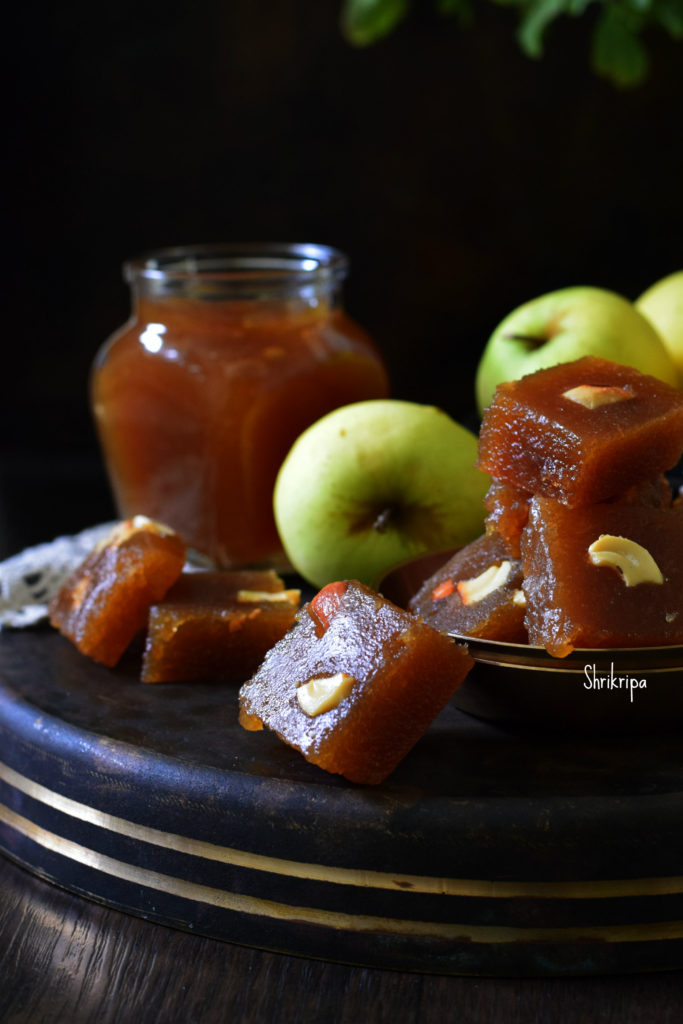
Apple Halwa

Yesterday, while preparing Apple jam, my Research oriented husband came in and asked me what I was doing, I said – Apple jam , planning to finish the stock which we bought couple of weeks back

He said, “why not halwa?” I was like 🙄🤔

Then, I changed my mind and took my share of  jam when it was done. Proceeded to make Halwa with the remaining quantity, by adding little ghee in-between at a regular interval.

Surprisingly, it turned out super delicious and here I am presenting my end result which was experimental.

Here I have used fruit as a whole /with skin. Normally Apple turns out sour when you cook /boil . To avoid the sour taste, normally I bake it until it is done, then grind into a puree, sieved, and proceed to make jam then halwa with the added mild cinnamon flavour. One can add cardamom as well. Sugar can be replaced with an organic jaggery as well. Even though I have not tried with the jaggery, my friend Aruna has tried with the jaggery and result was just amazing, which was deep brown in colour.
Ingredients:

Golden yellow Apple – 1 kg (Any variety would do)

 Sugar – ¾ kg

Ghee – ½ to ¾ cup

Cinnamon or Cardamom – 1 or 2 pinches

Method:

-Wash Apples, dice ,remove seed part and arrange in a baking dish. For Initial preparation, please refer here

-Bake this in a 170°C pre-heated oven for 15 minutes at first.

-Remove, flip those apple pieces, and continue further 15 minutes.

-After 30 minutes, check the doneness. If it is soft, well cooked ,remove it.

-If it is not done, bake for further 5 or 10 minutes.

-When it is cool, add a little water and churn in a juicer by adding 1 or 2 cups of water.

-Sieve ,discard the roughage ( fibre as well as outer skin remains)

-Put this pulp in a thick bottomed kadai, add sugar,  cook until it turns into little thick and turns into mass.
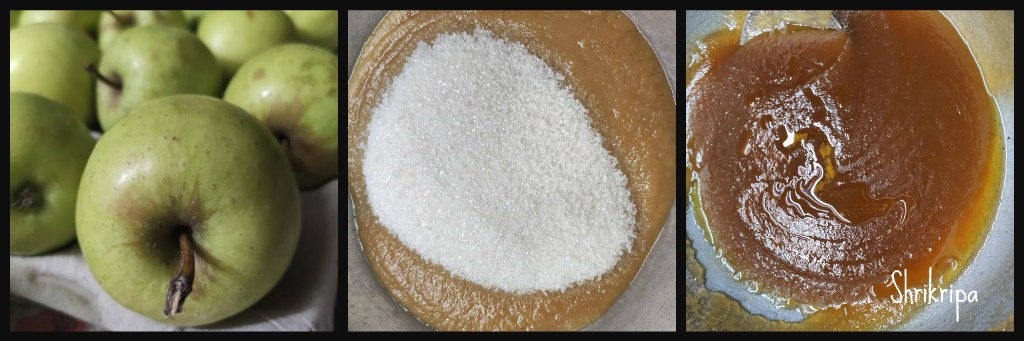
-Add ghee 2 tablespoons at a time in-between while stirring. If you feel that the Apple puree  needs a little more ghee, add up to ¾ cup, some varieties of Apple need very less ghee and some need more.

-Now we will see, how we decide the quantity of ghee. While stirring if you feel that the mixture is a little dry and the bottom part becomes a little brown, keep adding it. If the ghee starts oozing at the sides, it is an indication to stop the addition of ghee.        


-Now we will see how you know the doneness. It is quite simple, keep on stirring until mixture leaves the sides of the kadai and ghee oozes out from the mixture. You can add cashew pieces at this stage or spread those pieces in a greased plate like me.

-After you are done with this, it is almost ready to shift to the plate. Before shifting I prefer to check, by taking one small peanut sized portion of the mixture and rolling it in-between my thumb and forefinger to make a small ball like structure. If it holds a ball like structure and does not stick to your finger, it is ready.

-Now remove from the flame, shift to a greased plate, and pat this mixture evenly by using a flat, greased (apply some ghee) back of the spoon.       
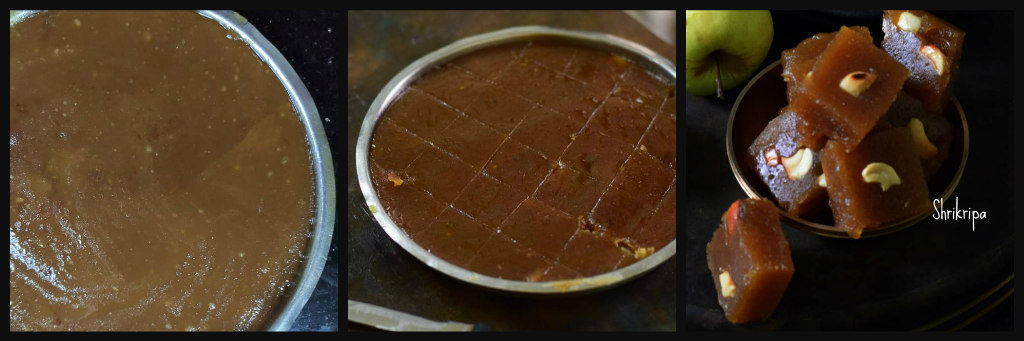
        

-Keep this aside for two or three hours to cool. Then cut this into the desired shape and store it in an airtight container.

-You can store this Halwa for a really long time (up to a month or two).
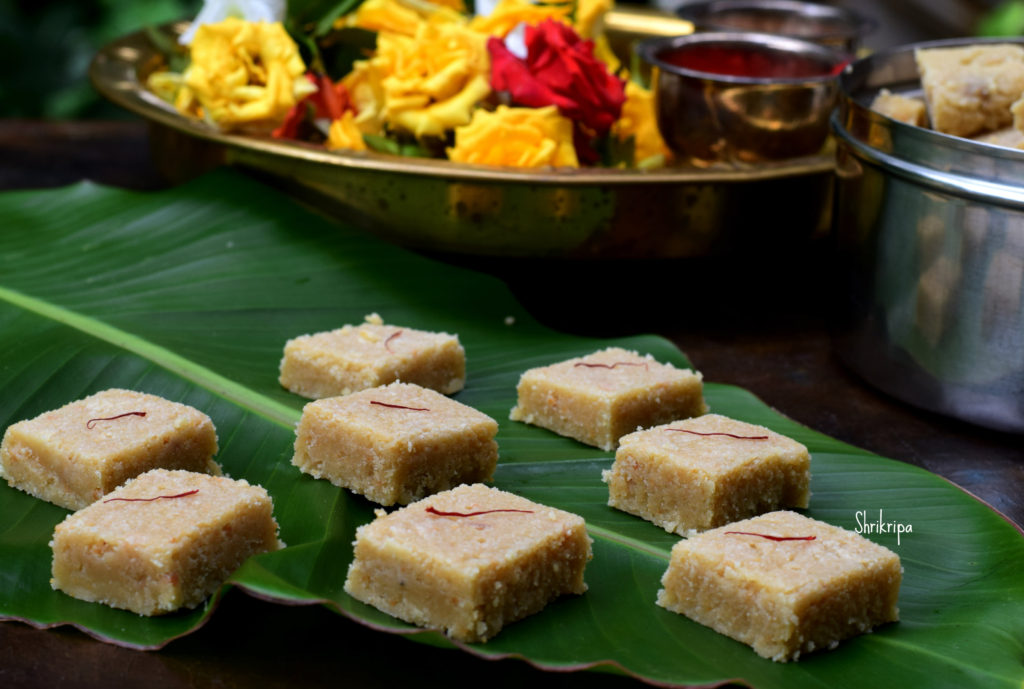


Almond Cashew Mawa Burfi:

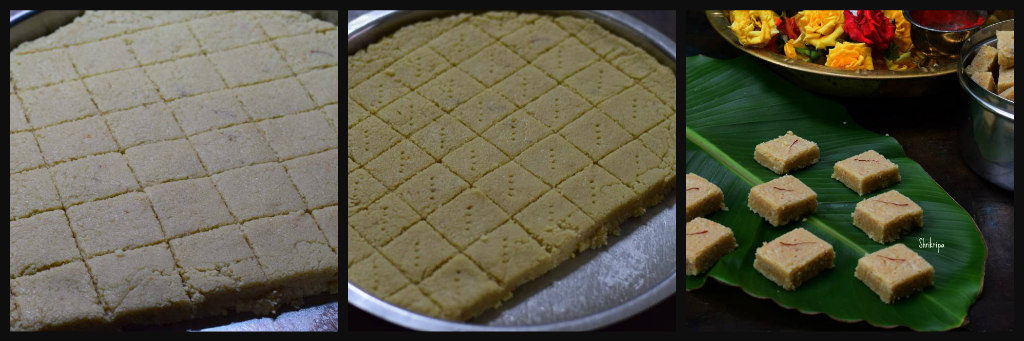
Who does not love Almond or Kaju Katli? Here I have combined the much loved two raw materials,  with milk solid/ khoya, to give a melt in a mouth Indian dessert, In the form of burfi.

Almond cashew mawa Barfi is a super delicious, easy to make, melt in mouth Indian sweet or fudge recipe. A perfect sweet to make on any special occasion! Or festive time.

Ingredients:

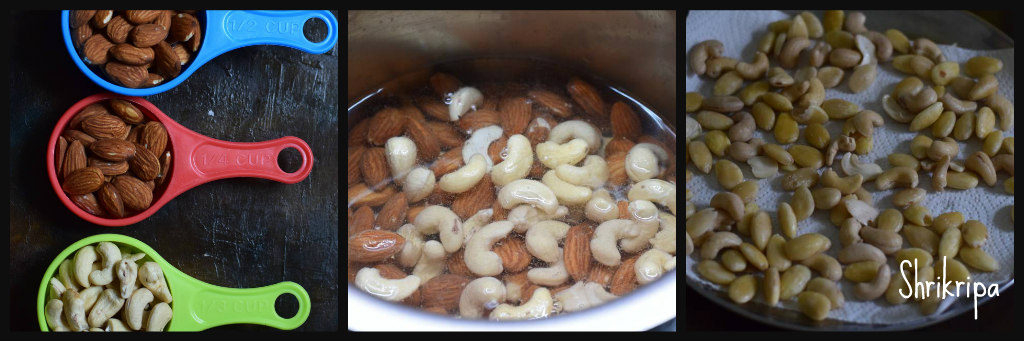
Almond – ¾ cup

Cashew –  1/3 cup

Khoya /mawa – ½ cup / 100 grams ( unsweetened)

Sugar – 1 ½ cup

Water – ½ cup

Ghee – ¼ cup

Saffron – 10 – 12 strands

Method:

-Heat a cup of water, soak almond and cashew. Close the lid and keep it for 2 hours.

-After two hours, peel the almonds, drain the water, spread these on kitchen towel to remove extra moisture.

-Grind them in a small mixer jar, by using pulse option by giving intervals for mixing in between to get a smooth paste. Grease one steel plate and keep it ready as well.

-Now, take one thick kadai, pour sugar, water, and boil until it reaches one thread consistency. It takes hardly 5 minutes, after initial boil.

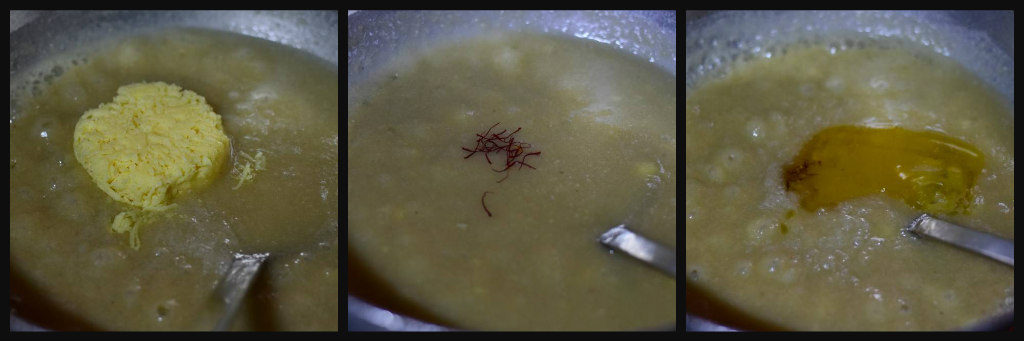
-Add in Almond, cashew paste, after it melts and forms a homogeneous mix, add in grated Mawa.

-Stir everything in a low fire, without leaving hand. While stirring, add a tsp of ghee at regular interval and add saffron strands as well.

-When mixture leaves the sides, as well as thickens, check for the doneness. Take out little mixture, hold a small quantity, in between your thumb and forefinger, try to make a ball. Formed ball should shine as well as should not stick to your finger.

-If it passes the test, switch off the gas, and keep stirring for another 5 to 7 minutes, if any ghee is remaining, pour in between stirring.

 -Take the greased plate, pour the mixture, and spread evenly and leave it for 10 minutes. Mark the line and keep it aside for cooling. After cooling, take out pieces, store it in an airtight box.


Kantola Palya / Subzi/ dry curry:

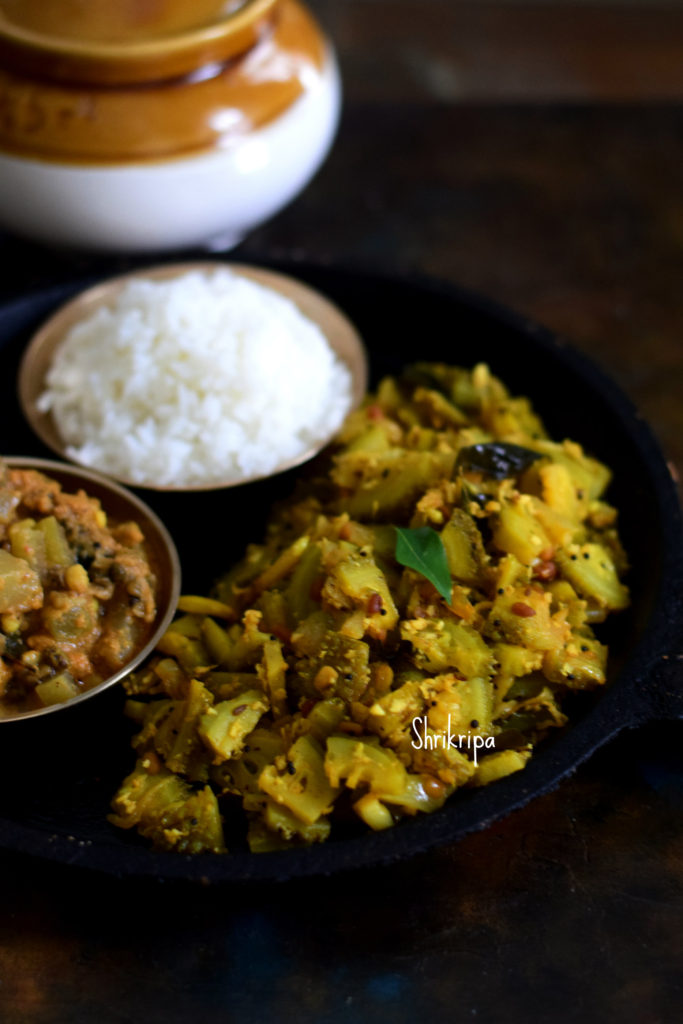
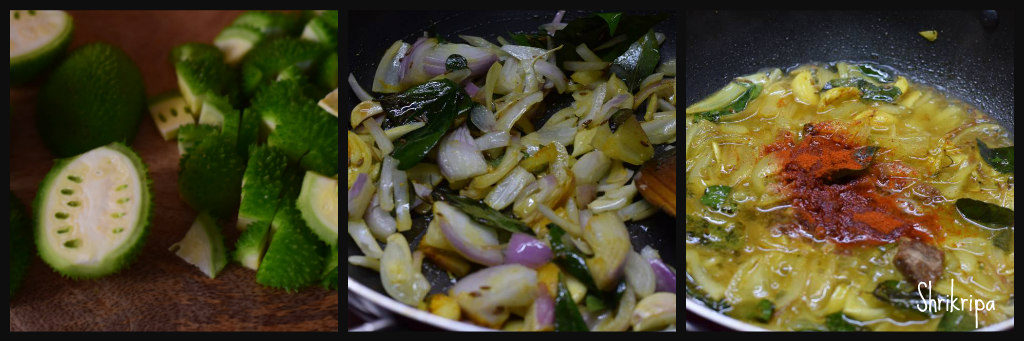
Kantola has many names like Spine gourd, Teasel Gourd, phagila, Mada hagala, locally we call this as “Kaadu peere” in Mangalore. Kantola is one of the famous and nutritious vegetable of coastal region and some Eastern parts of states. This monsoon vegetable is loved by all. This resembles a bitter gourd in structure, but not in taste. It is a crunchy mild flavoured vegetable.  It is a great health food as it is rich in proteins, Iron, and antioxidants and low in calories. It is high in fibre too.                  

In my family, we usually relish this in two ways. One is crunchy,  tawa fry form or as a palya. I make palya in two ways. One is garnished with  fresh coconut. Other one is  with coconut, along with little crushed roasted peanut. Both side dishes tastes equally good.

Ingredients:

Kantola – 500 grams

Onion – 1

Garlic – 7 to8

Turmeric – 1 tsp

Tamarind – small gooseberry size.

Red chilli powder – 1 to 2 tsp

Salt – to taste

Jaggery –  to taste

Fresh Coconut – to garnish

For seasoning: Coconut/ Vegetable oil, Mustard, urad dal, chana dal, cumin , curry leaves.

Method:

-Wash Kantola, chop into small slices. Chop onion and crush garlic. Soak tamarind in a cup of water.

– Take one kadai, heat oil, splutter mustard, add urad and chana dal. Fry until it turns red. Add cumin and curry leaves as well as crushed garlic.

-Add chopped onion, add turmeric, fry until onion turns transparent. Add tamarind water, red chilli powder, salt, jaggery.

-When it starts boiling, add chopped Kantola and mix everything , close the lid, and cook in a low flame.

-After water drains, Kantola turns soft, garnish with coconut or coconut as well as crushed roasted peanuts.

Mix everything and cook further 3 more minutes and switch off. Serve as a side dish with rice or roti.


Mexican Rice Bowl:

One of the much-loved foods for my daughters is the Californian Burrito rice bowls. It is a healthy, balanced meal which has protein, carbohydrate, good fat as well as all the goodness of vegetables. As  rice eaters, it used to be our choice as a go to meal.

When my daughters asked me to replicate their favourite meal at home, I tried my best to attain the taste and it was turned into a super hit and it got a thumbs up from everyone. So, thought of sharing my recipe in my blog as well.

Here, I have teamed up garlic – celery flavoured rice , Red beans/ dry rajma , pan roasted capsicum – zucchini, Tomato – sweet corn salsa , Avocado guacamole, and healthy sour cream by mixing hung curd with little mayonnaise.

Let us see how I made this: For 4 servings

For Garlic – Celery Rice:

Rice – 1 ½  cup (small grain rice)

Butter – 1 tablespoon

Garlic – 6 ( sliced)

Celery greens with stalk – 2

Salt , pepper

Method:

-Wash rice, Boil 6 to 8 cups of water in a vessel , add little salt, 1 tsp of oil. When it starts boiling, add rice, cook for 7 to 8 min ( al dente ). Drain the starch , cool, and keep aside.

-For seasoning, take one wok, heat butter, add garlic, chopped celery, and toss until it is done. Add little salt, pepper powder, and mix in cooled rice. Adjust the seasoning.

For Dry Rajma/ Red beans:

Rajma/ Red kidney beans – ¾ cup

Butter – 1 tbl sp

Onion – ½

Tomato – 1

Garlic – 4 cloves (sliced)

Cumin powder – 1 tsp

MDH  curry powder – 1 tsp (or any other masala of your choice)

Red chilli powder – 1 tsp

Turmeric – ½ tsp

Salt

Chopped coriander leaves – 1 tbl sp

Method:

-Take a short variety of Kashmiri Rajma. Soak for 7 to 8 hrs. Cook soaked beans in sufficient water for 6 to 8 whistles in a pressure cooker. Remove the content and do the seasoning.

-take the cooker, add butter, fry garlic and onion, add turmeric, red chilli powder, Curry powder, cumin powder, salt and if you prefer add pinch of sugar as well,  fry for 2 min and add chopped tomatoes.

-When tomatoes become mushy, add cooked rajma, close the lid, switch off after the first whistle.

-Open the lid, keep it in a simmer to drain, remaining water content. When it is semi solid, garnish with coriander leaves and switch off.

For Pan roasted Capsicum – zucchini :

Capsicum – 2 (diced)

Zucchini – ½ (diced)

Onion – 1 (diced)

Salt , seasoning of your choice or red chilli flakes or slit green chilli

Olive oil or butter

Method: Heat oil or butter, if you are adding green chilli, add now. Then diced veggies and toss until it is half cooked, sprinkle salt and preferred seasoning.

For Sweet corn – Tomato salsa:

Cooked sweet corn – ½ cup

Tomato – 1 big

Onion – ½

Green chilli – 1

Salt

Lemon – ½

Chopped coriander – little

Method: Chop onion, tomato , green chilli into tiny bits ,add salt, lemon juice and mix. Garnish with chopped coriander.

For Guacamole:

Recipe is here 

For low calorie Sour cream:

Take a 2 tbl spoon of hung curd, mix it with garlic mayo and beat a little.

How to Assemble:

Take one wide bowl, serve 1 serving spoon of prepared rice, then beans, roasted veggies, salsa in a circular manner. Top it with Guacamole and sour cream and serve with couple of tortilla chips or without chips.

Pomegranate Peel Tambli:

Like coconut tree and banana plant , pomegranate is also an extremely useful plant to mankind. Starting from its bark, young leaves , fruits, and its outer peel have many medicinal properties.

In olden days, people never used to buy a fruit from outside. In our villages, people used to eat home grown seasonal fruits , which included wildly grown many berries, guava, chikoo, mango , bell fruits etc. Banana bunch used to be hanged at one corner of the house and it was the only fruit which was available  365 days. Pomegranate was rare, if any person is ill or recuperating after surgery etc  then only, it used to enter our houses. So, lady of the house used to treat that not less than the gold 😉 . She used to make it a point to clean the peel by removing all those white covers, break it into 4 to 6 pieces, carefully sun drying and used to store it near “chulha” / we call it as a “ole katte” ( it is basically a olden day’s cooking platform, which used wood as fuel). Throwing out the peel was not heard of and it had an enormous importance in every family in our region.

According to my co sister, who is an ayurvedic doctor, Ayurveda holds Pomegranate fruit in higher regards because of its antioxidant, pro biotic nature. Due to its anti-bacterial and anti-microbial quality, it helps to bind the stools and helps to control the diarrhoea. She says, Astringent- bitter taste of the peel is the reason behind its anti-diarrhoea quality. Hence, it can be used to cure diarrhoea and not in constipation. Pomegranate peel powder is good for oily skin. If powder is mixed with rose water and applied as a face pack , it reduces acne and brings glow to oily face.

In traditional home remedies When fruit has been used to treat Anaemia , peel has been used to treat dysentery/ diarrhoea (even with blood) . We normally prepare Kashaya by boiling couple of pieces of dried peel in a cup of water, reduced to half and consumed either plain or by adding little jaggery. Otherwise, every now and then, prepare Tambli and consume to maintain our gut health .

Tambli is preferred to total wellbeing of our gut because , it is more palatable than the Kashaya, as well as it consists  curd ,which again is a pro-biotic. Hence, if we include pomegranate peel in our regular diet every now and then, it helps in intestinal detoxifying and cleansing. In return it would helps to improve digestion.

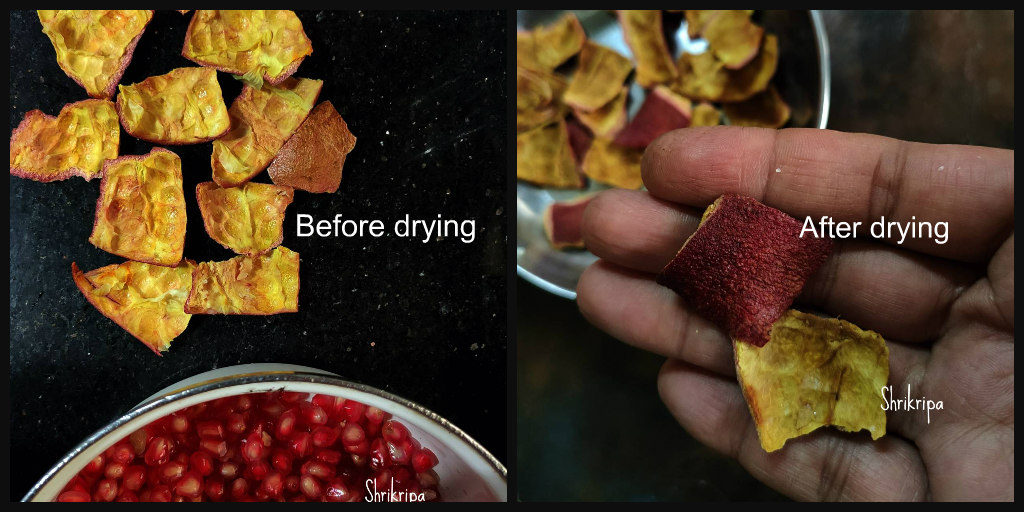
Now we would see how to dry those fruit peels at first: It is quite simple. Remove all the white sheath beneath the fruit kernels, dry under the sun or keep it near the windowsill . When it is crisp ,breaks while folding, that is it. Store it in an airtight jar or zip lock. Use whenever it is needed.

Tambli preparation:

Ingredients:

Dried Pomegranate peel – 2 pieces

Black whole pepper – 6 to 8

Cumin – ½ – ¾ tsp

Fresh grated Coconut – 1 fistful

Curd – 1 to 1 ½  small serving spoon

Salt

Ghee

Method:

-Fry pepper, cumin, broken pieces of the peel until it is  crispy.

-Grind these into fine paste by adding coconut ,salt and sufficient water.

-Add curd, adjust the consistency by adding water.

-If needed season with ghee, cumin and curry leaves and serve with rice or drink as it is.

NOTE:

1) For vegan version, instead of ghee or clarified butter one can use coconut oil .

2)You can use whole black pepper corns or white pepper corns.


Salted jackfruit Vada / Sole vade:

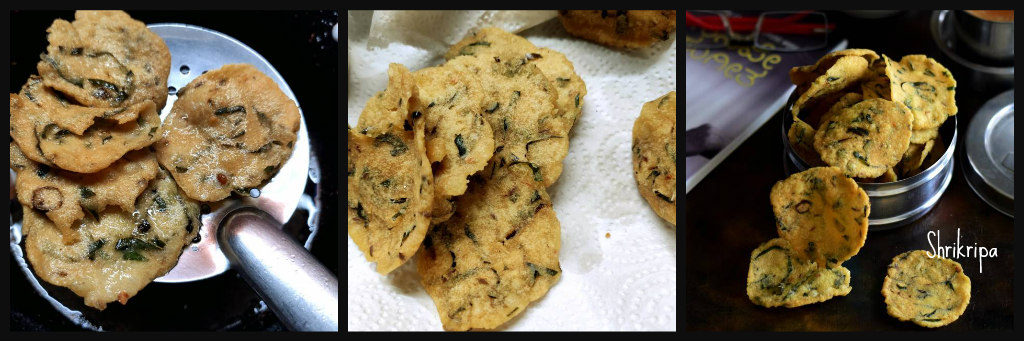
Sole , uppad pachir , uppinalli hakida halasinakai , these are all different names of salted / brined jackfruit. Which is basically a firm fully grown, matured but un-ripened jackfruit which is preserved in salt water. We usually relish this in the rainy season or in the off season by preparing some of our traditional dishes.

Salting the jackfruit, side by side preparing the chips is part of our childhood memories – sort of a preparation for rainy season. Which used to be a family affair and real fun altogether. Now a days, if I need to do something, either ask mom or buy it locally from Mangalore stores . Last weekend got a fistful of brined jack from my sister in law and made this age old / my grand mom’s recipe. Which I used to relish during my childhood. Just before the process of putting the fresh ones, there used to be a process of cleaning and sterilising the porcelain jars or Barani.  Which used to include, the process of emptying last year’s stock as well 😀 . So, all these delicacies used to be a result of such operations 😉 . You can call this as Salted jackfruit Vada or thattai or Nippattu. We hardly need any preparation for this delicacy. Curry leaves is the main flavour over here.

Ingredients:

Salted / brined jack – around 2 fistfuls

Rice flour – around ½ cup

Cumin – 1 to 2 tsp

Chopped green chillies – 2

Chopped curry leaves – around ½ cup

If needed – little salt.

Oil – to deep fry

Method:

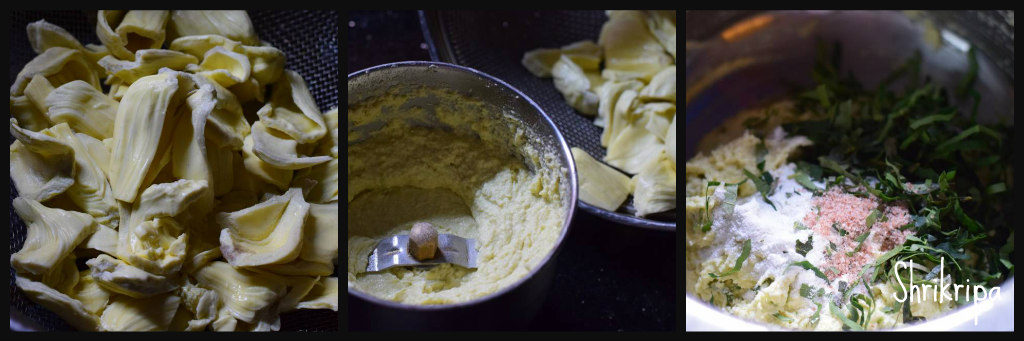
-Soak salted jack in a big bowl of water. Wash couple of times to remove excess salt.

-If salt is excess, sometimes it needs little extra soaking time in fresh water.

-Squeeze and as much as possible, drain the water and grind jackfruit pieces in a mixer jar.

-After grinding into smooth paste, add cumin, chopped green chillies, curry leaves, and mix it nicely.

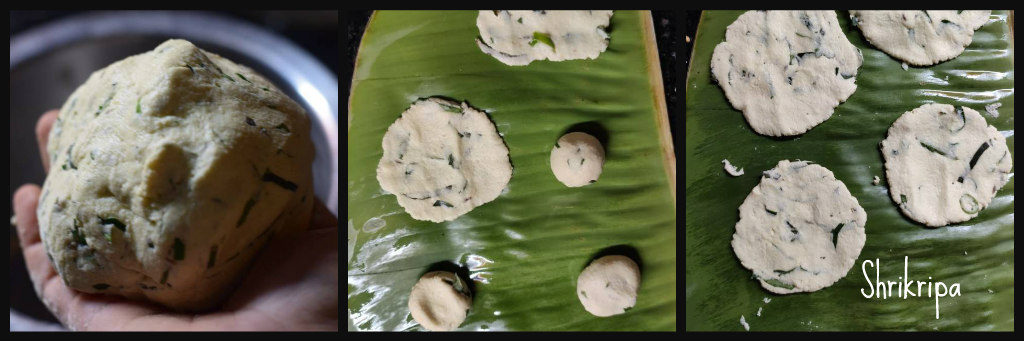
-Now, take required amount of rice flour and make a pliable dough.

-Check for the salt, if needed add and adjust.

-Take one small piece of banana leaf or  butter paper. Pat small Vada.

-Heat oil and deep fry like any other deep-fried savouries. Enjoy with your evening tea or coffee.


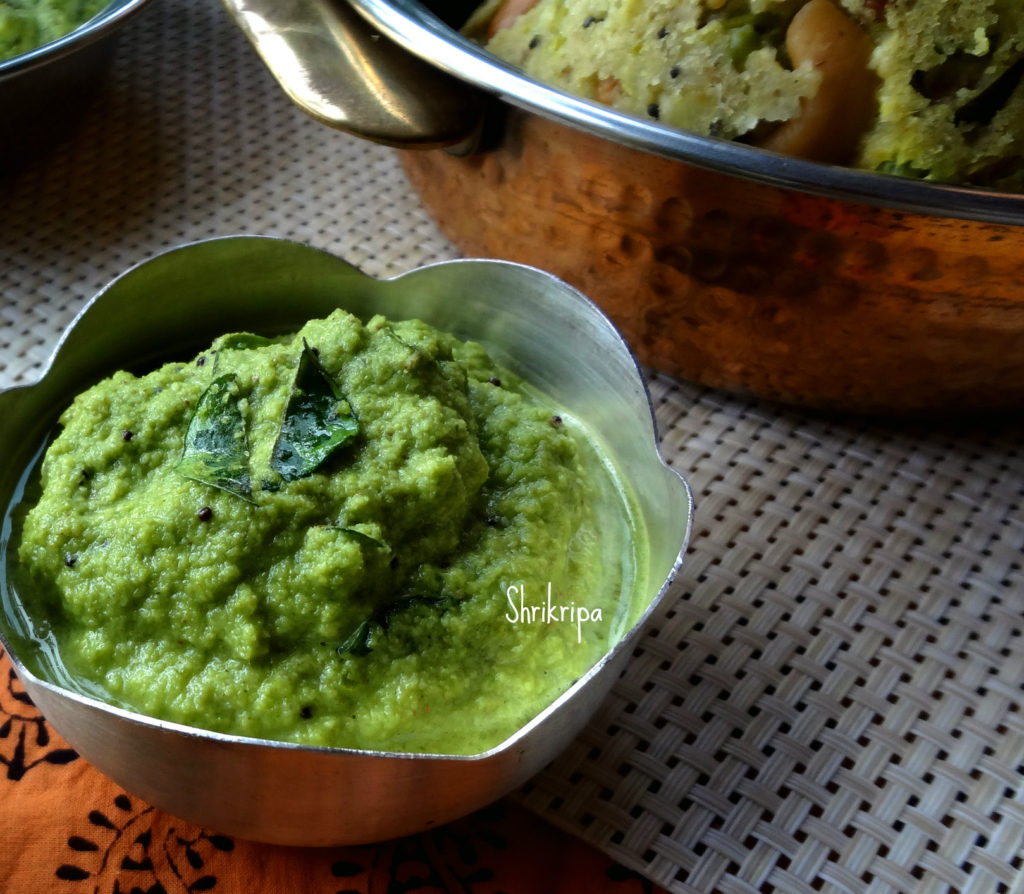
Coconut-Fresh Coriander chutney (Grandma’s style)

One more recipe from Smitha, dear friend of mine.  which I always relish with Oats and rava idli is age old recipe of her grandma. Though I have done little changes to the original recipe, taste wise it is the same and if you like khatta meeta chutneys, this is for you to enjoy with vegetable Oats rava idlies or plain oats – rava idlies or Rava idli with oats.

Ingredients

Fresh Coconut, shredded – 1 Cup
Fresh Coriander – A little more than half cup
Green Chilies – 4 to 6

Tamarind – Size of a Gooseberry
Hing – ½ tsp
Jaggery – 1 & 1/2 Tablespoon
Oil – 2 tsp

For Tempering: Oil, Mustard, Curry Leaves

Method

-Soak tamarind and jaggery in little bit of water to make it soft.

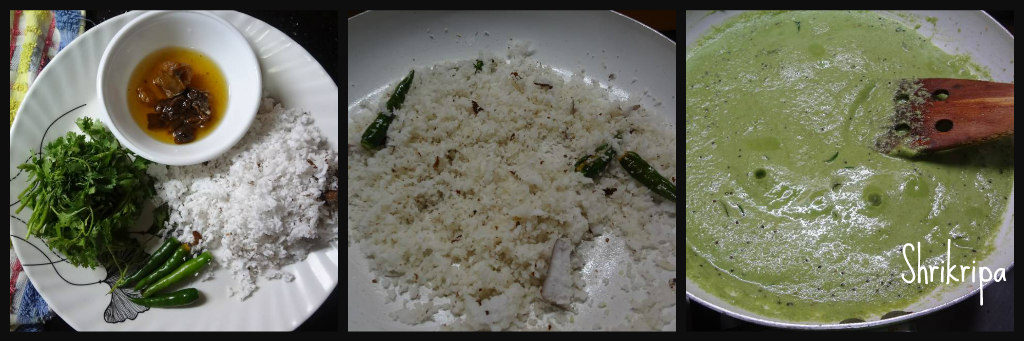
-Heat a pan. Add oil, Sauté the green chilies, until the outer skin looks partially white. Add the coconut and give it a mix. Once the coconut has turned warm, turn off the flame. Cool it.

– In a blender jar, put this mixture, along with tamarind-jaggery mix, hing, salt, fresh coriander and blend into smooth paste by adding water.

-Do seasoning, by heating oil, splutter mustard add curry leaves and add  ground paste, boil for 2 minutes.

-Cool and serve with Oats Rava idli. This chutney stays good for couple of days, under refrigeration.

Jackfruit seed Hummus :

In our native, jackfruit cutting is a family affair. Amma used to sit on the ‘ mettu katthi” which is a special type of sickle attached to the raised wooden plank. She used to chop the fruit, and we all used to sit in front of her and  do the odd job, like removal of jack bulbs, cut open the bulb and the separation of the seeds. Every seed used to be collected, washed, and  preserved it for the future use. In off season/ monsoon it used to be the main source of protein in our traditional cooking. I have shared couple of jackfruit seed recipes with Bamboo shoot as well as with coloured cucumber. I even preserve jack seed in a frozen form and procedure is already shared in my blog as well.

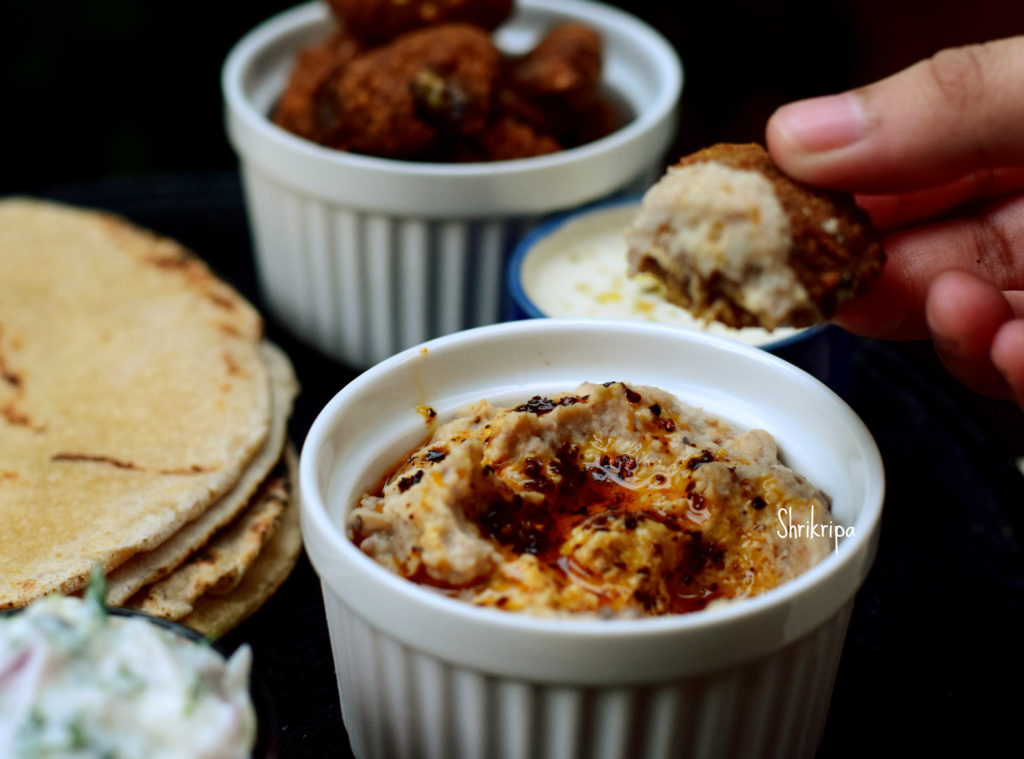
In our region, people have been using jackfruit seeds in their traditional cooking for ages. We are accustomed to its taste as well as love it in any form. This time, I tried my hand at making Hummus, as my family hates the usual hummus made of chickpeas, which is popular in Middle east and Mediterranean cuisine. Usually it is made from cooked, blended chickpeas with tahini, olive oil and some basic seasoning.

It turned out to be super delicious and we enjoyed it as a dip with some steamed vegetables as well as with pita bread pocket. Highly recommend if you don’t like the usual chickpea hummus.

Now we will see how I made this –

Ingredients:

Ingredients:

Jackfruit seeds – 10 to 15

Garlic – 6 to 8

White Sesame seeds – 1 tablespoon

Salt

Lemon juice – as needed.

Cold chilled water – to grind ( helps to achieve creamy texture)

Olive oil –1 to  3 tablespoons

Chilli flakes – 1 tsp

Method:

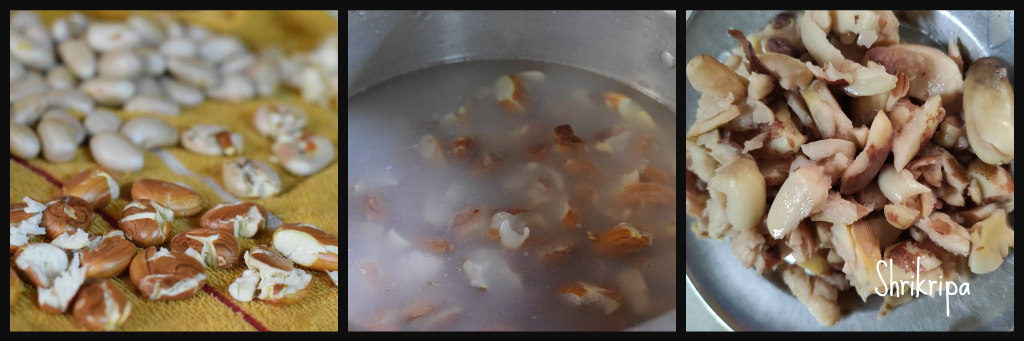
-I prefer crushing the seed at the beginning. Take a thick kitchen towel, keep the seeds and crush. ( it gives the grip. otherwise, seeds flip while crushing)

-Wash those seeds a couple of times to remove all those white traces, which oozes out from the seed.

-Put all this in a cooker, after 3 whistles, switch off the gas.

-Dry roast sesame seeds and keep it ready.

-In the meantime , slice garlic cloves , heat little oil, fry this into a golden brown and keep aside.

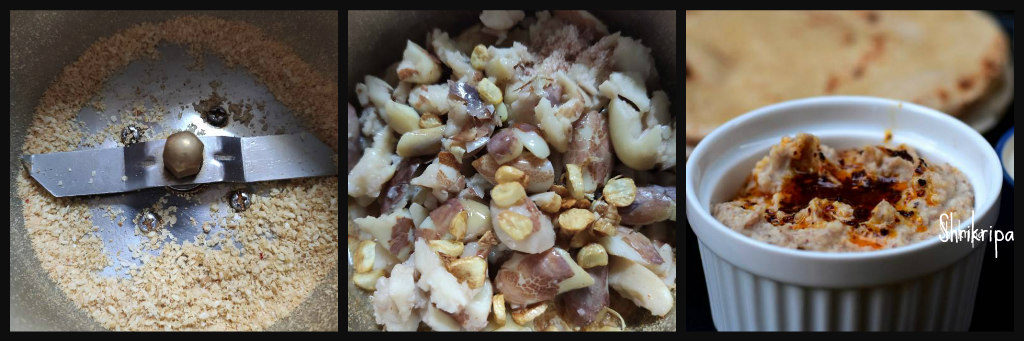
-When jack seed cools down , take a mixer jar or food processor, powder roasted sesame seed first. Add golden fried garlic chunks, lemon juice, salt, jack seed and sufficient cold water (it is an important to use cold water to achieve final creamy textured hummus)

-While grinding, use low speed / pulse option in your processor.

-After grinding, I have used hot olive oil ( you can blame my Indian gene 😉 who loves hot seasoning over any curries)  with red chilli flakes to give an extra zing. It is really simple.

-Take a seasoning ladle, heat olive oil, switch off the flame. Add red chilli flakes to hot oil. Now pour this over the hummus.

-Either you can enjoy as a dip with some steamed veggies like carrot, broccoli, or cucumber sticks.

-You can use as a sandwich spread or with pita bread or our Indian roti or  to prepare Rolls.


Jackfruit Cup cake:

My idea behind this cup cake is our very own, traditional Jackfruit Kottige or Idli, that we have been making for ages. When I wanted to try cup cake, somehow, I was not convinced to use All-purpose flour due to my motto of healthy baking . Also, I was not ready to use an egg with jack.

Now, the biggest challenge was how to make it? That is when I thought of incorporating our traditional ingredients, which pairs very well with Jackfruit.

So, I took Rice flour , instead of fresh coconut opted for a homemade coconut flour. It would have helped to give an airy texture to cake. Now comes the egg replacer, without any doubt went with flax gel. Worked out really well.

Now comes the tasting session, whoever loves the Jackfruit and its preparation? They all loved it. Whoever does not love jack fruit or its flavour, they said…No 😉

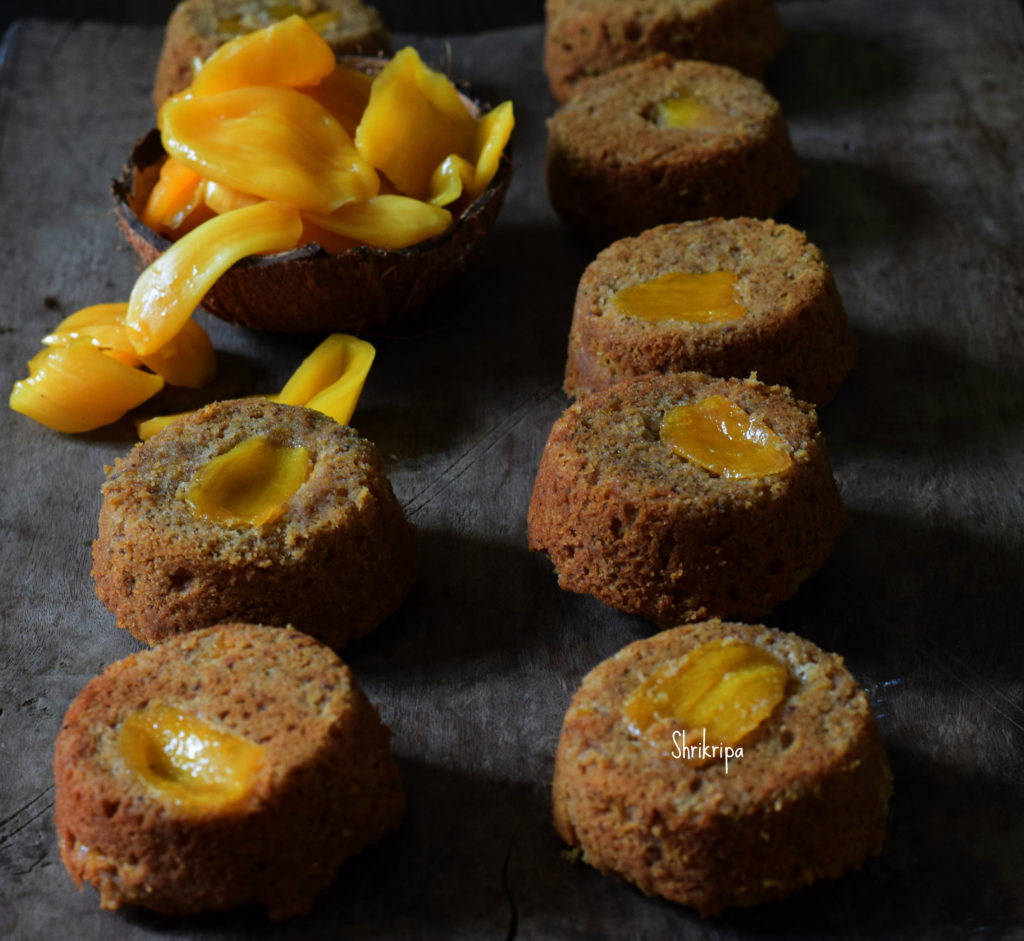
My verdict: Cake was soft, airy ,not at all dense. Tasted more of Jackfruit. After all it is Jackfruit cake 😀


Now, we would move towards the procedure 😀

Ingredients:

Rice flour – 1 cup

Coconut flour – 1 cup

Baking powder – ¾ tsp

Baking soda – ¾ tsp

Salt – ¼ tsp

Flax gel – Replacement for 1 egg

Buttermilk – ¾ cup

Jaggery powder – 2/3 cup ( you can add brown sugar or normal sugar as well)

Ghee / clarified butter – 1/3 cup

Jack fruit chunks – ½ cup (heaped)

Method:

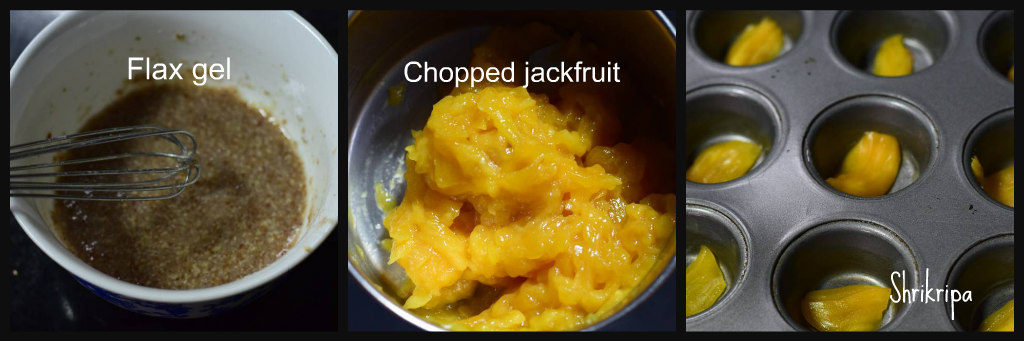
-Pre heat oven at 180 °C , grease the muffin pan. If you want to keep jack fruit piece at the bottom, you can keep one piece on each mould and keep it ready.

-Make flax gel: The basic ratio is 2 ½ tsp of flax seed powder and three tablespoons of  hot water  and then you simply whisk in the mixture until it becomes gelatinous  to replace one egg.

-Make  Jack fruit pieces by using chopper or mixer jar (by opting Pulse option)

-Take one bowl, add both the flours, baking powder, baking soda, salt and mix nicely or sieve couple of times. It is our dry mixture.

-Take one more bowl, make a wet mix. Take flax gel, ghee, buttermilk, and beat nicely.

-Now add jaggery or sugar and beat until frothy. Now add Jack fruit and mix.

-Pour  wet mixture into dry mixture and fold in and make a uniform mixture. Do not over mix.

-Pour the ready batter to muffin mould and bake in a Pre-heated oven for 20 minutes. Check the doneness and take out. 

-Cool and enjoy gluten free Jack fruit cupcake.

NOTE: – if you want to use all-purpose flour, please go ahead, and use 1 ½ cup and follow the same recipe.

Coconut Flour and Buck wheat Chocolate chip cookies:

In my earlier posts I have discussed regarding homemade coconut flour as well as  eggless coconut flour cookie with chocolate chip.

One thing we must keep in our minds while using coconut flour is, do not underestimate its absorption power by seeing its light and airy texture. It absorbs moisture like a sponge. What I learnt from my previous experience is, it needs almost equal amount of moisture content as flour volume.

Here I have tried with egg as well as without egg by adding  flax gel as an egg replacer, mainly because of its gel like texture. Coconut flour does not have any holding capacity, so thought of using flax gel.

In this experiment I have taken equal amount of coconut flour and buck wheat flour ( I did try with millet flour as well)  it did absorb the liquid, swell and gave me Eleven  cookies 😊 More than everything, this was interesting!! Baking Coconut Flour by adding millet/ buck wheat flour . This was a little experiment, and the results were not bad at all! I got the big thumbs up from my twins.

Let us see the procedure for With Egg Version –

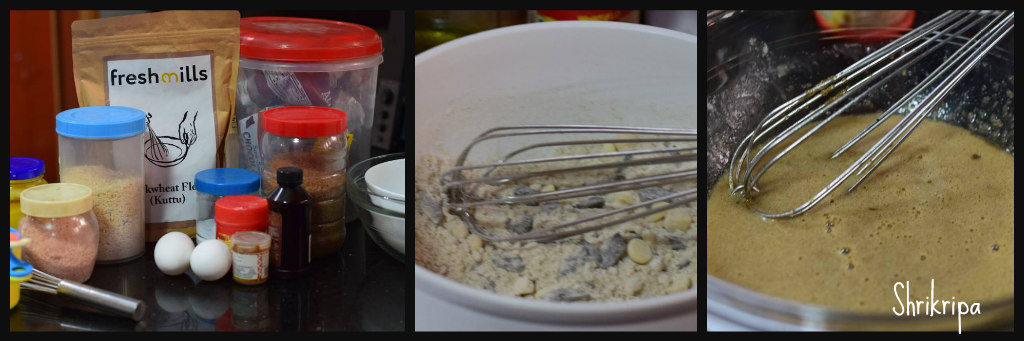
Ingredients:

Coconut flour – ½ cup

Millet/ Buck wheat flour – ½ cup

Choco chip – ¼ to ½ cup

Pink salt – ¼ teaspoon ( you can use normal salt as well)

Cinnamon powder – ½ tsp

Cooking soda  + baking powder – ¼ tsp ( 1/8th  tsp  each)

Eggs – 2

Ghee – 2 tablespoons

Vanilla – ½  teaspoon

Organic Natural brown sugar – ½ cup (you can use normal sugar or jaggery as well)

Method:

-take one bowl, add all the dry ingredients: Both the flours, salt, cinnamon powder, cooking soda, baking powder and Choco chip. Mix everything and keep it aside.

-Beat the egg , add vanilla, sugar, and ghee. Beat everything until you see a bubbly texture.

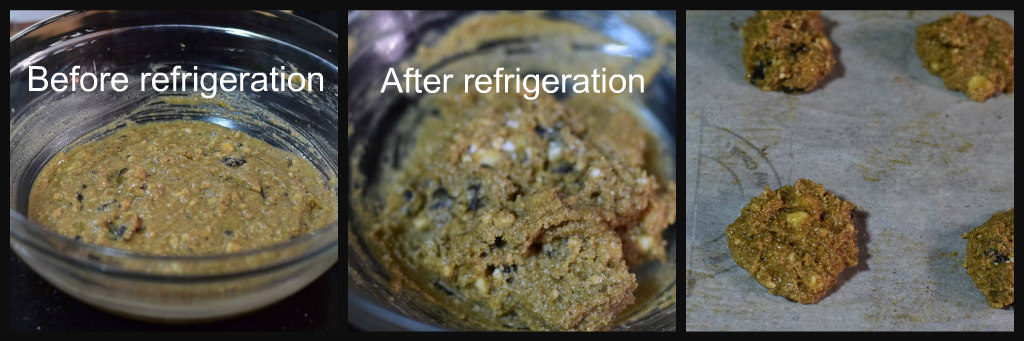
– Pour wet mix into dry ingredient and fold everything and prepare a dough. It would be sticky and wet.

-Keep this in a refrigerator at least for a half an hour. By this time, coconut flour would absorb the moisture and batter would be perfect to scoop out.

-Pre heat oven at 170 °C. Line the baking tray with the butter paper.

-Scoop out the mix by using ice cream scooper and arrange in a lined baking tray.

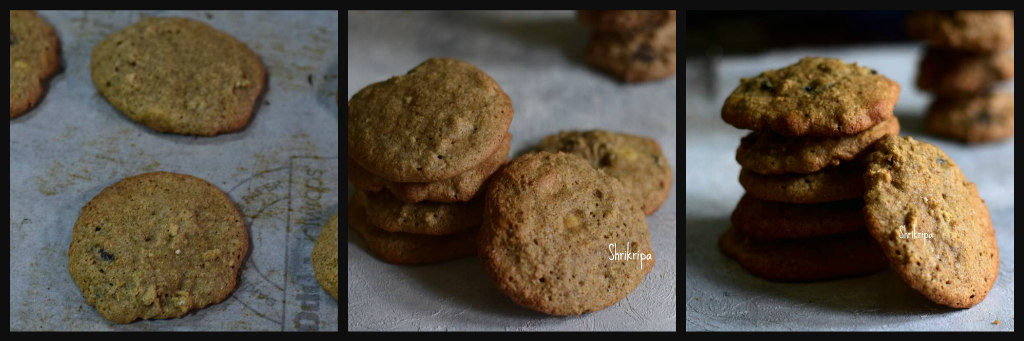
-Bake this in a pre-heated oven for 15 to 20 minutes.

-Do not touch while removing, it will be incredibly soft. Remove the tray and cool as it is.

-After cooling, it will harden a bit. After it cools down completely, store it in an airtight container.

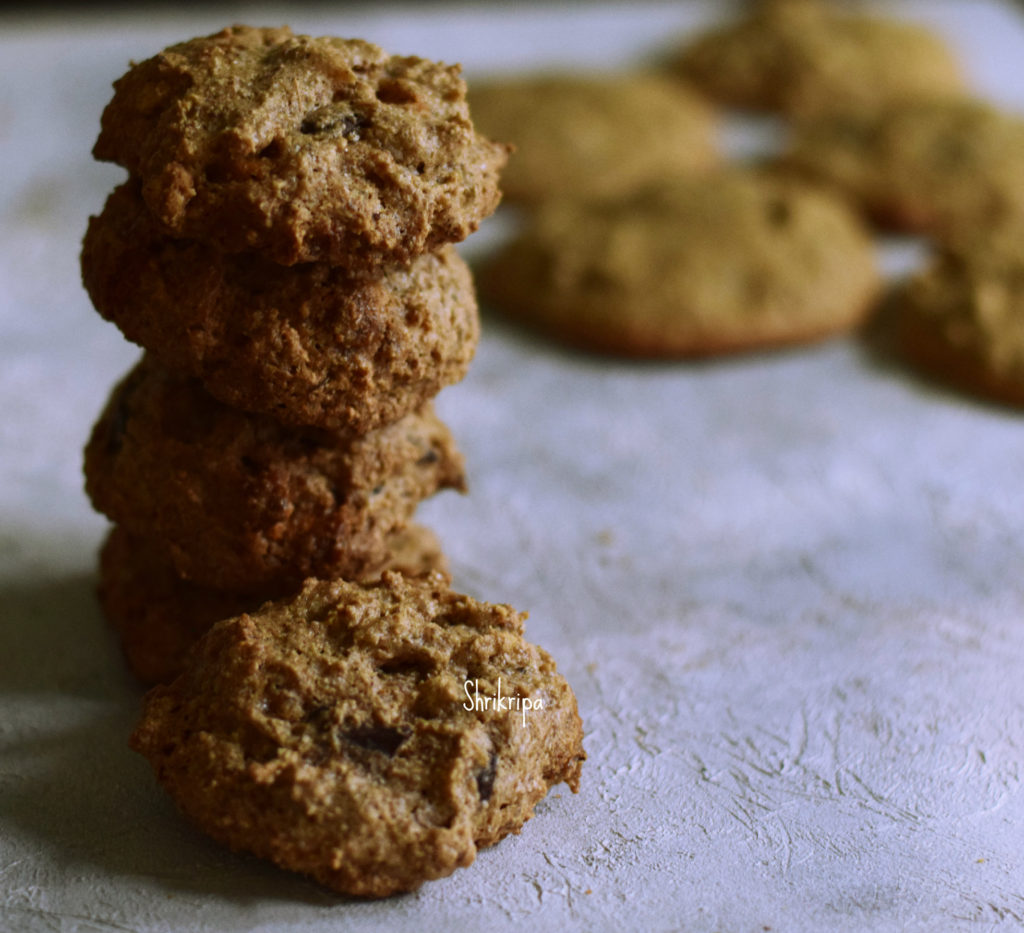
– These cookies are slightly crunchier at outer circle, soft and chewy at the centre.

– It becomes a little harder and firmer the next day .

For Without Egg Version:

For Egg less version, please use any egg replacer or 

Flax gel: The basic ratio is 2 ½ tsp of flax seed powder and three tablespoons of  hot water  and then you simply whisk in the mixture until it becomes gelatinous  to replace one egg.

-Here, after mixing the wet and dry mixture, you can directly proceed to baking. No need to keep it in the fridge. Dough is less liquid, compared to the with egg version.

-Cookies turn out much more heavy and crunchier than the with egg version. Does not spread while baking. It holds the shape very nicely.