Halasina hannina Guliyappa/ Jackfruit Paddu:

Jackfruit is an integral part of our kitchen during the Summer months. In our native, it is an everyday affair to make something or the other out of home-grown huge jack fruits. A lot of family bonding happens during its chopping, separating the fruit bulbs and cleaning. After cleaning, it is time to think about what to make? One says Dosa, other one Kottige or Guliyappa. Even after making all these delicacies if it is in excess, then it is time to make Berati and preserve it for a long.

Guliyappa is usually an instant thing if the rice has been soaked and ready. But I like Paddu out of fermented batter. Let us see how I make it.

Ingredients:

Dosa rice – 2 cups

Jackfruit – 1 big bowl

Coconut – 1 small bowl

Jaggery – I piece (according to taste) Or Jaggery Syrup as needed.

Salt

Method:

-Wash, soak Dosa rice in water for 3 to 4 hours. Clean jack fruit bulbs by removing fibre and seed.

– Drain the water, grind Rice, jaggery ( I would suggest using jaggery syrup), salt, coconut and chopped jackfruit with adding minimal water.

-The batter should be a little coarse, and the consistency should be like idli batter (should neither thick nor thin)

-Allow fermenting overnight in cold weather, or 2 to 3 hrs is enough.

-Heat Appe or Paddu pan. When it is hot, pour ¼ tsp of ghee or oil.

-Pour the batter into each mould, close the lid, and cook for a few minutes.

-Flip the side and cook the upper side as well.

-Serve with chutney. We normally prefer Ginger and coconut chutney as a side dish for jackfruit items.

-Repeat the process and enjoy your breakfast or brunch or dinner.

Note:

For ginger chutney: Fry red chillies with little oil and grind this with coconut, salt, tamarind, and a piece of ginger.

Brahmi Tambli:

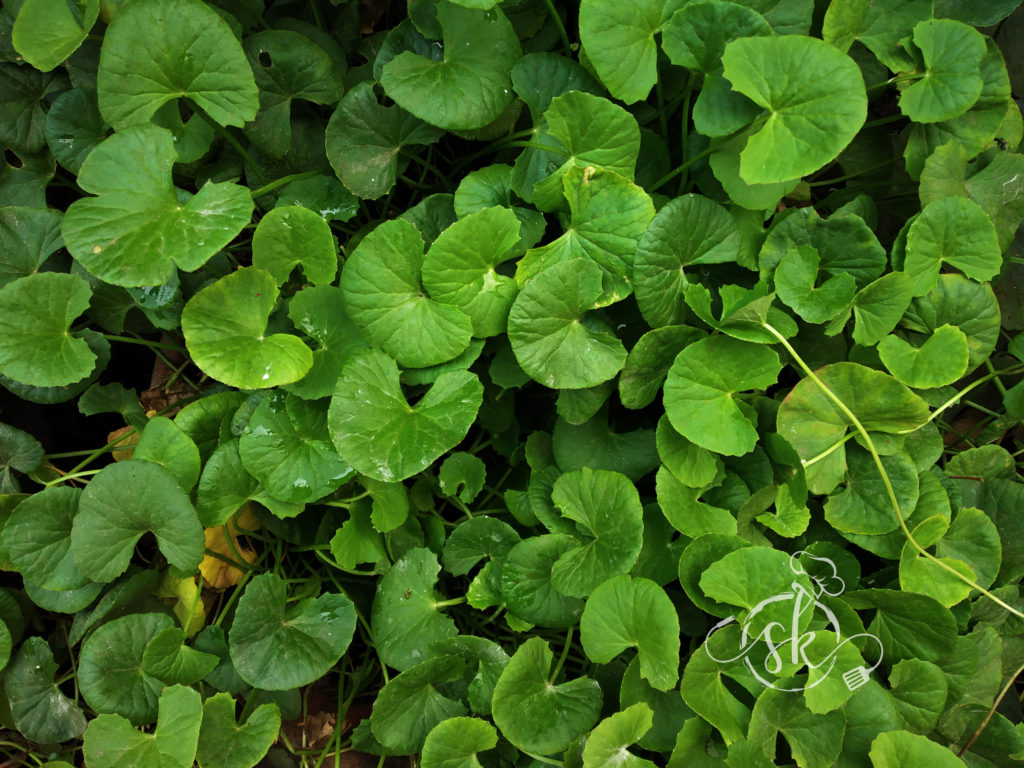
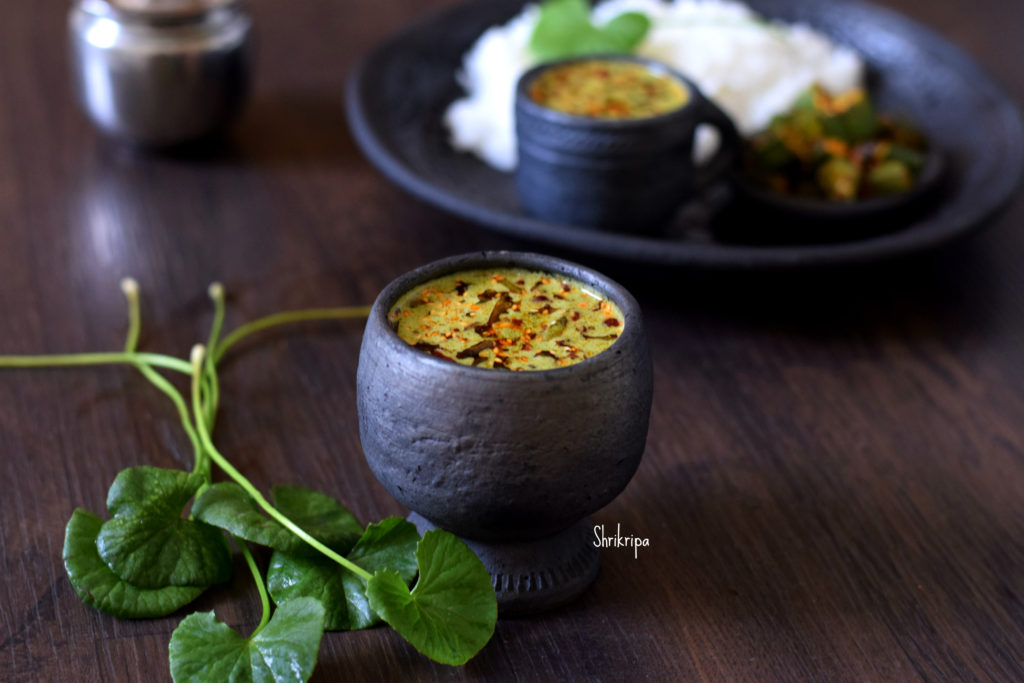
Centella Asiatica is commonly known as Centella /Gotu kola or Asiatic pennywort locally known as Thimare /Brahmi or Ondelaga in our region. Popularly known as a memory enhancer and from ages, it has been used as a brain tonic. In our coastal Brahmi is considered as a body coolant and used as a culinary herb during summer either by making chutney or Tambli.

Brahmi is a small runner/succulent herb and contains numerous fibrous roots at its every node. In our coastal belt, it grows widely in our paddy fields or Areca nut garden. It has small tiny seed-like flowers with a neutral colour. The whole plant including its roots can be used in cooking as well as medicinal purpose. It has little bitter sweetish taste when it is consumed in a raw form without any added taste enhancer. 2 teaspoons of Raw extract can be used for 3 to 7 days to enhance the overall health /to boost immune system/to reduce any inflammation of the body. Apart from this, it is very good for hair as well and I have shared the Hair oil recipe long ago by adding Brahmi and many other goodnesses. 

In our region, usually, we make Tambli or chutney and consumed as a raw form (not boiled) to get all the benefits of the greens. This particular recipe I learnt it from Kavya Bhat which she has shared with us in our Foodie Facebook group and I want to thank her for the wonderful tasty recipe.

How to make Tambli-

Ingredients:

Brahmi greens – 1 fistful (You can use with roots or without)

Coconut – ½ cup

Cumin – ½ tsp

Jaggery – 1 small piece

Curd – ½ cup

Salt

Seasoning:

Coconut oil – 1 tsp

Sesame seeds – 1tsp

Red chilli flakes – 1 tsp (or chopped red chilli)

Curry leaves – 1 spring

Method:

-Wash Brahmi greens and roots nicely.

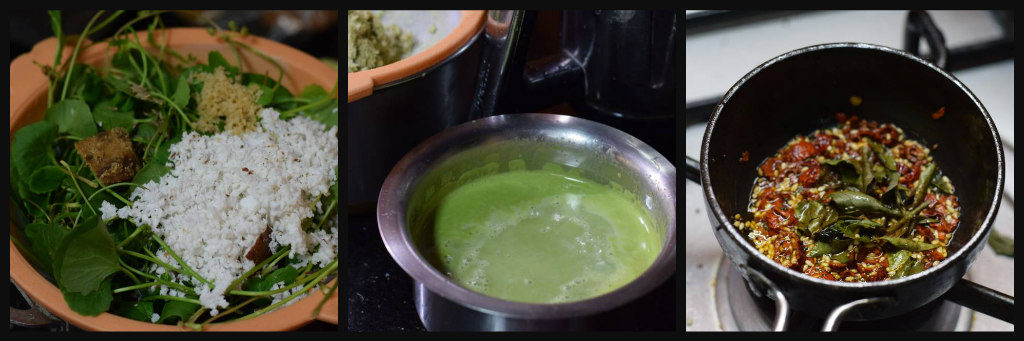
-Put Brahmi, coconut, salt, cumin, jaggery and pour ½ cup of water and grind into a smooth paste.

-Sieve the content and extract the liquid.

-Take all the roughage, add curd and little water grind once again and sieve. Collect the liquid.

-Third time add little water and grind, sieve and extract the liquid and discard all the remaining roughage.

-Prepare seasoning- heat oil, add sesame, when it turns light brown switch off the gas. Add red chilli flakes, curry leaves and add to Tambli.

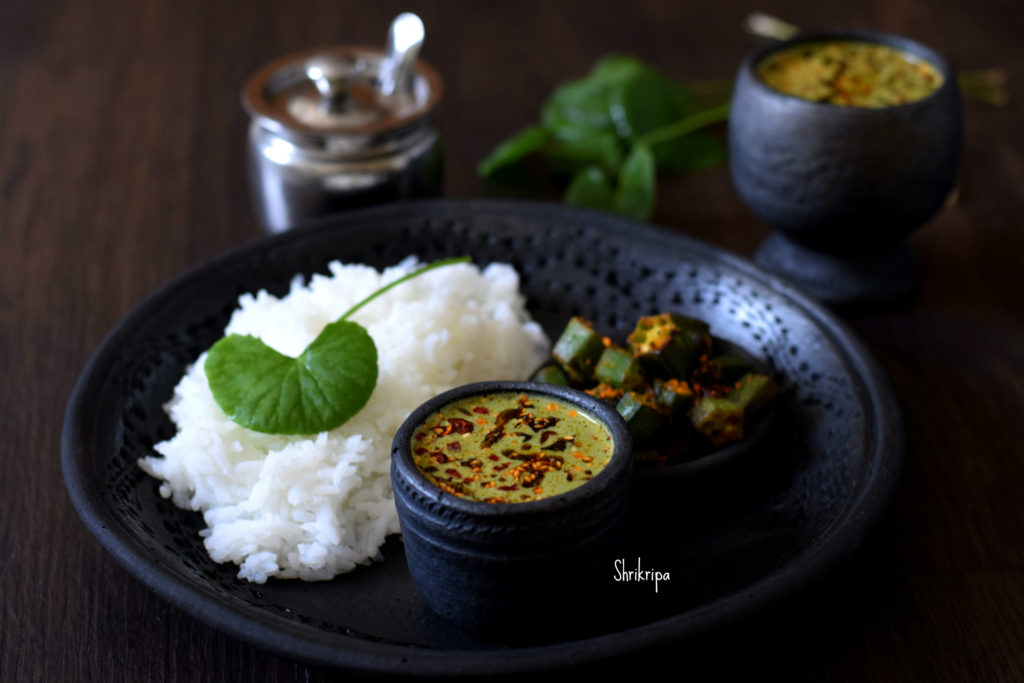
-Adjust the salt and enjoy either as an appetiser or with white or brown/ red rice.


Punarpuli sharbath/ Fresh Kokum Juice:

To start with this wonder fruit, I should introduce its plant, benefit, procedure to preserve the outer skin, to rest of the world. Kokum is belonging to Guttiferae family, same as mangosteen and its botanical name is Garcinia Indica, is a fruit bearing plant only found in western Ghats and coastal southern India.

It is a summer fruit, which is widely used for juices or Rasam in our region to quench thirst as well as to balance body heat. It has so many health benefits as well. It is a natural healer for acidity.

It is a ritual in our native to dry the outer skin in summer months to preserve to use whenever it is needed. Fresh fruit of Kokum is often halved, discard the inner pulpy white part which is a fleshy coating of real seed to make Kokum butter, which is used in medicinal as well as cosmetic products as a raw material. Then outer dark maroon skin will be sun dried and when it becomes crispy, it’s stored in an air tight manner. During this process, we used to prepare fresh pulp to make juice and I used to love fresh juice from its inner pulp. It is much tastier than the outer dried skin juice.

Last week found these cuties here in Mangalore stores. Picked up some and enjoyed my favourite drink after so many years.

How to prepare –

Ingredients:

Kokum fresh pulp – little

Water – as needed

Sugar – as needed

Salt – ½ tsp

Method:

-Soak fresh pulp and couple of outer shells in little water for some time.

-Mash everything by using clean hand and discard the seeds and outer shells.

-Add sugar, salt and required amount of water and mix everything and serve by adding couple of ice cubes.

-It is very good for our gut health as well as to keep us hydrated.


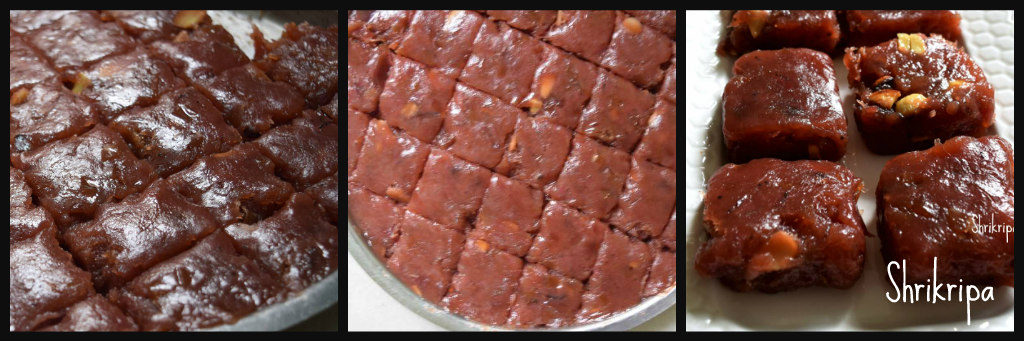
Apple – Banana Halwa (Microwave Method):

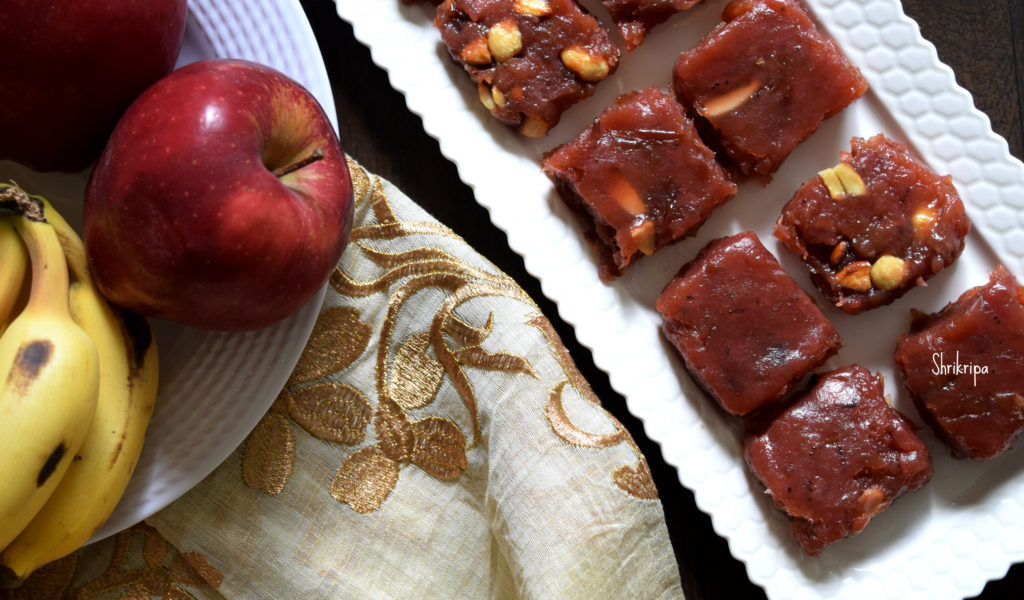
Traditionally halwa making takes a very long process and I have shared the recipe already.  You need a time and patience to attempt. When you make the same halwa with a less effort by using microwave, nothing like it. I do agree with the side effects of using microwave and personally I myself avoid using microwave many times.

This time, I wanted to finish off lot of over ripe bananas as well as tasteless apples and at the same time, I was pressed for time as well. That is how, I opted for this method and here is the procedure. I must tell you that, taste or texture wise there is no change or variation.

Here, I have not removed the outer skin of the apple and it was perfectly blended while cooking.

Ingredients:

Banana – ¾ kg (over ripe one)

Apple – ¾ kg (any variety)

Sugar – 2 cups

Ghee – 4 to 6 tsp

Cardamom – 1 tsp (powdered)

Cashew bits – optional

Method:

-Here I have used my LG Microwave and opted for Gajar halwa under Indian Cooking setting and proceeded. As I write the method, I would mention the timing, so that any one can make this halwa by using any Microwave.

-Chop Banana and apples (with skin) and put it in a glass bowl (microwave safe)

-In LG Microwave, when I opted for microwave IC1 = Gajar halwa and in one cycle it runs for 14 min.

-So, cook for 13 to 14 minutes at first. After first cycle, mix everything properly and keep it for 2nd cycle (again 13 to 14 minutes)

-Remove the bowl, add sugar and mix everything properly and keep it for 3rd cycle (again 13 to 14 Minutes)

-After taking out, add 4 tsp of ghee and mix everything and keep it for 4th cycle (again 13 to 14 minutes)

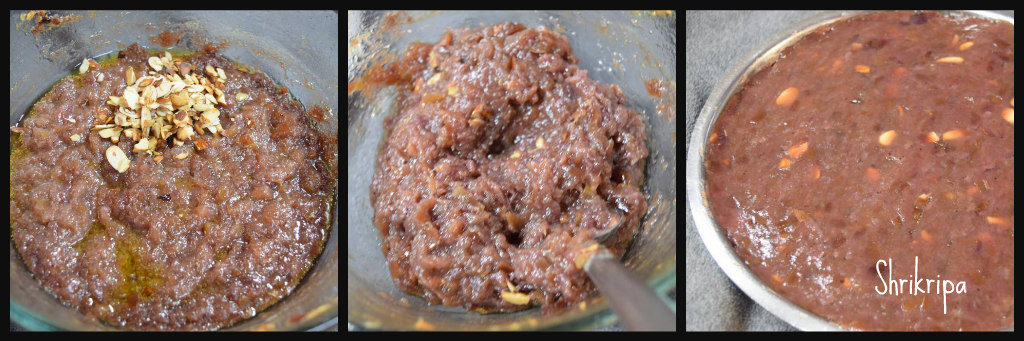
-Lastly add 2 tsp of ghee and keep it for 5th cycle (again 13 to 14min) and at this time, it appears as non-sticky and turns into a mass like structure.

-Over all it took me 1 hour and 10 minutes but in between my work, I did it whenever I pleased and finishes the work 😀

-Add in roasted cashew bits. If needed, please cook for some more minutes and spread the mixture in a ghee applied plate.

-After it cools down, maybe overnight, cut into pieces and store it in an air tight box. It stays good and shelf life is very long.

Note: You can use only banana as well.


Masala Dosa:

Who doesn’t love Masala Dosa? It is an absolute favourite in our family.

A properly made crisp Dosa is very delicious if the batter is perfectly fermented with little sour flavour and correct consistency.

Normally Masala Dosa can be served either by applying Red chutney or Green chutney.

Red chutney what I make is not very hot and made with only chillies. It is coconut-based garlic flavoured chutney.

In other hand, green chutney smeared Dosa is something I relish in Hotel MTR outlet in Bangalore. I tried to replicate the taste at home, and it is once again a coconut chutney, which is flavoured by coriander leaves.

In our coastal region, you never get to see red chutney applied Masala dosas. It is normal paper plain Dosa with bhaji at the centre and rolled like a paper roll and served with the watery ginger chutney and sambar as an accompaniment.

In our house we normally make red chutney and apply and enjoy garlicky flavoured chutney with aloo masala.
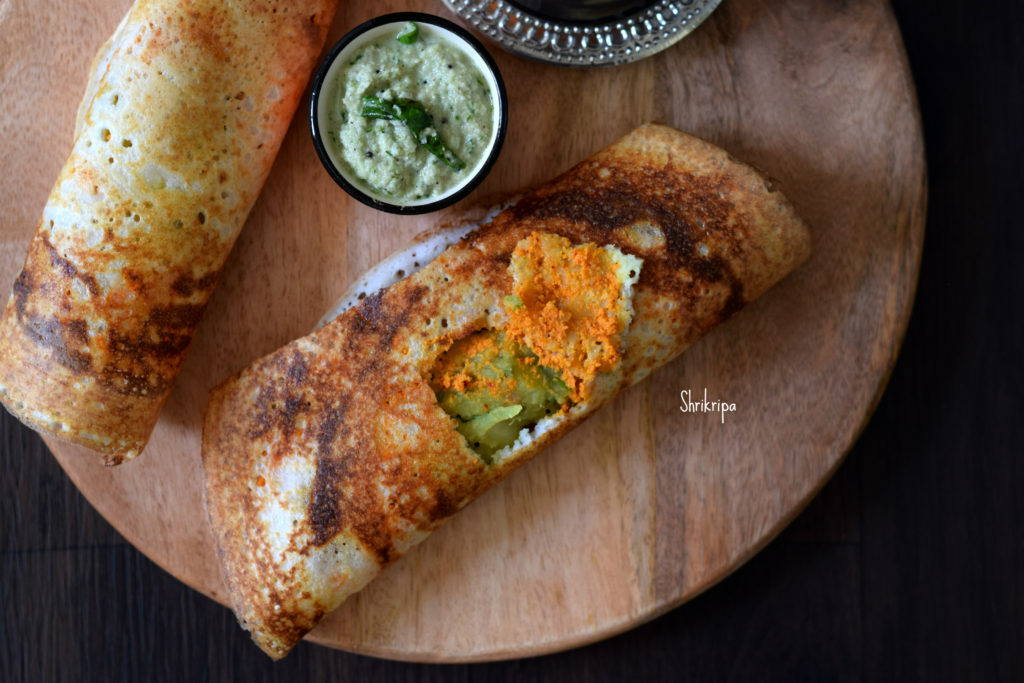
First, we will see How to make Dosa Batter:

Ingredient:

Dosa rice -1 cup

Idly rice -1 cup

Urad dal – ½ cup

Bengal gram/Chana dal – 1 tbl sp

Fenugreek/methi seeds – 1 tsp.

Beaten rice – ¼ cup

  Method:

-Wash all these ingredients couple of times.

-Soak this in a sufficient water (washed rice and dal should submerge) for 3 to 4 hours. Drain water from the rice and keep aside. This water is used while grinding according to the requirement. Grind soaked rice –dal mixture by adding salt in to a very fine /smooth batter by using wet grinder or Mixer grinder. I prefer Wet grinder and it certainly gives much finer, perfect batter. After removing the batter adjust the consistency by mixing properly. Now keep this ground batter for fermentation in a big vessel, so that it will allow room for puffed/fermented batter. It will take anywhere between 8 to 16 hours (according to the outside weather)

Note: In Bangalore I usually soak my lentils around morning, grinding happens around afternoon 2 to 3 pm and until next morning I keep the batter for fermentation. This is how I get my perfectly fermented batter. 

Potato Bhaji/ filling:

Ingredients:

Potato – 6 big

Onion – 3 big

Green chilli – 2 to 3

Grated ginger – ½ “

Turmeric – ½ tsp.

Salt

Seasoning: Coconut oil -2 tbl sp, mustard- 1tsp, Urad dal -1 tsp., chana dal-1 tsp, Cumin seeds – ½ tsp, hing – ¼ tsp, Red chilli -1, curry leaves -2 springs.

Chopped coriander leaves for garnishing.

 Method:

-Wash potato cut in to half and put this in a cooker with sufficient water. Cook for two whistles. Cool, remove outer skin, mash and keep aside.

-Slice onion and slit green chillies.

-Take one kadai, add coconut oil, mustard, when it starts to splutter, add cumin, hing, Urad dal, chana dal, red chilli. When dal becomes red add Curry leaves, slit green chillies and onions.

-Add turmeric and fry onions till it becomes light brown.

-Now add one to two cups of water, add salt.

-When water starts boiling add mashed potato and mix nicely. Check for the seasoning and close the lid and cook for a while until it becomes homogenised and water drains.

-Switch off the gas and garnish with chopped coriander leaves.


Red Chutney: It is garlic flavoured very thick coconut chutney.
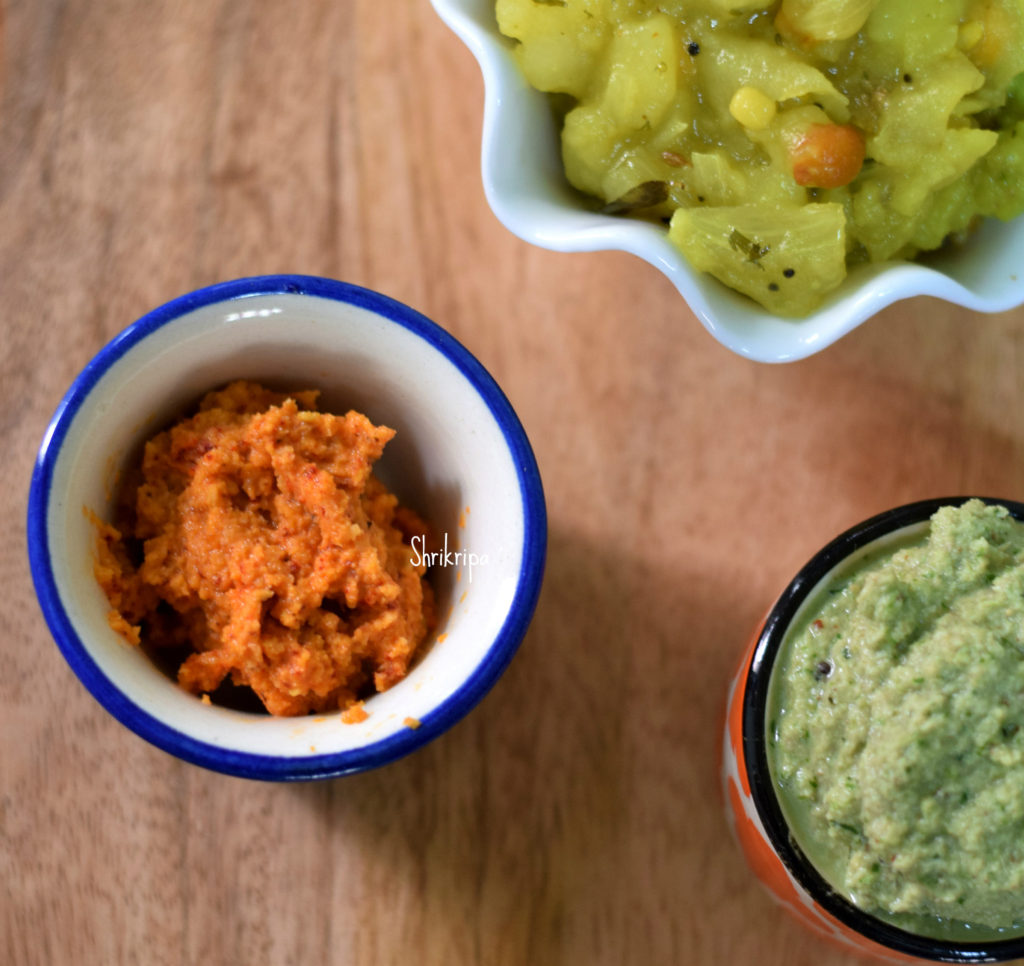
Ingredients:

Grated fresh coconut – 1 cup

Red chilli – 2

Garlic cloves -7 to 8

Tamarind – ¼ tsp.

Salt

Method: Roast Red chillies by putting ¼ tsp of oil.

Put all the ingredients together in a mixer jar, dry grind at first and then put very little water and make very thick consistency. This chutney is used for applying over the Dosa while making.


Green chutney: This chutney can be smeared as well as served as an accompaniment with Dosa. If you are smearing, keep the consistency little thick and if you are serving as a side, you can add little water and make it thin.

Ingredient:

Grated fresh coconut – 1 cup

Roasted gram/ puffed gram – ½ cup (putani or Hurigadale)

Green chillies – 3 to 4

Tamarind – little

Sugar – ½ tsp

Salt

Coriander leaves – 1 small cup

Curry leaves – 1 spring

Method:

Fist grind coconut, puffed gram, salt, tamarind by adding little water. Then add chopped coriander and curry leaves and churn a little and add seasoning with mustard and curry leaves.


White Coconut Chutney: This is served as a side dish and usually with ginger flavour.

Ingredients:

Fresh grated coconut – 1 cup

Green chilli – 1 or 2

Tamarind – ¼ tsp.

Salt

Ginger – ½ “     

Method: Grind all these by putting sufficient water and adjust the consistency. Do seasoning by putting coconut oil, mustard, red chilli and curry leaves.


How to Prepare Masala Dosa:

Now everything is ready, and we can proceed with our preparation.

-Keep the Dosa griddle over the gas stove for heating. You can use Iron griddle or Non-stick one.

-Nicely mix fermented Dosa batter and check for the consistency. If it is thick add ½ cup of water and adjust and keep it ready.
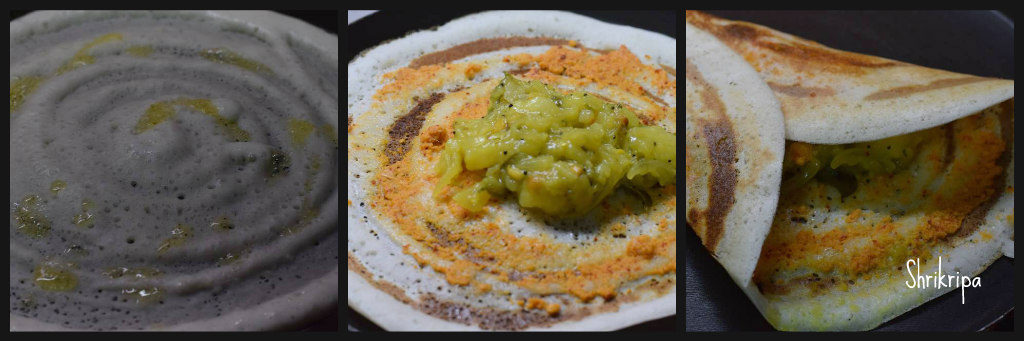
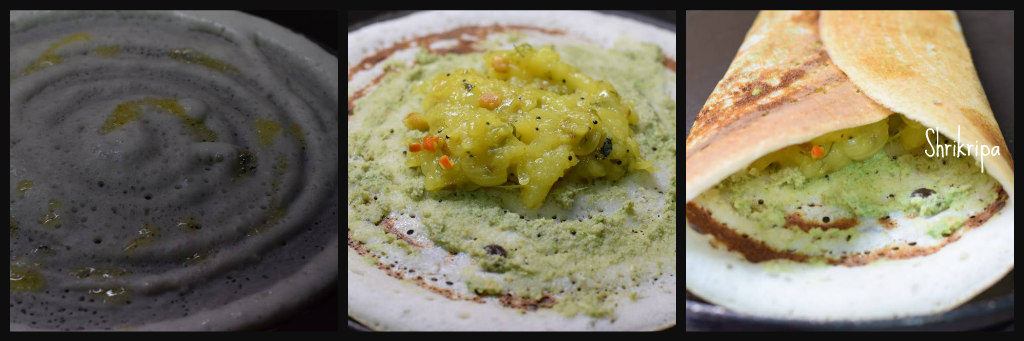
-When Dosa tawa becomes hot, pour one serving spoon of Dosa batter, move spatula in to a circular motion and spread the batter.

-sprinkle little ghee /butter/oil and cook until it is little brown in a low flame.

-when it is light brown spread Red garlic chutney or Thick green chutney at the centre of the Dosa in a circular motion and keep one serving spoon of potato filling at the centre and fold.        

-Now serve this ready Masala Dosa with White coconut chutney and Enjoy.



Kadu Mavina hannina Hasi Gojji/ Wild Mango Gojju:

Wild mangoes are known as Kadu mavina hannu in our local language. Which is very fibrous, tangy as well as sweet in taste. It has distinct taste; it is widely used in varieties of curries in our region. Hasi Gojju is nothing but, raw form of curry. Which can be prepared in a jiffy and doesn’t need any heating and is a perfect treat for summer. Usually we enjoy this with hot rice as well as devoured like a dessert :D. In Mango season, we do prepare varieties of curries like Sasame or Sasive, saaru and Gojju are the most loved dishes of our region.

Ingredients:

Wild mangoes -5-6

Salt – to taste

Jaggery – to taste

Green chillies – 1 or 2

Seasoning: Coconut oil – 1 tsp, mustard – 1 tsp, Red chilli – 1, Curry leaves – little.

Method:

  • Wash wild mangoes, remove top part of the mango, remove outer skin and keep this in a separate vessel. Keep inner fruit part in another vessel.

  • Add one cup of water to outer skin, mash nicely, collect pulpy water and add this to fruit.
  • Discard outer remaining skin. Add required amount of jaggery, salt and crush green chillies by using your hand.
  • Mix everything, check for the seasoning. If needed add some more grated jaggery or salt.
  • Season by using coconut oil. When it is hot, add mustard, after it splutters, add red chilli and curry leaves, add this to mango curry.

  • Enjoy this with hot rice.

NOTE:

-If you don’t have access to wild mango, don’t worry. Pick up any (little sour) varieties of mango, peel the outer skin and chop the fruit into bite size pieces or mash a little and proceed with above method.


Ellu Juice / Sesame Juice:

Ellu juice is a well-known coolant drink of summer, especially in and around Mangalore and Udupi region.  As I grew up in Puttur, little away from the coastal line, never tasted this juice until my marriage. I came to know about this healthy drink very recently, may be around three years back.

Ellu juice and masala buttermilk is sold in and around coastal temples, during summer. After tasting chilled, soothing drink I asked the shopkeeper to elaborate the recipe and noted it down and tried it at home here in Bangalore. According to me, chilled juice tastes really nice in hot weather.

Sesame seeds are tiny, healthy, oil rich seeds. Un-hulled seeds are black or dark brown in colour and hulled seeds look off white and fully polished one look pure white and known as Nylon variety.

To prepare this juice, one can use any type of sesame seeds and can be used raw as well as toasted.

Here I have used raw seeds and mixed coconut milk as well as regular milk. If you want to make Vegan drink, please use coconut little more or replace milk with any other plant-based milk and proceed. Now, we will proceed with the method.

Ingredients:

Sesame seeds – 1 table spoon (for 2 cups)

Coconut – 2 table spoon (grated)

Milk – ½ to ¾ cup

Whole Cardamom – 1 or 2

Jaggery – as needed

Water – approximately one cup

Method:

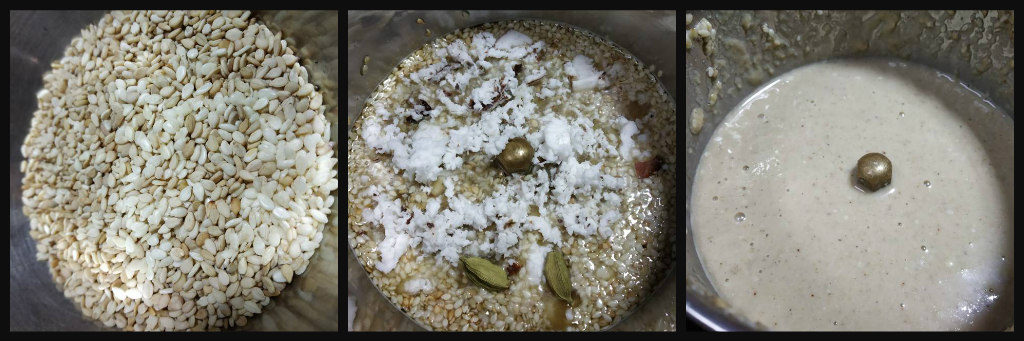
-Wash sesame, grind into paste by adding coconut, cardamom, jaggery and quarter cup of water.

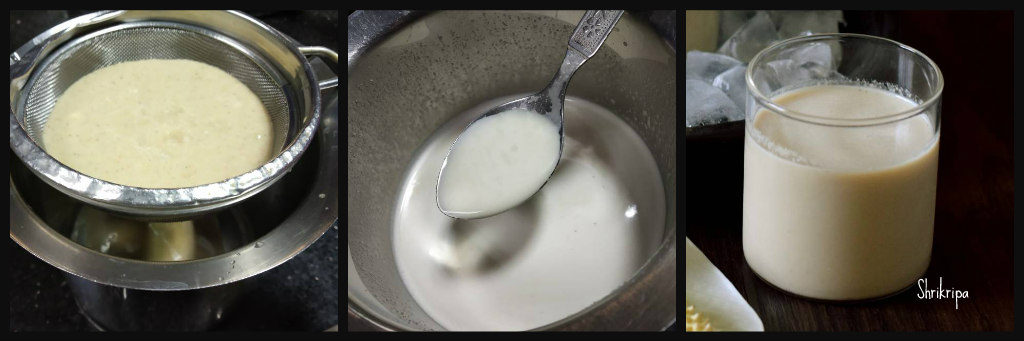
-Strain and collect the sesame milk. Repeat the process by adding little water until coconut and sesame turns into small, rough fibre.

-Now, discard the roughage and use collected milk, add plain milk and adjust the consistency.

-Cool this and serve.


Ginger Molasses Cookies:

Molasses cookies are chewy compared to any normal cookies. If it is made with wholesome flour with added ginger flavour, there’s nothing like it. It finally transforms into an absolute delicious wholesome snack for small kids or elders. Here is my Healthy, no all-purpose flour Ginger Molasses Cookies.

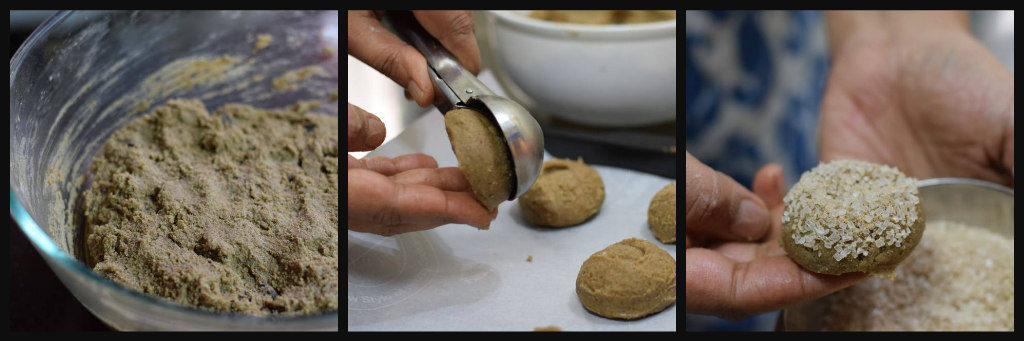
It is easy to make, with no rolling or freezing. Make the dough, scoop it out, roll this in crystal sugar and bake. That is, it. Stays good for a week or more.

If you want to make a huge batch, follow as it is. Otherwise, please make it half and proceed. Here I have taken multi millet flour (morning porridge powder) and whole wheat powder. You can play with the flour or straight away use All purpose flour or whole wheat flour according to your choice.

Ingredients:

Flour quantity – 4 ½ cup (porridge powder + whole wheat)

Butter – 300 grams (softened)

Brown sugar – 2 cups

Molasses / Jaggery syrup – ½ cup

Eggs – 2

Cooking soda – 4 tsps.

Ginger powder – 1 table spoon

Cinnamon powder – 1 tsp

Chocolate chunks/ chips – as needed (optional)

Salt – 1 tsp

Sugar – to coat

Method:

-Whisk all the dry ingredients (flour, cooking soda, ginger powder, Cinnamon powder, salt, chocolate chips.

-Take a big bowl or a processor, cream butter and sugar. Add eggs one by one and beat.

– Add molasses and beat one more time. Pour mixture of dry ingredients and prepare a dough.

-Place this dough (little sticky dough) in a fridge by closing a cling wrap, for one or two hours.

-Pre heat oven at 170 °C.

-Take out the dough, scoop out, roll the top part in crystal sugar and place it on the butter paper lined cookie tray.

-Bake for 12 to 15 minutes. Remove, cool and store it in an air tight bottle.

Note:

-If you don’t have Molasses, please melt half cup of jaggery powder in little water and boil until it is  thick and use it.

You can mix sugar crystals with half tsp of ginger and cinnamon powder to get more flavour.

I have made plain cookies as well as with chocolate chunk and both tastes equally good and stays good for many days.

Carrot – Bell fruit Kosambari /salad:

When you have abundant supply of home-grown Bell fruits in Summer, you tend to use it in anything and everything for sure 😀

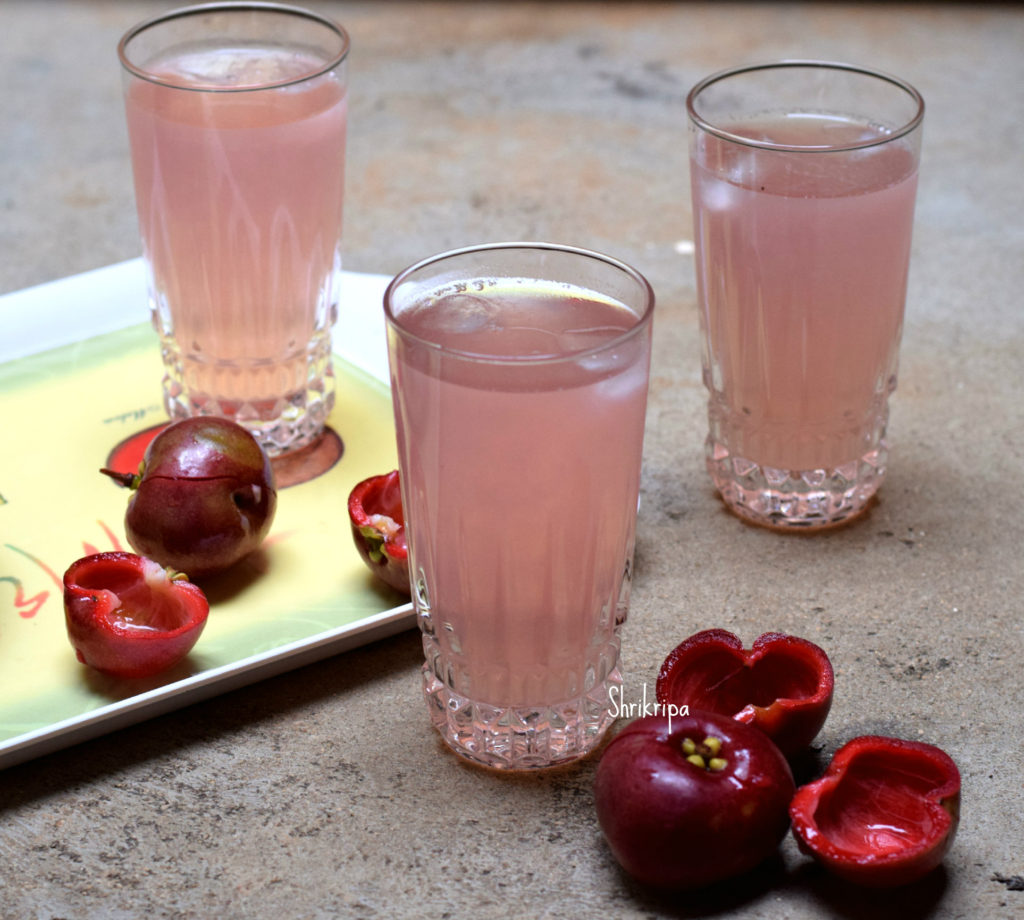
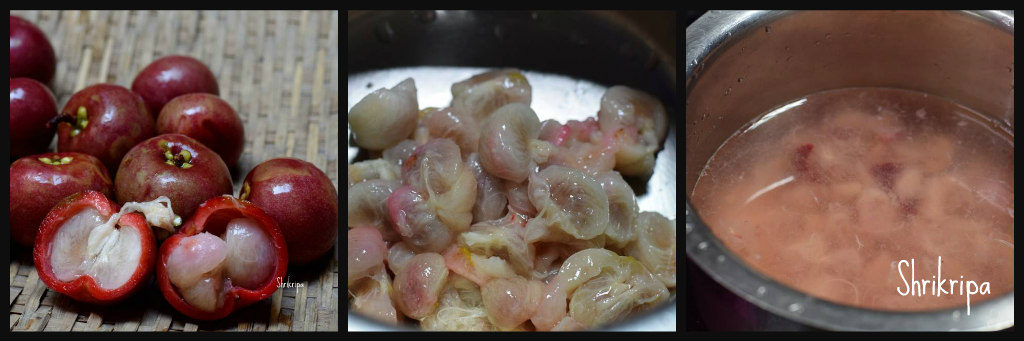
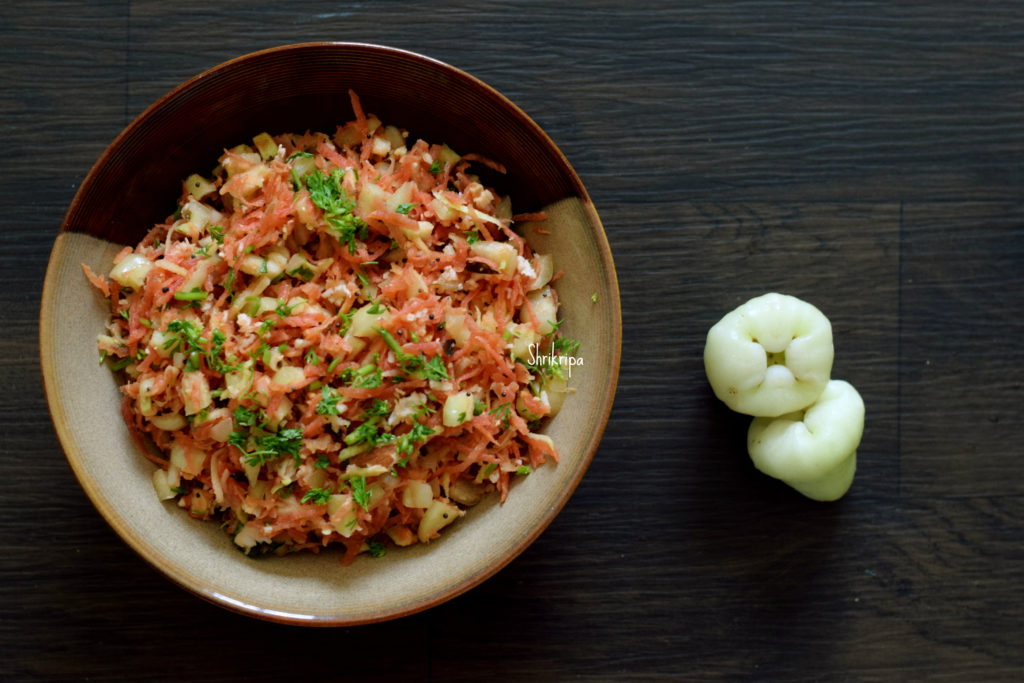
Bell fruit has many names like Java apple, Wax apple, Water apple, Syzygium, Jambi fruit or Jambu nerale. I normally prefer to use local, easily available and pesticide free stuffs as much as possible. I have shared the juice recipe before and now I am sharing one salad or commonly known as Kosambari in our local term. Which is “no onion and no garlic” and ideal for any fasting or festivities.


Ingredients:

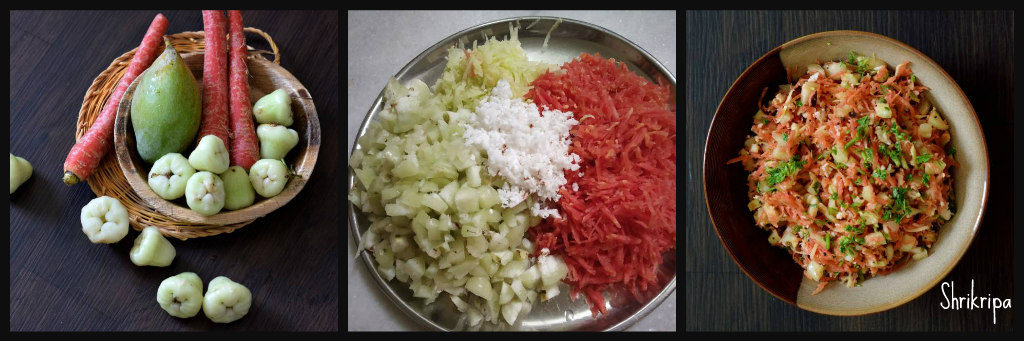
Carrots – 2 (red or normal)

Bell fruit – 10 – 12

Salt

Raw mango or lemon – as needed

Grated coconut – 2 table spoons

Coriander leaves – 1 table spoon (chopped)

Seasoning:

Coconut oil – 1 tea spoon

Mustard – 1 tsp

Hing – ¼ tsp

Green chilli – 1 or 2

Curry leaves – 1 spring

Method:

-Grate carrots, chop bell fruits into very small chunks.

-If you are using raw mango, grate and add or else use lemon juice.

-Mix in coconut, coriander leaves, salt.

-Now prepare seasoning, heat oil, splutter mustard, add chopped green chillies, curry leaves fry for a min and add it to the salad bowl and mix everything and check once.

– Serve as a salad or as a Kosambari /side dish for lunch.


Balehannina Berati Payasa / Payasam by plantain preserve:

First, I want to wish a very very happy “Ugadi” to all my readers.  Ugadi marks the beginning of the new Hindu lunar Calendar, which is based on the change in the moon’s orbit. Ugadi is a Lunar New year for us.

On the eve of this festival I made our traditional payasam and enjoyed with my family.

“Berati” is nothing but preserved fruit pulp, which is cooked until it forms into thick mass and usually made when it is in abundance and stored for future use.

How to preserve jackfruit and Banana / Berati is already shared in my blog. 

In Coastal region we love jack and Banana in many forms. Berati Payasa (preserved Banana or Jack)  is one of them.

Now we will see traditionally how it is made:

Ingredients:

Berati / Banana preserve – 1 bowl

Coconut – 1 (To extract milk)

-OR-

Thin coconut milk – 2cups

Thick coconut milk – ½ cup

Salt – ½ tsp

Cardamom powder – ½ tsp

For Seasoning:

Ghee – 1 tbl sp

Thin Coconut slices – 2 tbl sp

Cashew pieces – 2 tbl sp

OR

Toasted black sesame – 1 table spoon

Fresh coconut slices – 1 to 2 table spoons

Method:

  • Take out Berati from your freezer and keep aside for some time to attain room temperature.

  • Slice coconut by using small knife, chop these sliced pieces into small bits.
  • Toast black sesame and keep aside.
  • Take little ghee and fry coconut bits and keep aside.
  • If you want to, you can add ghee roasted cashew bits as well.
  • Grate coconut (coconut should be fresh), put one cup of water and grind this in a mixer jar and extract milk by sieving this ground mixture. This is thick coconut milk and you should keep this separately. We use this at the end stage of Payasa making.
  • Do this procedure a couple of times to get a thin extract and lastly discard coconut fibre.
  • If you are using readymade coconut milk, please skip this step.
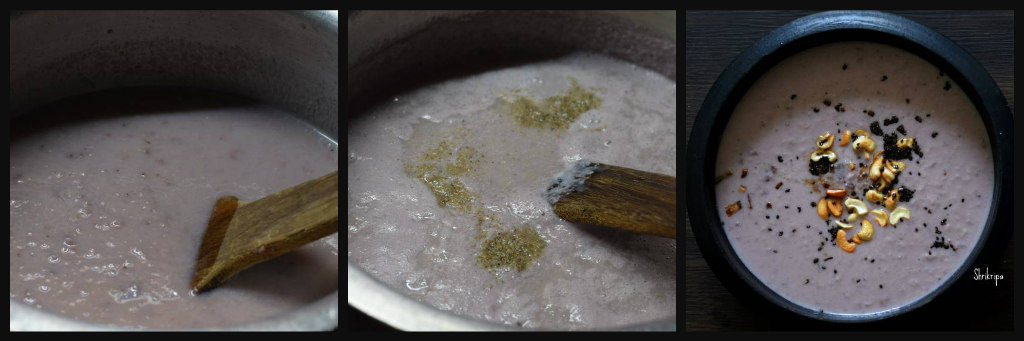
  • Now take one thick bottomed vessel, put Berati, thin coconut milk and dissolve Berati and keep this on a gas stove to boil.
  • Usually while making Berati, we put Sugar, so no need of additional sugar.

  • Lastly add thick extract of coconut milk and give one boil. Don’t boil it much. Add Cardamom powder and mix.       
  • Remove from fire and add fried coconut pieces, toasted black sesame or cashew brittles to prepared Payasa.
  • Serve with lunch thali or as a dessert.

NOTE:

  • Traditionally only toasted sesame and coconut bits are added.
  • Vegans can omit ghee and roast all the items, instead of frying.