Nugge soppu/Moringa leaves Pathrode:

Pathrode is a much-loved Mangalorean delicacy made with colocasia leaves and spice batter. We also make two versions of Pathrode, one is masala batter smeared, rolled, and steamed. Other one is by chopping the greens, mixed with masala laced batter, wrapped in wilted banana leaves , and steam cooked. This version can be prepared by using many other greens as well as banana blossom or flower as well.

After steaming these flat steamed dumplings/ pathrode’s, they can be enjoyed in many ways. We usually steam cook this, the previous evening and relish hot Pathrode paired with fresh coconut oil when it is hot. Next day, we normally, break those dumplings by using hand, prepare 2 types of seasoning. One is Sweet- with coconut and jaggery. Other one is – without jaggery, by adding onion. This version is my childhood favourite and even now, I cherish it to the core.

In the evening, if Pathrode is left, we even make Pathrode bendi. It is nothing but big chunks of Pathrode, dropped in masala gravy , simmered, and cooked. It is the most loved version in my husband’s family.

I would share all the possible relishing methods in this post. First, we should look into the main preparation,

Ingredients:

Moringa leaves – 1 big bowl

Rice – 2 cups (1 cup red boiled rice or Kerala matta rice +1 cup dosa rice) OR only dosa rice

Coconut – from half coconut

Red chillies – 10 -12 ( Byadagi variety)

Coriander – 2 tablespoons

Cumin – 1 tsp

Tamarind – 1 big lemon size

Hing – 1 peanut size (optional)

Salt

Jaggery – 2 teaspoons

Coconut oil – 2 teaspoons

Method:

-Soak rice for 3 to 4 hours after washing it. 

-separate moringa leaves from the twig, wash, drain, chop and keep aside.

-In the meantime, wilt banana leaves over a gas flame, wipe in a wet cloth and keep them ready.

-Make masala by adding coconut, coriander, cumin, hing, salt, jaggery, and red chillies. Add soaked, drained rice, and grind into a batter. A batter needs to be thick in consistency. Add very minimal water, and grind.

-Mix chopped moringa leaves with the batter, add coconut oil, and adjust the consistency, it should be semi-solid but pourable. 

-Pour the mixture, fold it, and steam cook in an idli steamer for one hr on a low flame. You can leave these overnight in an idli steamer itself.

-At night, you can remove a couple of pathrode, and relish hot Pathrode paired with fresh coconut oil when it is hot. This is an experience in itself 😀 

Next day morning, 

For Sweet Oggarane/ seasoning:

Take 2 pathrode’s, break them into pieces and keep them aside.

To make coconut jaggery mixture,  take a fistful of grated coconut, 2 to 3 tablespoons of grated jaggery and mix by hand.

For seasoning, take  2 tsp of coconut oil, splutter mustard, urad dal, one broken red chilli, fry until it turns red, and add a spring of curry leaves.

Mix in crushed Pathrode, coconut jaggery mixture and mix everything and allow it to heat and jaggery to melt and hold the flavour.

For Khara Oggarane/ Seasoning:

Take 2 pathrode’s, break them and keep them aside.

Chop one small onion little fresh coconut gratings.

For seasoning, take  2 tsp of coconut oil, splutter mustard, urad dal, 1 broken red chilli, fry until it turns red, and add a spring of curry leaves.

-Add chopped onion, fry until it turns transparent, mix in crushed Pathrode, coconut gratings and, mix everything and allow it to heat as well as to hold the flavour.

Now comes the,

 Pathrode Bendi/ dumpling in masala gravy:

Here, we must break Pathrode into big chunks and keep it ready.

For Masala: Take one bowl of grated coconut, roasted red chillies – 3 to 4 , 1 tsp of coriander, ¼ tsp of cumin, and two cloves of garlic and grind into a smooth paste.

Heat 2 tsp of coconut oil in a wok, splutter mustard, and one broken red chilli, and add curry leaves. Add half the finely chopped onion and fry until it turns brown.

Now, add ground masala paste into the seasoning and adjust the consistency; add salt and a pinch of jaggery and boil.

When it starts to boil, add Pathrode chunks, and boil for five more minutes or until it reaches a thick consistency.

Serve hot, and enjoy.

Sprouted Ragi Idli:

We all know, Ragi is extremely healthy plant-based grain, which is fibre rich, calcium rich and what not? It is a new age “Super food” which was earlier considered as a staple, poor man’s food, or farmer’s diet.

Ragi also known as finger millet or Nachni. Interesting part is, when we sprout the ragi, its nutritional benefits increases 10 folds.

Soaking and sprouting ragi is easy to digest, high in calcium, protein, low in glycaemic index as well as high in vitamin B12, which is a boon to vegetarians. Ragi has the natural property to balance sugar levels in our body, hence it is an extremely  good option for all the age groups, including diabetics.

 Some people do not like ragi for varied reasons, it may be due to its bland taste or something else. If that is the case, one can try to sneak in Ragi in various forms, combining with the other grains in cooking or while baking.

Here, I have tried to make sprouted Ragi idli with mixing rice. When it is combined with sambar or chutney it tastes delicious and my family likes it a lot.

Preparation goes like this-

Ingredients:

Whole Ragi -1 cup

Idli rice – 2 cups ( you can use normal rice as well)

Urad dal – 1 cup

Poha – 1 cup (loosely packed)

Salt

Method:

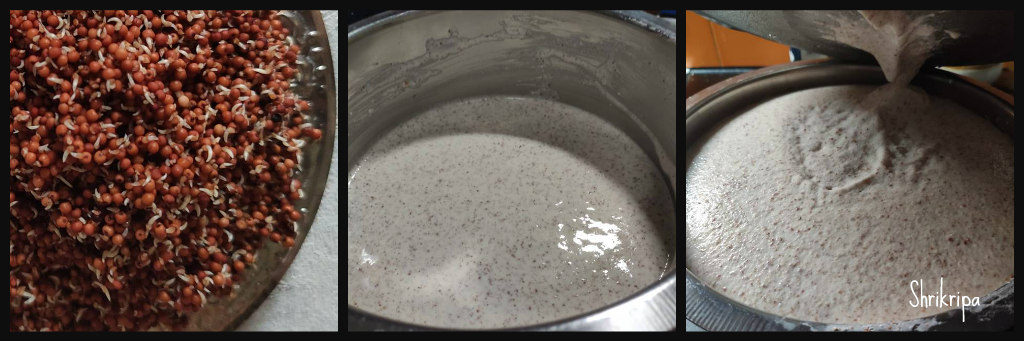
-Wash Ragi, soak overnight, drain and keep aside to sprout, In Bangalore weather it takes almost a day or day and a half. After sprouting it swells and becomes 1 ½ cup.

-Next day, wash , soak  Idli rice in one vessel. In another vessel, Urad dal and poha. Soak for 3 to 4 hrs.

-According to your weather, opt the timing to grind. Ragi batter ferments little quick, compared to normal idli batter. SO, keep that in mind as well.

-I normally opt for a wet grinder to make idli or dosa batter.

-While grinding, first grind urad dal into fine batter, then add sprouted ragi, it takes little longer to grind. While halfway through add soaked idli rice, salt and grind the batter into small rava consistency.

-Remove from the wet grinder, adjust the consistency of the batter, mix nicely, and keep aside to ferment.

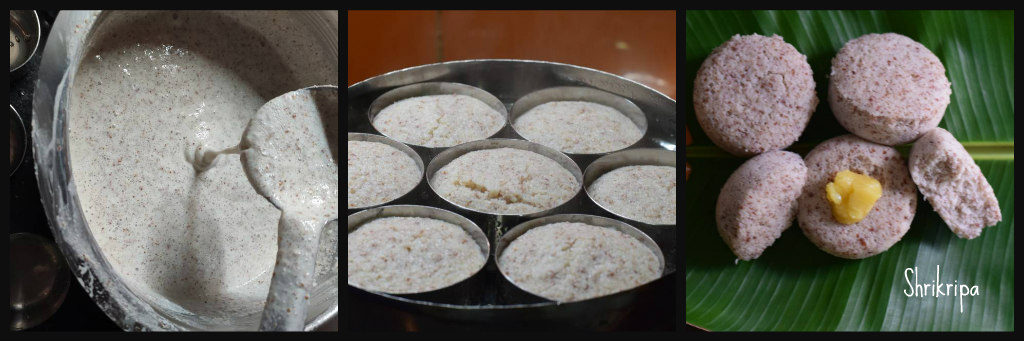
-Next day morning, steam idlies like a Regular idli and enjoy with little hot coconut chutney or any vegetable sambar.

Thondekai melara / Ivy gourd Kayi huli:

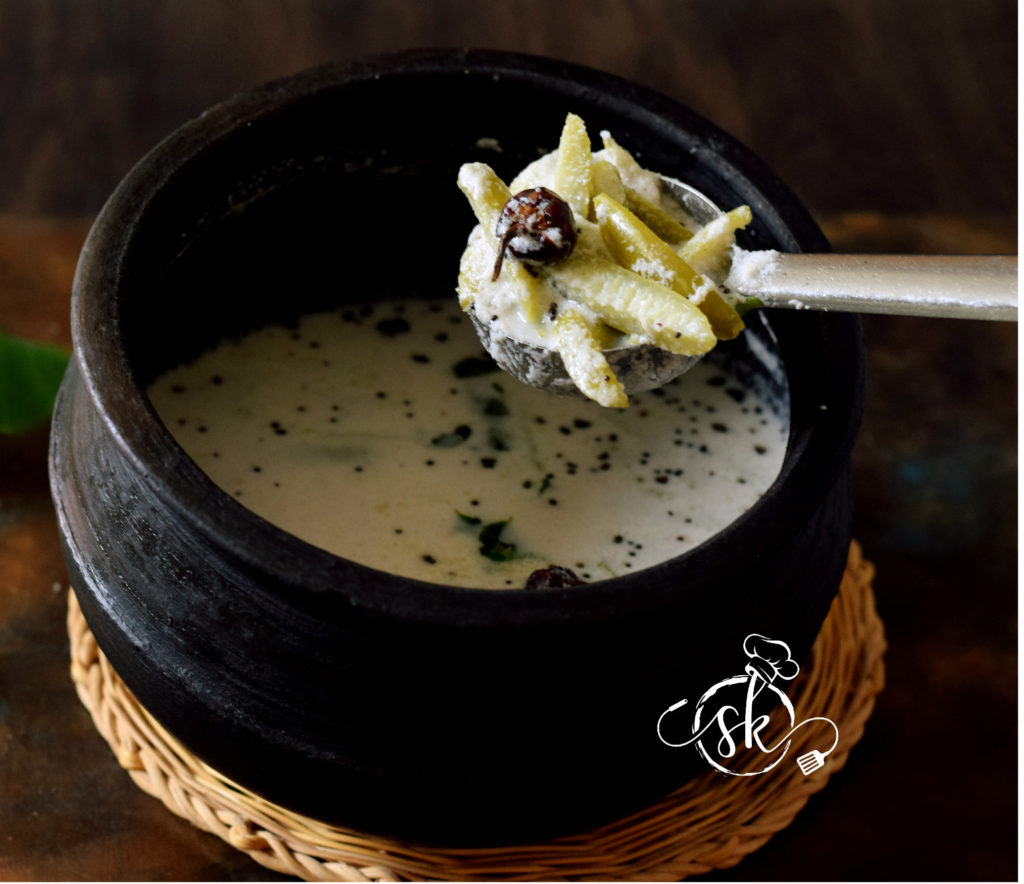
Melara is one of our  specialities, only found in our community and must in our functions or any festivity.  Melara has different names according to the region from which we belong to such as Kayi Huli / Majjige Huli. This post was long due and glad to be able to post at least now.

Kayi is nothing but Coconut. Here, fresh coconut ( which is known as Hasi kayi/ not dried/should be filled with coconut water, not dehydrated one)  is ground without any masala and added to cooked veggie , lastly one serving spoon of slightly sour buttermilk or beaten curd has been added and seasoned.

Melara can be done with extremely limited choices of vegetables. Well known  suitable vegetables which can be used in this curry are, Ivy gourd, Tender Mangalore coloured cucumber( which should be green and white) , Ivy gourd and Mangalore cucumber mixed together, Yam alone or with White Kabuli Chana , Bread fruit ,Giant Taro alone or with White Kabuli chana, White Bitter gourd , Red  Amaranth greens, yard long beans, brined raw jackfruit etc are some of our traditional “qualified” vegetables  to cook melara.

As time passes by, even this list has some additional English vegetables 😉 (Yes! Other than our native veggies are known by this name)  like Raw green tomato, Capsicum, potato, and beans)

Now we would move towards the recipe –

Ingredients:

Ivy gourd – 500 grams ( Or Vegetable of your choice)

Green chillies – 2

Salt

Grated fresh coconut – from ½ to ¾ coconut 

Thick buttermilk – 1 serving spoon

Coconut oil – 2 tsp

Mustard – 1 tsp

Red chilli -1

Curry leaves – 1 string

Method:

-Wash ivy gourd ,chop into 4 pieces lengthwise. Cook with just enough water to immerse, by adding salt, slit green chillies.

-Make a really fine paste of fresh grated coconut. When veggie cooks, add this ground masala, adjust the consistency and boil for 2 minutes.

-Add buttermilk or beaten curd and when it starts to boil, switch off.

-Prepare seasoning, heat oil, splutter mustard, add red chilli and curry leaves fry and pour over melara.


Buckwheat Dosa:

For some people, eating gluten -free is a necessity due to their sensitive gut or any other medical conditions. They normally prefer whole food without gluten , which is highly nutritious with many health benefits. As a good source of fibre, buck wheat is known for its low Glycemic index, hence it is safe to eat people with diabetic condition as well.

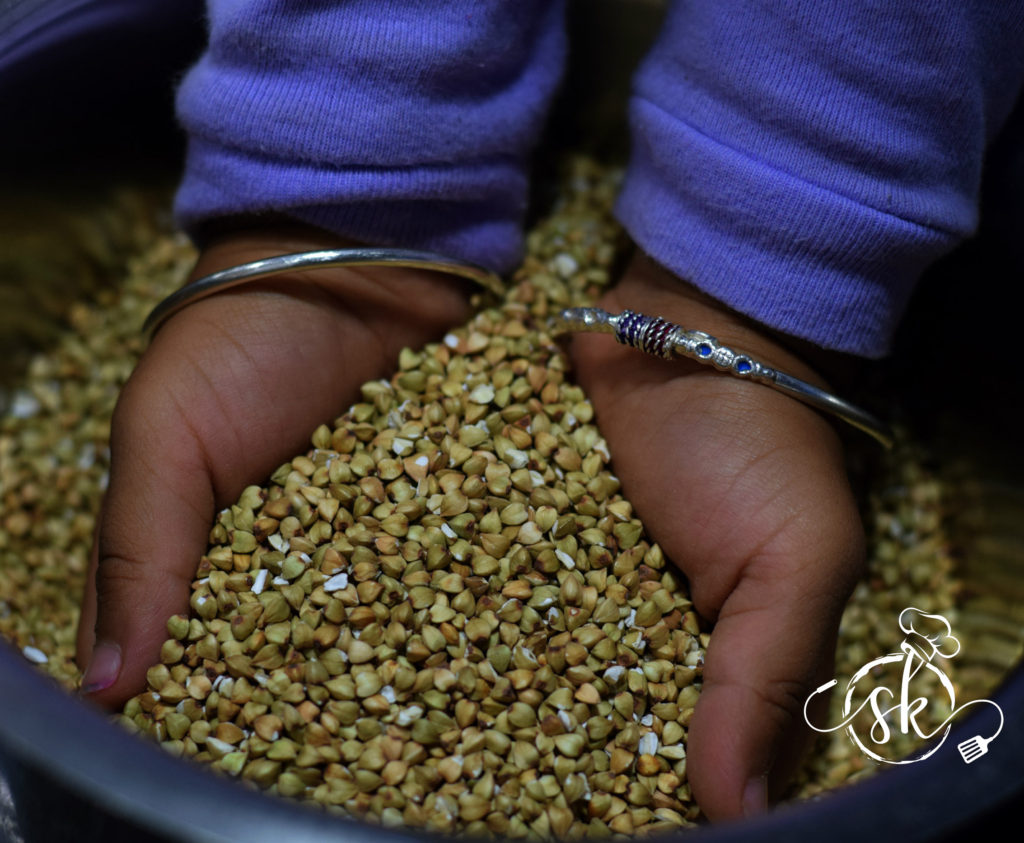
Buckwheat Is one such Super food and earlier I have posted Buck wheat honey Noodle recipe and now it is my experiment with the whole seed, which my sister has carried and got it for me. You must be wondering, why I have written Buckwheat as a seed? Yes! The name buckwheat causes confusion and usually people think that, it is some other form of grain and related to wheat. It is  seed of the flower from the plant, which belong to the same family as Sorrel and Rhubarb. The seeds are in triangular shape. These categories of seeds, which we normally consume as a grain is known as “pseudo cereals” and Amaranth and Quinoa are commonly used other pseudo cereals.

After seeing the seed/grain, I wanted to try our traditional Whole wheat dosa recipe by replacing whole wheat to Buckwheat. It tasted really good and loved the earthy taste and grainy texture, just like whole wheat. It is quick, no fermentation and instant recipe with all the goodness.

How I made:

Ingredients:

Whole Buckwheat – 3 cups

Green chillies – 2

Ginger – ½ inch

Coconut – 1 cup (freshly grated)

Salt

Method:

-Soak Buckwheat after washing for a couple of hours.

-In a mixer grinder, put soaked buckwheat, little water, salt, chilli, ginger , coconut and make a batter.

-Batter should not be very thin and watery. It should be like idli batter consistency.

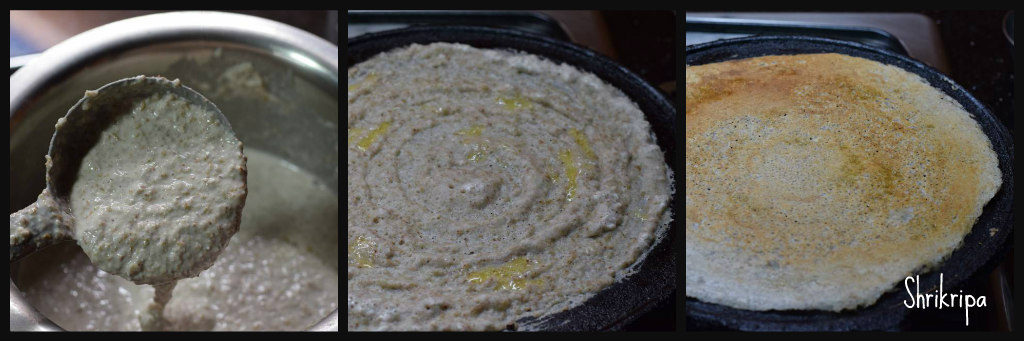
-Heat iron griddle. When it is hot, spread thin dosas, cook both the sides by pouring little ghee or oil.

-Serve with chutney or sambar.


Avalakki – Genasina upkari/ Seasoned Poha with Sweet potato and chana curry:

Bajil/ Avalakki is a default name for seasoned paper thin poha either with added chopped onion or plain. It is a speciality of our native, Mangalore .

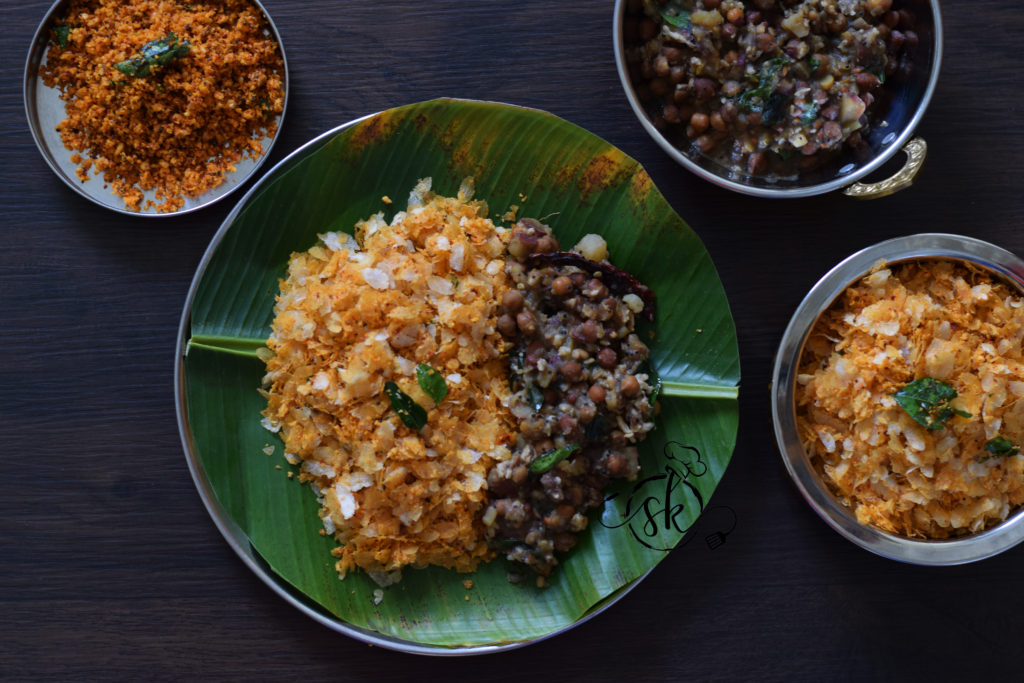
When it is combined with Chana curry, which is known as Kadle- Bajil. It is very nutritious ,protein rich combo breakfast option and truly  filling to our tummy as well. Here I have used my home-grown Sweet potato with soaked black chana or Bengal gram. It is two very  easy dishes combined together to make a pair. It is a no onion dish and appropriate breakfast option for any day either feast / Vrat .

Even though many people would have tasted Avalakki oggarane in any of our temples. This particular dish is almost extinct in today’s world. Hence wanted to share it with you all.

At first, we would see, how to prepare Kadle/Chana curry: Addition of Sweet potato is an optional. 

It is a semi solid ,simple, little sweet as well as spicy seasoned dish.

Ingredients:

Black Chana – ½  cup

Sweet potato – 1 or 2 (optional) 

Salt

Jaggery (optional)

Red chilli powder – 1 tsp

Coconut oil – 1 tablespoon

Mustard – 1 tsp

Urad dal – 1 tsp

Hing – ¼ tsp

Red chilli – 1 or 2

Curry leaves – 1 spring

Coconut – (grated)

Method:

-Soak Chana , on previous night.

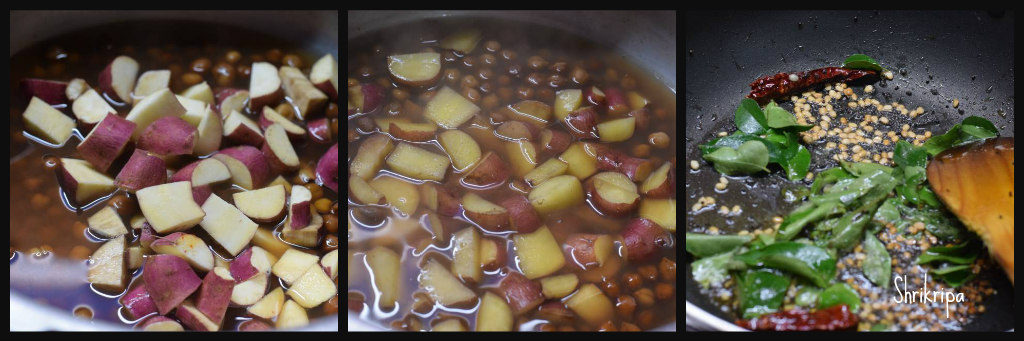
-Cook chana with little water and salt in a cooker. Dice Sweet potato with outer skin intact.

-When Chana is done, add sweet potato pieces and cook that as well.

-Prepare seasoning, heat oil, splutter mustard, add urad dal, red chilli, when dal becomes red, add curry leaves.

-Now add cooked chana and sweet potato and mash a little, to give a texture.

-Add jaggery, red chilli powder, adjust salt and Boil. when it becomes little thick, add grated fresh coconut, and switch off the gas. Serve with Seasoned Poha/ Avalakki Oggarane.

Now We would how to prepare Seasoned Poha/ Avalakki Oggarane:

Ingredients:

Fresh grated coconut – 1 cup

Salt

Rasam powder OR Roasted coriander, cumin, red chilli, little hing.

Little tamarind

Jaggery – ½ tsp

Paper thin poha – as needed

For seasoning:

Mustard – 1 tsp

Urad dal – ½ tsp

Red chilli -1

Curry leaves – 1 spring

Method:

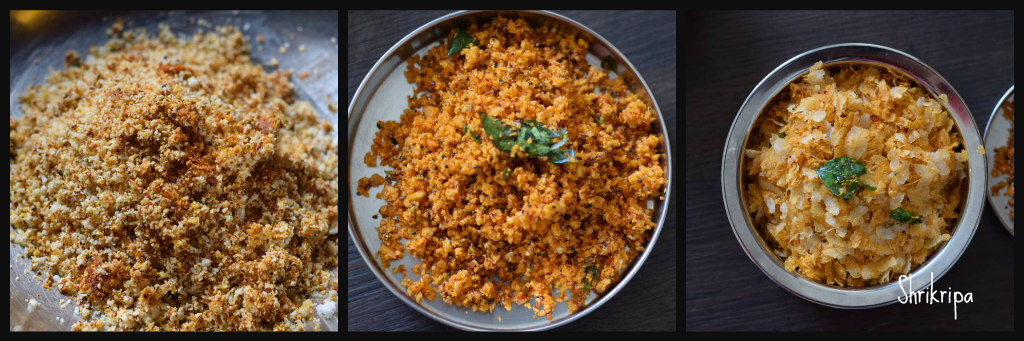
-At first, dry grind coconut, Rasam powder or roasted masala , jaggery, tamarind ,salt.

-To this mixture, add seasoning mix nicely by hand.

-Add required amount of poha and mix nicely by using your hand and serve with Chana and Sweet potato curry.

-Relish the Age-old filling breakfast with your near and dear ones.

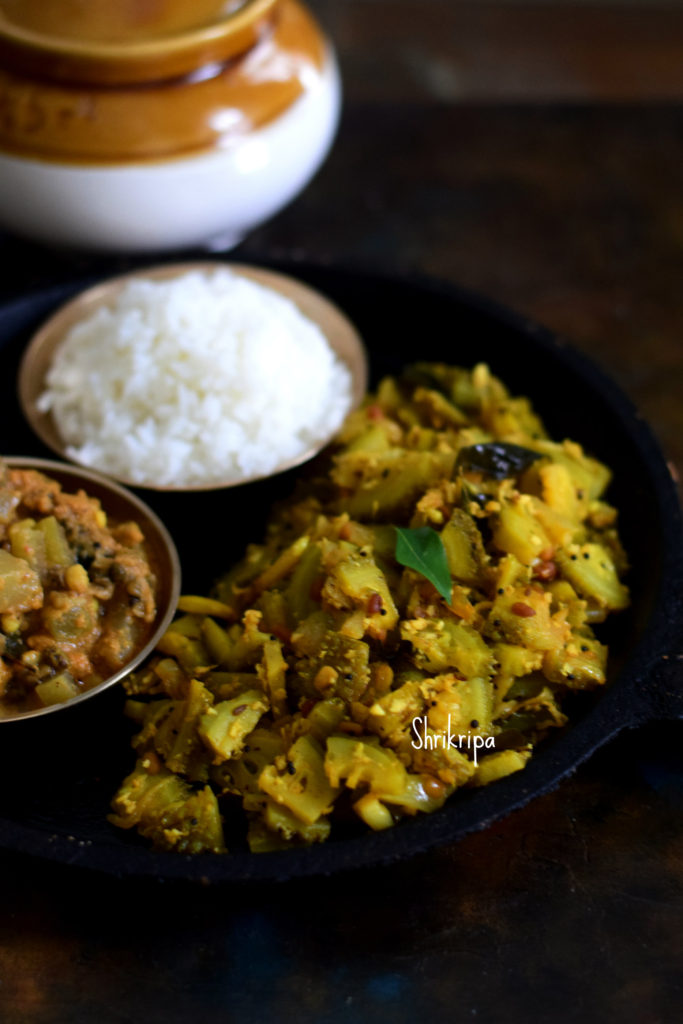
Kantola Palya / Subzi/ dry curry:

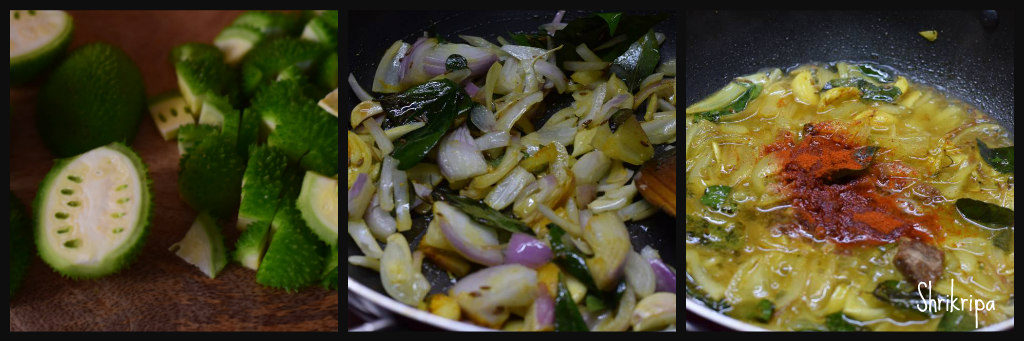
Kantola has many names like Spine gourd, Teasel Gourd, phagila, Mada hagala, locally we call this as “Kaadu peere” in Mangalore. Kantola is one of the famous and nutritious vegetable of coastal region and some Eastern parts of states. This monsoon vegetable is loved by all. This resembles a bitter gourd in structure, but not in taste. It is a crunchy mild flavoured vegetable.  It is a great health food as it is rich in proteins, Iron, and antioxidants and low in calories. It is high in fibre too.                  

In my family, we usually relish this in two ways. One is crunchy,  tawa fry form or as a palya. I make palya in two ways. One is garnished with  fresh coconut. Other one is  with coconut, along with little crushed roasted peanut. Both side dishes tastes equally good.

Ingredients:

Kantola – 500 grams

Onion – 1

Garlic – 7 to8

Turmeric – 1 tsp

Tamarind – small gooseberry size.

Red chilli powder – 1 to 2 tsp

Salt – to taste

Jaggery –  to taste

Fresh Coconut – to garnish

For seasoning: Coconut/ Vegetable oil, Mustard, urad dal, chana dal, cumin , curry leaves.

Method:

-Wash Kantola, chop into small slices. Chop onion and crush garlic. Soak tamarind in a cup of water.

– Take one kadai, heat oil, splutter mustard, add urad and chana dal. Fry until it turns red. Add cumin and curry leaves as well as crushed garlic.

-Add chopped onion, add turmeric, fry until onion turns transparent. Add tamarind water, red chilli powder, salt, jaggery.

-When it starts boiling, add chopped Kantola and mix everything , close the lid, and cook in a low flame.

-After water drains, Kantola turns soft, garnish with coconut or coconut as well as crushed roasted peanuts.

Mix everything and cook further 3 more minutes and switch off. Serve as a side dish with rice or roti.


Fusion Veggie Wraps/Rolls:

Why do I call this a Fusion wrap? It has an Indian Roti with Mexican filling. This is a Colourful veggie wrap which can be served hot or cold. These wraps are filling and at the same time very healthy too. 

It’s ideal for kid’s / office lunch boxes.

 -Here I have used

1) Ragi/finger millet, whole wheat roti. ( you can use plain wholewheat roti as well.

2) Avocado dip which is mixed with chopped lettuce and used as a bottom bed.

3) Roasted veggie: here I have taken capsicum. You can use chopped and roasted mushroom or any other veggie as well.

4) Salsa: here I have taken tomato salsa, you can use any salsa like pineapple, mango etc.

First, we will see how to make Roti:

Ingredients:

Whole wheat flour-1 cup

Ragi /finger millet flour-½ cup

Water-1 cup

Salt

 Chopped dill leaves-1 cup (optional)

Oil -1 tsp.

Method: Take one cup of water, add oil, salt and boil. Now add Ragi flour and keep this for 2 to 3 minutes or until it cooks. Now remove from the flame and keep aside. When it is a little cool and ready to handle, add whole wheat flour and chopped greens, make a firm ball like Chapati dough. Cover and keep this aside 10 minutes for resting. Then start making little thicker Chapati than the regular Chapati and cook both the sides by applying some ghee or oil and keep it ready.

Secondly, we will see how to make Lettuce – Avocado dip:

Ingredients:

Avocado -1 large

Yogurt- ½ cup

Sugar – 1 tsp.

Green chilli -1

Garlic salt – to taste.

Cumin powder – ½ tsp.

Red chilli flakes- ¼ tsp.

2 to 3 table spoons –chopped coriander leaves.

Chopped Lettuce or Napa cabbage – as required 

Method:

-Remove flesh from the avocado and discard its seed.

-Grind green chilli, coriander at first, then add all other ingredients and churn these by putting all of them together and adjust the seasoning.

-you can serve this as a side dish, as a dip or dressing.

-This dip stays good for a week under refrigeration.

-Now Chop lettuce like long strips and mix this avocado dip according to the requirement. Now your second ingredient for the wrap is ready.

Thirdly, the Roasted veggie:

-Here I have taken capsicum. Wash, remove seeds and dice .Now take some olive oil, sauté this and sprinkle some garlic salt. Now your third ingredient for the wrap is ready too.

Fourth and last one is Tomato Salsa:

Ingredients:

 Tomato -1 finely chopped

 Onion- ½ finely chopped 

 Green chilli -1 finely chopped   

 Salt, sugar and lemon juice –according to your taste

 Coriander leaves –chopped

Method: add all these ingredients, mix and adjust the seasoning. Now your fourth and last ingredient for the wrap is ready.                             

Now we will proceed to make Fusion veggie wrap:   


-Keep everything ready and Take one roti, spread avocado and lettuce mix, sprinkle roasted veggie, lastly salsa. Now roll it and pack it in a lunch box or serve as a lunch or snack.


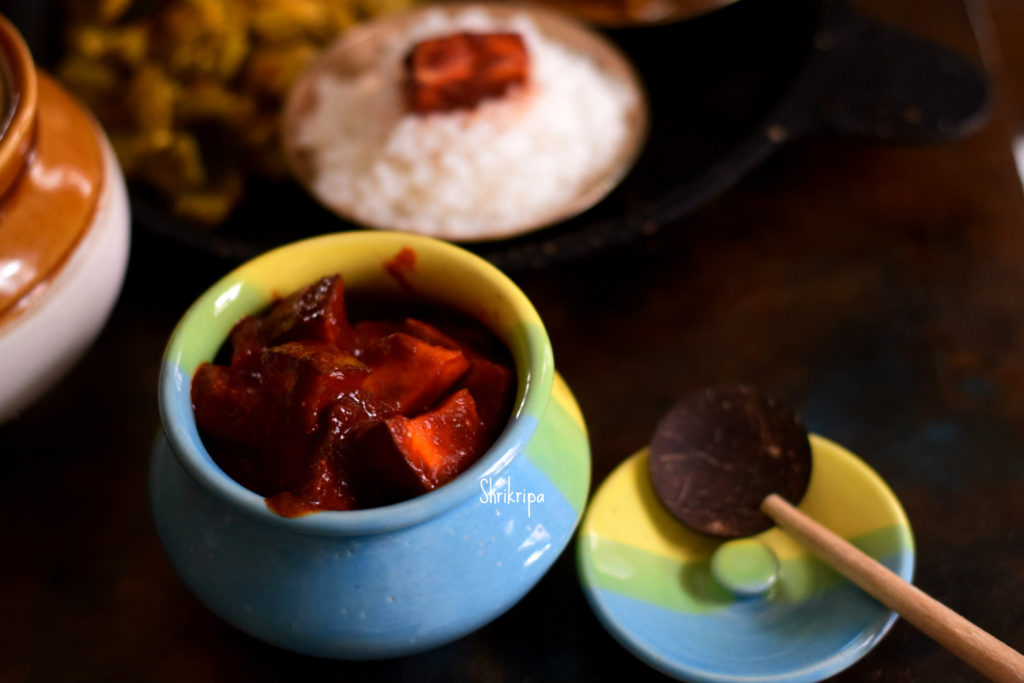
Raw Mango Pickle ( No oil version)

Mango pickle, who does not like it?! It is a perfect accompaniment to any Indian meal. As a south Indian, I need to have one piece of pickle with curd rice to end each meal of mine. 😉

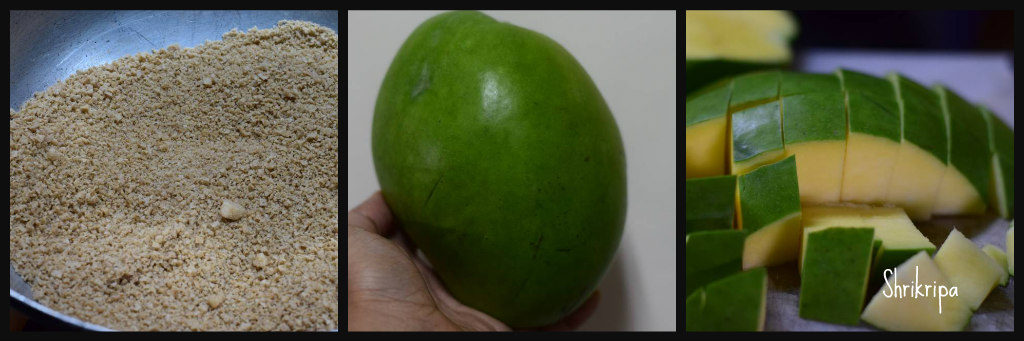
Due to lockdown, I was thinking of not indulging in pickle making. But, around two weeks back, when I happen to see huge Mangoes which are specifically meant for the pickle, I could not resist. Picked up only one, which itself was weighing one kilogram. It is our coastal recipe, which does not need loads of oil nor any added preservative . It has freshly ground masala and if you wish, added seasoning to enhance the taste and  known as Adangai.

Now we would see the procedure-

Ingredients:

1 big mango – weighed 900 grams

Salt – 1 glass tumbler ( 150 ml)

Hing – ½ tsp (solid hing) If it is powder add little more.

For pickle masala:

Fenugreek seeds – 1 tsp

Mustard – 2 tbl spoons

Cumin – 1 ½ tsp

Byadagi red chillies – 20 – 25 (acc to taste)

Black pepper corns – 10

Method:

-Dry roast crystal salt and remove all the moisture. Cool.

-Wash mango, dry it out, chop into small chunks.

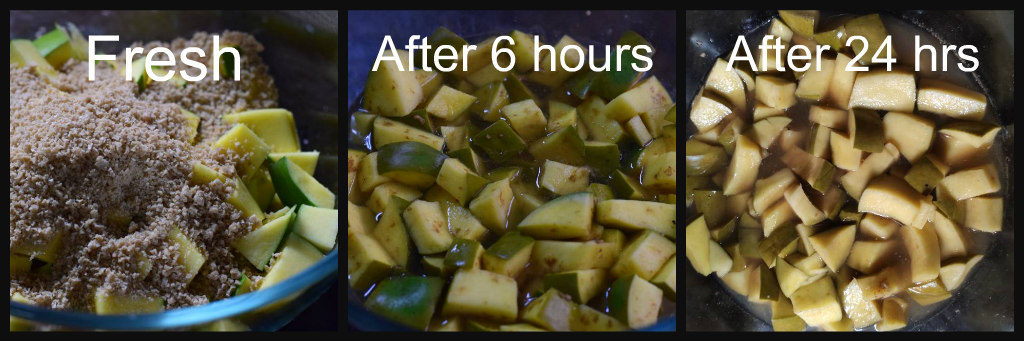
-Take one glass bowl or stainless-steel bowl, add roasted and cooled salt, mango pieces, hing. Mix everything, close and keep aside for 12  to 24 hours.

-Next day, dry roast methi until it is brown. Next, mustard until it splutters. Next roast red chillies, by adding 1 tsp of coconut oil   until crisp. Add pepper and roast for 2 minutes.

-Cool all these, make a powder. After that, collect the water, oozed out from the mango. Add into mixer jar and grind further to make a fine paste.

-Add the paste, marinated mango and mix together. Store it in a clean , dry glass bottle.

-If you want the seasoning – you can heat 2 tsp of coconut oil, splutter mustard, add hing and pour it over the ready pickle.

-Rest the pickle for at least ten days to absorb all the masalas , while doing so, in between give a stir by using dry spoon once in two days. It would fasten the marination process and pickle would turn out best by absorbing all the masalas.


Salted jackfruit Vada / Sole vade:

Sole , uppad pachir , uppinalli hakida halasinakai , these are all different names of salted / brined jackfruit. Which is basically a firm fully grown, matured but un-ripened jackfruit which is preserved in salt water. We usually relish this in the rainy season or in the off season by preparing some of our traditional dishes.

Salting the jackfruit, side by side preparing the chips is part of our childhood memories – sort of a preparation for rainy season. Which used to be a family affair and real fun altogether. Now a days, if I need to do something, either ask mom or buy it locally from Mangalore stores . Last weekend got a fistful of brined jack from my sister in law and made this age old / my grand mom’s recipe. Which I used to relish during my childhood. Just before the process of putting the fresh ones, there used to be a process of cleaning and sterilising the porcelain jars or Barani.  Which used to include, the process of emptying last year’s stock as well 😀 . So, all these delicacies used to be a result of such operations 😉 . You can call this as Salted jackfruit Vada or thattai or Nippattu. We hardly need any preparation for this delicacy. Curry leaves is the main flavour over here.

Ingredients:

Salted / brined jack – around 2 fistfuls

Rice flour – around ½ cup

Cumin – 1 to 2 tsp

Chopped green chillies – 2

Chopped curry leaves – around ½ cup

If needed – little salt.

Oil – to deep fry

Method:

-Soak salted jack in a big bowl of water. Wash couple of times to remove excess salt.

-If salt is excess, sometimes it needs little extra soaking time in fresh water.

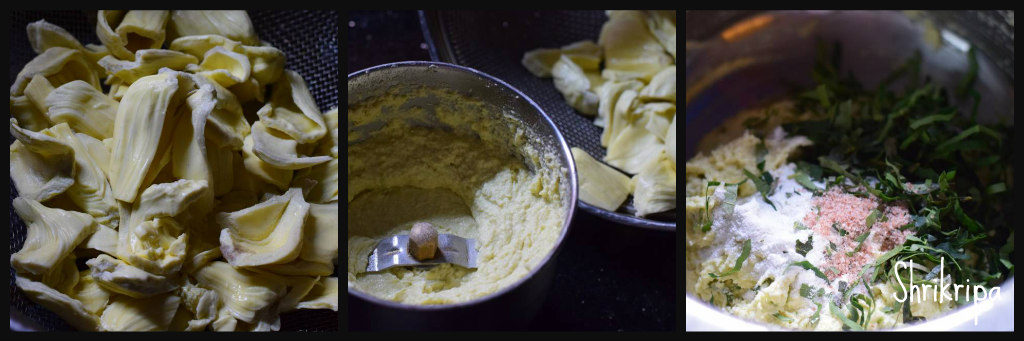
-Squeeze and as much as possible, drain the water and grind jackfruit pieces in a mixer jar.

-After grinding into smooth paste, add cumin, chopped green chillies, curry leaves, and mix it nicely.

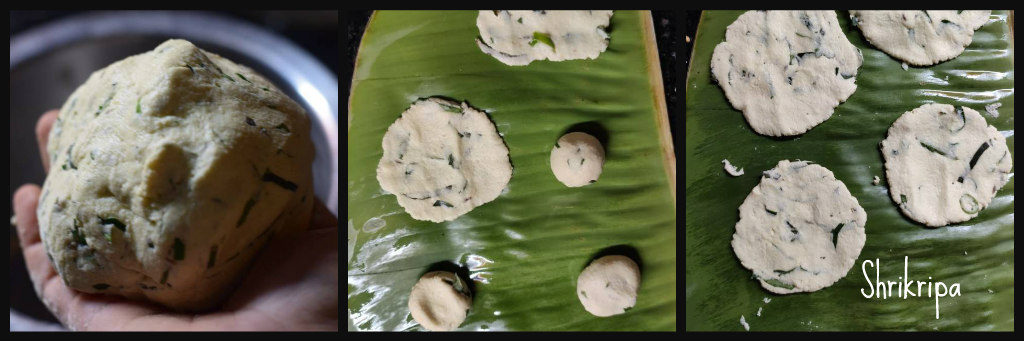
-Now, take required amount of rice flour and make a pliable dough.

-Check for the salt, if needed add and adjust.

-Take one small piece of banana leaf or  butter paper. Pat small Vada.

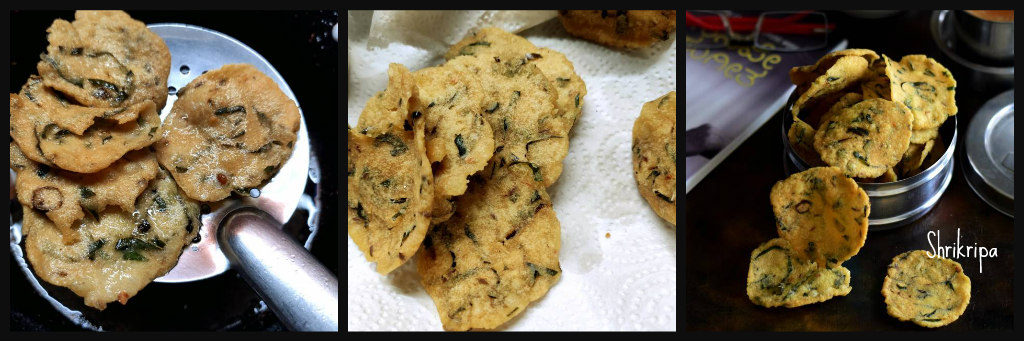
-Heat oil and deep fry like any other deep-fried savouries. Enjoy with your evening tea or coffee.


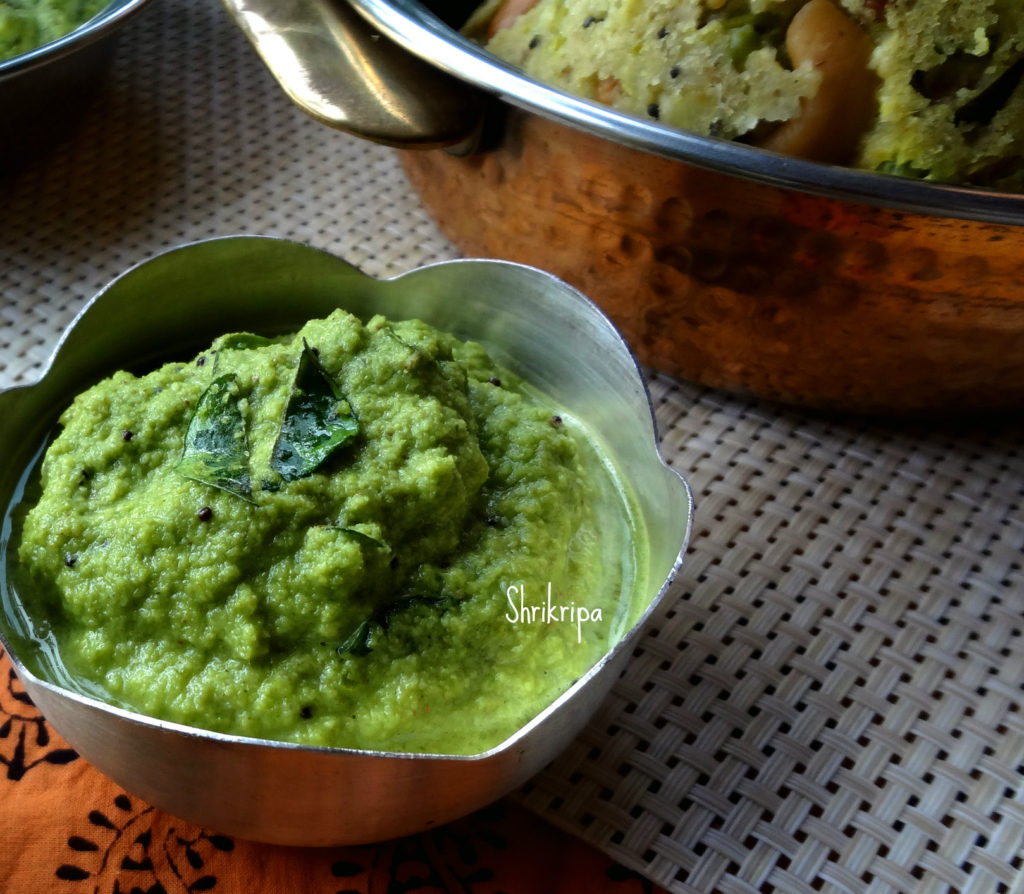
Coconut-Fresh Coriander chutney (Grandma’s style)

One more recipe from Smitha, dear friend of mine.  which I always relish with Oats and rava idli is age old recipe of her grandma. Though I have done little changes to the original recipe, taste wise it is the same and if you like khatta meeta chutneys, this is for you to enjoy with vegetable Oats rava idlies or plain oats – rava idlies or Rava idli with oats.

Ingredients

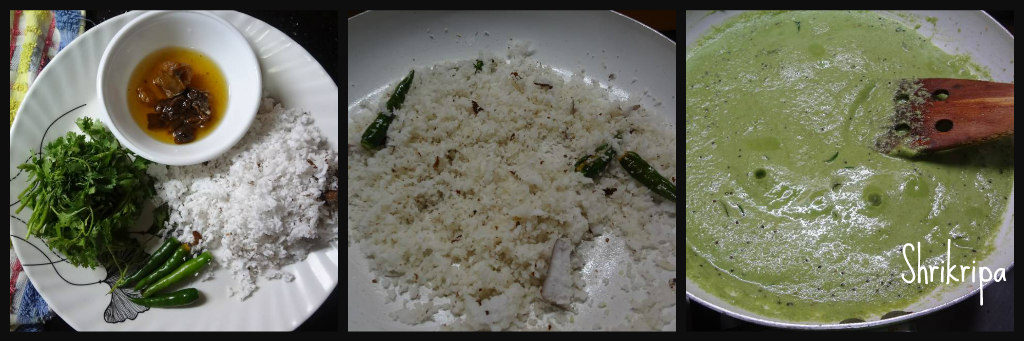
Fresh Coconut, shredded – 1 Cup
Fresh Coriander – A little more than half cup
Green Chilies – 4 to 6

Tamarind – Size of a Gooseberry
Hing – ½ tsp
Jaggery – 1 & 1/2 Tablespoon
Oil – 2 tsp

For Tempering: Oil, Mustard, Curry Leaves

Method

-Soak tamarind and jaggery in little bit of water to make it soft.

-Heat a pan. Add oil, Sauté the green chilies, until the outer skin looks partially white. Add the coconut and give it a mix. Once the coconut has turned warm, turn off the flame. Cool it.

– In a blender jar, put this mixture, along with tamarind-jaggery mix, hing, salt, fresh coriander and blend into smooth paste by adding water.

-Do seasoning, by heating oil, splutter mustard add curry leaves and add  ground paste, boil for 2 minutes.

-Cool and serve with Oats Rava idli. This chutney stays good for couple of days, under refrigeration.