Pepper flavoured Banana Chips:

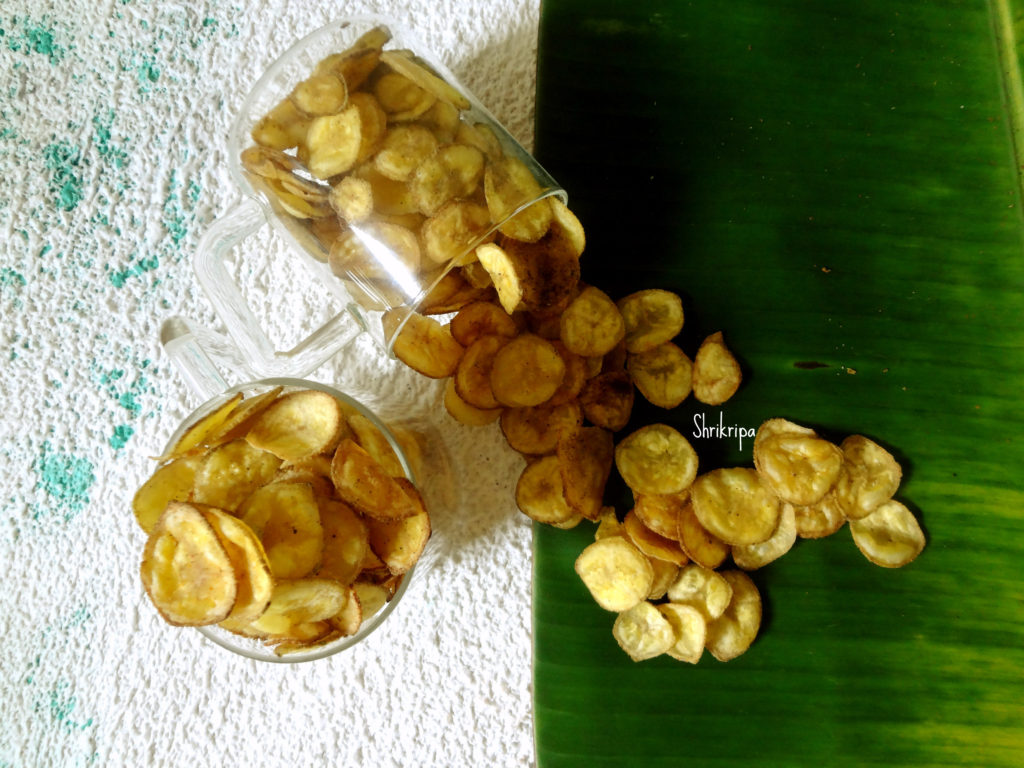
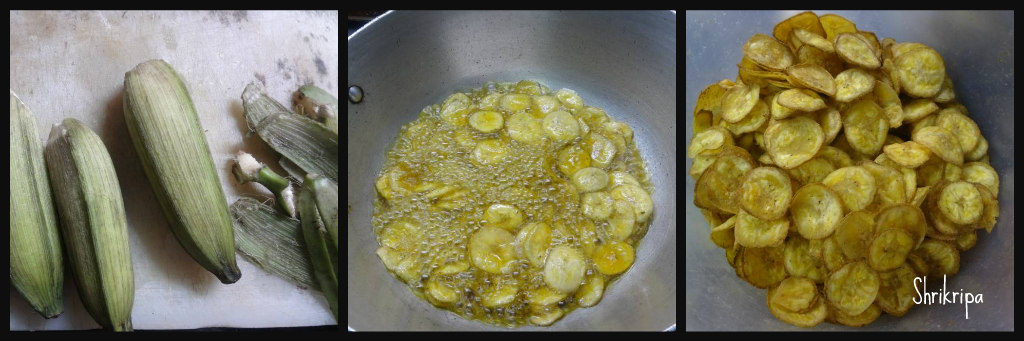
Pepper flavoured banana chips can be prepared by using any local varieties of Raw banana or Semi ripe but firm Kerala plantain. Banana I have used is home grown, small variety which we call as Gali bale. One can use Yelakki or any other variety of banana which is Non-ripe, green one.

Colour of the chips is not bright unlike Kerala plantain chips. It is earthy and peppery in flavour.

Now we will proceed towards the recipe-

Ingredients:

Green Banana – 10

Salt – 1 tbl sp

Water – 1 small cup

Coconut oil – To deep fry.

Chips slicer – to slice

Pepper powder – as needed

Method:

  • Apply some oil to your hand. To some extent it will protect your hand from blackening.
  • Take fresh, green plantain, wash properly. Peel the outer skin by using knife at the upper tip, use hand and proceed to peel till the bottom.
  • Immerse these peeled bananas in a bowl of water.
  • Take one small bowl of water and mix salt and keep aside.it is your salted water, which is used while frying chips.
  • Now you can keep coconut oil for heating. When it is very hot, start making chips. To test the hotness of oil, drop one small piece of plantain, if it pops up immediately, it is ready.
  • Take out plantain from water, pat dry and start slicing directly to the hot oil by using slicer.
  • Use one or two plantains at a time.
  • Keep flame at medium. When the slices of plantain cook, the bubbling sound of the oil becomes faint. Now you can add 1 tbl spoon of salted water, and you will hear lot of bubbles and bubbling sound. When the sound reduces, the chips are ready to be removed from the oil.
  • Remove the chips from the oil and keep them on a tissue-laid bowl and sprinkle some black pepper powder and mix by shaking the bowl up and down.
  • After cooling store, it in an airtight container and proceed with the remaining plantain.


Bendekai sambar/ Okra sambar:

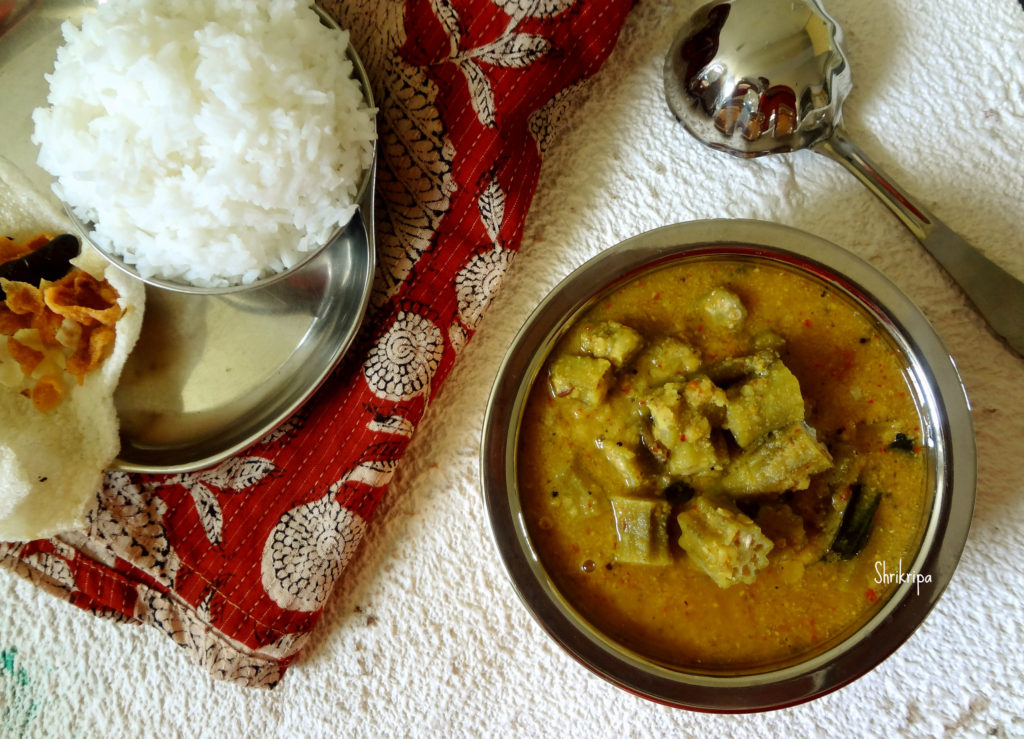
Sambar is a very essential part of south Indian meal. In Mangalore region, we normally use freshly roasted and ground coconut masala for vegetables as well as each vegetable has its own suitable masala recipe.

Normally, the main ingredients will be the same and here and there some additional ingredients or frying techniques will be different.

In this particular recipe, we don’t use coconut as it is.  Masala is fried as well as coconut and made into powder form and added. It is very flavourful and tasty.

We normally use heirloom variety of Bendekai/ ladies’ finger /Okra for sambar. This masala tastes very good even with small variety dark green bhindi as well.

Ingredient:

Bendekai/Bhindi /Okra – ½ kg

Toor dal – ½ cup

Tamarind – size of a small lemon

Green chillies – 2

Salt

Jaggery – 1 tsp

Methi – ¼ tsp

Coriander seeds – 1 tablespoon

cumin – 1tsp

Urad dal – 1 ½ tsp

Dried Red chillies – 2 to 3

Curry leaves – 1 spring

Coconut – ½  to ¾ cup

For the seasoning:

Coconut oil – 1 tsp

Mustard – ½ tsp

Red chilli – 1

Curry leaves – 1 spring

Method:

-Cook toor dal and keep aside.

-Soak tamarind, boil with little added water, salt, jaggery, slit green chillies.

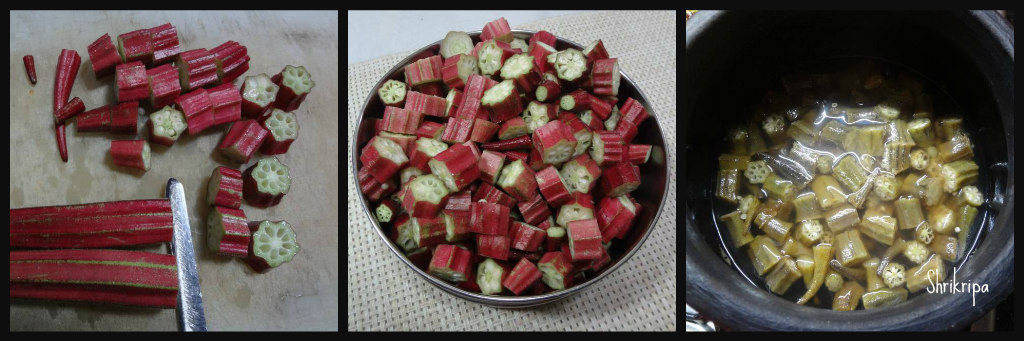
-When it starts boiling, add chopped bhindi. Allow to cook in a low flame.

-To avoid sliminess,  don’t close the lid or put a spoon to mix while boiling bhindi.

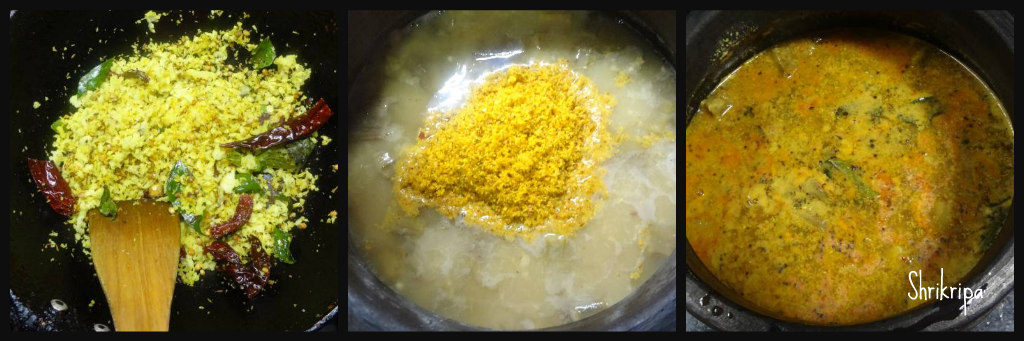
-In the meantime, prepare masala. Heat coconut oil, fry methi, add coriander, cumin , urad dal, red chillies and fry until all the spices are roasted.

-Next add curry leaves, coconut ,turmeric and fry until you get a nice aroma.

-Cool and make a powder of roasted coconut mix and keep aside.

-When bhindi is cooked, add dhal, masala powder and boil nicely by adding sufficient water to adjust the consistency.

-Do the seasoning and serve with hot rice.


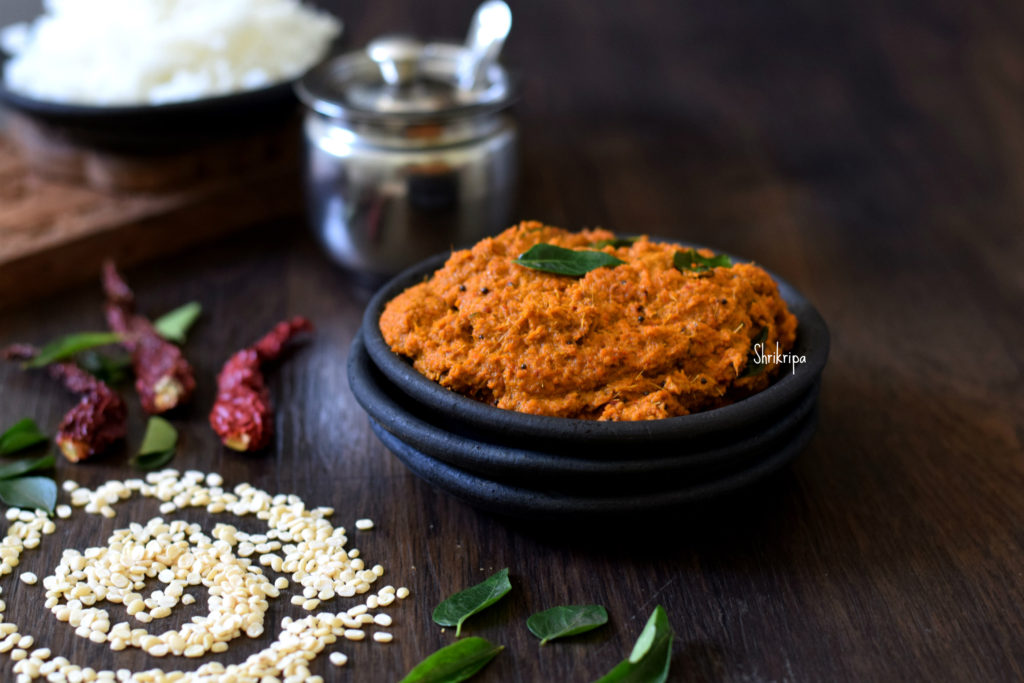
Pirandai Thogayal/Adamant creeper Chutney:

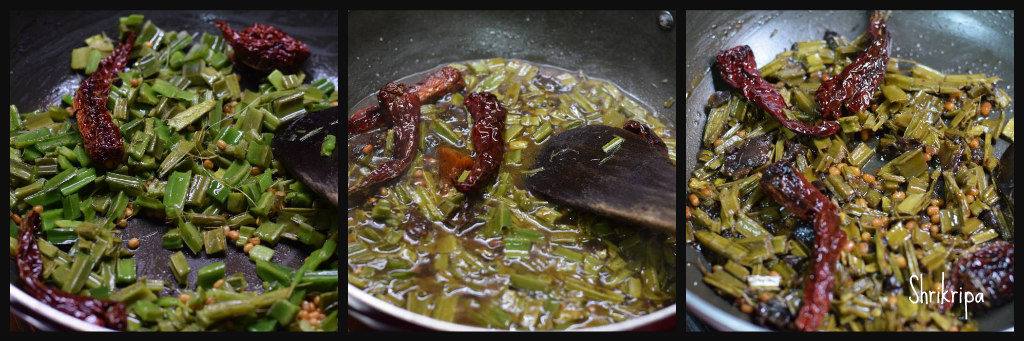
Pirandai is a creeper. It is called as Adamant Creeper / Devils Back Bone / Veldt Grape “ in English. Botanically known as Cissus Quadrangularis. Which refers to plants quadrangular sectioned  branches with internodes of 8 to 10 cm in length and 1.5 cm wide.

It has many names in different parts of our country. In Sanskrit: Asthisamhari, Vajravalli, Asthishrinkhala ,Kandavalli ,Vajrangi . In Hindi: Hadjod ,Hadjora ,Hadsankari Kandvel. In Kannada: Mangarahalli . In Tamil: Pirandai ,Vajravalli . In Malayalam: Peranta ,Cannalamparanta. In Telugu: Vajravalli ,Nalleru. In Gujrati: Chodhari , Hadsankal.

Adamant Creeper is a very well-known traditional herb in ancient ayurvedic medicine. which was used in setting bones/ bone fracture healing , gastric ulcer , piles ,anaemia ,menstrual problems as well as in de worming. It is a good source of Vitamin C and Calcium. Usage of the herb is usually by making Chutney or Kolambu or sundried and in powdered form.

If person wants to take it as a healing food, one should consume it weekly twice and mix with a little ghee either with hot rice or with Roti.

Till two years back, I had no idea regarding this plant or its usage. Due to our Foodie Facebook page, got to know about it. My Foodie friend Ashwini shared the plant cutting with me and guided me through. From then on, my experiments went on and I tried out many recipes. The chutney that I make and like is without coconut, mainly because it stays longer and can enjoy for many days. Here I will share both the version.

Pirandai has to be treated like Colocasia leaves and Yam. It is itchy in nature even while cutting as well as till the last stage of its cooking. So, quantity of tamarind plays a major role while cooking and application of oil to your hand will avoid itching while cleaning and chopping. One more thing what I have observed is, before using  keep it for one day ,after harvesting. This also helps in reducing the itchiness.

Now we will see the Thogayal/Chutney preparation:

Ingredients:

Pirandai – one bowl

Tamarind – lemon sized ball

Gingelly oil – 1 tablespoon

Urad dal – 1 tablespoon

Hing – ¼ tsp

Dried red  chillies – 3 to 4

Salt

Jaggery – 1tsp

For Seasoning:

Gingelly oil or any refined oil – 3 to 4tablespoons

Mustard – 1 tsp

Curry leaves – 2 springs

Method:

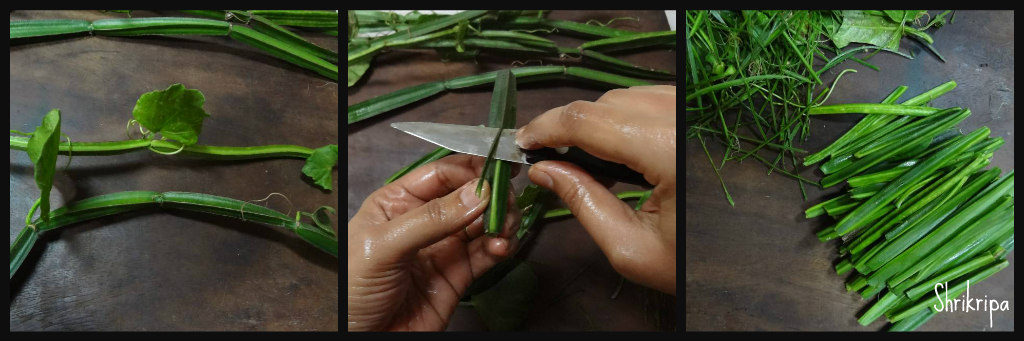
-Apply oil to your hand, cut every node and take out internal sticks, peel outer 4 corners and remove all the fibres.

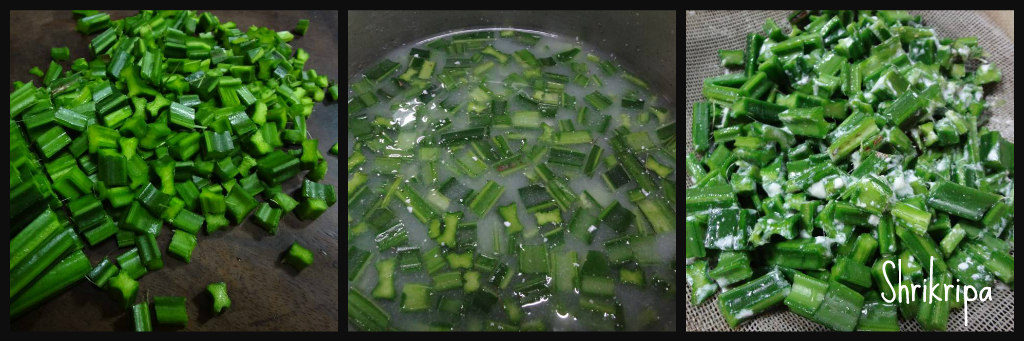
-Take diluted buttermilk water (add little curd to water and make) and wash these cleaned Pirandai nicely.

-Chop these sticks into tiny bits and immerse in diluted buttermilk or tamarind water.

-Soak tamarind in a little water.

-Now drain the water from chopped Pirandai and keep it ready for the seasoning.

-Now take 1 tbl spoon of oil, fry urad dal ,hing and red chillies. Add Pirandai choppings, fry until it is soft and turns pale in colour.

-Add tamarind water, salt, jaggery and cook until it is soft.

-Cool the mixture and grind into smooth paste by adding required amount of water. If you want to add coconut ,you can add coconut as well, while grinding .

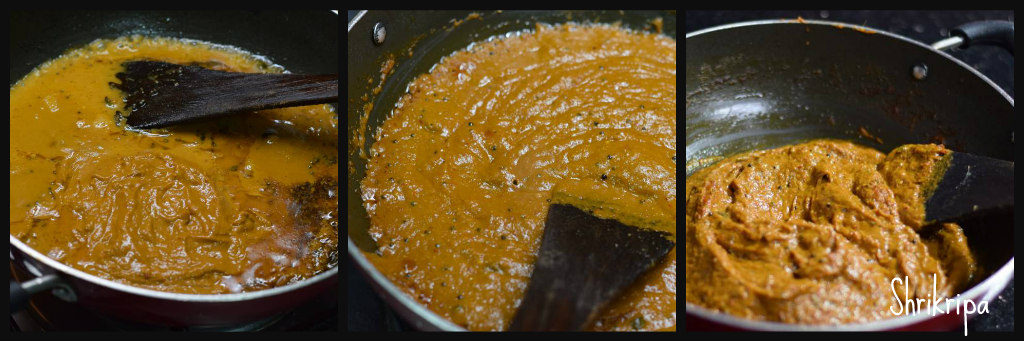
-Now prepare seasoning , take 2 to 3 tablespoons of oil , splutter mustard, curry leaves, add ground paste and boil until oil oozes out at the sides.

-Serve with hot rice , dosa or idlies. It can be stored for many days under refrigeration.

Note: Main picture is (with added coconut)


Ripe Jackfruit Idli:

Jack fruit idli is Instant , if you have left over Jackfruit dosa batter 😀 . Other wise you should soak dosa rice for 2 hours and then you can proceed to make idli. Last week when I made dosa , I had some left-over batter and tried this idli instead of our usual traditional kottige. Which is wrapped and steam cooked in Plantain leaf.

It turned out to be super soft and fluffy. It is very easy, at the same time no compromises in taste.

How I made:

Ingredients:

Dosa rice – 1 cup

Cleaned jack fruit – 1 big bowl 

Salt

Coconut gratings – ½ cup

Grated Jaggery – 2 tablespoons ( as required)

Ghee – 1 table soon (optional, but it surely enhance the taste)

Eno fruit salt – ½ tsp (optional)

Method:

-Wash and soak Dosa rice in sufficient water for 2 to 3 hours.

– Chop the jack fruit, remove bulbs and separate outer cover and inner seed.

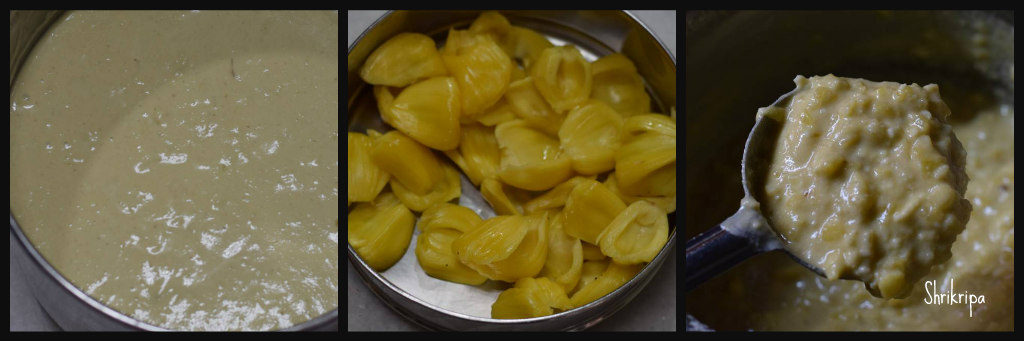
– Collect only the outer yellow fruit shell and put it in a mixer grinder, give couple of whipping sessions and remove.

-Divide it in half ( use one half for grinding and other half to ready batter. to enhance the taste.

– Now take soaked rice, half of  fruit chunks  , put little water and grind this into a smooth paste by adding sufficient salt. Batter consistency should be  little thicker.

-Take coconut gratings, mix in jaggery, little ghee( if you wish) and mix in half of jack pieces which we have kept aside.

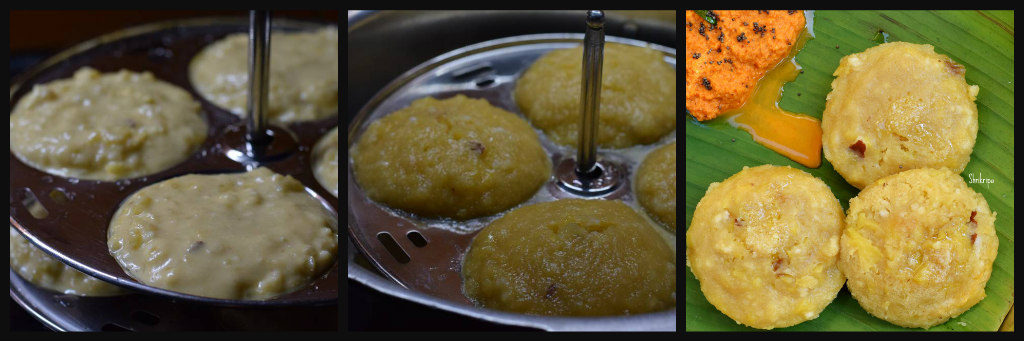
-Mix this mixture with ground batter. If you want, add Eno and mix everything and make idlies by using idli mould.

-serve this with honey or with ginger chutney.            

Note:

For ginger chutney: Fry red chillies with little oil and grind it with coconut, salt, little tamarind and piece of ginger.

If you have ready Dosa batter, add jack fruit pieces, coconut, jaggery ,ghee, Eno and mix everything and proceed.

If you are using idli stand, grease the idli plate with oil/ghee and pour a ladle full of batter and steam cook them in pressure cooker for 10-15 minutes.
Let it cool for few minutes before serving the idlis with spicy chutney and ghee.

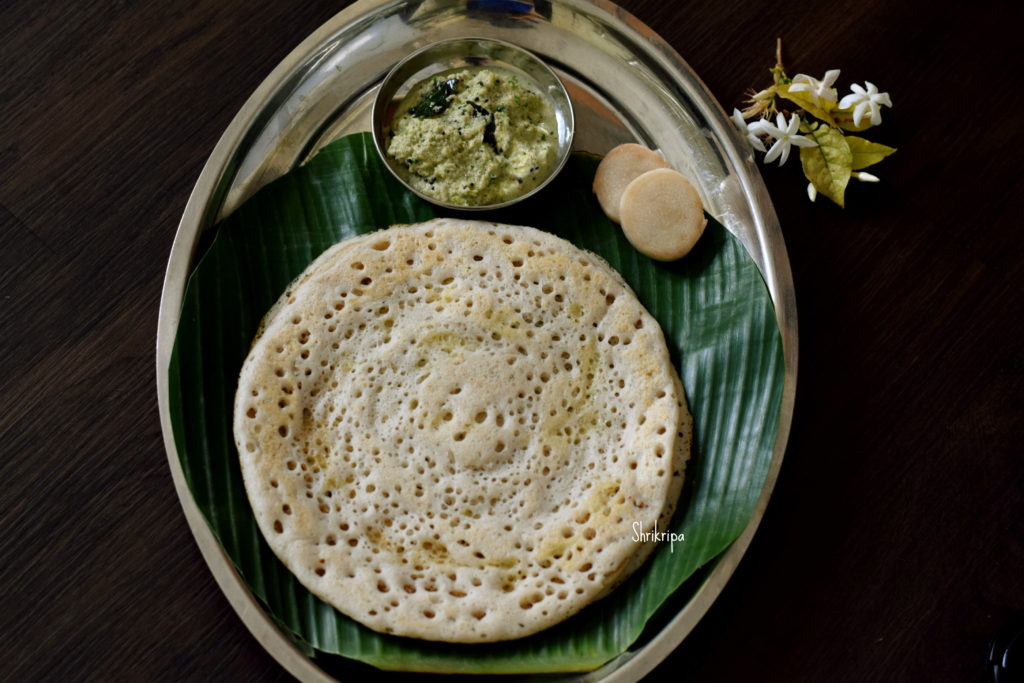
Plantain stem dosa / Bale dandina dosey:

Every part of the banana plant has its own benefits to our health. Banana stem is one such thing, which is high in fibre and filled with nutritious water. It is very good for Human gut as well as kidney.

The juice of the banana stem helps in flushing out of toxins as well as to prevent kidney stone formation as well. Overall it acts as a healing food for human body. In coastal Karnataka, we do use plantain stem or flower in various recipes. Today I am going to share our traditional Dosa recipe and previously I have shared Raw salad as well as Rasam recipe.

Plantain stem dosa turns out porous, soft as well as crispy and goes very well with any side dish of your choice.

Ingredients:

Dosa rice – 2 cups

Urad dal – ¼ cup

Methi seeds – 1 tablespoon

Banana/ plantain stem – 2 cups

Salt

Method:

-Wash , soak dosa rice, urad dal, methi in water for 2 to 3 hours.

-Chop Banana stem as I have shown in the picture below.

-Grind soaked rice and chopped plantain stem pieces by adding sufficient salt into smooth paste.

-Ferment overnight or 8 – 10 hours. Next day prepare Dosa .

-If you like crisp roasted one, spread as thin as possible on heated iron griddle.

-Serve with coconut chutney or any other curry.


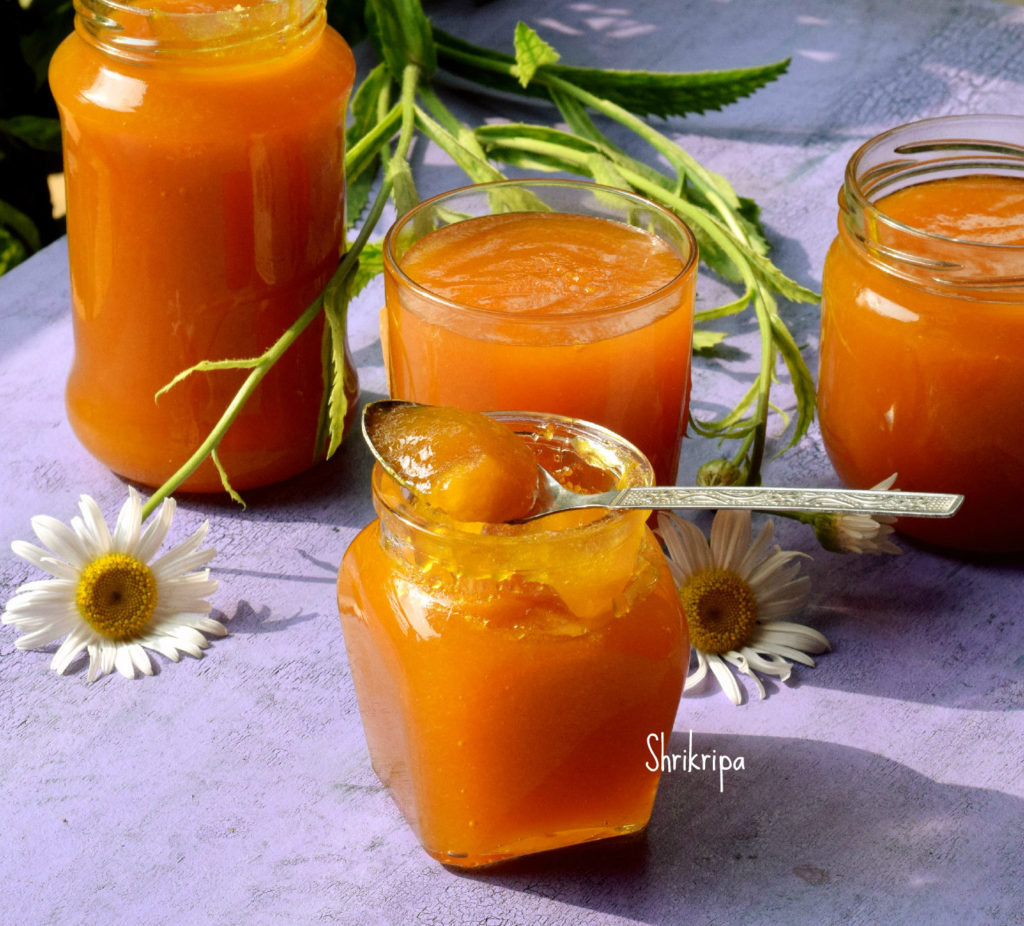
Mango- Guava Jam:

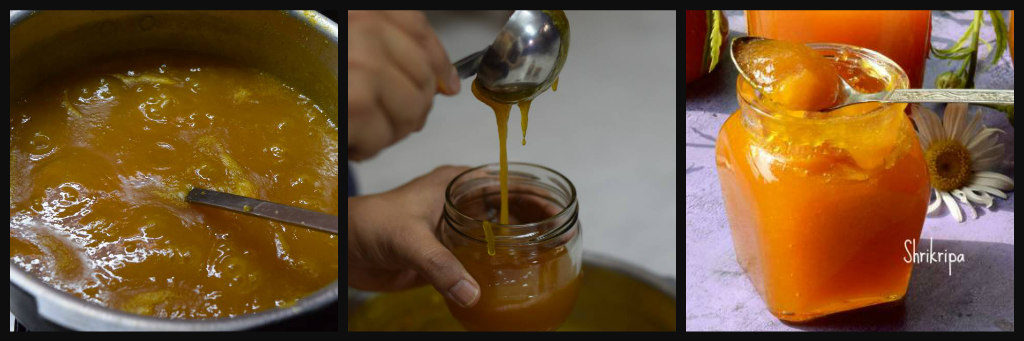
Homemade jams are full of flavours as well as without any chemicals and preservatives. Mango and guava turn out super delicious and texture of the jam would be little grainy and thick due to guava. If you want a silky-smooth texture, you can use only mango and proceed.

Now I will proceed towards the procedure-

Ingredients:

Mango’s – 600 Grams (roughly)

Guava – 500 grams (roughly)

Sugar- 1 kg (according to your taste)

lemon – 1

Method:

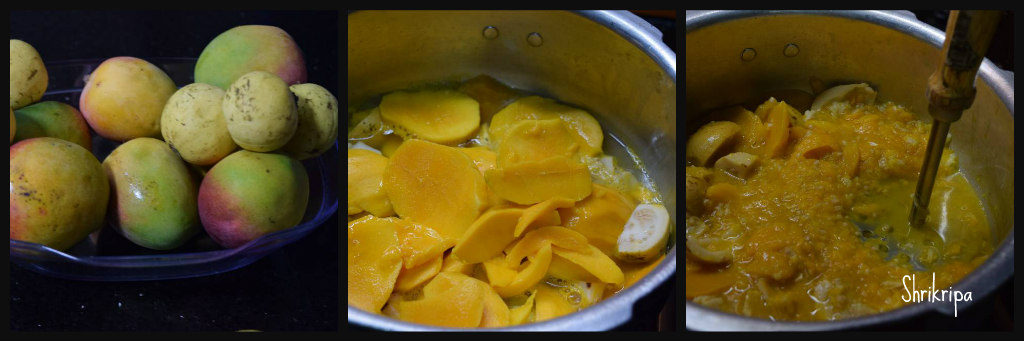
  • Wash, Peel the mangoes and chop.
  • Wash, chop guava into pieces.

  • Put all these pieces, with a little bit of water (till it immerses) and cook for 4 whistles.
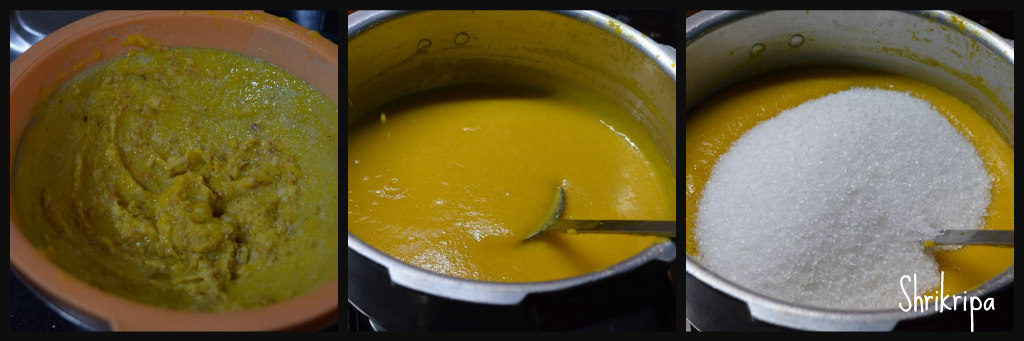
  • -Mash the mixture by using masher. Don’t use mixer grinder for mashing. (it would crush the guava seeds)
  • Sieve this pulp to remove fibres and seeds.

  • Collect the smooth pulp and heat it in a low fire, until it starts boiling.
  • Add sugar, cook until it is done.
  • To check the doneness, take some water in a small bowl, drop the cooked mixture in it, immediately it should form a thick mass. If it dissolves, then you should proceed cooking.
  • When it is done, add lemon juice and cook for 2 minutes.

  • Remove from the fire and cool for a while and pour it into a glass bottles to set.
  • Don’t close the lid until it is cool. Store this in a clean, dry bottle and refrigerate.

NOTE:

-If you use very sweet mango, adjust the quantity of sugar.


Paneer Pulav:

This is a one pot meal and is wholesome and quick. Working days are always hectic and when you have to pack dabbas, it is a challenge to think of some interesting wholesome food. This pulao is one such thing, my family doesn’t mind having even in dabbas when cold or piping hot for a quick weekend lunch.

It needs very little ingredients as well as time. Here I have taken Beans, carrot, peas along with paneer chunks to enhance the nutrition.

Ingredients:

Basmati rice or any rice of your choice – 3 cups

Veggies of your choice – 1 bowl (Beans, carrot, peas)

Paneer – 200 grams

Bay leaves – 2

Cinnamon- 1 “

Cardamom – 2

salt

Oil – 3 to 4 tablespoons

For Masala:

Cinnamon – 1”

Clove – 4

Ginger – 1”

Garlic – 10 cloves

Green chillies – 5 to 6

Coriander leaves – little

Pudina – little

Coconut – 2 tablespoons

Curd – 1 small cup

Method:

-Wash rice and soak for 20 minutes. Drain and keep aside.

-Chop veggies, grind masala and keep aside.

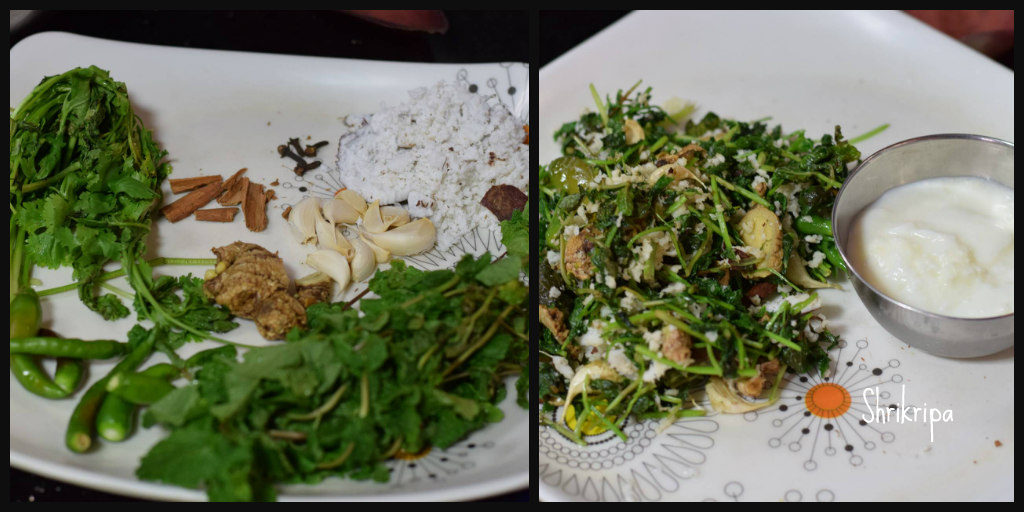
-For masala: Fry clove, cinnamon, green chillies, garlic, sliced ginger, coriander, pudina and coconut by adding little oil, cool and grind into smooth paste by adding curd.

-Take one cooker, add oil, drop cinnamon, bay leaves ,cardamom. Add chopped veggies and fry until raw smell vanishes.

-Next, add masala, add salt and fry until oil leaves at the sides.

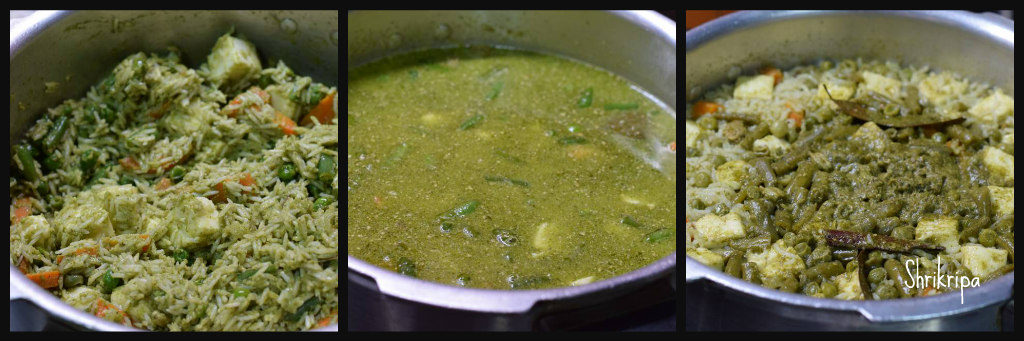
-Add drained rice, fry for 2 minutes. Add paneer chunks mix gently and add water (1:2 cups) and when it starts boiling, close the lid.

-Cook for one whistle, keep in a simmer for 1 to 2 minutes and switch off.

-When pressure releases, mix everything and serve with onion raita.


Brahmi Tambli:

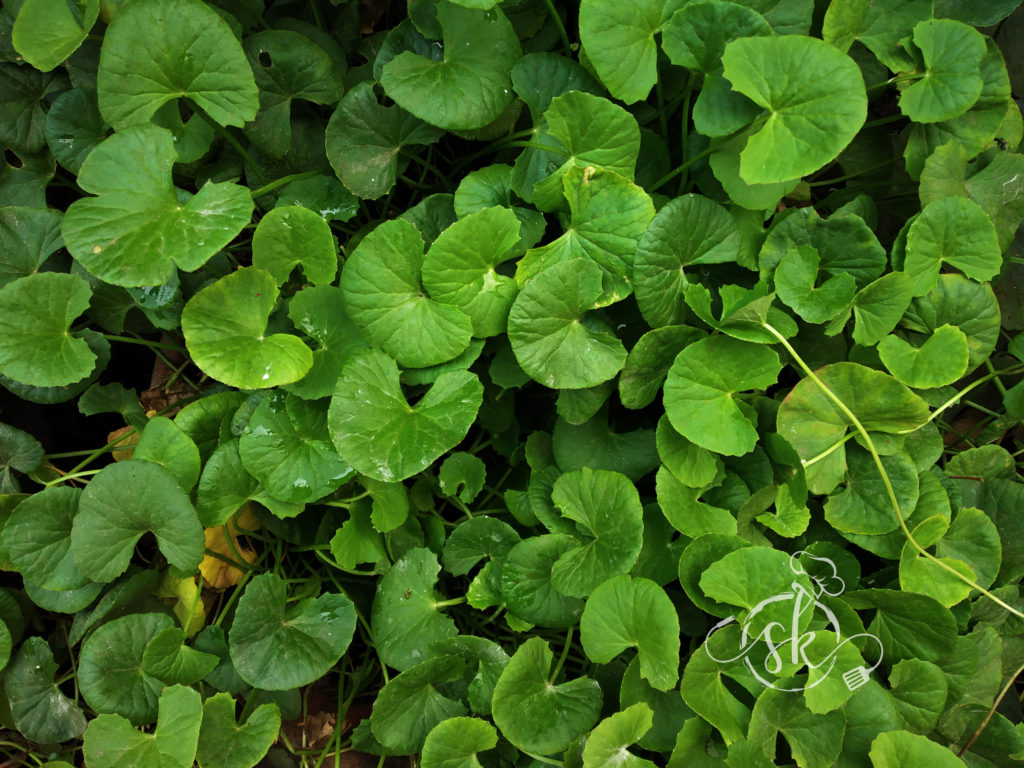
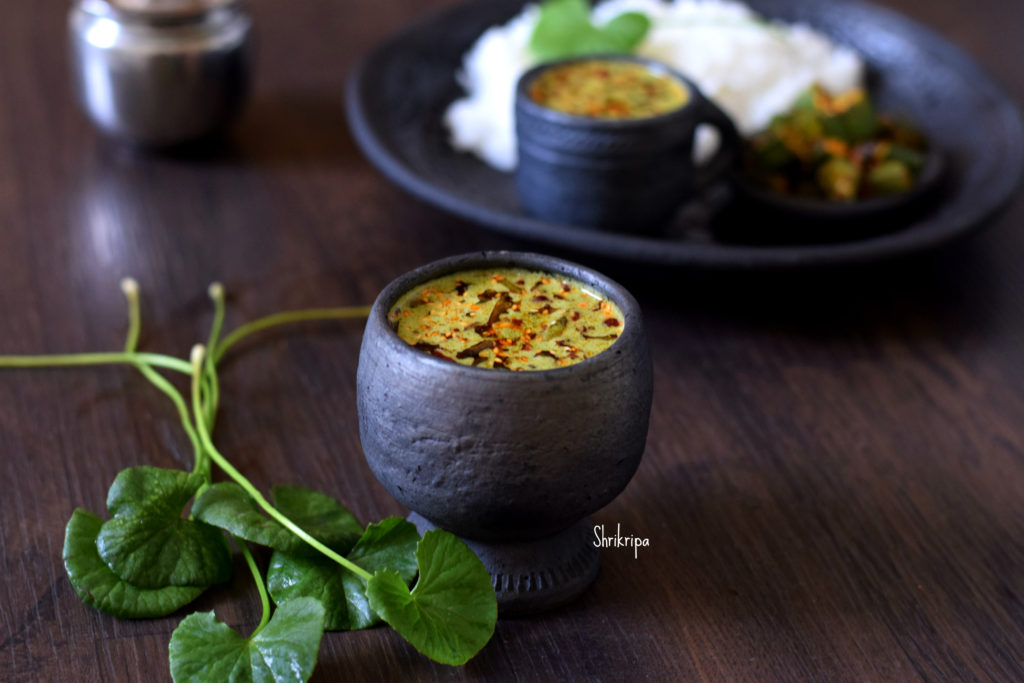
Centella Asiatica is commonly known as Centella /Gotu kola or Asiatic pennywort locally known as Thimare /Brahmi or Ondelaga in our region. Popularly known as a memory enhancer and from ages, it has been used as a brain tonic. In our coastal Brahmi is considered as a body coolant and used as a culinary herb during summer either by making chutney or Tambli.

Brahmi is a small runner/succulent herb and contains numerous fibrous roots at its every node. In our coastal belt, it grows widely in our paddy fields or Areca nut garden. It has small tiny seed-like flowers with a neutral colour. The whole plant including its roots can be used in cooking as well as medicinal purpose. It has little bitter sweetish taste when it is consumed in a raw form without any added taste enhancer. 2 teaspoons of Raw extract can be used for 3 to 7 days to enhance the overall health /to boost immune system/to reduce any inflammation of the body. Apart from this, it is very good for hair as well and I have shared the Hair oil recipe long ago by adding Brahmi and many other goodnesses. 

In our region, usually, we make Tambli or chutney and consumed as a raw form (not boiled) to get all the benefits of the greens. This particular recipe I learnt it from Kavya Bhat which she has shared with us in our Foodie Facebook group and I want to thank her for the wonderful tasty recipe.

How to make Tambli-

Ingredients:

Brahmi greens – 1 fistful (You can use with roots or without)

Coconut – ½ cup

Cumin – ½ tsp

Jaggery – 1 small piece

Curd – ½ cup

Salt

Seasoning:

Coconut oil – 1 tsp

Sesame seeds – 1tsp

Red chilli flakes – 1 tsp (or chopped red chilli)

Curry leaves – 1 spring

Method:

-Wash Brahmi greens and roots nicely.

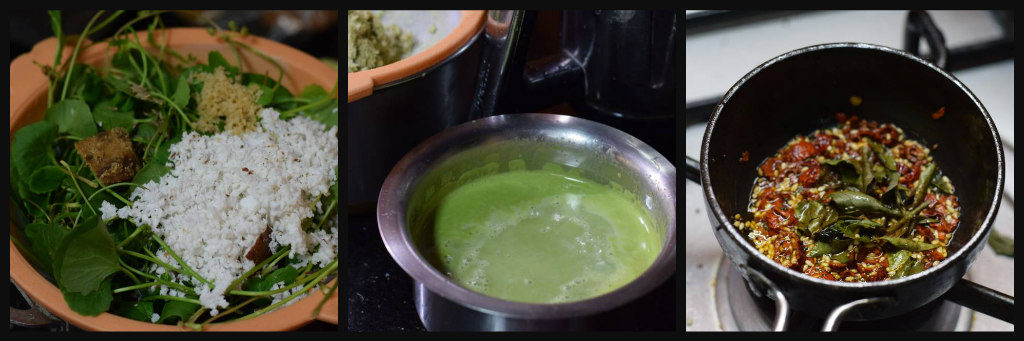
-Put Brahmi, coconut, salt, cumin, jaggery and pour ½ cup of water and grind into a smooth paste.

-Sieve the content and extract the liquid.

-Take all the roughage, add curd and little water grind once again and sieve. Collect the liquid.

-Third time add little water and grind, sieve and extract the liquid and discard all the remaining roughage.

-Prepare seasoning- heat oil, add sesame, when it turns light brown switch off the gas. Add red chilli flakes, curry leaves and add to Tambli.

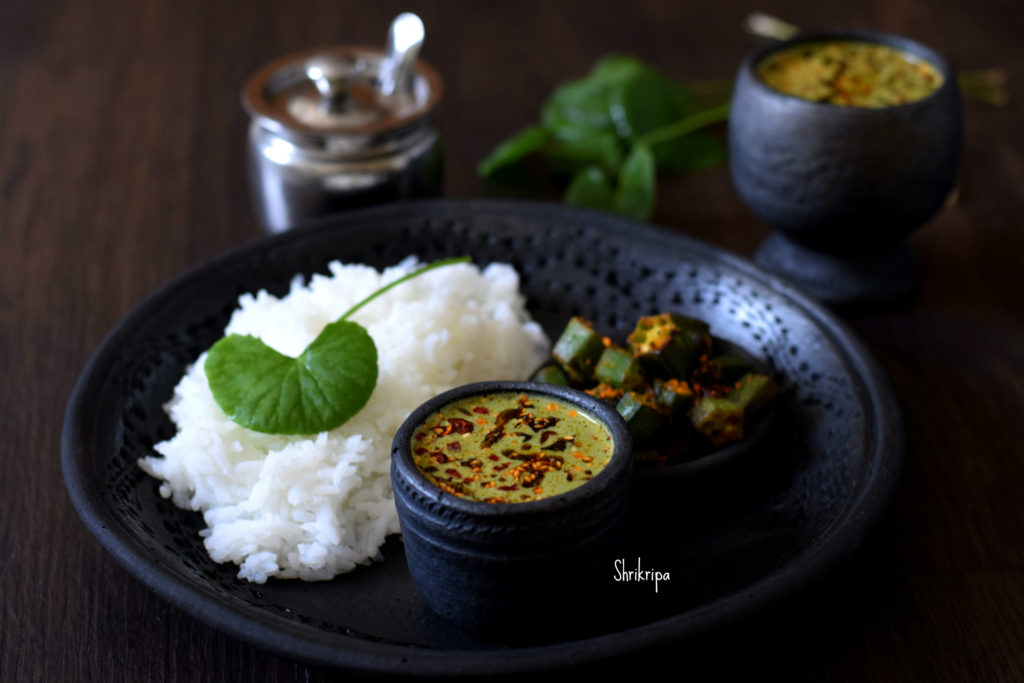
-Adjust the salt and enjoy either as an appetiser or with white or brown/ red rice.


Punarpuli sharbath/ Fresh Kokum Juice:

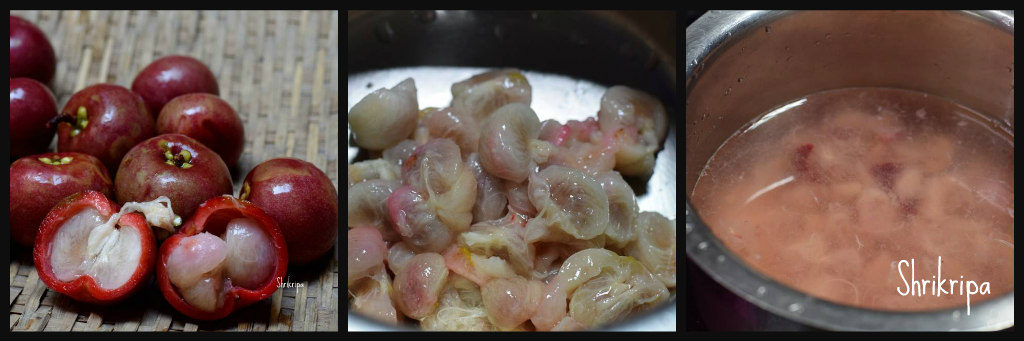
To start with this wonder fruit, I should introduce its plant, benefit, procedure to preserve the outer skin, to rest of the world. Kokum is belonging to Guttiferae family, same as mangosteen and its botanical name is Garcinia Indica, is a fruit bearing plant only found in western Ghats and coastal southern India.

It is a summer fruit, which is widely used for juices or Rasam in our region to quench thirst as well as to balance body heat. It has so many health benefits as well. It is a natural healer for acidity.

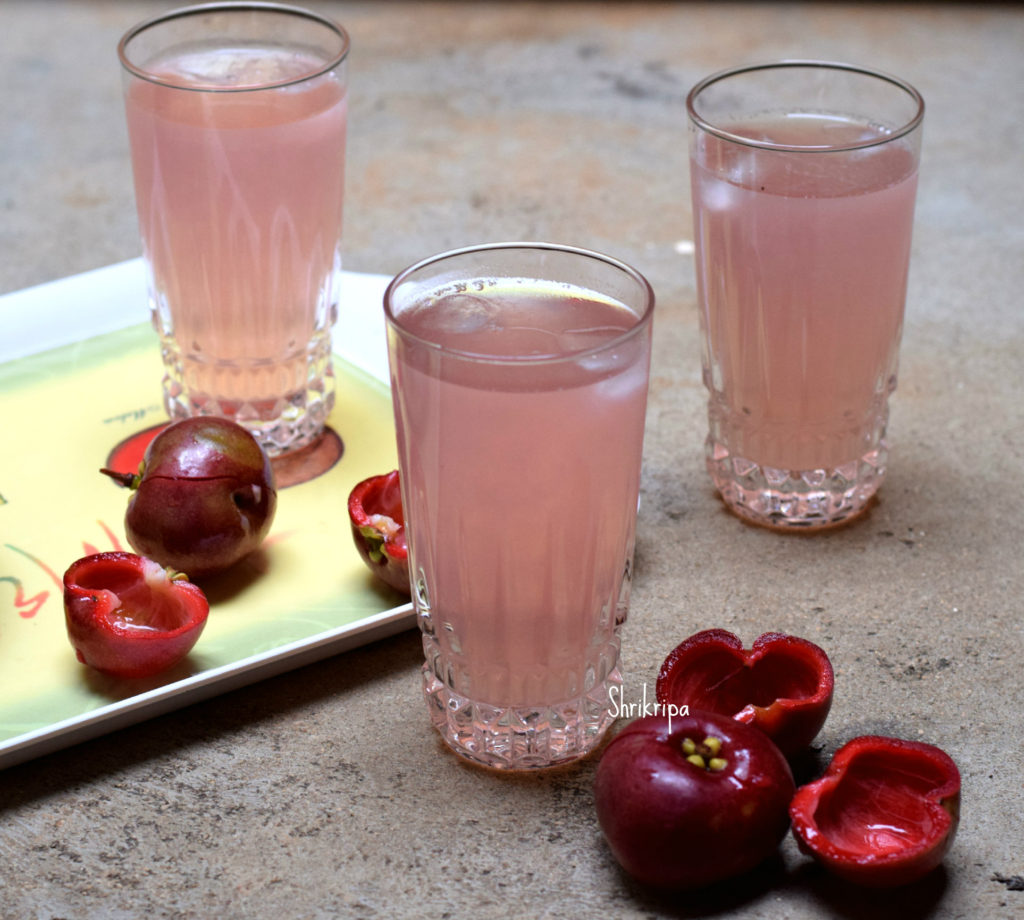
It is a ritual in our native to dry the outer skin in summer months to preserve to use whenever it is needed. Fresh fruit of Kokum is often halved, discard the inner pulpy white part which is a fleshy coating of real seed to make Kokum butter, which is used in medicinal as well as cosmetic products as a raw material. Then outer dark maroon skin will be sun dried and when it becomes crispy, it’s stored in an air tight manner. During this process, we used to prepare fresh pulp to make juice and I used to love fresh juice from its inner pulp. It is much tastier than the outer dried skin juice.

Last week found these cuties here in Mangalore stores. Picked up some and enjoyed my favourite drink after so many years.

How to prepare –

Ingredients:

Kokum fresh pulp – little

Water – as needed

Sugar – as needed

Salt – ½ tsp

Method:

-Soak fresh pulp and couple of outer shells in little water for some time.

-Mash everything by using clean hand and discard the seeds and outer shells.

-Add sugar, salt and required amount of water and mix everything and serve by adding couple of ice cubes.

-It is very good for our gut health as well as to keep us hydrated.


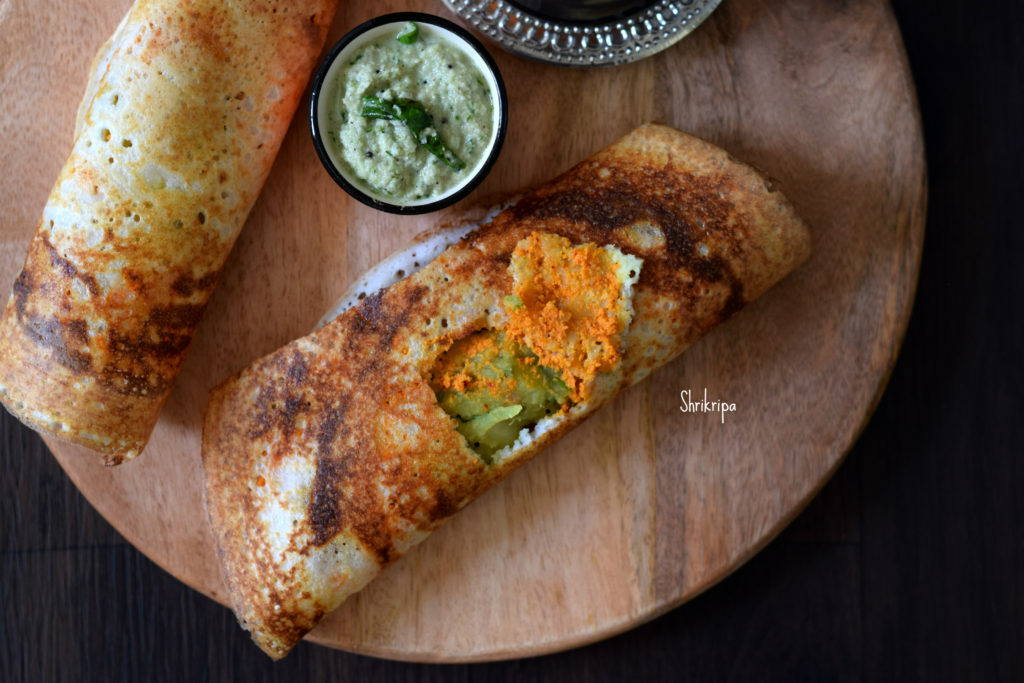
Masala Dosa:

Who doesn’t love Masala Dosa? It is an absolute favourite in our family.

A properly made crisp Dosa is very delicious if the batter is perfectly fermented with little sour flavour and correct consistency.

Normally Masala Dosa can be served either by applying Red chutney or Green chutney.

Red chutney what I make is not very hot and made with only chillies. It is coconut-based garlic flavoured chutney.

In other hand, green chutney smeared Dosa is something I relish in Hotel MTR outlet in Bangalore. I tried to replicate the taste at home, and it is once again a coconut chutney, which is flavoured by coriander leaves.

In our coastal region, you never get to see red chutney applied Masala dosas. It is normal paper plain Dosa with bhaji at the centre and rolled like a paper roll and served with the watery ginger chutney and sambar as an accompaniment.

In our house we normally make red chutney and apply and enjoy garlicky flavoured chutney with aloo masala.
First, we will see How to make Dosa Batter:

Ingredient:

Dosa rice -1 cup

Idly rice -1 cup

Urad dal – ½ cup

Bengal gram/Chana dal – 1 tbl sp

Fenugreek/methi seeds – 1 tsp.

Beaten rice – ¼ cup

  Method:

-Wash all these ingredients couple of times.

-Soak this in a sufficient water (washed rice and dal should submerge) for 3 to 4 hours. Drain water from the rice and keep aside. This water is used while grinding according to the requirement. Grind soaked rice –dal mixture by adding salt in to a very fine /smooth batter by using wet grinder or Mixer grinder. I prefer Wet grinder and it certainly gives much finer, perfect batter. After removing the batter adjust the consistency by mixing properly. Now keep this ground batter for fermentation in a big vessel, so that it will allow room for puffed/fermented batter. It will take anywhere between 8 to 16 hours (according to the outside weather)

Note: In Bangalore I usually soak my lentils around morning, grinding happens around afternoon 2 to 3 pm and until next morning I keep the batter for fermentation. This is how I get my perfectly fermented batter. 

Potato Bhaji/ filling:

Ingredients:

Potato – 6 big

Onion – 3 big

Green chilli – 2 to 3

Grated ginger – ½ “

Turmeric – ½ tsp.

Salt

Seasoning: Coconut oil -2 tbl sp, mustard- 1tsp, Urad dal -1 tsp., chana dal-1 tsp, Cumin seeds – ½ tsp, hing – ¼ tsp, Red chilli -1, curry leaves -2 springs.

Chopped coriander leaves for garnishing.

 Method:

-Wash potato cut in to half and put this in a cooker with sufficient water. Cook for two whistles. Cool, remove outer skin, mash and keep aside.

-Slice onion and slit green chillies.

-Take one kadai, add coconut oil, mustard, when it starts to splutter, add cumin, hing, Urad dal, chana dal, red chilli. When dal becomes red add Curry leaves, slit green chillies and onions.

-Add turmeric and fry onions till it becomes light brown.

-Now add one to two cups of water, add salt.

-When water starts boiling add mashed potato and mix nicely. Check for the seasoning and close the lid and cook for a while until it becomes homogenised and water drains.

-Switch off the gas and garnish with chopped coriander leaves.


Red Chutney: It is garlic flavoured very thick coconut chutney.
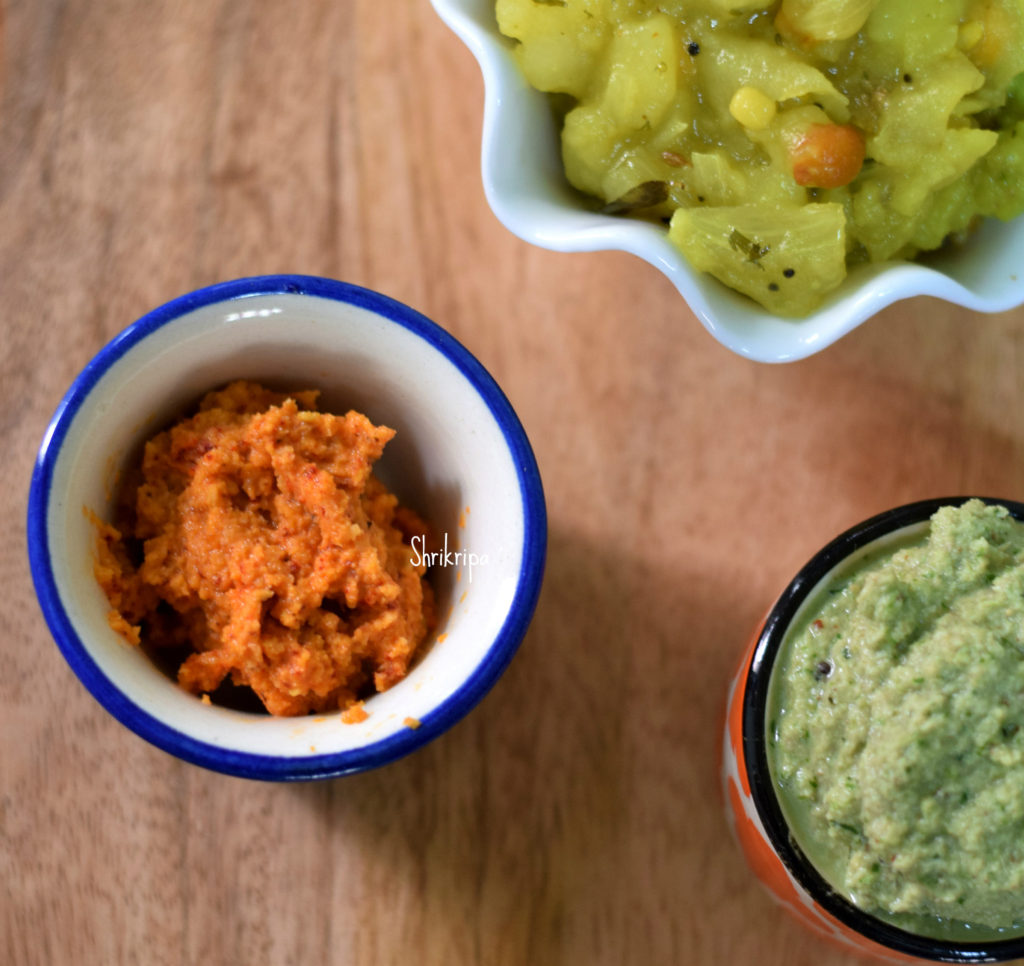
Ingredients:

Grated fresh coconut – 1 cup

Red chilli – 2

Garlic cloves -7 to 8

Tamarind – ¼ tsp.

Salt

Method: Roast Red chillies by putting ¼ tsp of oil.

Put all the ingredients together in a mixer jar, dry grind at first and then put very little water and make very thick consistency. This chutney is used for applying over the Dosa while making.


Green chutney: This chutney can be smeared as well as served as an accompaniment with Dosa. If you are smearing, keep the consistency little thick and if you are serving as a side, you can add little water and make it thin.

Ingredient:

Grated fresh coconut – 1 cup

Roasted gram/ puffed gram – ½ cup (putani or Hurigadale)

Green chillies – 3 to 4

Tamarind – little

Sugar – ½ tsp

Salt

Coriander leaves – 1 small cup

Curry leaves – 1 spring

Method:

Fist grind coconut, puffed gram, salt, tamarind by adding little water. Then add chopped coriander and curry leaves and churn a little and add seasoning with mustard and curry leaves.


White Coconut Chutney: This is served as a side dish and usually with ginger flavour.

Ingredients:

Fresh grated coconut – 1 cup

Green chilli – 1 or 2

Tamarind – ¼ tsp.

Salt

Ginger – ½ “     

Method: Grind all these by putting sufficient water and adjust the consistency. Do seasoning by putting coconut oil, mustard, red chilli and curry leaves.


How to Prepare Masala Dosa:

Now everything is ready, and we can proceed with our preparation.

-Keep the Dosa griddle over the gas stove for heating. You can use Iron griddle or Non-stick one.

-Nicely mix fermented Dosa batter and check for the consistency. If it is thick add ½ cup of water and adjust and keep it ready.
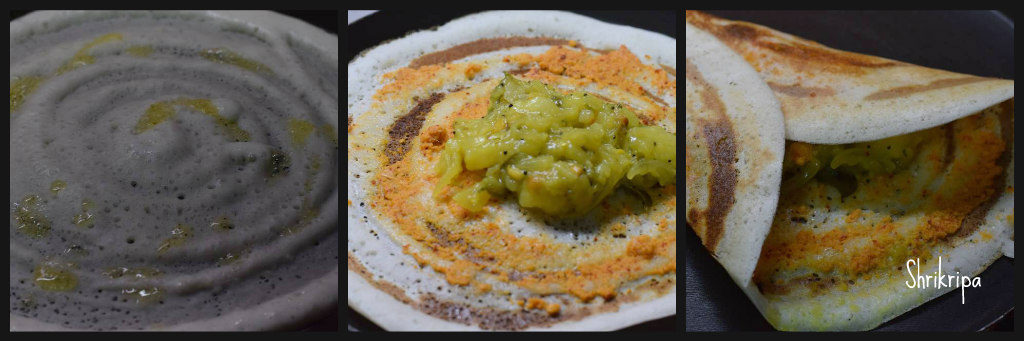
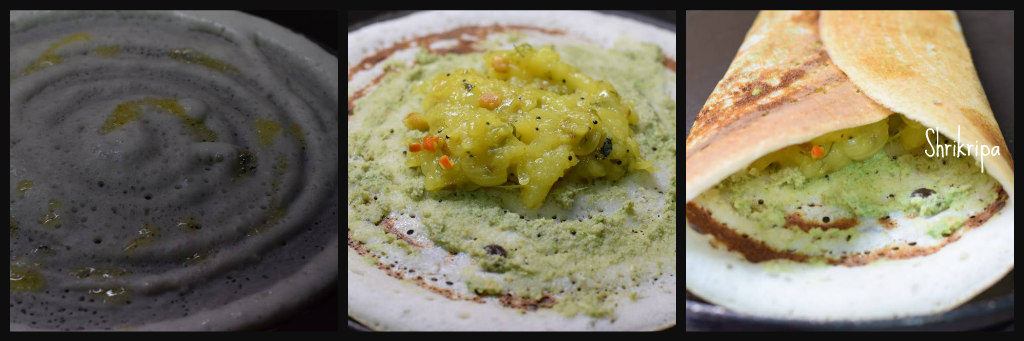
-When Dosa tawa becomes hot, pour one serving spoon of Dosa batter, move spatula in to a circular motion and spread the batter.

-sprinkle little ghee /butter/oil and cook until it is little brown in a low flame.

-when it is light brown spread Red garlic chutney or Thick green chutney at the centre of the Dosa in a circular motion and keep one serving spoon of potato filling at the centre and fold.        

-Now serve this ready Masala Dosa with White coconut chutney and Enjoy.