Onion Chutney with Coconut:

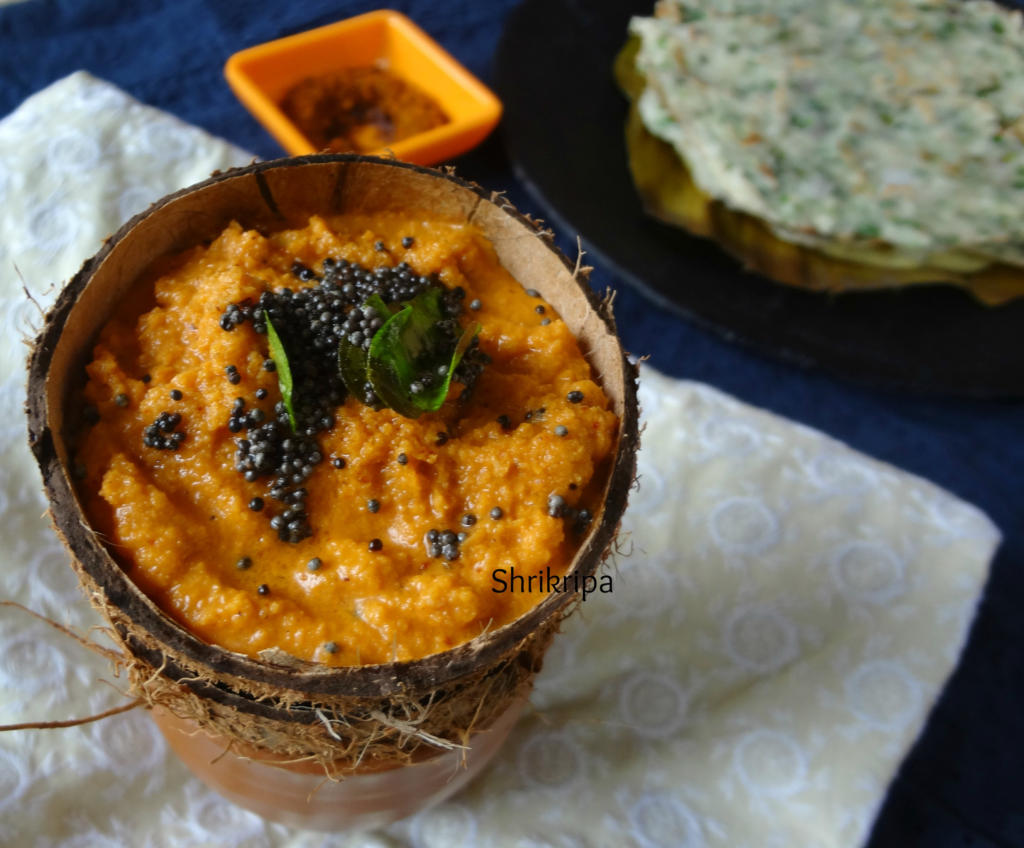
We normally refer to this as Neerulli Chutney in Mangalore. Here Neerulli is Onion.Coconut is an integral part of our cooking. This is how we prepare onion chutney traditionally in our households. It can be paired with anything and everything from our breakfast list.

pic 1

Ingredient:

Grated Coconut – 1cup

Red chillies – 2 (Byadagi variety)

Salt – as required

Tamarind – ¼ tsp

Onion – ½ of medium size.

For seasoning-

Coconut oil – 1 tsp

Mustard – ½ tsp

Curry leaves – 1spring

Method:

-Roast the red chillies by putting 2 drops of oil.

-Chop onion

-Grind Coconut, roasted red chillies, tamarind, onion by adding required amount of water and salt into smooth paste.

– Empty out this paste to one small bowl.

-Do seasoning by heating oil, add mustard. When mustard starts to splutter, add curry leaves and pour this over the chutney.

Ili Kivi leaves Tambli:

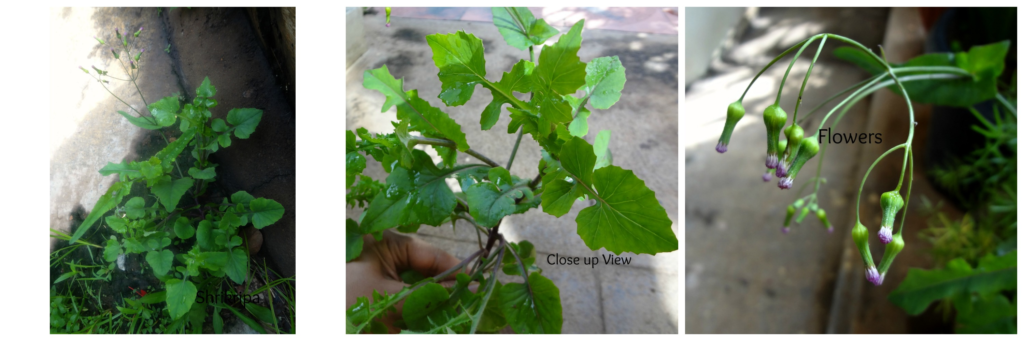
Emilia sonchifolia, Cupid’s Shaving Brush, Lilac tassel flower is locally known as Ili Kivi in Kannada. Sasasruti in Sanskrit and it is one among the “Ten sacred flowers of Kerala state in India, collectively known as Dasapushpam. It has been used in traditional medicine for the treatment of fever, sore throat, diarrhoea, eczema and as an antidote for snake bites.

The plant requires well drained soil and grows in open fields. it is an annual herb with weak and erect stems. Leaves are ovate or obovate. The flowers are pinkish purple in colour and usually blooms around July to October. Herb contains Calcium, Phosphorous, Magnesium, sodium and Potassium and some vitamins too. The herb is used as a folk medicine not only in India as well as China and some other parts of the world too.

collage 1

According to Ayurveda plant pacifies Kapha, vata and is effective in treating fever, tonsillitis; juice is a natural for eye diseases. It is also good in conditions like worm infections and allergy. Whole plant is crushed and the juice is extracted and is used to cure intestinal worms. The paste of the plant is useful for bleeding piles. A decoction of the plant is good in bringing down fever. The herb is useful in treating cough and bronchitis. Applying a paste on the thyroid region helps to cure the swelling in is sometimes used in cases of diabetes. (Details are from this website)

Whenever I come across this plant, I don’t hesitate to make use of it and usually prepare this Tambli for lunch.

pic 8

Ingredients:

Ili Kivi leaves – from one plant

Cumin – ½ tsp

Black pepper – 4

Bird eye chilli – 2

Ghee – 1 tsp

Coconut – ½ cup

Salt

Butter milk – ½ cup

Seasoning: ghee – ½ Tsp, cumin – ½ tsp, curry leaves – 1 spring.

Method:

-Wash leaves, Chop.

-take 1 tsp of ghee in a small kadai. When it is hot, add cumin , pepper and bird eye chilli. If you don’t have bird eye chillies, instead you can use half green chilli and roast. Then add chopped leaves and fry until it wilts.

– Now take out all these fried items and cool.     

collage 2

-Grind this into smooth paste by adding coconut, salt and little water.

-Put this into a vessel, add buttermilk, and adjust the consistency by adding little water if needed.

-Consistency should be like normal milk.

– Add seasoning by heating ghee, cumin and curry leaves.

– Enjoy this with hot rice.

Aviyal/Avial OR Avilu:

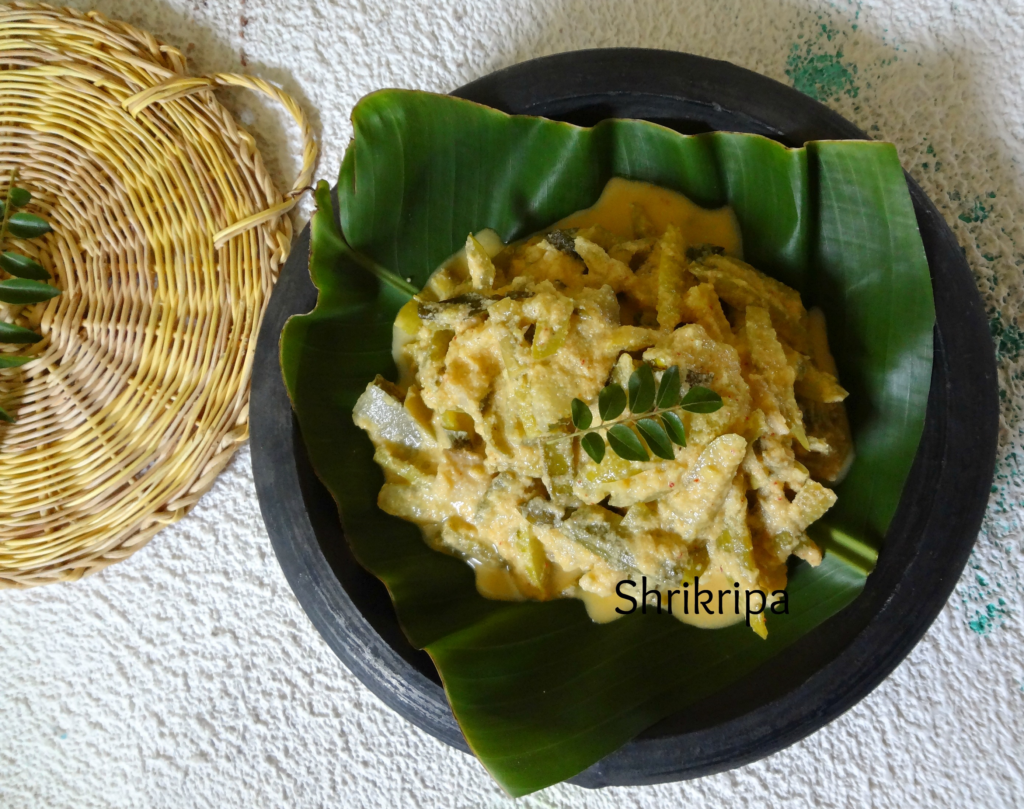
Aviyal is a mixed vegetable dish cooked in coconut gravy by adding some curd/yoghurt, Raw coconut oil and lots of curry leaves. It is an integral part of any festival cooking and It is believed that Bhima, one of the Pandava’s, invented this dish, during their exile period. Avial is a must dish during Onam Sadhya in Kerala. Aviyal is one of the favorite dishes of my family. I learnt this recipe from my mom-in-law. This is how we do this recipe in our family.   

pic mainIngredients:

Ivy gourd – 250gms.

Brinjal – 1

Snake gourd -1

Raw banana -1

Yam -250 grams.

Ridge gourd-1

Yard long beans -250 grams.

Bitter gourd -1

Coloured cucumber – 1

Raw mango-1 or Hog plum -4

Fresh grated Coconut – From one coconut.

Butter milk – 1 cup

Coconut oil – 6 tsp.

Jeera/cumin -1 tsp.

Dry red chilli – 2

Green chilli -4 to 5

Red chilli powder – 1tsp.

Turmeric Powder – 1tsp.

Curry Leaves- 5 springs.

Salt 

Procedure:

1. Cut all the above-mentioned vegetables in a matchstick manner (slightly big pieces).     collage 1     

2. Take all the vegetables and slit green chilies in a heavy bottomed vessel. To this add little red chilli powder, turmeric powder, salt and little water and cook till the veggies are done.                           

3. In the meantime, prepare coconut paste by adding grated coconut, jeera, dry red chilli in a mixer jar. Add little water, grind and keep it aside.

4.When veggies are cooked add this coconut paste along with butter milk. Mix nicely.

5.To this mixture add lot of curry leaves and pour raw coconut oil. Press everything using back of the ladle, close tightly using a plate and continue cooking till it boils nicely.                            

6.Once it starts boiling, switch-off the gas and delicious avial is ready to serve.

7. You can enjoy this Avial with rice, roti or Neer Dosa.                  

 NOTE: -Try to add all the mentioned vegetables as much as possible.

            – Usage of coconut oil will give the authentic taste.


Neeru Mavinakayi/ Brined mango chutney:

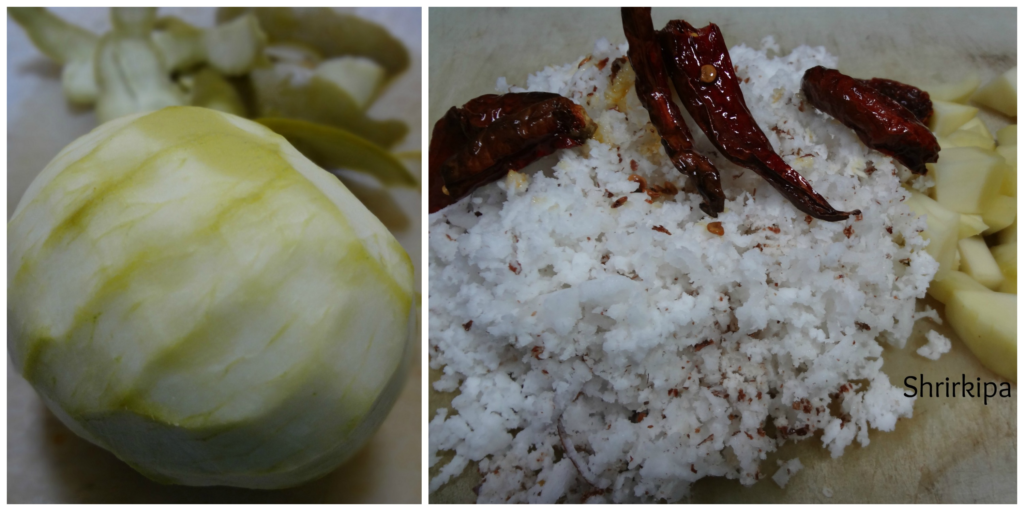
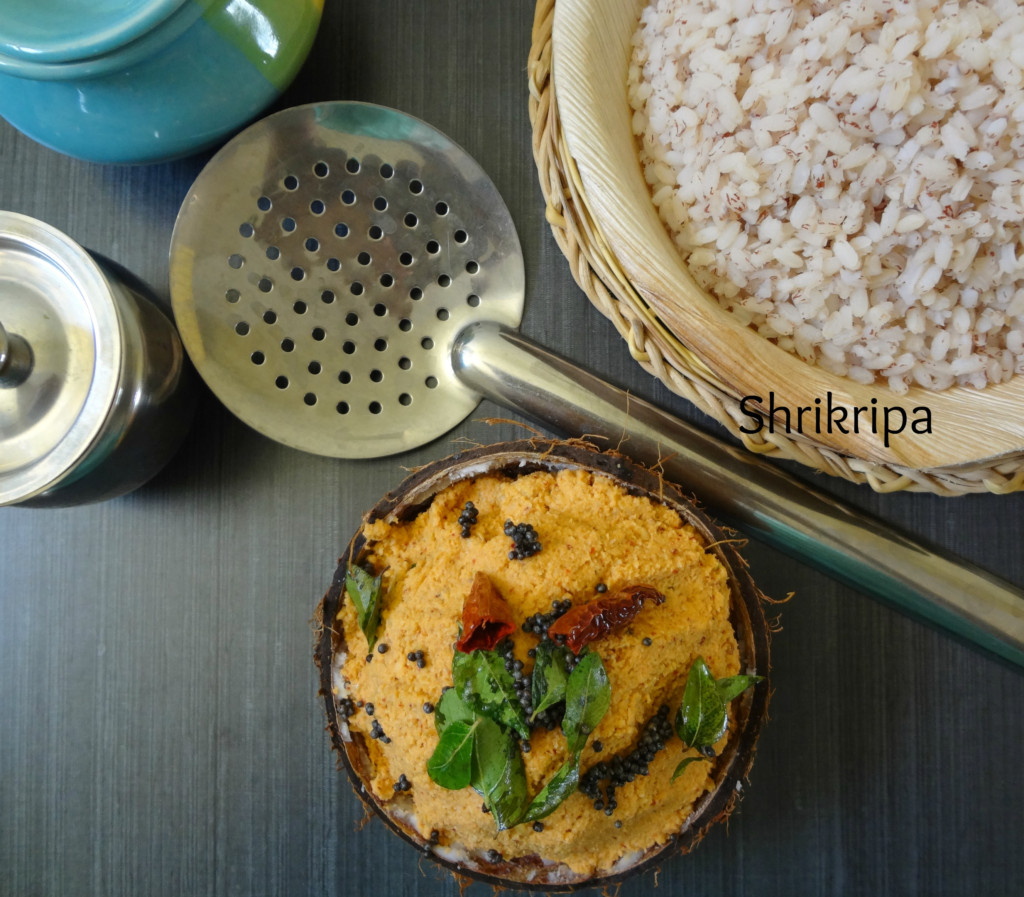
The word “Neeru Mavinakayi” makes me nostalgic and my mouth water. I am sure that is the case with every Mangalorean. We grew up with very basic comfort food during monsoons. Which consists of kucchilakki (Red rice) ganji accompanied with ghee and this chutney, which is made by using coconut and dried red chillies.

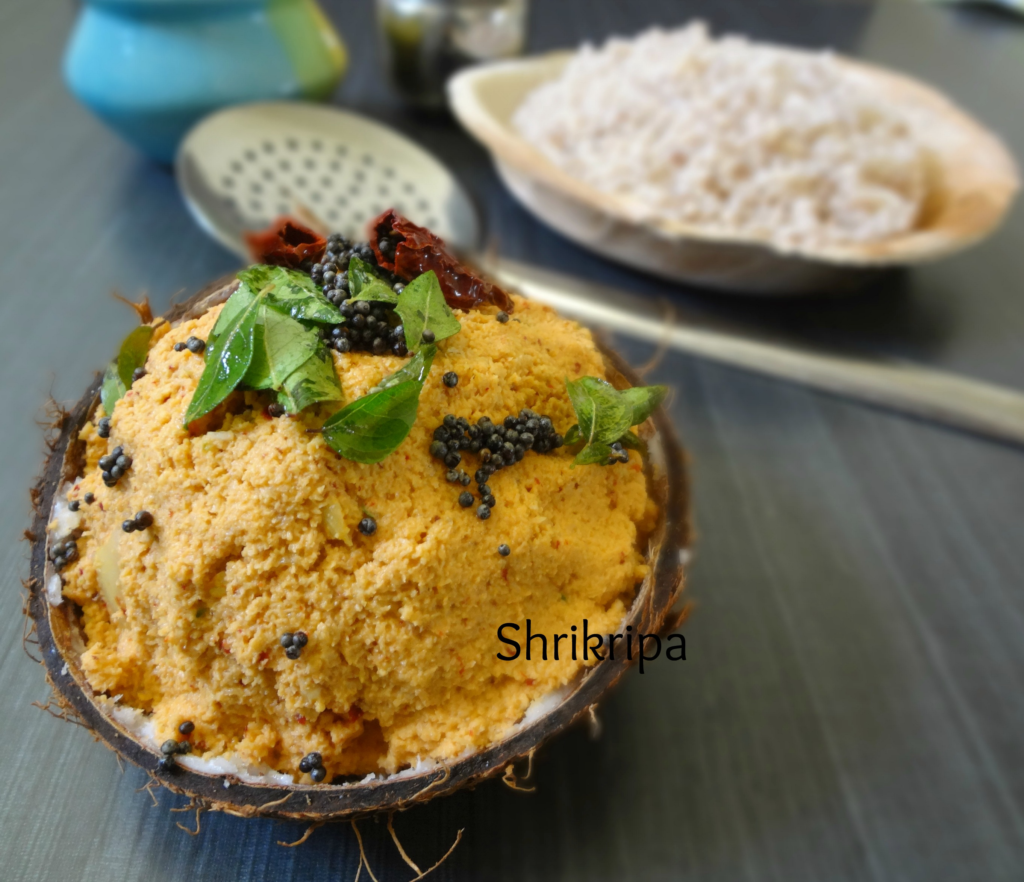
Raw mango in brine is known as Neeru Mavinakayi. During its season we normally preserve raw, firm mangoes by putting it in brine solution. This way, the mangoes can be enjoyed throughout the year. We do make varieties of recipes and this chutney is one of them.

pic 3

Ingredients:

Brined mango – 1

Fresh Coconut – 1 cup

Dried red chillies – 3 to 4

Hing – ¼ tsp

Seasoning:

Coconut oil – 1 tsp

Mustard – 1 tsp

Red chilli – 1

Curry leaves – 1 string

Method:

– Take out one mango from the brine, wash properly and peel outer skin and chop.

-Roast red chillies and hing in a drop of coconut oil.

collage 1

– Grind chopped mango, roasted items and coconut into coarse paste by adding very minimal water.

-It usually doesn’t require salt, if needed you can check the taste and add accordingly.

-Add seasoning by heating oil, when mustard splutters add curry leaves and add this to the chutney.

pic 4

-Enjoy either with white rice or like us with boiled rice (red rice) ganji and ghee.


Menthe Kodilu/ Methi Sambar:

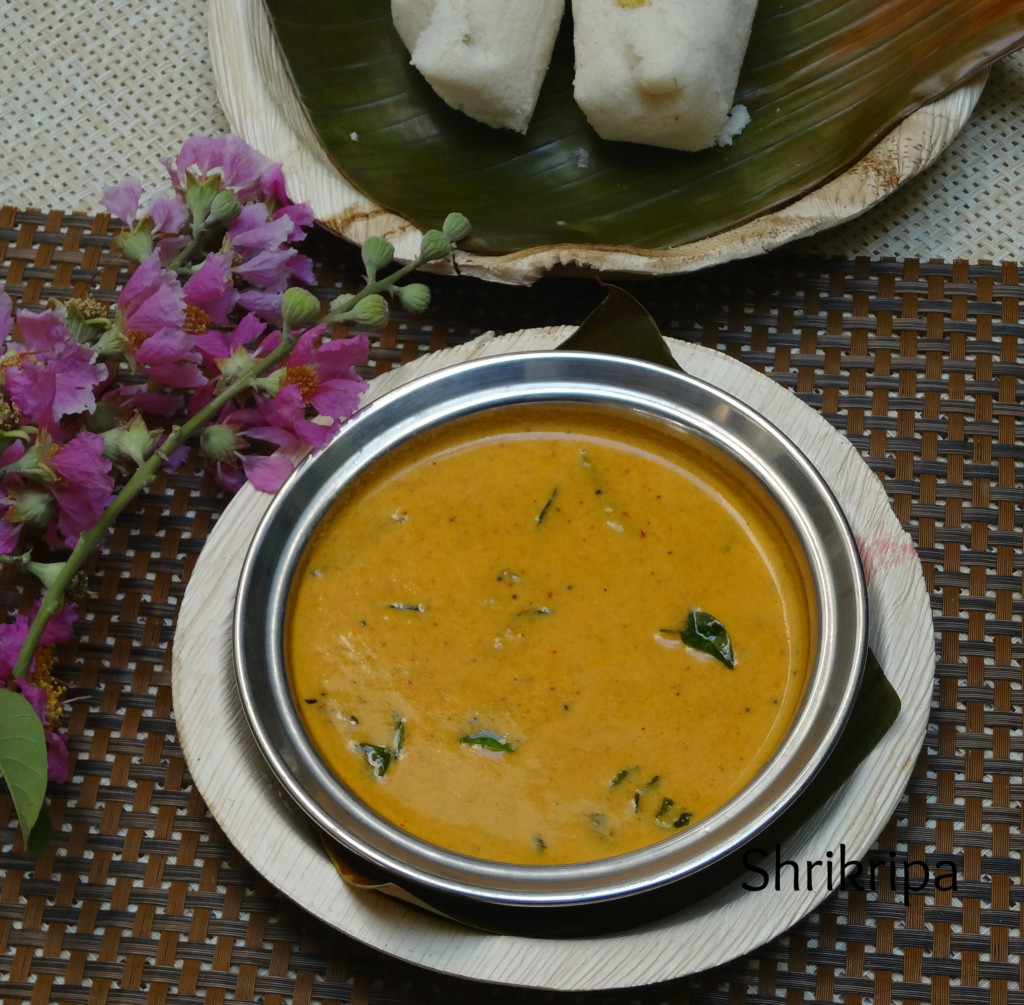
This is one of our traditional recipes and if you like a little sweetish tangy taste, this is the perfect combo for kotte kadubu / idly or semige.

We don’t use onion or garlic on any auspicious day and this side dish is usually prepared on such days and we relish this as a side dish with kotte kadubu/ Moode.

Here menthe is fenugreek and kodilu stands for sambar in our language. This is a very simple coconut based little sweetish gravy and needs very less ingredient and tastes good.

pic main

Ingredient:

Fresh grated coconut – 1 big bowl.

Dried red chillies – 3 to 4

Methi / fenugreek seeds – ½ tsp

Turmeric – ½ tsp

Coconut oil – 1tsp

Tamarind – ½ tsp

Jaggery – 2 tbl spoon

Salt

Seasoning:

Coconut oil – 1 tsp

Mustard – 1 tsp

Curry leaves – 1 springs

Red chilli – 1

Method:

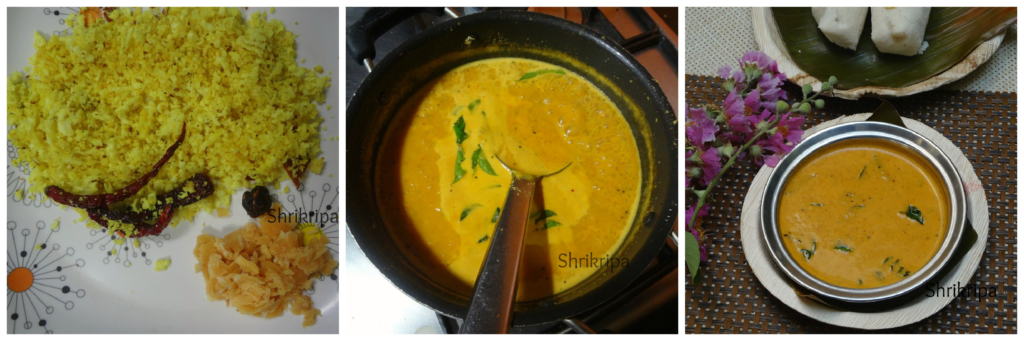
 Take 1 spoon of coconut oil in a small kadai, heat.

 When it is hot, drop methi and fry for a while.

 When it is light brown, add red chillies and fry until it swells.

  Add coconut gratings, turmeric and fry for 2 to 3 minutes.

collage 1

  Cool this mixture and grind this into smooth paste by adding sufficient water, salt, jaggery and tamarind.

Now take that same kadai, in which we have fried chillies and coconut. Pour ground batter, adjust the consistency by adding water.

Boil this for a while and check for a salt and jaggery. If needed adjust that as well.

Do seasoning by heating oil, mustard, red chilli and curry leaves and pour this over boiled kodilu.

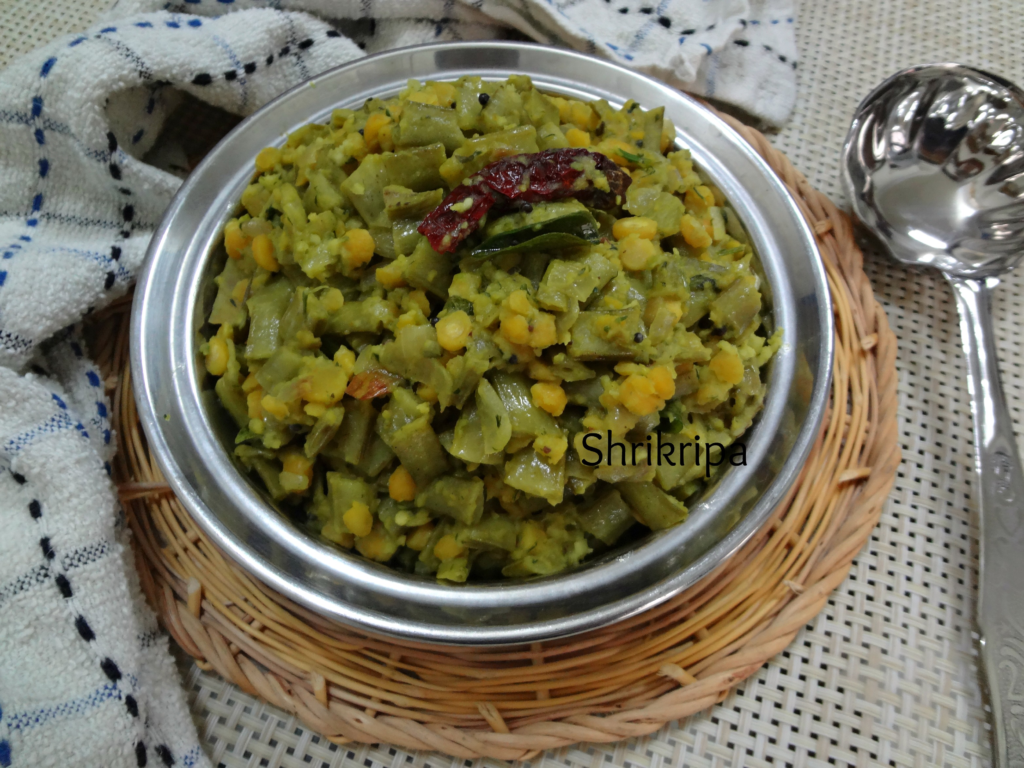
Chavli kai palya /Cluster beans and chana dal dry curry:

Like any other veggie, even most neglected high fibre, low calorie, nutrition filled Cluster beans also has many names like, Gorikayi, chavlikai, Guvar, Kothavarangai, Goru chikkudi etc. in different Indian languages.

It is a type of green beans, which is short, flat and little bitter in nature. It is a “power house of goodness” but neglected in-between  all kinds of veggies.

Yes, it needs some other vegetable, dal or potato to enhance its taste or to tone down the bitterness. Here in this recipe, we use soaked Chana dal and little bit masala to enhance the taste and this recipe is handed down to me by my dear aunty who is a super human being.

pic 12

It is a perfect side dish for any kind of Indian flat breads or with hot rice.

Ingredients:

Cluster beans – ½ kg

Chana dal – 1 cup

Onion – 2

Fresh Coconut gratings – 1 fist full

Seasoning:

Oil – 3 to 4 tbl sp

Mustard – 1 tsp

Red chillies – 2

Hing – ¼ tsp

Curry leaves – 1 string

For masala:

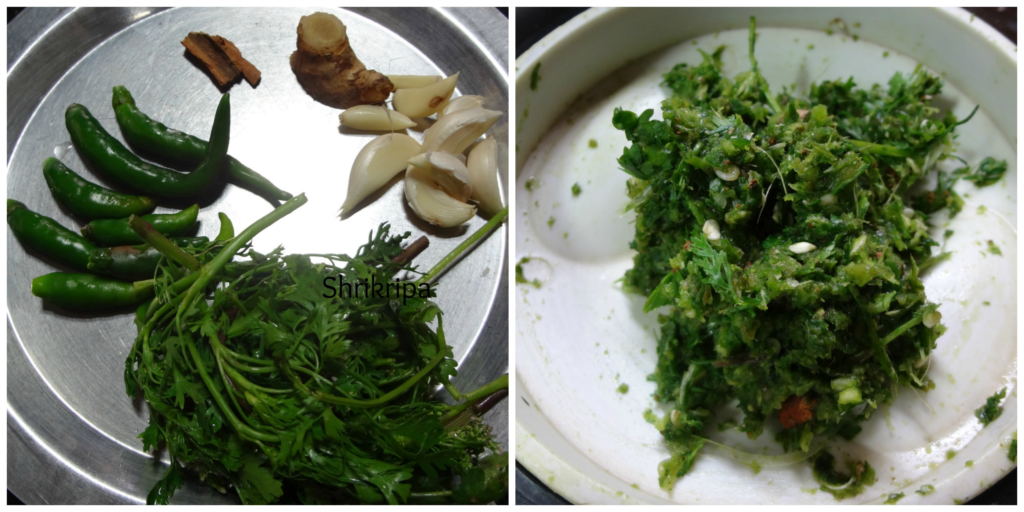
Green chillies – 6 to 7

Cinnamon – 1” piece

Ginger – 1” piece

Garlic – 8 cloves

Coriander leaves – 10 strings

Method:

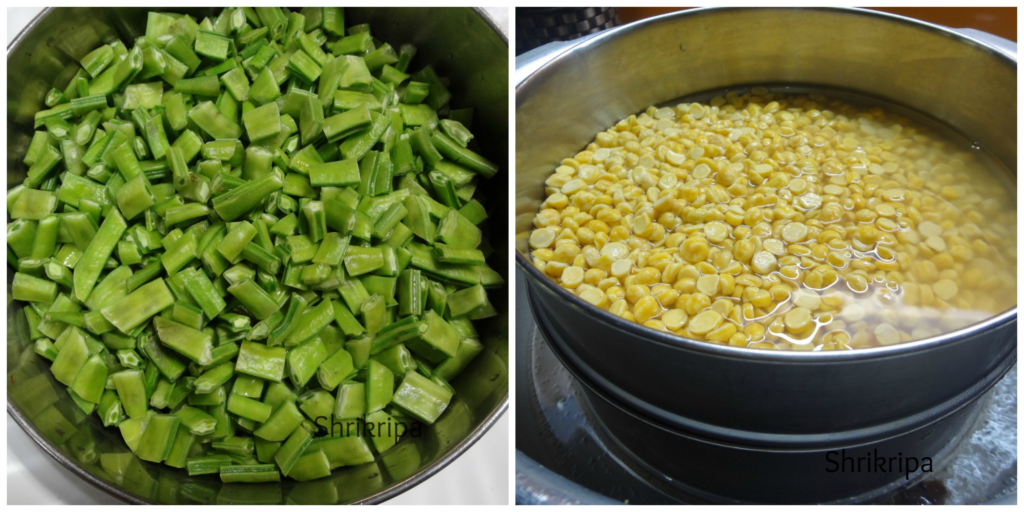
-Wash, soak chana dal in water for half to one hour.

-Cut cluster beans in to bit size pieces after washing and removing both the ends.

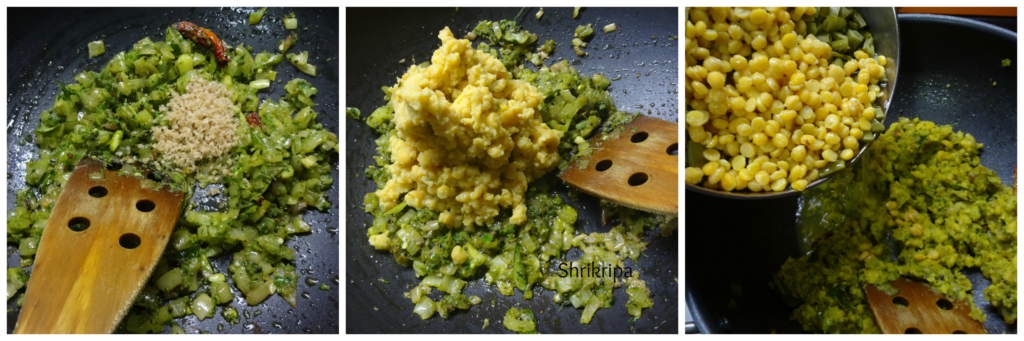
collage 1

– Cook soaked dal and chopped beans for 2 whistles in two separate vessels by adding very little water.

– Put aside one serving spoon of cooked chana dal and pulse remaining amount of dal.

– Dry grind all the items under masala and keep aside.

collage 2

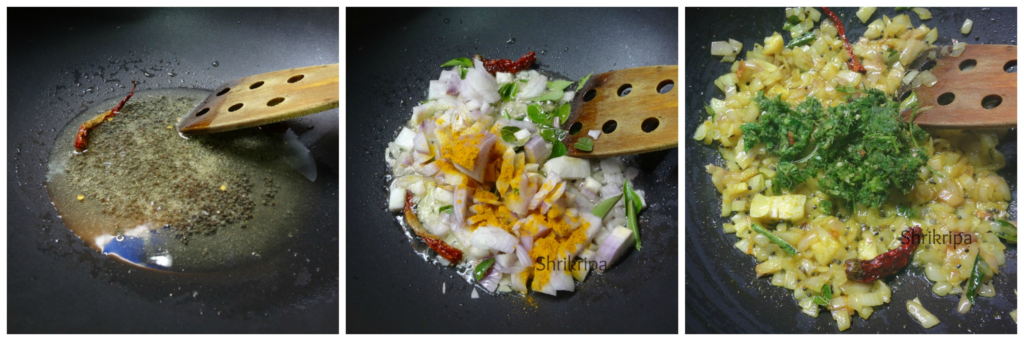
– Chop onions.

– Take one thick bottomed tawa, Put oil, splutter mustard, hing, red chillies and curry leaves.

– Add onion, turmeric and fry nicely.

collage 3

– Add ground masala,required amount of salt and fry nicely.When its raw smell vanishes, add roughly ground dal and fry for a while.

collage 4

– Lastly add cooked cluster beans and dal which we have kept aside.

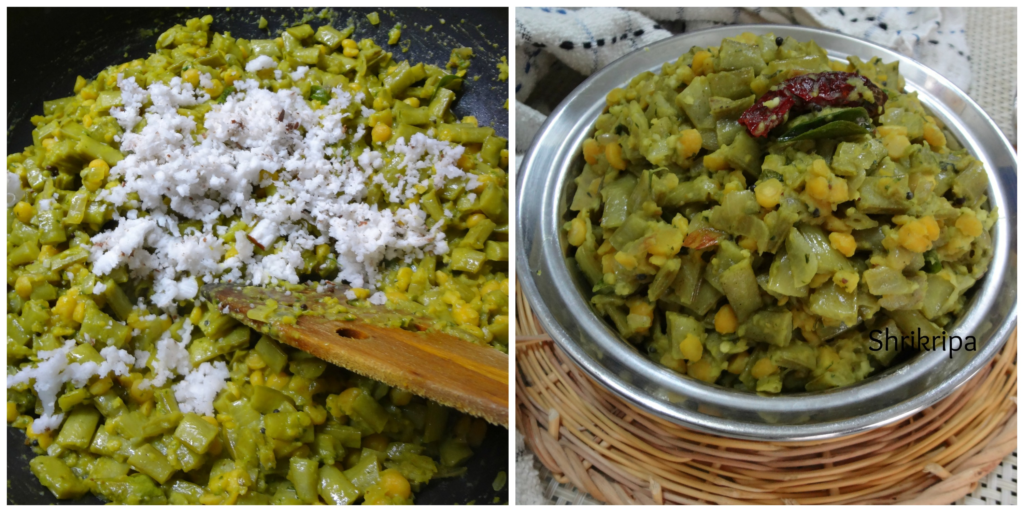
-Cook this until water becomes dry and garnish with fresh coconut. Mix nicely and heat this mixture for a couple of minutes.

collage 6

-Serve either with rotti, phulka or hot rice.

Bendekayi/Okra Palya:

Bendekai/lady’s finger/okra/bhindi- so many names for this simple, high fibre, low calorie vegetable. Some people just avoid this slimy vegetable without knowing how to cook. It is just simple, if you know the right technique.

We normally don’t use any onion, garlic or tomato in festive cooking. In Mangalore, we prefer this simple coconut based side dishes for any weddings or festivities.

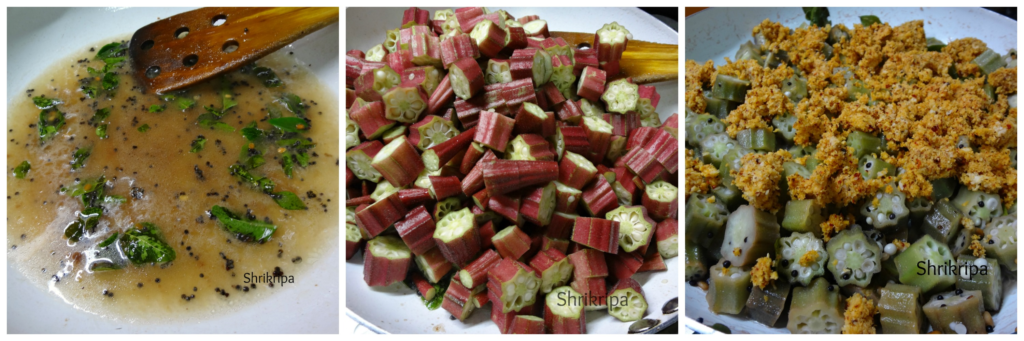
Here we use tamarind base to cook Bendekai to remove its slime. To avoid sliminess , you should remember 2 to 3 things. First thing, drops the veggie, only after tamarind water starts boiling. secondly, don’t over mix the veggie, while cooking. Thirdly, don’t cover the lid, while cooking lady’s finger. These are all the tricks I learnt from my elder’s while learning cooking from over the years.

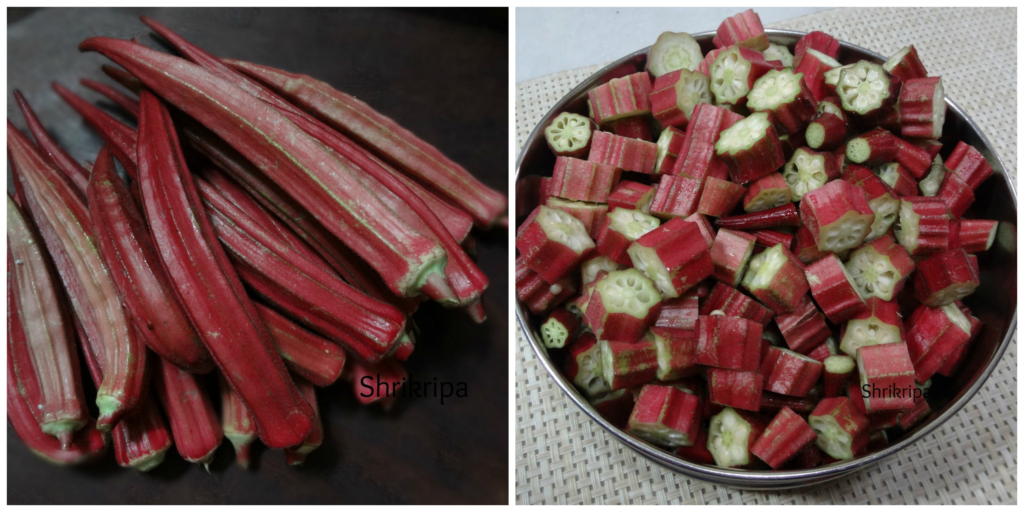
You can use any varieties of lady’s finger for this recipe. Here I have used local variety from Mangalore which I have grown and harvested from my terrace garden. It is Red Okra and after cooking, it becomes like any other okra.

pic 1

Ingredients:

Ladies’ finger – ½ kg

Tamarind – 1 tsp

Salt

Jaggery

Red chilli powder – ½ tsp

To grind:

Fresh Coconut – 1 small cup

Red chillies – 2 to 3

Mustard – ½ tsp

Hing – very little

Seasoning:

Coconut oil – 1 tbl sp

Mustard – 1tsp

Urad dal – 1 tsp

Red chilli – 1

Curry leaves – 1 string

Method:

-Wash and cut the bhindi into half inch pieces.

collage 2

-soak tamarind in one cup of water.

-Roast red chillies and hing in a drop of coconut oil.

-Dry grind coconut, roasted red chillies, hing, mustard and keep it aside.

– Take one tawa, do the seasoning by putting oil, mustard seeds, urad dal, red chilli.

collage 3

-When mustard starts spluttering, add curry leaves and pour tamarind water (squeeze soaked tamarind in water and use)

-Add required amount of salt, jaggery and red chilli powder.

-When it starts boiling, add chopped Bendekai and cook this in a low flame.

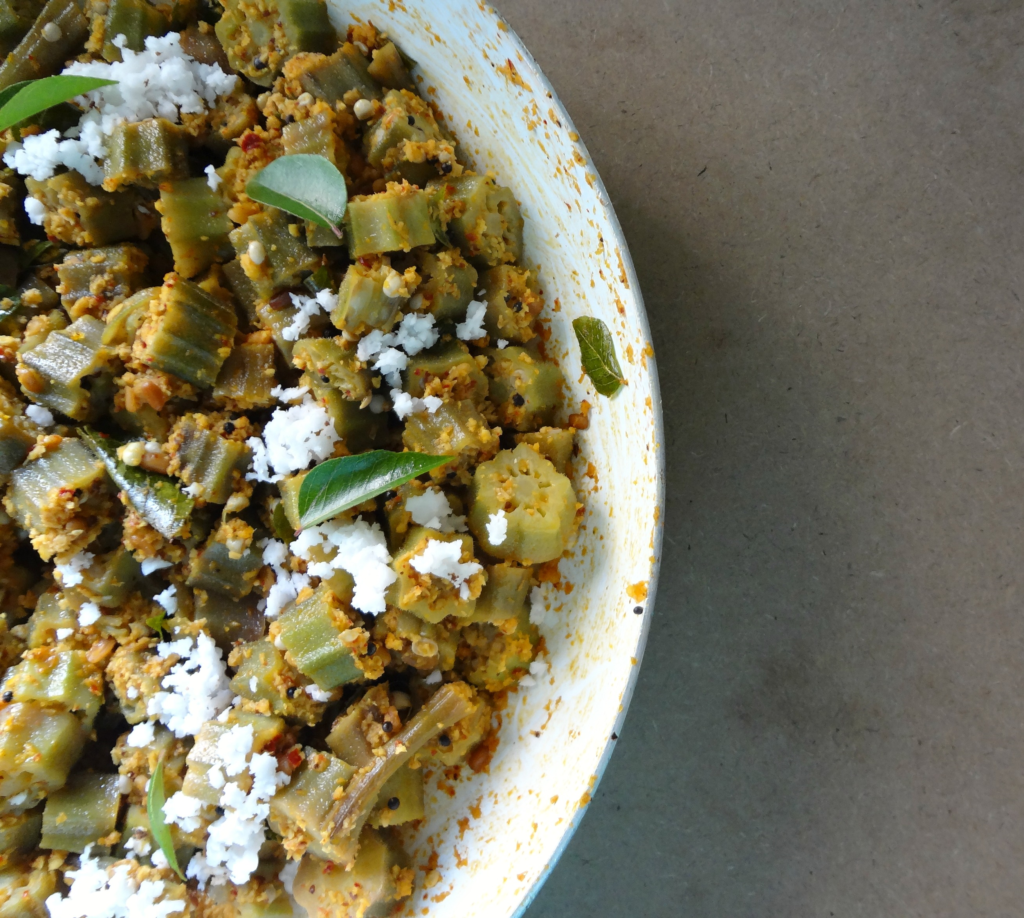
-when water drains or Bendekai cooks, add ground coconut mixture and mix thoroughly and keep this in a simmer for couple of minutes.

pic 3

-serve this as a side dish with hot rice or Chapati.

Marakesavu Pathrode:

Pathrode, name itself will make any Mangalorean drool. That too if it is marakesavu leaf, fun is even more. Marakesavu is non-itchy, seasonal colocasia leaves. It is one more classic monsoon special from Mangalore. Pathrode is usually served with coconut oil either plain or pan fried by slicing.
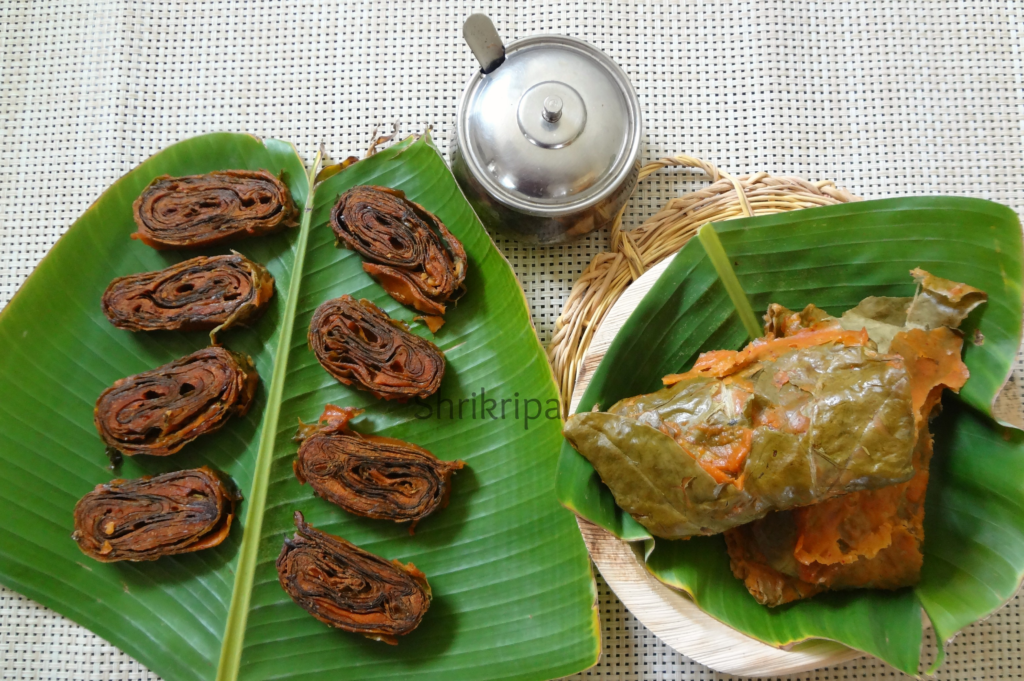
pic main

Marakesavu is commonly known as hitchhiker elephant ear and botanical name of this leaf is Remusatia vivipara. Leaf is large, oval, leathery textured, glossy on both the sides. Foliage disappears in winter and emerges after the first rain during monsoon. Grows widely on big tree trunks or in-between the stones, mainly emerges from the moss bed. The name itself suggests about its habitat. Here, “Mara” is Tree and “Kesavu” is colocasia.
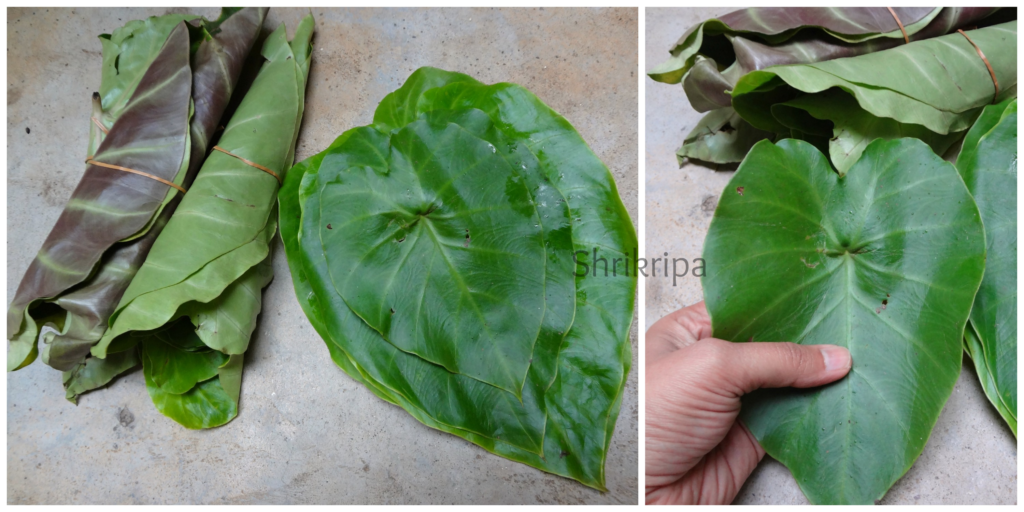
collage 1

We will see the Procedure-

Ingredients:

Dosa rice – 3 cups

Fresh Coconut – 1 ½ cup

Dried red chillies – 12 (Roasted)

Hing – ¼ teaspoon

Salt

Jaggery – 1 table spoon

Tamarind – 1 table spoon (if normal colocasia use little more)

Marakesavu – 3 bundles

Coconut oil – for serving

Method:

Wash the leaves, remove stem and trim.

  Wash and soak rice for 3 hours.

  Fry red chillies by putting very little oil.

collage 2

Grind soaked rice, coconut, tamarind, jaggery, salt, roasted red chillies into smooth paste by adding sufficient water.

  Batter consistency should be like Dosa batter.

  Now, we are ready to make Pathrode.

collage 3

  Take biggest leaf from the lot, place upper glossy part downwards and apply ground batter on back side of the leaf. (pc:step 1)

 After applying on the first leaf, keep second one (slightly smaller than the first one)

Proceed with the application. After applying on second leaf, keep the third leaf then fourth one and proceed.(pc: step 2&3)

collage 4

  Now lift sideways, and fold. Make it like a mat. Apply some batter on these folds as well.

  Roll from the tip and proceed until the end and apply some batter on outer shell and keep this in a water filled idly steamer.
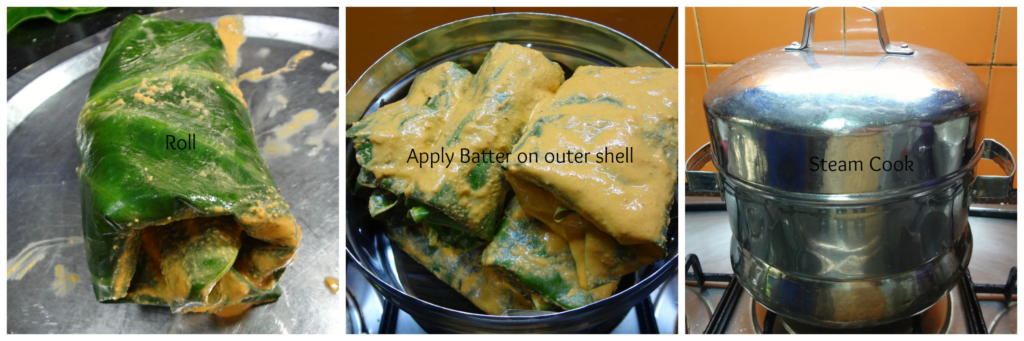
collage 5

  Cook this for 45 minutes to one hour, depending on the quantity of the content inside the vessel, in a low fire.

collage 6

  Serve fresh with coconut oil by slicing these cooked rolls or apply coconut oil and fry these in an iron tawa on both the sides and enjoy as it is for breakfast or with lunch or dinner.

NOTE:

-Tamarind is a key ingredient while making Pathrode.

– If it is Mara Kesavu, it is non-itchy and quantity of the tamarind doesn’t matter.

– If you are using normal colocasia leaves, tamarind plays a very crucial part, in removing the itchiness of the leaves. Use little more quantity than normal.

– You can prepare this same recipe by using big spinach leaves as well.

Tadka dal- Seasoned lentil :

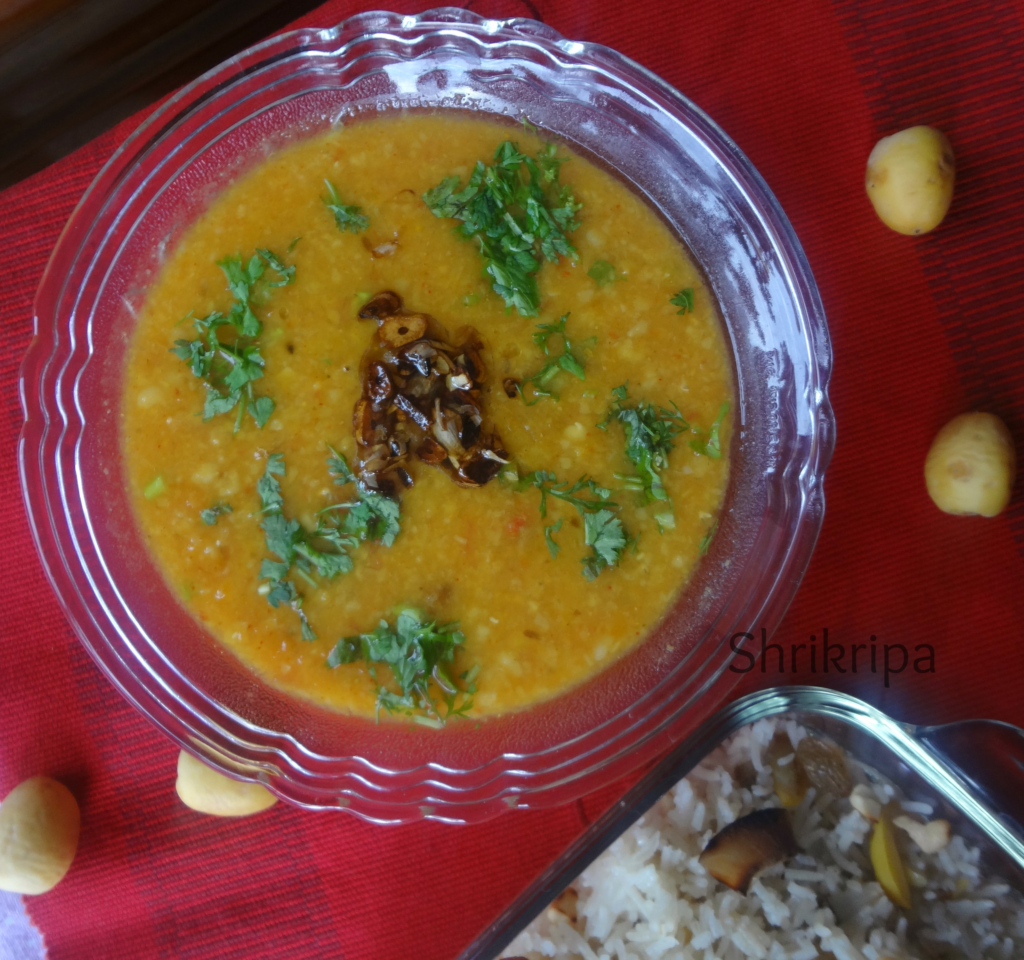
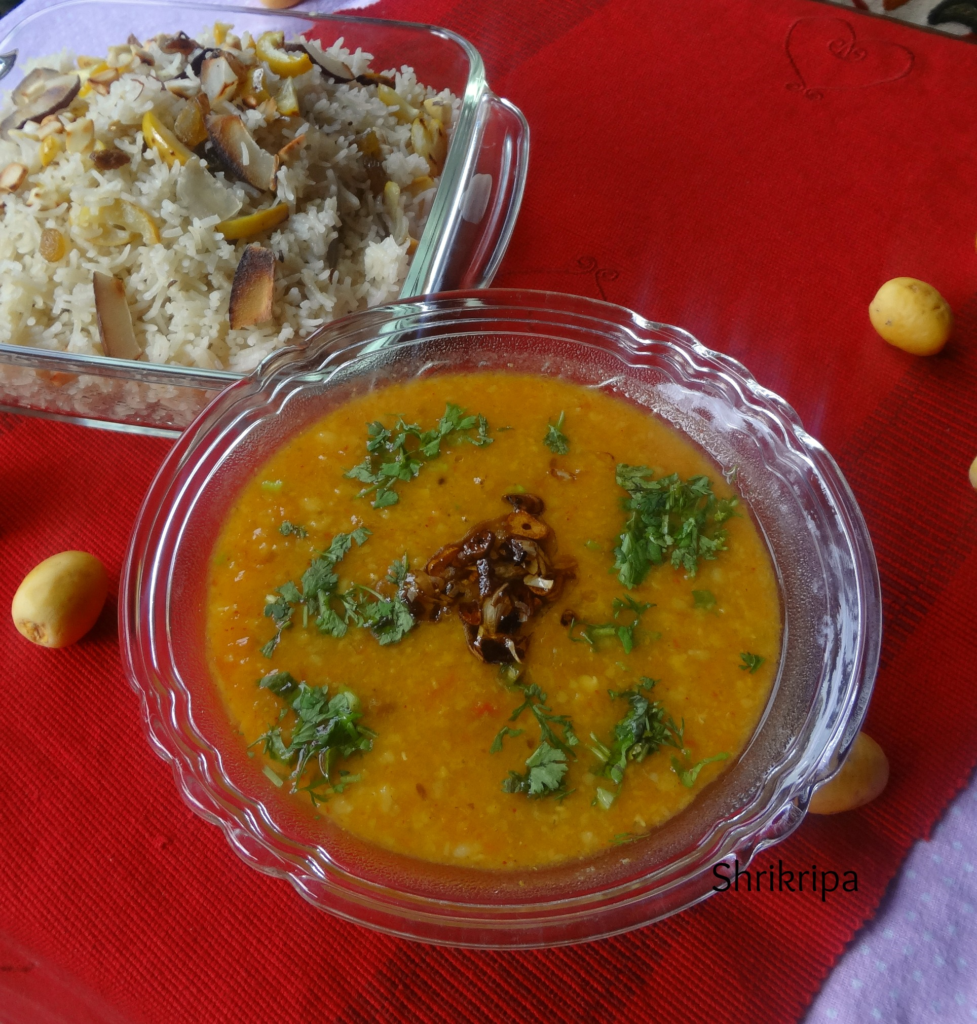
Tadka dal is a simple, nutritious side dish from northern India. Tadka dhal is a blend of a couple of lentils, cooked and seasoned with ghee as well as butter. It is a very good side dish and goes very well either with roti, plain rice, jeera rice or Kashmiri Pulav.

pic 1 Ingredients:

Toor dal/ Pigeon peas – ½ cup

Masoor dal/Red lentil – ½ cup

Ghee – 1 tbl sp

Cumin – 1tsp

Turmeric – ½ tsp

Onion – 1 small

Garlic – 4 to 5 cloves

Ginger – ½ inch

Tomato – 1 big

Coriander powder – 1 tsp

Cumin powder – 1 tsp

Red chilli powder – 1 tsp

Salt

To Garnish – Chopped coriander, sliced garlic – 3 cloves, butter – ½ tbl sp

 Method: 

-Wash both the dals, cook with sufficient water.

– Take chopped onion, garlic and ginger in a small mixer jar and make rough paste and keep aside.

– grind tomato as well and keep aside.

-Now take one kadai, put ghee. When it is hot add Cumin then ground onion mixture, turmeric and fry until it is light brown.

-Now add ground tomato and fry this until raw smell vanishes and add Coriander, Cumin and Red chilli powders.

– Add cooked dal, salt and sufficient water. Boil.

-Garnish with chopped coriander leaves.

-Fry chopped garlic in little butter and add this into dal.

pic 2

 Enjoy this Dal with Kashmiri Pulav, plain rice or roti.

Creamy Mushroom Curry:

This curry is very dear to my heart; I had dished out this recipe almost eighteen years back. At that time, I was not very familiar with cooking mushrooms. I wanted to try mushrooms at the same time; I had no clue how. I decided to keep the curry leaves’ flavour and creamy texture dominant, mainly because of my hubby’s fondness towards these two aspects.

This lightly spiced curry is very easy, and it has no frills attached. It is super simple with mind-blowing flavours of southern Indian spices. It takes less than 30 minutes to make. It is healthy, low fat, mild, and a perfect side dish for any roti, pulka or even bread.

For a vegan and tastiest version, you can use coconut milk and replace milk with coconut milk and if it is thick, avoid adding cornflour. 

Ingredients:

Mushroom – 200 grams

Onion – 1 (big)

Green chillies – 1 or 2

Curry leaves – 2 springs

Coconut oil – 1 tablespoon

Cumin – ½ teaspoon

Turmeric – ½ teaspoon

Salt

Pepper powder – ½ teaspoon

Garam masala – ¼ teaspoon

Milk – 1 cup

Corn starch – 1 ½ teaspoon

Method:

-Wash, wipe and slice the mushrooms.Chop onion and green chillies as well.

-Mix cornflour to milk and keep it aside. (If you are using coconut milk, avoid this step)

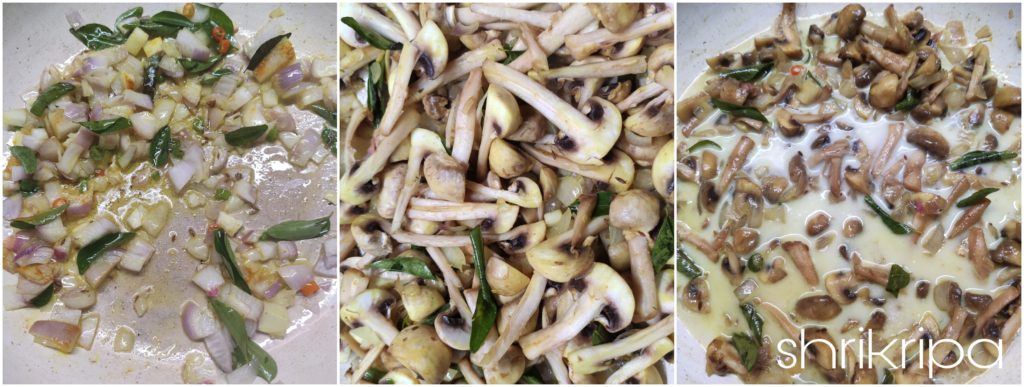
-Heat oil in a skillet, add cumin, curry leaves.

-Then add chopped onions and green chillies, turmeric and fry for a while.

-When onion becomes transparent, add in sliced mushrooms and fry for two to three minutes.

-When it starts wilting, sprinkle little salt and mix.

-Pour milk and cornflour mixture or Coconut milk and cook until it reaches a creamy texture.

-Lastly, garnish with a little pepper powder and garam masala.

-Enjoy with any flatbread.