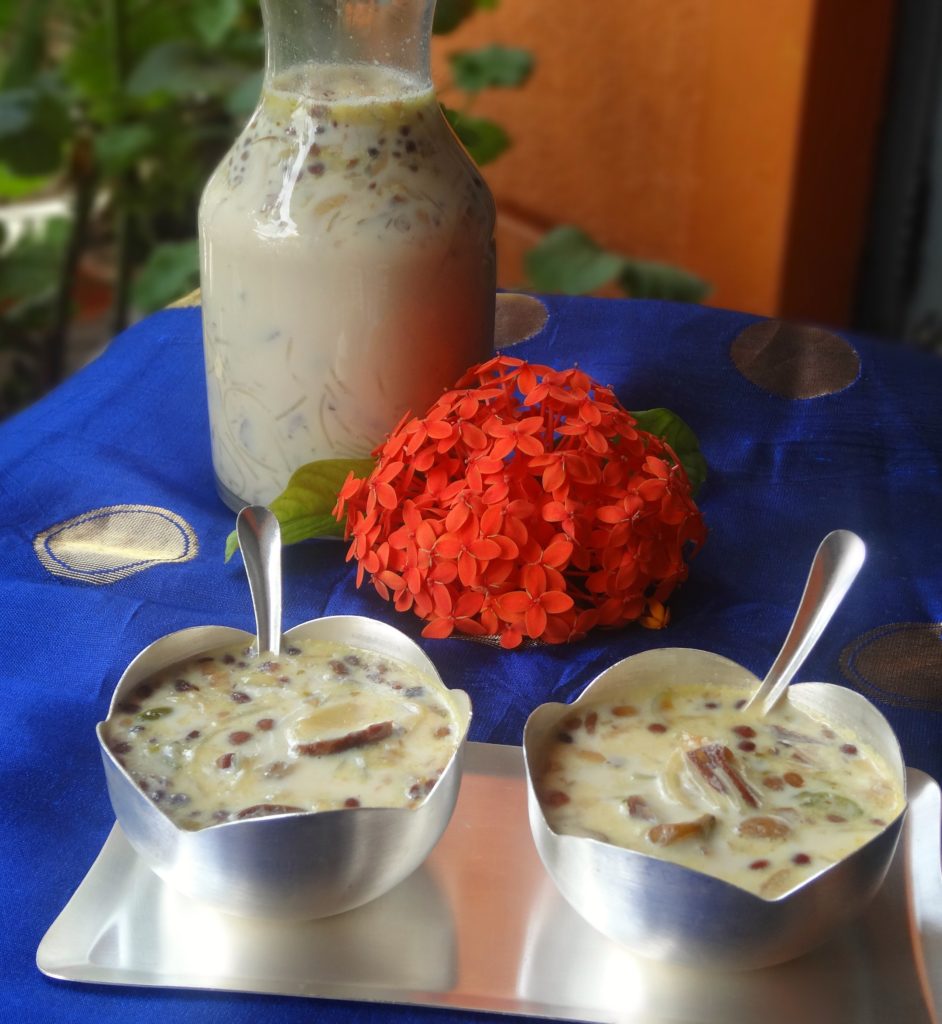
Sheer Khurma/ Sheer Khorma:

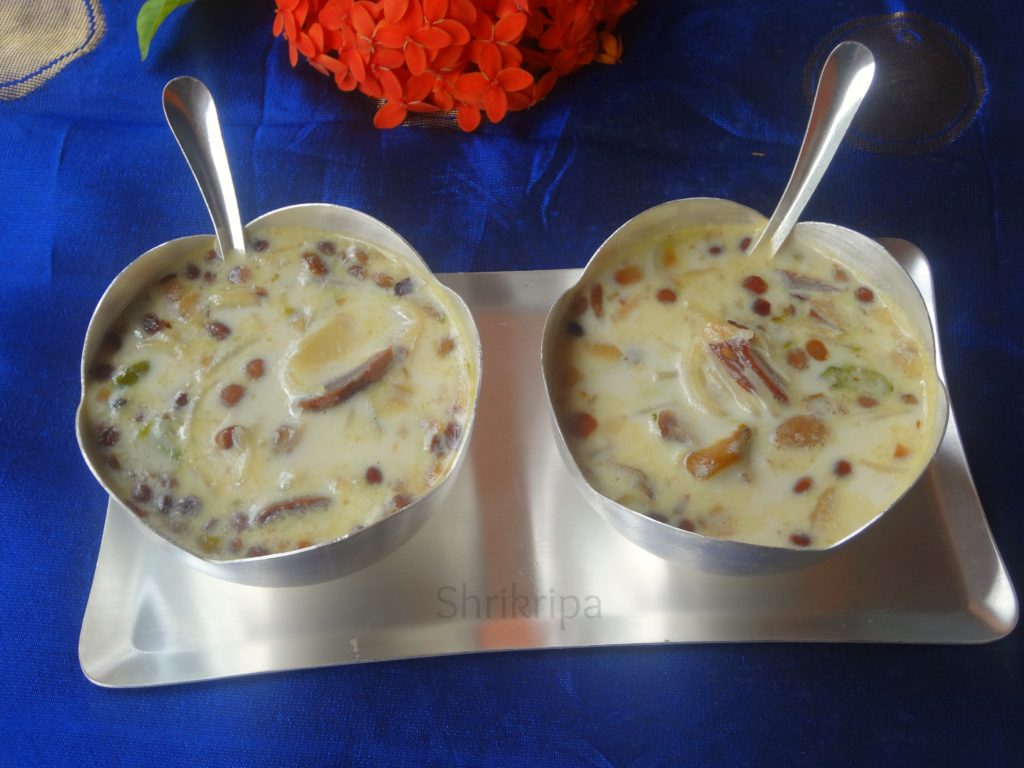
Sheer Khurma is also known as Sheer Khorma. The term represents Milk with dry dates. It is Vermicelli kheer with lots and lots of dry fruits and dry dates. It is a traditional sweet dish, which is served during Eid Ul Fitr.

I wanted to try this recipe from so long. I took my house-help’s help to gather how it is made and she described to me how her mom used to make this on festival days. She guided me on how to chop all these dry fruits as well.

sheer ori

Ingredients:

Milk – 1.5 litres.

Ghee – 2 to 3 tbl spoon (to fry all the dry fruits)

Sugar – to taste (used almost ½ cup)

Dry dates – ¼ cup (sliced length wise)

Almond – ¼ cup (slivered)

Cashew – 2 table spoon (bits)

Pista – ¼ cup (chopped)

Raisins – 2 table spoons

Chironji – 2 table spoons

Vermicelli – ¼ cup

Saffron – 8 to 10 strands

Cardamom – ½ tea spoon.

Method:

pic 1

-Take ghee in a thick bottomed kadai and roast vermicelli, remove and keep aside.

– Fry all the dry fruits one by one.

Soak saffron in 2 table spoons of hot milk and keep aside.

 Take roasted vermicelli and dry fruits together in this same kadai and pour milk and boil.

  Cook this until you see a creamy texture and vermicelli is perfectly done.

  It takes anywhere between fifteen to twenty minutes.

 Now add in sugar and check for the sweetness and adjust the quantity and boil.

 Lastly add soaked saffron and cardamom powder.

pic 2

You can serve this as a hot dessert or chilled.

Banana Berati / Plantain Preserve:

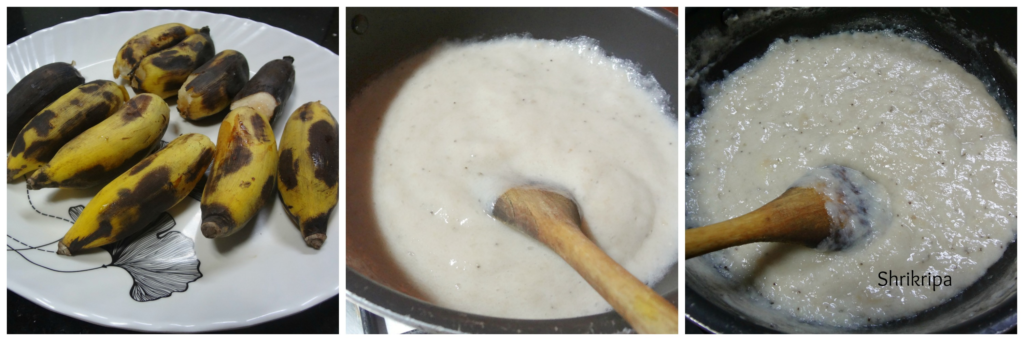
Whenever you have large stock of over ripe bananas, this is one such procedure one can follow and finish off all the stock and preserve this for future use. This preserve stays good almost a year or more in the freezer. It is a very handy when you want to make banana payasam/kheer or HalwaHere I have used yellow small variety of banana from Mangalore and we call this as Kadali.

pic main

Ingredients:

Over ripe banana – 22

Sugar – 1 bowl 

Method:

 Put all the peeled bananas to mixer grinder and make a smooth paste.

  Measure this by using any bowl of your choice. If this paste is 3 cups in quantity take one cup of sugar in that same measurement cup.

  So, your ratio of banana paste and sugar will be 3:1.

Take one thick bottomed kadai, put this paste and keep gas flame in a very low flame and cook for a while.

collage 1

       When it changes its colour to milky white, then to a pale colour and when you smell the banana flavour in the air, add sugar and mix this in a regular interval.

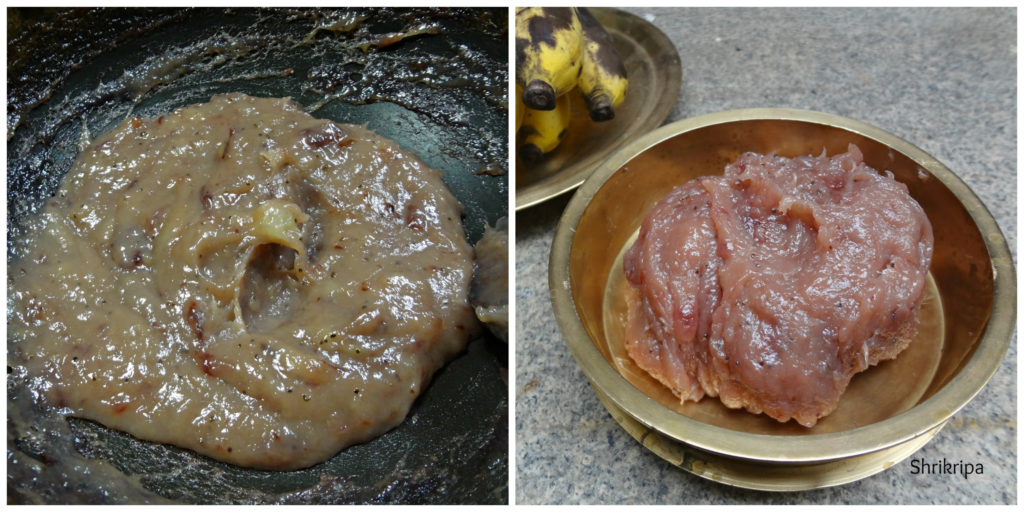
   After some time, it will turn into a pinkish or reddish colour and it will start to leave the sides of the kadai. Now it is the time to remove it from the fire.

collage 2

   Keep as it is and when it reaches room temperature; store it in an airtight container or a zip lock.

   You can do this in a microwave as well. Only thing, you should remove the glass bowl at regular intervals and give a stir and proceed as given above.


Neeru Mavinakayi/ Brined mango chutney:

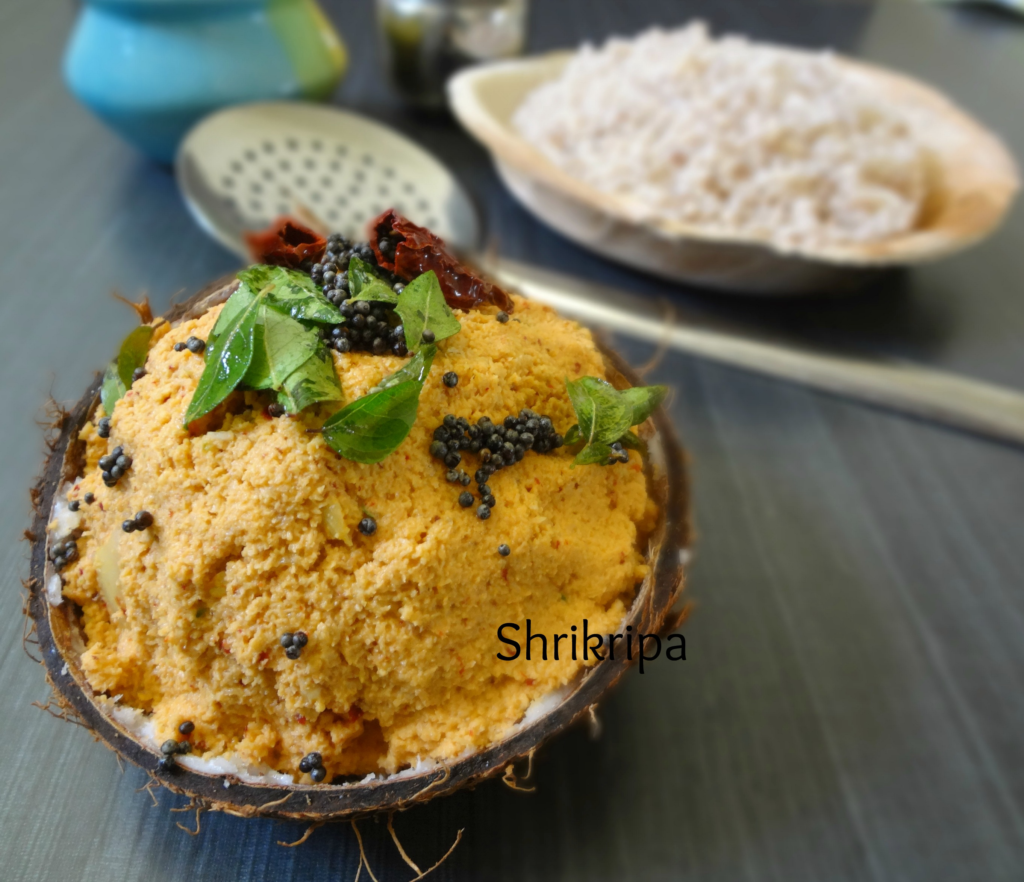
The word “Neeru Mavinakayi” makes me nostalgic and my mouth water. I am sure that is the case with every Mangalorean. We grew up with very basic comfort food during monsoons. Which consists of kucchilakki (Red rice) ganji accompanied with ghee and this chutney, which is made by using coconut and dried red chillies.

Raw mango in brine is known as Neeru Mavinakayi. During its season we normally preserve raw, firm mangoes by putting it in brine solution. This way, the mangoes can be enjoyed throughout the year. We do make varieties of recipes and this chutney is one of them.

pic 3

Ingredients:

Brined mango – 1

Fresh Coconut – 1 cup

Dried red chillies – 3 to 4

Hing – ¼ tsp

Seasoning:

Coconut oil – 1 tsp

Mustard – 1 tsp

Red chilli – 1

Curry leaves – 1 string

Method:

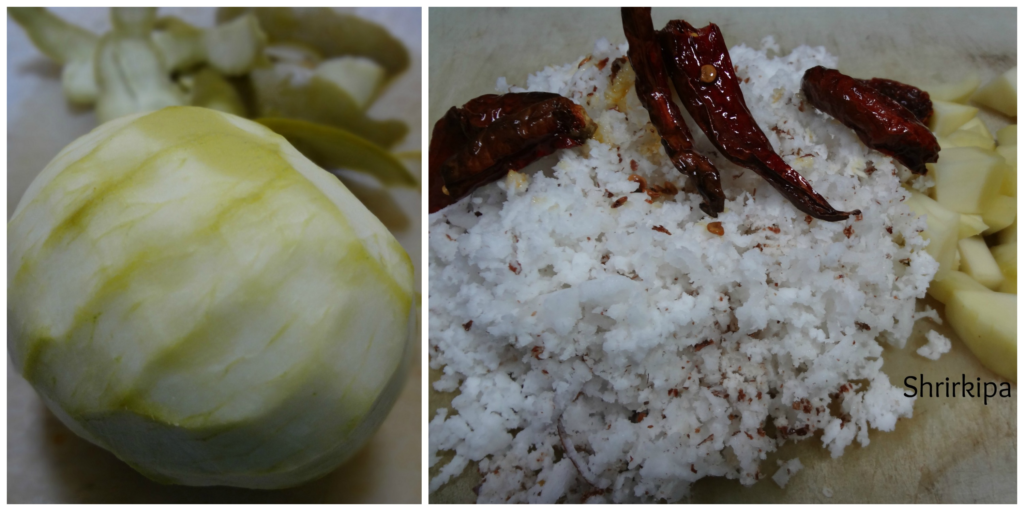
– Take out one mango from the brine, wash properly and peel outer skin and chop.

-Roast red chillies and hing in a drop of coconut oil.

collage 1

– Grind chopped mango, roasted items and coconut into coarse paste by adding very minimal water.

-It usually doesn’t require salt, if needed you can check the taste and add accordingly.

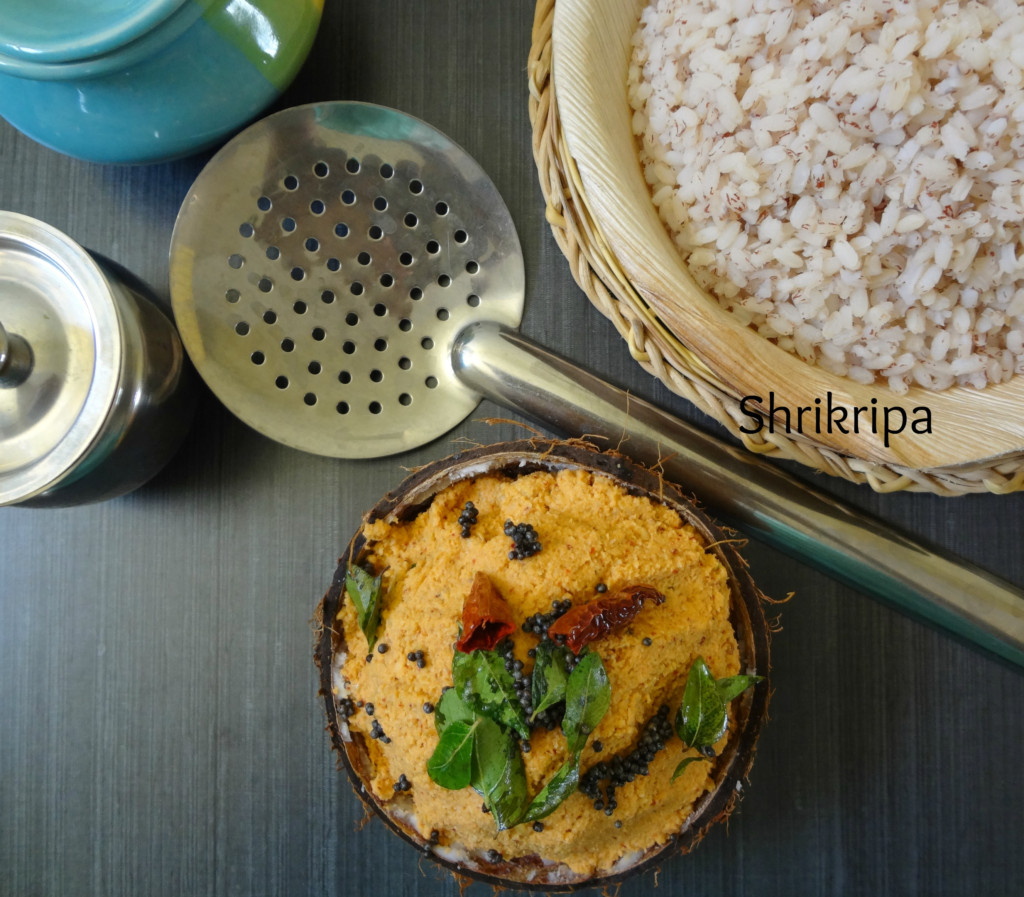
-Add seasoning by heating oil, when mustard splutters add curry leaves and add this to the chutney.

pic 4

-Enjoy either with white rice or like us with boiled rice (red rice) ganji and ghee.


Menthe Kodilu/ Methi Sambar:

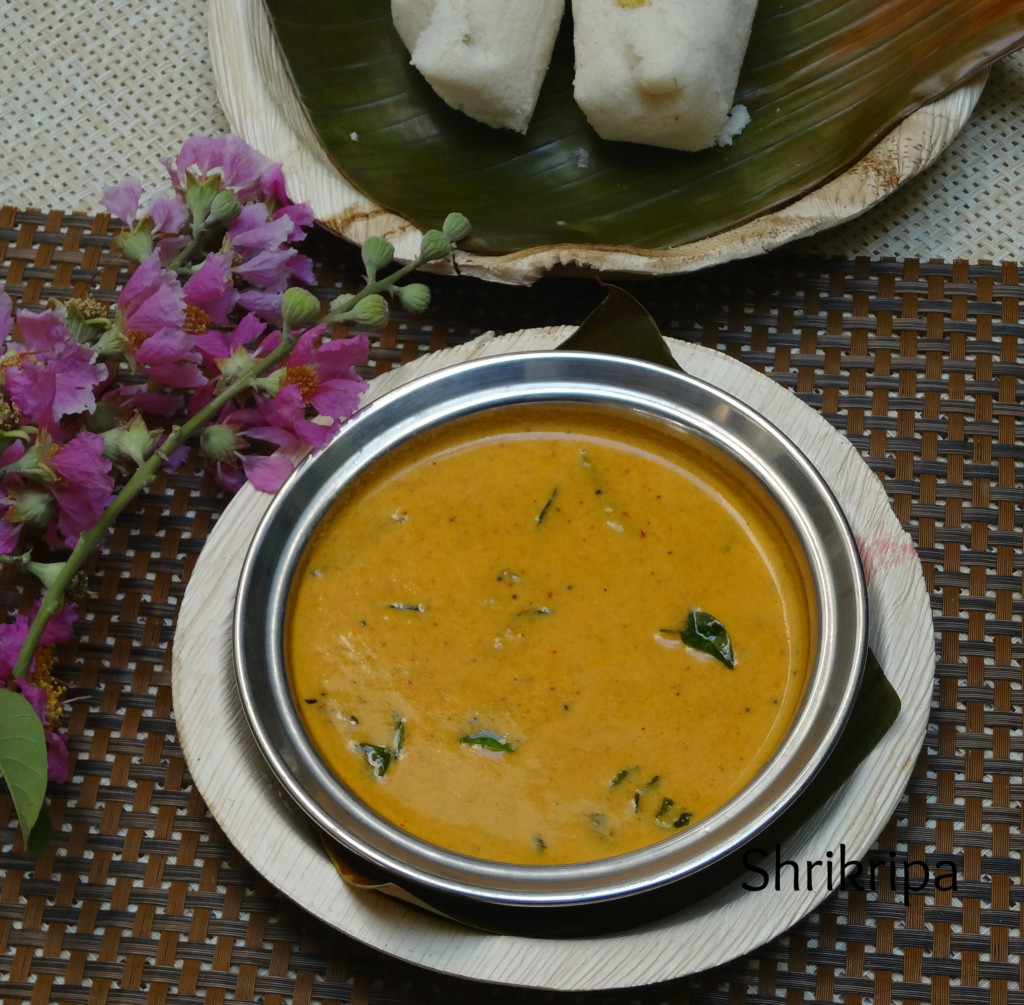
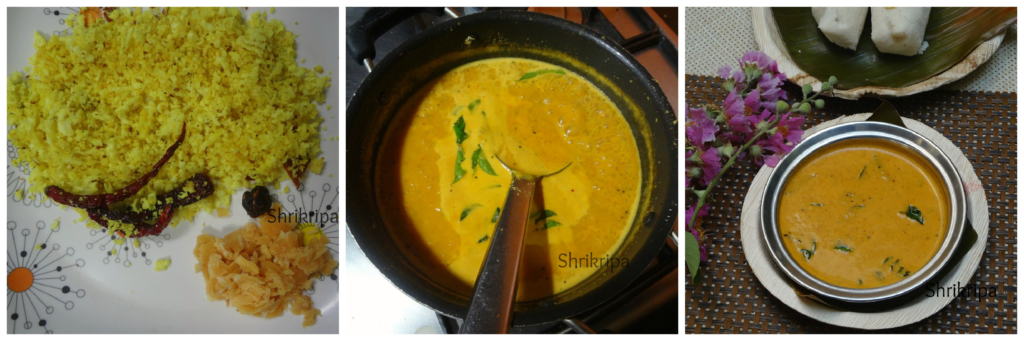
This is one of our traditional recipes and if you like a little sweetish tangy taste, this is the perfect combo for kotte kadubu / idly or semige.

We don’t use onion or garlic on any auspicious day and this side dish is usually prepared on such days and we relish this as a side dish with kotte kadubu/ Moode.

Here menthe is fenugreek and kodilu stands for sambar in our language. This is a very simple coconut based little sweetish gravy and needs very less ingredient and tastes good.

pic main

Ingredient:

Fresh grated coconut – 1 big bowl.

Dried red chillies – 3 to 4

Methi / fenugreek seeds – ½ tsp

Turmeric – ½ tsp

Coconut oil – 1tsp

Tamarind – ½ tsp

Jaggery – 2 tbl spoon

Salt

Seasoning:

Coconut oil – 1 tsp

Mustard – 1 tsp

Curry leaves – 1 springs

Red chilli – 1

Method:

 Take 1 spoon of coconut oil in a small kadai, heat.

 When it is hot, drop methi and fry for a while.

 When it is light brown, add red chillies and fry until it swells.

  Add coconut gratings, turmeric and fry for 2 to 3 minutes.

collage 1

  Cool this mixture and grind this into smooth paste by adding sufficient water, salt, jaggery and tamarind.

Now take that same kadai, in which we have fried chillies and coconut. Pour ground batter, adjust the consistency by adding water.

Boil this for a while and check for a salt and jaggery. If needed adjust that as well.

Do seasoning by heating oil, mustard, red chilli and curry leaves and pour this over boiled kodilu.

Moode/ Kotte kadubu:

Moode or kotte kadubu is a local delicacy of Coastal Karnataka. We especially prepare this on the eve of any festivities. Now a day It is an integral part of any weddings in our region.

Moode or kotte is leaf cup which we prepare either by using jack leaves, Kedige flower leaves (Kewda, Fragrant Screw Pine, Umbrella tree, Screw pine) or Plantain leaf. It is based on availability and accessibility to leaf.

It is basically normal idly batter which is poured in these cups, which is made by any one of these leaves and steam cooked in a water bath and served with chutney or any sambar.

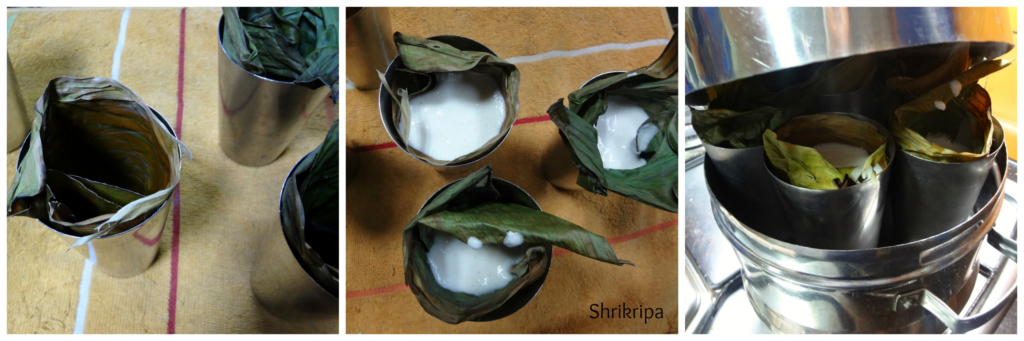
I usually prepare this by bringing these leaf cups, from One of the many Mangalore stores, spread across Bangalore, during festival season. Sometimes I do prepare by lining a stainless-steel cup with small pieces of plantain leaves. This also works just fine like any other leaf cup.

pic main

Ingredients:

Idly Batter – Fermented

Tall steel glasses

Plantain leaves – as needed

Method:

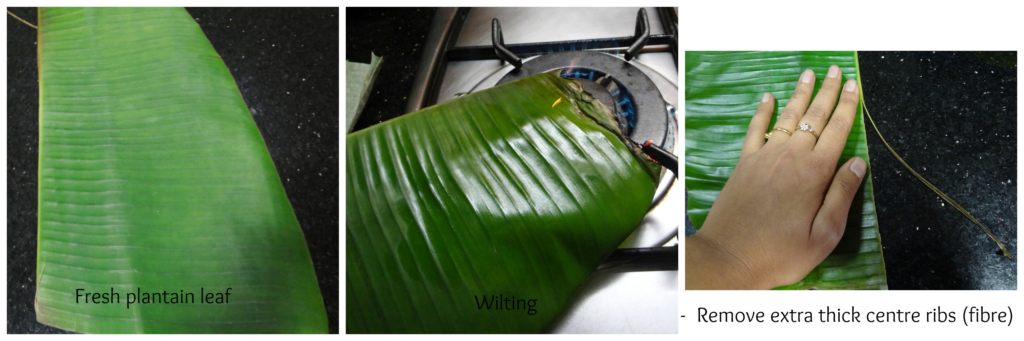
Hold plantain leaves on gas flame and wilt a little. It will help while folding or rolling the leaves.

If you don’t wilt it, it will tear very easily.

collage 1

Take one wet cloth and wipe plantain leaves (you should move your hand from centre rib to edge as ridges moves in the leaves) and clean the leaves.

 Remove extra thick centre ribs (fibre) by holding your left palm to support over the leaf and pull the fibre by right hand.

-Cut this into small rectangle pieces.

 It is now ready to roll and place inside the steel glass.

collage 2

Keep idly steamer ready, when water starts boiling, pour the batter to the moulds.

In these cups, usually 2 to 2 ½ serving spoons of batter will hold.

 If batter is more, cooking time should increase according to that.

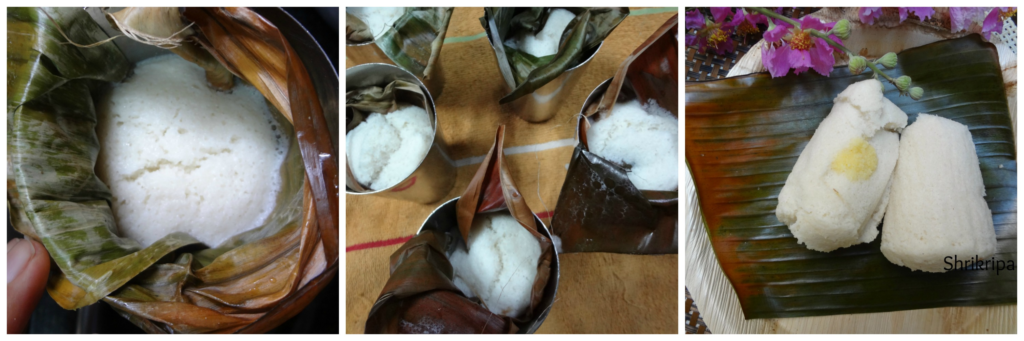
Keep it in a steamer, cook in a high fire for 10 minutes and when you feel the steam is uniformly distributed inside the steamer, reduce the flame and cook for 40 to 50 minutes in a very low flame.

After it is done, switch off the gas, don’t open the lid and keep it for some more time.

When you want to serve this, open the lid, remove the glass mould and pull the banana leaves out and serve with pouring little ghee and any side dish of your choice.

collage 3

Usually on festival days, we make coconut based sambar or chutney and totally avoid garlic and onion on any auspicious day.

Our traditional side dish is called menthe kodilu and we relish these kadubu’s with menthe kodilu or sweetened cardamom flavoured coconut milk(kayi halu) and coconut chutney .

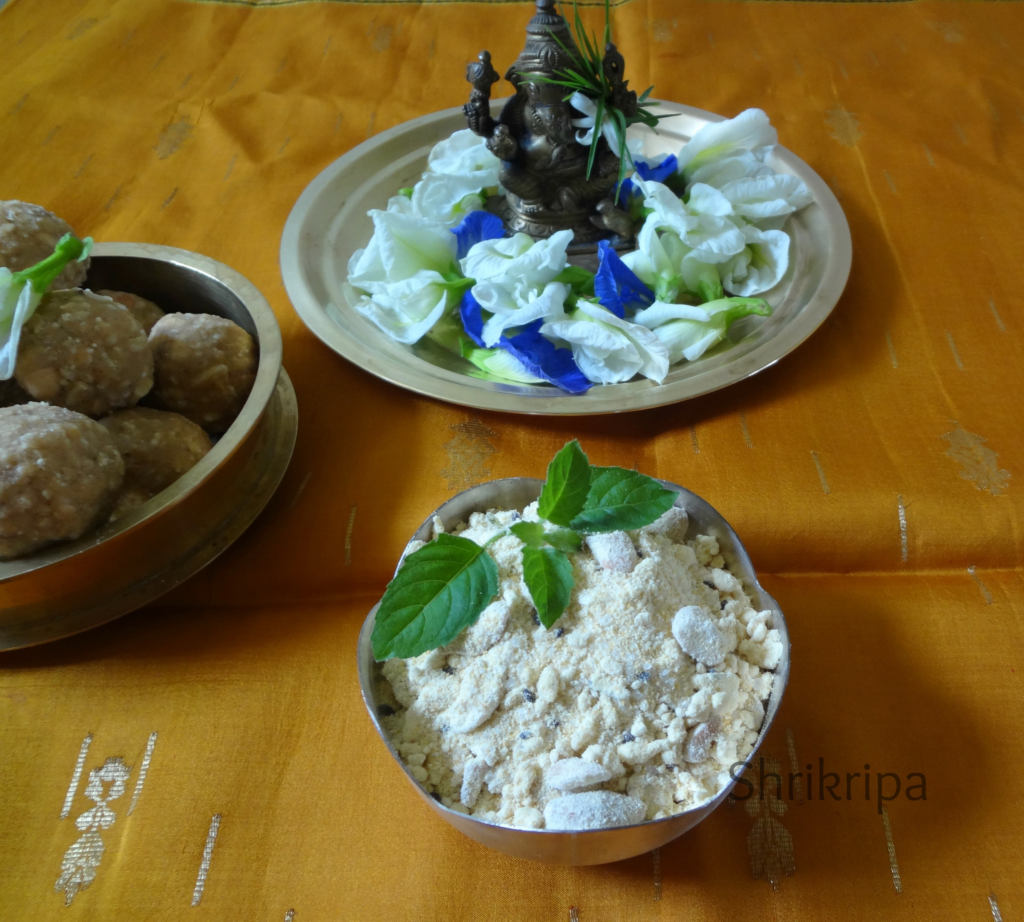
Panchakajjaya /Naivedym which offered to lord Ganapathi:

Panchakajjaya is integral part of Ganesh Chaturthi Naivedyam. Pancha means Five. As the name suggests it is made up of five ingredients. Chana dal, sugar, coconut, Ghee, black sesame seed. cashew nuts are optional. This powdery Prasadam is a treat which we look forward to every year on this auspicious day.

pic 8

Ingredients:

Chana dal / Bengal gram dal – 1 cup

Grated fresh coconut – 1cup

Sugar – 1cup

Black sesame seed – 2 tbl sp

Cashew bits – ½ cup

Cardamom powder – ½ tsp

Ghee – ½ tsp

Method:

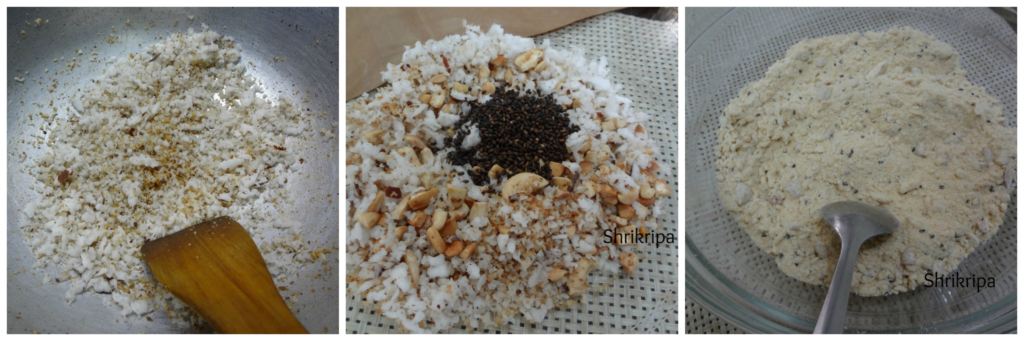
         Dry roast Chana dal until it is light golden and fragrant. Cool and make powder by using small mixer jar. Sieve and collect fine powder. Do this in small batches, little by little.

collage 1

         Powder sugar.

         Dry roast sesame seed and cool.

         Dry roast coconut gratings until light golden. Cool this.

         Fry cashew bits in ghee and keep aside.

collage 2 

         Now take one bowl, mix everything together, and sprinkle cardamom powder. Offer to God.

Idly/Idli Batter:

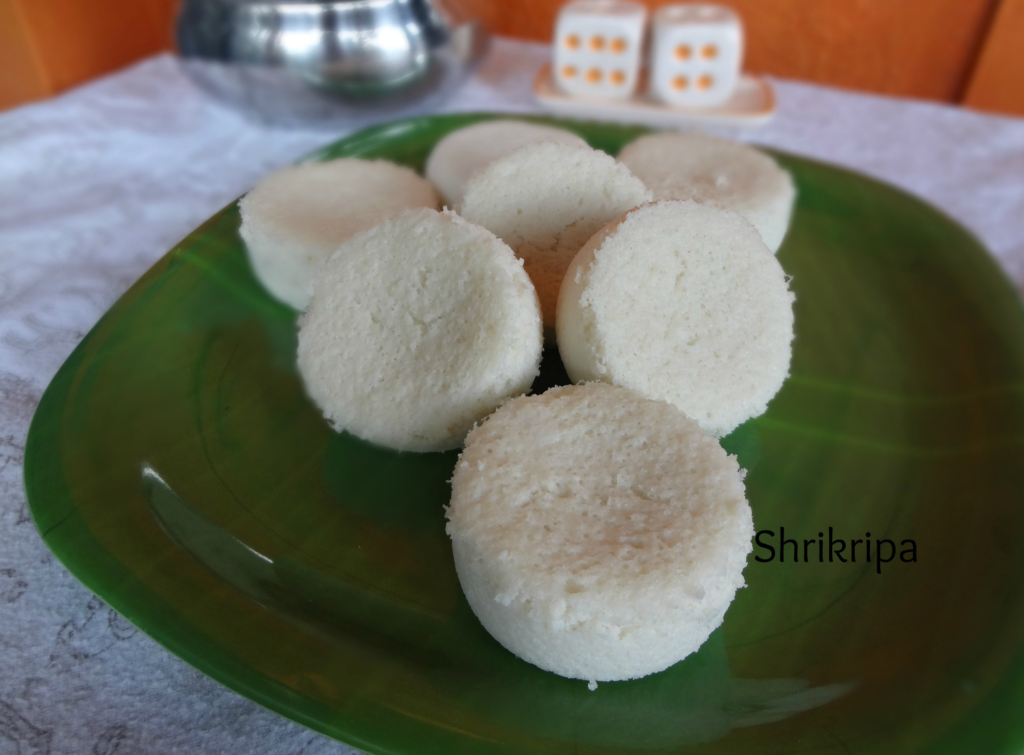
Idli is very basic, staple breakfast of south India. It is very healthy steam cooked rice and lentil cake which is very nutritious too. Each place has their own rice and lentil ratio or proportion and grinding technique also changes from region to region. In Mangalore, we soak rice and dal separately and grind very fine paste of urad dal and either we mix rice rawa or we are grinding the rice, we keep it a little coarse, hence this batter will be a little coarse. After fermenting the batter, the next day we proceed to make idlies by using either idly stand or idly cups. In our region, idly cups are regular and very common in every house hold and we use special type of idly steamer and invariably we use this for so many kinds of steam cooking.
pic 14

Ingredients for idli batter:

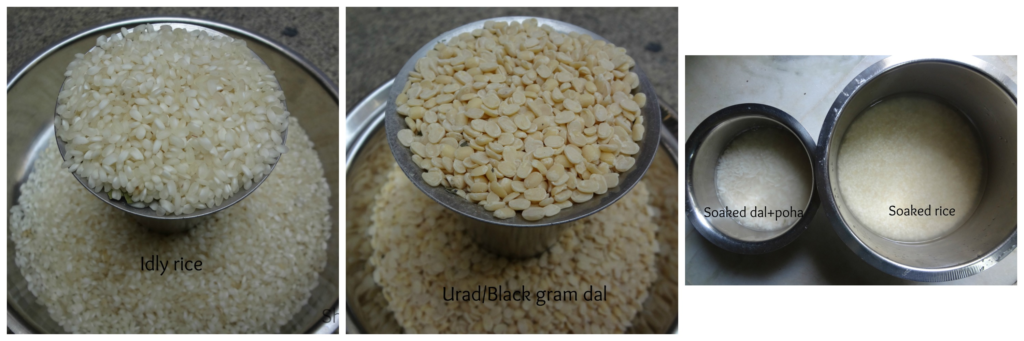
Idly rice or Idly rawa – 2 cups

Urad/Black gram dal – 1 cup

Poha – 1 fist full

salt

Method:

-Wash and soak rice in one vessel. If you are using idli rawa, you can wash idly rawa and put very little water and keep aside.
collage 1

-Wash Urad dal and poha in another vessel and soak for 3 to 4 hours.

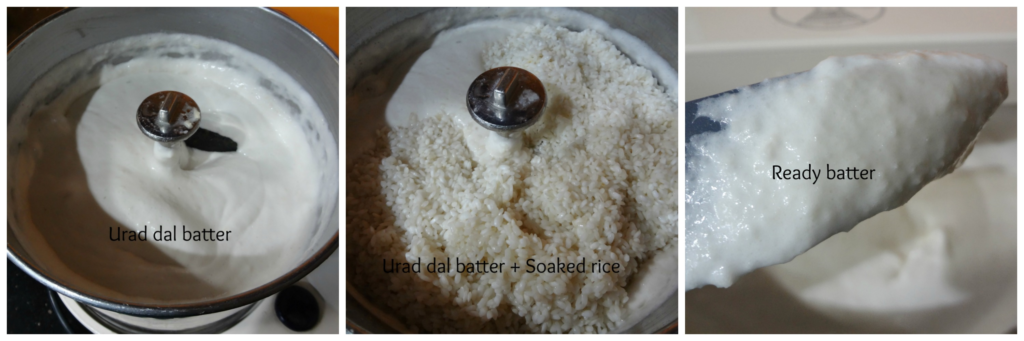
-At first, drain excess water from urad dal and put this into wet grinder.

-Grind this into smooth paste by adding water in-between while grinding.

-When urad dal batter becomes fine and smooth, its consistency becomes almost double and colour of the batter looks milky white.
collage 2

– When you think urad dal batter is ready, add soaked rice or rice rawa by draining its soaked water.

-You can use this water while grinding or adjusting the consistency of the batter or to wash wet grinder at first to remove the dough that is stuck on the stone.

-Grind this into small rawa consistency by adding salt and remove this ready batter into big vessel. If you are using rice rawa ,allow batter to mix for couple of minutes and then remove.

-I usually grind urad dal first, then mix in drained rice so that batter mixes uniformly and becomes light and airy. 

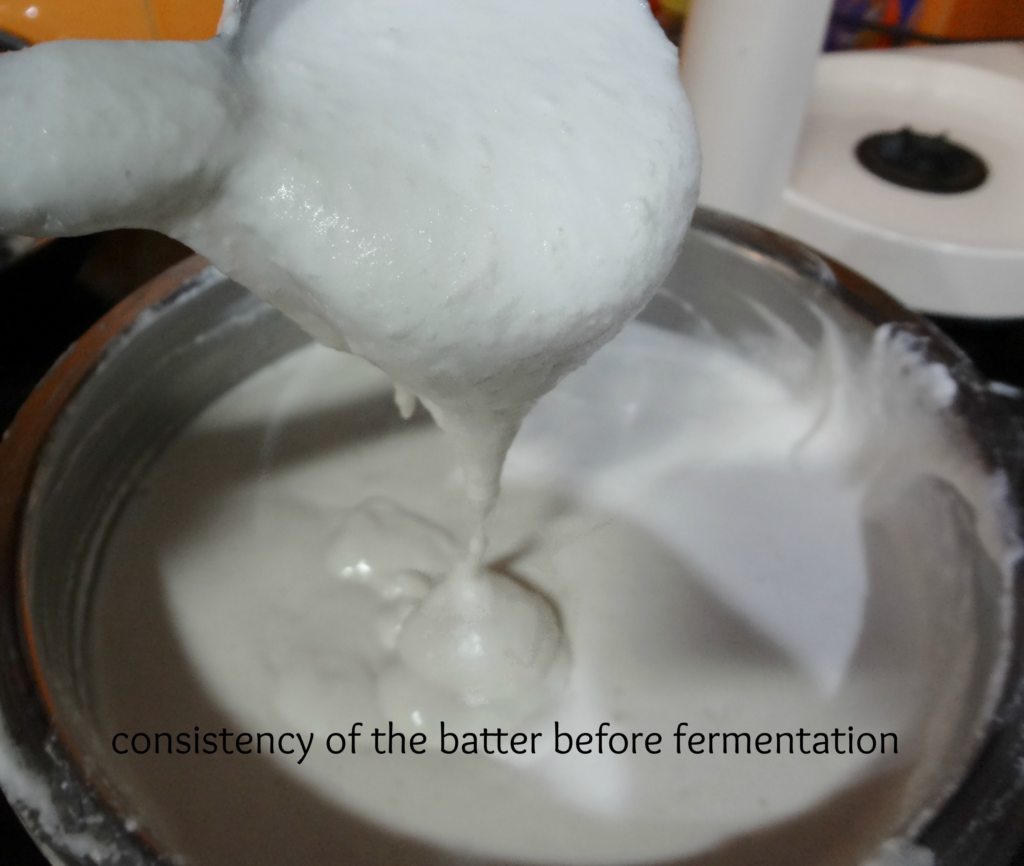
– Batter consistency should be a little thick and when u hold and drop the batter it should not drop very easily and it should stick to the spoon.
pic 7

-Close the lid and keep this batter for 8 to 10 hours or more (according to outside weather where you live) for fermentation.

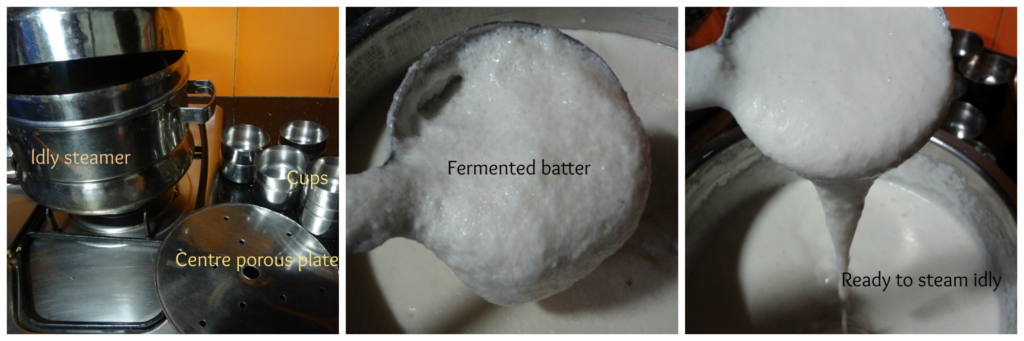
-Next day morning fill idly steamer or pressure cooker with sufficient water, place the porous plate at the centre of the vessel and keep this on the fire.
collage 3

-Mix fermented batter vigorously, if needed add water and adjust the consistency keep it ready.

-Rinse the idly moulds in fresh water once, it will act as a non-sticky layer between idly and mould.

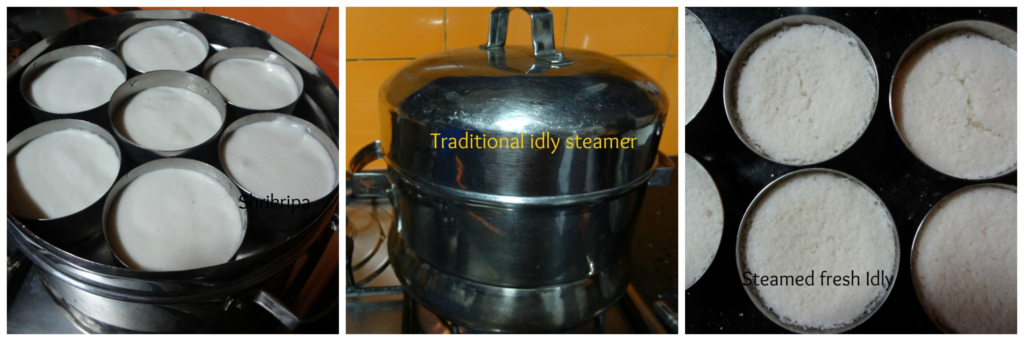
-When water starts boiling, pour one spoon of batter into respective moulds and steam cook.
collage 4

-If you are using cups, cook this in a steamer for 15 to 20 minutes. Cups holds more batter than idly stand.

-If you are using idly stand, 7 to 8 minutes of steam cooking is sufficient.

-When it is done, switch off the gas, open the lid and remove moulds outside.

-Once it is cool, remove idly and serve with chutney or sambar or with your choice of side dish.

NOTE:

-Use wet grinder to get awesome soft idlies.

– Use soaked and drained water from the dal or rice while grinding. It will enhance the taste.

-Always mix and pour the batter to the moulds, only after water starts boiling.



Beaten rice/Poha laddu:

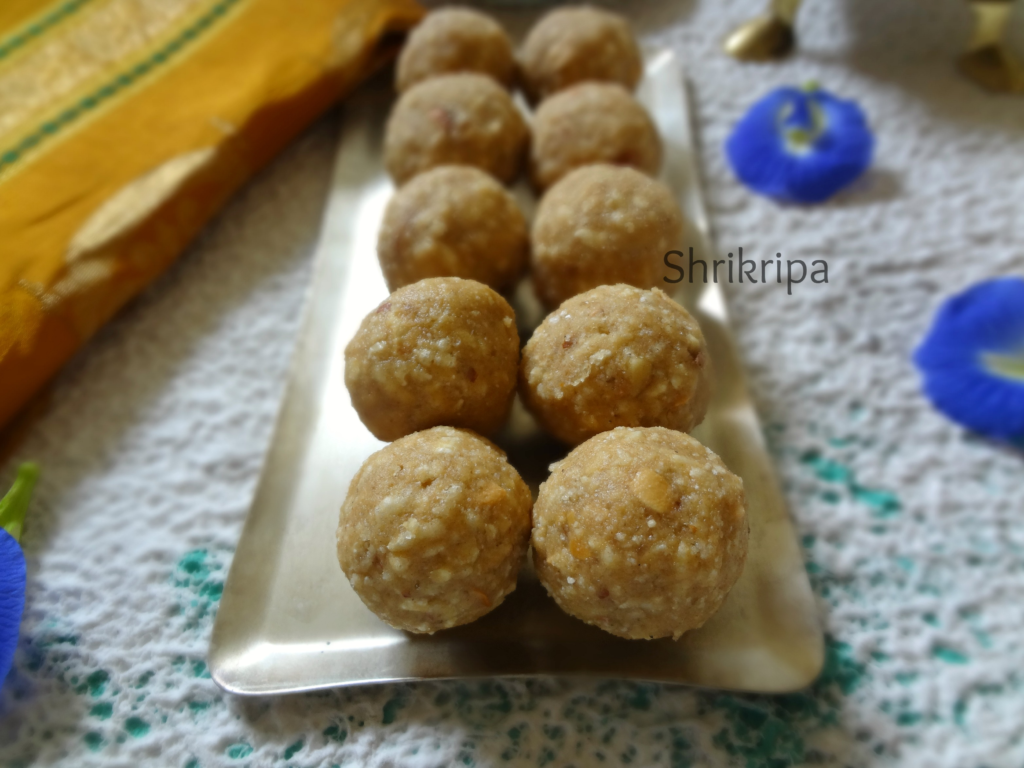
Wish you all my lovely readers a very happy Krishna janmashtami. As beaten rice is one of the favourite things of lord Krishna. Beaten rice is also known as poha in Hindi and Avalakki in Kannada.

This ladoo is one of my twin daughter’s favourite things in this whole wide world. I learnt this addictive crunchy ladoo recipe from my sister’s Mother-In-Law. Now let’s get started with the recipe.

pic main

Ingredients:

Whole wheat flour-1 cup

Chickpea flour/Besan -1 cup

Thick beaten rice – 2 cups (thicker variety, which is used for deep frying in savoury making)

Sugar- 2 ½ cup

Clarified butter (ghee) – ½ to ¾ cup (as required)

Dry fruits – 1 cup (We like chopped almond and cashew)

Cardamom powder – 1tsp

Method:

1.       Dry roast wheat flour and chickpea flour separately in a thick bottomed vessel and keep small flame in a gas stove, so that flour will not get burnt and fry uniformly.

2.       Fry dry fruits with little ghee and keep aside.

3.       Deep fry beaten rice and put it in a tissue.

collage 1

4.       Take all these things (roasted flour, dry fruits, fried beaten rice, and cardamom powder) in a large bowl, to this add powdered sugar and mix everything nicely.

5.       To the above mixture add melted little hot clarified butter or ghee and mix it with clean hand.

collage 2

6.       Once you can make ladoo stop adding clarified butter and continue making ladoo.

pic 7

7. After it cools down, store this in a clean, dry airtight container and enjoy whenever you feel like.


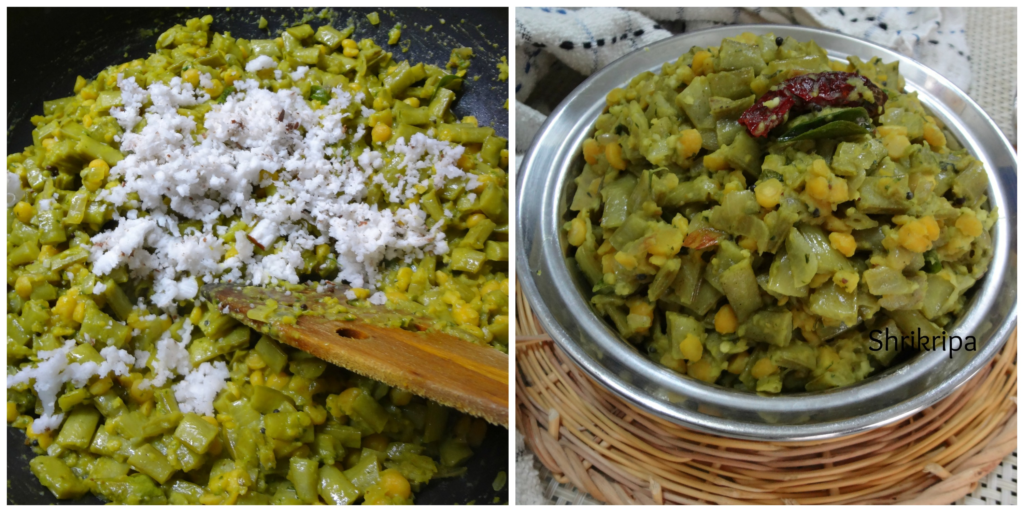
Chavli kai palya /Cluster beans and chana dal dry curry:

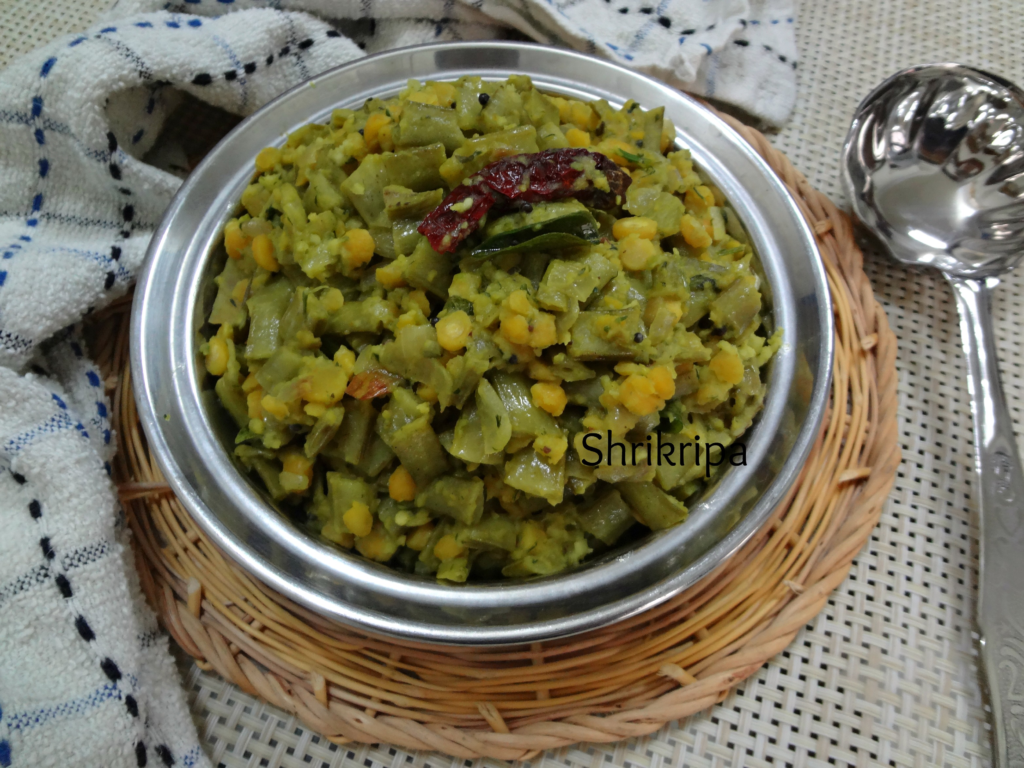
Like any other veggie, even most neglected high fibre, low calorie, nutrition filled Cluster beans also has many names like, Gorikayi, chavlikai, Guvar, Kothavarangai, Goru chikkudi etc. in different Indian languages.

It is a type of green beans, which is short, flat and little bitter in nature. It is a “power house of goodness” but neglected in-between  all kinds of veggies.

Yes, it needs some other vegetable, dal or potato to enhance its taste or to tone down the bitterness. Here in this recipe, we use soaked Chana dal and little bit masala to enhance the taste and this recipe is handed down to me by my dear aunty who is a super human being.

pic 12

It is a perfect side dish for any kind of Indian flat breads or with hot rice.

Ingredients:

Cluster beans – ½ kg

Chana dal – 1 cup

Onion – 2

Fresh Coconut gratings – 1 fist full

Seasoning:

Oil – 3 to 4 tbl sp

Mustard – 1 tsp

Red chillies – 2

Hing – ¼ tsp

Curry leaves – 1 string

For masala:

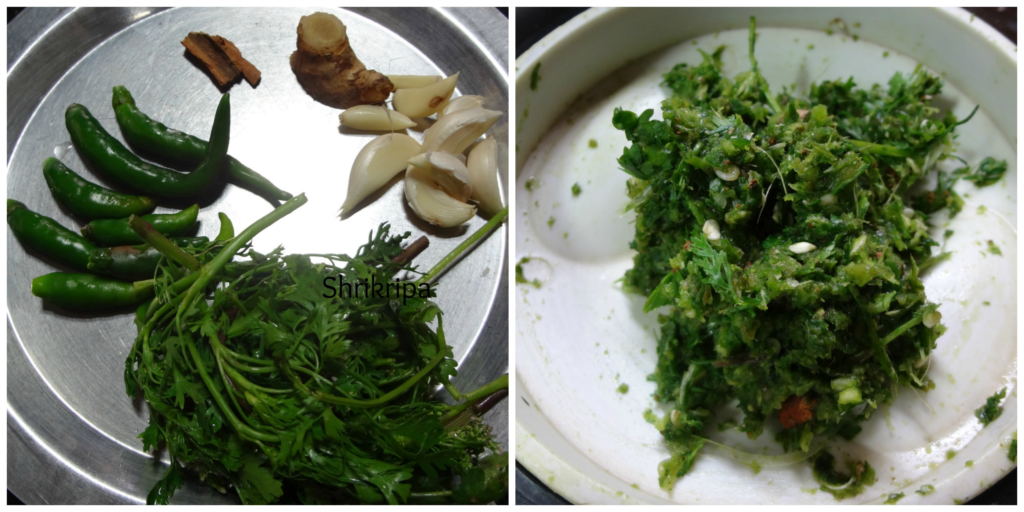
Green chillies – 6 to 7

Cinnamon – 1” piece

Ginger – 1” piece

Garlic – 8 cloves

Coriander leaves – 10 strings

Method:

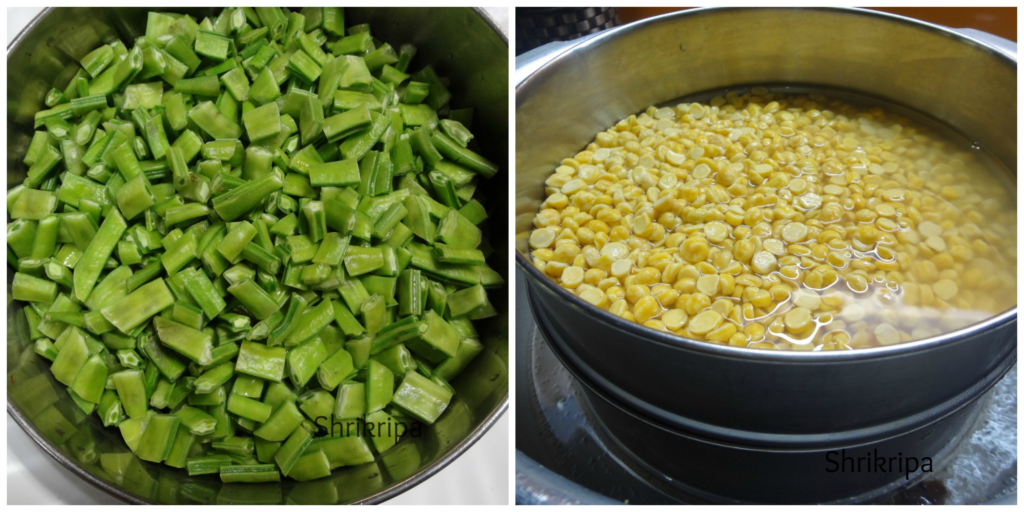
-Wash, soak chana dal in water for half to one hour.

-Cut cluster beans in to bit size pieces after washing and removing both the ends.

collage 1

– Cook soaked dal and chopped beans for 2 whistles in two separate vessels by adding very little water.

– Put aside one serving spoon of cooked chana dal and pulse remaining amount of dal.

– Dry grind all the items under masala and keep aside.

collage 2

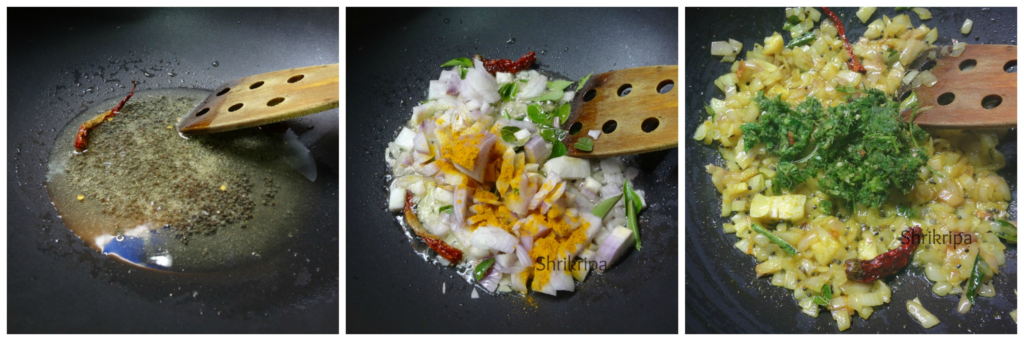
– Chop onions.

– Take one thick bottomed tawa, Put oil, splutter mustard, hing, red chillies and curry leaves.

– Add onion, turmeric and fry nicely.

collage 3

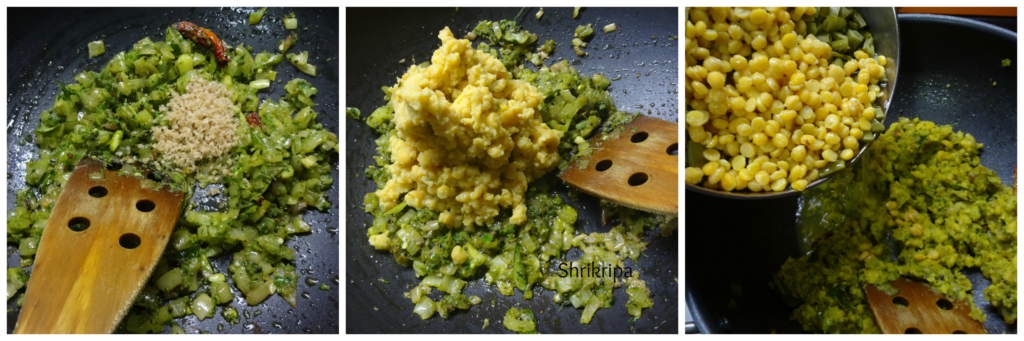
– Add ground masala,required amount of salt and fry nicely.When its raw smell vanishes, add roughly ground dal and fry for a while.

collage 4

– Lastly add cooked cluster beans and dal which we have kept aside.

-Cook this until water becomes dry and garnish with fresh coconut. Mix nicely and heat this mixture for a couple of minutes.

collage 6

-Serve either with rotti, phulka or hot rice.

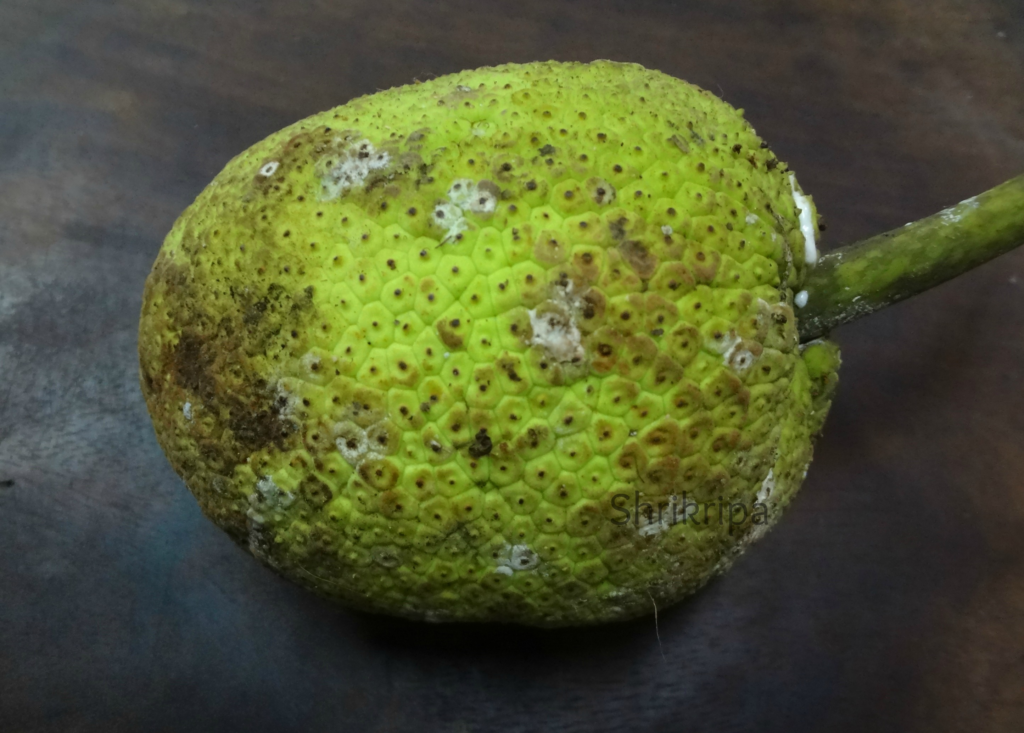
Breadfruit chips:

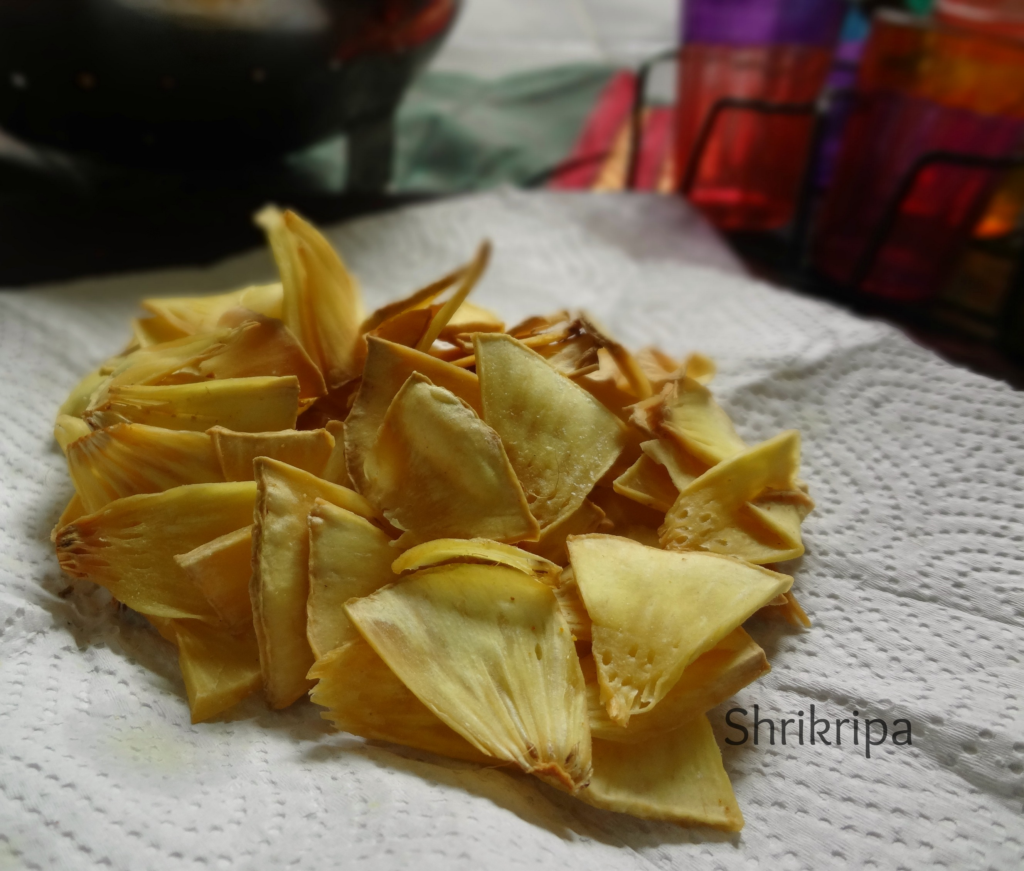
Breadfruit is commonly known as Jeegujje or Deevi halasu in our native language. It is a staple food in many tropical region and considered as an exotic veggie and wonder food only because of its richness either in its taste, fragrance, its high source of gluten free carbohydrate, protein and minerals.

pic 4

Breadfruit is a seasonal, much-loved veggie in our coastal region of Karnataka. It can be consumed when it is mature, but still firm and can be cooked and eaten in many forms. Today I am going to write about its chips. How we can make this exotic savoury and enjoy the gloomy weather.

I got this fresh Breadfruit from my cousin brother’s farm and got an opportunity to make these chips and had them after ages. Guidance was given by my lovely co sister who prepares this in our native, during every season.

pic 2

Ingredients:

Breadfruit – 2

Salt -1 table spoon

Turmeric – ½ tea spoon (optional)

Water – 1 small cup

Coconut oil – To deep fry

Chips slicer – to slice

Method:

– Apply some oil to your hand. To some extent it will protect your hand from blackening.

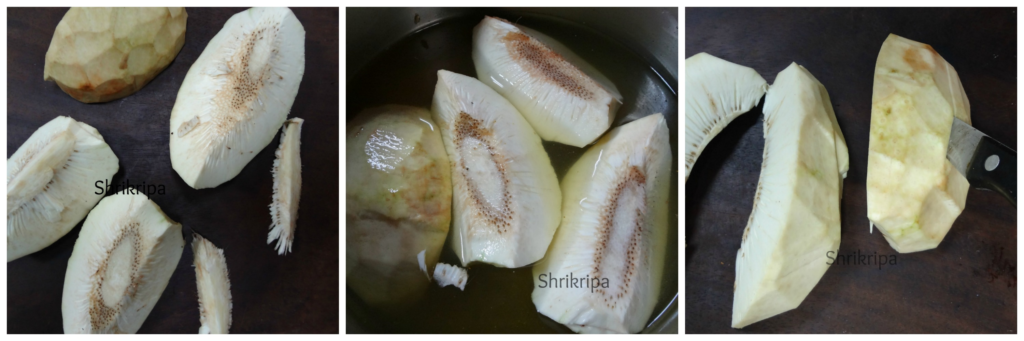
– Take fresh breadfruit, wash properly. Take one sharp knife and remove outer skin as thin as possible.

– Make four longitudinal pieces, remove inner pith (which is slightly harder and rubbery in nature)

– Immerse these pieces in bowl of water.

collage 1

– Take one small bowl of water and mix salt, turmeric powder and keep aside. It is your salted water, which is used while frying and addition of turmeric will enhance the colour of the chips.

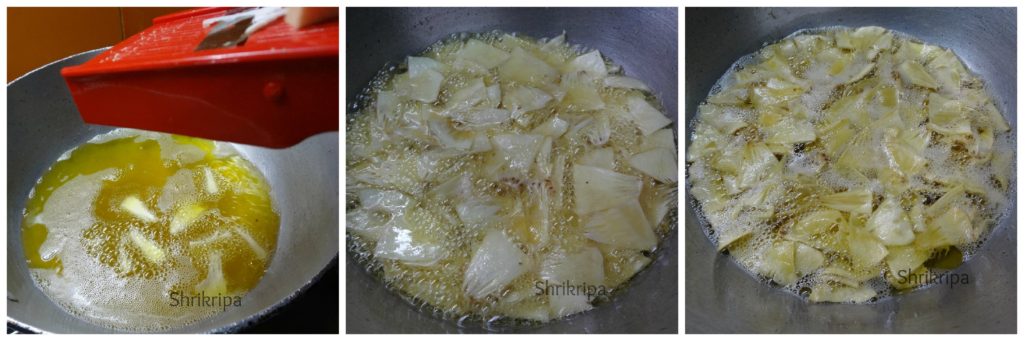
– Now you can keep coconut oil for heating. When it is very hot, start making chips. To test the hotness of oil, drop one small piece of breadfruit, if it pops up immediately, it is ready.

collage 2

– Take out breadfruit from water, remove traces of water by wiping it out. Make each quarter into half and now you will get 8 total pieces from one bread fruit.

– Take each piece and start slicing directly to the hot oil by using slicer. Keep gas flame at medium.

– When the breadfruit slices cook, the bubbling sound of the oil becomes faint. Now you can add 1 to 2 tsp of salted water.

collage 3

– You will hear lot of bubbles and bubbling sound immediately after adding salted water to the hot oil.

– When the sound reduces, the chips are ready to be removed from the oil.

pic 1

– Remove the chips from the oil and keep them on a tissue paper laid plate.

– After cooling store it in an air tight container and proceed with the remaining bread fruit.