Sorekayi Kottige / Bottle gourd steam dumpling:

Sorekayi is nothing but humble bottle gourd, which we usually neglect to use in our daily diet, which incidentally has numerous health benefits. In our native, bottle gourd is mainly used to treat stomach illness or jaundice. It is believed that, it has the power (anti-inflammatory properties) to heal our Liver and intestine during the illness. Bottle gourd has close to 90% water content and is great on the stomach and light on digestion. Apart from this, bottle gourd juice is very good for weight watchers, diabetics and for a healthy heart too. We have so many traditional preparations of bottle gourd and all are very low in calories and tasty too.
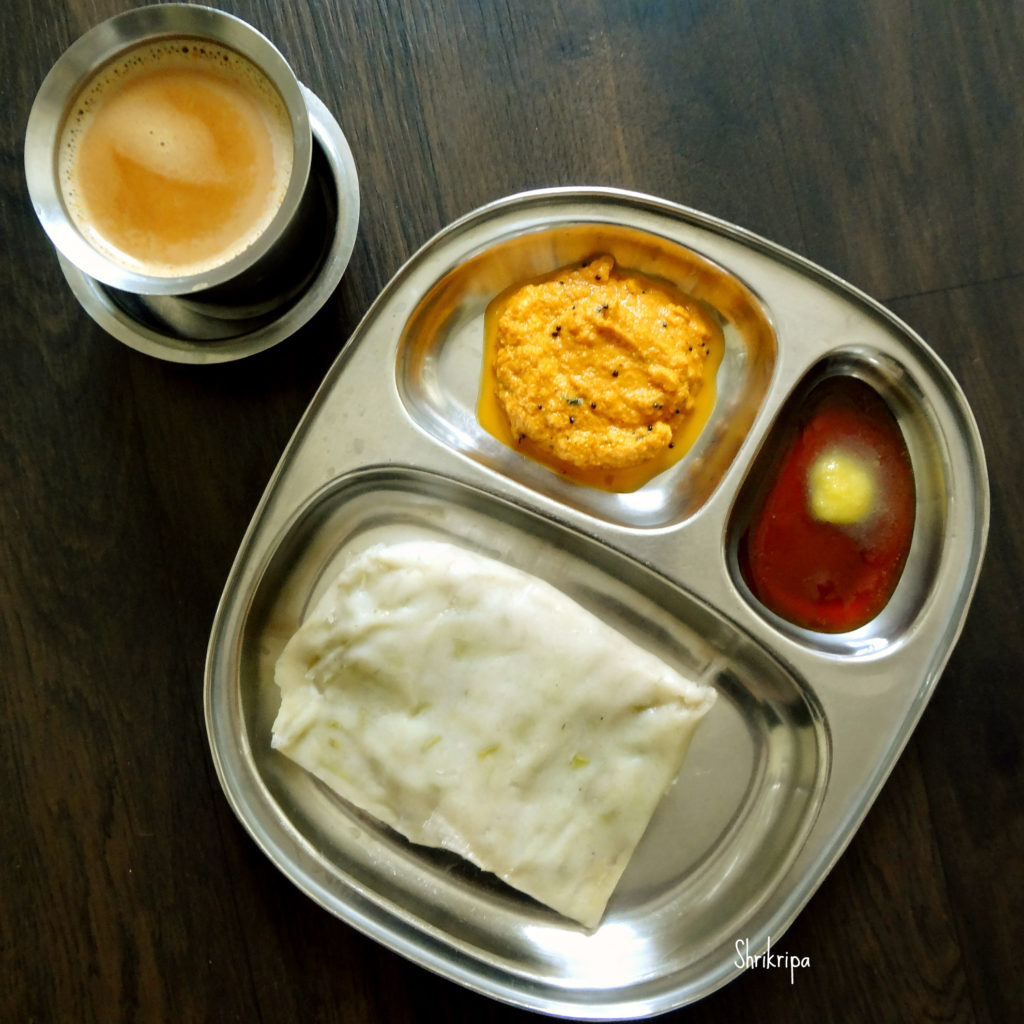
DSC06039_Fotor

Ingredients:

Dosa rice – 2 cups

Bottle gourd – 1 or 2 (according to size)

Salt

Banana leaves or turmeric leaves – to wrap
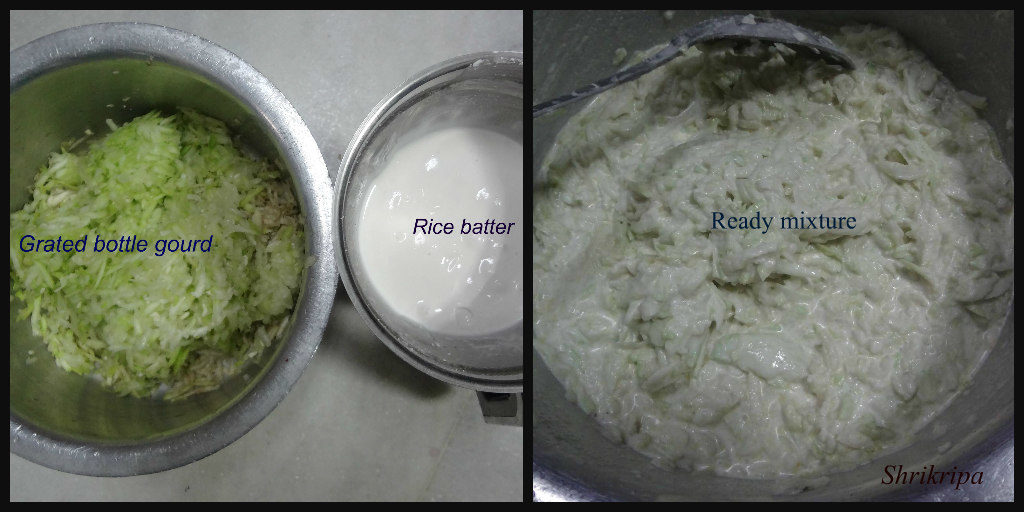
collage 1

Method:

-Wash Dosa rice and soak it for 3 hours.

-Grate bottle gourd by using big hole of a grater or chop it into very small chunks.

-Grind soaked rice into a fine paste with minimal amount of water and salt.

-Mix chopped or grated veggie and rice batter.

-If you are using turmeric leaves, wipe it and use as it is.

-If you are using banana leaves, take banana leaf, hold it over a gas flame (for wilting) then clean it with a wet cloth.

– If you are using turmeric leaves, use 2 leaves, place it in a “Plus” position, now pour one serving spoon of batter and fold the leaves like a packet.
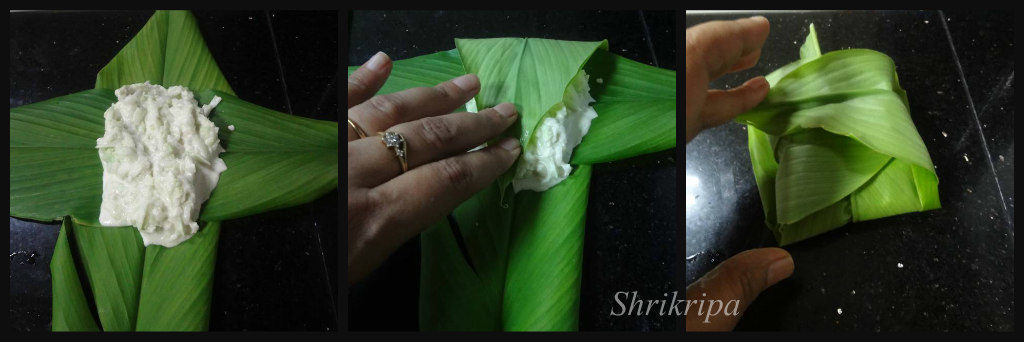
collage 2

-If you are using banana leaf, pour batter, fold side wise, then close the ends.

collage 3

-Steam cook these ready packets in a water filled idly steamer for 30 minutes to 40 minutes in a medium heat.

collage 4

– Serve this kottige with jaggery syrup with ghee / Honey, coconut chutney or sambar.
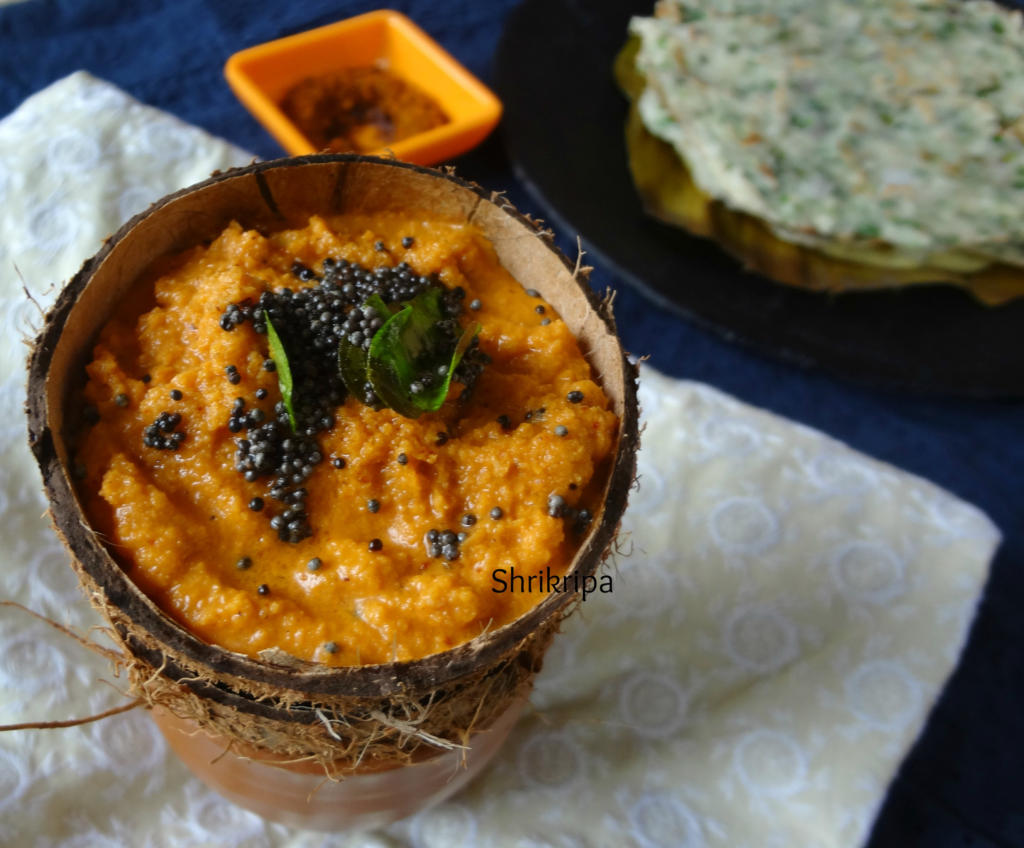


Onion Chutney with Coconut:

We normally refer to this as Neerulli Chutney in Mangalore. Here Neerulli is Onion.Coconut is an integral part of our cooking. This is how we prepare onion chutney traditionally in our households. It can be paired with anything and everything from our breakfast list.

pic 1

Ingredient:

Grated Coconut – 1cup

Red chillies – 2 (Byadagi variety)

Salt – as required

Tamarind – ¼ tsp

Onion – ½ of medium size.

For seasoning-

Coconut oil – 1 tsp

Mustard – ½ tsp

Curry leaves – 1spring

Method:

-Roast the red chillies by putting 2 drops of oil.

-Chop onion

-Grind Coconut, roasted red chillies, tamarind, onion by adding required amount of water and salt into smooth paste.

– Empty out this paste to one small bowl.

-Do seasoning by heating oil, add mustard. When mustard starts to splutter, add curry leaves and pour this over the chutney.

Spring Onion Akki Rotti:

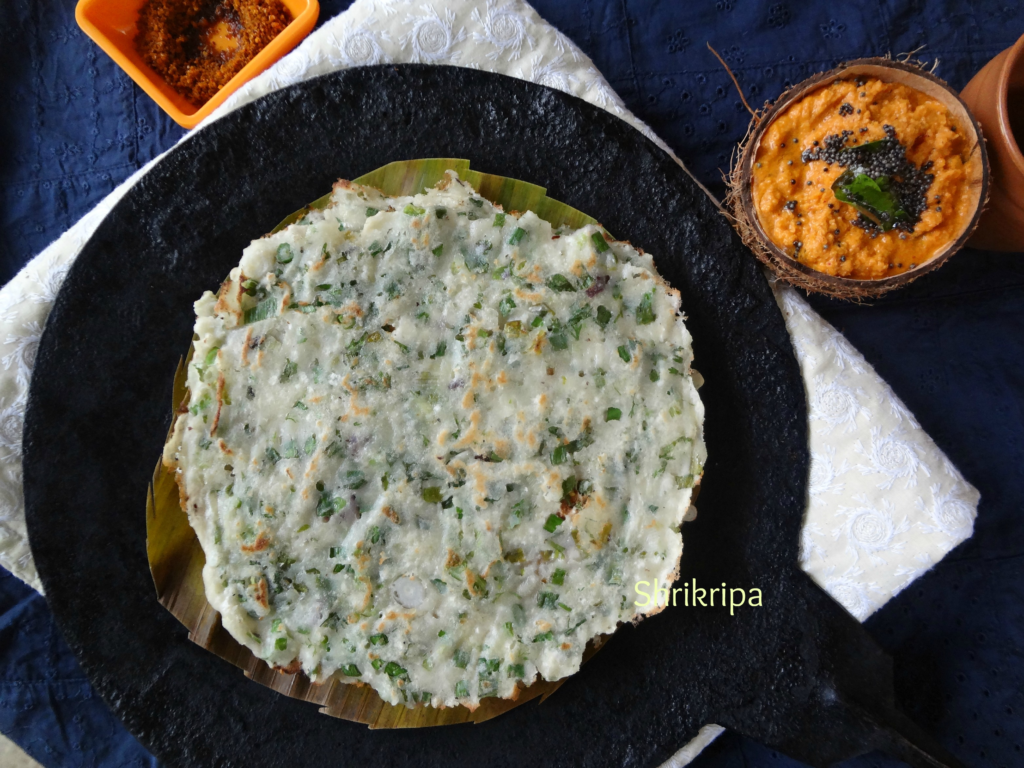
 Akki Rotti is a traditional Breakfast item of Karnataka. Usually it is prepared either by adding chopped greens, grated veggies or only onion. Here I have added chopped spring onion greens as well as bulbs, which is mixed with rice flour to form a thick pliable dough to make super tasty gluten free flat bread. I have served it with coconut and onion chutney, which we traditionally prepare in a Mangalore house hold.

pic main

Ingredients:

Rice flour – 3 cups

Spring onion -1 bundle

Green chillies – 2

Salt

Fresh Coconut gratings – 2 table spoons

Water – to bind

Oil – to fry the rotti.

Method:

  Wash and clean the spring onion and green chillies.

Chop green chillies, spring onion greens and bulbs finely.

 Take one wide steel bowl and mix in rice flour, chopped green chillies, spring onions, coconut gratings, salt.

 Make a pliable dough by adding sufficient water.

Keep it aside for 5 to 10 minutes to absorb all the seasoning as well as to soak.

 When you want to make rotti, take one piece of banana leaf or butter paper.

Take a little rotti dough in your moist hand, and start patting in a circular motion by dipping your hand in a water in-between.

Sprinkle one teaspoon of oil over this patted rotti and keep it ready.

 Heat iron griddle and cook oil sprinkled rotti by putting upside down on it.

After 2 to 3 minutes, peel off banana leaf or butter paper.

Sprinkle little oil over it and flip.

Cook and serve hot with Onion and coconut chutney.

Note:

-Keep one bowl of water in a reachable distance to dip your hand in-between.

-While patting the rotti, dip your hand in a bowl of water which you have kept aside.

– wetting your hand will help to avoid the dough sticking to your fingers while patting.


Ili Kivi leaves Tambli:

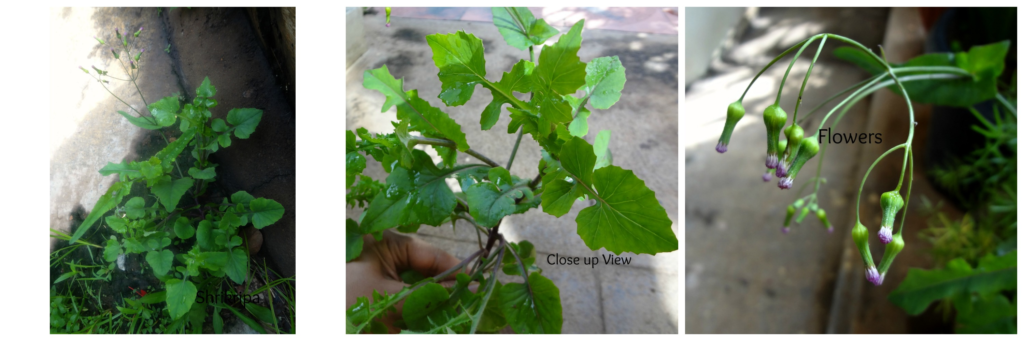
Emilia sonchifolia, Cupid’s Shaving Brush, Lilac tassel flower is locally known as Ili Kivi in Kannada. Sasasruti in Sanskrit and it is one among the “Ten sacred flowers of Kerala state in India, collectively known as Dasapushpam. It has been used in traditional medicine for the treatment of fever, sore throat, diarrhoea, eczema and as an antidote for snake bites.

The plant requires well drained soil and grows in open fields. it is an annual herb with weak and erect stems. Leaves are ovate or obovate. The flowers are pinkish purple in colour and usually blooms around July to October. Herb contains Calcium, Phosphorous, Magnesium, sodium and Potassium and some vitamins too. The herb is used as a folk medicine not only in India as well as China and some other parts of the world too.

collage 1

According to Ayurveda plant pacifies Kapha, vata and is effective in treating fever, tonsillitis; juice is a natural for eye diseases. It is also good in conditions like worm infections and allergy. Whole plant is crushed and the juice is extracted and is used to cure intestinal worms. The paste of the plant is useful for bleeding piles. A decoction of the plant is good in bringing down fever. The herb is useful in treating cough and bronchitis. Applying a paste on the thyroid region helps to cure the swelling in is sometimes used in cases of diabetes. (Details are from this website)

Whenever I come across this plant, I don’t hesitate to make use of it and usually prepare this Tambli for lunch.

pic 8

Ingredients:

Ili Kivi leaves – from one plant

Cumin – ½ tsp

Black pepper – 4

Bird eye chilli – 2

Ghee – 1 tsp

Coconut – ½ cup

Salt

Butter milk – ½ cup

Seasoning: ghee – ½ Tsp, cumin – ½ tsp, curry leaves – 1 spring.

Method:

-Wash leaves, Chop.

-take 1 tsp of ghee in a small kadai. When it is hot, add cumin , pepper and bird eye chilli. If you don’t have bird eye chillies, instead you can use half green chilli and roast. Then add chopped leaves and fry until it wilts.

– Now take out all these fried items and cool.     

collage 2

-Grind this into smooth paste by adding coconut, salt and little water.

-Put this into a vessel, add buttermilk, and adjust the consistency by adding little water if needed.

-Consistency should be like normal milk.

– Add seasoning by heating ghee, cumin and curry leaves.

– Enjoy this with hot rice.

Banana Berati / Plantain Preserve:

Whenever you have large stock of over ripe bananas, this is one such procedure one can follow and finish off all the stock and preserve this for future use. This preserve stays good almost a year or more in the freezer. It is a very handy when you want to make banana payasam/kheer or HalwaHere I have used yellow small variety of banana from Mangalore and we call this as Kadali.

pic main

Ingredients:

Over ripe banana – 22

Sugar – 1 bowl 

Method:

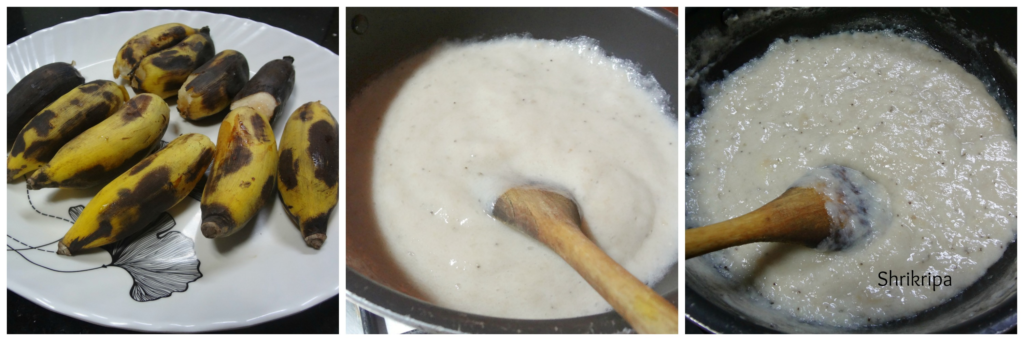
 Put all the peeled bananas to mixer grinder and make a smooth paste.

  Measure this by using any bowl of your choice. If this paste is 3 cups in quantity take one cup of sugar in that same measurement cup.

  So, your ratio of banana paste and sugar will be 3:1.

Take one thick bottomed kadai, put this paste and keep gas flame in a very low flame and cook for a while.

collage 1

       When it changes its colour to milky white, then to a pale colour and when you smell the banana flavour in the air, add sugar and mix this in a regular interval.

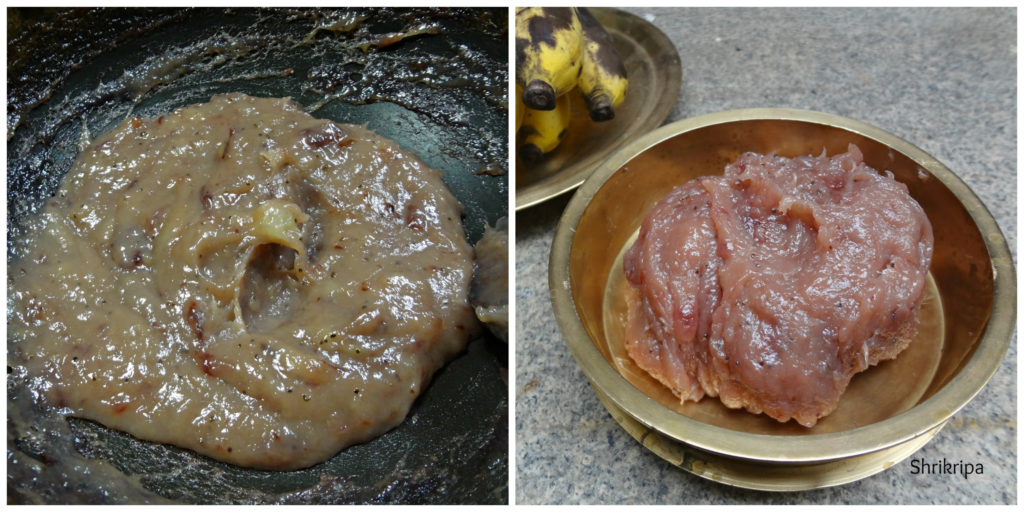
   After some time, it will turn into a pinkish or reddish colour and it will start to leave the sides of the kadai. Now it is the time to remove it from the fire.

collage 2

   Keep as it is and when it reaches room temperature; store it in an airtight container or a zip lock.

   You can do this in a microwave as well. Only thing, you should remove the glass bowl at regular intervals and give a stir and proceed as given above.


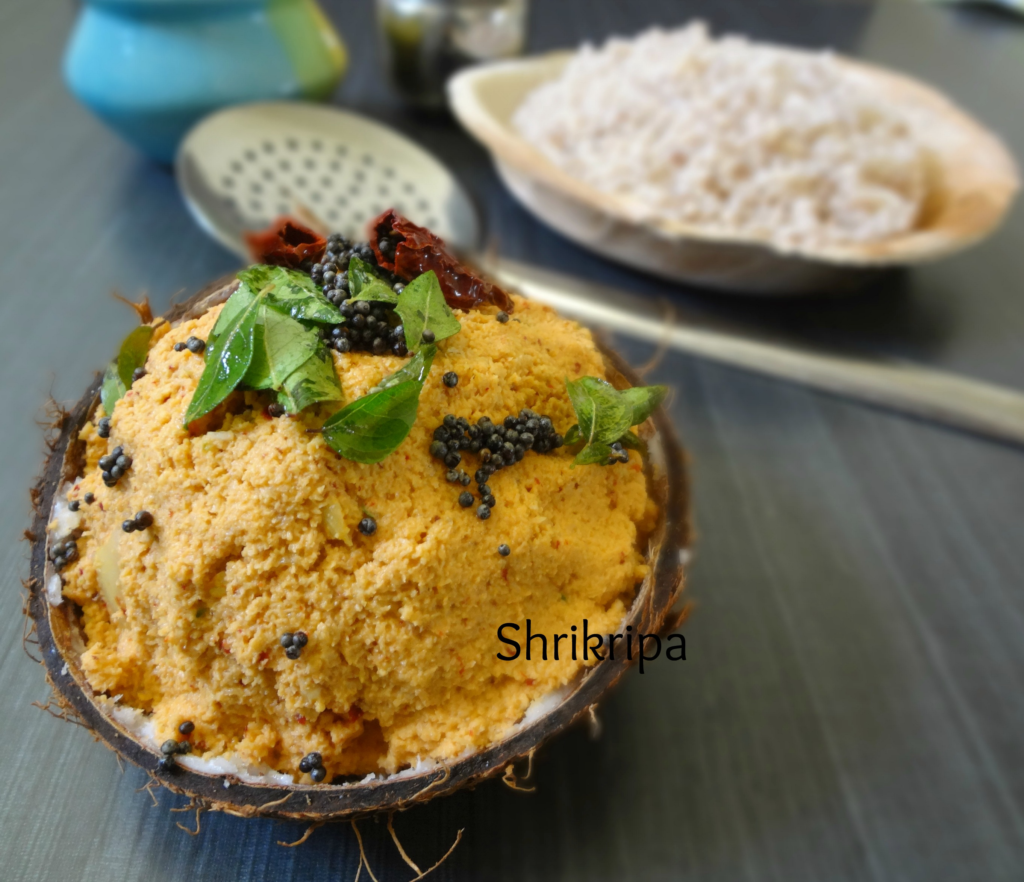
Neeru Mavinakayi/ Brined mango chutney:

The word “Neeru Mavinakayi” makes me nostalgic and my mouth water. I am sure that is the case with every Mangalorean. We grew up with very basic comfort food during monsoons. Which consists of kucchilakki (Red rice) ganji accompanied with ghee and this chutney, which is made by using coconut and dried red chillies.

Raw mango in brine is known as Neeru Mavinakayi. During its season we normally preserve raw, firm mangoes by putting it in brine solution. This way, the mangoes can be enjoyed throughout the year. We do make varieties of recipes and this chutney is one of them.

pic 3

Ingredients:

Brined mango – 1

Fresh Coconut – 1 cup

Dried red chillies – 3 to 4

Hing – ¼ tsp

Seasoning:

Coconut oil – 1 tsp

Mustard – 1 tsp

Red chilli – 1

Curry leaves – 1 string

Method:

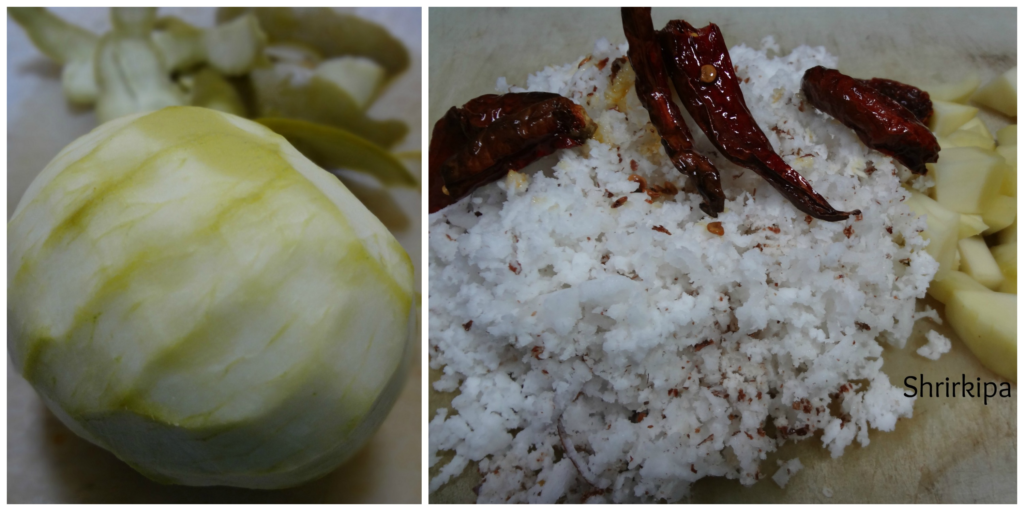
– Take out one mango from the brine, wash properly and peel outer skin and chop.

-Roast red chillies and hing in a drop of coconut oil.

collage 1

– Grind chopped mango, roasted items and coconut into coarse paste by adding very minimal water.

-It usually doesn’t require salt, if needed you can check the taste and add accordingly.

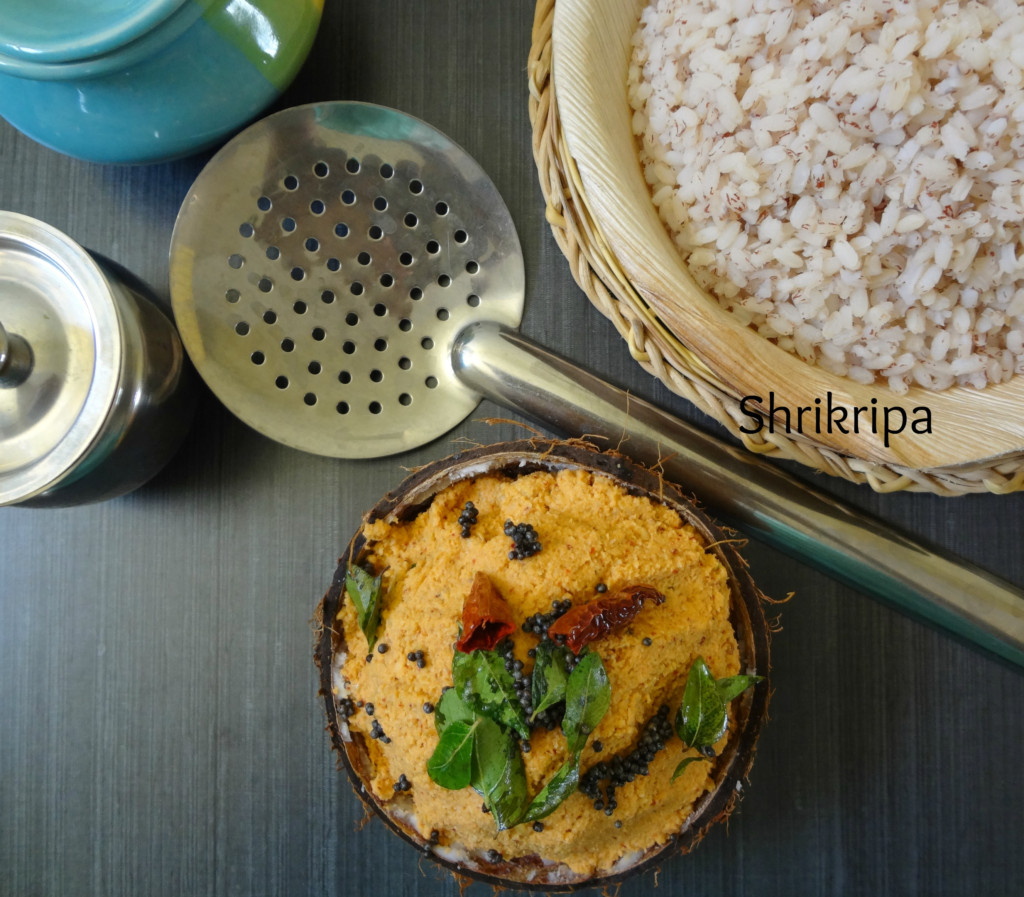
-Add seasoning by heating oil, when mustard splutters add curry leaves and add this to the chutney.

pic 4

-Enjoy either with white rice or like us with boiled rice (red rice) ganji and ghee.


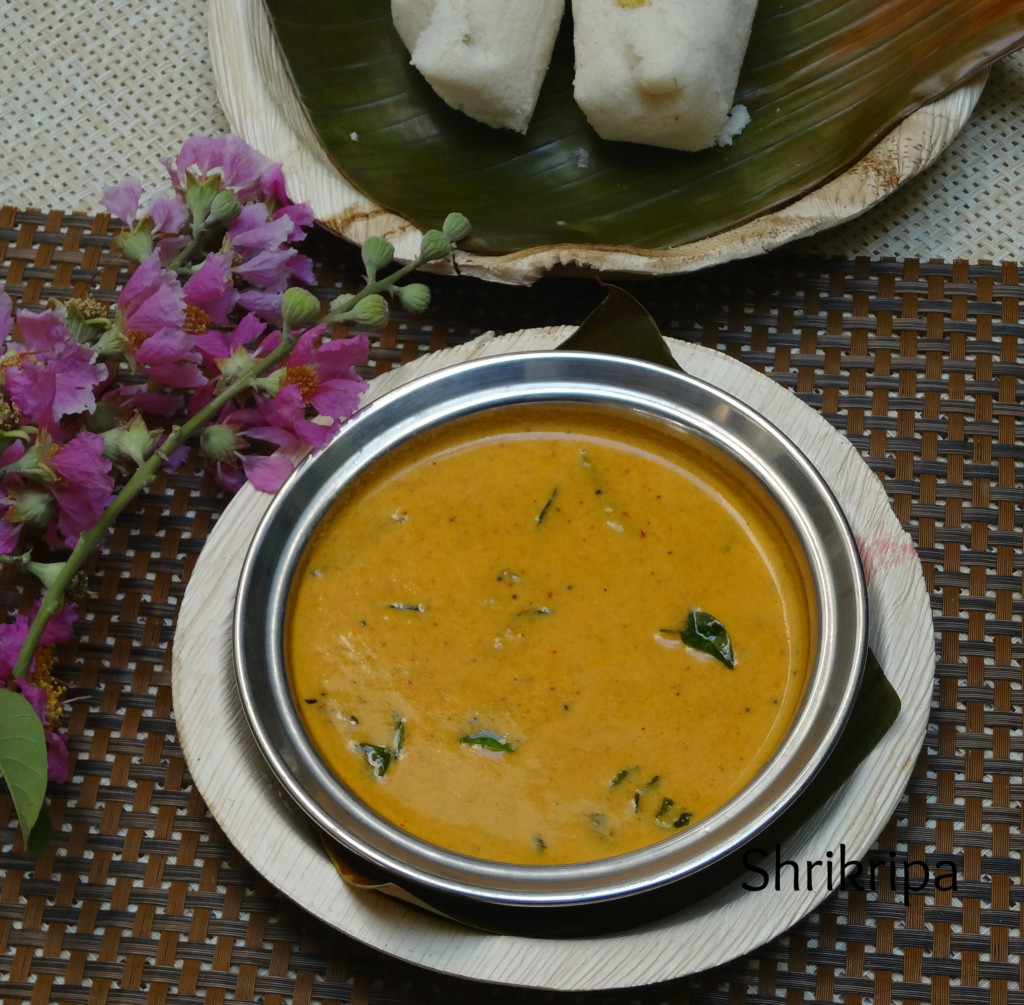
Menthe Kodilu/ Methi Sambar:

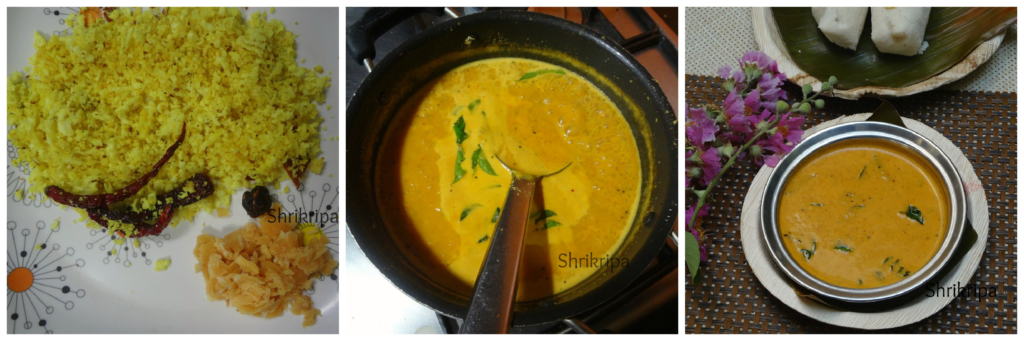
This is one of our traditional recipes and if you like a little sweetish tangy taste, this is the perfect combo for kotte kadubu / idly or semige.

We don’t use onion or garlic on any auspicious day and this side dish is usually prepared on such days and we relish this as a side dish with kotte kadubu/ Moode.

Here menthe is fenugreek and kodilu stands for sambar in our language. This is a very simple coconut based little sweetish gravy and needs very less ingredient and tastes good.

pic main

Ingredient:

Fresh grated coconut – 1 big bowl.

Dried red chillies – 3 to 4

Methi / fenugreek seeds – ½ tsp

Turmeric – ½ tsp

Coconut oil – 1tsp

Tamarind – ½ tsp

Jaggery – 2 tbl spoon

Salt

Seasoning:

Coconut oil – 1 tsp

Mustard – 1 tsp

Curry leaves – 1 springs

Red chilli – 1

Method:

 Take 1 spoon of coconut oil in a small kadai, heat.

 When it is hot, drop methi and fry for a while.

 When it is light brown, add red chillies and fry until it swells.

  Add coconut gratings, turmeric and fry for 2 to 3 minutes.

collage 1

  Cool this mixture and grind this into smooth paste by adding sufficient water, salt, jaggery and tamarind.

Now take that same kadai, in which we have fried chillies and coconut. Pour ground batter, adjust the consistency by adding water.

Boil this for a while and check for a salt and jaggery. If needed adjust that as well.

Do seasoning by heating oil, mustard, red chilli and curry leaves and pour this over boiled kodilu.

Moode/ Kotte kadubu:

Moode or kotte kadubu is a local delicacy of Coastal Karnataka. We especially prepare this on the eve of any festivities. Now a day It is an integral part of any weddings in our region.

Moode or kotte is leaf cup which we prepare either by using jack leaves, Kedige flower leaves (Kewda, Fragrant Screw Pine, Umbrella tree, Screw pine) or Plantain leaf. It is based on availability and accessibility to leaf.

It is basically normal idly batter which is poured in these cups, which is made by any one of these leaves and steam cooked in a water bath and served with chutney or any sambar.

I usually prepare this by bringing these leaf cups, from One of the many Mangalore stores, spread across Bangalore, during festival season. Sometimes I do prepare by lining a stainless-steel cup with small pieces of plantain leaves. This also works just fine like any other leaf cup.

pic main

Ingredients:

Idly Batter – Fermented

Tall steel glasses

Plantain leaves – as needed

Method:

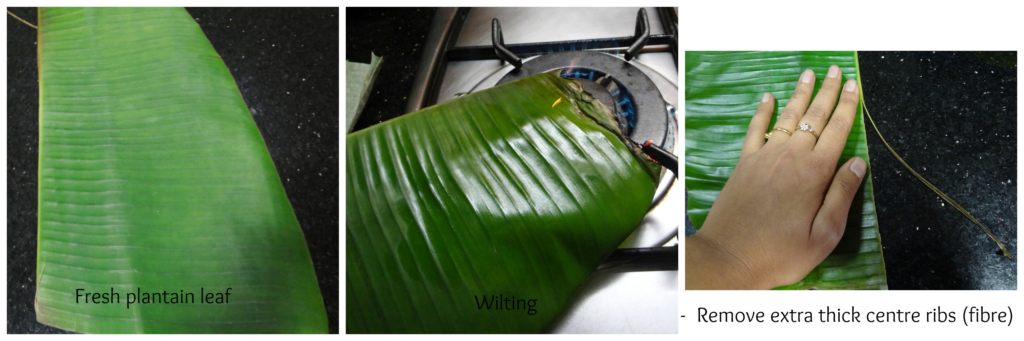
Hold plantain leaves on gas flame and wilt a little. It will help while folding or rolling the leaves.

If you don’t wilt it, it will tear very easily.

collage 1

Take one wet cloth and wipe plantain leaves (you should move your hand from centre rib to edge as ridges moves in the leaves) and clean the leaves.

 Remove extra thick centre ribs (fibre) by holding your left palm to support over the leaf and pull the fibre by right hand.

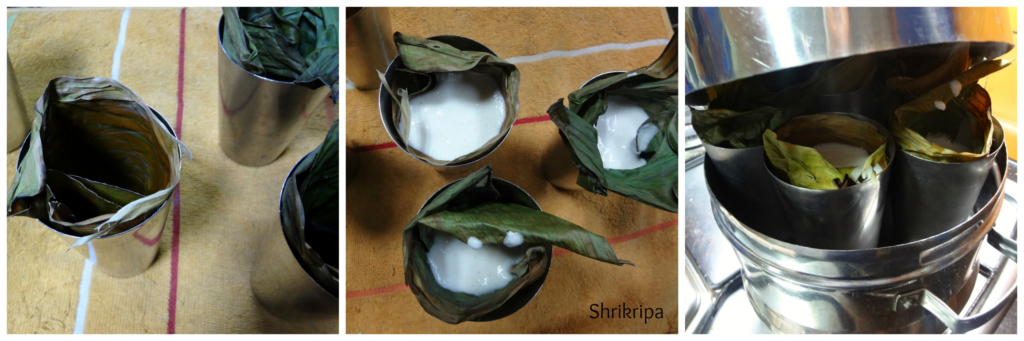
-Cut this into small rectangle pieces.

 It is now ready to roll and place inside the steel glass.

collage 2

Keep idly steamer ready, when water starts boiling, pour the batter to the moulds.

In these cups, usually 2 to 2 ½ serving spoons of batter will hold.

 If batter is more, cooking time should increase according to that.

Keep it in a steamer, cook in a high fire for 10 minutes and when you feel the steam is uniformly distributed inside the steamer, reduce the flame and cook for 40 to 50 minutes in a very low flame.

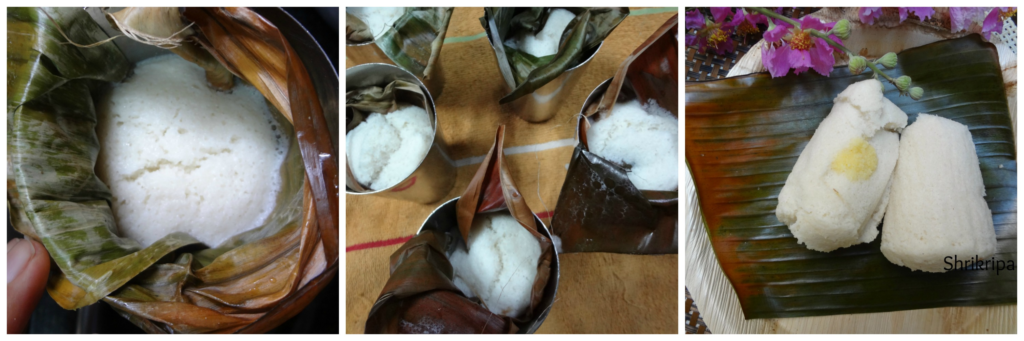
After it is done, switch off the gas, don’t open the lid and keep it for some more time.

When you want to serve this, open the lid, remove the glass mould and pull the banana leaves out and serve with pouring little ghee and any side dish of your choice.

collage 3

Usually on festival days, we make coconut based sambar or chutney and totally avoid garlic and onion on any auspicious day.

Our traditional side dish is called menthe kodilu and we relish these kadubu’s with menthe kodilu or sweetened cardamom flavoured coconut milk(kayi halu) and coconut chutney .

Panchakajjaya /Naivedym which offered to lord Ganapathi:

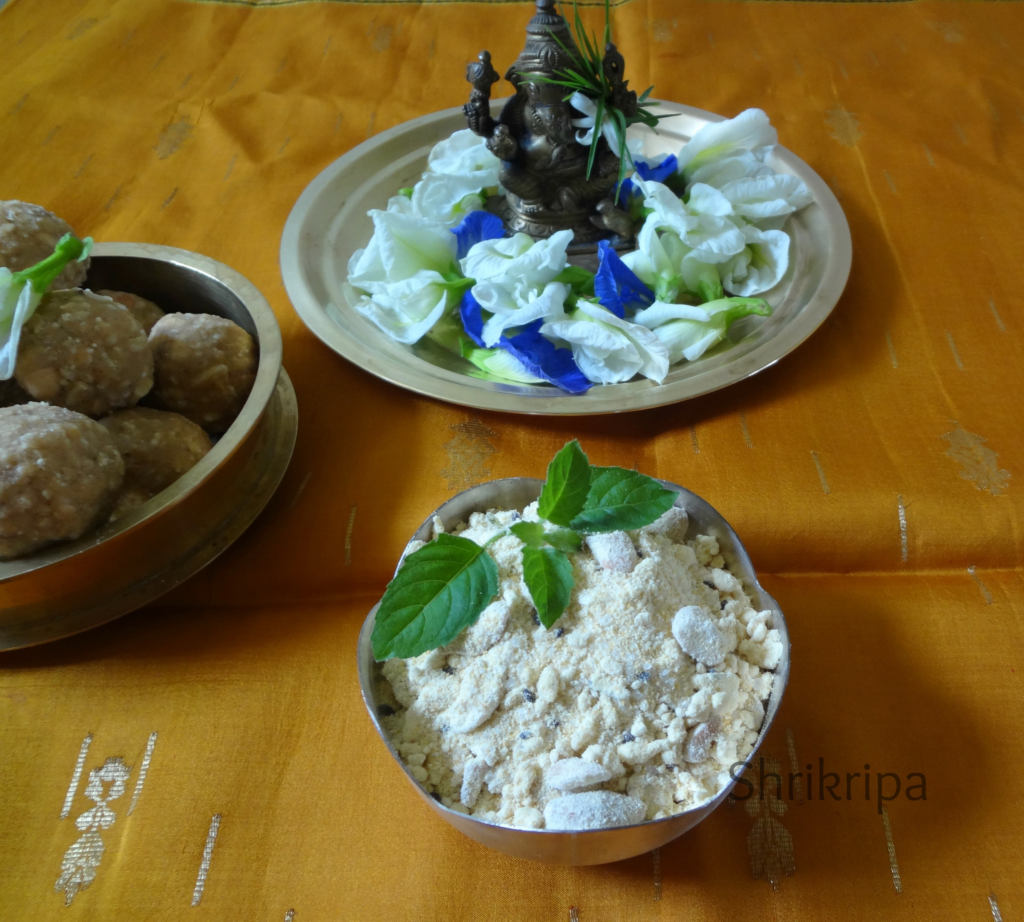
Panchakajjaya is integral part of Ganesh Chaturthi Naivedyam. Pancha means Five. As the name suggests it is made up of five ingredients. Chana dal, sugar, coconut, Ghee, black sesame seed. cashew nuts are optional. This powdery Prasadam is a treat which we look forward to every year on this auspicious day.

pic 8

Ingredients:

Chana dal / Bengal gram dal – 1 cup

Grated fresh coconut – 1cup

Sugar – 1cup

Black sesame seed – 2 tbl sp

Cashew bits – ½ cup

Cardamom powder – ½ tsp

Ghee – ½ tsp

Method:

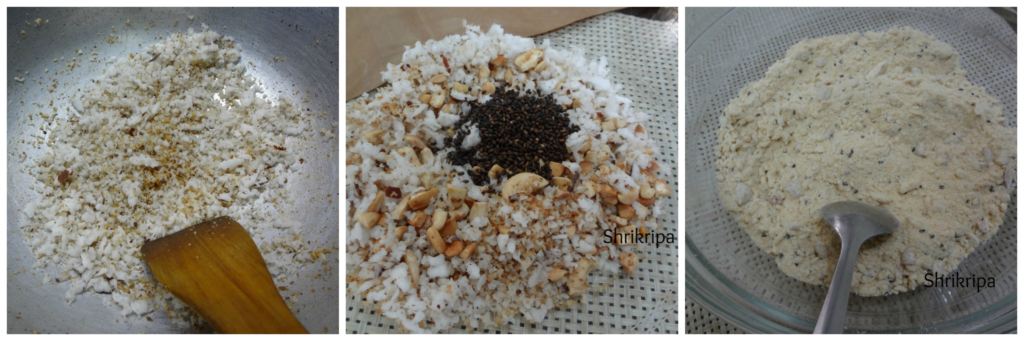
         Dry roast Chana dal until it is light golden and fragrant. Cool and make powder by using small mixer jar. Sieve and collect fine powder. Do this in small batches, little by little.

collage 1

         Powder sugar.

         Dry roast sesame seed and cool.

         Dry roast coconut gratings until light golden. Cool this.

         Fry cashew bits in ghee and keep aside.

collage 2 

         Now take one bowl, mix everything together, and sprinkle cardamom powder. Offer to God.

Idly/Idli Batter:

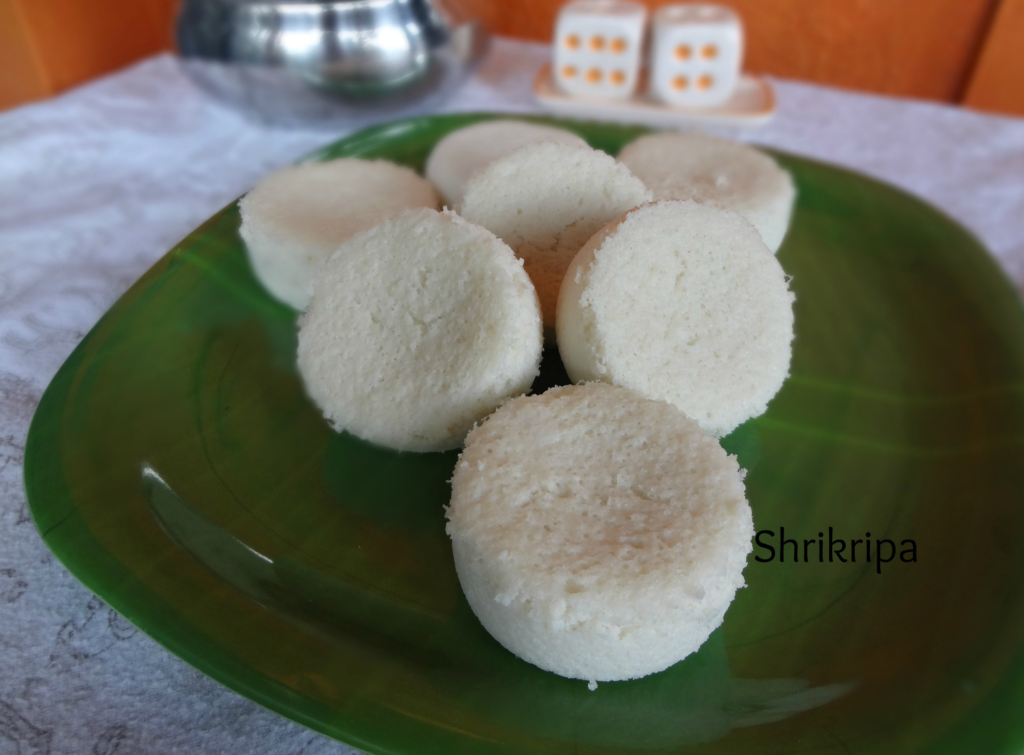
Idli is very basic, staple breakfast of south India. It is very healthy steam cooked rice and lentil cake which is very nutritious too. Each place has their own rice and lentil ratio or proportion and grinding technique also changes from region to region. In Mangalore, we soak rice and dal separately and grind very fine paste of urad dal and either we mix rice rawa or we are grinding the rice, we keep it a little coarse, hence this batter will be a little coarse. After fermenting the batter, the next day we proceed to make idlies by using either idly stand or idly cups. In our region, idly cups are regular and very common in every house hold and we use special type of idly steamer and invariably we use this for so many kinds of steam cooking.

pic 14

Ingredients for idli batter:

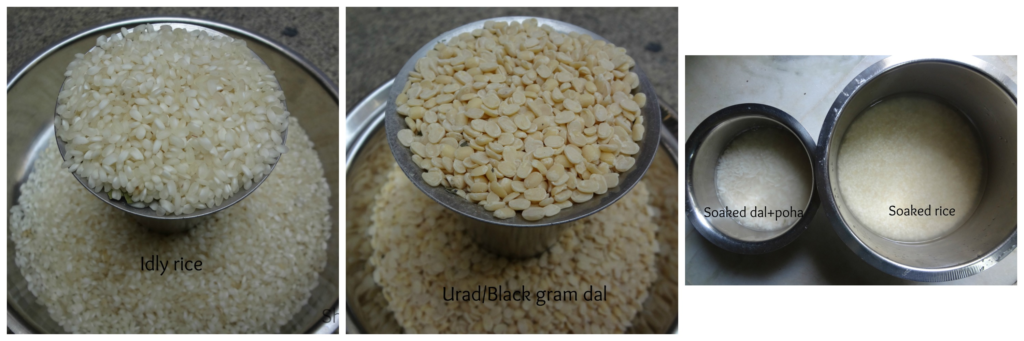
Idly rice or Idly rawa – 2 cups

Urad/Black gram dal – 1 cup

Poha – 1 fist full

salt

Method:

-Wash and soak rice in one vessel. If you are using idli rawa, you can wash idly rawa and put very little water and keep aside.

collage 1

-Wash Urad dal and poha in another vessel and soak for 3 to 4 hours.

-At first, drain excess water from urad dal and put this into wet grinder.

-Grind this into smooth paste by adding water in-between while grinding.

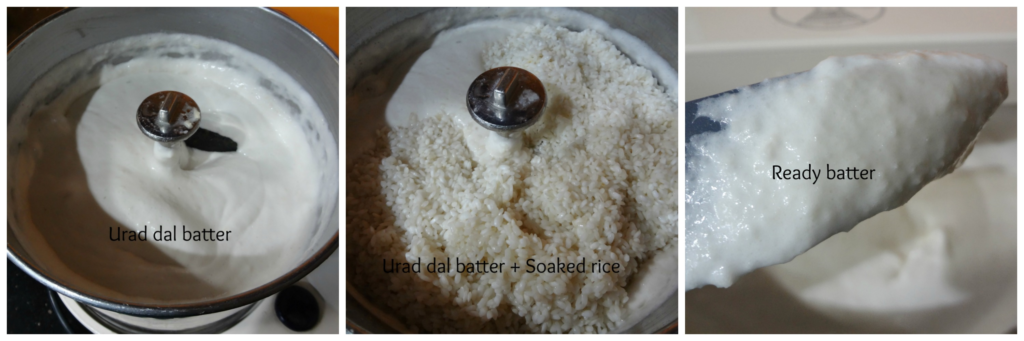
-When urad dal batter becomes fine and smooth, its consistency becomes almost double and colour of the batter looks milky white.

collage 2

– When you think urad dal batter is ready, add soaked rice or rice rawa by draining its soaked water.

-You can use this water while grinding or adjusting the consistency of the batter or to wash wet grinder at first to remove the dough that is stuck on the stone.

-Grind this into small rawa consistency by adding salt and remove this ready batter into big vessel. If you are using rice rawa ,allow batter to mix for couple of minutes and then remove.

-I usually grind urad dal first, then mix in drained rice so that batter mixes uniformly and becomes light and airy. 

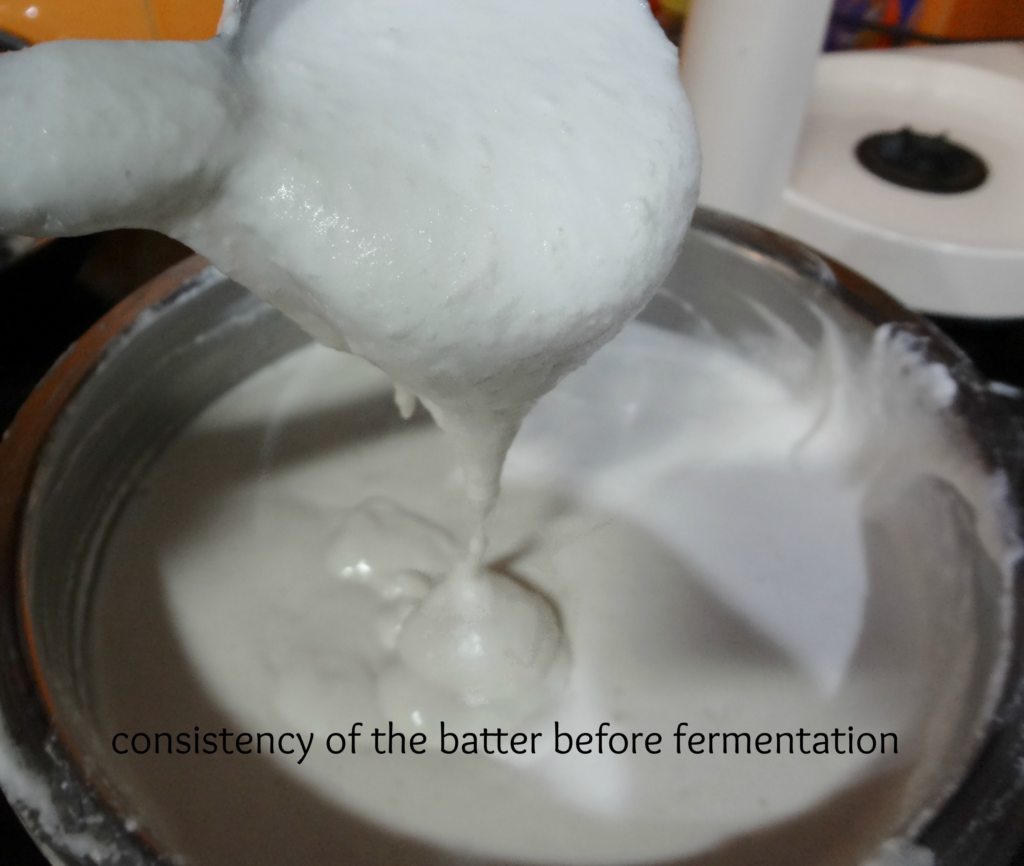
– Batter consistency should be a little thick and when u hold and drop the batter it should not drop very easily and it should stick to the spoon.

pic 7

-Close the lid and keep this batter for 8 to 10 hours or more (according to outside weather where you live) for fermentation.

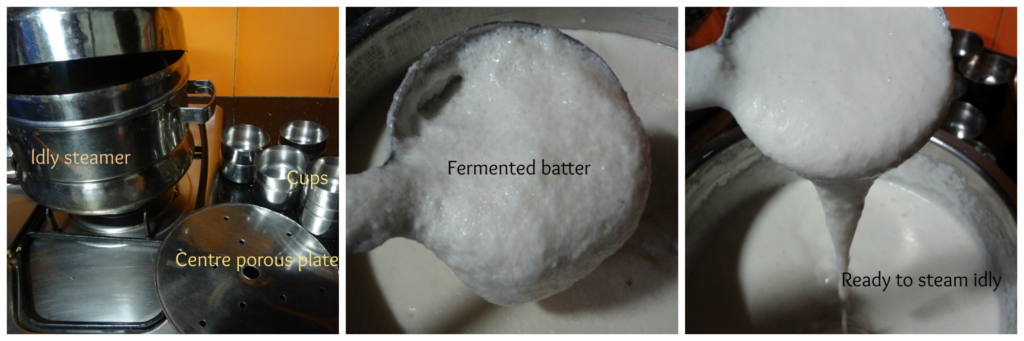
-Next day morning fill idly steamer or pressure cooker with sufficient water, place the porous plate at the centre of the vessel and keep this on the fire.

collage 3

-Mix fermented batter vigorously, if needed add water and adjust the consistency keep it ready.

-Rinse the idly moulds in fresh water once, it will act as a non-sticky layer between idly and mould.

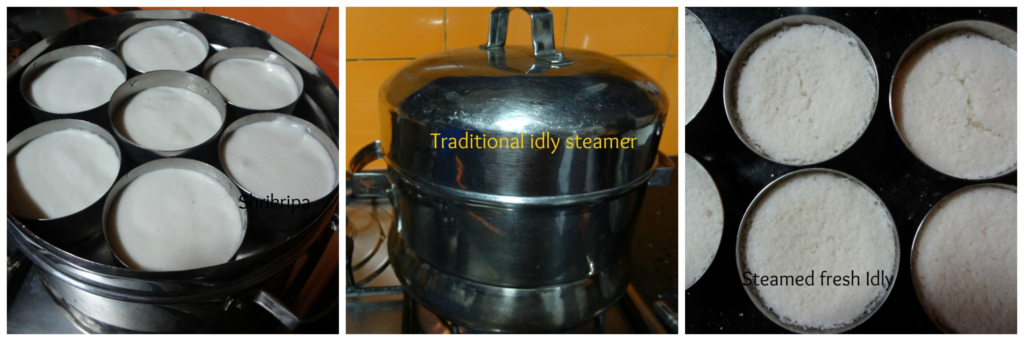
-When water starts boiling, pour one spoon of batter into respective moulds and steam cook.

collage 4

-If you are using cups, cook this in a steamer for 15 to 20 minutes. Cups holds more batter than idly stand.

-If you are using idly stand, 7 to 8 minutes of steam cooking is sufficient.

-When it is done, switch off the gas, open the lid and remove moulds outside.

-Once it is cool, remove idly and serve with chutney or sambar or with your choice of side dish.

NOTE:

-Use wet grinder to get awesome soft idlies.

– Use soaked and drained water from the dal or rice while grinding. It will enhance the taste.

-Always mix and pour the batter to the moulds, only after water starts boiling.